



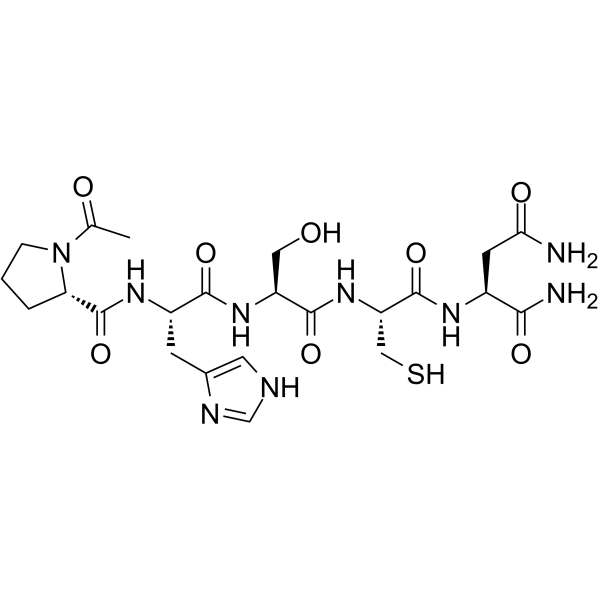
ATN-161 trifluoroacetate salt
Based on 12 publication(s) in Google Scholar
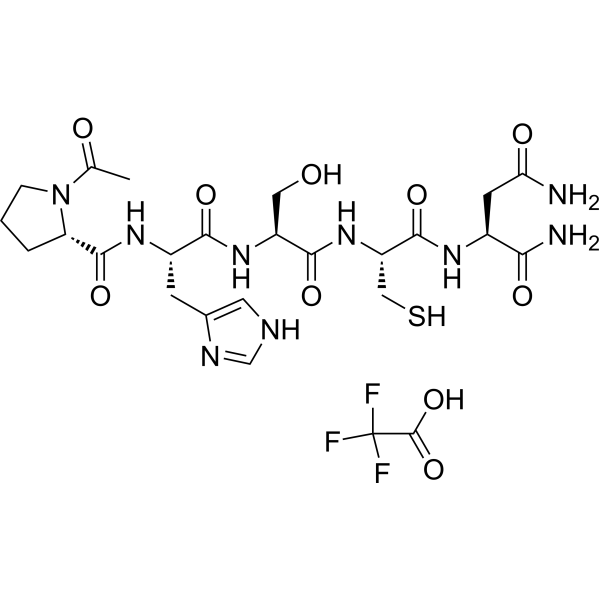
ATN-161 trifluoroacetate salt is a novel integrin α5β1 antagonist, which inhibits angiogenesis and growth of liver metastases in a murine model.
For research use only. We do not sell to patients.
- Purity : 99.04%
- CAS No.: 904763-27-5
- Formula: C25H36F3N9O10S
- Molecular Weight:711.67
-
Storage:
4°C, sealed storage, away from moisture
* In solvent : -80°C, 2 years; -20°C, 1 year (sealed storage, away from moisture)

To place orders, for customer services and technical support, please contact: MedChemExpress USA
Tel: 609-228-6898 E-mail: [email protected] [email protected]


-
 Biological Activity
-
Chemical Information
-
Solvent & Solubility
- Protocols
- Purity & Documentation
- References
-
 Help & FAQs


-
HY-16141
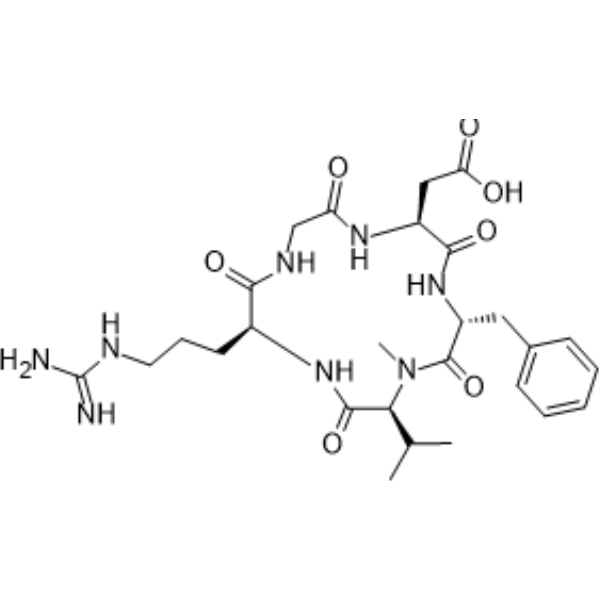
CilengitideIntegrin Inhibitor -
HY-100506
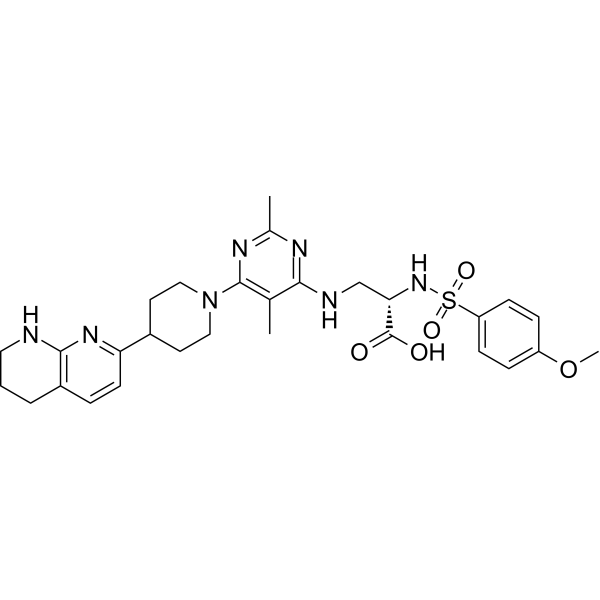
GLPG0187Integrin Receptor Antagonist -
HY-P0023
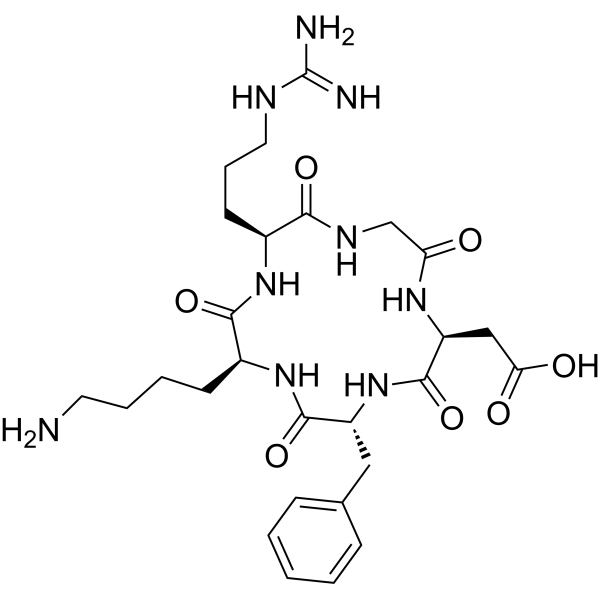
Cyclo(-RGDfK)αvβ3 Integrin Inhibitor -
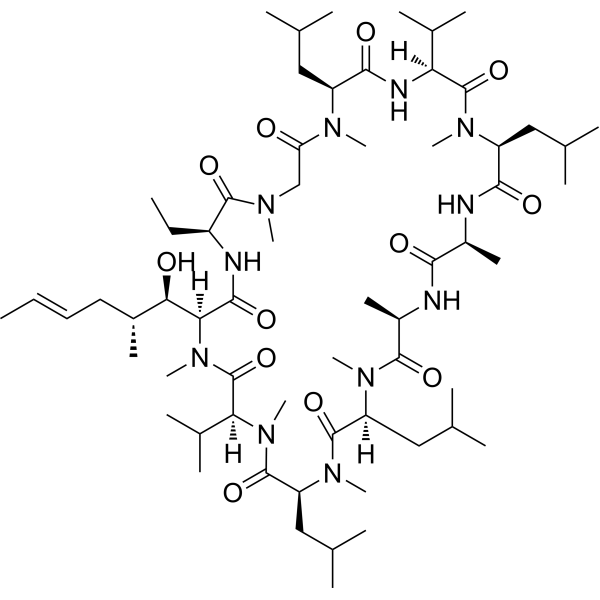
HY-B0579
Cyclosporin ACalcineurin Inhibitor -
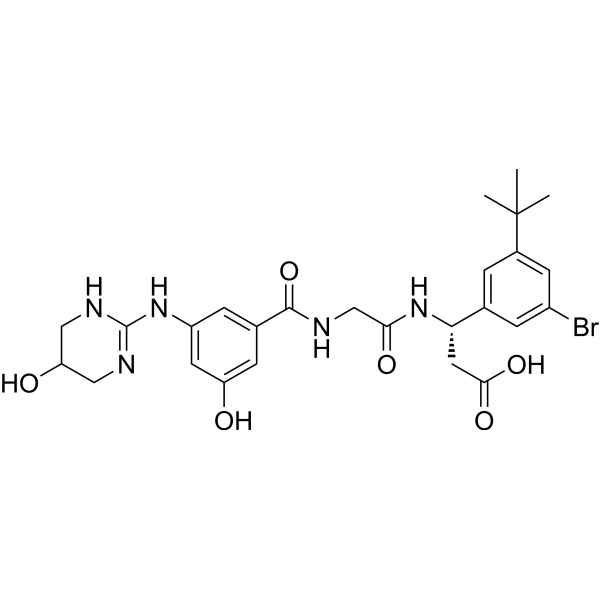
HY-18644
CWHM-12αV Integrins Inhibitor -
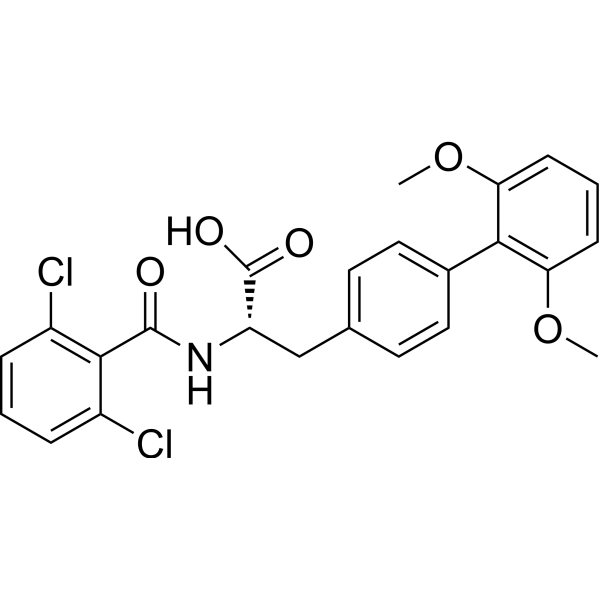
HY-15770
TR-14035α4β7/α4β1 Antagonist -
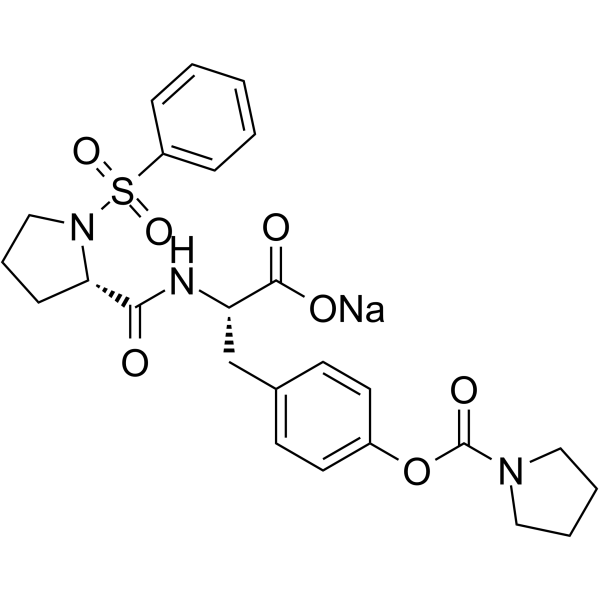
HY-129453
BOP sodiumα9β1/α4β1 Integrin Inhibitor -
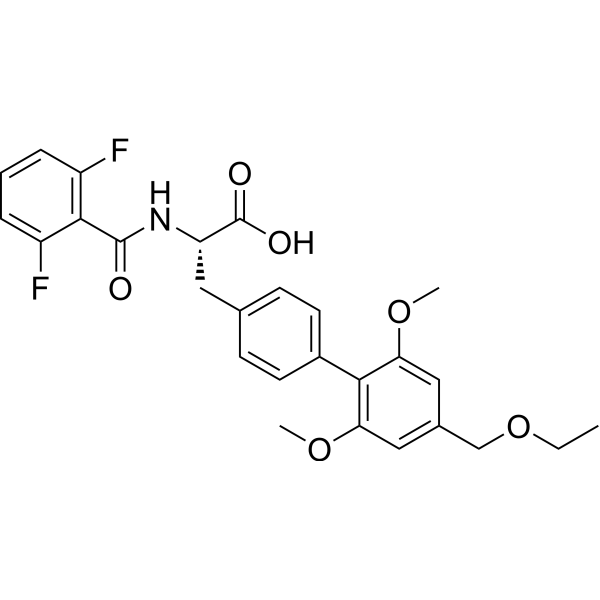
HY-14951
FirategrastIntegrin Antagonist -
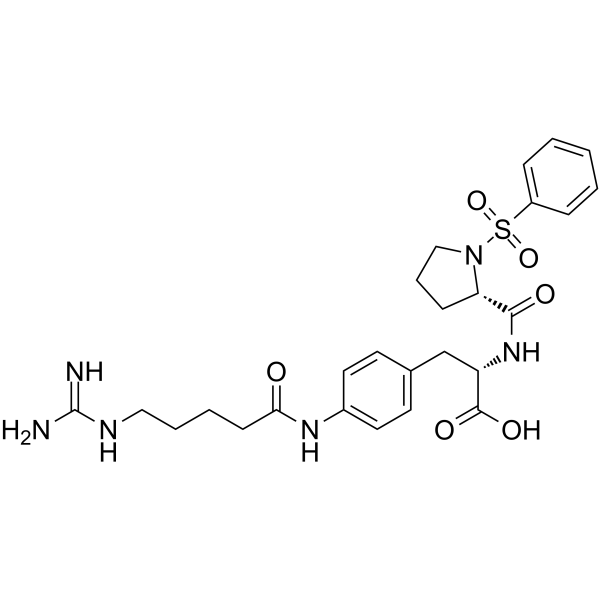
HY-100445
αvβ1 integrin-IN-1αvβ1 Inhibitor -
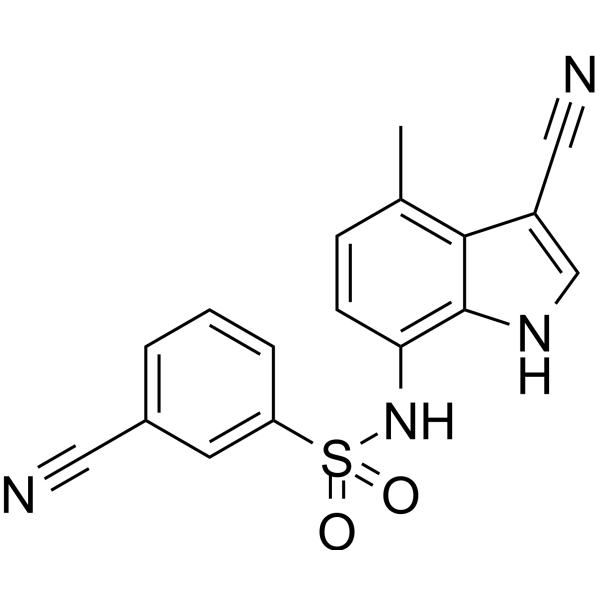
HY-14571
E7820Angiogenesis Inhibitor -
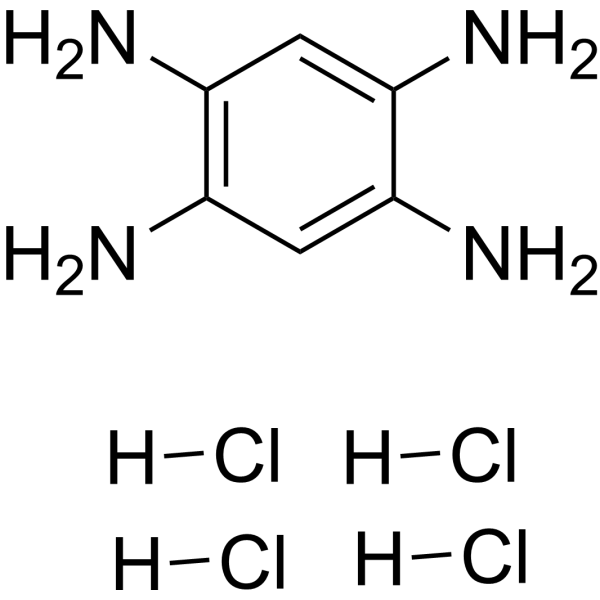
HY-12444
Y15FAK Inhibitor -
HY-13535
ATN-161α5β1/αvβ3 Integrin Binder
Publications Citing Use of MedChemExpress (MCE) ATN-161 trifluoroacetate salt
More- Cancer Cell. 2019 Jan 14;35(1):64-80.e7. [Abstract]
- Nat Nanotechnol. 2026 Jun;21(6):880-891. [Abstract]
- Int J Oral Sci. 2026 Jul 9;18(1):50.
- ACS Nano. 2025 Jun 10;19(22):20564-20577. [Abstract]
- J Adv Res. 2025 May 25:S2090-1232(25)00370-4. [Abstract]
- Stem Cell Res Ther. 2022 Jul 18;13(1):327. [Abstract]
- Cell Prolif. 2021 Apr;54(4):e13012. [Abstract]
- Sci Signal. 2022 Dec 6;15(763):eabn2743. [Abstract]
- ACS Biomater Sci Eng. 2023 May 8;9(5):2524-2533. [Abstract]
- Colloids Surf B Biointerfaces. 2022 Feb:210:112227. [Abstract]
- J Cell Sci. 2025 Dec 1;138(23):jcs264412. [Abstract]
- Res Sq. 2025 Dec 17.
 Customer Validation & Images

-
Cell Imaging/Staining

-
RT-PCR

-
Flow Cytometry

-
Flow Cytometry


Biological Activity
Description
IC50 & Target
Integrin α5β1[1]
In Vitro
The combination of ATN-161 plus 5-FU significantly reduces tumor cell proliferation compared to control and single-agent therapy (p<0.01). In addition, combination therapy leads to a significant increase of apoptotic (TUNEL-positive) tumor cells (p<0.03), whereas single-agent therapy does not increase in TUNEL-positive tumor cells. ATN-161 treatment leads to a significant reduction in EC number (21% decrease) after a 48 hr incubation time compared to control (p<0.03)[1]. ATN-161 inhibites VEGF-induced migration and capillary tube formation in hCECs, but did not inhibit proliferation. ATN-161 decreases the number of cells migrating in response to VEGF in a dose-dependent manner starting at 100 nM (P<0.001 vs. VEGF group)[2].
MedChemExpress (MCE) has not independently confirmed the accuracy of these methods. They are for reference only. Further protocols information, click here.
In Vivo
MedChemExpress (MCE) has not independently confirmed the accuracy of these methods. They are for reference only.


Chemical Information
-
CAS No. 904763-27-5
-
Appearance Solid
-
Molecular Weight 711.67
-
Formula C25H36F3N9O10S
-
Color White to off-white
-
SMILES
FC(F)(C(O)=O)F.O=C(N)C[C@@H](C(N)=O)NC([C@H](CS)NC([C@H](CO)NC([C@H](CC1=CNC=N1)NC([C@H]2N(C(C)=O)CCC2)=O)=O)=O)=O
-
Synonyms
ATN-161 TFA salt
-
Shipping
Room temperature in continental US; may vary elsewhere.
-
Storage
4°C, sealed storage, away from moisture
* In solvent : -80°C, 2 years; -20°C, 1 year (sealed storage, away from moisture)


Publications (12)
-
Journal Impact Factor
-
Most Recent
-
Cancer Cell
Tinagl1 Suppresses Triple-Negative Breast Cancer Progression and Metastasis by Simultaneously Inhibiting Integrin/FAK and EGFR Signaling. [Abstract]2019 Jan 14;35(1):64-80.e7. PMID: 30612941 -
Nat Nanotechnol
2026 Jun;21(6):880-891. PMID: 42286217 -
-
ACS Nano
Deciphering the Distinct Roles of Molecular and Supramolecular Chirality in Osteogenic Differentiation of Mesenchymal Stem Cells in 3D Hydrogels. [Abstract]2025 Jun 10;19(22):20564-20577. PMID: 40425514 -
J Adv Res
Fibrinogen exacerbates α-synuclein aggregation and mitochondrial dysfunction via alpha5beta3 integrin in Parkinson's disease. [Abstract]2025 May 25:S2090-1232(25)00370-4. PMID: 40425084 -
Stem Cell Res Ther
Extracellular matrix derived from Wharton's Jelly-derived mesenchymal stem cells promotes angiogenesis via integrin αVβ3/c-Myc/P300/VEGF. [Abstract]2022 Jul 18;13(1):327. PMID: 35851415
ATN-161 trifluoroacetate salt purchased from MedChemExpress. Usage Cited in: Stem Cell Res Ther. 2022 Jul 18;13(1):327. [Abstract]
ATN-161 trifluoroacetate salt (8 h) and ECM significantly inhibited the tube formation ability but did not change the tube formation ability of HUVECs.
-
Cell Prolif
Vitronectin-activated αvβ3 and αvβ5 integrin signalling specifies haematopoietic fate in human pluripotent stem cells. [Abstract]2021 Apr;54(4):e13012. PMID: 33656760
ATN-161 trifluoroacetate salt purchased from MedChemExpress. Usage Cited in: Cell Prolif. 2021 Apr;54(4):e13012. [Abstract]
ATN-161 trifluoroacetate salt (10 μM; from day 2 to day 6) did not affect the mRNA expression of RUNX1, GATA2 and MYB in hPSCs.
ATN-161 trifluoroacetate salt purchased from MedChemExpress. Usage Cited in: Cell Prolif. 2021 Apr;54(4):e13012. [Abstract]
ATN-161 trifluoroacetate salt (10 μM; from day 2 to day 6) did not affect the production of CD43+ HPCs in VTN‐coated hPSCs.
ATN-161 trifluoroacetate salt purchased from MedChemExpress. Usage Cited in: Cell Prolif. 2021 Apr;54(4):e13012. [Abstract]
ATN-161 trifluoroacetate salt (10 μM; from day 2 to day 6) did not affect the production of CD43+ HPCs in VTN‐coated hPSCs.
-
Sci Signal
Cross-talk between TSC2 and the extracellular matrix controls pulmonary vascular proliferation and pulmonary hypertension. [Abstract]2022 Dec 6;15(763):eabn2743. PMID: 36473049 -
ACS Biomater Sci Eng
Regulation of Macrophage Polarization on Chiral Potential Distribution of CFO/P(VDF-TrFE) Films. [Abstract]2023 May 8;9(5):2524-2533. PMID: 37092816 -
Colloids Surf B Biointerfaces
Anisotropic magneto-mechanical stimulation on collagen coatings to accelerate osteogenesis. [Abstract]2022 Feb:210:112227. PMID: 34838419 -
J Cell Sci
Bile canaliculi formation in primary hepatocytes requires α1β1 integrin-dependent adherens junction re-organization. [Abstract]2025 Dec 1;138(23):jcs264412. PMID: 41347643 -


Solvent & Solubility
In Vitro:
H2O : 5 mg/mL (7.03 mM; ultrasonic and warming and heat to 60°C)
DMSO : 1 mg/mL (1.41 mM; Need ultrasonic; Hygroscopic DMSO has a significant impact on the solubility of product, please use newly opened DMSO)
Please refer to the solubility information to select the appropriate solvent. Once prepared, please aliquot and store the solution to prevent product inactivation from repeated freeze-thaw cycles.
Storage method and period of stock solution: -80°C, 2 years; -20°C, 1 year (sealed storage, away from moisture). When stored at -80°C, please use it within 2 years. When stored at -20°C, please use it within 1 year.
* Note: If you choose water as the stock solution, please dilute it to the working solution, then filter and sterilize it with a 0.22 μm filter before use.
Please refer to the solubility information to select the appropriate solvent. Once prepared, please aliquot and store the solution to prevent product inactivation from repeated freeze-thaw cycles.
Storage method and period of stock solution: -80°C, 2 years; -20°C, 1 year (sealed storage, away from moisture). When stored at -80°C, please use it within 2 years. When stored at -20°C, please use it within 1 year.
* Note: If you choose water as the stock solution, please dilute it to the working solution, then filter and sterilize it with a 0.22 μm filter before use.
Concentration (start) × Volume (start) = Concentration (final) × Volume (final)
In Vivo:
For the following dissolution methods, please prepare the working solution directly:
It is recommended to prepare fresh solutions and use them promptly within a short period of time.
The percentages shown for the solvents indicate their volumetric ratio in the final prepared solution. If precipitation or phase separation occurs during preparation, heat and/or sonication can be used to aid dissolution.
Add each solvent one by one: PBS
Solubility: 10 mg/mL (14.05 mM); Clear solution; Need ultrasonic and warming and heat to 60°C

Protocols
-
Human pluripotent stem cell endothelial-cell differentiation
Human pluripotent stem cell endothelial differentiation is based on stepwise developmental patterning: early activation of WNT/GSK3β inhibition promotes mesodermal or vascular progenitor entry, followed by endothelial specification using VEGF-related signaling, BMP4, FGF2, Notch modulation, or cAMP depending on the published protocol. Endothelial differentiation is read out by acquisition of CD31, CD34, VE-cadherin/CD144, KDR/VEGFR2, vWF, Tie2, NOS3, acetylated LDL uptake, tube/network formation, barrier function, and in vivo vessel-forming capacity where tested.
-
Vascular/Branching Fractal Analysis
Vascular/branching fractal analysis quantifies the geometric complexity of vessel trees or vascular networks from segmented 2D images, commonly by converting vessels into binary and/or skeletonized maps and estimating fractal dimension using box-counting or related approaches. Fractal dimension is interpreted as an image-derived readout of vascular branching complexity, space filling, or density, and has been applied to retinal photographs, fluorescein angiography, OCT angiography, capillary perfusion maps, and in vitro Matrigel angiogenesis networks. The assay readout is generated from vessel-positive pixels after image preprocessing, vessel segmentation, binarization, and optional skeletonization; reported outputs include fractal dimension, vessel density, branchpoint density, endpoint density, vessel length density, tortuosity, and generation-based branching metrics when VESGEN-style analysis is used. The biological interpretation is limited to quantitative vascular patterning and s
-
Endothelial Tube Formation Assay
Endothelial tube formation assay evaluates the ability of endothelial cells to attach, migrate, align, and organize into capillary-like networks when cultured on gelled basement membrane extract or Matrigel; the readout is the morphology and quantity of tube-like networks, which reflects an in vitro endothelial morphogenesis step related to angiogenesis. Basement membrane extract/Matrigel provides laminin-rich extracellular matrix cues that support endothelial differentiation into capillary-like structures, but it can contain biologically active growth factors, so growth-factor-reduced matrix is preferred when testing defined angiogenic stimulators or inhibitors.
-
Endothelial Cell Migration/Angiogenic Sprouting Assay
Endothelial cell migration and angiogenic sprouting assays are in vitro (and partially ex vivo-adapted) functional models that quantify the ability of endothelial cells to undergo coordinated migration, extracellular matrix invasion, and multicellular organization into capillary-like sprouts in response to pro-angiogenic stimuli such as VEGF, bFGF, or conditioned microenvironments. These assays are used to model early angiogenic events including tip-cell formation, directional migration, and lumen-like sprout extension, which collectively reflect angiogenic activation and vascular morphogenesis processes observed in vivo.


Purity & Documentation
-
Data Sheet (282 KB)
-
SDS (252 KB)
- English - EN (252 KB)
- Français - FR (252 KB)
- Deutsch - DE (252 KB)
- Norwegian - NO (252 KB)
- Español - ES (252 KB)
- Swedish - SV (252 KB)
- Italian - IT (252 KB)
- Korean - KR (252 KB)
- Portuguese - PT (252 KB)
-
Handling Instructions (2659 KB)
References
[1]. Stoeltzing O, et al. Inhibition of integrin alpha5beta1 function with a small peptide (ATN-161) plus continuous 5-FU infusion reduces colorectal liver metastases and improves survival in mice. Int J Cancer. 2003 Apr 20;104(4):496-503. [Content Brief]
[2]. Wang W, et al. The antiangiogenic effects of integrin alpha5beta1 inhibitor (ATN-161) in vitro and in vivo. Invest Ophthalmol Vis Sci. 2011 Sep 14;52(10):7213-20. [Content Brief]


Complete Stock Solution Preparation Table
Please refer to the solubility information to select the appropriate solvent. Once prepared, please aliquot and store the solution to prevent product inactivation from repeated freeze-thaw cycles.
Storage method and period of stock solution: -80°C, 2 years; -20°C, 1 year (sealed storage, away from moisture). When stored at -80°C, please use it within 2 years. When stored at -20°C, please use it within 1 year.
| Optional Solvent | Concentration Solvent Mass | 1 mg | 5 mg | 10 mg | 25 mg |
|---|---|---|---|---|---|
| DMSO / H2O | 1 mM | 1.4051 mL | 7.0257 mL | 14.0515 mL | 35.1286 mL |
| H2O | 5 mM | 0.2810 mL | 1.4051 mL | 2.8103 mL | 7.0257 mL |
* Note: If you choose water as the stock solution, please dilute it to the working solution, then filter and sterilize it with a 0.22 μm filter before use.


ATN-161 trifluoroacetate salt Related Classifications
HY-13535A Related Classifications
 Powered by Bioz