



CTPB
Based on 5 publication(s) in Google Scholar
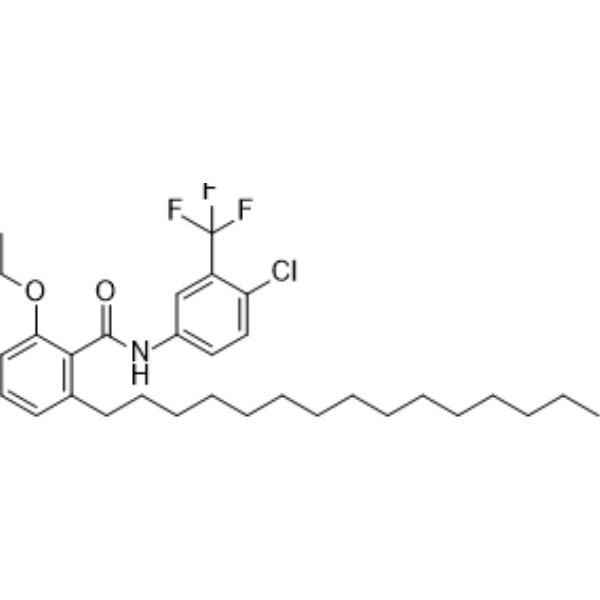
CTPB is a good activator of p300 histone acetyl transferase (HAT) enzyme.
For research use only. We do not sell to patients.
- Purity : 98.0%
- CAS No.: 586976-24-1
- Formula: C31H43ClF3NO2
- Molecular Weight:554.13
-
Storage:Powder -20°C, 3 years , 4°C, 2 years ; In solvent -80°C, 2 years , -20°C, 1 year

To place orders, for customer services and technical support, please contact: MedChemExpress USA
Tel: 609-228-6898 E-mail: [email protected] [email protected]


-
 Biological Activity
-
Chemical Information
-
Solvent & Solubility
- Purity & Documentation
- References
-
 Help & FAQs


-
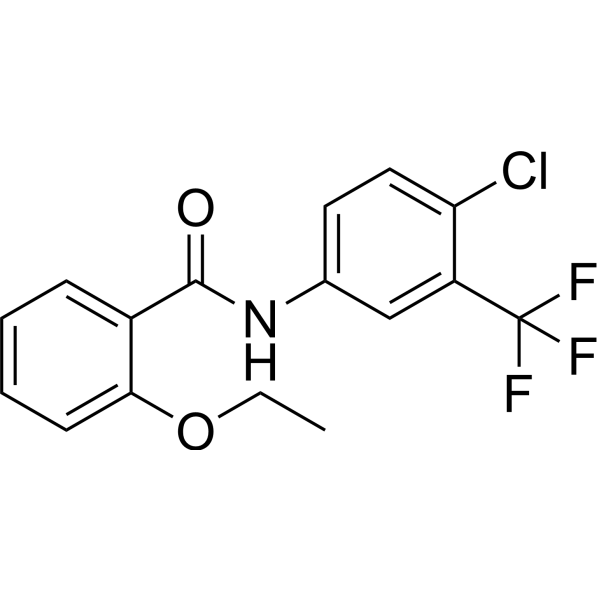
HY-134964
CTBp300 Activator -
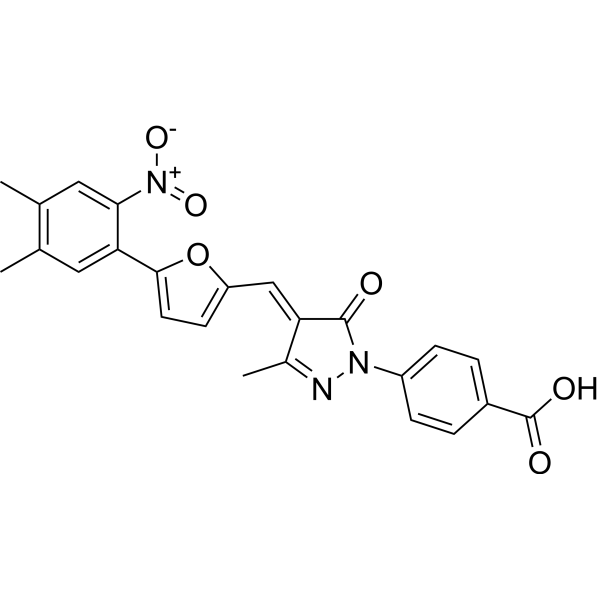
HY-13823
C646p300/CBP HAT Inhibitor -
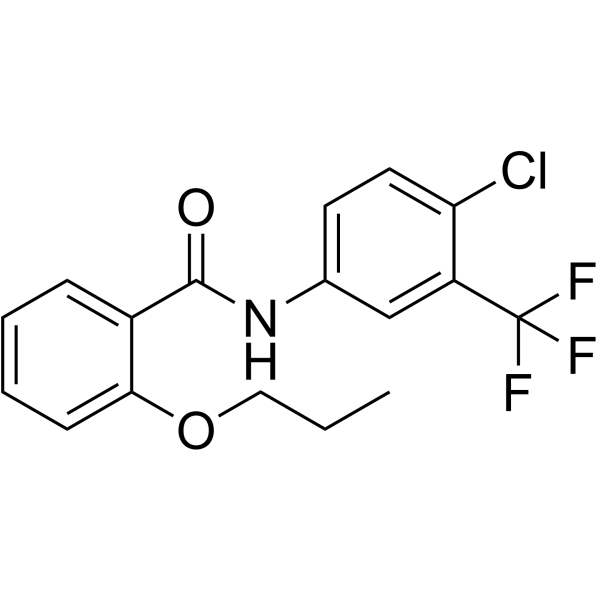
HY-116673
TTK21CBP/p300 Activator -
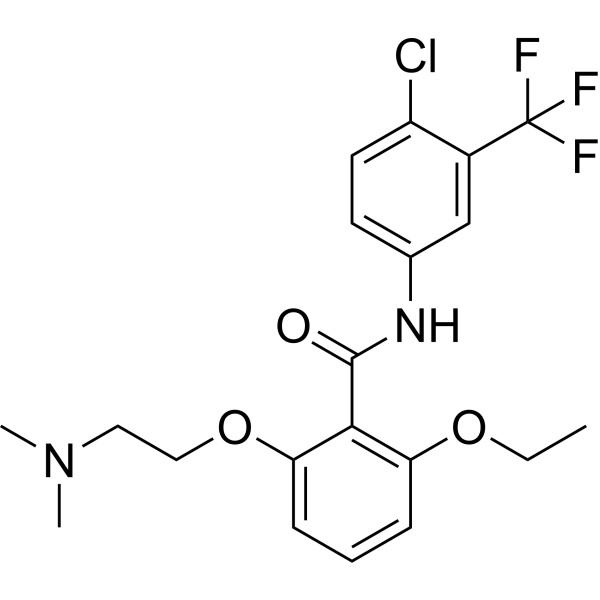
HY-16531
YF-2Histone Acetyltransferase -
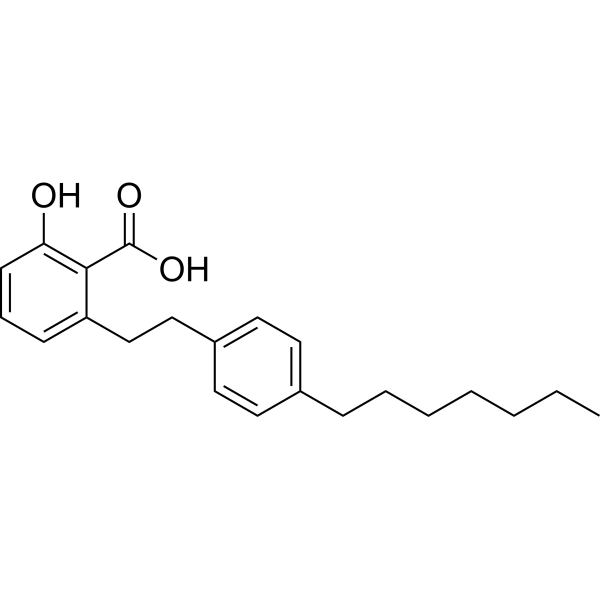
HY-15887
MG 149Tip60 Inhibitor -
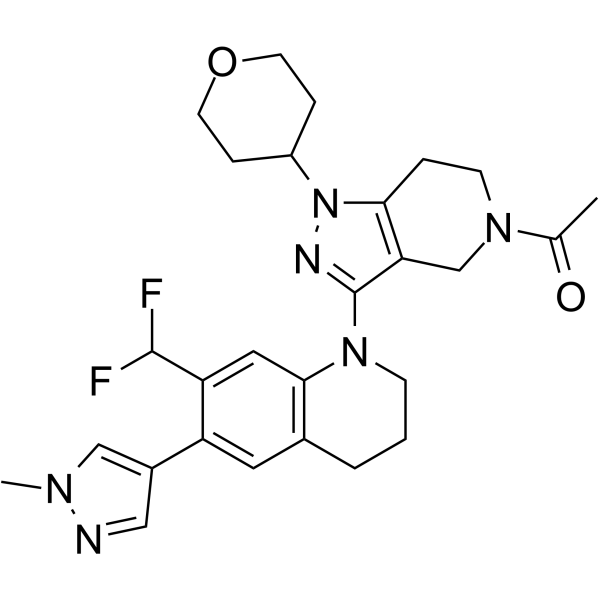
HY-108435
GNE-049CBP Inhibitor -
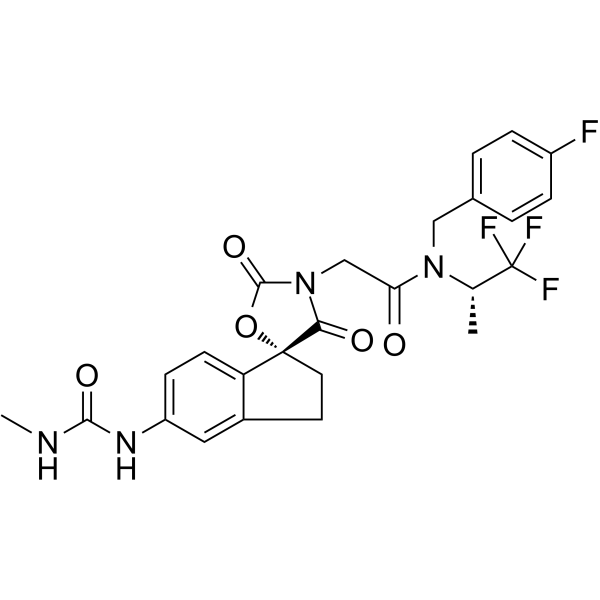
HY-107455
A-485p300/CBP Inhibitor -
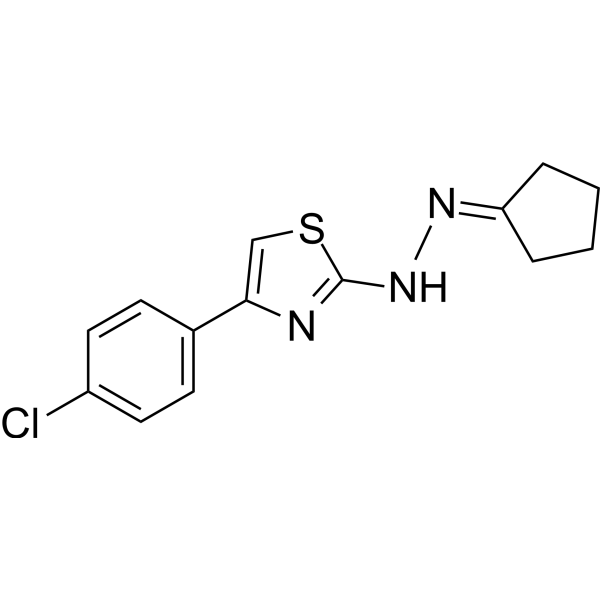
HY-W013274
CPTH2Histone Acetyltransferase Inhibitor -
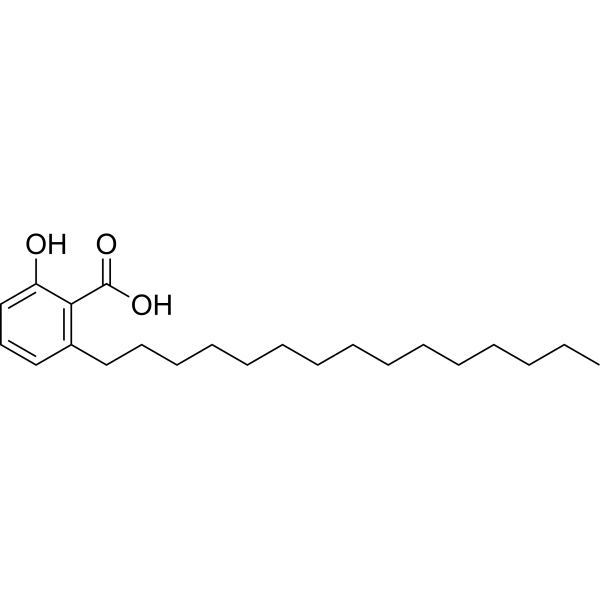
HY-N2020
Anacardic AcidHistone Acetyltransferase Inhibitor -
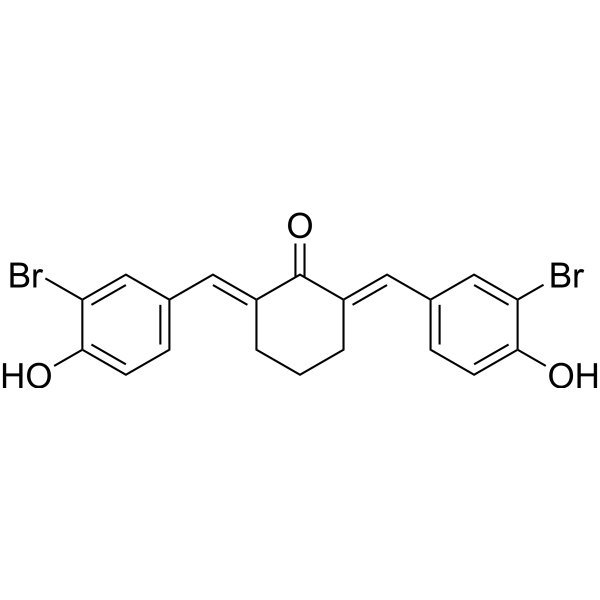
HY-100734
Histone Acetyltransferase Inhibitor IIp300 Histone Acetyltransferase Inhibitor -
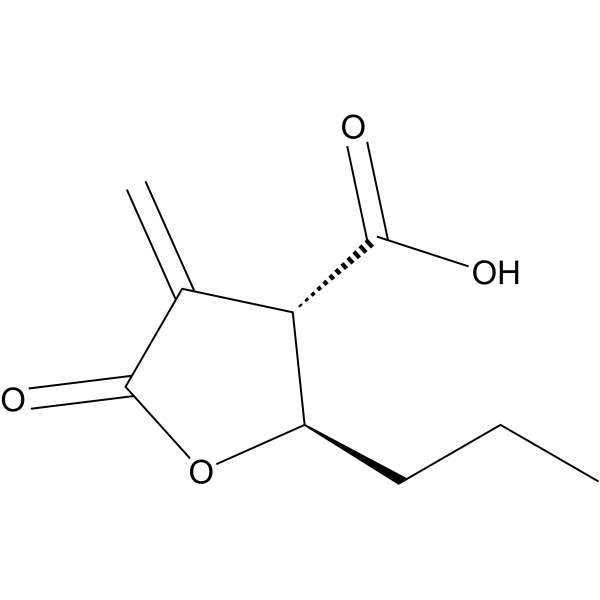
HY-129039
Butyrolactone 3Gcn5 Inhibitor -
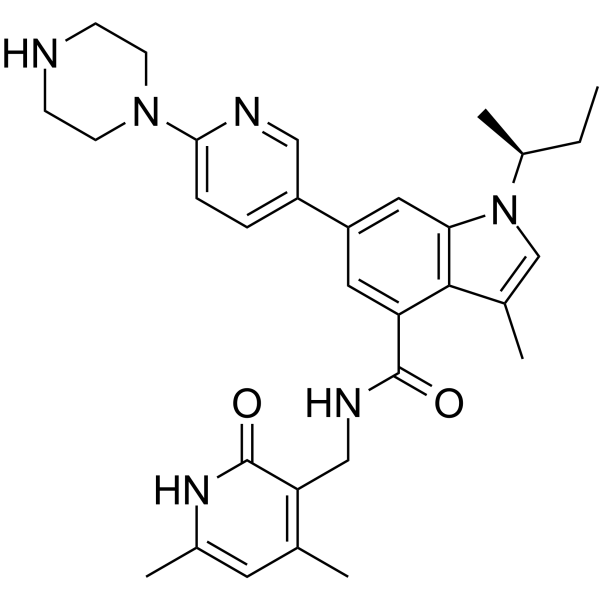
HY-13470
GSK126EZH2 Inhibitor
Publications Citing Use of MedChemExpress (MCE) CTPB
More

Biological Activity
Description
IC50 & Target
[1]|
CBP/p300 |
Cellular Effect
|
Cell Line

|
Type | Value | Description | References |
|---|---|---|---|---|
| Sf21 | IC50 |
275 μM
Compound: 4.2; CTPB
|
Inhibition of full length recombinant human His6-tagged p300 expressed in baculovirus infected Sf21 cells using N-terminal H3 peptide substrate after 10 mins by radiometric filter binding assay in presence of [3H]acetyl-CoA
Inhibition of full length recombinant human His6-tagged p300 expressed in baculovirus infected Sf21 cells using N-terminal H3 peptide substrate after 10 mins by radiometric filter binding assay in presence of [3H]acetyl-CoA
|
[PMID: 26701186] |
In Vitro
CTPB is a synthetic HAT activator, which promotes the transcription by increasing the H3 and H4 acetylation in nucleosome[1].
MedChemExpress (MCE) has not independently confirmed the accuracy of these methods. They are for reference only. .


Chemical Information
-
CAS No. 586976-24-1
-
Appearance Solid
-
Molecular Weight 554.13
-
Formula C31H43ClF3NO2
-
Color White to light yellow
-
SMILES
O=C(NC1=CC=C(Cl)C(C(F)(F)F)=C1)C2=C(CCCCCCCCCCCCCCC)C=CC=C2OCC
-
Shipping
Room temperature in continental US; may vary elsewhere.
-
Storage
Powder -20°C 3 years 4°C 2 years In solvent -80°C 2 years -20°C 1 year


Publications (5)
-
Journal Impact Factor
-
Most Recent
-
Adv Sci (Weinh)
Identification of A p300-SP1-BRD4 Transcriptional Axis as a Key Driver of AR Hyperactivation in Polycystic Ovarian Syndrome. [Abstract]2026 Apr;13(23):e18185. PMID: 41684293 -
Phytomedicine
Si-Ni-San inhibits hepatic Fasn expression and lipid accumulation in MAFLD mice through AMPK/p300/SREBP-1c axis. [Abstract]2024 Jan:123:155209. PMID: 37984123 -
Cells
2020 Jun 10;9(6):1447. PMID: 32532133 -
Onco Targets Ther
CCNB1 Expedites the Progression of Cervical Squamous Cell Carcinoma via the Regulation by FOXM1. [Abstract]2020 Dec 1:13:12383-12395. PMID: 33299327 -
bioRxiv
Targeting Monoallelic CREBBP / EP300 Mutations in Germinal Center-Derived B-Cell Lymphoma with a First-in-Class Histone Acetyltransferase Activator. [Abstract]2025 Mar 15:2025.03.13.642871. PMID: 40161591


Solvent & Solubility
In Vitro:
DMSO : 62.5 mg/mL (112.79 mM; Need ultrasonic; Hygroscopic DMSO has a significant impact on the solubility of product, please use newly opened DMSO)
Please refer to the solubility information to select the appropriate solvent. Once prepared, please aliquot and store the solution to prevent product inactivation from repeated freeze-thaw cycles.
Storage method and period of stock solution: -80°C, 2 years; -20°C, 1 year. When stored at -80°C, please use it within 2 years. When stored at -20°C, please use it within 1 year.
Please refer to the solubility information to select the appropriate solvent. Once prepared, please aliquot and store the solution to prevent product inactivation from repeated freeze-thaw cycles.
Storage method and period of stock solution: -80°C, 2 years; -20°C, 1 year. When stored at -80°C, please use it within 2 years. When stored at -20°C, please use it within 1 year.
Concentration (start) × Volume (start) = Concentration (final) × Volume (final)
In Vivo:
Select the appropriate dissolution method based on your experimental animal and administration route.
- For the following dissolution methods, please ensure to first prepare a clear stock solution using an In Vitro approach and then sequentially add co-solvents:
- To ensure reliable experimental results, the clarified stock solution can be appropriately stored based on storage conditions. As for the working solution for In Vivo experiments, it is recommended to prepare freshly and use it on the same day.
- The percentages shown for the solvents indicate their volumetric ratio in the final prepared solution. If precipitation or phase separation occurs during preparation, heat and/or sonication can be used to aid dissolution.
Add each solvent one by one: 10% DMSO 40% PEG300 5% Tween-80 45% Saline
Solubility: 2.08 mg/mL (3.75 mM); Suspended solution; Need ultrasonic
This protocol yields a suspended solution of 2.08 mg/mL. Suspended solution can be used for oral and intraperitoneal injection.
Taking 1 mL working solution as an example, add 100 μL DMSO stock solution (20.8 mg/mL) to 400 μL PEG300, and mix evenly; then add 50 μL Tween-80 and mix evenly; then add 450 μL Saline to adjust the volume to 1 mL.
Preparation of Saline: Dissolve 0.9 g sodium chloride in ddH₂O and dilute to 100 mL to obtain a clear Saline solution.
Add each solvent one by one: 10% DMSO 90% (20% SBE-β-CD in Saline)
Solubility: ≥ 2.08 mg/mL (3.75 mM); Clear solution
This protocol yields a clear solution of ≥ 2.08 mg/mL (saturation unknown).
Taking 1 mL working solution as an example, add 100 μL DMSO stock solution (20.8 mg/mL) to 900 μL 20% SBE-β-CD in Saline, and mix evenly.
Preparation of 20% SBE-β-CD in Saline (4°C, storage for one week): 2 g SBE-β-CD powder is dissolved in 10 mL Saline, completely dissolve until clear.
In Vivo Dissolution Calculator
Please enter the basic information of animal experiments:
-
-
-
-
Recommended: Prepare an additional quantity of animals to account for potential losses during experiments.
Please enter your animal formula composition:
-
%DMSO +
Recommended: Keep the proportion of DMSO in working solution below 2% if your animal is weak.
-
%+
-
+%Tween-80 + +
-
%Saline +
The co-solvents required include: DMSO, . All of co-solvents are available by MedChemExpress (MCE). , Tween 80. All of co-solvents are available by MedChemExpress (MCE).
Working solution concentration: 0.22 mg/mL
Method for preparing stock solution: mg drug dissolved in μL DMSO. Stock solution concentration: mg/mL.
1. Take μL DMSO stock solution;
2. Add μL .
μL , mix evenly;
3. Then add μL Tween 80, mix evenly;
4. Then add μL
Please ensure that the stock solution in the first step is dissolved to a clear state, and add co-solvents in sequence. You can use ultrasonic heating (ultrasonic cleaner, recommended frequency 20-40 kHz), vortexing, etc. to assist dissolution.


Purity & Documentation
-
Data Sheet (271 KB)
-
SDS (393 KB)
- English - EN (393 KB)
- Français - FR (393 KB)
- Deutsch - DE (393 KB)
- Norwegian - NO (393 KB)
- Español - ES (393 KB)
- Swedish - SV (393 KB)
- Italian - IT (393 KB)
- Korean - KR (393 KB)
- Portuguese - PT (393 KB)
-
Handling Instructions (2659 KB)
References
[1]. Sivanandam M, et al. Investigation of activation mechanism and conformational stability of N-(4-chloro-3-trifluoromethyl-phenyl)-2-ethoxybenzamide and N-(4-chloro-3-trifluoromethyl-phenyl)-2-ethoxy-6-pentadecyl-benzamidein the active site of p300 histone acetyl transferase enzyme by molecular dynamics and binding free-energy studies. J Biomol Struct Dyn. 2018 Oct 9:1-38. [Content Brief]


Complete Stock Solution Preparation Table
Please refer to the solubility information to select the appropriate solvent. Once prepared, please aliquot and store the solution to prevent product inactivation from repeated freeze-thaw cycles.
Storage method and period of stock solution: -80°C, 2 years; -20°C, 1 year. When stored at -80°C, please use it within 2 years. When stored at -20°C, please use it within 1 year.
| Optional Solvent | Concentration Solvent Mass | 1 mg | 5 mg | 10 mg | 25 mg |
|---|---|---|---|---|---|
| DMSO | 1 mM | 1.8046 mL | 9.0232 mL | 18.0463 mL | 45.1158 mL |
| 5 mM | 0.3609 mL | 1.8046 mL | 3.6093 mL | 9.0232 mL | |
| 10 mM | 0.1805 mL | 0.9023 mL | 1.8046 mL | 4.5116 mL | |
| 15 mM | 0.1203 mL | 0.6015 mL | 1.2031 mL | 3.0077 mL | |
| 20 mM | 0.0902 mL | 0.4512 mL | 0.9023 mL | 2.2558 mL | |
| 25 mM | 0.0722 mL | 0.3609 mL | 0.7219 mL | 1.8046 mL | |
| 30 mM | 0.0602 mL | 0.3008 mL | 0.6015 mL | 1.5039 mL | |
| 40 mM | 0.0451 mL | 0.2256 mL | 0.4512 mL | 1.1279 mL | |
| 50 mM | 0.0361 mL | 0.1805 mL | 0.3609 mL | 0.9023 mL | |
| 60 mM | 0.0301 mL | 0.1504 mL | 0.3008 mL | 0.7519 mL | |
| 80 mM | 0.0226 mL | 0.1128 mL | 0.2256 mL | 0.5639 mL | |
| 100 mM | 0.0180 mL | 0.0902 mL | 0.1805 mL | 0.4512 mL |


CTPB Related Classifications
HY-124960 Related Classifications
 Powered by Bioz