



Akt
PKB; Protein kinase B
Akt/PKB (Protein kinase B), a serine/threonine protein kinase with antiapoptotic activity, is one of the major downstream targets of PtdIns(3,4,5)P3 signaling pathway. It contains a pleckstrin homology domain (PH domain) that specifically binds PtdIns(3,4,5)P3 on the plasma membrane. Akt phosphorylation and activation are directly determined by the level of PtdIns(3,4,5)P3 on the plasma membrane, which is regulated by PI3K.
Akt consists of three isoforms: PKBα/Akt1, PKBβ/Akt2 and PKBγ/Akt3. Akt isoforms have an N-terminal PH (pleckstrin homology) domain and a kinase domain, which are separated by a 39-amino-acid hinge region. Catalytically active Akt regulates the function of numerous substrates involved in cell survival, growth, proliferation, metabolism and protein synthesis.
Akt is a crucial mediator of cell survival and its deactivation is implicated in various stress-induced pathological cell death and degenerative diseases.
Akt Isoform Specific Products
All Product Categories
-
Akt Inhibitors
(965)
View all products
-
Akt Agonists
(7)
View all products
-
Akt Activators
(287)
View all products
-
Akt Modulators
(23)
View all products
-
Akt Chemical
(1)
View all products
-
Akt Inducers
(9)
View all products
-
Akt Degraders
(9)
View all products
-
Akt Control
(1)
View all products
-
Akt Ligands
(6)
View all products
-
AKT Serine/Threonine Kinase 2 (AKT2) Proteins
(5)
View all products
-
AKT Serine/Threonine Kinase 3 (AKT3) Proteins
(6)
View all products
-
Akt Related Products (1417)
Related Products (1417)

-
Recombinant Proteins (11)
-
Antibodies (11)
-
Akt Isoform Comparison
-
Oxaprozin potassium
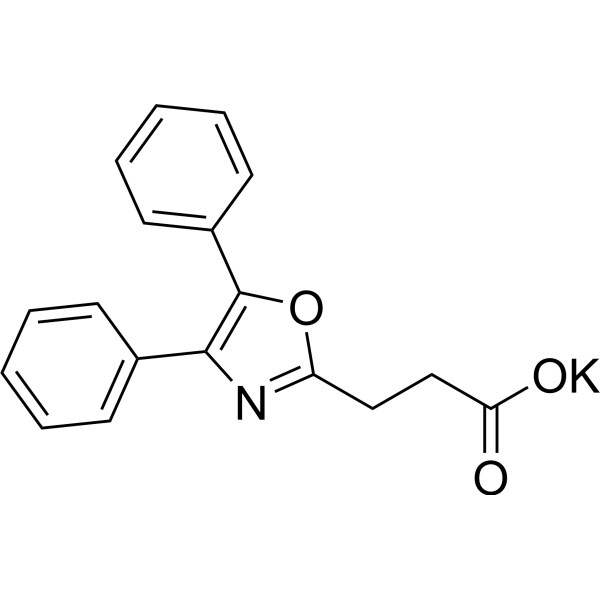 0 ImagesCat. No.: HY-B0808ACAS No.: 174064-08-5Synonyms: Oxaprozinum potassium; Wy21743 potassiumOxaprozin potassium is an orally active and potent COX inhibitor, with IC50 values of 2.2 μM for human platelet COX-1 and and 36 μM for IL-1-stimulated human synovial cell COX-2, respectively. Oxaprozin potassium also inhibits the activation of NF-κB. Oxaprozin potassium induces cell apoptosis. Oxaprozin potassium shows anti-inflammatory activity. Oxaprozin potassium-mediated inhibition of the Akt/IKK/NF-κB pathway contributes to its anti-inflammatory properties.
-
Anticancer agent 319
 0 ImagesCat. No.: HY-183316Anticancer agent 319 is an anticancer agent. Anticancer agent 319 inhibits the proliferation of liver cancer cells. Anticancer agent 319 inhibits AKT phosphorylation and blocks the PI3K/AKT signaling axis; meanwhile, it inhibits ERK1/2 phosphorylation and blocks the MAPK/ERK signaling axis. Anticancer agent 319 induces G2/M phase cell cycle arrest, triggers apoptosis, and reduces mitochondrial membrane potential in liver cancer cells. Anticancer agent 319 can be used for the research of hepatocellular carcinoma.
-
FLT3-IN-36
 0 ImagesCat. No.: HY-178996FLT3-IN-36 is a potent FLT3 inhibitor. FLT3-IN-36 exhibits antitumor activity against FLT3-mutated acute myeloid leukemia (AML) cells. FLT3-IN-36 induces cell cycle arrest, reduces mitochondrial membrane potential, and induces apoptosis, downregulating FLT3 and downstream protein expression (including AKT, ERK, PI3K, and STAT5). FLT3-IN-36 can be used for AML research.
-
LQEQ-19 (mouse, rat)
 0 ImagesCat. No.: HY-P11130CAS No.: 322644-72-4LQEQ-19 (mouse, rat) is a VGF derived peptide that exerts neuroprotective effects. LQEQ-19 (mouse, rat) activates the PI3K/Akt and MEK/ERK signaling pathways by promoting phosphorylation of Akt and ERK1/2. LQEQ-19 (mouse, rat) is commonly used in the study of neurological conditions.
-
L-Valine-d1
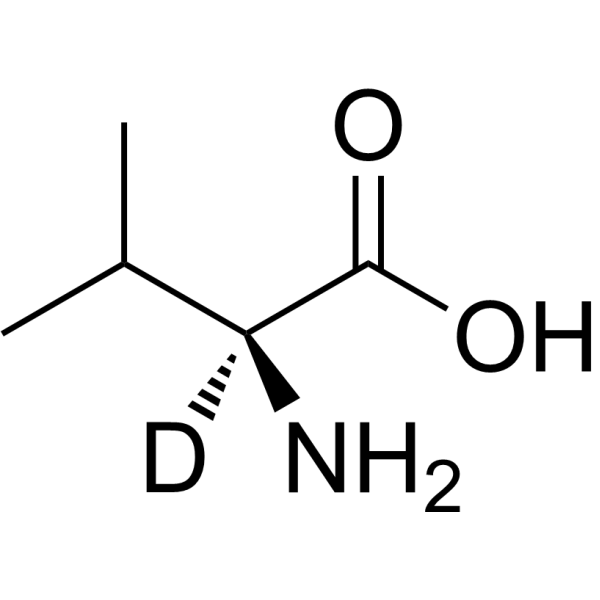 0 ImagesSynonyms: (S)-Valine-d1L-Valine-d1 ((S)-Valine-d1) is the deuterium labeled L-Valine (HY-N0717). L-Valine ((S)-Valine) is a nonlinear semiorganic material. L-Valine causes lipid peroxidation and accumulation of malondialdehyde (MDA), exhibits inhibitory activity against cyanobacteria. L-Valine inhibits multidrug-resistant bacteria through activation of PI3K/Akt signaling pathway and inhibition of arginase.
-
EGFR AUTOTAC-1
 0 ImagesCat. No.: HY-187533EGFR AUTOTAC-1 is a p62/SQSTM1-directed EGFR AUTOTAC degrader. EGFR AUTOTAC-1 recruits p62 to form a ternary complex, activates the ubiquitin-proteasome system-independent Atg5-dependent autophagy-lysosome pathway, mediates autophagic degradation of EGFR and inhibits the AKT/ERK signaling pathway, thereby promoting apoptosis and activating autophagy. EGFR AUTOTAC-1 can be used for the research of non-small cell lung cancer.(Pink: EGFR ligand (HY-79511); Blue: p62 ligand (HY-187557); Black: Linker)
-
NL13
 0 ImagesCat. No.: HY-162895NL13 is a Polo-like kinase 4 (PLK4) inhibitor with an IC50 value of 2.32 μM. NL13 can inhibit the viability of PC3 and DU145 prostate cancer cells, with IC50 values of 3.51 μM and 2.53 μM, respectively. NL13 can lead to the inactivation of the AKT signaling pathway by downregulating CCNB1/CDK1, inducing G2/M cell cycle arrest, and triggering apoptosis through the cleavage of caspase-9/caspase-3. In prostate cancer mice, NL13 can inhibit tumor growth.
-
SHIP1-IN-1
 0 ImagesSHIP1-IN-1 is an orally active, blood-brain barrier-permeable SHIP1 ligand. SHIP1-IN-1 exhibits IC50 values of 384 μM and 177 μM against human SHIP1, and an IC50 value of 379 μM against murine SHIP1. SHIP1-IN-1 alters the binding state of SHIP1 to phosphatidylinositol membranes, and regulates phosphoinositide pools and phosphorylated AKT levels. SHIP1-IN-1 enhances the uptake of myelin/membrane fragments and amyloid proteins by microglia, alters gene expression and reduces IL-1β levels. SHIP1-IN-1 can be used in studies related to Alzheimer's disease.
-
PI3K/Akt/mTOR-IN-4
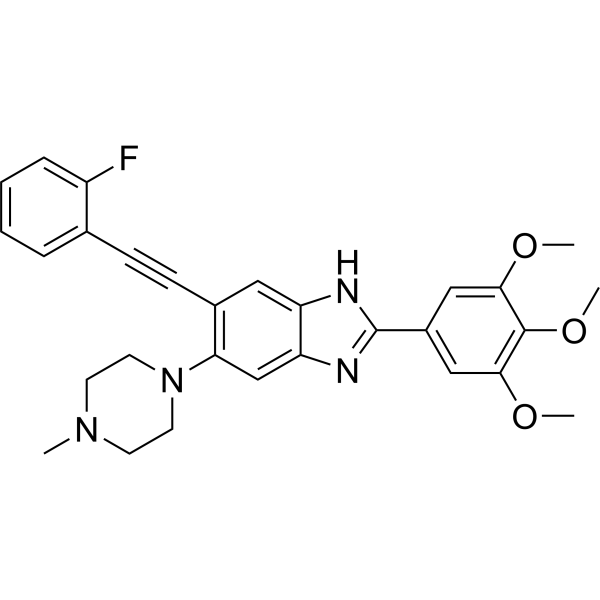 0 ImagesCat. No.: HY-163511PI3K/Akt/mTOR-IN-4 (compound 4r) is a potent PI3K/Akt/mTOR and tubulin polymerization inhibitor. PI3K/Akt/mTOR-IN-4 induce apoptosis and cell cycle arrest at G2/M phase. PI3K/Akt/mTOR-IN-4 decreases the expression of p-PI3K, p-Akt, and p-mTOR, β-tubulin.
-
Ki11502
 0 ImagesKi11502 is a multi-targeted receptor tyrosine kinase (RTK) inhibitor that selectively inhibits the activity of PDGF β/α receptors with IC50 values less than 10 nM. Ki11502 selectively inhibits PDGF β receptor phosphorylation, proliferation, and proteoglycan synthesis in human vascular smooth muscle cells. Ki11502 can induce Apoptosis) and exhibits profound antiproliferative effects on select subsets of leukemia, including those with Imatinib (HY-15463) resistant mutations. Ki11502 is highly suitable for studying the role of PDGF in vascular diseases, particularly the role of proteoglycans in atherosclerosis.
-
VVD-484
 0 ImagesCat. No.: HY-185205CAS No.: 3055745-21-3VVD-484 is a PI3K p110α inhibitor with an IC50 of 0.59 μM against human targets.,VVD-484, classified as a "silent ligand", forms a covalent bond with Cys242 of PI3K p110α without disrupting the p110α-KRASG12C interaction. VVD-484 inhibits phosphorylation (S473) of AKT via a RAS-independent pathway. VVD-484 can be used in the research of HER2-overexpressing cancers.
-
Pachymic acid (Standard)
 0 ImagesCat. No.: HY-N0371RCAS No.: 29070-92-6Synonyms: 3-O-Acetyltumulosic acid (Standard)
-
TAT-N15
 0 ImagesCat. No.: HY-P10854CAS No.: 2415370-74-8TAT-N15 is a p55PIK inhibitor with remarkable anti-inflammatory activity and neuroprotective effects. TAT-N15 can significantly inhibit the activation of IL-6, IL-8, Akt, and NF-κB pathways, as well as suppress the protein expression of phosphorylated STAT3 and NF-κB. By inhibiting the activation of Akt, STAT3, and NF-κB pathways, TAT-N15 is used in research on acute conjunctivitis, allergic rhinitis, chronic obstructive pulmonary disease (COPD), and stroke.
-
CK37
 0 ImagesCat. No.: HY-101145CAS No.: 1001478-90-5CK37 is a competitive choline kinase-α inhibitor. CK37 inhibits purified recombinant human choline kinase-α activity. CK37 suppresses MAPK and PI3K/AKT signaling, disrupts actin cytoskeletal organization. CK37 diminishs activating phosphorylations of ERK. CK37 exhibits anticancer activity against cervical cancer, melanoma, Lewis lung carcinoma, lung adenocarcinoma, breast cancer, and leukemia.
-
PPM-18
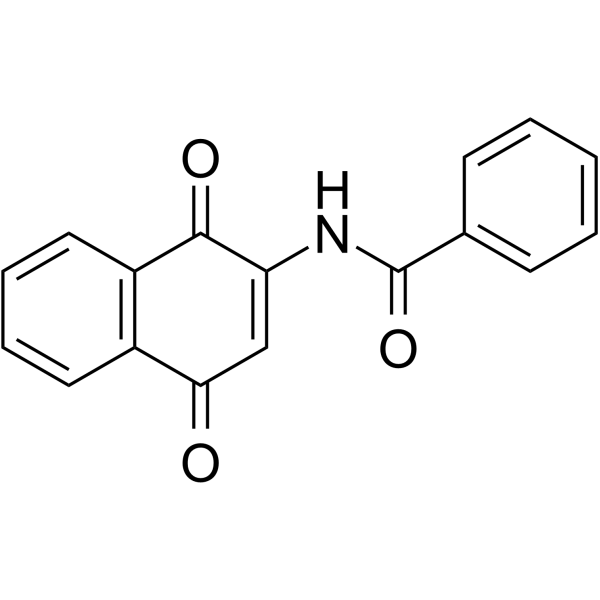 0 ImagesSynonyms: NSC 73233PPM-18 (NSC 73233) is a Vitamin K (HY-B2172) analog. PPM-18 prevents LPS-induced IκBα degradation, thereby inhibiting NF-κB activation and nuclear translocation of NF-κB. PPM-18 inhibits LPS-induced nitrite production and iNOS expression. PPM-18 inhibits HDAC6. PPM-18 induces ROS accumulation, activates AMPK, inhibits the mTORC1 and PI3K/AKT pathways, initiates Autophagy, and induces Apoptosis. PPM-18 suppresses seizures in zebrafish and mouse epilepsy models. PPM-18 prevents LPS-induced lethal toxicity and delayed hypotension. PPM-18 exhibits anticancer activity against leukemia and bladder cancer. PPM-18 can be used in research related to septic shock, bladder cancer and atherosclerosis.
-
Antcin K
 0 ImagesCat. No.: HY-N9980CAS No.: 741268-13-3Antcin K is a selective inhibitor targeting the PI3K/Akt, NF-κB, MEK1/2-ERK, p38 and AP-1 pathways. Antcin K upregulates IL-10 expression, thereby inhibiting the production of pro-inflammatory factors, blocking monocyte adhesion, reducing tissue damage, and promoting myogenesis. Antcin K has significant anti-inflammatory, anti-damage and tissue protective activities. Antcin K is mainly used in the research of inflammation-related diseases such as periodontitis, rheumatoid arthritis, and skeletal muscle injury.
-
Pan-RAS-IN-8
 0 ImagesCat. No.: HY-177762CAS No.: 3103594-37-9Pan-RAS-IN-8 (Page 152, third row, third from left to right) is a pan-RAS inhibitor. Pan-RAS-IN-8 blocks the binding of RAS to downstream effector molecules by forming a ternary complex, thereby inhibiting the activation of the MAPK and PI3K-AKT signaling pathways. Pan-RAS-IN-8 can be used for the research of cancer, inflammatory diseases and autoimmune diseases.
-
PI3K-IN-56
 0 ImagesCat. No.: HY-171558CAS No.: 2633645-58-4PI3K-IN-56 (Compound 1) is an orally active, potent and selective irreversible inhibitor of phosphoinositide 3-kinase (PI3K). PI3K-IN-56 irreversibly blocks the phosphatidylinositol-3,4,5-triphosphate (PIP3) production and downstream AKT signaling pathway. PI3K-IN-56 is promising for research of PI3Kα-driven cancers, such as breast and ovarian cancers.
-
NISC-6
 0 ImagesCat. No.: HY-153685CAS No.: 2097636-49-0NISC-6 is a novel dual Topo-IIα/Akt inhibitor. NISC-6 has inhibitory activity against various cells, such as UACC903 (IC50 = 2.5 µM) and CHL-1 (IC50 = 0.8 µM) cells. NISC-6 dose dependently induces early and late apoptosis. NISC-6 can be used for research on melanoma.
-
KRAS G12D-IN-37
 0 ImagesCat. No.: HY-183355KRAS G12D-IN-37 is a KRASG12D inhibitor. KRAS G12D-IN-37 shows antiproliferative activity against KRASG12D mutant tumor cells and minimal cytotoxicity toward normal cells. KRAS G12D-IN-37 binds stably to KRASG12D via hydrogen bond interactions with residues His 95, Arg 68, and Asp 12, and inhibits downstream ERK/AKT signaling pathways. KRAS G12D-IN-37 elevates ROS levels, induces apoptosis, disrupts mitochondrial membrane potential. KRAS G12D-IN-37 downregulates the level of anti-apoptotic protein Bcl-2, and upregulates the levels of pro-apoptotic proteins Bax and caspase 3. KRAS G12D-IN-37 can be used for the research of cancer, such as gastric adenocarcinoma and colorectal cancer.




