



Apoptosis Activator
-
Plantamajoside (Standard)
 0 ImagesCat. No.: HY-N0031RCAS No.: 104777-68-6
Plantamajoside (Standard) is the analytical standard of Plantamajoside. This product is intended for use in research and analytical applications. Plantamajoside is an orally active phenylpropanoid glycoside. Plantamajoside can be isolated from Plantago asiatica L.(Plantaginaceae). Plantamajoside inactivates NF-κB, PI3K/akt, induces Apoptosis, and improves Autophagy. Plantamajoside regulates MAPK, integrin-linked kinase/c-Src. Plantamajoside inhibits multiple cancers, improves lung and kidney damage. Plantamajoside has neuroprotective and anti-inflammatory effects.
-
CX-5461 hydrochloride
 0 ImagesCat. No.: HY-13323BCAS No.: 2101314-20-7
CX-5461 hydrochloride is a selective, orally active RNA polymerase I inhibitor. CX-5461 hydrochloride disrupts the formation of the SL1-rDNA complex, thereby blocking the transcription initiation of ribosomal RNA without altering the activity of RNA polymerase II, DNA replication, or protein translation processes. CX-5461 hydrochloride upregulates the expression of p21, MDM2, Sestrin1/2, and phosphorylated AMPKα, and reduces the level of phosphorylated Akt. CX-5461 hydrochloride induces G2/G2/M cell cycle arrest, Autophagy, Apoptosis, and cellular senescence, and activates CHK1, CHK2, and RPA. CX-5461 hydrochloride can be used in research related to osteosarcoma, cervical cancer, hematologic malignancies, high-grade serous ovarian cancer, and solid tumors.
-
FI-700
 0 ImagesCat. No.: HY-111268CAS No.: 866883-79-6
FI-700 is an orally active FLT3 inhibitor with an IC50 of 20 nM. FI-700 induces G1 phase cell cycle arrest by inhibiting autophosphorylation of mutant FLT3 and the downstream STAT5/MAPK pathway. FI-700 triggers the mitochondrial apoptosis pathway by downregulating anti-apoptotic proteins Mcl-1 and Bcl-XL, altering the conformation of Bax, and activating caspase-3. FI-700 can be used in research related to acute myeloid leukemia.
-
Oxcarbazepine-d4
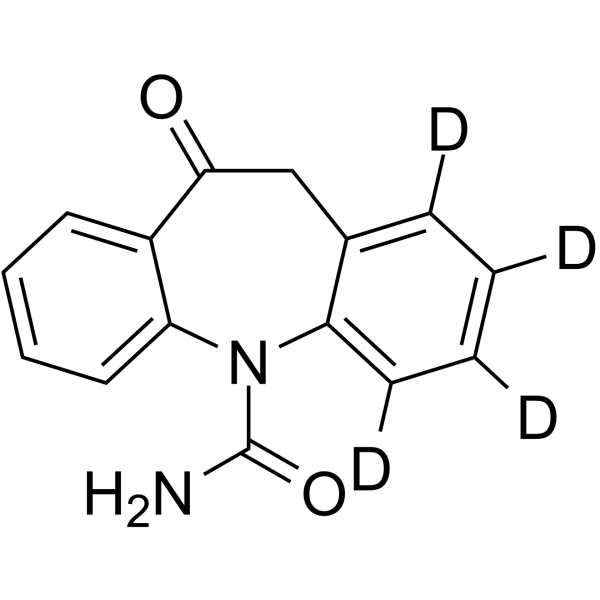 0 ImagesCat. No.: HY-B0114SCAS No.: 1020719-71-4Synonyms: GP 47680-d4
Oxcarbazepine-d4 (GP 47680-D4) is the deuterium labeled Oxcarbazepine. Oxcarbazepine is a sodium channel blocker. Oxcarbazepine significantly inhibits glioblastoma cell growth and induces apoptosis or G2/M arrest in glioblastoma cell lines. Anti-cancer and anticonvulsant effects.
-
SKF-83566 (Standard)
 0 ImagesCat. No.: HY-103430ARCAS No.: 99295-33-7
SKF-83566 (Standard) is the analytical standard of SKF-83566 (HY-103430A). This product is intended for research and analytical applications. SKF-83566 is an orally active, blood-brain barrier-permeable D1/D5 dopamine receptor antagonist with a Ki value of approximately 0.4-0.56 nM. SKF-83566 modulates locomotor behavior and spatial memory by blocking D1 receptors and inhibits glioblastoma progression by targeting the DRD1/c-Myc/UHRF1 pathway. SKF-83566 acts as an inhibitor of the dopamine transporter (DAT) and adenylyl cyclase 2 (AC2). SKF-83566 competitively binds to DAT to inhibit dopamine reuptake and non-competitively inhibits AC2 activity, thereby reducing cAMP accumulation. SKF-83566 is used in research areas such as dopaminergic system mechanisms, learning and memory, targeted intervention for glioblastoma, AC2 pathophysiology, antiparasitic drug screening, and synaptic plasticity (the "gating effect").
-
Antiproliferative agent-42
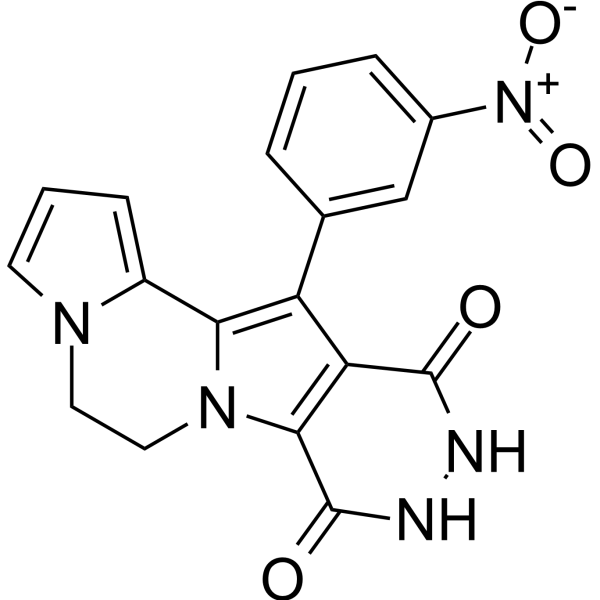 0 ImagesCat. No.: HY-155402CAS No.: 3002404-74-9
Antiproliferative agent-42 (compound 7m) is a dihydrodipyrrolo compound. Antiproliferative agent-42 showed antiproliferative activity against Panc-1 cell line with an IC50 value of 12.54 μM.
-
L-Azetidine-2-carboxylic acid (Standard)
 0 Images
L-Azetidine-2-carboxylic acid is a proline analog. L-Azetidine-2-carboxylic acid upregulates the lipid autophagy marker LC3-II via activation of the PERK pathway. L-Azetidine-2-carboxylic acid increases pro-apoptotic BAX protein. L-Azetidine-2-carboxylic acid induces ATF6 cleavage and upregulates phosphorylated eIF2α levels. L-Azetidine-2-carboxylic acid induces ER stress, inducing protein misfolding and aggregation. L-Azetidine-2-carboxylic acid shows teratogenic, pro-inflammatory and pro-apoptotic effects.
-
6-Azuridine (Standard)
 0 ImagesSynonyms: 6-Azauridine (Standard)
6-Azuridine (Standard) is the analytical standard of 6-Azuridine. This product is intended for research and analytical applications. 6-Azuridine (6-Azauridine) is an orally active purine nucleoside analogue. 6-Azuridine activates autophagic flux, induces Apoptosis that depends on AMPK and p53. 6-Azuridine exhibit both antitumor and antiviral activities.
-
ML-7
 0 ImagesCat. No.: HY-119038CAS No.: 109376-83-2
ML-7 is a selective and highly specific myosin light chain kinase (MLCK) inhibitor that acts as a trabecular meshwork (TM) relaxant. ML-7 enhances Quinocetone (HY-123581)-induced phosphorylation of ERK, p38 MAPK and JNK, attenuates Akt activation, and promotes apoptosis of hepatocellular carcinoma cells. ML-7 reduces Th2 cytokine secretion by inhibiting MLCK, while alleviating smooth muscle hyperplasia and collagen deposition. As a non-antibiotic adjuvant, ML-7 restores the sensitivity of drug-resistant bacteria to Tigecycline (HY-B0117). ML-7 can be used in research related to glaucoma, hepatocellular carcinoma, asthma, and Klebsiella pneumoniae infection.
-
H2L5186303 (Standard)
 0 ImagesCat. No.: HY-107616RCAS No.: 139262-76-3
H2L5186303 (Standard) is the analytical standard of H2L5186303 (HY-107616). This product is intended for research and analytical applications. H2L5186303 is a potent and selective LPA2 receptor antagonist with an IC50 of 9 nM. H2L5186303 promotes Apoptosis. H2L5186303 inhibits cell proliferation and motility. H2L5186303 has anti-inflammatory effects.
-
MMI-166
 0 ImagesCat. No.: HY-183408CAS No.: 193809-84-6
MMI-166 is an orally active selective matrix metalloproteinase (MMP) inhibitor (MMP-2 (IC50 = 2 nM), MMP-9 (IC50 = 53 nM)). MMI-166 can prevent tumor invasion, metastasis and angiogenic, and promotes apoptosis. MMI-166 dose not only directly inhibits the enzymatic activity of MMP-2 and MMP-9 but also downregulates their protein synthesis and expression levels at the post-transcriptional level. MMI-166 can be used in research on colon cancer, head and neck squamous cell carcinoma, microglioma, lung cancer, and pancreatic cancer.
-
Sphingosine
 0 ImagesCat. No.: HY-165550CAS No.: 134053-67-1Synonyms: C22-D-erythro-Sphingosine
Sphingosine (C22-D-erythro-Sphingosine) is a metabolite of sphingolipid and a pro-Apoptotic signaling messenger. Sphingosine induces apoptosis via Caspase-dependent, mitochondria-dependent and lysosomal affinity detergent pathways, downregulates Bcl-2 and Bcl-xL, and truncates Bid and Bax. Sphingosine is used for cancer research.
-
Pipoxolan
 0 ImagesCat. No.: HY-105854ACAS No.: 23744-24-3
Pipoxolan is an orally active smooth muscle relaxant, anti-inflammatory agent and anticancer agent. Pipoxolan modulates PI3K/AKT signaling pathways, and reduces the levels of Ras/MEK/p-ERK, MMP-2 and MMP-9. Pipoxolan inhibits pro-inflammatory transcription factor pathways, activates Nrf2/HO-1, and suppresses the production of pro-inflammatory mediators. Pipoxolan induces ROS generation, endogenous mitochondrial Apoptosis, and G0/G1 cell cycle arrest. Pipoxolan reduces cerebral infarction size and inhibits intimal hyperplasia. Pipoxolan can be used in research related to cerebral ischemia, intimal hyperplasia, oral squamous cell carcinoma, leukemia and lung cancer.
-
Famitinib (Standard)
 0 ImagesCat. No.: HY-108713RCAS No.: 1044040-56-3Synonyms: SHR1020 (Standard)
Famitinib (Standard) is the analytical standard of Famitinib. This product is intended for research and analytical applications. Famitinib (SHR1020), an orally active multi-targeted kinase inhibitor, inhibits the activity of c-kit, VEGFR-2 and PDGFRβ with IC50 values of 2.3 nM, 4.7 nM and 6.6 nM, respectively. Famitinib exerts powerful antitumor activity in human gastric cancer cells and xenografts. Famitinib triggers apoptosis.
-
Iproniazid (Standard)
 0 Images
Iproniazid (Standard) is the analytical standard of Iproniazid (HY-B0886A). This product is intended for research and analytical applications. Iproniazid is an orally active, irreversible, non-selective monoamine oxidase (MAO) inhibitor. Iproniazid inhibits MAO activity and enhances Rotenone (HY-B1756)-induced Apoptosis. Iproniazid modulates neurotransmitter levels, affects neuronal function, induces hepatic necrosis, and interferes with the endocrine system. Iproniazid can be used in the research of depression, Parkinson's disease, and hepatotoxicity.
-
Anticancer agent 253
 0 ImagesCat. No.: HY-116904CAS No.: 1983924-33-9
Anticancer agent 253 (Compound 26) has anti-cancer activity against breast cancer cells, with IC50s of 6 μM (MCF-7), 10 μM (MDA-MB-231) and 6.4 μM (4T1 cells). Anticancer agent 253 arrests cell cycle and induces mitochondria-mediated apoptosis in cancer cells. Anticancer agent 253 inhibits Akt phosphorylation in human breast and prostate cancer.
-
JNJ-16241199 (Standard)
 0 ImagesCat. No.: HY-10226RCAS No.: 604769-01-9Synonyms: R306465 (Standard)
JNJ-16241199 (Standard) is the analytical standard of JNJ-16241199 (HY-10226). This product is intended for research and analytical applications. JNJ-16241199 (R306465) is an orally active, selectivehydroxamate-based histone deacetylase (HDAC) inhibitor, with theIC50of 3.3 nM and 23 nM for HDAC1and HDAC8, respectively.JNJ-16241199induces histone 3 acetylation and strongly increases the expression of p21waf1, cip1 in A2780 ovarian carcinoma cells.JNJ-16241199 inducescell apoptosisand shows anticancer activityin a broad spectrum of human malignancies. JNJ-16241199 can be used for cancer study.
-
N-Hydroxyphthalimide (Standard)
 0 Images
N-Hydroxyphthalimide (Standard) is the analytical standard of N-Hydroxyphthalimide (HY-Y0396). This product is intended for research and analytical applications. N-Hydroxyphthalimide is a blocking agent and catalyst. N-Hydroxyphthalimide promotes oxidation reactions by generating PINO free radicals and activating hydrogen atom transfer processes. N-Hydroxyphthalimide reduces the expression of anti-apoptotic proteins Survivin and Bcl-xL and activates caspase 9 and caspase 3. N-Hydroxyphthalimide induces Apoptosis. N-Hydroxyphthalimide inhibits the phosphorylation of mTOR (Ser2448, Ser2481) and Akt (Ser473). N-Hydroxyphthalimide has anticancer effects against breast and colon cancer.
-
4',5,7,8-Tetrahydroxyflavanone
 0 ImagesCat. No.: HY-W975617CAS No.: 479-54-9Synonyms: Carthamidin
4',5,7,8-Tetrahydroxyflavanone (Carthamidin) is a flavanone pigment. 4',5,7,8-Tetrahydroxyflavanone can be found in Carthamus tinctorius. 4',5,7,8-Tetrahydroxyflavanone induces ROS generation, oxidative stress, Apoptosis-mediated cell death, cell cycle arrest at G0/G1 phase, mitochondrial membrane potential collapse, and LDH leakage. 4',5,7,8-Tetrahydroxyflavanone exhibits anti-inflammatory, antioxidant, and neuroprotective effects, and acts as a reducing and capping agent for gold nanoparticles. 4',5,7,8-Tetrahydroxyflavanone can be used in breast cancer research.
-
Sitamaquine
 0 ImagesCat. No.: HY-19688CAS No.: 57695-04-2Synonyms: WR 6026
Sitamaquine (WR 6026) is an orally active Antileishmanial agent and Succinate dehydrogenase inhibitor. Sitamaquine accumulates in the acidocalcisomes of Leishmania, induces organelle alkalization, and crosses the plasma membrane of Leishmania via temperature- and energy-independent diffusion. Sitamaquine disrupts oxidative phosphorylation in Leishmania, induces mitochondrial depolarization, oxidative stress, elevated intracellular calcium, plasma membrane depolarization, and Apoptosis-like cell death. Sitamaquine can be used in the research of leishmaniasis.



