



Apoptosis Inducer
-
Thalidomide-NH-C13-NH2 hydrochloride
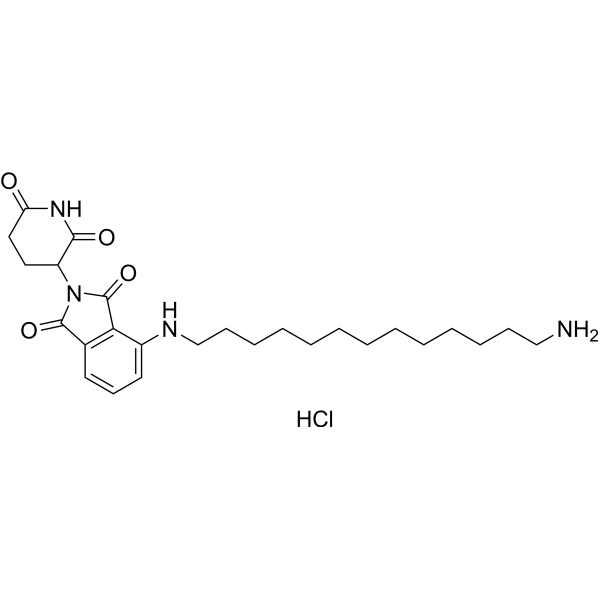 0 ImagesCat. No.: HY-156161Purity: 99.82%
Thalidomide-NH-C13-NH2 hydrochloride is the Thalidomide (HY-10984)-based cereblon ligand used in the recruitment of CRBN protein.Thalidomide-NH-C13-NH2 hydrochloride can be connected to the ligand for protein by a linker to form PROTACs.
-
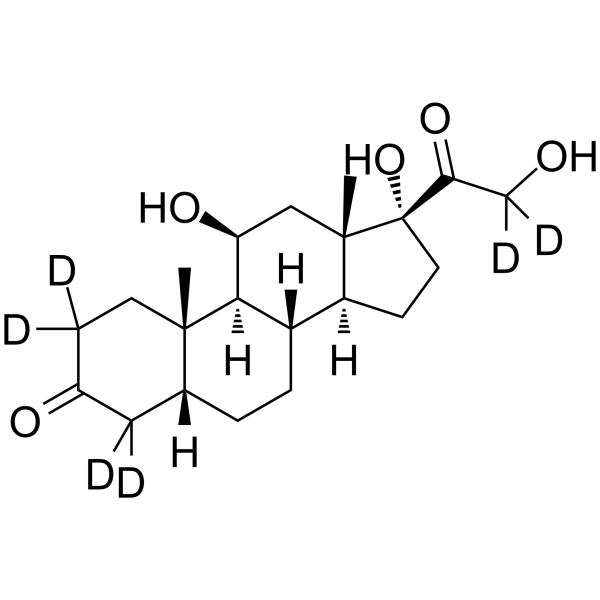
(GalNAc)3-CPT
 0 ImagesCat. No.: HY-175472
(GalNAc)3-CPT is a glycoconjugate prodrug that targets the asialoglyco-protein receptor (ASGR) overexpressed on hepatocytes. (GalNAc)3-CPT exhibits significant antitumor activity (IC50 value of 3.07 μM in HepG2 cells) by activating the cGAS-STING pathway and promoting CD8+ T cell infiltration into tumors, thereby inducing tumor cell apoptosis.
-
PI3Kα-IN-21
 0 ImagesCat. No.: HY-158029
PI3Kα-IN-21 (compound 8) is a PI3Kα inhibitor, and its selectivity for PI3Kα is 10.41/16.99/37.53 times higher than PI3Kβ/γ/δ respectively (IC50: 96.89/568.24/397.48 nM ). PI3Kα-IN-21 inhibits cancer cell activity, proliferation, and migration, and induces mitochondrial apoptosis through the PI3K/Akt/mTOR pathway. PI3Kα-IN-21 exhibits in vivo antitumor potency in a mouse model of non-small cell lung cancer.

-
TAS-121
 0 ImagesCat. No.: HY-164392CAS No.: 1451370-01-6
TAS-121 is an orally active, selective, covalent, third-generation mutant EGFR-tyrosine kinase inhibitor (EGFR-TKI). TAS-121 inhibits the L858R mutation (IC50=1.7 nM), Ex19del mutation (IC50=2.7 nM), L858R/T790M mutation (IC50=0.56 nM) and Ex19del/T790M mutation (IC50=1.1 nM) and wild-type EGFR (IC50=8.2 nM). TAS-121 inhibits HER2 and HER4 with IC50s of 110 and 2.6 nM, respectively. TAS-121 inhibits phosphorylation of EGFR and its downstream signaling targets to block cell proliferation. TAS-121 induces apoptosis and displays antitumor activity in SW48 (EGFR G719S) and NCI-H1975 (EGFR L858R/T790M) xenograft models.
-
KB-15
 0 ImagesCat. No.: HY-175542
KB-15 is a STAT3 inhibitor. KB-15 exhibits potent anti-proliferative activity against AGS gastric cancer cells (IC50 = 0.29 μM) and BGC-823 gastric cancer cells (IC50 = 0.65 μM). KB-15 exerts anti-tumor effects by inhibiting STAT3 phosphorylation, downregulating HO-1 expression, and promoting intracellular ROS accumulation. KB-15 induces G0/G1 phase cell cycle arrest and apoptosis, as well as suppresses colony formation and migration of gastric cancer cells. KB-15 demonstrates excellent anti-tumor efficacy in BGC-823 subcutaneous xenograft model. KB-15 can be used for the study of gastric cancer.
-
Mutant IDH1/NAMPT-IN-1
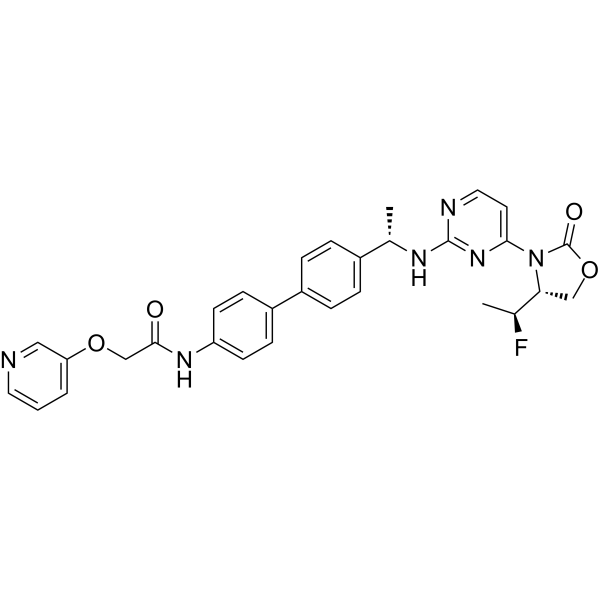 0 ImagesCat. No.: HY-158319CAS No.: 3040122-14-0
Mutant IDH1/NAMPT-IN-1 (Compound 23h) is a dual inhibitor of mutant isocitrate dehydrogenase 1 (mutant IDH1) (IC50=14.93 nM) and nicotinamide phosphoribosyltransferase (NAMPT) (IC50=12.56 nM). Mutant IDH1/NAMPT-IN-1 can induce apoptosis. Mutant IDH1/NAMPT-IN-1 crosses the blood-brain barrier effectively.
-
PROTAC BRD4 Degrader-16
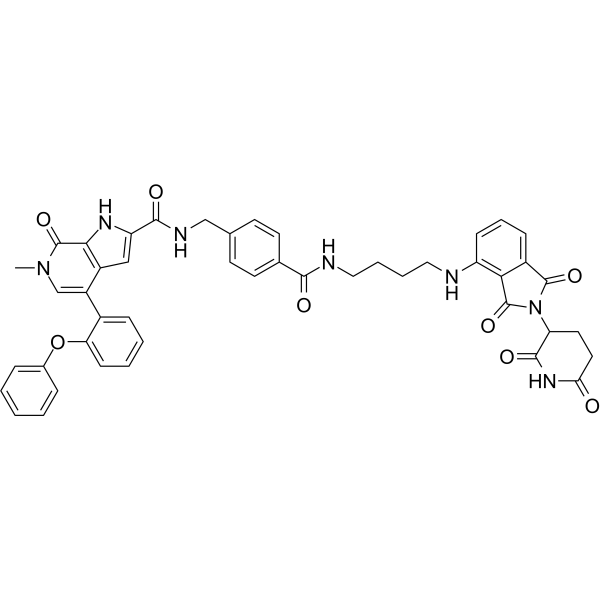 0 ImagesCat. No.: HY-143327CAS No.: 2585561-36-8
PROTAC BRD4 Degrader-16 is a BRD4 PROTAC degrader. PROTAC BRD4 Degrader-16 induces sustained degradation of both long and short isoforms of BRD4 in cancer cells, causes cell cycle arrest, and exhibits only extremely low apoptosis effects. PROTAC BRD4 Degrader-16 can be used in studies related to acute myeloid leukemia.

-
Anticancer agent 204
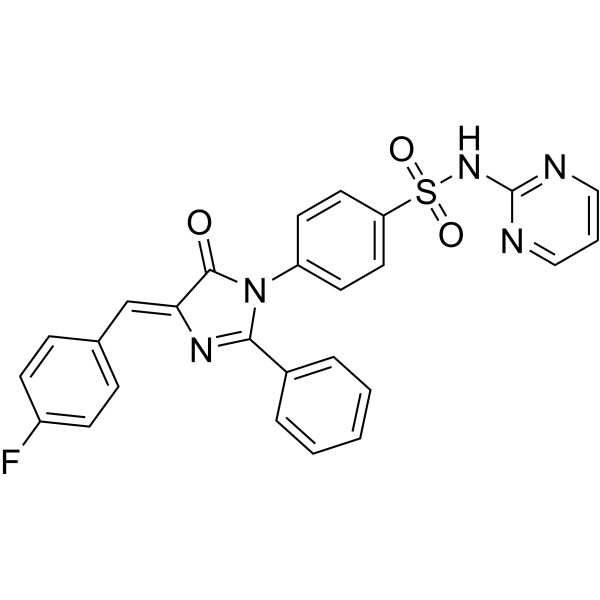 0 ImagesCat. No.: HY-162453CAS No.: 3034640-70-2
Anticancer agent 204 (Compound 6), a cinnamide fluorinated derivative, possesses anticancer activity. Anticancer agent 204 can arrest the cell cycle of HepG2 cells in the G1 phase and induce apoptosis by reducing the level of mitochondrial membrane polarization (MMP).
-
TBP-134
 0 ImagesCat. No.: HY-172940CAS No.: 2761081-30-3
TBP-134 induce apoptosis primarily through DR5 and causes G2/M phase arrest. TBP-134 can be used in the research for pancreatic tumor.
-
Hericerin A
 0 ImagesCat. No.: HY-N21648CAS No.: 1629208-29-2
Hericerin A is an isoindolinone derivative and a selective cytotoxic agent. Hericerin A is isolated from Hericium erinaceus cultured on brown rice. Hericerin A downregulates the phosphorylation of AKT and downregulates c-Myc oncoprotein levels downstream of p-AKT inactivation. Hericerin A induces Apoptosis. Hericerin A exhibits anticancer activity against leukemia. Hericerin A is used in research on acute promyelocytic leukemia, breast cancer, and Helicobacter pylori infection.
-
FPR1 antagonist 2
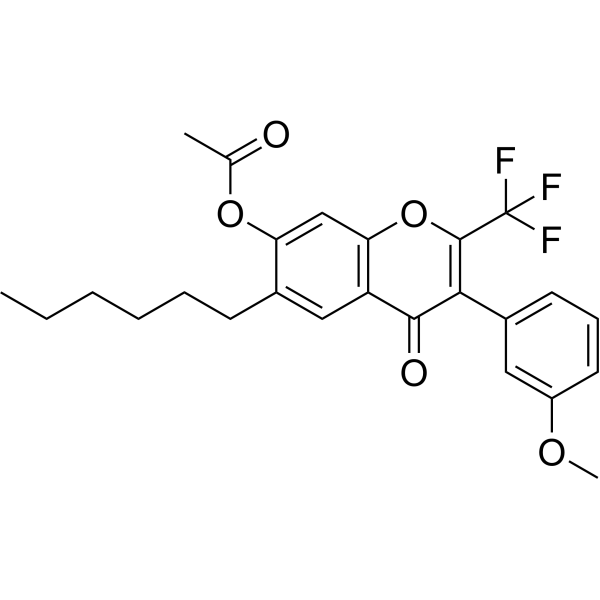 0 ImagesCat. No.: HY-156294
FPR1 antagonist 2 (compound 25b) is a formyl peptide receptor 1 (FPR1) antagonist with an IC50 of 70 nM. FPR1 antagonist 2 inhibits cell growth through a combined effect on cell proliferation and apoptosis and reduces cell migration, while inducing an increase in angiogenesis.
-
HDSI-18
 0 ImagesCat. No.: HY-172873
HDSI-18 is an orally active HDAC6 selective inhibitor (IC50: 1.6 nM). HDSI-18 is cytotoxic to K562, MV4-11, MOLM-13, THP-1, and Jurkat cells (IC50: 0.48, 0.58, 0.91, 1.79, and 4.31 μM, respectively). HDSI-18 activates Caspase-3, induces mitochondrial depolarization and apoptosis, and has antitumor activity.
-
Ciprofloxacin lactate solution
 0 ImagesCat. No.: HY-FLW040298CAS No.: 97867-33-9Synonyms: Bay-09867 lactate solution
Ciprofloxacin lactate solution is mainly composed of Ciprofloxacin lactate (HY-W040298). Ciprofloxacin (Bay-09867) lactate is a potent, orally active topoisomerase IV inhibitor. Ciprofloxacin lactate induces mitochondrial DNA and nuclear DNA damage and lead to mitochondrial dysfunction, ROS production. Ciprofloxacin lactate has anti-proliferative activity and induces apoptosis. Ciprofloxacin lactate is a fluoroquinolone antibiotic, exhibiting potent antibacterial activity.
-
(S)-Thalidomide-piperazine-pyrimidine-piperazine-C2-OH
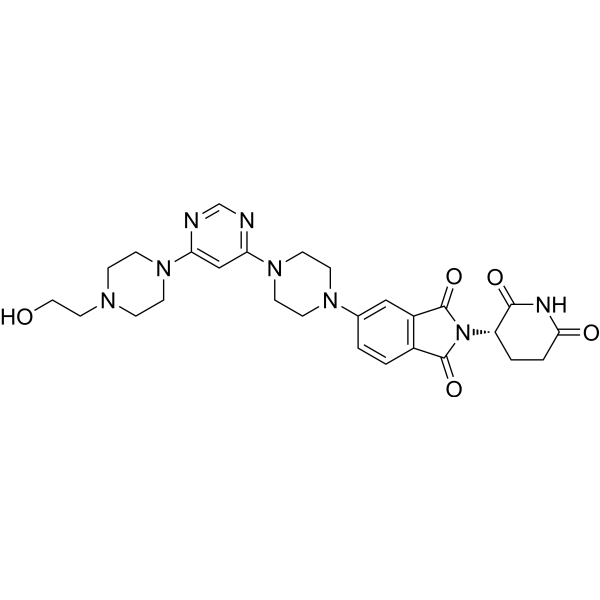 0 ImagesCat. No.: HY-157760
(S)-Thalidomide-piperazine-pyrimidine-piperazine-C2-OH is a conjugate of E3 ligase ligand and linker, consisting of Thalidomide (HY-14658) and the corresponding Linker. (S)-Thalidomide-piperazine-pyrimidine-piperazine-C2-OH can serve as a Cereblon ligand to recruit CRBN proteins and serve as a key intermediate for the synthesis of complete PROTAC molecules.
-
DXL625
 0 ImagesCat. No.: HY-P992349
DXL625 is an autophilic CD20-targeting agent. DXL625 triggers downstream apoptosis signaling pathways dependent on intact lipid rafts and extracellular Ca2+. DXL625 induces caspase-mediated apoptosis in cancer cells and selectively targets cells in the actively proliferative S phase. DXL625 mediates complement-dependent cytotoxicity in cancer cells and primary B lymphocytes. DXL625 can be used in research related to Burkitt's lymphoma and B-cell lymphoma.
-
Gemcitabine triphosphate
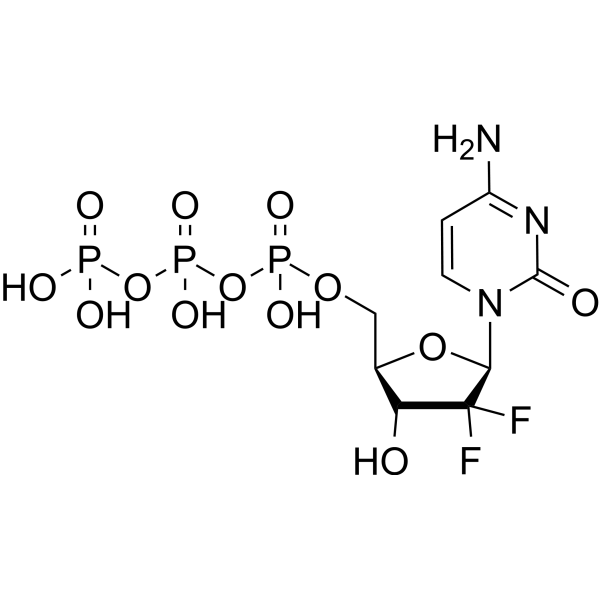 0 ImagesCat. No.: HY-17026ACAS No.: 110988-86-8Synonyms: dFdCTP
Gemcitabine triphosphate (dFdCTP) is the active metabolite of Gemcitabine (HY-17026). The mechanism of Gemcitabine triphosphate cell-killing is its competition with cytidine triphosphate during DNA replication, which results in the inhibition of chain elongation. Gemcitabine triphosphate shows a Ki of 11.2 μM against DNA polymerase α and 14.4 μM against DNA polymerase ε. Gemcitabine triphosphate partially inhibits dCMP deaminase and acts as a substrate for DNA synthesis to incorporate into cellular DNA and RNA. Gemcitabine triphosphate disrupts DNA and RNA synthesis, arrests cell cycle in G0/G1 and S phases, triggers apoptosis, reduces tumor cell proliferation. Gemcitabine triphosphate can be used for the research of pancreatic cancer and non-small cell lung cancer.
-
Crepidatin
 0 ImagesCat. No.: HY-N18312CAS No.: 101508-50-3
Crepidatin is a bibenzyl compound that can be isolated from the stems of Dendrobium loddigesii. Crepidatin promotes anoikis of lung cancer cells. Crepidatin inhibits the anchorage-independent growth of human lung cancer cells. Crepidatin can be used in lung cancer-related research.



