



Bacterial
Anything that destroys bacteria or suppresses their growth or their ability to reproduce. Heat, chemicals such as chlorine, and antibiotic drugs all have antibacterial properties. Many antibacterial products for cleaning and handwashing are sold today. Such products do not reduce the risk for symptoms of viral infectious diseases in otherwise healthy persons. This does not preclude the potential contribution of antibacterial products to reducing symptoms of bacterial diseases in the home.
All Product Categories
-
Bacterial Inhibitors
(7547)
View all products
-
Bacterial Agonists
(3)
View all products
-
Bacterial Antagonists
(9)
View all products
-
Bacterial Activators
(25)
View all products
-
Bacterial Modulators
(27)
View all products
-
Bacterial Chemicals
(2)
View all products
-
Bacterial Inducers
(6)
View all products
-
Bacterial Controls
(14)
View all products
-
Bacterial Substrates
(2)
View all products
-
Bacterial Ligand
(1)
View all products
-
Bacterial Related Products (8884)
Related Products (8884)

-
Antibodies (14)
-
Related Compound Screening Libraries (1)
-
Sulfachloropyridazine-13C6
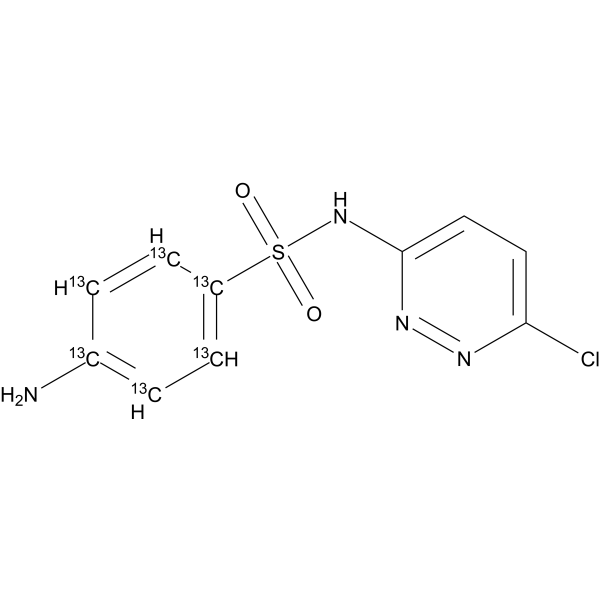 0 ImagesCat. No.: HY-B1781SCAS No.: 2731998-51-7Synonyms: Sulfachlorpyridazine-13C6Sulfachloropyridazine-13C6 is the 13C6 labeled Sulfachloropyridazine. Sulfachloropyridazine is a broad spectrum sulfonamide used against both Gram-positive and Gram-negative aerobic bacteria.
-
(S)-Ofloxacin-d3
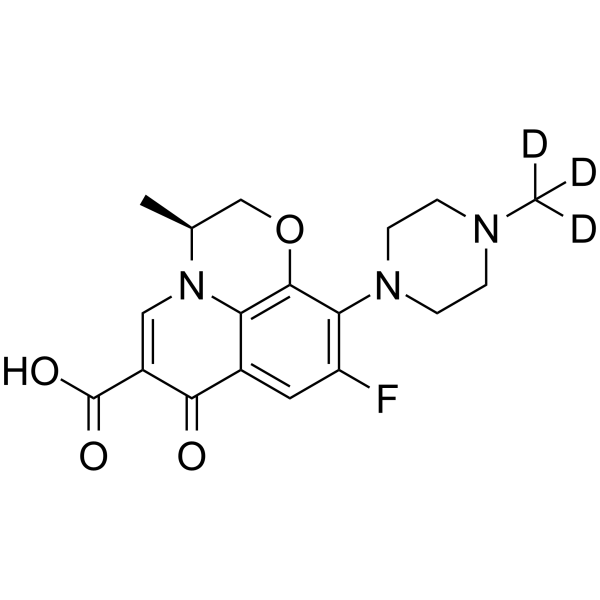 0 Images(S)-Ofloxacin-d3 is the deuterium labeled Levofloxacin. Levofloxacin, a synthetic fluoroquinolone, is an antibacterial agent that inhibits the supercoiling activity of bacterial DNA gyrase, halting DNA replication.

-
Antibacterial agent 349
 0 ImagesCat. No.: HY-184237Antibacterial agent 349 is an antibacterial agent. Antibacterial agent 349 impairs reactive oxygen species clearance, disrupts citrate cycle homeostasis and induces metabolic stress. Antibacterial agent 349 compromises bacterial membrane integrity, increases permeability, and causes intracellular component leakage. Antibacterial agent 349 can be used for the research of bacterial leaf streak.
-
2-Undecanone (Standard)
 0 Images2-Undecanone (Standard) is the analytical standard of 2-Undecanone (HY-W016969). This product is intended for research and analytical applications. 2-Undecanone is an orally active organic ketone. 2-Undecanone exerts antibacterial effects by inhibiting bacterial chaperone systems and interfering with the refolding of heat-inactivated proteins. 2-Undecanone also ameliorates asthmatic inflammation and airway remodeling by blocking the NF-κB pathway, and activates the Nrf2 pathway to reduce oxidative damage and prevent lung cancer induced by Benzo[a]pyrene (HY-107377). 2-Undecanone can be used in research related to cancer, asthma and infections.
-
α/β-Hydrolase-IN-1
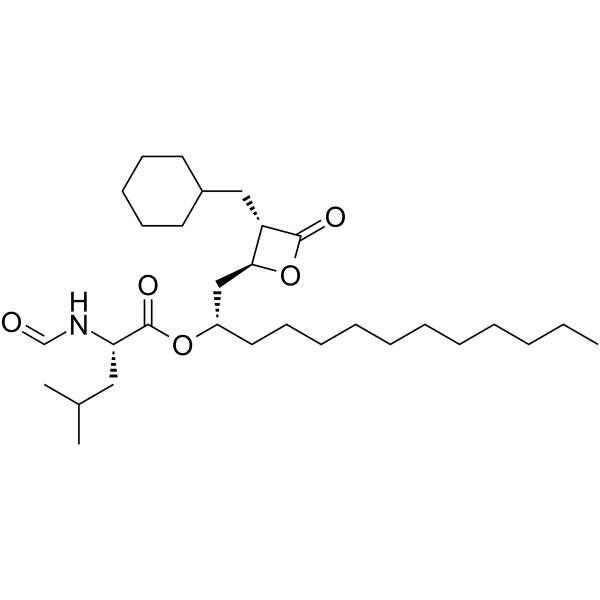 0 ImagesCat. No.: HY-139654CAS No.: 2696301-42-3α/β-Hydrolase-IN-1 exhibits the best-in-class MICs of 50 μM (25 μg/mL) and 16 μM (8.4 μg/mL) against M. smegmatis and M. tuberculosis H37Ra, respectively.
-
Orazamide
 0 ImagesOrazamide is an AICA orotate. Orazamide can prevent anti-TB drug-induced liver damage by downregulating the protein expression of HMGB 1 and RAGE in liver tissue and inhibiting the secretion of inflammatory factors. Orazamide can be used in research on hepatitis and liver cirrhosis.
-
Flumequine (Standard)
 0 ImagesSynonyms: R-802 (Standard)Flumequine (Standard) is the analytical standard of Flumequine. This product is intended for research and analytical applications. Flumequine (R-802) is a quinolone antibiotic, and acts as a topoisomerase II inhibitor, with an IC50 of 15 μM (3.92 μg/mL).
-
Synthalin A sulfate
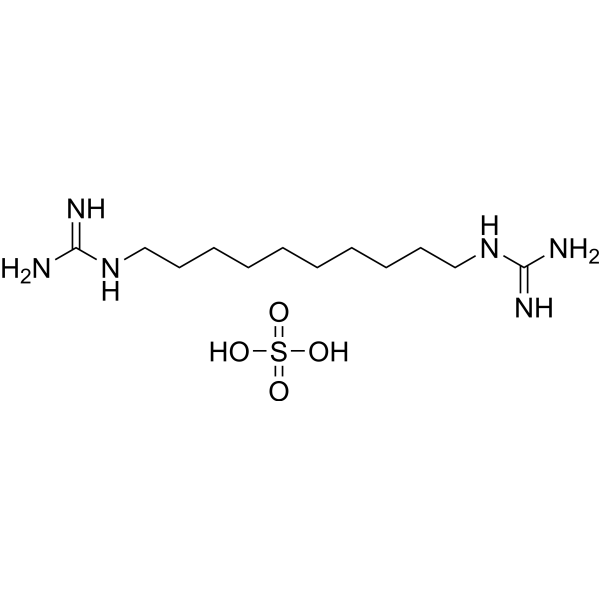 0 ImagesCat. No.: HY-101048CAS No.: 182285-12-7Synthalin A sulfate is a biguanylated diamine with antibacterial and hypoglycemic properties. Synthalin A sulfate against S. aureus with a MIC of 64 μg/mL.
-
(R)-(+)-Pantoprazole-d6
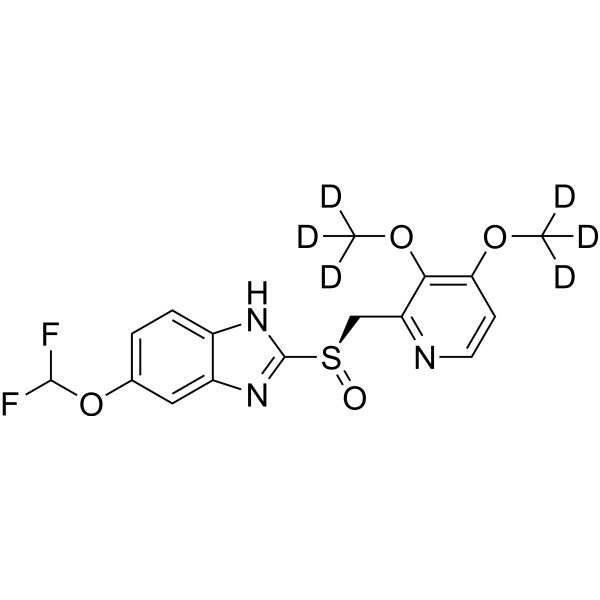 0 ImagesCat. No.: HY-17507CS(R)-(+)-Pantoprazole-d6 is deuterium labeled (R)-(+)-Pantoprazole.
-
Sulfaperin
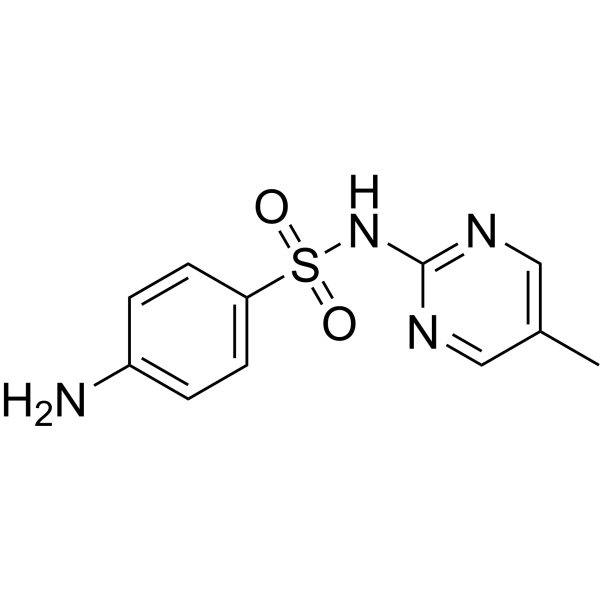 0 ImagesSulfaperin (Methylsulfadiazin) is an antibacterial agent.
-
N-Desmethyl clomipramine hydrochloride (Standard)
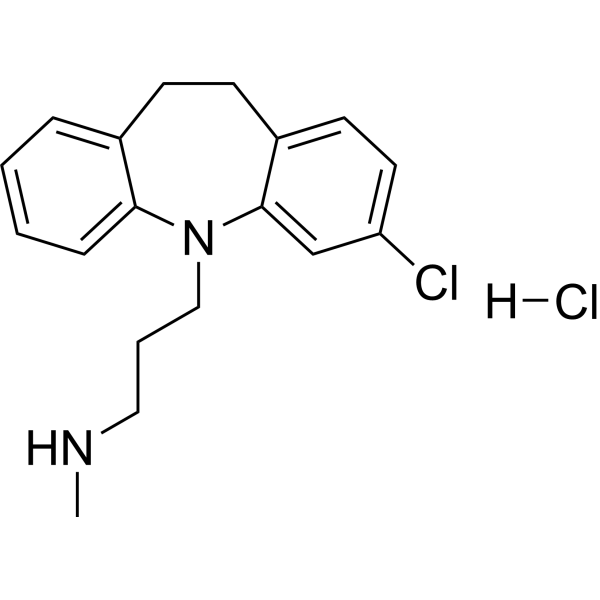 0 ImagesSynonyms: Desmethylclomipramine hydrochloride (Standard); Norclomipramine hydrochloride (Standard)N-Desmethyl clomipramine hydrochloride (Standard) (Desmethylclomipramine hydrochloride (Standard); Norclomipramine hydrochloride (Standard)) is the analytical standard of N-Desmethyl clomipramine hydrochloride (HY-12388A). This product is intended for research and analytical applications. N-Desmethyl clomipramine hydrochloride is the orally active major active metabolite of the tricyclic antidepressant Clomipramine (HY-B0457A), possessing multiple activities including anti-inflammatory, antioxidant, antibacterial, and antiparasitic effects. N-Desmethyl clomipramine hydrochloride blocks autophagosome-lysosome fusion, leading to the accumulation of LC3-II, p62, ATG7, WIPI2, and ATG5-12, reactivates the p53/p21 pathway, induces apoptosis through C-PARP and C-CAS3, and inhibits the proliferation, migration, and invasion of renal cancer cells. N-Desmethyl clomipramine hydrochloride inhibits LdTOPIA, inducing R-loop accumulation in the nucleus of Leishmania, ultimately causing parasite death. N-Desmethyl clomipramine hydrochloride can be used for research on depression, metastatic renal cell carcinoma, and leishmaniasis.
-
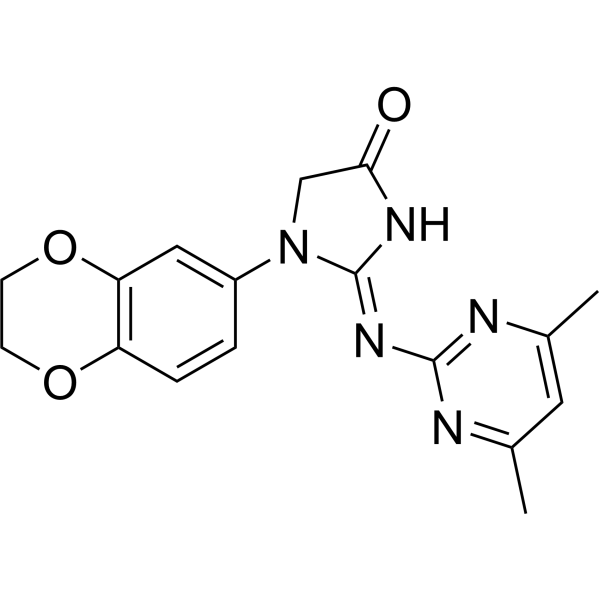
Albomycin ε
 0 ImagesCat. No.: HY-N16461CAS No.: 12676-10-7Albomycin ε is a siderophore-antibiotic conjugate targeting bacterial ribosomes (MIC values:>512 μg/mL). Albomycin ε is promising for research of Streptococcus pneumoniae and Staphylococcus aureus infections.
-
Mezlocillin sodium (Standard)
 0 ImagesCat. No.: HY-B1466RCAS No.: 42057-22-7Synonyms: BAY-f 1353 sodium (Standard)Mezlocillin (sodium) (Standard) is the analytical standard of Mezlocillin (sodium). This product is intended for research and analytical applications. Mezlocillin (BAY-f 1353) sodium is a β-lactam antibiotic, a semisynthetic and extended-spectrum antibiotic. Mezlocillin sodium is active against both gram-negative and gram-positive bacteria. Mezlocillin sodium can be used in bacterial infection research[1][2].
-
DprE1-IN-4
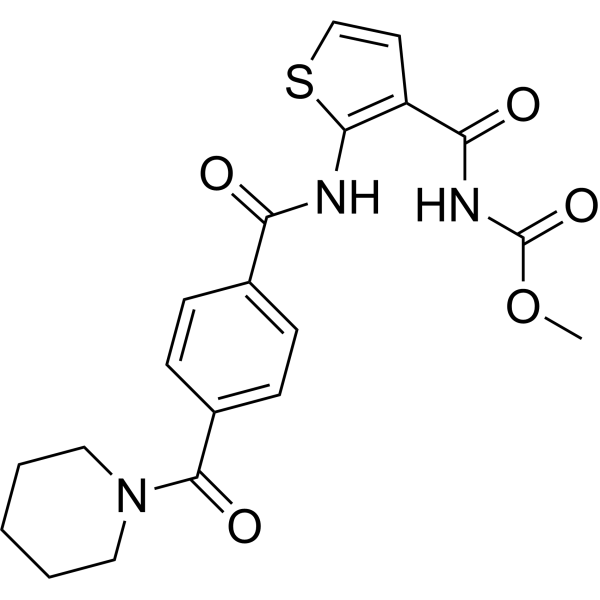 0 ImagesCat. No.: HY-138671CAS No.: 2419160-96-4DprE1-IN-4 is a potent and orally active noncovalent DprE1 inhibitor with an IC50 of 0.90 μg/mL. DprE1-IN-4 exhibits potent in vitro activity against M. tuberculosis H37Rv and drug-resistant tuberculosis strain with MIC values of 0.12 μg/mL and 0.24 μg/mL, respectively. DprE1-IN-4 displays acceptable pharmacokinetic property and shows significant bactericidal activity in an acute mouse model of tuberculosis.
-
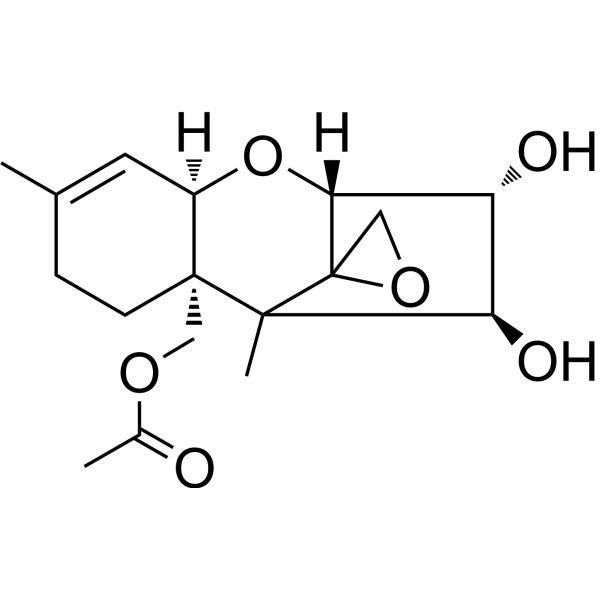
Antibacterial agent 341
 0 ImagesCat. No.: HY-183340CAS No.: 3023862-30-5Antibacterial agent 341 is an anti-bacterial agent. Antibacterial agent 341 shows broad-spectrum Gram-positive antibacterial activity. Antibacterial agent 341 targets phosphatidylglycerol (PG) and cardiolipin (CL) in bacterial cell membranes, induces sustained depolarization of membranes, and disrupts the cell membrane integrity. Antibacterial agent 341 exhibits anti-infection activity against S. aureus-induced subcutaneous abscesses in mice.
-
N-Hydroxypipecolic acid potassium
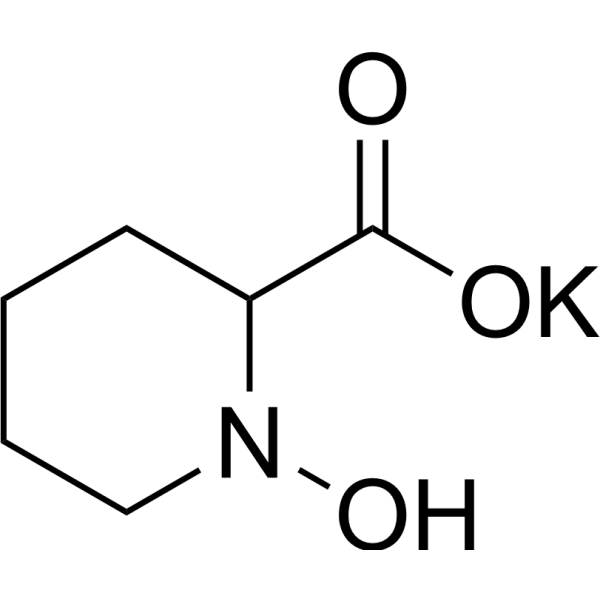 0 ImagesCat. No.: HY-N7378ACAS No.: 2253632-01-6Synonyms: 1-Hydroxy-2-piperidinecarboxylic acid potassium; NHP potassiumN-Hydroxypipecolic acid potassium (1-Hydroxy-2-piperidinecarboxylic acid potassium), a plant metabolite and a systemic acquired resistance (SAR) regulator, orchestrates SAR establishment in concert with the immune signal salicylic acid. N-Hydroxypipecolic acid potassium accumulates systemically in the plant foliage in response to pathogen attack. N-Hydroxypipecolic acid potassium induces SAR to bacterial and oomycete infection.




