



Bacterial
Anything that destroys bacteria or suppresses their growth or their ability to reproduce. Heat, chemicals such as chlorine, and antibiotic drugs all have antibacterial properties. Many antibacterial products for cleaning and handwashing are sold today. Such products do not reduce the risk for symptoms of viral infectious diseases in otherwise healthy persons. This does not preclude the potential contribution of antibacterial products to reducing symptoms of bacterial diseases in the home.
All Product Categories
-
Bacterial Inhibitors
(7553)
View all products
-
Bacterial Agonists
(3)
View all products
-
Bacterial Antagonists
(9)
View all products
-
Bacterial Activators
(25)
View all products
-
Bacterial Modulators
(27)
View all products
-
Bacterial Chemicals
(2)
View all products
-
Bacterial Inducers
(6)
View all products
-
Bacterial Controls
(14)
View all products
-
Bacterial Substrates
(2)
View all products
-
Bacterial Ligand
(1)
View all products
-
Bacterial Related Products (8893)
Related Products (8893)

-
Antibodies (14)
-
Related Compound Screening Libraries (1)
-
Collismycin A
 0 ImagesCat. No.: HY-138185CAS No.: 158792-24-6Synonyms: SF 2738ACollismycin A is a bacterial metabolite originally isolated from Streptomyces that has diverse biological activities, including antibacterial, antiproliferative, and neuroprotective properties. It is active against a variety of bacteria (MICs=6.25 and 100 μg/mL) and fungi (MICs=12.5-100 μg/mL). It inhibits proliferation of A549 lung, HCT116 colon, and HeLa cervical cancer cells (IC50s=0.3, 0.6, and 0.3 μM, respectively) and NIH373 fibroblasts (IC50=56.6 μM) but not MDA-MD-231 breast cancer cells (IC50=>100 μM). Collismycin A forms a complex with Fe(II) and Fe(III) at a 2:1 ratio, and the addition of iron ions inhibits the antiproliferative effect of collismycin A on HeLa cells, an effect that does not occur with the addition of zinc, manganese, copper, or magnesium ions.3 Collismycin A (1 μM) prevents apoptosis in the brain region of zebrafish larvae in a model of neuronal cell death induced by all-trans retinoic acid.
-
3-Methylthiophene-2-carboxylic acid
 0 ImagesCat. No.: HY-W004782CAS No.: 23806-24-83-Methylthiophene-2-carboxylic acid (compound 3) is a potent Pseudomonas quinolone signal system protein E (PqsE) inhibitor with a Kd of 19.6 µM and an IC50 of 40 µM. 3-Methylthiophene-2-carboxylic acid binds to the active center of PqsE and shows inhibition of the thioesterase activity. Methylthiophene-2-carboxylic acid can permeate into P. aeruginosa and affect 2,4-dihydroxyquinoline (DHQ) levels to a similar extent as deletion of the PqsE gene. 3-Methylthiophene-2-carboxylic acid can be used for cystic fibrosis research.
-
Biotin protein ligase-IN-1
 0 ImagesCat. No.: HY-168486Biotin protein ligase-IN-1 (Compound Bio-9) is an inhibitor of biotin protein ligase (BPL) with a Kd value of 7 nM. Biotin protein ligase-IN-1 exhibits antibacterial activity, with MIC values of 0.2 and 20 μM against Staphylococcus aureus (including MRSA and MSSA) and Mycobacterium tuberculosis, respectively.
-
Antibacterial agent 103
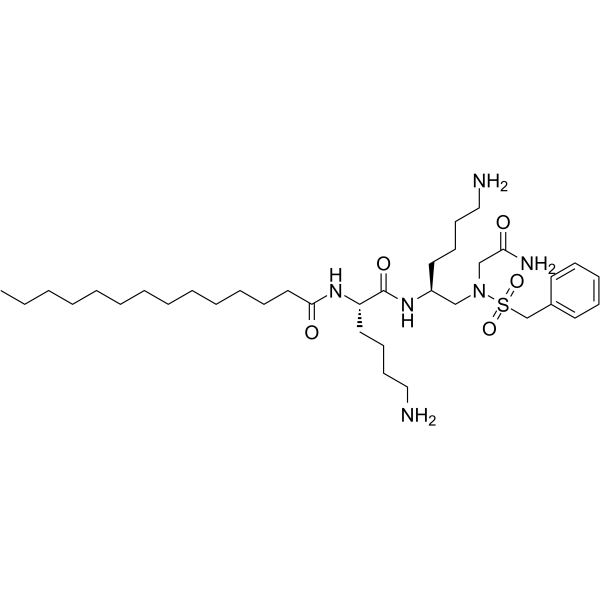 0 ImagesCat. No.: HY-146470CAS No.: 2396409-46-2Antibacterial agent 103 (compound 7) has highly antibacterial activity against kinds of Gram-positive and -negative bacteria. Antibacterial agent 103 can be used for researching inhibition of resistance bacterial strains.
-
Cefalonium dihydrate (Standard)
 0 ImagesCat. No.: HY-B1252BRCAS No.: 1385046-35-4Cefalonium dihydrate (Standard) is the analytical standard of Cefalonium dihydrate (HY-B1252B). This product is intended for research and analytical applications. Cefalonium dihydrate is a first-generation cephalosporin bactericidal antimicrobial agent. Cefalonium dihydrate can be used in studies related to bovine mastitis, Staphylococcus aureus-induced mastitis and intramammary infections.
-
SA1103064
 0 ImagesCat. No.: HY-183782SA1103064 is a potent antibiotic with antibacterial activity against multiple resistant bacterial strains. SA1103064 binds to the bacterial ribosome's nascent peptide exit tunnel. SA1103064 can be used for the research of bacterial infections.
-
Mezlocillin
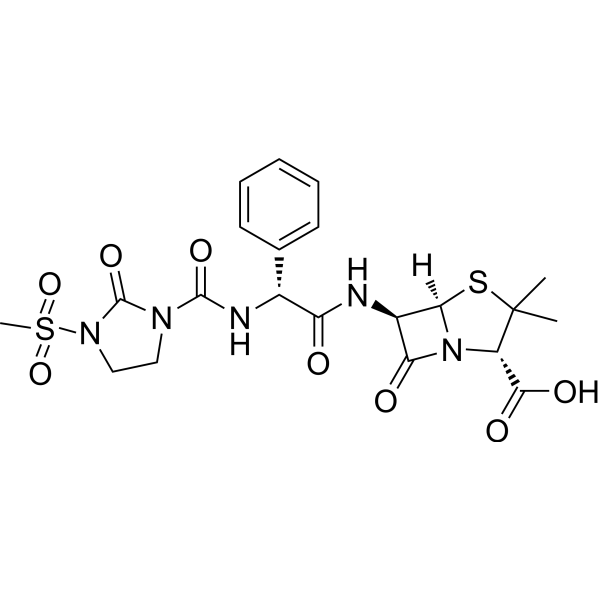 0 ImagesCat. No.: HY-B1466ACAS No.: 51481-65-3Synonyms: BAY-f 1353Mezlocillin (BAY-f 1353) is a β-lactam antibiotic, a semisynthetic and extended-spectrum antibiotic. Mezlocillin is active against both gram-negative and gram-positive bacteria. Mezlocillin can be used in bacterial infection research.
-
Antibacterial agent 79
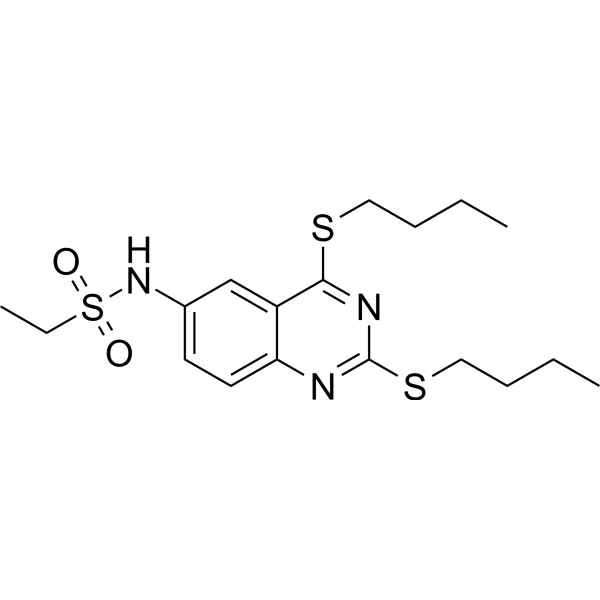 0 ImagesCat. No.: HY-145877CAS No.: 2902561-44-6Antibacterial agent 79 (compound 32) is an antibacterial agent.
-
Procyanidin A2 (Standard)
 0 ImagesCat. No.: HY-N2343RCAS No.: 41743-41-3Procyanidin A2 (Standard) is the analytical standard of Procyanidin A2. This product is intended for research and analytical applications. Procyanidin A2 is a flavonoid found in grapes, with anti-cancer, antioxidant, antimicrobial and anti-inflammation activity.
-
Brevinin-1Ea
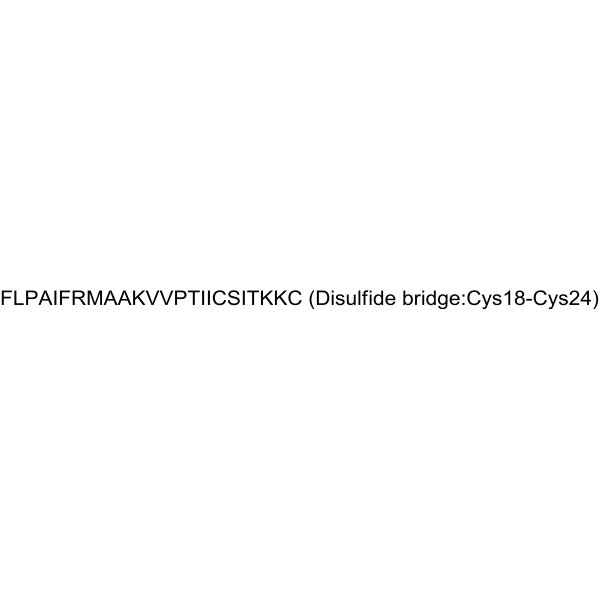 0 ImagesCat. No.: HY-P5656CAS No.: 156793-64-5Brevinin-1Ea is an antimicrobial peptide derived from the skin secretions of Rana esculenta.
-
Leucomycin tartrate
 0 ImagesCat. No.: HY-N7112ACAS No.: 37280-56-1Synonyms: Kitasamycin tartrateLeucomycin tartrate (Kitasamycin tartrate) is a potent 16-membered macrolideantibiotic.
-
V-06-018
 0 ImagesCat. No.: HY-122143CAS No.: 299927-26-7V-06-018 is a potent LasR antagonist with an IC50 value of 5.2 µM. V-06-018 can be used as chemical probes of quorum sensing (QS) in Pseudomonas aeruginosa.
-
Antibacterial agent 144
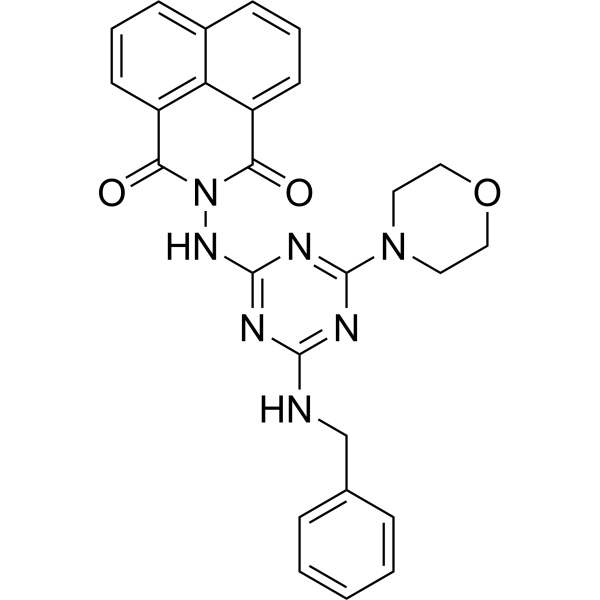 0 ImagesCat. No.: HY-155060Antibacterial agent 144 (compound 8e) is an antibacterial agent,with better effect against multi-resistant Staphylococcus aureus than Chloromycin and Amoxicillin (HY-B0467A). Antibacterial agent 144 destroys the cytoplasmic membrane of bacteria,and inhibits the biofilms formation. Antibacterial agent 144 binds to HSA (Kd=13.2 μM),and exerts bactericidal efficacy. Antibacterial agent 144 also binds with DNA to for supramolecular complex to obstruct DNA replications.
-
Hb 98–114
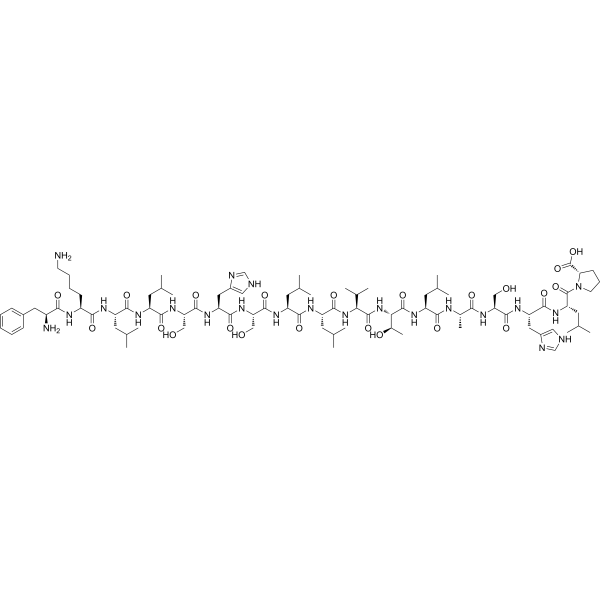 0 ImagesCat. No.: HY-P5549Hb 98-114, the amino acids 98-114 of the alpha subunit of bovine hemoglobin, is an antimicrobial peptide. Hb 98-114 is active against several yeast and filamentous fungi (MIC: 2.1 μM-12.5 μM).
-
Luteoreticulin
 0 ImagesCat. No.: HY-123265CAS No.: 22388-89-2Synonyms: GriseulinLuteoreticulin is a nitro-containing bacterial metabolite originally isolated from S. luteoreticuli. It has mosquitocidal activity against A. aegypti when used at a concentration of 6.25 mg/L and nematocidal activity against C. elegans.
-
Sodium bicarbonate, meets analytical specification of Ph. Eur., BP, USP, FCC, E500
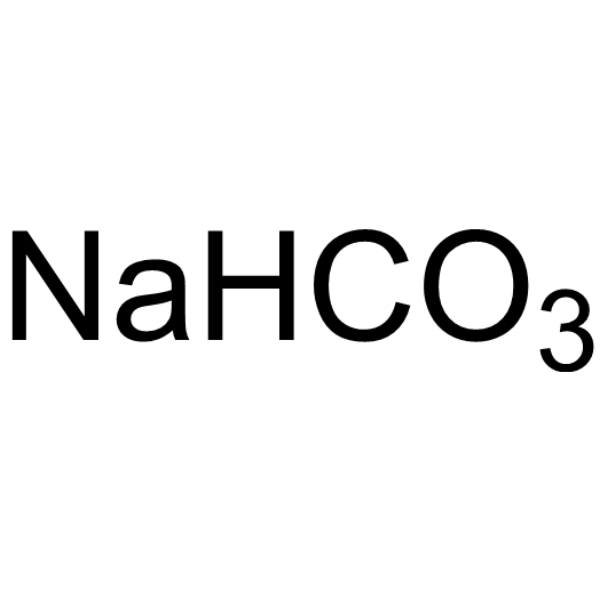 0 ImagesCat. No.: HY-W251598ICAS No.: 144-55-8Synonyms: Sodium hydrogen carbonate, meets analytical specification of Ph. Eur., BP, USP, FCC, E500Sodium bicarbonate, meets analytical specification of Ph. Eur., BP, USP, FCC, E500 is an inorganic salt that is neutral to slightly alkaline and easily decomposes when exposed to moisture in the air. Sodium bicarbonate can maintain the pH of the culture medium, thereby affecting the expression of inducible nitric oxide synthase (iNOS) and nitric oxide (NO) production in macrophages and reversing the acidosis of the tumor microenvironment. Sodium bicarbonate is widely used in the fields of food, medicine, cosmetics, etc. Its main uses include buffers, flavoring agents, disinfectants, pharmaceuticals, and proton gradient regulators. Sodium bicarbonate is also commonly used as an antacid to inhibit gastrointestinal diseases, neutralize gastric acid, and reduce gastric discomfort.
-
Dicranin
 0 ImagesCat. No.: HY-187674CAS No.: 61481-30-9Dicranin is a 15-lipoxygenase (15-LOX) inhibitor and bacterial agent. Dicranin inhibits the dioxygenation reaction of polyenoic fatty acids by irreversibly binding to lipoxygenase. Dicranin can be isolated from the phospholipids of Philonotis fontana, Leptodontium paradoxum, and Dicranum scoparium. Dicranin can be used in studies related to Gram-positive bacterial infections.
-
Armeniaspirol B
 0 ImagesCat. No.: HY-N15550CAS No.: 1206881-48-2Armeniaspirol B is a selective antibiotic targeting Gram-positive pathogens, showing MIC values of 0.5 μg/mL against S. aureus Newman and 2.0 μg/mL against S. aureus USA300. Armeniaspirol B is promising for research of Gram-positive bacterial infections (e.g., MRSA, VRE infections).

-
Fowlicidin-2
 0 ImagesCat. No.: HY-P11161Fowlicidin-2 is an alpha helical antibacterial peptide. Fowlicidin-2 can significantly inhibit the production of TNF-α and NO. Fowlicidin-2 can be used in the study of infectious conditions and sepsis.




