



Bacterial
Anything that destroys bacteria or suppresses their growth or their ability to reproduce. Heat, chemicals such as chlorine, and antibiotic drugs all have antibacterial properties. Many antibacterial products for cleaning and handwashing are sold today. Such products do not reduce the risk for symptoms of viral infectious diseases in otherwise healthy persons. This does not preclude the potential contribution of antibacterial products to reducing symptoms of bacterial diseases in the home.
All Product Categories
-
Bacterial Inhibitors
(7547)
View all products
-
Bacterial Agonists
(3)
View all products
-
Bacterial Antagonists
(9)
View all products
-
Bacterial Activators
(25)
View all products
-
Bacterial Modulators
(27)
View all products
-
Bacterial Chemicals
(2)
View all products
-
Bacterial Inducers
(6)
View all products
-
Bacterial Controls
(14)
View all products
-
Bacterial Substrates
(2)
View all products
-
Bacterial Ligand
(1)
View all products
-
Bacterial Related Products (8884)
Related Products (8884)

-
Antibodies (14)
-
Related Compound Screening Libraries (1)
-
Catalpanp-1
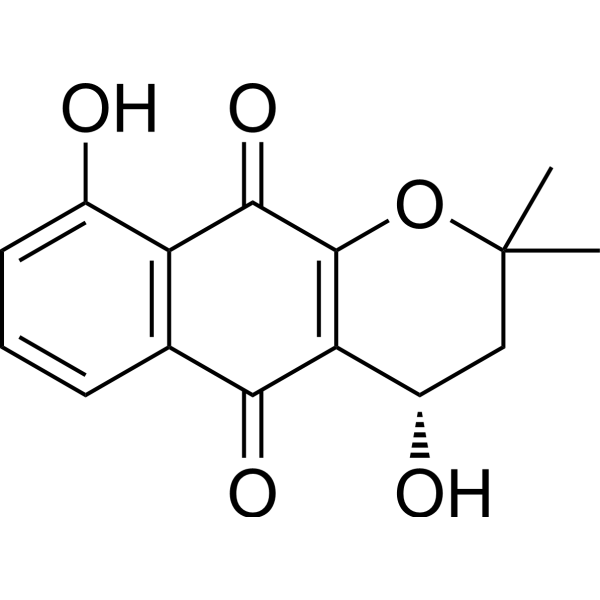 0 ImagesCat. No.: HY-N1886CAS No.: 56473-67-7Catalpanp-1 is a potent anti-microbial agent. Catalpanp-1 has strong antimicrobial effect on yeast, bacteria, fungi and the like.
-
1,3-Dihydroxy-4-methoxy-10-methylacridin-9(10H)-one
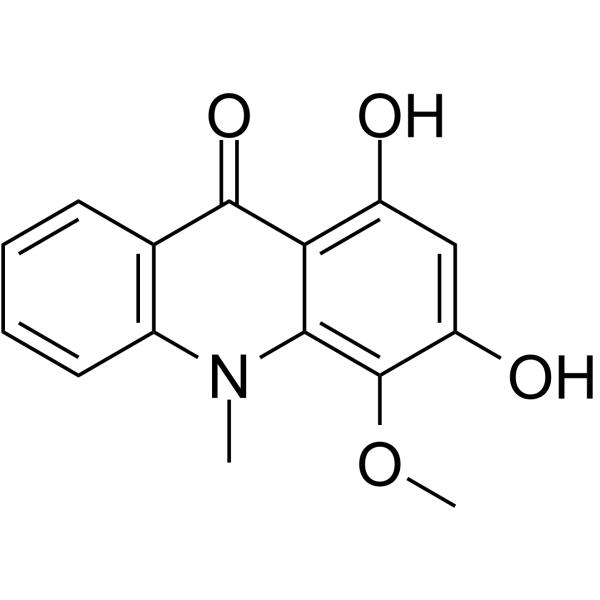 0 ImagesCat. No.: HY-128913CAS No.: 1189362-86-41,3-Dihydroxy-4-methoxy-10-methylacridin-9(10H)-one is an acridone alkaloid compound isolated from the fruits of Z. leprieurii and Z. zanthoxyloides. 1,3-Dihydroxy-4-methoxy-10-methylacridin-9(10H)-one has antibacterial activity.
-
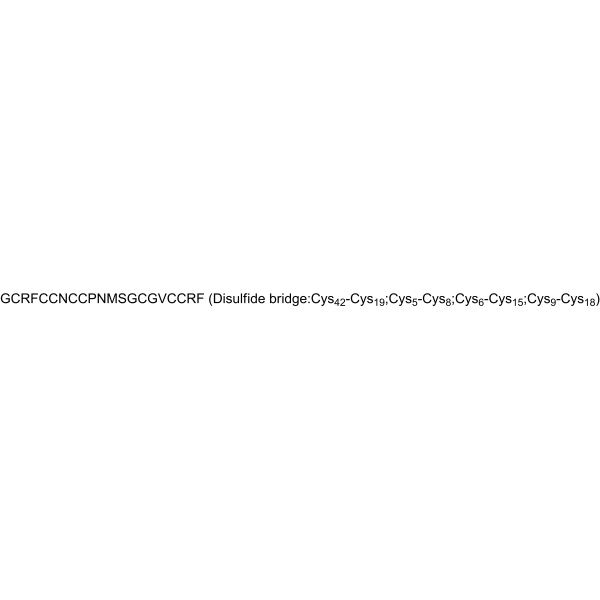
Diaporthein B
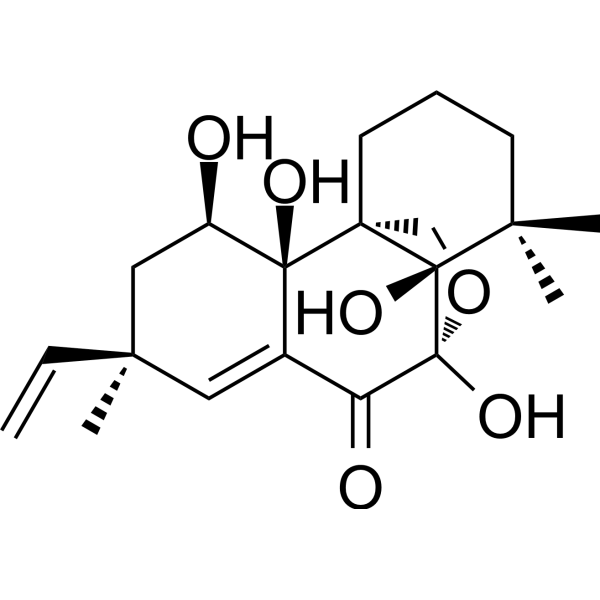 0 ImagesCat. No.: HY-149066CAS No.: 577705-64-7Diaporthein B is one of the most highly oxidized pimarane diterpenes. Diaporthein B exhibits activity against M. tuberculosis, with a MIC of 3.1 μg/mL. Diaporthein B reveals IC50s of 1.5-3 μM against HCT 116 and LoVo colon cancer cells.
-
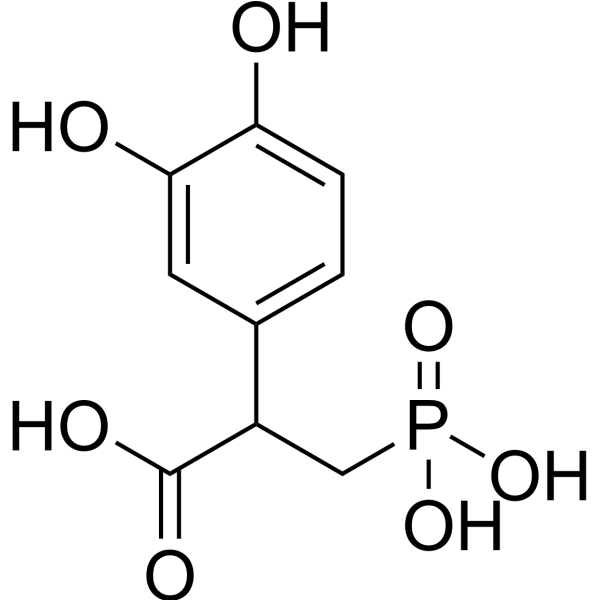
Antibacterial agent 28
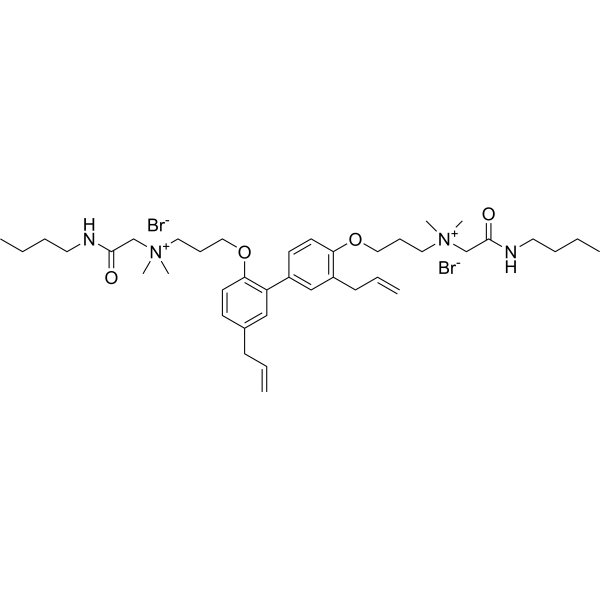 0 ImagesCat. No.: HY-139679CAS No.: 2673185-41-4Antibacterial agent 28 is a potential antibacterial candidate for combating MRSA infections (MICs = 0.5–2 μg/mL).
-
RmlA-IN-2
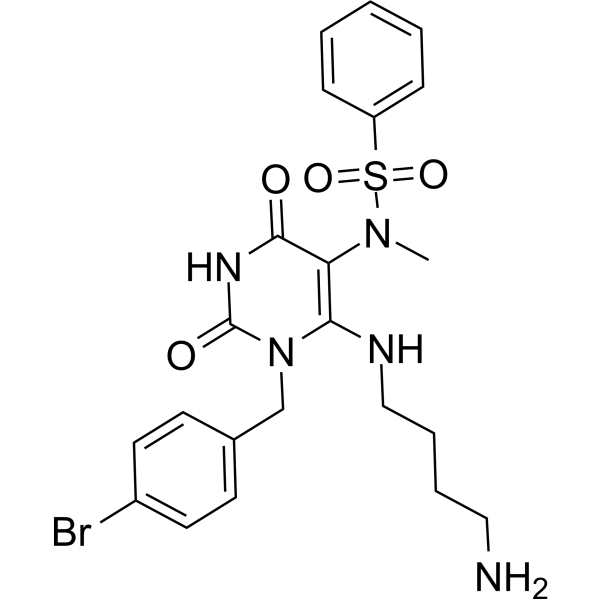 0 ImagesCat. No.: HY-146551CAS No.: 2866140-40-9RmlA-IN-2 (Compound 1d) is a potent inhibitor of glucose-1-phosphate thymidylyltransferase (RmlA) with an IC50 of 0.303 μM. RmlA-IN-2 influences monosaccharide l-Rhamnose biosynthetic pathway. RmlA-IN-2 affects bacterial cell wall permeability.
-
Nilofabicin (Standard)
 0 ImagesCat. No.: HY-111071RCAS No.: 934628-27-0Synonyms: CG-400549 (Standard)Nilofabicin (Standard) is an analytical standard for Nilofabicin (HY-111071). This product is intended for research and analytical applications. Nilofabicin (CG-400549) is an anti-bacterialagent that targets FabI. Nilofabicin shows high selectivity for the genus Staphylococcus and weak activity against most Gram-negative bacteria. Nilofabicin inhibits bacterial fatty acid biosynthesis, blocks phospholipid synthesis, and disrupts the structure of bacterial cell membranes. Nilofabicin exhibits in vivo antibacterial efficacy in a mouse model of systemic Staphylococcus aureus infection. Nilofabicin can be used in studies related to bacterial infections.
-
Cas9-IN-2
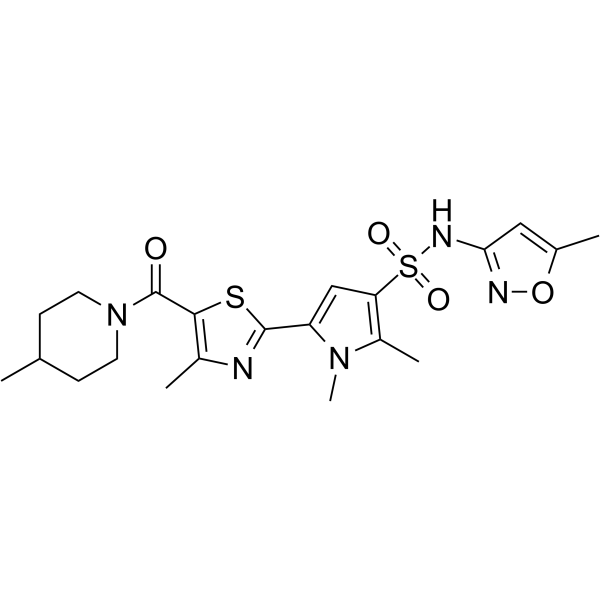 0 ImagesCat. No.: HY-144119CAS No.: 1030133-34-6Cas9-IN-2 is a potent Cas9 inhibitor (IC50=246 μM), Cas9-IN-2 acts by binding to apo-Cas9 to prevent Cas9:gRNA complex formation, which can potentially be applied to modulate and control Cas9 activity in various applications.
-
Concanamycin A (purity≥70%)
 0 ImagesCat. No.: HY-N1724ACAS No.: 80890-47-7Synonyms: Antibiotic X 4357B (purity≥70%); Folimycin (purity≥70%); X 4357B (purity≥70%)Concanamycin A (purity≥70%) (Antibiotic X 4357B) is a macrolide antibiotic, a vacuolar type H+-ATPase (V-ATPase) inhibitor. Concanamycin A (purity≥70%) is also an inhibitor of lysosomal acidification, can be used to T cell-mediated inflammation research-.
-
Sideromycin 7
 0 ImagesCat. No.: HY-181966Sideromycin 7 is an antibacterial agent. Sideromycin 7 forms a 7-Bi3+ coordination complex with bismuth citrate, exerting a three-pronged antibacterial mode of action: direct DNA binding to induce damage and arrest replication, suppression of KdpC synthesis to block KdpFABC-mediated potas-sium transport, and inhibition of ATP production. Sideromycin 7 exhibits potent antibacterial activity against Ciprofloxacin (HY-B0356)-resistant Pseudomonas aeruginosa strains. Sideromycin 7 exerts antibiofilm activity against Pseudomonas aeruginosa. Sideromycin 7 can be used for the research of ciprofloxacin-resistant Pseudomonas aeruginosa infection.
-
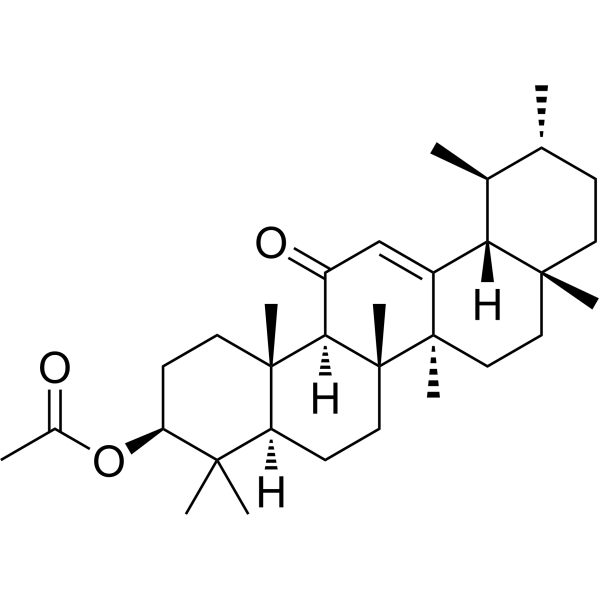
Antibacterial agent 265-13C,d3
 0 ImagesCat. No.: HY-W756467CAS No.: 2733149-80-7Synonyms: 1-Cyclopropyl-6,7-difluoro-8-methoxy-4-oxo-1,4-dihydroquinoline-3-carboxylic Acid-13C,d3Antibacterial agent 265-13C,d3 (1-Cyclopropyl-6,7-difluoro-8-methoxy-4-oxo-1,4-dihydroquinoline-3-carboxylic Acid-13C,d3) is the deuterium labeled and 13C-labeled Antibacterial agent 265 (HY-W018629). Antibacterial agent 265 (Compound 2) is an antibacterial agent. Antibacterial agent 265 shows antibacterial activity against Staphylococcus Aureus, Micrococcus Luteus, Bacillus subtilis, gram-negative Escherichia coli, Pseudomonas aeruginosa and Flavobacterium devorans.
-
3,6-Dihydroxyindoxazene
 0 ImagesCat. No.: HY-N14972CAS No.: 86004-57-13,6-Dihydroxyindoxazene, an antibiotic can be isolated from C. violaceum, exhibits a selective activity against Gram-negative bacteria.
-
Bromelain (USP)
 0 ImagesCat. No.: HY-E71367Bromelain USP is an orally active proteolytic agent. Bromelain USP converts plasminogen to plasmin to support fibrinolysis, cleaves CD44 adhesion molecules from cell surfaces, and diminishes uPAR expression and uPA activity. Bromelain USP can inhibit the activity of a variety of fungi and bacteria. Bromelain USP can be used for the research of angina pectoris, atherosclerotic disease, fungal infections, bacterial infections, chronic inflammatory bowel disease, and cancer.
-
Violet Red Bile Glucose Agar
 0 ImagesCat. No.: HY-157356Violet Red Bile Glucose Agar can be used for counting intestinal bacteria and identification of enterobacteriaceae. The composition of 1 liter of Violet Red Bile Glucose Agar contains: 7.0 g gelatin pancreatic enzyme hydrolysate, 3.0 g yeast extract powder, 1.5 g sodium deoxycholate, 10.0 g glucose, 5.0 g sodium chloride, 0.03 g neutral red, 0.002 g crystal violet, and 15.0 g agar in per liter.
-
Benzydamine hydrochloride (Standard)
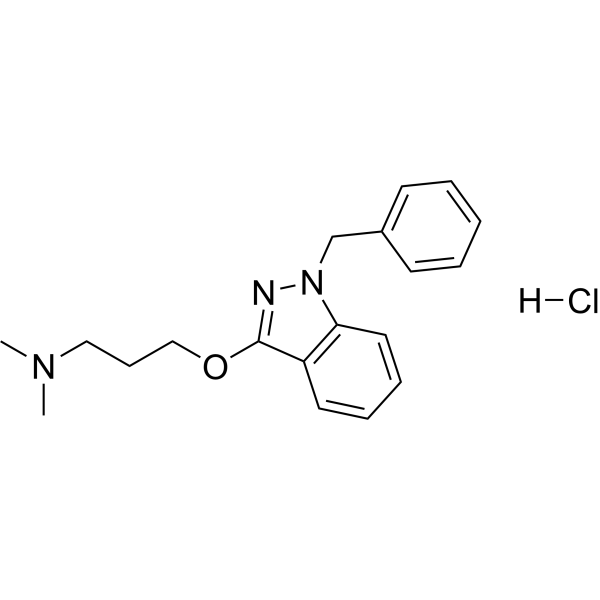 0 ImagesBenzydamine (hydrochloride) (Standard) is the analytical standard of Benzydamine (hydrochloride). This product is intended for research and analytical applications. Benzydamine hydrochloride is a prostaglandin synthase inhibitor, anti-inflammatory, and has also been reported to have antibacterial activity.

-
Undecanoic acid-d3
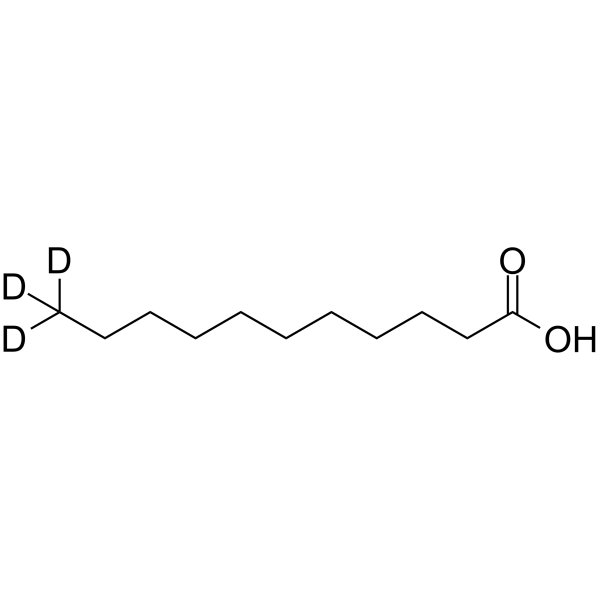 0 ImagesCat. No.: HY-W004282S1CAS No.: 1219802-11-5Synonyms: Undecanoate-d3; Hendecanoic acid-d3Undecanoic acid-d3 (Undecanoate-d3) is the deuterium labeled Undecanoic acid (HY-W004282). Undecanoic acid is a monocarboxylic acid with antifungal property. Undecanoic acid inhibits the production of exocellular keratinase, lipase and the biosynthesis of several phospholipids in T. rubrum.




