



CYP3
CYP3A enzymes are major cytochrome P450 monooxygenases that catalyze the oxidative metabolism of endogenous steroids, lipids, and a large proportion of clinically used xenobiotics, thereby regulating drug clearance and systemic exposure[1][2]. Within the CYP3A subfamily, CYP3A4 is the predominant hepatic and intestinal isoform and contributes to the metabolism of approximately 30-50% of prescribed drugs, making it a central determinant of pharmacokinetic variability and drug-drug interactions[1][3]. Mechanistically, CYP3A enzymes localize to the endoplasmic reticulum and catalyze hydroxylation, epoxidation, and dealkylation reactions that facilitate the biotransformation and elimination of structurally diverse compounds[2][3]. Disease relevance emerges through their influence on therapeutic response, adverse drug reactions, and interindividual differences in drug disposition, particularly in the context of genetic polymorphisms affecting CYP3A activity[1][4]. Compared with CYP3A4, CYP3A5 displays distinct tissue distribution and substrate selectivity, contributes variably to total CYP3A-mediated metabolism, and has been implicated in specific metabolic and drug-resistance phenotypes that are not fully redundant with CYP3A4 function[2][3]. Structural and biochemical studies further demonstrate differential interactions of CYP3A4 and CYP3A5 with inhibitors, supporting isoform-selective modulation as a useful strategy for mechanistic pharmacology and experimental drug-metabolism research[2][5].
References:
- [1]. Zhang Y, et al. CYP3A4 and CYP3A5: the crucial roles in clinical drug metabolism and the significant implications of genetic polymorphisms. PeerJ. 2024 Dec 5;12:e18636. [Content Brief]
- [2]. Lan Y, et al. Novel radioligands for imaging sigma-1 receptor in brain using positron emission tomography (PET). Acta Pharm Sin B. 2019 Nov;9(6):1204-1215. [Content Brief]
- [3]. Wikipedia.
- [4]. Zhai Q, et al. Why We Need to Take a Closer Look at Genetic Contributions to CYP3A Activity. Front Pharmacol. 2022 Jun 16;13:912618. [Content Brief]
- [5]. Wikipedia.
- [6]. McConn DJ 2nd, et al. Differences in the inhibition of cytochromes P450 3A4 and 3A5 by metabolite-inhibitor complex-forming drugs. Drug Metab Dispos. 2004 Oct;32(10):1083-91. [Content Brief]
-
CYP3 Related Products (135)
Related Products (135)

-
Tetrahydrocurcumin-d6
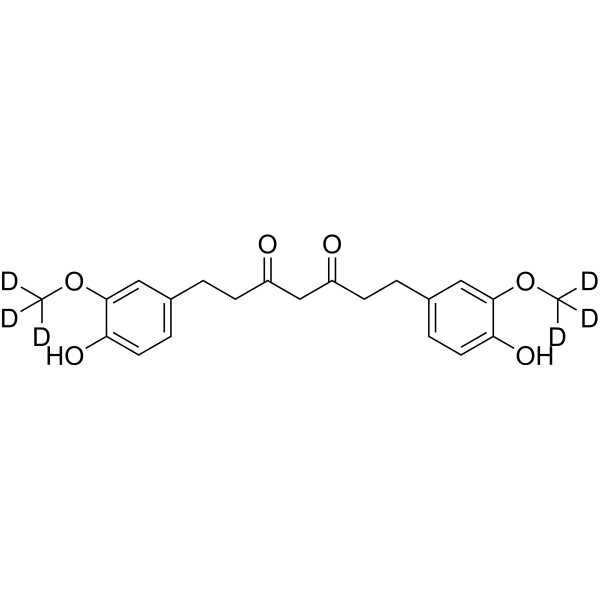 0 ImagesSynonyms: HZIV 81-2 d6
-
Antiviral agent 81
 0 ImagesCat. No.: HY-182761Antiviral agent 81 is an orally bioavailable N-acylated remdesivir derivative and RdRp inhibitor with 45.3% oral bioavailability (based on active metabolite GS-441524 exposure), plasma half-life >8 h, and reduced CYP3A4 inhibition. Antiviral agent 81 exhibits activity against Coronaviridae, Flaviviridae, and Pneumoviridae, and shows no activity against Orthomyxoviridae, Herpesviridae, and Alphaviridae. Antiviral agent 81 can be used for the research of viral infections.
-
hCYP3A4-IN-1
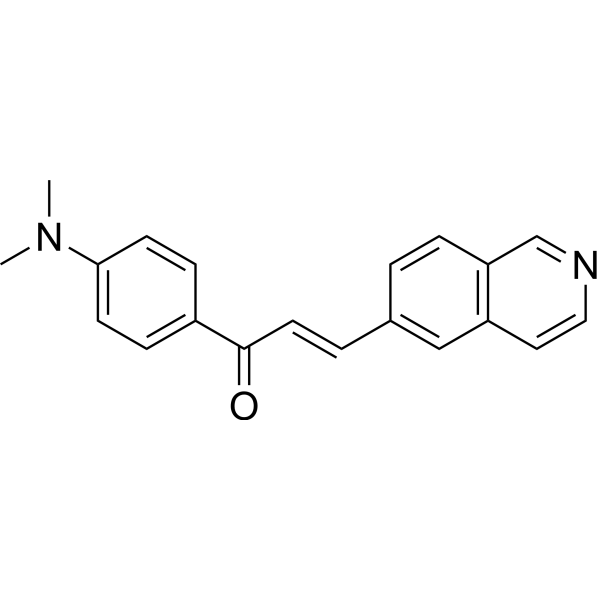 0 ImagesCat. No.: HY-155141CAS No.: 3003751-14-9hCYP3A4-IN-1 (compound C6) is a potent, orally active hCYP3A4 inhibitor. hCYP3A4-IN-1 shows the IC50 values of 43.93 nM and 153.00 nM against hCYP3A4 in human liver microsomes (HLMs) and CHO-3A4 stably transfected cell line, respectively. hCYP3A4-IN-1 potently inhibits CYP3A4-catalyzed N-ethyl-1,8-naphthalimide (NEN) hydroxylation in a competitive manner (Ki = 30.00 nM).
-
RO6889678
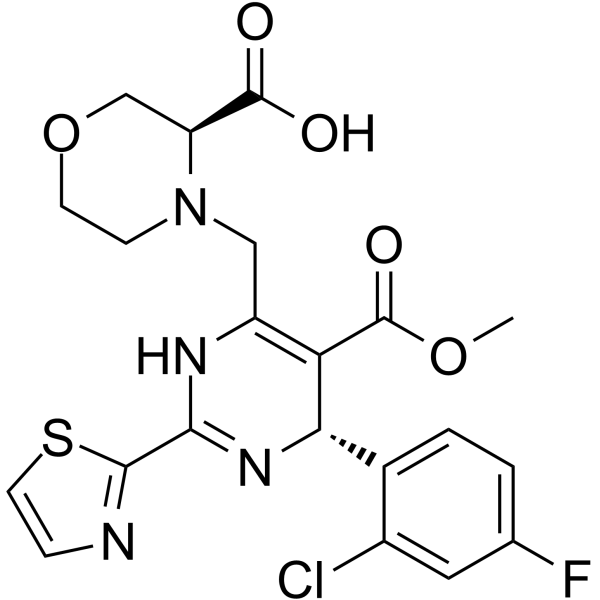 0 ImagesCat. No.: HY-124364CAS No.: 1578153-27-1RO6889678 is a highly potent HBV capsid formation inhibitor with a complex absorption, distribution, metabolism, and excretion (ADME) profile. RO6889678 is a potent inducer of CYP3A4 and coregulated proteins in human hepatocytes. RO6889678 is metabolized by a combination of CYP3A4-mediated oxidation and UDP-glucuronosyltransferase UGT1A3- and UGT1A1-mediated direct glucuronidation.
-
Tabimorelin hemifumarate
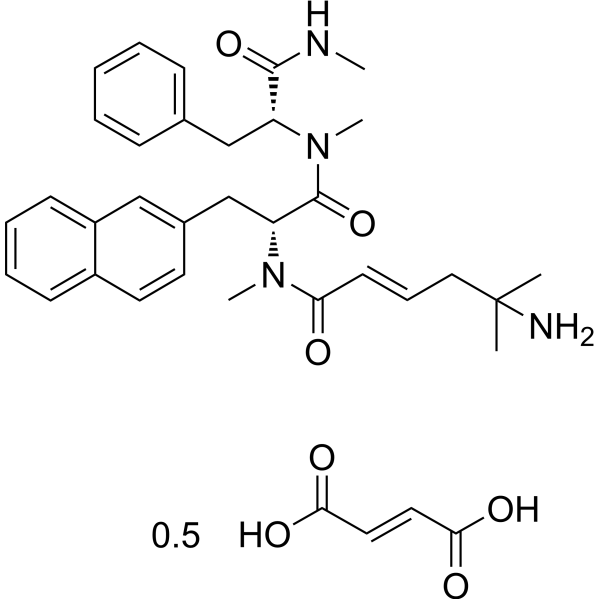 0 ImagesCat. No.: HY-103540CAS No.: 242143-80-2Synonyms: NN703 hemifumarateTabimorelin (NN703) hemifumarate is an orally active growth hormone (GH) secretagogue. Tabimorelin hemifumarate is also a potent inhibitor of CYP3A4 activity.
-
KOSN 1724
 0 ImagesCat. No.: HY-182602CAS No.: 693272-98-9KOSN 1724 is an anticancer agent. KOSN 1724 disrupts tubulin activity, stabilizes microtubules, and inhibits cancer cells proliferation. KOSN 1724 inhibits cytochrome P450 3A4, CYP2C9, and CYP2C19 activity. KOSN 1724 can be used for the research of cancer.
-
ALT-2074
 0 ImagesCat. No.: HY-W879508CAS No.: 173026-17-0Synonyms: BXT-51072ALT-2074 (BXT-51071) is an orally active catalytic analogue of glutathione peroxidase. ALT-2074 is an inhibitor of human CYP3A, with its IC50 value ranging from 2.0 to 2.6 μM. ALT-2074 shows only a weak inhibitory effect on CYP3A in vivo, suggesting that it may not significantly affect the metabolism of CYP3A substrate drugs. ALT-2074 can be used to study inflammatory diseases characterized by reactive oxygen species, such as acute coronary syndrome.
-
Licopyranocoumarin
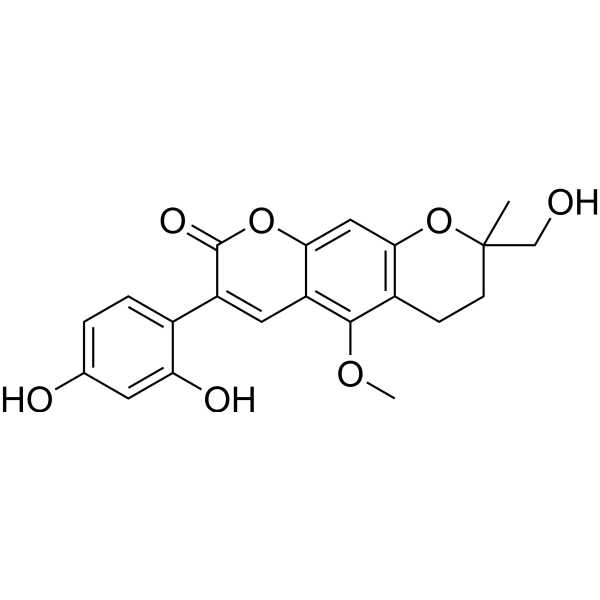 0 ImagesCat. No.: HY-119804CAS No.: 117038-80-9Licopyranocoumarin is an isoflavonoid that shows CYP3A4 inhibitory activity with an IC50 of 32 μM. Licopyranocoumarin has potent neuroprotective activities.
-
Escholtzine perchlorate
 0 ImagesCat. No.: HY-N16471ACAS No.: 77790-29-5Escholtzine perchlorate is an Alkaloid. Escholtzine perchlorate can be isolated from Eschscholzia californica. Escholtzine perchlorate is a CYP3A4 inhibitor, 5-HT1A receptor inhibitor with a CYP3A4 IC50 of 13.4 μM, 5-HT1A EC50 of 11 μM. Escholtzine perchlorate can be used for the research of anxiety, depression.
-
Conivaptan
 0 ImagesCat. No.: HY-18347CAS No.: 210101-16-9Synonyms: YM 087 free baseConivaptan (YM 087 free base) is an orally active dual vasopressin V1a/V2 receptor antagonist with Ki values of 0.48 nM and 3.04 nM for vasopressin V1a receptor and V2 receptor, respectively. Conivaptan competitively and reversibly blocks vasopressin-mediated antidiuresis, vasoconstriction, and cellular hypertrophy, while inhibiting CYP3A4. Conivaptan inhibits vasopressin-induced intracellular calcium, cAMP, and mitogen-activated kinase activation in vascular smooth muscle cells and cardiomyocytes. Conivaptan induces water diuresis while improving hemodynamics in heart failure models, reducing left ventricular end-diastolic pressure, vascular resistance, and organ weight. Conivaptan is used for research on hyponatremia and congestive heart failure.
-
KBP-7018
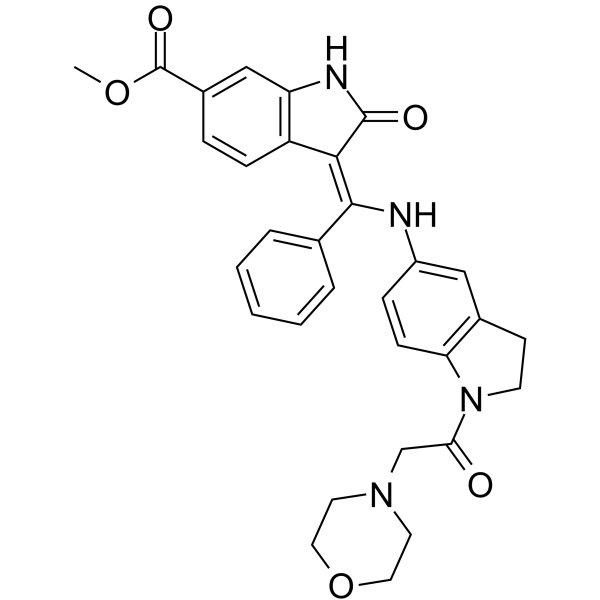 0 ImagesCat. No.: HY-117873CAS No.: 1613437-66-3KBP-7018 is an orally active, tyrosine kinase-selective multi-kinase inhibitor with an IC50 value of 10 nM against c-KIT, 7.6 nM against RET, and 25 nM against human PDGFR. KBP-7018 improves survival rates in a mouse model of pulmonary fibrosis. KBP-7018 can be used in research related to idiopathic pulmonary fibrosis.
-
CYP3A4-IN-4
 0 ImagesCat. No.: HY-169217CYP3A4-IN-4 (compound Δ,Λ-3), a Ru(II) Ir(III) Conjugate, is a photoactive inhibitor of the major human drug metabolizing enzyme CYP3A4. CYP3A4-IN-4 containing the [Ru(tpy)(Me2bpy)] photocaging group showed an IC50 of 2.2 μM for inhibition of microsomal CYP3A4 under light conditions (λirr=530 nm, tirr=15 min).
-
DNA Gyrase/ribosomes-IN-1
 0 ImagesCat. No.: HY-181107DNA Gyrase/ribosomes-IN-1 is a bacterial ribosome and DNA gyrase inhibitor, with IC50 values of 1.11 μM and 3.31 μM, respectively. DNA Gyrase/ribosomes-IN-1 also inhibits CYP3A4, with an IC50 of 18.5 μM, and exhibits stability in mouse plasma and liver microsomes. DNA Gyrase/ribosomes-IN-1 inhibits bacterial protein synthesis by interacting with ribosomal RNA and associated sites. DNA Gyrase/ribosomes-IN-1 suppresses bacterial DNA replication by interacting with the gyrase complex. DNA Gyrase/ribosomes-IN-1 restores activity against macrolide-resistant, erm-mediated Gram-positive pathogens and enhances activity against Gram-negative bacteria such as Haemophilus influenzae and Moraxella catarrhalis. DNA Gyrase/ribosomes-IN-1 can be used in research on community-acquired bacterial pneumonia.
-
Conivaptan hydrochloride (Standard)
 0 ImagesSynonyms: YM 087 (Standard)Conivaptan hydrochloride (Standard) (YM 087 (Standard)) is the analytical standard of Conivaptan hydrochloride (HY-18347A). This product is intended for research and analytical applications. Conivaptan hydrochloride is an orally active dual vasopressin V1a/V2 receptor antagonist with Ki values of 0.48 nM and 3.04 nM for vasopressin V1a receptor and V2 receptor, respectively. Conivaptan hydrochloride competitively and reversibly blocks vasopressin-mediated antidiuresis, vasoconstriction, and cellular hypertrophy, while inhibiting CYP3A4. Conivaptan hydrochloride inhibits vasopressin-induced intracellular calcium, cAMP, and mitogen-activated kinase activation in vascular smooth muscle cells and cardiomyocytes. Conivaptan hydrochloride induces water diuresis while improving hemodynamics in heart failure models, reducing left ventricular end-diastolic pressure, vascular resistance, and organ weight. Conivaptan hydrochloride is used for research on hyponatremia and congestive heart failure.
-
Curcumenol (Standard)
 0 ImagesCat. No.: HY-N2259RCAS No.: 19431-84-6Synonyms: (+)-Curcumenol (Standard)Curcumenol (Standard) ((+)-Curcumenol (Standard)) is the analytical standard of Curcumenol (HY-N2259). This product is intended for research and analytical applications. Curcumenol ((+)-Curcumenol) is a natural compound with oral efficacy, exhibiting an IC50 of 12.6 μM and a Ki of 10.8 μM against human CYP3A4. Curcumenol inhibits TNFα-induced phosphorylation/degradation of IκBα, phosphorylation/nuclear translocation of NF-κB p65, as well as the upregulation of MMP3, MMP9, MMP13, TRAF3, IL1RL1, TNFα and IL-1β. Curcumenol suppresses LPS-induced phosphorylation of Akt and p38 MAPK, as well as the production of pro-inflammatory mediators/proteins, and downregulates the SLC7A11/NF-κB/TGF-β pathway. Curcumenol binds to and inhibits the activation of Fyn and Lyn, blocks the function of downstream FcεRI signaling components, and reduces the release of allergic mediators/cytokines. Curcumenol upregulates the expression of KDM6B, and promotes chondrocyte proliferation and cartilage repair. Curcumenol induces ferroptosis and apoptosis, regulates the EMT process, and inhibits tumor growth and metastasis of triple-negative breast cancer. Curcumenol possesses anti-inflammatory, neuroprotective, antioxidant, antitumor, antiviral and hepatoprotective activities. Curcumenol can be used in research related to intervertebral disc degeneration, cancer, inflammation, central nervous system neurodegenerative diseases, allergic reactions and knee osteoarthritis.



