



ERK
ERK1/2 are related protein-serine/threonine kinases in the Ras-Raf-MEK-ERK cascade, which regulates cell adhesion, cell-cycle progression, migration, survival, differentiation, metabolism, proliferation, and transcription[1]. Mechanistically, MEK1/2 phosphorylates ERK1/2, enabling ERK-dependent signaling outputs that connect extracellular stimulation to nuclear and cytoplasmic responses[1]. In cell-cycle research, sustained ERK1/2 activation supports G1-to-S-phase progression and regulates positive and antiproliferative cell-cycle factors[2]. In disease-relevant models, deregulated ERK1/2 activity associates with developmental syndromes and several human diseases, making pathway output a practical readout for phosphoproteomics and signaling-network studies[3]. Compared with related isoforms, ERK1 and ERK2 show strong functional redundancy during development, and mouse genetic data indicate that total ERK1/2 activity, rather than strict isoform identity, determines developmental output[4]. Evolutionary analysis also supports interchangeable ERK1/2 action in tetrapods and highlights total ERK quantity as a relevant experimental variable[5]. For experimental applications, selective ERK1/2 inhibitors such as SCH772984 exploit a unique ERK1/2 binding site and provide tools for probing kinase activity and pathway dependence[6]. Clinically oriented studies use ulixertinib as an ERK1/2 inhibitor with preclinical activity in BRAF- and RAS-mutant cancer models[7].
References:
- [1]. Roskoski R Jr. ERK1/2 MAP kinases: structure, et al. ERK1/2 MAP kinases: structure, function, and regulation. Pharmacol Res. 2012 Aug;66(2):105-43. [Content Brief]
- [2]. Meloche S, et al. The ERK1/2 mitogen-activated protein kinase pathway as a master regulator of the G1- to S-phase transition. Oncogene. 2007 May 14;26(22):3227-39. [Content Brief]
- [3]. Courcelles M, et al. Phosphoproteome dynamics reveal novel ERK1/2 MAP kinase substrates with broad spectrum of functions. Mol Syst Biol. 2013 May 28;9:669. [Content Brief]
- [4]. Frémin C, et al. Functional Redundancy of ERK1 and ERK2 MAP Kinases during Development. Cell Rep. 2015 Aug 11;12(6):913-21. [Content Brief]
- [5]. Buscà R, et al. ERK1 and ERK2 present functional redundancy in tetrapods despite higher evolution rate of ERK1. BMC Evol Biol. 2015 Sep 3;15:179. [Content Brief]
- [6]. Chaikuad A, et al. A unique inhibitor binding site in ERK1/2 is associated with slow binding kinetics. Nat Chem Biol. 2014 Oct;10(10):853-60. [Content Brief]
- [7]. Sullivan RJ, et al. First-in-Class ERK1/2 Inhibitor Ulixertinib (BVD-523) in Patients with MAPK Mutant Advanced Solid Tumors: Results of a Phase I Dose-Escalation and Expansion Study. Cancer Discov. 2018 Feb;8(2):184-195. [Content Brief]
-
ERK Related Products (613)
Related Products (613)

-
Gondoic acid (Standard)
 0 ImagesCat. No.: HY-W013242RCAS No.: 5561-99-9Synonyms: cis-11-Eicosenoic acid (Standard)Gondoic acid (Standard) is an analytical standard for Gondoic acid. This product is used for research and analytical applications. Gondoic acid (cis-11-Eicosenoic acid), a monounsaturated long-chain fatty acid, is contained in a variety of plant oils and nuts. Gondoic acid can exert anti-inflammatory activity by inhibiting the production of ROS and the PKCθ/ERK/STAT3 signaling pathway. Gondoic acid can be used as a raw material for medical supplies and a moisturizing ingredient in cosmetic creams.
-
Propoxur-d7
 0 ImagesCat. No.: HY-W750153CAS No.: 2140327-65-5Propoxur-d7 is the deuterium labeled Propoxur. Propoxur is a reversible, competitive, orally active AChE inhibitor that can cross the blood-brain barrier. Propoxur inhibits AChE activity to induce neurotoxicity, while promoting MMP-2 expression and enhancing tumor cell migration and invasion by inducing intracellular ROS generation and activating the ERK/Nrf2 signaling pathway. On the one hand, Propoxur inhibits AChE, leading to acetylcholine accumulation and causing neurological dysfunction; on the other hand, it promotes Nrf2 nuclear translocation through ROS-dependent ERK1/2 phosphorylation, and upregulates MMP-2 and other invasion-related proteins. Propoxur is also a carbamate insecticide used to combat turf, forestry, and household pests.
-
MRS2693 trisodium
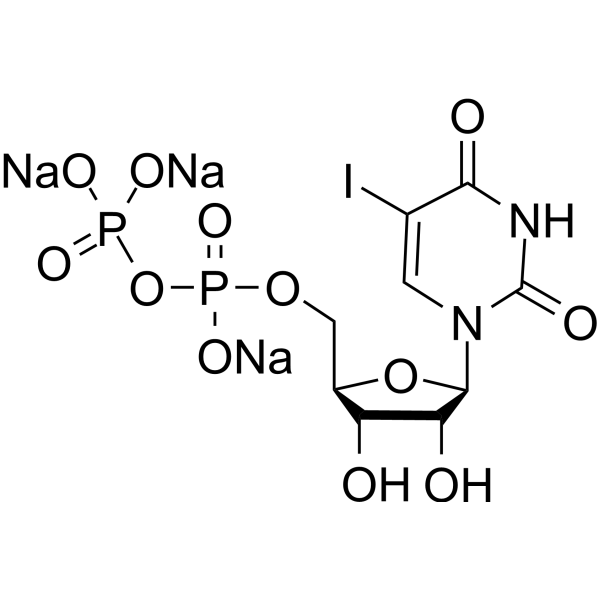 0 ImagesCat. No.: HY-117356BCAS No.: 1448858-83-0MRS2693 trisodium is a selective P2Y6 agonist with an EC50 value of 0.015 μM. MRS2693 trisodium can reduce the activation of NF-kappaB and activate the ERK1/2 pathway, and has a cytoprotective effect on mouse hindlimb skeletal muscle ischemia-reperfusion injury model.
-
KU004
 0 ImagesCat. No.: HY-164489CAS No.: 1260401-93-1KU004 is a potent dual EGFR/HER2 inhibitor with anticancer effects. KU004 inhibits the proliferation of human breast cancer SKBR3 cells by inducing G1 phase arrest. KU004 blocks the activation of HER2, EGFR and downstream Akt and Erk pathways and induces cell Apoptosis mainly via the extrinsic pathway. KU004 is a quinazoline derivative.
-
Cafestol (Standard)
 0 ImagesCafestol (Standard) is the analytical standard of Cafestol. This product is intended for research and analytical applications. Cafestol is an orally active diterpenoid and an inhibitor of ERK2. Cafestol has elevated blood lipids, anti-inflammatory, anti-angiogenic and anti-diabetic activities. In addition, Cafestol induces tumor cell apoptosis and autophagy, which can be used in the study of cancer.
-
KRASG12C IN-15
 0 ImagesCat. No.: HY-173047CAS No.: 2768868-14-8KRASG12C IN-15 (Compound 21) is the orally active inhibitor for KRASG12C, and inhibits SOS1-mediated GDP/GTP exchange with an IC50 of 19 nM. KRASG12C IN-15 inhibits the phosphorylation of ERK with IC50 of 0.051 μM. KRASG12C IN-15 inhibits the cell viability of KRASG12C mutated MIA PaCa-2 with IC50 of 0.023 μM. KRASG12C IN-15 exhibits antitumor effect in MIA PaCa-2 xenograft mouse models.
-
Withanolide B (Standard)
 0 ImagesCat. No.: HY-129566RCAS No.: 56973-41-2Withanolide B (Standard) is the analytical standard of Withanolide B. This product is intended for research and analytical applications. Withanolide B is an active component of W. somnifera Dunal. Withanolide B promotes osteogenic differentiation of hBMSCs via ERK1/2 and Wnt/β-catenin signaling pathways. Withanolide B exhibits neuroprotective, anti-arthritic, anti-aging and anti-cancer effects.
-
ATWLPPRAANLLMAAS
 0 ImagesCat. No.: HY-P10832CAS No.: 1228447-26-4ATWLPPRAANLLMAAS is a chimeric peptide with anti-angiogenic and potent anti-tumor effects. ATWLPPRAANLLMAAS can inhibit the proliferation, viability, migration, and invasion of human hepatocellular carcinoma cells, and induce apoptosis..
-
Tauroursodeoxycholate-d4-1
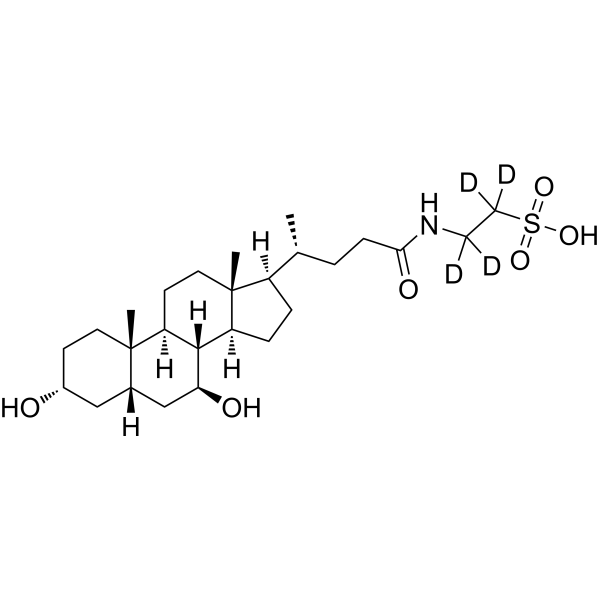 0 ImagesCat. No.: HY-19696S2CAS No.: 2573035-17-1Synonyms: Tauroursodeoxycholic acid-d4-1; TUDCA-d4-1; UR 906-d4-1Tauroursodeoxycholate-d4-1 is the deuterium labeled Tauroursodeoxycholate. Tauroursodeoxycholate (Tauroursodeoxycholic acid) is an endoplasmic reticulum (ER) stress inhibitor. Tauroursodeoxycholate significantly reduces expression of apoptosis molecules, such as caspase-3 and caspase-12. Tauroursodeoxycholate also inhibits ERK.
-
Enniatin A1-13C35
 0 ImagesCat. No.: HY-N6704SEnniatin A1-13C35 is the 13C-labeled Enniatin A1 (HY-N6704). Enniatin A1 isolated from Fusarium mycotoxins is a cyclic hexadepsipeptide consisting of alternating D-α-hydroxyisovaleric acids and N-methyl-L-amino acids. Enniatin A1 possesses anticarcinogenic properties by induction of apoptosis and disruption of ERK signalling pathway. Enniatin A1 inhibits ACAT with an IC50 of 49 μM in rat liver microsomes.
-
EGFR-IN-173
 0 ImagesCat. No.: HY-175864EGFR-IN-173 is an orally active, pan-mutant EGFR tyrosine kinase inhibitor that targets EGFR 19del, L858R/T790M and C797S triple-mutations, potently inhibiting EGFR19del/T790M/C797S with an IC50 of 1.19 nM while showing over 100-fold selectivity for mutant over wild-type EGFR (IC50 = 19.362 μM against WT). EGFR-IN-173 significantly inhibits cell migration, induces apoptosis in non-small cell lung cancer (NSCLC) cells. EGFR-IN-173 inhibits EGFR phosphorylation and suppresses the downstream pathways (MAPK/ERK, AKT, STAT3). EGFR-IN-173 exhibits antitumor efficacy in NSCLC and Ba/F3 xenograft models. EGFR-IN-173 can be used for NSCLC research.
-
DDN
 0 ImagesCat. No.: HY-138842CAS No.: 118006-14-7DDN is a selective insulin receptor (Insulin Receptor) activator, an insulin sensitizer, and a glucose-lowering insulin mimetic with oral bioavailability. DDN can directly bind to the receptor kinase domain and induce Akt and ERK phosphorylation, and it can also enhance insulin's effect on glucose uptake. DDN significantly reduces blood glucose levels in wild-type and diabetic ob/ob and db/db mice.
-
BMS-554417
 0 ImagesCat. No.: HY-10263CAS No.: 468741-42-6BMS-554417 is an orally active inhibitor of insulin receptor and insulin-like growth factor-I receptor (IGF-1R) kinases, with IC50 values of 50.6 nM and 67.9 nM, respectively. BMS-554417 blocks downstream signal transduction via the ERK and PI3K/Akt pathways. BMS-554417 induces G0-G1 cell cycle arrest, prevents cyclin D1 accumulation in the nucleus, triggers mitochondrial pathway-mediated apoptosis, promotes HER2 phosphorylation, and inhibits the proliferation and growth of cancer cells. BMS-554417 can be used in research related to colon cancer, ovarian cancer, and breast cancer.
-
Gypenoside LVI
 0 ImagesCat. No.: HY-N21887CAS No.: 105214-48-0Gypenoside LVI is an orally active dammarane-type triterpenoid compound found in Gynostemma pentaphyllum. Gypenoside LVI inhibits ERK and JNK phosphorylation, the NLRP3 inflammasome, and modulates M1 to M2 microglial polarization. Gypenoside LVI downregulates PCSK9 expression through a SREBP-independent pathway. Gypenoside LVI promotes cholesterol efflux via ABCG1 and SRB1, upregulates LXRα-mediated reverse cholesterol transport, and attenuates foam cell formation by reducing lipid accumulation and cholesterol uptake. Gypenoside LVI inhibits IL-6 and IL-1β secretion, reduces oxidative stress, neuroinflammation, microglial and astrocyte activation, and inhibits LPS-induced microglial proliferation. Gypenoside LVI can be used for research on atherosclerosis, hypercholesterolemia, depression, and non-small cell lung cancer.
-
Pratol
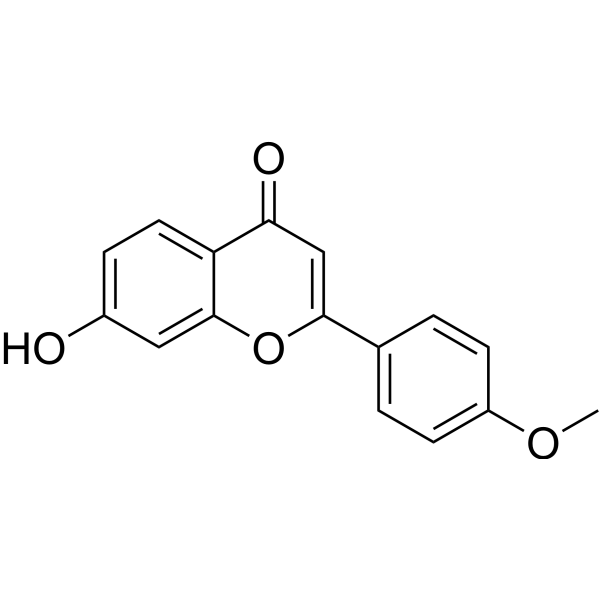 0 ImagesPratol (7-Hydroxy-4'-methoxyflavone) is an NF-κB inhibitor. Pratol also inhibits NO, PGE2, TNF-α, IL-1β, and IL-6 production. Pratol increases the phosphorylation of p38 MAPK, JNK, and ERK, decreases AKT phosphorylation, and upregulates MITF, tyrosinase, TRP-1, and TRP-2 through a PKA-dependent signaling pathway. Pratol reduces iNOS and COX-2 protein expression, inhibits p65 phosphorylation, and protects IκBα from degradation, thereby inhibiting NF-κB nuclear translocation. Pratol can be used in research on hypopigmentary disorders, inflammatory diseases, cervical cancer, and colon cancer.
-
7-Acetoxycoumarin
 0 ImagesCat. No.: HY-N20744CAS No.: 10387-49-2Synonyms: Acetylumbelliferone7-Acetoxycoumarin (Acetylumbelliferone) is an anti-inflammatory inhibitor with antibacterial and amoebicidal activities. 7-Acetoxycoumarin reduces the phosphorylation levels of ERK, JNK, NF-κB and p38 MAPK. 7-Acetoxycoumarin downregulates the protein and mRNA expression levels of iNOS and COX-2. 7-Acetoxycoumarin inhibits the production of IL-1β, IL-6, TNF-α, NO and PG2. 7-Acetoxycoumarin reduces the degradation of IκBα. 7-Acetoxycoumarin can be used in studies related to amoebiasis and Bacillus lentus infection.
-
DCZ3112
 0 ImagesCat. No.: HY-187653CAS No.: 2556837-25-1DCZ3112 is a Hsp90/Cdc37 protein-protein interaction inhibitor, with a Kd value of 4.98 µM against human Hsp90. DCZ3112 binds to the N-terminal domain of Hsp90, disrupts the Hsp90-Cdc37 interaction, and does not inhibit the ATPase activity of Hsp90. DCZ3112 induces G1 phase cell cycle arrest, apoptosis, reduces the phosphorylation levels of AKT and ERK, and inhibits the proliferation of HER2-positive breast cancer cells. DCZ3112 can be used in breast cancer-related research.
-
Flavokawain A (Standard)
 0 ImagesFlavokawain A is a chalcone compound and an orally active inhibitor of PRMT5 and cytochrome P450. Flavokawain A has anti-inflammatory, anti-tumor, and immunomodulatory effects. Flavokawain A can inhibit the proliferation of tumor cells and induce apoptosis. Flavokawain A can be used in the research of diseases such as bladder cancer.
-
ETP-45835 dihydrochloride
 0 ImagesCat. No.: HY-110336CAS No.: 2136571-30-5D-106669 is an inhibitor of Erk2 with an IC50 value of 18.7 μM. D-106669 inhibits cell proliferation with an EC50 value of 0.9 μM.
-
Sitagliptin (Standard)
 0 ImagesCat. No.: HY-13749RCAS No.: 486460-32-6Synonyms: MK-0431 (Standard)Sitagliptin (Standard) is the analytical standard of Sitagliptin (HY-13749). This product is intended for research and analytical applications. Sitagliptin is an orally active and highly selective DPP4 inhibitor with an IC50 value of 19 nM. Sitagliptin blocks the degradation of glucagon-like peptide-1 (GLP-1) and glucose-dependent insulinotropic peptide (GIP) by competing inhibition mechanism (Kᵢ = 1 nM), thereby increasing the level of active incretin. Sitagliptin can also directly stimulate the secretion of GLP-1 by intestinal L cells by activating the cAMP/PKA and ERK1/2 pathways, and this effect is independent of DPP-4. Sitagliptin shows protective effects on pancreatic islet grafts in 1-type diabetes models. Sitagliptin can be used for the study of 1-type and 2-type diabetes.



