



HBV
Hepatitis B virus
HBV (Hepatitis B virus), abbreviated HBV, is a species of the genus Orthohepadnavirus, which is likewise a part of the Hepadnaviridae family of viruses. HBV causes the disease hepatitis B. The hepatitis B virus is classified as the type species of the Orthohepadnavirus, which contains three other species: the Ground squirrel hepatitis virus, Woodchuck hepatitis virus, and theWoolly monkey hepatitis B virus. The genus is classified as part of the Hepadnaviridae family. HBV is divided into four major serotypes (adr, adw, ayr, ayw) based on antigenic epitopes present on its envelope proteins, and into eight genotypes (A–H) according to overall nucleotide sequence variation of the genome. The genotypes have a distinct geographical distribution and are used in tracing the evolution and transmission of the virus. Differences between genotypes affect the disease severity, course and likelihood of complications, and response to treatment and possibly vaccination.
All Product Categories
-
HBV Related Products (384)
Related Products (384)

-
Antibodies (2)
-
(Rac)-Tenofovir-d6
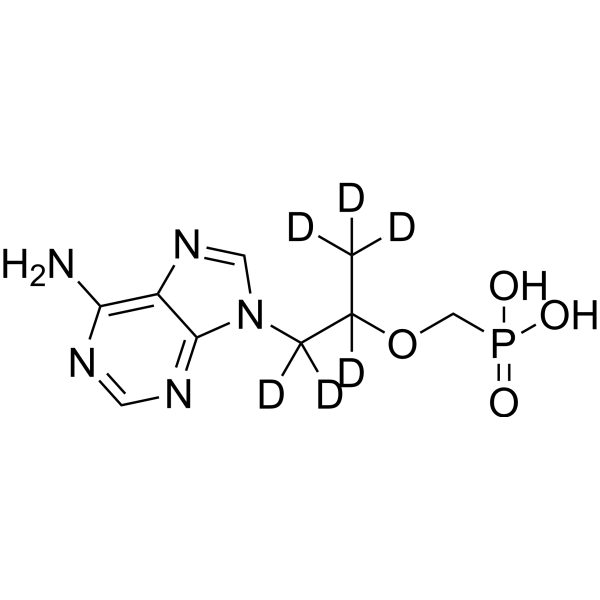 0 Images(Rac)-Tenofovir-d6 is a labelled racemic Tenofovir. Tenofovir (GS 1278) is a nucleotide reverse transcriptase inhibitor to treat HIV and chronic Hepatitis B (HBV).
-
(Tetrahydro-2H-pyran-4-yl)methanol
 0 Images(Tetrahydro-2H-pyran-4-yl)methanol is a biochemical reagent that can be used as a biological material or organic compound for life science related research.
-
(S)-Tenofovir
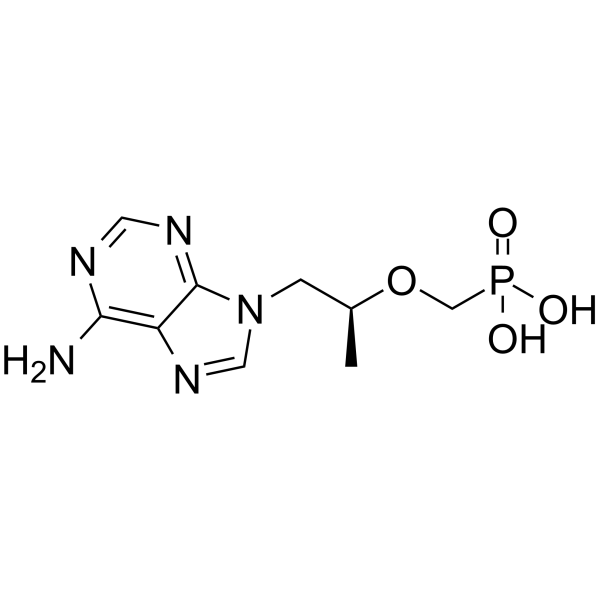 0 ImagesSynonyms: (S)-GS 1278; (S)-PMPA; (S)-TDF
-
Emtricitabine triphosphate tetrasodium salt
 0 ImagesSynonyms: (-)-Emtricitabine triphosphate tetrasodium saltEmtricitabine triphosphate tetrasodium salt is the tetrasodium salt form of Emtricitabine triphosphate (HY-131596). However,Emtricitabine triphosphate ((-)-Emtricitabine triphosphate) is the phosphorylated anabolite of Emtricitabine (HY-17427),a nucleoside reverse transcriptase inhibitor,targeting to HIV and HBV.
-
Antazoline hydrochloride
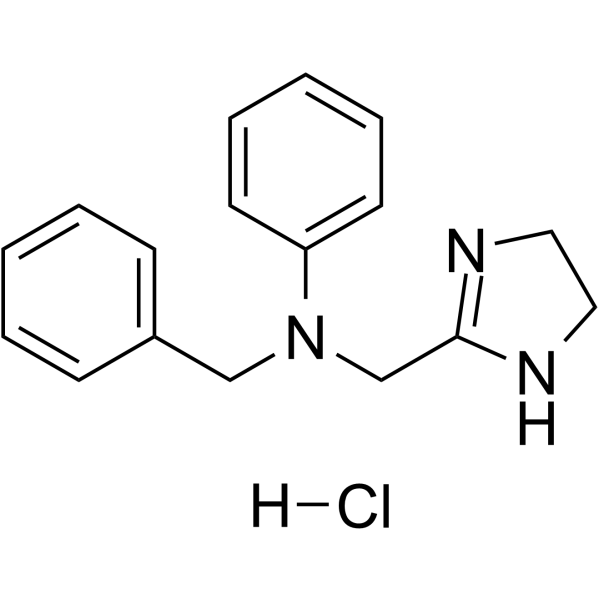 0 ImagesAntazoline hydrochloride is a histamine H1 receptor antagonist with anticholinergic and antiviral properties. Antazoline hydrochloride can prevent histamine from acting on target cells through a reversible competition effect on histamine receptor sites of these cells. Antazoline hydrochloride can exert an antiallegic effect and prevent the occurrence of physiological reactions from the effect of blocking as well as inhibiting H1 receptor. Antazoline hydrochloride can effectively reduce HBV DNA in the extracellular supernatant in a dose-dependent manner, with EC50 of 2.910 μmol/L in HepAD38 cells. Antazoline hydrochloride also has a significant inhibitory effect on HBV DNA in the extracellular supernatant of Huh7 cells (EC50 = 2.349 μmol/L). Antazoline hydrochloride has anti-arrhythmic effect in acute myocardial infarctions. Antazoline hydrochloride can be studied in research for cardiovascular diseases, and HBV.
-
Thiamine-13C3 hydrochloride
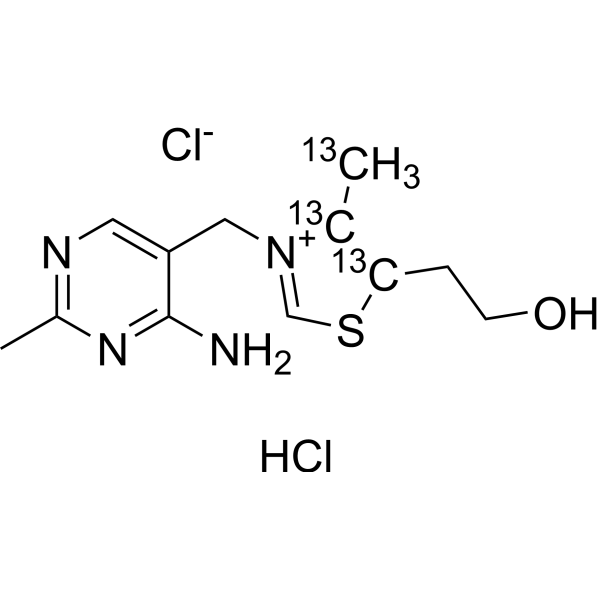 0 ImagesCat. No.: HY-N0680S3Purity: 99.9%Synonyms: Thiamine chloride-13C3 hydrochloride; Vitamin B1-13C3 hydrochlorideThiamine-13C3 (hydrochloride) is the 13C-labeled Thiamine (hydrochloride). Thiamine hydrochloride (Thiamine chloride hydrochloride) is an essential micronutrient needed as a cofactor for many central metabolic enzymes.
-
Libivirumab
 0 ImagesSynonyms: 17.1.41Libivirumab (17.1.41) is a human anti-HBV monoclonal antibody. Libivirumab shows neutralization activity with IC50s of 35, 130 ng/mL for HBsAg, HBeAg, respectively.
-
ALG-001075
 0 ImagesALG-001075, a capsid assembly modulator (CAM), is an orally active HBV inhibitor. ALG-001075 effectively blocks not only HBV DNA production but also extracellular HBsAg/HBeAg and intracellular HBV RNA in primary human hepatocytes. ALG-001075 shows pronounced reductions of circulating HBV DNA in the AAV-HBV mouse model. ALG-001075 can be used for the study of Chronic hepatitis B (CHB).
-
Inarigivir ammonium
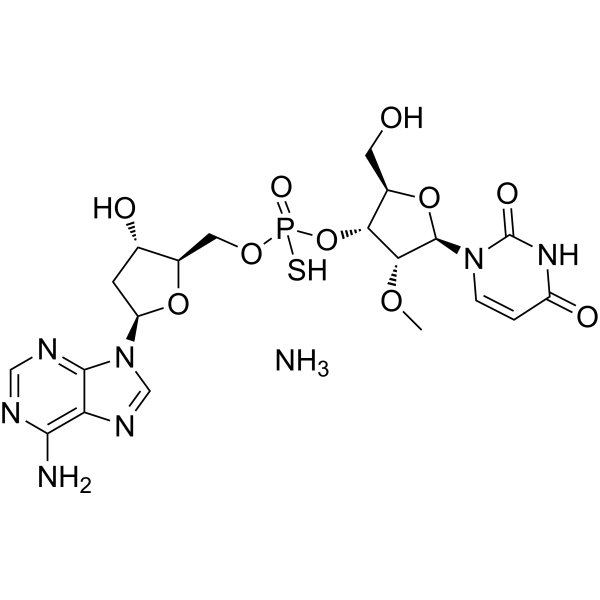 0 ImagesSynonyms: ORI-9020 ammonium; SB-9000 ammoniumInarigivir (ORI-9020) ammonium is a dinucleotide antiviral drug that can significantly reduce liver HBV DNA in transgenic mice expressing hepatitis B virus. Inarigivir (ORI-9020) ammonium acts as a RIG-I (Retinoic acid-inducible gene-I) agonist to activate cellular innate immune responses.

-
Mulberrofuran G
 0 ImagesCat. No.: HY-N3239CAS No.: 87085-00-5Mulberrofuran G is a NOX inhibitor (IC50: 6.9 μM) and tyrosinase inhibitor. Mulberrofuran G exhibits anti-inflammatory, antioxidant, antiviral, antitumor, and neuroprotective effects. Mulberrofuran G can be used in the research of tumors, nervous system diseases, and other conditions.
-
Alloc-DOX
 0 ImagesSynonyms: N-Alloc doxorubicinAlloc-DOX (N-Alloc doxorubicin) is a Doxorubicin (HY-15142A) prodrug. The combination of a catalyst (such as nano-palladium) and alloc-DOX leads to a decrease in cell viability and tumour growth.
-
Chamaechromone
 0 ImagesChamaechromone is a biflavonoid ingredient isolated from the roots of Stellera chamaejasme L. (Thymelaeaceae). Chamaechromone possesses anti-hepatitis B virus (HBV) effects against the surface antigen of HBV (HBsAg) secretion and has insecticidal activities.
-
IR415
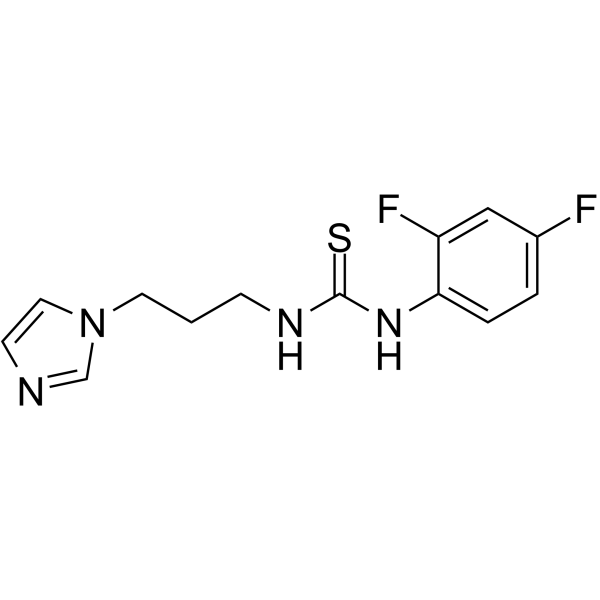 0 ImagesIR415 is a potent anti-HBV agent and inhibits HBV replication by blocking the HBx activity. IR415 selectively interacts with HBx (Kd=2 nM) and blocks HBV-mediated RNAi suppression, reverses the inhibitory effect of HBx protein on the activity of the dicer endoribonuclease. HBx: hepatitis B virus X protein.

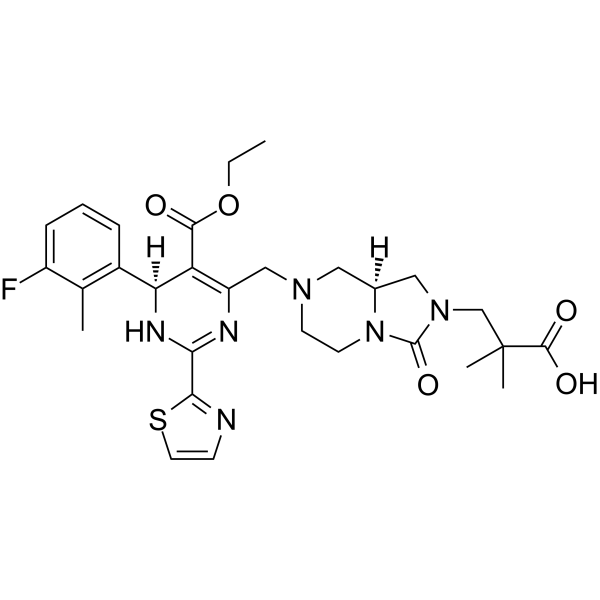
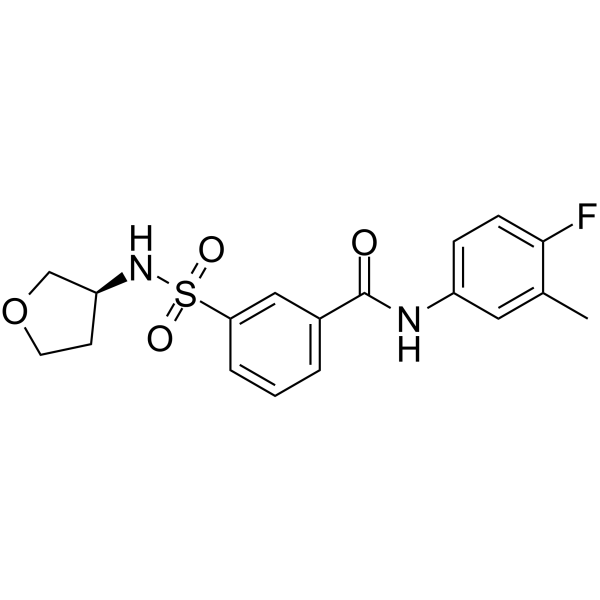
-
Lenvervimab
 0 ImagesSynonyms: GC1102Lenvervimab (GC1102) is a IgG1-type recombinant human hepatitis B Immunoglobulin. Lenvervimab can be used for research of hepatitis B virus infection.
-
Tenofovir exalidex
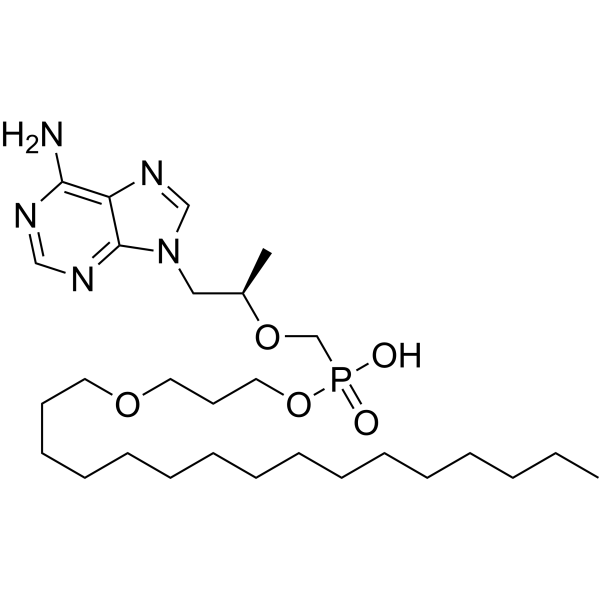 0 ImagesSynonyms: CMX-157Tenofovir exalidex (CMX157) is a lipid conjugate of the acyclic nucleotide analog Tenofovir with activity against both wild-type and antiretroviral drug-resistant HIV strains, including multidrug nucleoside/nucleotide analog-resistant viruses. Tenofovir exalidex is active against all major subtypes of HIV-1 and HIV-2 in fresh human PBMCs and against all HIV-1 strains evaluated in monocyte-derived macrophages, with EC50s ranging between 0.2 and 7.2 nM. CMX157 is orally available and has no apparent toxicity. Tenofovir exalidex also shows antiviral activity against HBV.
-
Canocapavir
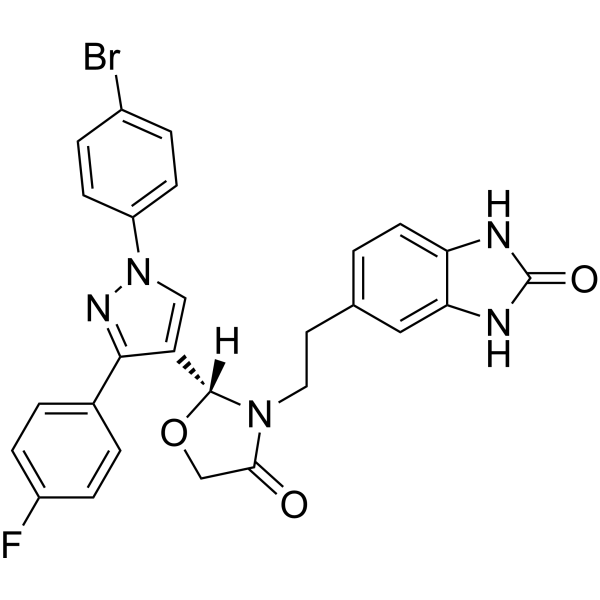 0 ImagesSynonyms: ZM-H1505RCanocapavir (ZM-H1505R) is an orally active HBV core protein-targeting antiviral agent. Canocapavir binds to the hydrophobic pocket at the dimer-dimer interface of HBV core protein (HBc), stimulating intracellular accumulation of nonfunctional HBV capsids, disrupting viral replication. Canocapavir interferes with the interaction between HBc and HBV large surface protein, resulting in diminished
production of empty virionsis. Canocapavir can be used for the research of hepatitis B virus (HBV) infection.




