



HDAC
Histone deacetylases
HDAC (Histone deacetylases) are a class of enzymes that remove acetyl groups (O=C-CH3) from an ε-N-acetyl lysine amino acid on ahistone, allowing the histones to wrap the DNA more tightly. This is important because DNA is wrapped around histones, and DNA expression is regulated by acetylation and de-acetylation. Its action is opposite to that of histone acetyltransferase. HDAC proteins are now also called lysine deacetylases (KDAC), to describe their function rather than their target, which also includes non-histone proteins. Together with the acetylpolyamine amidohydrolases and the acetoin utilization proteins, the histone deacetylases form an ancient protein superfamily known as the histone deacetylase superfamily.
HDAC Isoform Specific Products
-
HDAC
(387)
View all products
-
HDAC1
(312)
View all products
-
HDAC2
(207)
View all products
-
HDAC3
(200)
View all products
-
HDAC4
(71)
View all products
-
HDAC5
(56)
View all products
-
HDAC6
(326)
View all products
-
HDAC7
(53)
View all products
-
HDAC8
(185)
View all products
-
HDAC9
(41)
View all products
-
HDAC10
(64)
View all products
-
HDAC11
(70)
View all products
-
HD1
(3)
View all products
-
HD2
(4)
View all products
All Product Categories
-
HDAC Inhibitors
(769)
View all products
-
HDAC Antagonists
(3)
View all products
-
HDAC Activators
(14)
View all products
-
HDAC Modulators
(4)
View all products
-
HDAC MDM2 Inhibitor
(1)
View all products
-
HDAC Degraders
(41)
View all products
-
HDAC Controls
(3)
View all products
-
HDAC Substrates
(3)
View all products
-
HDAC Ligands
(10)
View all products
-
HDAC Related Products (897)
Related Products (897)

-
Antibodies (16)
-
HDAC Signaling Pathway
-
HDAC Isoform Comparison

-
GK718
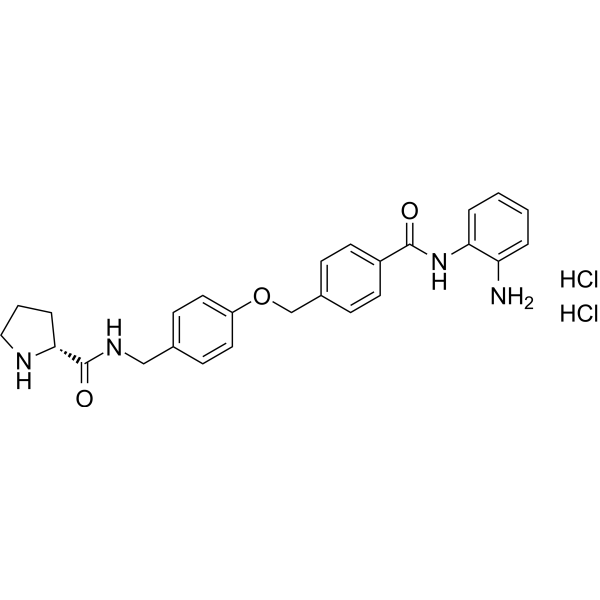 0 ImagesCat. No.: HY-155329CAS No.: 3032392-65-4
-
HDAC6-IN-31
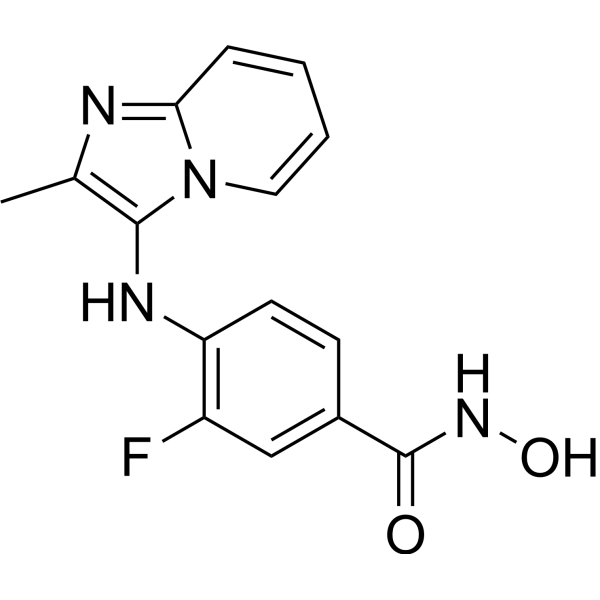 0 ImagesCat. No.: HY-161155HDAC6-IN-31 (compound 8m) is a selective HDAC6 inhibitor, with the IC50 value of 0.026 μM, that significantly inhibits the production and release of pro-inflammatory cytokines. While HDAC6 is critically involved in the activation of inflammasomes, HDAC6-IN-31 has the potential to inhibit NLRP3 inflammasome-driven inflammatory diseases. HDAC6-IN-31 also inhibits glioblastoma cell migration.
-
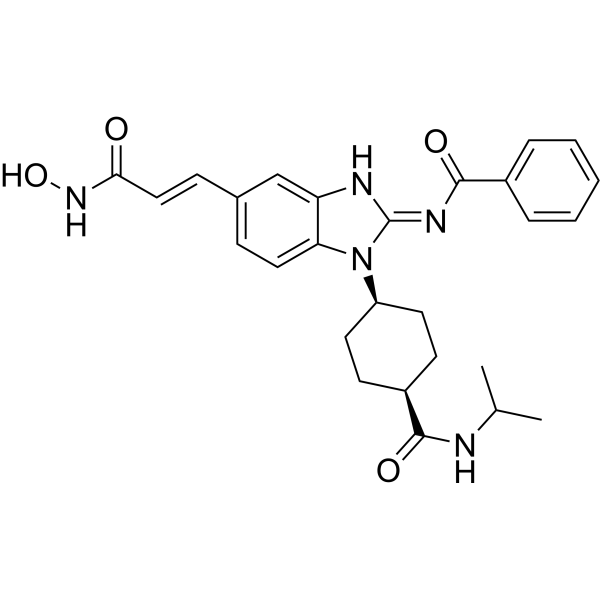
HDAC/HSP90-IN-1
 0 ImagesCat. No.: HY-130273CAS No.: 2244714-37-0HDAC/HSP90-IN-1 (compound 20) is a potent dual inhibitor of HDAC (IC50 = 194 nM) and HSP90 (HSP90α IC50 = 153 nM). HDAC/HSP90-IN-1 induces HSP70 expression, downregulates HSP90 client proteins, and promotes acetylation of α-tubulin and histone H3 in cancer cells. HDAC/HSP90-IN-1 reduces PD-L1 expression in IFN-γ treated H1975 cells. HDAC/HSP90-IN-1 can be used for cancer research, such as lung and colon cancer.
-
HDAC-IN-42
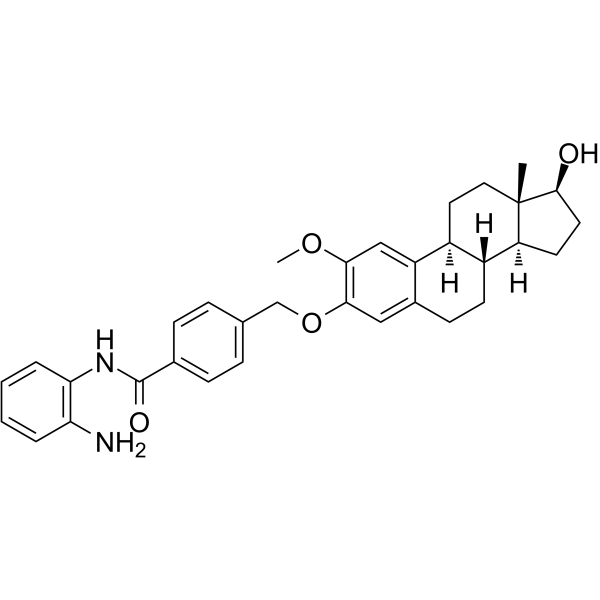
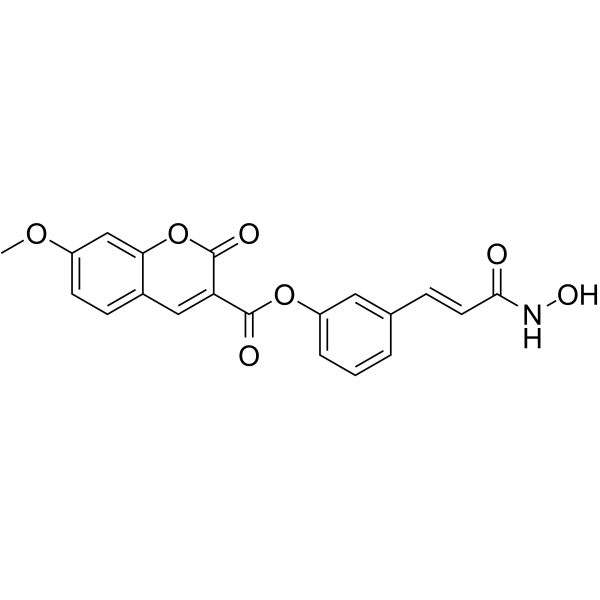 0 ImagesCat. No.: HY-147892CAS No.: 2454024-18-9HDAC-IN-42 (compound 14f) is a potent and selective HDAC inhibitor with IC50 values of 0.19 and 4.98 µM for HDAC1 and HDAC6, respectively. HDAC-IN-42 shows anticancer and anti-proliferative activity. HDAC-IN-42 induces apoptosis and cell cycle arrest at G2/M phase.
-
(±)-trans-BAS-2
 0 ImagesCat. No.: HY-184505CAS No.: 2790482-16-3(±)-trans-BAS-2 is a hHDAC6 inhibitor with an IC50 value of 0.462 μM. (±)-trans-BAS-2 serves as a scaffold for the design of proteolysis-targeting chimeras (PROTACs) and induces proteasome-dependent degradation of hHDAC6 in cells. (±)-trans-BAS-2 can be used in the research of triple-negative breast cancer and multiple myeloma.
-
Top/HDAC-IN-2
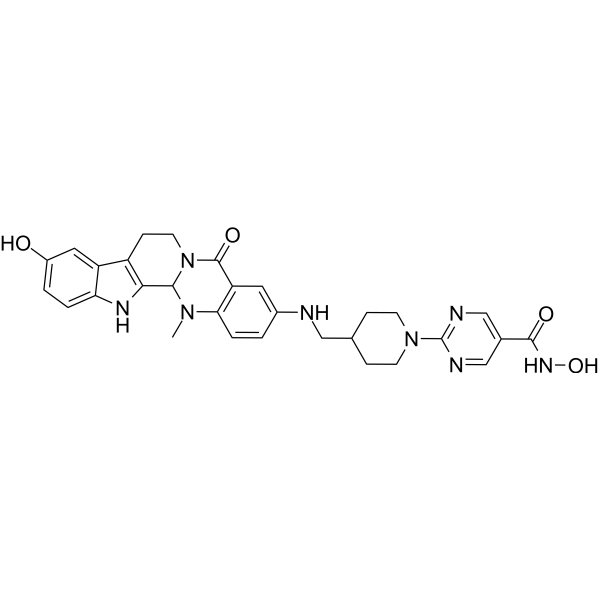 0 ImagesCat. No.: HY-145852CAS No.: 2775446-64-3
-
HDAC-IN-63
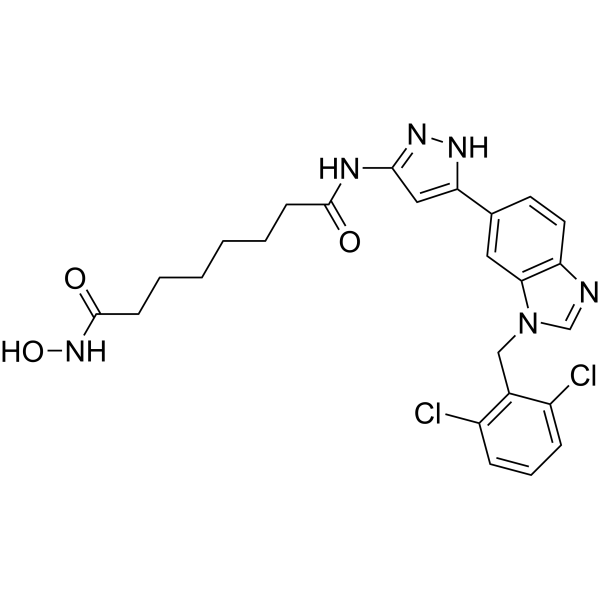 0 ImagesCat. No.: HY-149474CAS No.: 2920046-95-1HDAC-IN-63 (Compound 63) is a dual FLT3/HDAC inhibitor (IC50: 0.844 and 30.0 nM for FLT3 and HDAC1 respectively). HDAC-IN-63 inhibits MV4-11 cell proliferation (IC50: 92 nM. HDAC-IN-63 induces apoptosis and arrests cell cycle in MV4-11 cells. HDAC-IN-63 can be used for research of acute myeloid leukemia (AML).
-
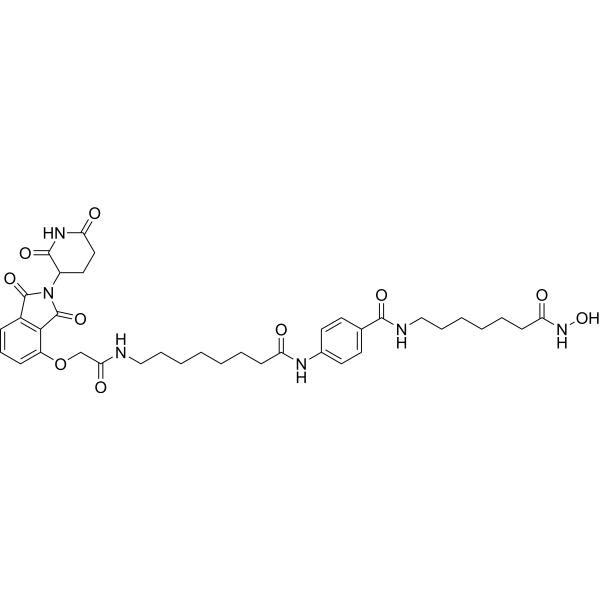
HDAC-IN-95
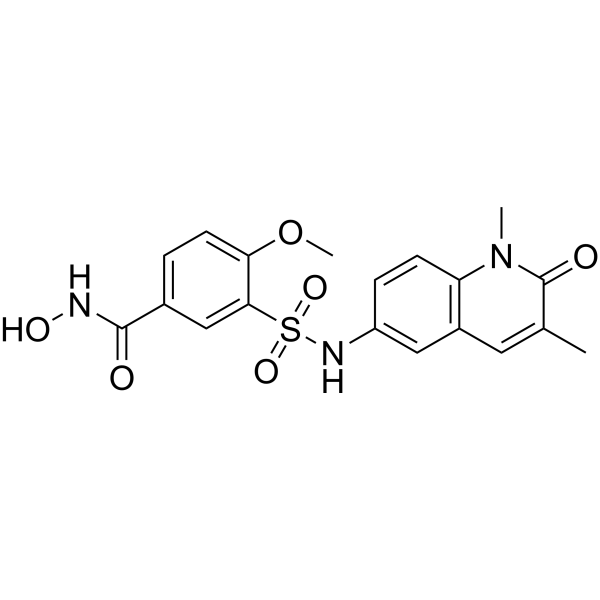
 0 ImagesCat. No.: HY-17667CAS No.: 127588-56-1

-
Fibrostat
 0 ImagesCat. No.: HY-169940Fibrostat (Compound 5n) is a selective HDAC6 inhibitor that exerts antifibrotic effects by inhibiting HDAC6 activity, with an IC50 value of 63 nM. It also exhibits good selectivity over HDAC1, HDAC3, HDAC5, HDAC8, HDAC10, and HDAC11. Fibrostat significantly downregulates fibrotic markers (fibronectin and collagen 1) in fibroblasts. Additionally, Fibrostat demonstrated no toxicity in rat-perfused heart and zebrafish larvae models. Fibrostat shows potential for research into fibrosis-related diseases.
-
COX-2/HDAC6-IN-1
 0 ImagesCat. No.: HY-181926COX-2/HDAC6-IN-1 (Compound 11e) is a dual COX-2 and HDAC6 inhibitor, with an IC50 of 0.12 μM against HDAC6 and an IC50 of 0.66 μM against COX-2. COX-2/HDAC6-IN-1 enhances the acetylation level of α-tubulin, regulates epigenetic gene expression, and inhibits the expression of pro-inflammatory mediators (COX-2, IL-1β, IL-6 and TNF-α). COX-2/HDAC6-IN-1 promotes Amyloid-β clearance and reduces excessive phosphorylation of Tau protein. COX-2/HDAC6-IN-1 maintains neuronal morphology by stabilizing MAP2, protects synaptic integrity by regulating synapsin, and restores the expression of memory-related genes. COX-2/HDAC6-IN-1 possesses neuroprotective activity and improves learning and memory abilities in Scopolamine (HY-N0296)-induced Alzheimer's disease mouse models. COX-2/HDAC6-IN-1 is applicable to research related to Alzheimer's disease.
-
HDAC-IN-66
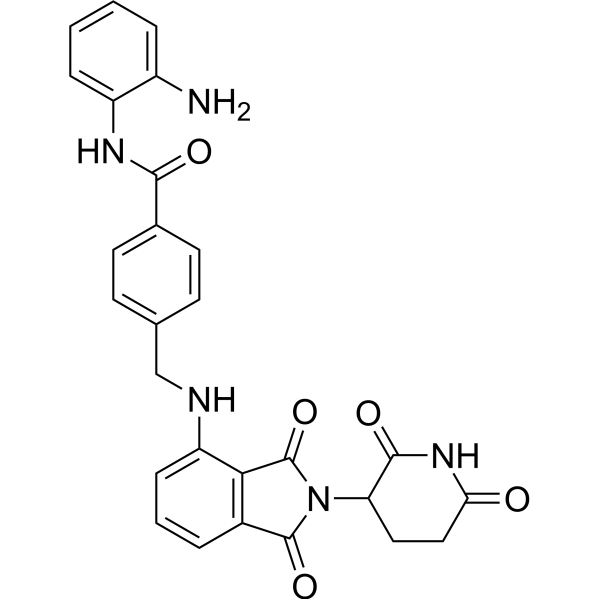 0 ImagesCat. No.: HY-157215CAS No.: 3055552-04-7HDAC-IN-66 (compound 2F) is a selective HDAC inhibitor and Pomalidomide (HY-10984) derivative that potently inhibits hematological tumor cells.
-
HDAC3-IN-8
 0 ImagesCat. No.: HY-181768CAS No.: 2763368-90-5HDAC3-IN-8 is a selective inhibitor targeting HDAC1, HDAC2 and HDAC3, with IC50 values of 3.52 nM for HDAC1, 15.14 nM for HDAC2 and 0.38 nM for HDAC3. HDAC3-IN-8 shows high selectivity for HDAC3 and exerts its effect by inhibiting histone deacetylase activity. HDAC3-IN-8 can be used to construct HDAC3-targeted PROTAC degrader (HY-181767) and is suitable for the research of acute myeloid leukemia (AML).
-
HDAC6-IN-45
 0 ImagesCat. No.: HY-161783CAS No.: 3048532-05-1HDAC6-IN-45 (Compound 15) is a selective inhibitor for HDAC6 with IC50 of 15.2 nM. HDAC6-IN-45 exhibits neurotrophic through the upregulation of GAP43 and Beta-3 tubulin markers. HDAC6-IN-45 activates the Nrf2 signaling pathway, reduces H2O2-induced ROS production, inhibits apoptosis in PC12, and exhibits neuroprotective efficacy in SCOP-induced zebrafish Alzheimer's Disease models. HDAC6-IN-45 exhibits antioxidant activity and good blood-brain barrier (BBB) permeability.




