



PARP
PARP-1 (poly(ADP-ribose) polymerase 1) is a nuclear ADP-ribosyl transferase that functions as an early sensor of DNA strand breaks and coordinates cellular responses to genomic damage through poly(ADP-ribosyl)ation-dependent signaling[1][2]. Mechanistically, PARP-1 participates in multiple DNA repair pathways, including base excision repair (BER), homologous recombination (HR), and non-homologous end joining (NHEJ), where it promotes chromatin remodeling and recruitment of repair factors to damaged DNA sites[1][2][3]. Through these activities, PARP-1 contributes to genome surveillance and maintenance of genomic stability, processes that are frequently disrupted during tumor development[1][2]. In cancer biology, dysregulated PARP-1 function has been associated with disease progression, and inhibition of PARP-mediated DNA repair can reduce tumor cell viability by exploiting defects in homologous recombination repair pathways[1][4]. Compared with the closely related isoform PARP-2, PARP-1 is the dominant mediator of single-strand break repair, whereas PARP-2 shares DNA repair functions but also displays distinct roles in biological processes including inflammation, metabolism, oxidative stress responses, and cancer progression[3][5]. This functional distinction is important for understanding isoform-specific biology and for designing selective therapeutic strategies[5]. For experimental and translational applications, PARP inhibitors have become widely used tools to interrogate DNA damage responses and to target tumors with DNA repair deficiencies, particularly those characterized by homologous recombination defects[1][4].
References:
- [1]. Conceição CJF, et al. PARP1: A comprehensive review of its mechanisms, therapeutic implications and emerging cancer treatments. Biochim Biophys Acta Rev Cancer. 2025 Apr;1880(2):189282. [Content Brief]
- [2]. Pazzaglia S, et al. Multifaceted Role of PARP-1 in DNA Repair and Inflammation: Pathological and Therapeutic Implications in Cancer and Non-Cancer Diseases. Cells. 2020;9(1):41.
- [3]. Szántó M, et al. Specific and shared biological functions of PARP2 - is PARP2 really a lil' brother of PARP1? Expert Rev Mol Med. 2024;26:e13.
- [4]. Rose M, et al. PARP Inhibitors: Clinical Relevance, Mechanisms of Action and Tumor Resistance. Front Cell Dev Biol. 2020 Sep 9;8:564601. [Content Brief]
- [5]. Yelamos J, et al. PARP-1 and PARP-2: New players in tumour development. Am J Cancer Res. 2011;1(3):328-346. Epub 2011 Jan 8. PMID: 21968702; PMCID: PMC3180065. [Content Brief]
All Product Categories
-
PARP Related Products (307)
Related Products (307)

-
Antibodies (2)
-
TIPARP Human Pre-designed siRNA Set A
 0 ImagesCat. No.: HY-RS14546
TIPARP Human Pre-designed siRNA Set A contains three designed siRNAs for TIPARP gene (Human), as well as a negative control, a positive control, and a FAM-labeled negative control.
-
CQ-16
 0 ImagesCat. No.: HY-169336CAS No.: 3024354-59-1CQ-16 is an orally active small molecule drug conjugate (SMDC) targeting prostate-specific membrane antigen (PSMA). CQ-16 exhibits highly selective antiproliferative activity between PSMA-positive and PSMA-negative prostate cells. In addition, CQ-16 also has PARP inhibitory activity (IC50=1 nM). (Pink: PSMA Ligand (HY-139840); Black: Linker (HY-W037980); Blue: PARP Inhibitor (HY-10162))
-
R9-caPep
 0 ImagesCat. No.: HY-183488CAS No.: 1207092-73-6Synonyms: RRRRRRRRRCCLGIPEQEYR9-caPep (RRRRRRRRRCCLGIPEQEY) is a cell-penetrating peptide derived from proliferating cell nuclear antigen (PCNA). R9-caPep selectively blocks the interactions between PCNA and FEN1, as well as between PCNA and LIGI, while preserving the binding of POLD3 to PCNA. R9-caPep interferes with DNA synthesis and homologous recombination-mediated double-strand DNA break repair, inducing S-phase arrest, DNA damage accumulation, and apoptosis. R9-caPep inhibits the growth of tumor volume and weight of neuroblastoma in nude mice. R9-caPep can be used in research related to neuroblastoma and triple-negative breast cancer.

-
WP-1034
 0 ImagesCat. No.: HY-111275CAS No.: 857064-42-7WP-1034 is a JAK-STAT inhibitor with proapoptotic and antileukemic activity in acute myeloid leukemia (AML). WP-1034 blocks activation of Stat 3 and 5. WP-1034 induces cell cycle arrest and triggers apoptosis. WP-1034 can be used for AML research.
-
BSI-001
 0 ImagesCat. No.: HY-P991977Synonyms: 5G9BSI-001 (5G9) is a HER2-targeting antibody. BSI-001 inhibits cell proliferation and migration, induces apoptosis and PARP cleavage, and suppresses HER2-mediated downstream signaling pathways (including the phosphorylation of EGFR, HER3, AKT and ERK) when combined with Trastuzumab (HY-P9907) in HER2-positive cancer cells. BSI-001 exhibits synergistic anti-tumor efficacy in animal models of gastric cancer and breast cancer when combined with Trastuzumab. BSI-001 can be used for the research of HER2-positive breast cancer and HER2-overexpressing gastric cancer.
-
GPI 15427
 0 ImagesCat. No.: HY-15048CAS No.: 805242-85-7GPI 15427 is a potent inhibitor of the enzyme poly (ADP-ribose) polymerase-1 (PARP-1), which plays a harmful role during inflammation. In a rat model of gut injury and inflammation, including splanchnic artery occlusion (SAO) shock and dinitrobenzene sulfonic acid (DNBS)-induced colitis, GPI 15427 demonstrates strong anti-inflammatory effects that reduces inflammatory cell infiltration, histological injury. GPI 15427 also diminishes the accumulation of poly (ADP-ribose) in the ileum and colon of treated rats.
-
PARP-1-IN-13
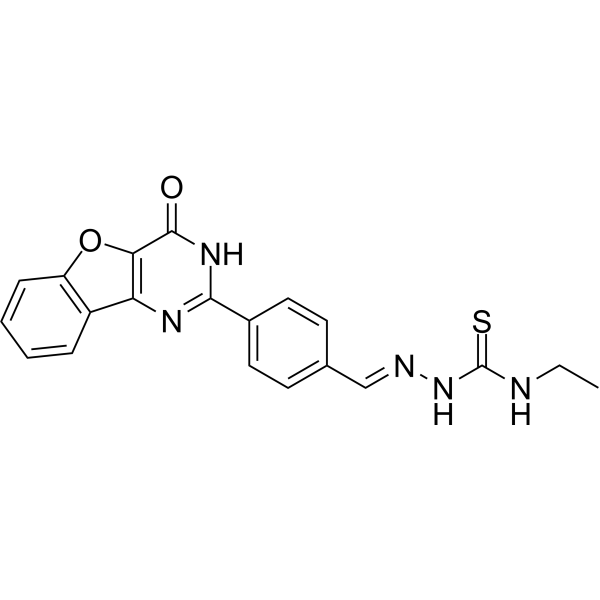 0 ImagesCat. No.: HY-155122CAS No.: 2999661-74-2
-
BYK 49187
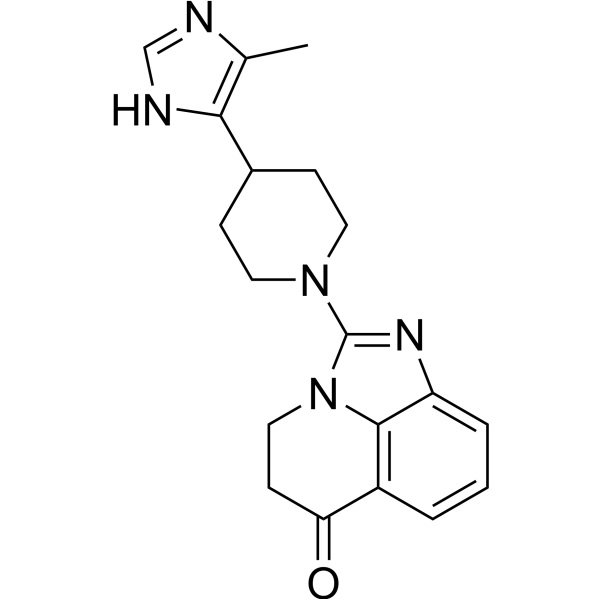 0 ImagesCat. No.: HY-108633CAS No.: 163120-31-8AR-C66096 (FPL 66096) tetrasodium is a selective platelet P2YT receptor antagonist. AR-C66096 tetrasodium effectively blocks ADP-induced platelet aggregation. AR-C66096 tetrasodium can be used in the research of thromboembolism.
-
CU-TZD-20
 0 ImagesCat. No.: HY-179091CU-TZD-20 is a PARP-1 inhibitor. CU-TZD-20 has a high affinity for binding to the PARP-1 catalytic domain and good structural stability. CU-TZD-20 competitively occupies NAD+ binding sites and forms stable interactions with key catalytic residues. CU-TZD-20 can be used for cancer research.
-
SKLB70326
 0 ImagesCat. No.: HY-116204CAS No.: 1257317-77-3SKLB70326 is a small molecule inhibitor of cell cycle progression that induces cell cycle arrest and apoptosis in human hepatocellular carcinoma cells. SKLB70326 is involved in downregulating cyclin-dependent kinase (CDK) 2, CDK4, and CDK6, while also activating PARP, caspase-3, caspase-9, and Bax, and downregulating Bcl-2.
-
Viriditoxin
 0 ImagesCat. No.: HY-126051CAS No.: 1381782-08-6Synonyms: (-)-ViriditoxinViriditoxin ((-)-Viriditoxin) is a mycotoxin. Viriditoxin promotes tubulin polymerization, and inhibits FtsZ polymerization and GTPase activity. Viriditoxin exhibits cytotoxicity against cancer cells, induces apoptosis, inhibits cell migration and colony formation, induces G2/M phase arrest, and triggers autophagic cell death. Viriditoxin activates caspase-3, cleaves PARP, promotes cytochrome c release, and induces ROS production. Viriditoxin possesses broad-spectrum antibacterial activity against Gram-positive pathogenic bacteria, fish pathogenic bacteria, and permeabilized Gram-negative bacteria. Viriditoxin can be used in research related to ovarian cancer, lung cancer, nasopharyngeal carcinoma, colon cancer, neuroblastoma, prostate cancer, leukemia, lymphoma, bacterial infections, and streptococcosis.
-
PARP-1-IN-1
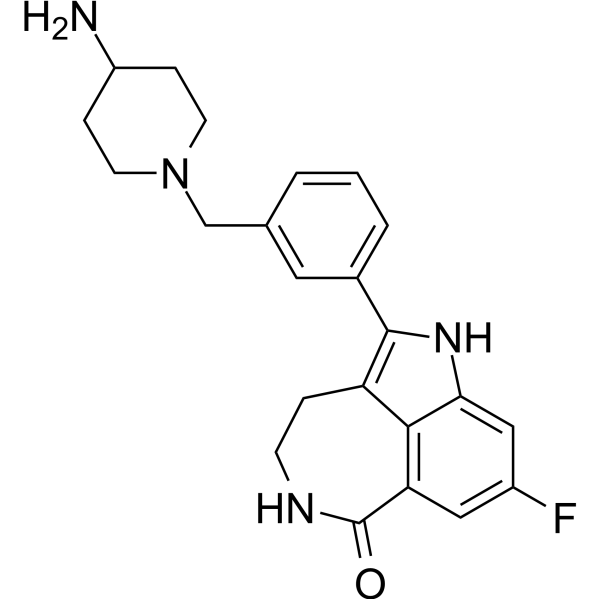 0 ImagesCat. No.: HY-144642CAS No.: 2763840-83-9PARP-1-IN-1 is a high selective and orally active PARP-1 inhibitor (IC50=0.96 nM). PARP-1-IN-1 has well tolerance and remarkable single dose activity in the MDA-MB-436 xenotransplantation model.
-
PARP1-IN-54
 0 ImagesCat. No.: HY-185143CAS No.: 2915309-47-4PARP1-IN-54 (example 5) is a PARP1 inhibitor with antitumor effects.
-
Oxychlororaphine (Standard)
 0 ImagesCat. No.: HY-W042191RCAS No.: 550-89-0Oxychlororaphine (Standard) is the analytical standard of Oxychlororaphine. This product is intended for research and analytical applications. Oxychloroaphine could be isolated from the bacterium Pantoea agglomerans naturally present in soil. Oxychloroaphine has broad-spectrum antifungal activity. Oxychloroaphine has cytotoxicity in a dose-dependent manner and induces apoptosis. Oxychloroaphine can be used in research of cancer[1][2].

-
Chlorin e6 (solution)
 0 ImagesCat. No.: HY-DY1092CAS No.: 19660-77-6Synonyms: Ce6 (solution)Chlorin e6 (solution) (Ce6 (solution)) is a photosensitizer and has strong absorption peaks at wavelength of 402 and 662 nm, as well as exhibiting intense fluorescence at 668 nm. Chlorin e6 has antimicrobial efficacy and anticancer activity. Chlorin e6 induces cell apoptosis via caspase-3 activation and can be used for the research of cancer.
Solvent and concentration: DMSO: 10 mM
The 1 mL volume is defined as the base specification. All larger sizes correspond to incremental volumes of this base.
-
RPS6-IN-1
 0 ImagesCat. No.: HY-161874RPS6-IN-1 (Compound 22o) inhibits cell metastasis, induces cell apoptosis (increases the expression of Bax, p53, cleaved-caspase 3, and cleaved-PARP). RPS6-IN-1 decreases mitochondrial membrane potential. RPS6-IN-1 activates autophagy through the PI3K-Akt-mTOR signaling pathway, damages intracellular mitochondria and lysosomes, and cause ER stress. RPS6-IN-1 inhibits RPS6 phosphorylation. RPS6-IN-1 is an anticancer agent with low systemic toxicity.
-
NCT-TFP
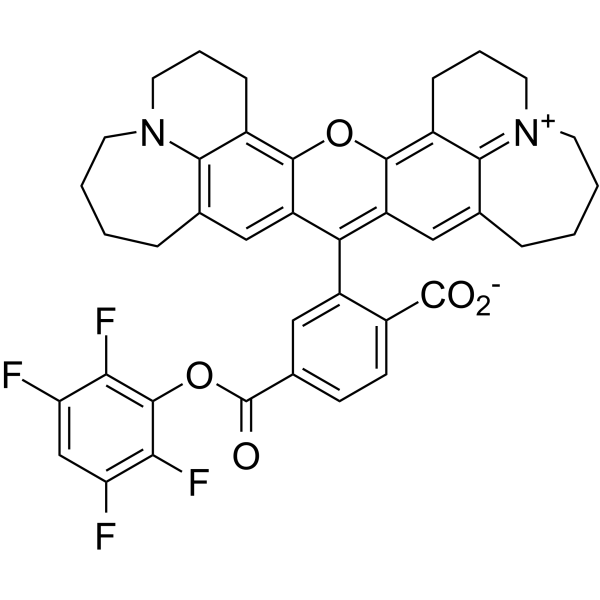 0 ImagesCat. No.: HY-D1107CAS No.: 2379390-73-3
-
Acrofolione A
 0 ImagesCat. No.: HY-N16567CAS No.: 820975-61-9Acrofolione A is an acetophenone dimer isolated from Acronychia pendunculata with anticancer effects. Acrofolione A induces G0/G1 phase cell cycle arrest and apoptosis in human NALM-6 pre-B cell leukaemia cells. Acrofolione A can be used for leukaemia research.




