



PARP
PARP-1 (poly(ADP-ribose) polymerase 1) is a nuclear ADP-ribosyl transferase that functions as an early sensor of DNA strand breaks and coordinates cellular responses to genomic damage through poly(ADP-ribosyl)ation-dependent signaling[1][2]. Mechanistically, PARP-1 participates in multiple DNA repair pathways, including base excision repair (BER), homologous recombination (HR), and non-homologous end joining (NHEJ), where it promotes chromatin remodeling and recruitment of repair factors to damaged DNA sites[1][2][3]. Through these activities, PARP-1 contributes to genome surveillance and maintenance of genomic stability, processes that are frequently disrupted during tumor development[1][2]. In cancer biology, dysregulated PARP-1 function has been associated with disease progression, and inhibition of PARP-mediated DNA repair can reduce tumor cell viability by exploiting defects in homologous recombination repair pathways[1][4]. Compared with the closely related isoform PARP-2, PARP-1 is the dominant mediator of single-strand break repair, whereas PARP-2 shares DNA repair functions but also displays distinct roles in biological processes including inflammation, metabolism, oxidative stress responses, and cancer progression[3][5]. This functional distinction is important for understanding isoform-specific biology and for designing selective therapeutic strategies[5]. For experimental and translational applications, PARP inhibitors have become widely used tools to interrogate DNA damage responses and to target tumors with DNA repair deficiencies, particularly those characterized by homologous recombination defects[1][4].
References:
- [1]. Conceição CJF, et al. PARP1: A comprehensive review of its mechanisms, therapeutic implications and emerging cancer treatments. Biochim Biophys Acta Rev Cancer. 2025 Apr;1880(2):189282. [Content Brief]
- [2]. Pazzaglia S, et al. Multifaceted Role of PARP-1 in DNA Repair and Inflammation: Pathological and Therapeutic Implications in Cancer and Non-Cancer Diseases. Cells. 2020;9(1):41.
- [3]. Szántó M, et al. Specific and shared biological functions of PARP2 - is PARP2 really a lil' brother of PARP1? Expert Rev Mol Med. 2024;26:e13.
- [4]. Rose M, et al. PARP Inhibitors: Clinical Relevance, Mechanisms of Action and Tumor Resistance. Front Cell Dev Biol. 2020 Sep 9;8:564601. [Content Brief]
- [5]. Yelamos J, et al. PARP-1 and PARP-2: New players in tumour development. Am J Cancer Res. 2011;1(3):328-346. Epub 2011 Jan 8. PMID: 21968702; PMCID: PMC3180065. [Content Brief]
All Product Categories
-
PARP Related Products (307)
Related Products (307)

-
Antibodies (2)
-
GPS167
 0 ImagesCat. No.: HY-183831CAS No.: 3034312-19-8GPS167 is a CLK kinase inhibitor that potently and selectively inhibits recombinant human CLK1, CLK2 and CLK4. By inhibiting CLK-mediated phosphorylation of SRSF10, GPS167 upregulates the protein-binding ability of CLK1 and CLK4 with SRSF10, downregulates oncogenic BCLAF1-L and upregulates tumor-suppressive BCLAF1-S, regulates alternative splicing of genes such as MDM2 and MDM4, stabilizes p53 protein and induces DNA damage, ultimately triggering tumor cell apoptosis. GPS167 can block the epithelial-mesenchymal transition process of tumors, activate intracellular double-stranded RNA-mediated antiviral immune responses, and produce synergistic cytotoxicity when combined with microtubule-targeting drugs. GPS167 can be used in research related to various cancers including colorectal cancer.
-
Swerchirin
 0 ImagesSwerchirin is an orally active, plant-derived xanthone that acts as an inhibitor of the Raf/MEK/ERK signaling pathway. Swerchirin downregulates the expression of phosphorylated MEK and phosphorylated ERK, induces mitochondrial apoptosis and cell cycle arrest, regulates Bcl-2 family proteins, triggers cytochrome c release, activates caspases, and drives PARP cleavage. Swerchirin reduces blood glucose levels in rat models under fasting, fed, glucose-loaded conditions, and following treatment with Tolbutamide (HY-B0401). Swerchirin can be used in research related to ovarian cancer, liver injury, and diabetes.
-
FLC-8
 0 ImagesCat. No.: HY-182937CAS No.: 3100242-36-9FLC-8 is an orally active FLT3 inhibitor with IC50 values of 10.2 nM, 11.6 nM and 24.10 nM against human FLT3-WT, FLT3-G697R and FLT3-N676D, respectively. FLC-8 inhibits FLT3 autophosphorylation and downstream STAT5, AKT and ERK signaling pathways, and induces apoptosis in acute myeloid leukemia (AML) cells. FLC-8 exhibits potent antitumor activity in the MV4-11 xenograft model. FLC-8 can be used for the research of acute myeloid leukemia.
-
Nudifloramide-d6
 0 ImagesCat. No.: HY-113432S1CAS No.: 2012598-72-8Synonyms: 2PY-d6
-
Anticancer agent 71
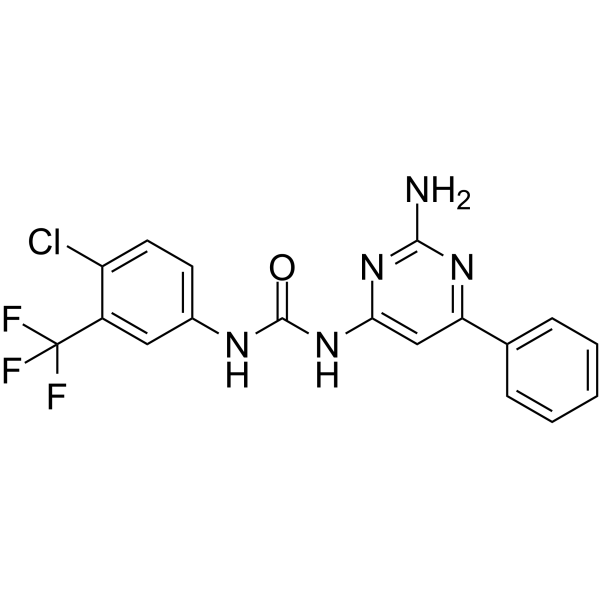 0 ImagesCat. No.: HY-147906CAS No.: 2453228-45-8Anticancer agent 71 (Compound 4b) is a potent anticancer agent and induces apoptosis. Anticancer agent 71 arrests cell cycle at G2/M phase and induces apoptosis through upregulating Bax, Ikb-α and cleaved PARP and downregulating Bcl-2 expression levels. Anticancer agent 71 shows antiproliferative activity.
-
2-Methylquinazolin-4-ol (Standard)
 0 Images2-Methylquinazolin-4-ol (Standard) is the analytical standard of 2-Methylquinazolin-4-ol. This product is intended for research and analytical applications. 2-Methylquinazolin-4-ol is a potent competitive poly(ADP-ribose) synthetase inhibitor, with a Ki of 1.1 μM. 2-Methylquinazolin-4-ol mammalian aspartate transcarbamylase (ATCase) inhibitor, with 0.20 mM[1][2].
-
PARP7-IN-19
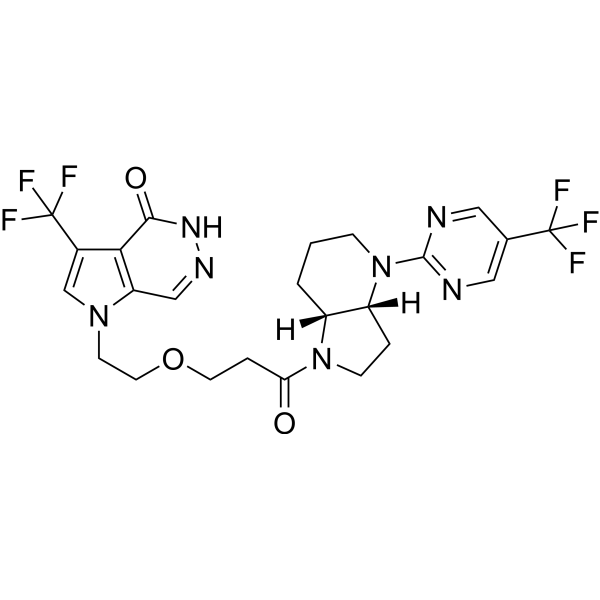 0 ImagesCat. No.: HY-163492CAS No.: 3033778-34-3

-
Lerzeparib
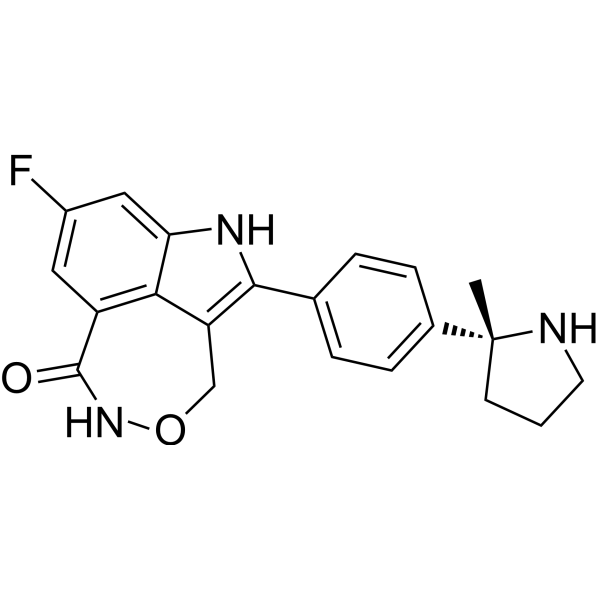 0 ImagesCat. No.: HY-156623CAS No.: 2459693-01-5Lerzeparib is an (ADP-ribose) polymerase (PARP) inhibitor, with antineoplastic activity.
-
EAPB0503
 0 ImagesCat. No.: HY-171184CAS No.: 1140627-77-5EAPB0503 is a quinoline compound with anti-tumor activity, showing strong cytotoxicity against melanoma cells in vitro (IC50=200 nM). EAPB0503 can induce specific cell cycle arrest in mitosis of CML cells and directly activate apoptosis, leading to an increase in the G0 cell population, disruption of mitochondrial membrane potential, PARP cleavage, and DNA fragmentation. EAPB0503 also reduces the levels of BCR-ABL protein .
-
Topoisomerase I/II inhibitor 8
 0 ImagesCat. No.: HY-169509CAS No.: 355400-87-2Topoisomerase I/II Inhibitor 8 (Compound Ru7) is a dual catalytic inhibitor of Topoisomerase I/II, capable of inducing DNA damage and PARP-1 activation, which subsequently leads to the activation of RIPK1, RIPK3, and MLKL, ultimately triggering necroptosis. Topoisomerase I/II Inhibitor 8 demonstrates remarkable anticancer activity by effectively targeting the nuclei of cancer cells and inducing cell death through necroptosis, showing great clinical potential in circumventing drug resistance in cancer treatment.


-
Jujuboside B (Standard)
 0 ImagesCat. No.: HY-N0660RCAS No.: 55466-05-2Jujuboside B (Standard) is the analytical standard of Jujuboside B. This product is intended for research and analytical applications. Jujuboside B is a bioactive saponin component isolated from Ziziphi Spinosae Semen (sour jujube seed), with oral efficacy and blood-brain barrier permeability. Jujuboside B induces acute leukemia cell death and drives necroptosis apoptosis by activating the RIPK1/RIPK3/MLKL pathway. Jujuboside B upregulates the expression of NOXA, PARP and caspase-3, activates AMPK, inhibits the proliferation of breast cancer cells, and induces cell apoptosis and autophagy. Jujuboside B inhibits angiogenesis and tumor growth by blocking the VEGFR-2 signaling pathway. Jujuboside B alleviates liver injury in mice by regulating the Nrf2-STING signaling pathway. Jujuboside B alleviates liver injury by regulating anti-inflammatory responses and downregulating the expression of 11β-HSD2. Jujuboside B induces ferroptosis and overcomes radioresistance in non-small cell lung cancer via the PPARγ-ATF3-Gpx4 signaling pathway. Jujuboside B exerts inhibitory effects on platelet aggregation. Jujuboside B inhibits febrile seizures by suppressing the activity of AMPA receptors. Jujuboside B reverses chronic unpredictable mild stress-promoted tumor progression by blocking the PI3K/Akt and MAPK/ERK pathways and dephosphorylating CREB signaling. Jujuboside B is applicable to related studies on acute leukemia, breast cancer, PM2.5-induced lung injury, hepatotoxicity, liver injury, colorectal cancer, non-small cell lung cancer, thromboembolic diseases, cardiovascular diseases associated with high platelet aggregation, febrile seizures, and depressive-like phenotypes.
-
TNKS1/2-IN-2
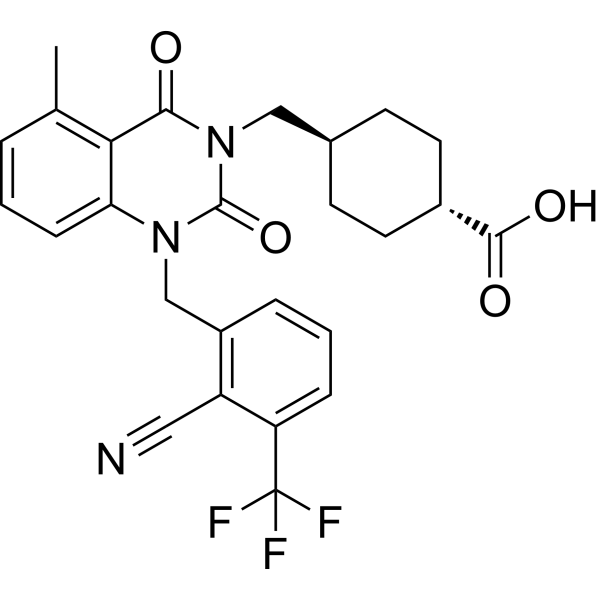 0 ImagesCat. No.: HY-153259CAS No.: 1498300-35-8TNKS1/2-IN-2 (Compound 21) is a potent and selective tankyrases inhibitor. TNKS1/2-IN-2 exhibits IC50 values of 4 nM and 63 nM against TNK1 and TNK2 in the enzymatic assay, respectively. TNKS1/2-IN-2 inhibits proliferation of A549 and H292 cell lines with IC50 values of 39.5 nM and 12.8 nM, respectively. TNKS1/2-IN-2 can be used for the research of cancer.

-
Anticancer agent 137
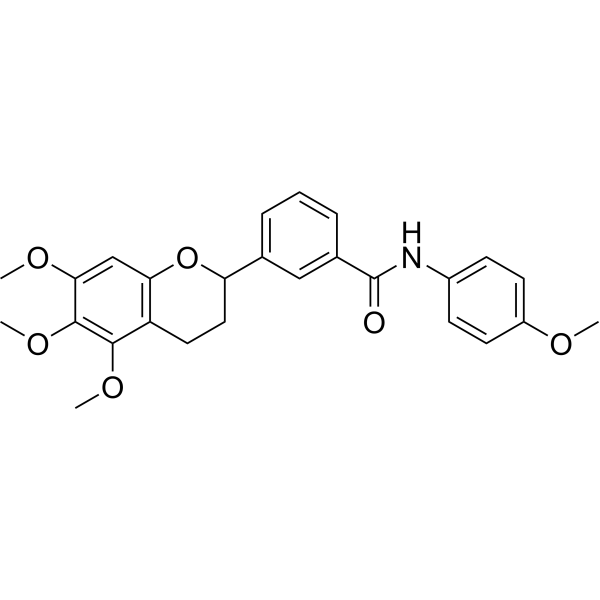 0 ImagesCat. No.: HY-155570Anticancer agent 137 (8q) is a potent PI3k inhibitor. Anticancer agent 137 has broad-spectrum anticancer activity. Anticancer agent 137 induces G2/M cell cycle arrest and apoptosis. Anticancer agent 137 increases cleaved PARP, caspase 3, and 7. Anticancer agent 137 can be used in research of cancer.

-
ICA-1S
 0 ImagesCat. No.: HY-183252CAS No.: 90597-15-2
-
PARP1-IN-15
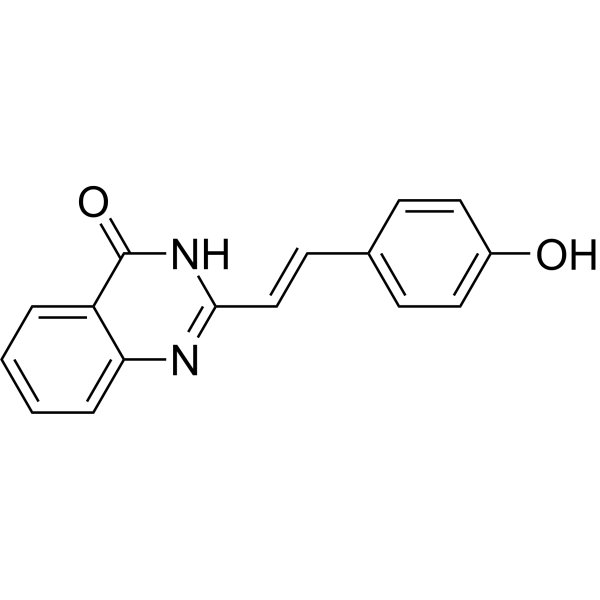 0 ImagesCat. No.: HY-155246PARP1-IN-15 (Compound 6) is a PARP1 inhibitor. PARP1-IN-15 inhibits tankyrase (TNKS) and facilitates DNA double-strand breaks damage. PARP1-IN-15 induces tumor cell apoptosis. PARP1-IN-15 has anti-cancer activity in triple-negative breast cancer (TNBC) cells and TNBC patient-derived organoids. PARP1-IN-15 can be used for research of TNBC with or without BRCA1 mutations.




