



PARP
PARP-1 (poly(ADP-ribose) polymerase 1) is a nuclear ADP-ribosyl transferase that functions as an early sensor of DNA strand breaks and coordinates cellular responses to genomic damage through poly(ADP-ribosyl)ation-dependent signaling[1][2]. Mechanistically, PARP-1 participates in multiple DNA repair pathways, including base excision repair (BER), homologous recombination (HR), and non-homologous end joining (NHEJ), where it promotes chromatin remodeling and recruitment of repair factors to damaged DNA sites[1][2][3]. Through these activities, PARP-1 contributes to genome surveillance and maintenance of genomic stability, processes that are frequently disrupted during tumor development[1][2]. In cancer biology, dysregulated PARP-1 function has been associated with disease progression, and inhibition of PARP-mediated DNA repair can reduce tumor cell viability by exploiting defects in homologous recombination repair pathways[1][4]. Compared with the closely related isoform PARP-2, PARP-1 is the dominant mediator of single-strand break repair, whereas PARP-2 shares DNA repair functions but also displays distinct roles in biological processes including inflammation, metabolism, oxidative stress responses, and cancer progression[3][5]. This functional distinction is important for understanding isoform-specific biology and for designing selective therapeutic strategies[5]. For experimental and translational applications, PARP inhibitors have become widely used tools to interrogate DNA damage responses and to target tumors with DNA repair deficiencies, particularly those characterized by homologous recombination defects[1][4].
References:
- [1]. Conceição CJF, et al. PARP1: A comprehensive review of its mechanisms, therapeutic implications and emerging cancer treatments. Biochim Biophys Acta Rev Cancer. 2025 Apr;1880(2):189282. [Content Brief]
- [2]. Pazzaglia S, et al. Multifaceted Role of PARP-1 in DNA Repair and Inflammation: Pathological and Therapeutic Implications in Cancer and Non-Cancer Diseases. Cells. 2020;9(1):41.
- [3]. Szántó M, et al. Specific and shared biological functions of PARP2 - is PARP2 really a lil' brother of PARP1? Expert Rev Mol Med. 2024;26:e13.
- [4]. Rose M, et al. PARP Inhibitors: Clinical Relevance, Mechanisms of Action and Tumor Resistance. Front Cell Dev Biol. 2020 Sep 9;8:564601. [Content Brief]
- [5]. Yelamos J, et al. PARP-1 and PARP-2: New players in tumour development. Am J Cancer Res. 2011;1(3):328-346. Epub 2011 Jan 8. PMID: 21968702; PMCID: PMC3180065. [Content Brief]
All Product Categories
-
PARP Related Products (307)
Related Products (307)

-
Antibodies (2)
-
Caudatin (Standard)
 0 ImagesCaudatin (Standard) is the analytical standard of Caudatin (HY-N1983). This product is intended for research and analytical applications. Caudatin is an orally active and brain-penetrant C-21 steroidal found in Cynanchum bungei decne with a variety of biological activities. Caudatin can inhibit cell proliferation, migration, invasion, cause cell phase arrest, induce apoptosis, autophagy, ROS prodution and loss of mitochondrial membrane potential. Caudatin activates PARP, caspase-3, -7, -9, upregulates pro-apoptotic Bad and Bax and downregulates anti-apoptotic Bcl-2 and Bcl-XL. Caudatin suppresses VEGF, FAK phosphorylation, upregulates p21, p27, DR5 protein expression, activates the p38 MAPK, JNK and PPARα/TFEB-mediated autophagy-lysosomal signaling pathways. Caudatin can be used for the research of cancer, inflammation and neurological disease, such as glioma and Alzheimer's disease.
-
PARP-1-IN-4
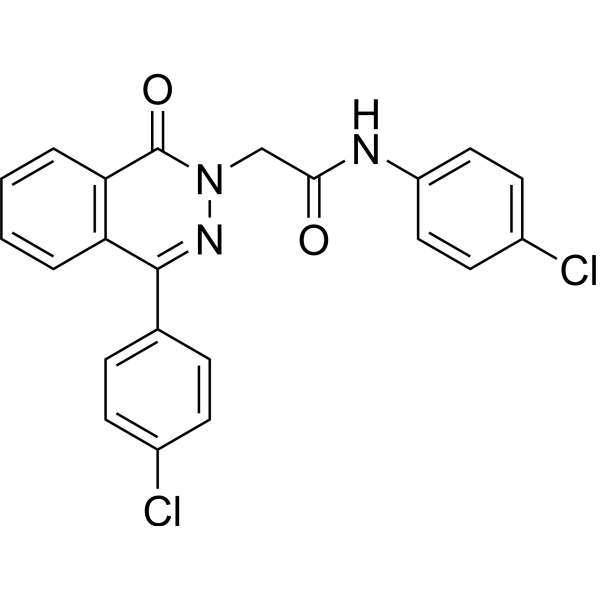 0 ImagesPARP-1-IN-4 is a PARP-1 inhibitor. PARP-1-IN-4 has inhibitory activity against PARP-1 with IC50 value of 302 μM. PARP-1-IN-4 can be used for the research of lung adenocarcinoma.
-
MKI-3
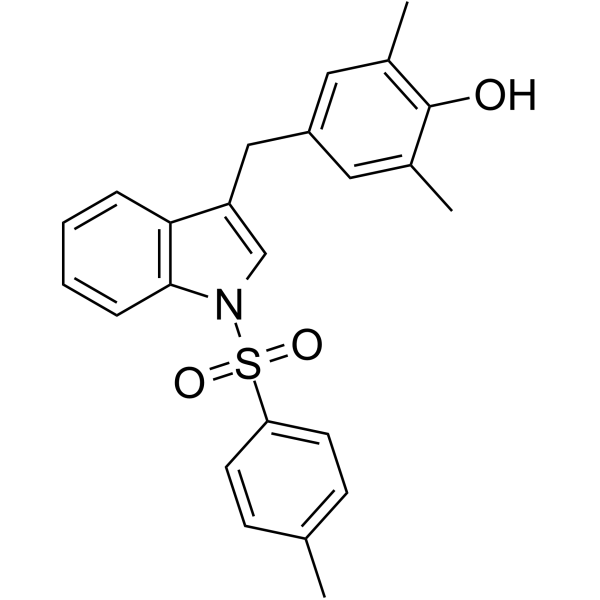
 0 ImagesCat. No.: HY-182391CAS No.: 3084702-28-0MKI-3 is a selective microtubule-associated serine/threonine kinase-like (MASTL) inhibitor with an IC50 of 5.72 nM and a Kd of 1.89 nM. MKI-3 disrupts the MASTL-ENSA-Aurora A signaling axis. MKI-3 induces chromosomal instability, mitotic catastrophe and apoptosis (apoptosis) in cancer cells. MKI-3 is applicable to research related to triple-negative breast cancer.
-
Procyanidin B2-3'-O-gallate
 0 ImagesCat. No.: HY-N16483CAS No.: 109280-47-9Procyanidin B2-3'-O-gallate is a mono-gallate ester that can be found in grape seed extract. Procyanidin B2-3'-O-gallate induces cleavage of caspase-9, caspase-3, and PARP, reduces levels of Bcl-2, Bcl-Xl, and androgen receptor and induces apoptosis. Procyanidin B2-3'-O-gallate can be used for the research of prostate cancer.
-
Rucaparib (Standard)
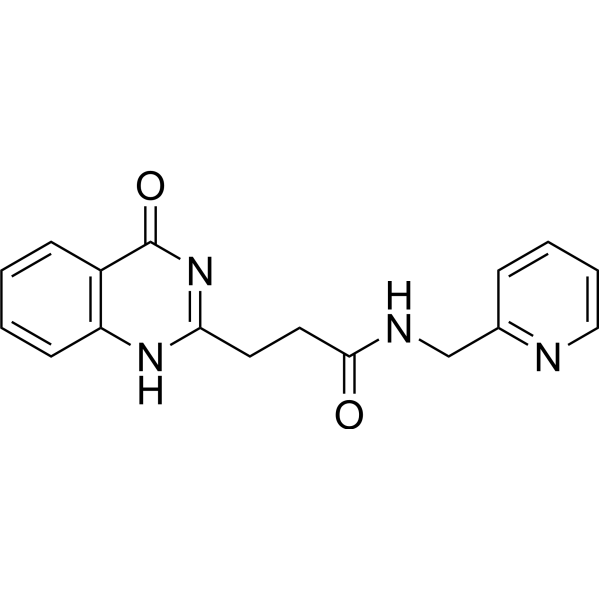
 0 ImagesSynonyms: AG014699 (Standard); PF-01367338 (Standard)Rucaparib (Standard) is the analytical standard of Rucaparib. This product is intended for research and analytical applications. Rucaparib (AG014699) is an orally active, potent inhibitor of PARP proteins (PARP-1, PARP-2 and PARP-3) with a Ki of 1.4 nM for PARP1. Rucaparib is a modest hexose-6-phosphate dehydrogenase (H6PD) inhibitor. Rucaparib has the potential for castration-resistant prostate cancer (CRPC) research.
-
LS-75
 0 ImagesLS-75 is a PARP-1 inhibitor with blood-brain permeability and IC50 value of 18 μM. LS-75 has neuroprotective activity.
-
5,7,4'-Trimethoxyflavone (Standard)
 0 Images5,7,4'-Trimethoxyflavone (Standard) is the analytical standard of 5,7,4'-Trimethoxyflavone. This product is intended for research and analytical applications. 5,7,4’-Trimethoxyflavone can be isolated from the medicinal plant Kaempferia parviflora (KP). 5,7,4’-Trimethoxyflavone is a CFTR activator and EC50 is 64 μM. 5,7,4’-Trimethoxyflavone induces apoptosis, increases proteolytic activation of caspase-3, and degradation of ADP-ribose polymerase (PARP) protein. 5,7,4’-Trimethoxyflavone has antitumor activity. 5,7,4’-Trimethoxyflavone can be used to prevent skin aging and oxidative stress.
-
Atiprimod
 0 ImagesCat. No.: HY-13559CAS No.: 123018-47-3Synonyms: Azaspirane ; SKF 106615-12; SKF 106615A12Atiprimod (Azaspirane) is a STAT3 inhibitor with antitumor, anti-inflammatory, and anti-angiogenic activities. Atiprimod blocks the signaling pathways of IL-6 and VEGF by inhibiting the phosphorylation of signal transducer and activator of STAT3. Atiprimod blocks the JAK-STAT signaling pathway by inhibiting the phosphorylation of JAK2 and JAK3. Atiprimod also inhibits cell proliferation, induces cell cycle arrest, and induces autophagy and apoptosis. Atiprimod triggers persistent ER stress-mediated apoptosis in breast cancer cells by activating the PERK/eIF2α/ATF4/CHOP axis and inhibiting the nuclear translocation of STAT3/NF-κB. Atiprimod shows great anti-tumor activities in tumor xenograft mouse models. Atiprimod can be used for the study of pituitary adenoma, breast cancer, multiple myeloma and acute myeloid leukemia (AML).
-
BR102375
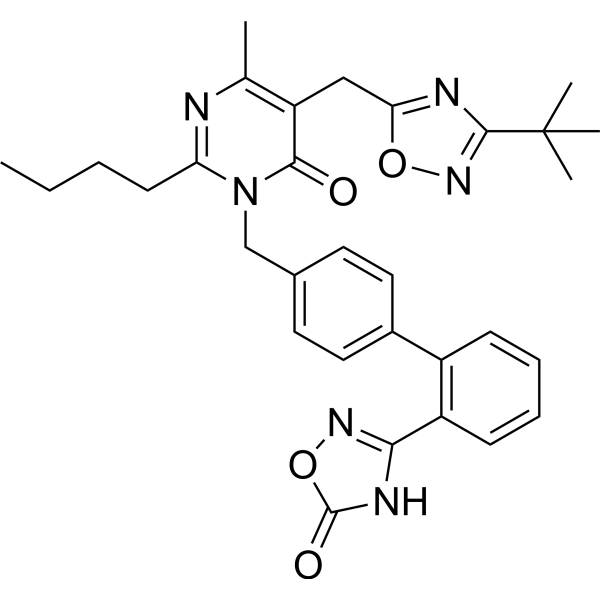 0 ImagesCat. No.: HY-128344CAS No.: 2366255-59-4BR102375 is a non-TZD peroxisome proliferator-activated receptor γ (PPAR γ) full agonist for the treatment of type 2 diabetes, reveals EC50 value of 0.28 μM and Amax ratio of 98%.
-
AKT-IN-28
 0 ImagesCat. No.: HY-174254CAS No.: 3099809-16-9AKT-IN-28 is an Akt allosteric inhibitor, a derivative of Shikonin (HY-N0822). AKT-IN-28 effectively binds to the allosteric site of Akt through hydrophobic and hydrogen interactions with Kd of 2.07 μM. AKT-IN-28 significantly inhibits Akt activity, induces cell apoptosis, arrests cell cycle in G2/M phase, and suppresses proliferation, migration and metabolism of KRAS mutant colorectal cancer cells.
-
HSP90-IN-11
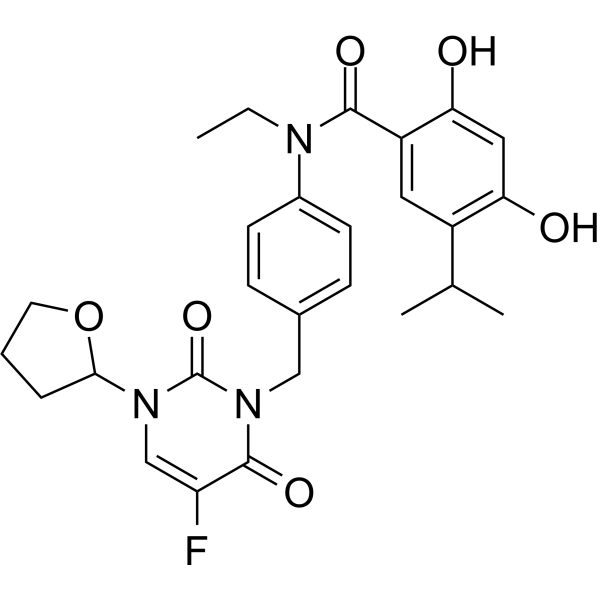 0 ImagesCat. No.: HY-146325CAS No.: 2986564-20-7HSP90-IN-11 is a HSP90 inhibitor with an IC50 of 27.8 nM. HSP90-IN-11 inhibits the activity of HSP90, which in turn induces rapid degradation of EGFR and Akt proteins in non-small cell lung cancer (NSCLC) cells. HSP90-IN-11 induces accumulation of the G1 subphase cell population in NSCLC cells, activates caspase-3, caspase-8, caspase-9 and PARP, thereby triggering apoptosis. HSP90-IN-11 exhibits antiproliferative activity in colorectal cancer and NSCLC cells. HSP90-IN-11 can be used for the research of colorectal cancer and non-small cell lung cancer.
-
FGFR-IN-28
 0 ImagesCat. No.: HY-184250CAS No.: 2634677-16-8FGFR-IN-28 is a FGFR inhibitor with inhibitory activity against multiple subtypes of the FGFR family, with an IC50 of 4.4 nM against FGFR4. FGFR-IN-28 inhibits kinase activity and phosphorylation processes, and blocks the downstream MAPK and AKT signaling pathways. FGFR-IN-28 induces cellular DNA damage, cell cycle arrest, apoptosis and ferroptosis, and reduces the adhesion, invasion and metastasis abilities of cancer cells. FGFR-IN-28 exhibits anti-tumor activity in in vitro experiments on colon cancer cells, and inhibits tumor growth in colon cancer xenograft models. FGFR-IN-28 can be used in colon cancer-related research.
-
EGFR-IN-197
 0 ImagesCat. No.: HY-181502CAS No.: 3060883-16-8EGFR-IN-197 is an EGFR inhibitor with IC50 values of 19.5 nM and 12.0 nM against EGFRL858R/T790M and EGFRL858R/T790M/C797S, respectively. EGFR-IN-197 arrests the cell cycle of NCI-H1975 cells at the G2/M phase, while inhibiting their proliferation, colony formation and migration; it also inhibits mitochondrial translocation and upregulates mitochondrial H2S levels. EGFR-IN-197 disrupts anti-apoptotic signaling pathways by regulating apoptosis-related proteins; it induces DNA damage and activates pro-apoptotic pathways to trigger apoptosis. EGFR-IN-197 can be used in studies related to non-small cell lung cancer (NSCLC).
-
TP-110
 0 ImagesCat. No.: HY-118522CAS No.: 688737-95-3TP-110 is a proteasome inhibitor. TP-110 specifically inhibits the protease-like activity of the 20S proteasome, but does not affect the trypsin-like or peptidyl-glutamyl peptide hydrolysis activity. TP-110 inhibits the NF-κB pathway, activates caspase-8, -9, and -3, and causes PARP cleavage, significantly reducing the levels of cIAP-1 and XIAP. TP-110 causes cell cycle arrest at the G2/M phase and promotes apoptosis of cancer cells. TP-110 can be used in cancer research of prostate cancer and multiple myeloma, etc.
-
Anticancer agent 64
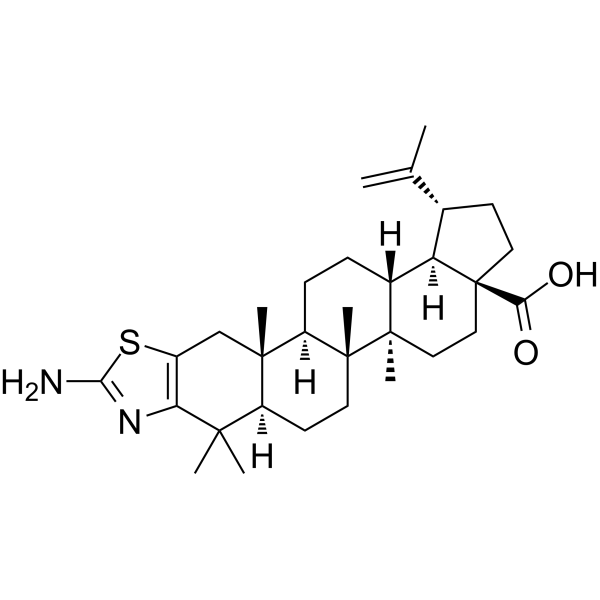 0 ImagesCat. No.: HY-147514CAS No.: 2387902-92-1Anticancer agent 64 (compound 5m) shows cytotoxic activity in CCRF-CEM cells, with IC50 of 2.4 μM. Anticancer agent 64 shows good anticancer activity through apoptosis induction. Anticancer agent 64 induces caspase 3 and 7 activation and PARP cleavage. Anticancer agent 64 induces significant effect of mitochondria depolarization.
-
Apoptosis inducer 45
 0 ImagesCat. No.: HY-178099Apoptosis inducer 45 is an apoptosis inducer. Apoptosis inducer 45 is cytotoxically active against the MCF-7 cell line. Apoptosis inducer 45 elicits MCF-7 cell apoptosis via the mitochondrial pathway (increases the Bax/Bcl-2 ratio) by activating cleavage of caspase-9, thereby inducing the fragmentation of DNA repair protein PARP. Apoptosis inducer 45 also can induce caspase-8 cleavage, subsequently initiating cleavage of caspase-3 and its downstream protein PARP to culminate in the extrinsic apoptosis. Apoptosis inducer 45 can be used in the research of breast cancer.
-
Longilactone
 0 ImagesCat. No.: HY-N21972CAS No.: 129587-09-3Longilactone is a quassinoid diterpenoid isolated from the roots of Eurycoma longifolia. Longilactone induces apoptosis in MCF-7 cells via the extrinsic caspase pathway, activating the cleavage of caspase-8, caspase-7 and PARP. Longilactone can be used in research related to breast cancer and human lung cancer.




