



PKC
Protein kinase C
PKC (Protein kinase C) is a family of protein kinase enzymes that are involved in controlling the function of otherproteins through the phosphorylation of hydroxyl groups of serine and threonine amino acid residues on these proteins. PKC enzymes in turn are activated by signals such as increases in the concentration of diacylglycerol (DAG) or calcium ions (Ca2+). Hence PKC enzymes play important roles in several signal transduction cascades. The PKC family consists of 15 isozymes in humans: PKC-α (PRKCA), PKC-β1 (PRKCB), PKC-β2 (PRKCB), PKC-γ (PRKCG), PKC-δ (PRKCD), PKC-δ1 (PRKD1), PKC-δ2 (PRKD2), PKC-δ3 (PRKD3), PKC-ε (PRKCE), PKC-η (PRKCH), PKC-θ (PRKCQ), PKC-ι (PRKCI), PKC-ζ (PRKCZ), PK-N1 (PKN1), PK-N2 (PKN2), PK-N3 (PKN3). PKC is involved in receptor desensitization, in modulating membrane structure events, in regulating transcription, in mediating immune responses, in regulating cell growth, and in learning and memory. These functions are achieved by PKC-mediated phosphorylation of other proteins.
PKC Isoform Specific Products
-
PKC
(384)
View all products
-
PKCα
(48)
View all products
-
PKCβ
(40)
View all products
-
PKCγ
(26)
View all products
-
PKCδ
(26)
View all products
-
PKCε
(30)
View all products
-
PKCη
(15)
View all products
-
PKCζ
(14)
View all products
-
PKCθ
(21)
View all products
-
PKCμ
(4)
View all products
-
PKC-ι ℩
(2)
View all products
-
PKCι
(7)
View all products
All Product Categories
-
PKC Related Products (504)
Related Products (504)

-
Antibodies (21)
-
PKC Isoform Comparison


-
Hypocrellin A (Standard)
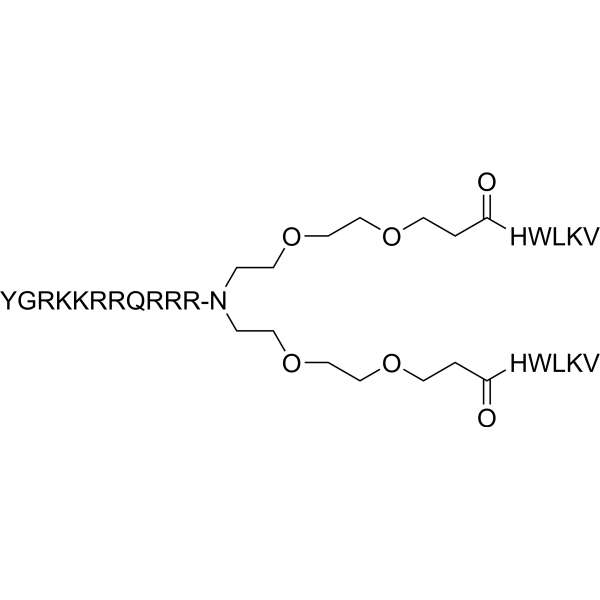
 0 ImagesCat. No.: HY-N2575RCAS No.: 77029-83-5Hypocrellin A (Standard) is the analytical standard of Hypocrellin A. This product is intended for research and analytical applications. Hypocrellin A is a PKC inhibitor that exerts antidiabetic activity by reversing the effects of high glucose on endothelin (ET-1) expression. Hypocrellin A is also a photosensitizer for photodynamic therapy (PDT) with anticancer, antibacterial and antiviral activities, especially against human immunodeficiency virus (HIV). In addition, Hypocrellin-A also possesses anti-Leishmania activity (IC50=0.27 μg/ml)[1][2][3][4][5][6][7][8][9].
-
PF-04577806
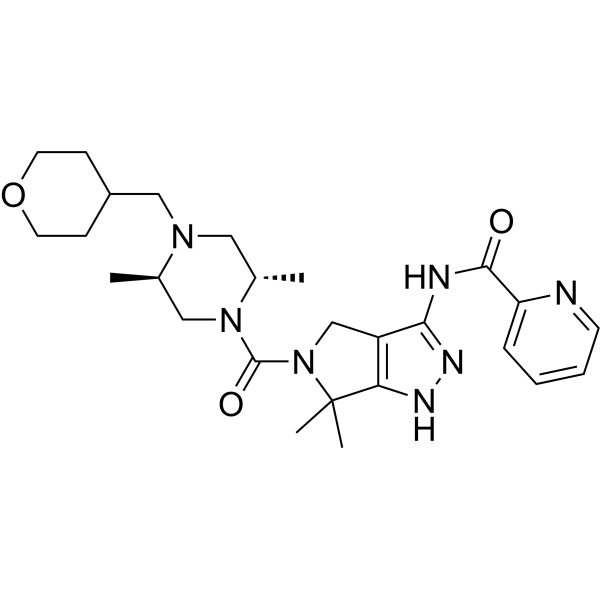 0 ImagesCat. No.: HY-139467CAS No.: 1072100-81-2
-
Aurothiomalate disodium
 0 ImagesCat. No.: HY-W010270ACAS No.: 74916-57-7Aurothiomalate disodium acts as an inhibitor of PKCI and TrxR1. Aurothiomalate disodium disrupts the PKCI-Par6-Rac1 signaling pathway, and also inhibits TrxR1 activity, TNFα-induced NF-κB activation, and the expression of pro-inflammatory genes. Aurothiomalate disodium blocks Kras-mediated BASC expansion and lung tumor growth, inhibits anchorage-independent growth and tumorigenicity of lung cancer cells, and suppresses neutrophil chemotaxis, phagocytosis, and leukocyte extravasation. Aurothiomalate disodium can be used in research related to rheumatoid arthritis and non-small cell lung cancer.
-
aPKC-IN-1
 0 ImagesCat. No.: HY-131220CAS No.: 15854-12-3aPKC-IN-1 (compound 1) is an atypical protein kinase C (aPKCζ) inhibitor. aPKC-IN-1 can be used for the study of a host of diseases involving increased vascular permeability and inflammation.
-
AS2521780
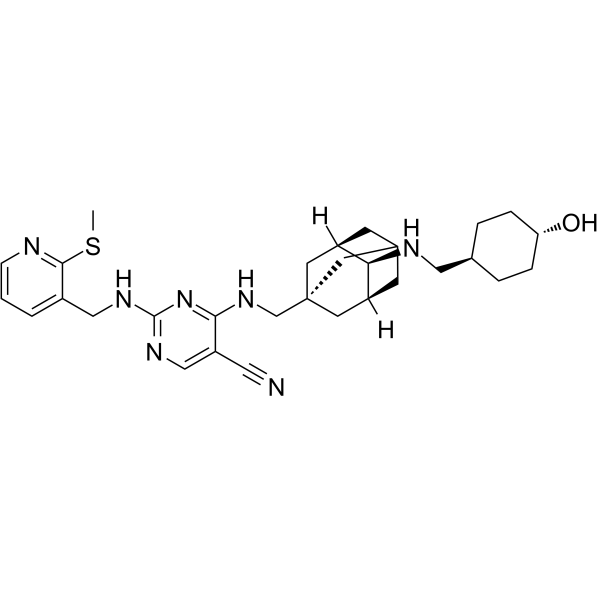 0 ImagesCat. No.: HY-12663CAS No.: 1214726-89-2AS2521780 is a novel PKCθ selective inhibitor with an IC50 of 0.48 nM.
-
ICP-103
 0 ImagesCat. No.: HY-175401CAS No.: 153997-72-9ICP-103 (Compound 3K) is a highly selective protein kinase C (PKC) inhibitor with an IC50 of 30 nM. ICP-103 is promising for research of cancers.
-
PKCε inhibitor peptide,myristoylated
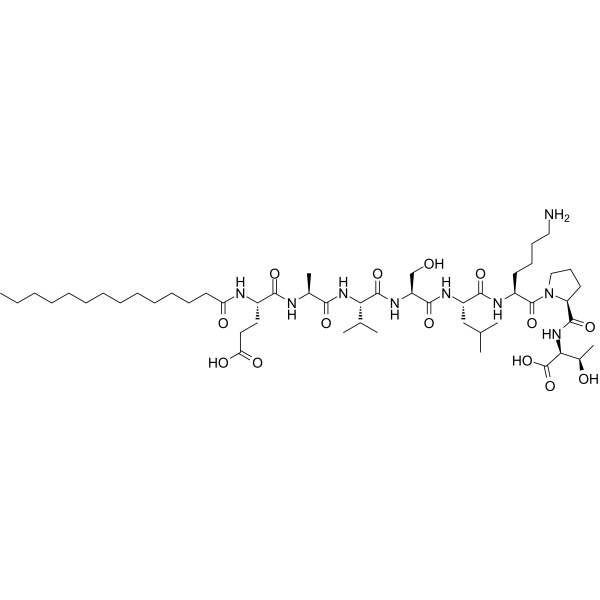 0 ImagesCat. No.: HY-P5888CAS No.: 1072301-78-0Synonyms: Myr‐PKCɛ-PKCε inhibitor peptide,myristoylated (Myr-PKCε-) is a cell permeable myristic acid conjugated PKC peptide inhibitor that attenuates NO release in cultured human umbilical vein endothelial cells (HUVECs).
-
Aurora A/PKC-IN-1
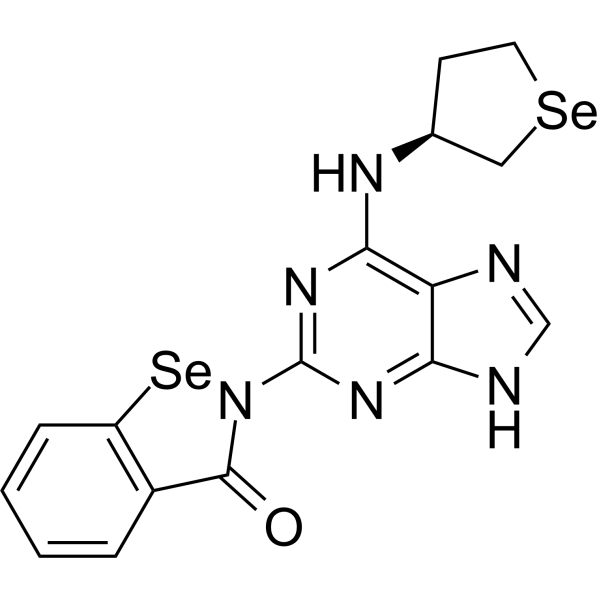 0 ImagesCat. No.: HY-144307CAS No.: 3031505-76-4
-
(E/Z)-Chk2-IN-1
 0 ImagesCat. No.: HY-112477ACAS No.: 693222-51-4Synonyms: (E/Z)-Hymenialdisine analogue-1(E/Z)-Chk2-IN-1 ((E/Z)-Hymenialdisine analogue-1) (Compound 1) is a potent and selective cell cycle kinase Chk2 inhibitor with an IC50 of 8 nM. (E/Z)-Chk2-IN-1 exhibits low inhibitory activity against other kinases (such as CK1δ, MEK1, and PKCα/βⅡ) with IC50 values both >89 nM. (E/Z)-Chk2-IN-1 can be used for the research of cancer.
-
HA-100 hydrochloride
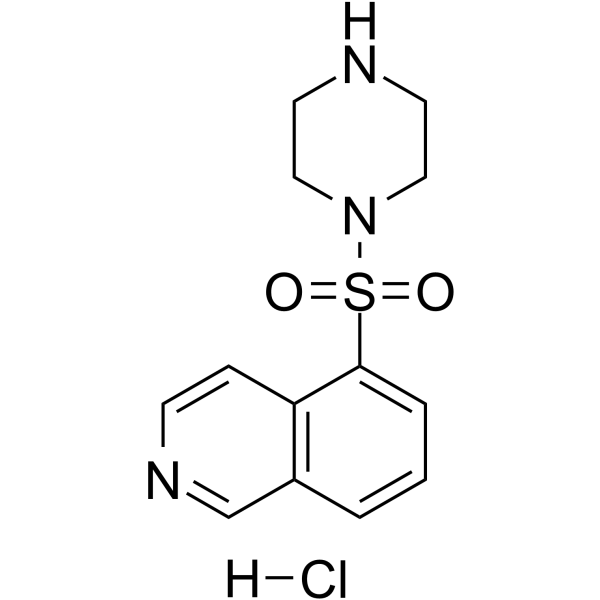 0 ImagesCat. No.: HY-100984ACAS No.: 141543-63-7
-
Prkd1 Mouse Pre-designed siRNA Set A
 0 ImagesCat. No.: HY-RS11145
Prkd1 Mouse Pre-designed siRNA Set A contains three designed siRNAs for Prkd1 gene (Mouse), as well as a negative control, a positive control, and a FAM-labeled negative control.
-
Aprinocarsen sodium scrambled negative control
 0 ImagesCat. No.: HY-148413AAprinocarsen sodium scrambled negative control is the sequence scrambled negative control of Aprinocarsen sodium.
-
PICK1 PDZ-IN-1
 0 ImagesCat. No.: HY-180197PICK1 PDZ-IN-1 (Compound 6b) is a selective and brain-penetrant protein interacting with C kinase 1 (PICK1) PDZ domain inhibitor with a Ki of 27.73 μM. PICK1 PDZ-IN-1 can competitively inhibit the interaction between PICK1 and the GluA2 subunit of AMPA receptors. PICK1 PDZ-IN-1 can increase the survival rate of HT22 cells and primary cortical neuron cells induced by glutamate and inhibit ROS production. PICK1 PDZ-IN-1 exhibits neuroprotective effect and reduces the area of cerebral infarction. PICK1 PDZ-IN-1 can be used for the research of ischemic stroke.
-
pep2-EVKI
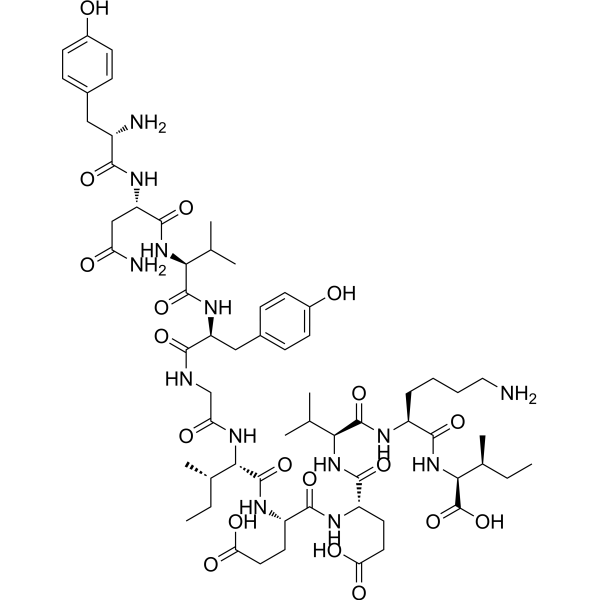 0 ImagesCat. No.: HY-P1054CAS No.: 1315378-67-6Synonyms: YNVYGIEEVKIpep2-EVKI (YNVYGIEEVKI) is an inhibitor peptide that selectively blocks PICK1 interactions, caused the opposite effects on synaptic AMPAR function to PICK1 expression.
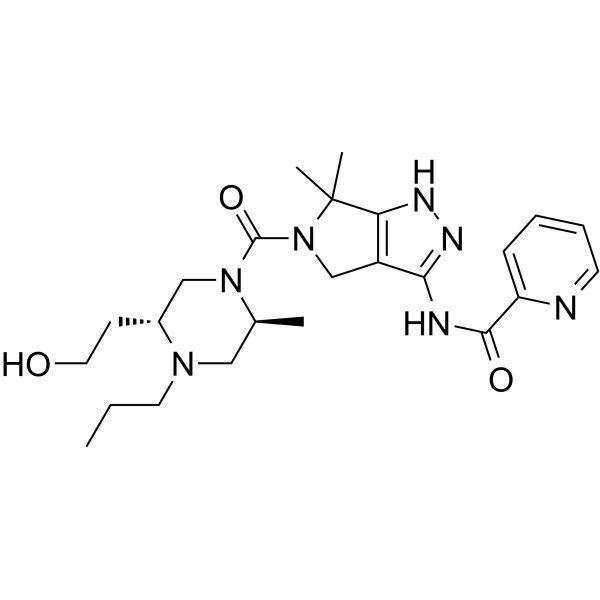

-
7-Oxostaurosporine
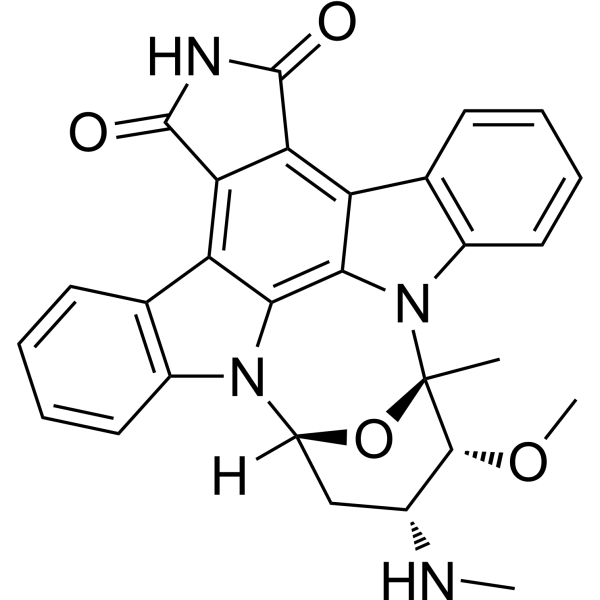 0 ImagesCat. No.: HY-120515CAS No.: 125035-83-8Synonyms: BMY-41950




