



PPARα
PPARα is a ligand-activated nuclear receptor that controls fatty acid metabolism in oxidative tissues, especially liver, heart, and muscle[1]. Mechanistically, hepatocyte PPARα acts as a lipid sensor that coordinates fasting-responsive gene networks for fatty acid homeostasis, ketogenesis, and metabolic adaptation[2]. In disease models, liver PPARα protects against NAFLD by supporting whole-body fatty acid homeostasis, while combined PPARα and PPARβ/δ activation improves steatosis, inflammation, and fibrosis in preclinical liver disease models[3][1]. Compared with related isoforms, PPARα primarily promotes fatty acid catabolism, whereas PPARγ favors fatty acid uptake, triglyceride storage, insulin sensitivity, and glucose metabolism[4][5]. For experimental applications, fibrates and WY-14,643 serve as PPARα agonists, while GW6471 supports antagonist-based studies by stabilizing corepressor recruitment to the PPARα ligand-binding domain[6][7].
References:
- [1]. Pawlak M, et al. Molecular mechanism of PPARα action and its impact on lipid metabolism, inflammation and fibrosis in non-alcoholic fatty liver disease. J Hepatol. 2015 Mar;62(3):720-33. [Content Brief]
- [2]. Fougerat A, et al. Lipid sensing by PPARα: Role in controlling hepatocyte gene regulatory networks and the metabolic response to fasting. Prog Lipid Res. 2024 Nov;96:101303. [Content Brief]
- [3]. Montagner A, et al. Liver PPARα is crucial for whole-body fatty acid homeostasis and is protective against NAFLD. Gut. 2016 Jul;65(7):1202-14. [Content Brief]
- [4]. Wang YX. PPARs: diverse regulators in energy metabolism and metabolic diseases. Cell Res. 2010 Feb;20(2):124-37. doi: 10.1038/cr.2010.13. Epub 2010 Jan 26. PMID: 20101262; PMCID: PMC4084607. et al. PPARs: diverse regulators in energy metabolism and metabolic diseases. Cell Res. 2010 Feb;20(2):124-37. [Content Brief]
- [5]. Montaigne D, et al. PPAR control of metabolism and cardiovascular functions. Nat Rev Cardiol. 2021 Dec;18(12):809-823. [Content Brief]
- [6]. Oike Y, et al. Angiopoietin-like proteins: potential new targets for metabolic syndrome therapy. Trends Mol Med. 2005 Oct;11(10):473-9. [Content Brief]
- [7]. Xu HE, et al. Structural basis for antagonist-mediated recruitment of nuclear co-repressors by PPARalpha. Nature. 2002 Feb 14;415(6873):813-7. [Content Brief]
-
PPARα Related Products (139)
Related Products (139)

-
Recombinant Proteins (2)
-
Antibodies (1)
-
Sodium acetate trihydrate, United States Pharmacopeia (USP) Reference Standard
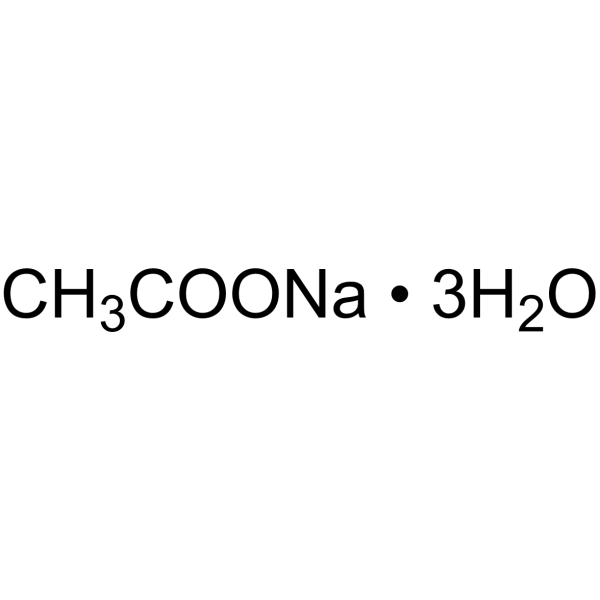 0 ImagesSynonyms: Sodium acetate trihydrate (Pharmaceutical primary standard, USP)Sodium acetate trihydrate, United States Pharmacopeia (USP) Reference Standard (Sodium acetate trihydrate (Pharmaceutical primary standard, USP)) is a carboxylic acid and short-chain fatty acid (SCFAs). Sodium acetate trihydrate activates AMPK, increases ROS, cleaved caspase 9, PPARα, downregulates SREBP-1c, ChREBP expression. Sodium acetate trihydrate exhibits antifungal activity against Saccharomyces cerevisiae W303-1A. Sodium acetate trihydrate regulates energy metabolism. Sodium acetate trihydrate has anticancer activity against gastric cancer. Sodium acetate trihydrate induces writhing reaction and ulcerative colitis. Sodium acetate trihydrate can be used in the researches for gastric cancer, ulcerative colitis, hepatic steatosis, and pain.
-
PPARα/γ agonist 2
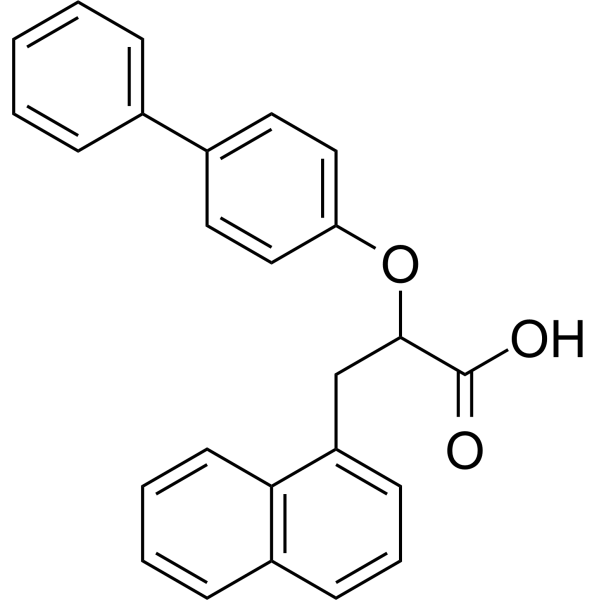 0 ImagesCat. No.: HY-148922CAS No.: 2213365-56-9
-
PPARδ agonist 13
 0 ImagesCat. No.: HY-181652CAS No.: 3056618-93-7PPARδ agonist 13 is a potent, selective and orally active PPARδ agonist with an EC50 values of 0.50 nM. PPARδ agonist 13 binds to the PPARδ ligand-binding pocket and upregulates PPARδ target gene expression. PPARδ agonist 13 inhibits renal fibroblast activation, restores fatty acid oxidation, and attenuates TGF-β1-induced renal fibroblast activation. PPARδ agonist 13 exhibits anti-renal fibrosis effects in a mouse model of unilateral ureteral obstruction. PPARδ agonist 13 can be used for the research of renal fibrosis.
-
PPARα/γ agonist 4
 0 ImagesCat. No.: HY-162578PPARα/γ agonist 4 (Compound (S)-7) is an orally active dual potent agonist of PPARα and PPARγ, with EC50 values of 0.061 μM and 1.42 μM respectively. PPARα/γ agonist 4 acts through an insulin-independent mechanism and exhibits mitochondrial pyruvate carrier inhibition and anti-diabetic properties. PPARα/γ agonist 4 is expected to be used in research for dyslipidemic type 2 diabetes.
-
PPARα/δ antagonist-1
 0 ImagesCat. No.: HY-182619CAS No.: 1673590-38-9PPARα/δ antagonist-1 is an orally active, highly selective dual antagonist of PPARα/δ, with IC50 values of 0.113 μM and 0.025 μM against human PPARα and PPARδ, respectively. PPARα/δ antagonist-1 exhibits an excellent in vitro activity profile and preliminary efficacy in mouse tumor models. PPARα/δ antagonist-1 can be used in studies related to cancers (melanoma metastasis, ovarian cancer).
-
CF-Vanillin
 0 ImagesCat. No.: HY-181474CAS No.: 1323378-95-5CF-Vanillin is an orally active hypolipidemic/hepatic protector with strong binding affinity for PPAR-α. CF-Vanillin exerts antioxidant and anti-inflammatory effects by activating the Nrf2/HO-1 signaling pathway. CF-Vanillin reduces triglyceride and total cholesterol levels and alleviates liver injury. CF-Vanillin can be used in the research of diseases such as hyperlipidemia and liver injury.
-
Elaidyl-sulfamide
 0 ImagesCat. No.: HY-165393CAS No.: 945009-57-4Synonyms: N-(9E)-9-Octadecen-1-ylsulfamideElaidyl-sulfamide (N-(9E)-9-Octadecen-1-ylsulfamide) is a PPARα agonist. Elaidyl-sulfamide reduces body weight gain and food intake and reduces circulating cholesterol levels and increases both glucose and insulin levels. Elaidyl-sulfamide has the potential for the research of complicated obesity.
-
Sitofibrate
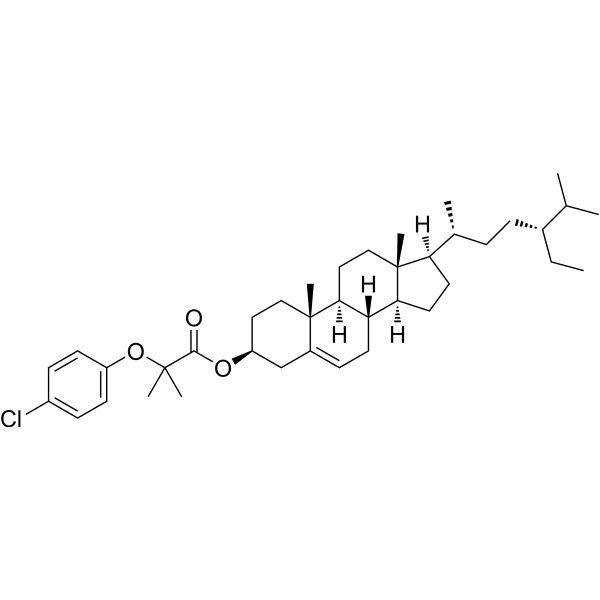 0 ImagesCat. No.: HY-156977CAS No.: 55902-94-8Sitofibrate is a Clofibrate (HY-B0287) derivative. Sitofibrate is aperoxisome proliferator activated receptor-α (PPAR-α) agonist. Sitofibrate is an antihyperlipidemic agent.
-
Acanthoic acid
 0 ImagesCat. No.: HY-116136CAS No.: 119290-87-8Synonyms: NP1302Acanthoic acid (NP1302) is an orally active pimarane-type diterpenoid. Acanthoic acid is isolated from the root bark of Araliaceae family plant Eleutherococcus senticosus (Siberian ginseng). Acanthoic acid activates LXR and FXR. Acanthoic acid activates the AMPK-LKB1, SIRT1, and p38 MAPK signaling pathways and increases the phosphorylation level of ACC. Acanthoic acid downregulates the expression of SREBP-1, CYP2E1, HIF-1α, and PPARγ, and upregulates the expression of PPARα. Acanthoic acid induces Apoptosis by activating Caspase-3, promoting PARP cleavage, and downregulating Bcl-xL. Acanthoic acid exhibits antioxidant, anti-fibrotic, and hepatoprotective effects. It reduces lipid accumulation and lipogenesis. Acanthoic acid is used in studies on non-alcoholic fatty liver disease, alcoholic liver disease, acute promyelocytic leukemia, and Acetaminophen-induced hepatotoxicity.
-
GW 2433
 0 ImagesCat. No.: HY-120886CAS No.: 227941-61-9
-
ZINC17167211
 0 ImagesCat. No.: HY-117131CAS No.: 592539-21-4ZINC17167211 is a potent PPAR-α agonist (EC50=0.16 nM) that can be used in the study of diabetes, hyperlipidemia, and inflammatory diseases.
-
TZD18
 0 ImagesCat. No.: HY-121798CAS No.: 228577-00-2
-
AVE-8134
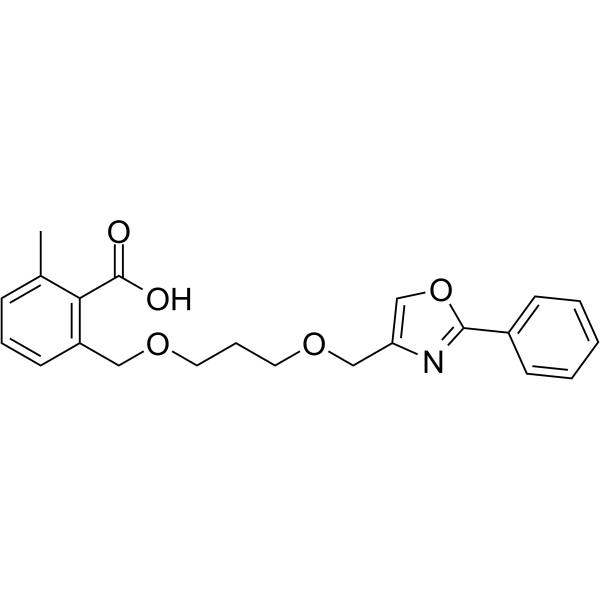 0 ImagesCat. No.: HY-U00014CAS No.: 304025-09-0

-
7-Hydroxy-3-(3-methoxyphenyl)-4H-chromen-4-one
 0 ImagesCat. No.: HY-W508552CAS No.: 139256-06-77-Hydroxy-3-(3-methoxyphenyl)-4H-chromen-4-one is a dual agonist of PPARα and PPARγ, with an EC50 of 23.10 μM for human PPARα and an EC50 of 22.29 μM for human PPARγ. 7-Hydroxy-3-(3-methoxyphenyl)-4H-chromen-4-one regulates the expression of lipid metabolism-related genes via PPARα, and modulates the expression of genes associated with glucose homeostasis and adipogenesis via PPARγ. 7-Hydroxy-3-(3-methoxyphenyl)-4H-chromen-4-one can be used in the research of type 2 diabetes and metabolic syndrome.
-
N-Octadecyl-N'-propyl-sulfamide
 0 ImagesCat. No.: HY-124399CAS No.: 925891-74-3Peroxisome proliferator-activated receptors (PPARs) play an important role in regulating lipid and glucose metabolism, and oleoylethanolamide (OEA) is a natural ligand for PPARα. N-Octadecyl-N'-propyl-sulfamide is an analog of OEA and a potent activator of PPARα, with selective binding affinity for PPARα (EC50=100 nM, compared to 120 nM for OEA). N-Octadecyl-N'-propyl-sulfamide (10 mg/kg; ip) inhibits food intake and reduces body weight gain in rats. At a dose of 1 mg/kg, N-Octadecyl-N'-propyl-sulfamide induces satiety, thereby reducing food intake, body weight, and plasma triglyceride concentrations in free-feeding Wistar rats and obese Zucker (fa/fa) rats.
-
NS-220
 0 ImagesCat. No.: HY-19425CAS No.: 377731-45-8NS-220 is an orally active PPARα agonist with high subtype selectivity, with EC50 values of 1.9×10⁻⁸ M, 9.6×10⁻⁶ M and >10-4 M for PPARα, PPAR γ and PPARδ, respectively. NS-220 is used in the research for hyperlipidemia or metabolic disorders in type-2 diabetes.
-
Alisol A (Standard)
 0 ImagesCat. No.: HY-N0853RCAS No.: 19885-10-0Alisol A (Standard) is the analytical standard of Alisol A (HY-N0853). This product is intended for research and analytical applications. Alisol A is an orally active tetracyclic triterpenoid compound of the prototerpane type. Alisol A can be extracted from the rhizome of Alisma orientale. Alisol A activates AMPK/ACC/SREBP-1c, SIRT1, PPARα, inhibits MMP-2/-9, decreases inflammatory cytokine expression (IL-1β, IL-6, IL-8). Alisol A has anti-tumor activity against breast cancer and colorectal cancer. Alisol A has anti-obesity and anti-atherosclerotic activities. Alisol A can be used in the research of hepatitis B, breast cancer, colorectal cancer, atherosclerosis, and obesity.
-
PPARα-MO-1
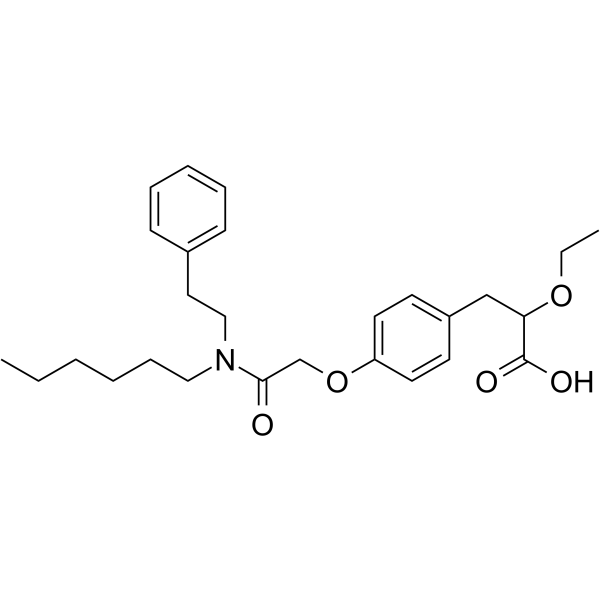 0 ImagesCat. No.: HY-U00068CAS No.: 810677-36-2PPARα-MO-1 is a potent PPARα modulator extracted from patent WO/2004/110982A1, formula I.




