



Proteasome
Proteasomes are very large protein complexes inside all eukaryotes and archaea, and in some bacteria. In eukaryotes, they are located in the nucleus and the cytoplasm. The main function of the proteasome is to degrade unneeded or damaged proteins by proteolysis, a chemical reaction that breaks peptide bonds. Enzymes that carry out such reactions are called proteases. Proteasomes are part of a major mechanism by which cells regulate the concentration of particular proteins and degrade misfolded proteins. The degradation process yields peptides of about seven to eight amino acids long, which can then be further degraded into amino acids and used in synthesizing new proteins. Proteins are tagged for degradation with a small protein called ubiquitin. The tagging reaction is catalyzed by enzymes called ubiquitin ligases. Once a protein is tagged with a single ubiquitin molecule, this is a signal to other ligases to attach additional ubiquitin molecules. The result is a polyubiquitin chain that is bound by the proteasome, allowing it to degrade the tagged protein.
All Product Categories
-
Proteasome Inhibitors
(224)
View all products
-
Proteasome Activators
(10)
View all products
-
Proteasome Modulator
(1)
View all products
-
Proteasome Degraders
(3)
View all products
-
Proteasome Controls
(3)
View all products
-
Proteasome Substrates
(6)
View all products
-
Proteasome Ligands
(7)
View all products
-
Proteasome Related Products (292)
Related Products (292)

-
Antibodies (22)
-
ZINC09518833
 0 ImagesCat. No.: HY-168048CAS No.: 893983-51-2ZINC09518833 is a α-ketoamide nonpeptidic proteasome inhibitor with an IC50 value of 12.4 μM. ZINC09518833 binds both primed and nonprimed sites of the proteasome. ZINC09518833 is promising for research of multiple myeloma (MM).
-
Berberine-amide-m-PhBA chloride
 0 ImagesCat. No.: HY-181940Berberine-amide-m-PhBA chloride (Compound 8b) is a selective anti-breast cancer agent. Berberine-amide-m-PhBA chloride may inhibit the proteasome by interacting with the 20S proteasome β5 subunit. Berberine-amide-m-PhBA chloride can be used in the research of breast cancer.
-
Celastrol (GMP)
 0 ImagesCat. No.: HY-13067GCAS No.: 34157-83-0Synonyms: Tripterine (GMP); Tripterin (GMP)Celastrol (GMP) (Tripterine (GMP)) is Celastrol (HY-10227) produced by using GMP guidelines. GMP small molecules works appropriately as an auxiliary reagent for cell therapy manufacture. Celastrol (Tripterine;Tripterin) is a proteasome inhibitor which potently and preferentially inhibits the chymotrypsin-like activity of a purified 20S proteasome with IC50 of 2.5 μM. In addition, Celastrol is also an antibiotic with potent antimicrobial activity against standard and clinical methicillin-resistant Staphylococcus aureus (MRSA) strains, inducing oxidative stress and inhibiting DNA synthesis by binding to P5CDH.
-
Calpastatin subdomain B
 0 ImagesCat. No.: HY-P5379CAS No.: 128578-18-7Calpastatin subdomain B is a biological active peptide. (inhibit calpain activity)
-
CWHM-117
 0 ImagesCat. No.: HY-188134CAS No.: 1505452-80-1CWHM-117 is an orally active aspartic protease inhibitor with selective activity against Toxoplasma gondii. CWHM-117 inhibits the proliferation of Toxoplasma gondii tachyzoites in human fibroblasts, with an EC50 of 2.00 µM. CWHM-117 delays mortality in an acute mouse model of toxoplasmosis. In a chronic mouse model of toxoplasmosis, CWHM-117 reduces brain cyst burden and prolongs survival. CWHM-117 can be used for research on toxoplasmosis.
-
Argyrin B
 0 ImagesCat. No.: HY-N13917CAS No.: 174423-36-0Argyrin B, a natural product cyclic peptide, is a reversible, non-competitive immunoproteasome inhibitor. Argyrin B shows selective inhibition of the β5i and β1i sites of the immunoproteasome over the β5c and β1c sites of the constitutive proteasome with nearly 20-fold selective inhibition of β1i over the homologous β1c. Argyrin B has antibacterial effects.
-
Anticancer agent 233
 0 ImagesCat. No.: HY-163770Anticancer agent 233 (compound 5g) is a 3,5-bis(arylmethylene)-4-piperidinone derivative with anticancer activity, with GI50 of 0.25 and 0.23 μM for cervical cancer (HeLa) and colon cancer (HCT116) cell lines, respectively. The chlorine atom on the aromatic ring of Anticancer agent 233 interacts well with the catalytic site of 20S proteasome, inhibiting the activity of 20S proteasome to exert its anticancer effect.
-
LMP7-IN-2
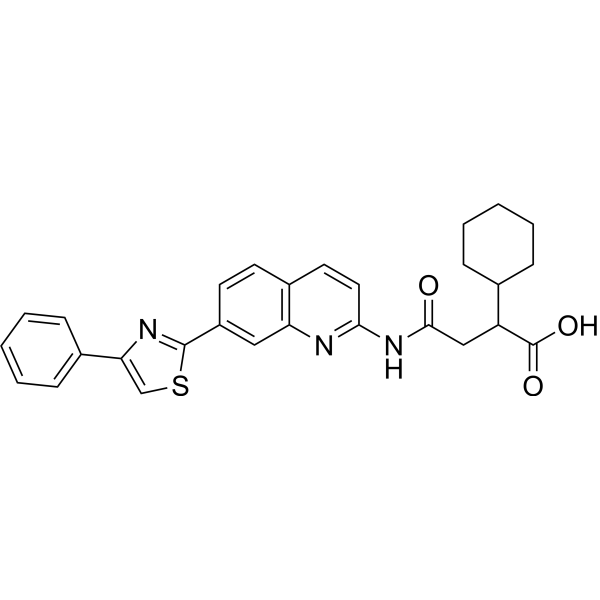 0 ImagesCat. No.: HY-157033CAS No.: 1613317-24-0LMP7-IN-2 is a LMP7 inhibitor. LMP7-IN-2 can be used for associated inflammatory diseases and disorders.
-
AMC-3-030
 0 ImagesCat. No.: HY-180934CAS No.: 2926656-07-5AMC-3-030 is a selective and potent dual inhibitor targeting HDAC6 and chymotrypsin-like proteasome with IC50 values of 884 and 4.17 nM. AMC-3-030 has a proliferation inhibitory effect. AMC-3-030 can reduce α-tubulin and β-actin levels. AMC-3-030 can be used for research of multiple myeloma.
-
5-Amino-8-hydroxyquinoline dihydrochloride
 0 ImagesCat. No.: HY-W001023ACAS No.: 21302-43-2Synonyms: 5A8HQ dihydrochloride; 5AHQ dihydrochloride5-Amino-8-hydroxyquinoline (5A8HQ; 5AHQ) dihydrochloride is an orally active non-competitive 20S proteasome inhibitor. 5-Amino-8-hydroxyquinoline dihydrochloride can inhibit NF-κB activity and induce cancer cells death and shows low cytotoxicity towards normal hematopoietic cells. 5-Amino-8-hydroxyquinoline dihydrochloride can be used for the research of cancer, such as leukemia.
-
Z-Leu-Leu-Glu-βNA
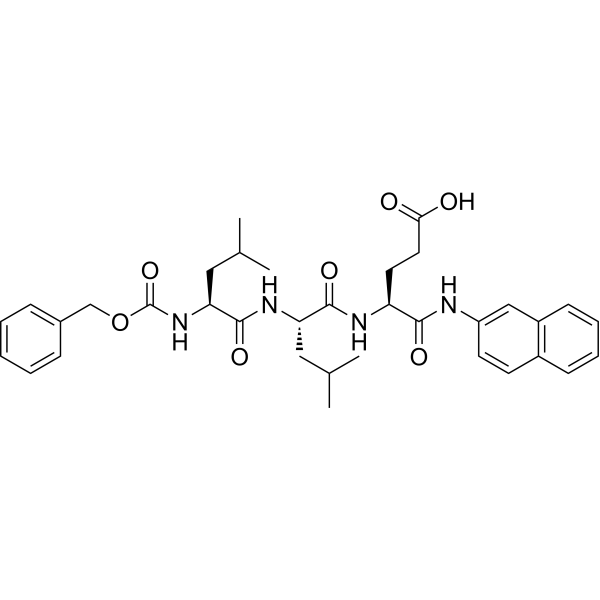 0 ImagesCat. No.: HY-137286CAS No.: 75873-85-7Synonyms: Z-Leu-Leu-Glu-β-naphthylamideZ-Leu-Leu-Glu-βNA (Z-Leu-Leu-Glu-β-naphthylamide) is a substrate for determination of the glutamylpeptidyl-peptide hydrolase activity of the 20S proteasome.
-
Isovalerylcarnitine-d3 chloride
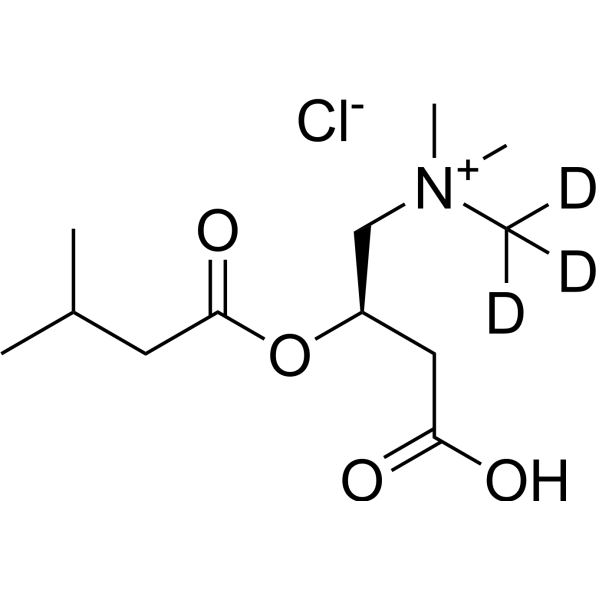 0 ImagesCat. No.: HY-113221ASIsovalerylcarnitine-d3 chloride is the deuterium labeled Isovalerylcarnitine chloride (HY-145542). Isovalerylcarnitine chloride is a metabolite of leucine. Isovalerylcarnitine chloride can specifically activate calpain in human neutrophils. Isovalerylcarnitine chloride inhibits tumor cell proliferation and induces apoptosis. Elevated circulating levels of Isovalerylcarnitine chloride are negatively correlated with reduced lung cancer risk.
-
20S Proteasome-IN-3
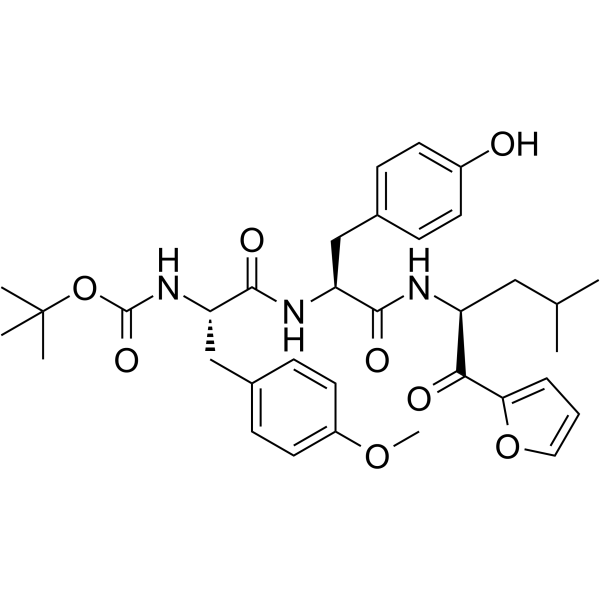 0 ImagesCat. No.: HY-150591CAS No.: 1803040-07-420S Proteasome-IN-3 is a 20S proteasome β5 subunit inhibitor (IC50=1.64 μM). 20S Proteasome-IN-3 shows anti-tumor proliferation activity.
-
20S Proteasome-IN-5
 0 ImagesCat. No.: HY-15815020S Proteasome-IN-5 (Compound 5) is a macrocyclic inhibitor of the 20S Proteasome, with IC50 values of 0.19 and 52.5 μM for ChT-L and PGPH-L activity, respectively.
-
Proteasome β2c/i-IN-1
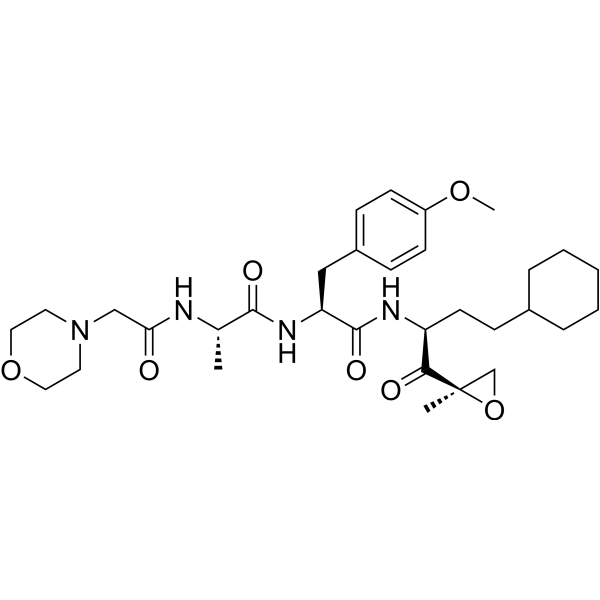 0 ImagesCat. No.: HY-157035CAS No.: 2322333-75-3Proteasome β2c/i-IN-1 (compound 37) is a subunit-selective human proteasome β2c and β2i inhibitor .
-
DY-9760e
 0 ImagesCat. No.: HY-19230CAS No.: 179185-73-0DY-9760e is a calmodulin (CaM) inhibitor. DY-9760e selectively inhibits the activity of various calmodulin-dependent enzymes by antagonizing the Ca²⁺/CaM complex, exhibiting the strongest inhibitory activity against nNOS, CaM kinase II, and calcineurin (Ki: 0.9, 1.4, and 2.0 μM, respectively). DY-9760e inhibits excessive nitric oxide production and protein tyrosine nitration, as well as the activation of calpain and caspase-3. DY-9760e reduces infarct size, improves cardiac function, and inhibits oxidative stress and cell death. DY-9760e can be used in research on the treatment of myocardial infarction, cerebral ischemia, and other diseases.
-
Proteasome-IN-7
 0 ImagesCat. No.: HY-168902Proteasome-IN-7 (Compound 6f) is an epoxyketone macrocyclic peptidyl proteasome inhibitor (IC50 value of 37.92 nM for 20S proteasome ChT-L subunit). Proteasome-IN-7 displays robust antiproliferative effects against multiple myeloma, acute lymphoblastic leukemia and non-small cell lung cancer.
-
β5i-IN-2
 0 ImagesCat. No.: HY-187220CAS No.: 3119216-05-3β5i-IN-2 is a potent, selective, and orally active inhibitor of the immunoproteasome β5i subunit, with an IC50 of 0.08 μM against human β5i. β5i-IN-2 inhibits LPS (HY-D1056)- and IFN-γ-induced expression of IL-1β, IL-6, and TNF-α, and suppresses the JNK, ERK, and NF-κB signaling pathways. β5i-IN-2 can be used in research related to rheumatoid arthritis and ulcerative colitis.
-
Z-LLF-CHO
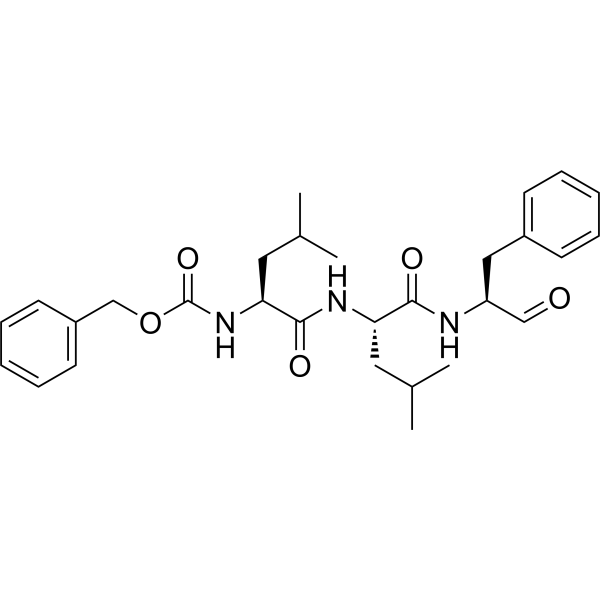 0 ImagesCat. No.: HY-138096CAS No.: 133429-58-0Synonyms: Z-Leu-Leu-Phe-CHOZ-LLF-CHO (Z-Leu-Leu-Phe-CHO) is a potent inhibitor of the chymotrypsin-like activity of the pituitary multicatalytic proteinase complex (Ki = 460 nM). Z-LLF-CHO is also a NF-κB nuclear translocation inhibitor.
-
Nor-Cerpegin
 0 ImagesCat. No.: HY-135511CAS No.: 145887-88-3Nor-Cerpegin is an analog of Cerpegin. Cerpegin, a pyridinone-fused c-lactone, is an inhibitor of 20S proteasome. Cerpegin can be used as a tranquillizer, anti-inflammatory, analgesic and antiulcer.




