



TNF Receptor
Tumor Necrosis Factor Receptor; TNFR
Tumor necrosis factor (TNF) is a major mediator of apoptosis as well as inflammation and immunity, and it has been implicated in the pathogenesis of a wide spectrum of human diseases, including sepsis, diabetes, cancer, osteoporosis, multiple sclerosis, rheumatoid arthritis, and inflammatory bowel diseases.
TNF-α is a 17-kDa protein consisting of 157 amino acids that is a homotrimer in solution. In humans, the gene is mapped to chromosome 6. Its bioactivity is mainly regulated by soluble TNF-α–binding receptors. TNF-α is mainly produced by activated macrophages, T lymphocytes, and natural killer cells. Lower expression is known for a variety of other cells, including fibroblasts, smooth muscle cells, and tumor cells. In cells, TNF-α is synthesized as pro-TNF (26 kDa), which is membrane-bound and is released upon cleavage of its pro domain by TNF-converting enzyme (TACE).
Many of the TNF-induced cellular responses are mediated by either one of the two TNF receptors, TNF-R1 and TNF-R2, both of which belong to the TNF receptor super-family. In response to TNF treatment, the transcription factor NF-κB and MAP kinases, including ERK, p38 and JNK, are activated in most types of cells and, in some cases, apoptosis or necrosis could also be induced. However, induction of apoptosis or necrosis is mainly achieved through TNFR1, which is also known as a death receptor. Activation of the NF-κB and MAPKs plays an important role in the induction of many cytokines and immune-regulatory proteins and is pivotal for many inflammatory responses.
TNF Receptor Isoform Specific Products
-
TNF Receptor
(684)
View all products
-
TNFRSF1A/
CD120a (8)View all products
-
TNFRSF3/
CD18 (1)View all products
-
TNFRSF4
(5)
View all products
-
TNFRSF5/
CD40 (117)View all products
-
TNFRSF6/
Fas/ (2)CD95 View all products
-
TNFRSF7/
CD27 (2)View all products
-
TNFRSF8/
CD30 (3)View all products
-
TNFRSF9/
4-1BB/ (3)CD137 View all products
-
TNFRSF10B/
DR5/ (1)CD262 View all products
-
TNFRSF12A/
TWEAK (5)View all products
-
TNFRSF16/
NGF Receptor/ (1)CD271 View all products
-
TNFRSF18/
GITR/ (6)CD357 View all products
All Product Categories
-
TNF Receptor Inhibitors
(866)
View all products
-
TNF Receptor Agonists
(35)
View all products
-
TNF Receptor Antagonists
(25)
View all products
-
TNF Receptor Activators
(72)
View all products
-
TNF Receptor Modulators
(8)
View all products
-
TNF Receptor Inducers
(10)
View all products
-
TNF Receptor Controls
(4)
View all products
-
TNF Receptor Ligands
(2)
View all products
-
TNF Receptor Superfamily Proteins
(282)
View all products
-
TNF Receptor Related Products (1218)
Related Products (1218)

-
Recombinant Proteins (282)
-
Antibodies (23)
-
TNF Receptor Signaling Pathway
-
TNF Receptor Isoform Comparison
-
PDE4-IN-28
 0 ImagesCat. No.: HY-176234PDE4-IN-28 (Compound G1) is a PDE4D inhibitor (IC50: 29 nM). PDE4-IN-28 inhibits the production of TNF-α and NO (IC50: 13.32 and 2.32 μM, respectively). PDE4-IN-28 exhibits anti-inflammatory, antibacterial and analgesic effects in a rat pressure ulcer (PU) model and promotes HUVEC cell migration, thereby accelerating wound healing.
-
CX-659S
 0 ImagesCat. No.: HY-114908CAS No.: 204980-81-4CX-659S is an orally active 5-carboxamide uracil derivative. CX-659S can effectively inhibit lipid peroxidation (IC50 = 5.9 μM). CX-659S can reduce the infiltration of neutrophils and eosinophils. CX-659S inhibits the mRNA expression of pro-inflammatory cytokines IL-1β and TNF-α. CX-659S can be used for research on inflammatory conditions.
-
Variegatic acid
 0 ImagesCat. No.: HY-149151CAS No.: 20988-30-1Variegatic acid is a secondary metabolite derived from basidiomycete fungi. Variegatic acid is a PKCβ1 inhibitor with an IC₅₀ of 36.2 μM. Variegatic acid inhibits antigen- or calcium ionophore-induced β-hexosaminidase release (IC₅₀ values of 10.4 μM and 22.2 μM, respectively) and TNF-α secretion (IC₅₀ values of 16.8 μM and 20.1 μM, respectively). Variegatic acid suppresses the enzymatic activity of calcium-activated PKCβ1 and reduces Fe(III) to Fe(II) in a pH-dependent manner, enabling the generation of hydroxyl radicals (·OH) through reaction with H₂O₂, which facilitates the degradation of lignocellulose. Variegatic acid is useful for studying biological degradation and allergic responses.

-
Anti-TNFSF9/4-1BBL Antibody
 0 ImagesCat. No.: HY-P990531The Anti-TNFSF9/4-1BBL Antibody is a CHO-expressed humanized antibody that targets TNFSF9/4-1BBL. The Anti-TNFSF9/4-1BBL Antibody has huIgG1 heavy chain and huκ light chain, with a predicted molecular weight (MW) of 150 kDa. For isotype control of the Anti-TNFSF9/4-1BBL Antibody, you can refer to Human IgG1 kappa, Isotype Control (HY-P99001).
-
Apigenin 7-O-gentiobioside
 0 ImagesCat. No.: HY-N20671CAS No.: 50826-94-3Apigenin 7-O-gentiobioside is a flavonoid glycoside. Apigenin 7-O-gentiobioside antagonizes TNF-α-induced cytotoxicity. Apigenin 7-O-gentiobioside can be used in the research of inflammation-related diseases.
-
TNF-α-IN-26
 0 ImagesCat. No.: HY-175430CAS No.: 165806-63-3TNF-α-IN-26 (Compound 18) is a TNF-α inhibitor with an IC50 of 0.10 μM for CSBP ligands. TNF-α-IN-26 inhibits LPS (HY-D1056)-stimulated TNF production in mice model. TNF-α-IN-26 can be used for inflammatory diseases research.
-
Maxadilan
 0 ImagesCat. No.: HY-P3483CAS No.: 135374-80-0Maxadilan is a specific irreversible PAC1 receptor agonist and a potent vasodilator peptide present in the salivary glands of sand flies. Maxadilan exhibits anti-apoptotic activity in hADSCs. Maxadilan inhibits pro-inflammatory cytokines (TNF-α) and enhances anti-inflammatory mediators (IL-10). Maxadilan can activate leukocytes and inhibit vascular permeability through PAC1 receptors. Maxadilan promotes neural differentiation of human adipose-derived stem cells. Maxadilan can be used to study endotoxin shock, atherosclerosis, and neurodegenerative diseases[1][2][3][4][5].
-
SARS-CoV-2 3CLpro-IN-40
 0 ImagesCat. No.: HY-187097SARS-CoV-2 3CLpro-IN-40 is a SARS-CoV-2 3CLpro inhibitor with an IC50 of 2.041 μM. SARS-CoV-2 3CLpro-IN-40 reduces the expression level of viral nucleocapsid protein and the expression levels of proinflammatory cytokines (IL-6, TNF-α and IFN-β). SARS-CoV-2 3CLpro-IN-40 decreases the RNA level of infectious bronchitis virus. SARS-CoV-2 3CLpro-IN-40 inhibits SARS-CoV-2 infection. SARS-CoV-2 3CLpro-IN-40 reduces the replication level of HCoV-OC43. SARS-CoV-2 3CLpro-IN-40 is applicable to research related to coronavirus infection.
-
TNF-α-IN-16
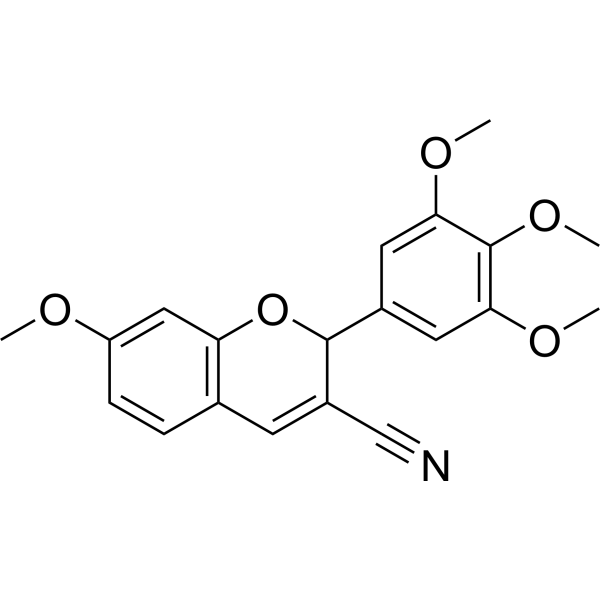 0 ImagesCat. No.: HY-160437CAS No.: 364039-60-1TNF-α-IN-16 is a potent TNFα inhibitor with an IC50 of <0.6 μM. TNF-α-IN-16 has antiinflammatory properties (WO2001072735A2; example 18).
-
Isoquinoline (Standard)
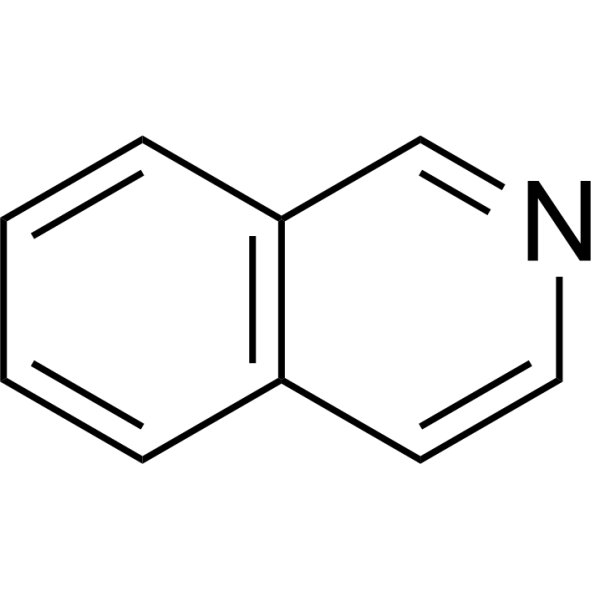 0 ImagesIsoquinoline (Standard) is the analytical standard of Isoquinoline. This product is intended for research and analytical applications. Isoquinoline is an analog of pyridine. Isoquinoline structural-based alkaloids, such as tropoloisoquinoline, phthalideisoquinoline, and naphthylisoquinoline has anti-cancer activities.
-
Anti-Mouse 4-1BBL/CD137L Antibody (TKS-1-Mouse IgG2a)
 0 ImagesCat. No.: HY-P990304AAnti-Mouse 4-1BBL/CD137L Antibody (TKS-1-Mouse IgG2a) is a mouse-derived IgG2a κ antibody inhibitor that targets mouse 4-1BBL/CD137L. Anti-Mouse 4-1BBL/CD137L Antibody (TKS-1-Mouse IgG2a) is a chimeric version of the original TKS-1 antibody (HY-P990304). The variable domain sequences are identical to the original TKS-1 but the constant region sequences have been switched from rat IgG2a to mouse IgG2a. Anti-Mouse 4-1BBL/CD137L Antibody (TKS-1-Mouse IgG2a) reacts with mouse 4-1BB ligand (4-1BBL). Anti-Mouse 4-1BBL/CD137L Antibody (TKS-1-Mouse IgG2a) can be used for the researches of cancer, infection, inflammation and immunology.
-
sEH inhibitor-19
 0 ImagesCat. No.: HY-170492CAS No.: 3107483-12-2sEH inhibitor-19 (Compound (R)-14i) is an orally active inhibitor for soluble epoxide hydrolase (sEH) with an IC50 of 1.2 nM. sEH inhibitor-19 inhibits the expression of TNF-α and IL-6, exhibits anti-inflammatory activity in mouse acute pancreatitis or Carrageenan (HY-125474)-induced edema models.
-
GPR84 antagonist 9
 0 ImagesCat. No.: HY-161682CAS No.: 2654791-96-3GPR84 antagonist 9 is an orally active GPR84 antagonist with an IC50 value of 12 nM. By antagonizing the GPR84 receptor, GPR84 antagonist 9 blocks immune cell migration, M1 polarization, and the release of inflammatory factors (IL1β/TNFα) induced by medium-chain free fatty acids (MCFFAs) and other substances, thereby comprehensively inhibiting inflammatory and fibrotic responses. GPR84 antagonist 9 can be used in the research of inflammation-driven pain disorders, including neuropathic pain disorders, Fabry disease, gout, and bladder pain syndrome.
-
AMG-228
 0 ImagesCat. No.: HY-P991404AMG-228 is a human IgG1 monoclonal antibody (mAb) targeting TNFRSF18/GITR/CD357. AMG-228 can be used in advanced solid tumors research.
-
PARP7-IN-27
 0 ImagesCat. No.: HY-189217CAS No.: 3051563-45-9PARP7-IN-27 is a blood-brain barrier-permeable and selective PARP7 inhibitor with an IC50 of 22.8 nM. PARP7-IN-27 alleviates neuroinflammation and astrocyte activation, mitigates autophagy-related alterations, reduces the levels of ischemia-associated pro-inflammatory factors, and maintains the expression of synaptic markers. PARP7-IN-27 can be used in studies related to ischemic stroke.
-
OX118
 0 ImagesCat. No.: HY-P992435Purity: 99.22%OX118 is a fully human, ADCC-enhanced monoclonal antibody targeting OX40L, the recommended isotype control is HY-P99001. OX118 blocks OX40L, suppresses effector T-cell proliferation, expands regulatory T-cell populations, and reduces bystander activation across natural killer cells, B cells, and CD14+ monocytes. OX118 can be used for the research of graft-versus-host disease.
-
Omtriptolide sodium
 0 ImagesCat. No.: HY-16362CAS No.: 195883-09-1Synonyms: PG 490-88NaOmtriptolide sodium (PG490-88Na) is a derivative of Triptolide (HY-32735). Omtriptolide sodium exhibits significant immunosuppressive, anti-fibrotic and anti-inflammatory properties. The mechanism of action of Omtriptolide sodium is diverse, including inhibiting T cell activation and proliferation, inducing T cell apoptosis (apoptosis), blocking fibroblast maturation/proliferation, inhibiting TGF-β mRNA expression, and suppressing pro-inflammatory cytokines (such as IL-2, IFN-γ, TNF-α) by blocking transcription factors such as NF-κB. Omtriptolide sodium can be used for research on obstructive airway diseases, pulmonary fibrosis and graft-versus-host disease.
-
FuBIG
 0 ImagesCat. No.: HY-182469FuBIG is an iminoguanidine derivative with neuroprotective effects. FuBIGL inhibits L-LDH activation and reduces lactate production. FuBIGL exerts protective effects on inflammatory nerve cells, upregulates the expressions of AMPK, pAMPK and FOXO3, and activates the AMPK pathway in cells. FuBIG exerts anti-inflammatory effects by reducing pro-inflammatory cytokines (IL-6, IL-1β, TNF-α) and increasing the anti-inflammatory cytokine IL-10. FuBIG maintains mitochondrial membrane potential, alleviates mitochondrial dysfunction, reduces ROS production, and relieves oxidative stress. FuBIG upregulates Bcl-2, downregulates Bax and Caspase-3, and inhibits cell apoptosis (apoptosis). FuBIG improves metabolic disorders in diabetic mice, decreases the levels of LDL-C, ALT and AST, and increases HDL-C level simultaneously. FuBIG can be used in the research of diabetic neuroinflammation.
-
(R)-5,7-Dimethoxyflavanone
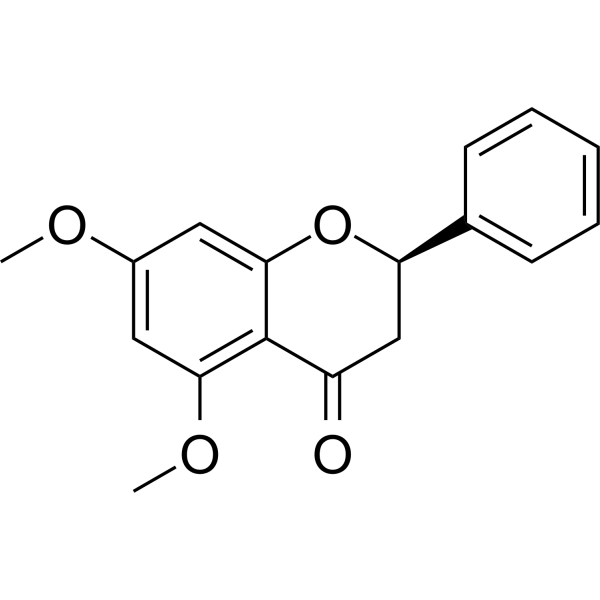 0 Images(R)-5,7-Dimethoxyflavanone shows potent antimutagenic activity against MeIQ mutagenesis in Ames test using the S. typhimurium TA100 and TA98 strains. And (R)-5,7-Dimethoxyflavanone significantly and dose-dependently inhibits the inflammatory mediato.




