



Tau Protein
Tau is well established as a microtubule-associated protein in neurons. They have roles primarily in maintaining the stability of microtubules in axons and are abundant in the neurons of the central nervous system (CNS). However, under pathological conditions, aberrant assembly of tau into insoluble aggregates is accompanied by synaptic dysfunction and neural cell death in a range of neurodegenerative disorders, collectively referred to as tauopathies.
All Product Categories
-
Tau Protein Related Products (217)
Related Products (217)

-
Antibodies (5)
-
Lu AF87908
 0 ImagesCat. No.: HY-P992400Lu AF87908 is an IgG1 monoclonal antibody targeting the p-Ser396/404 epitope of tau protein, which mainly binds to the pSer396 region. Lu AF87908 can be used in the research of Alzheimer's disease. The recommended isotype control is human IgG1 kappa (HY-P99001).
-
Tau ASO-12 (murine) sodium scrambled negative control
 0 ImagesCat. No.: HY-132582ETau ASO-12 (murine) sodium scrambled negative control is the sequence scrambled negative control of Tau ASO-12 (murine) sodium.
-
TRV-1387
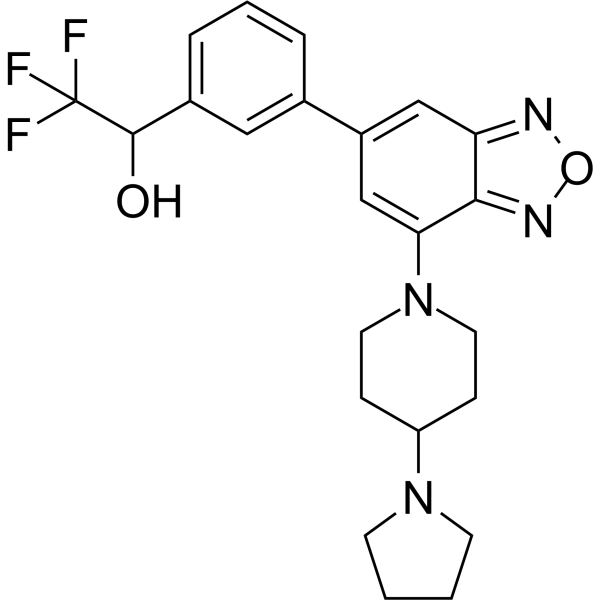 0 ImagesCat. No.: HY-153431CAS No.: 1569645-63-1TRV-1387 is a benzofurazan that inhibits the aggregation of tau and amyloid-β.
-
Schisanhenol (Standard)
 0 ImagesCat. No.: HY-N0859RCAS No.: 69363-14-0Synonyms: Schizanhenol (Standard); Gomisin-K3 (Standard)Schisanhenol (Standard) (Schizanhenol (Standard)) is the analytical standard of Schisanhenol (HY-N0859). This product is intended for research and analytical applications. Schisanhenol, a lignan, is an orally active antioxidant. Schisanhenol reduces AChE activity, increases SIRT1 and PGC-1α expression, and decreases phosphorylated Tau (Ser 396) levels. Schisanhenol increases SOD and glutathione peroxidase activity, decreases malondialdehyde (MDA) content, and inhibits UGT2B7 activitY. Schisanhenol attenuates ox-LDL-induced apoptosis, intracellular reactive oxygen species generation, and cytotoxicity in endothelial cells. Schisanhenol inhibits LDL oxidation, brain mitochondrial and membrane peroxidative damage, and brain mitochondrial swelling and disintegration. Schisanhenol can be used for the research of Alzheimer’s disease, atherosclerosis, brain ischemia, and age-related brain deterioration.
-
Phenchlobenpyrrone
 0 ImagesCat. No.: HY-119492CAS No.: 215036-81-0Phenchlobenpyrrone is a highly selective neuronal calcium antagonist that crosses the blood-brain barrier. Phenchlobenpyrrone mildly inhibits AChE activity. Phenchlobenpyrrone inhibits Aβ aggregation and promotes the clearance of Aβ oligomers. Phenchlobenpyrrone reduces abnormal phosphorylation of Tau protein. Phenchlobenpyrrone may be used in research on Alzheimer's disease.
-
D-687
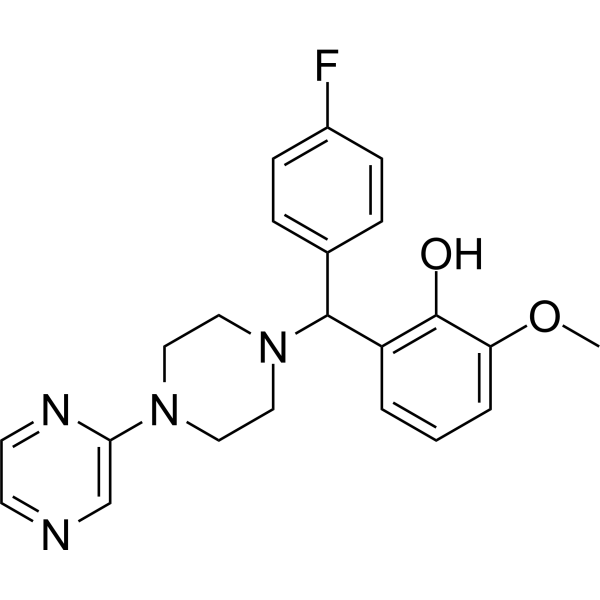
 0 ImagesCat. No.: HY-169196CAS No.: 2276762-06-0D-687 is an inhibitor of Tau and Aβ. D-687 can reverse Aβ1–42-induced toxicity in SH-SH5Y cells and has significant neuroprotective properties.
-
RA-PR058
 0 ImagesCat. No.: HY-172176RA-PR058 is an orally active Ramalin derivative with blood-brain barrier permeability, exhibiting multi-target regulatory effects and favorable pharmacokinetic properties. RA-PR058 demonstrates potential as a multi-target modulator for Alzheimer's disease by reducing the expression of BACE1, tau protein hyperphosphorylation, and anxiety-like behaviors.
-
Tau-aggregation-IN-5
 0 ImagesCat. No.: HY-176936CAS No.: 1283397-08-9Tau-aggregation-IN-5 is a Tau-aggregation inhibitor (EC50 = 0.31 μM). Tau-aggregation-IN-5 targets P4HB covalently and activates mild ER stress. Tau-aggregation-IN-4 can be used for the study of neurodegenerative disorders such as Alzheimer’s and Pick’s diseases.
-
H3R antagonist 4
 0 ImagesCat. No.: HY-162812H3R antagonist 4 (compound 11L) was a dual inhibitor of cholinesterase and histamine receptor (H3R), with corresponding IC50 of 7.04 μM (eeAChE), 9.73 μM (hAChE)(reversible) and 1.09 nM (H3R) , respectively. H3R antagonist 4 inhibited the aggregation of Aβ1-42 induced by itself and Cu2+ (95.48% and 88.63%) , and degraded the Aβ1-42 fibrils induced by itself and Cu2+ (80.16% and 89.30%) . H3R antagonist 4 chelate biometals such as Cu2+, Zn2+, Al3+, and Fe2+. H3R antagonist 4 significantly reduced tau protein hyperphosphorylation induced by Aβ1-42 and inhibited RSL-3-induced apoptosis and ferroptosis in PC12 cells. H3R antagonist 4 had the best blood-brain barrier permeability and intestinal absorption in hCMEC/D3 and hPepT1-MDCK cells.H3R antagonist 4 ameliorates learning and memory impairment in a mouse model of Alzheimer's disease induced by scopolamine (HY-N0296) .
-
D-688
 0 ImagesCat. No.: HY-169197CAS No.: 2276762-07-1D-688 is an inhibitor of Tau and Aβ. D-688 can reverse Aβ1–42-induced toxicity in SH-SH5Y cells and has significant neuroprotective properties. D-688 can improve the survival rate of Drosophila melanogaster expressing the human tau protein isoform (2N4R).
-
AJ-4
 0 ImagesCat. No.: HY-184742AJ-4 is an orally active, blood-brain barrier-permeable GSK-3β/AChE inhibitor, with an IC50 of 4.7 nM against GSK-3β and 2.97 μM against AChE. AJ-4 increases the level of phosphorylated GSK-3β and reduces the expression of Amyloid-β and phosphorylated Tau. AJ-4 improves scopolamine-induced learning and memory impairment and alleviates hippocampal neuron damage in AD mice. AJ-4 can be used for the research of Alzheimer's disease.
-
Dendrobine-N-oxide
 0 ImagesCat. No.: HY-N21794CAS No.: 40072-57-9Dendrobine-N-oxide is a dendrobine-type sesquiterpene alkaloid. It is isolated from Dendrobium nobile. Dendrobine-N-oxide inhibits neuroinflammation, reduces β-Amyloid accumulation, enhances the expression of neurotrophic factors, suppresses the hyperphosphorylation of Tau protein, and exerts anti-neuronal Apoptosis effects. Dendrobine-N-oxide shows no anticancer activity against colon cancer and pancreatic adenocarcinoma. It is used in research on neurodegenerative diseases.
-
GSK-3β inhibitor 21
 0 ImagesCat. No.: HY-168079GSK-3β inhibitor 21 (compound 44) is an ATP-competitive GSK-3β inhibitor (IC50=6.06 μM) with anti-amyloid aggregation and tau phosphorylation inhibitory activities. GSK-3β inhibitor 21 can be used in the study of Alzheimer's disease.
-
GSK3β-IN-3
 0 ImagesCat. No.: HY-W098905CAS No.: 301359-45-5GSK3β-IN-3 is an ATP-competitive GSK-3β inhibitor (IC50 = 0.90 μM). GSK3β-IN-3 can reduce the phosphorylation level of tau protein in the BR5706 strain and reduce the deposition of Aβ aggregates in the CL2006 strain, and can be used to research Alzheimer's disease (AD).
-
GSK-3β inhibitor 16
 0 ImagesCat. No.: HY-161458GSK-3β inhibitor 16 (compound 7c) is a GSK-3β inhibitor with the IC50 of 4.68 nM. GSK-3β inhibitor 16 decreases Tau hyperphosphorylated aggregate and alleviates cognitive impairments in the Scopolamin (HY-N0296)-induced model in mice.
-
ACI-3024
 0 ImagesCat. No.: HY-W835959CAS No.: 2361566-66-5ACI-3024 is an an orally active and highly selective Tau protein aggregation inhibitor. ACI-3024 decrease the β-sheet content and seeding properties of pathological Tau from different Tauopathies, leading to a significant rescue of the Tau-induced neurodegeneration and neuroinflammation in a cellular model. ACI-3024 is promising for research of neurodegenerative diseases.
-
Tau Peptide (274-288)
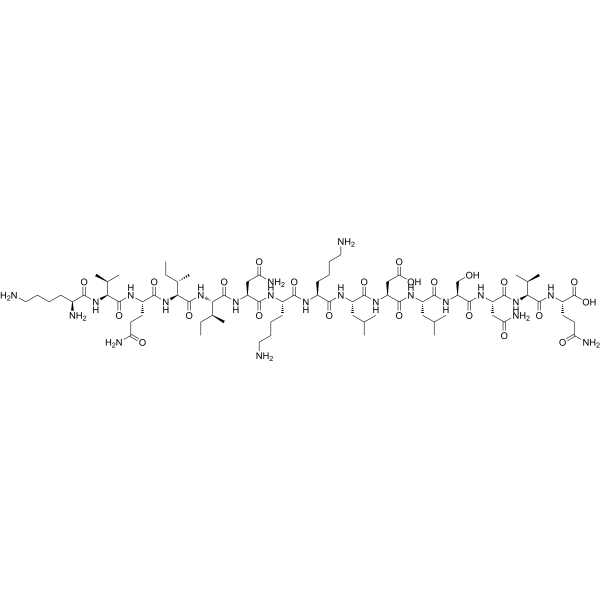 0 ImagesCat. No.: HY-P4949CAS No.: 330456-39-8Tau Peptide (274-288) is a polypeptide that can be found by peptide screening. Peptide screening is a research tool that pools active peptides primarily by immunoassay. Peptide screening can be used for protein interaction, functional analysis, epitope screening, especially in the field of agent research and development.
-
Anandamide-15N
 0 ImagesCat. No.: HY-10863S2Purity: 99.78%Synonyms: AEA-15NN; Arachidonoyl ethanolamide-15NNAnandamide-15N (AEA-15N) is the 15N-labeled Anandamide (HY-10863). Anandamide is an endocannabinoid. Anandamide modulates both neuronal and immune functions through two protein-coupled cannabinoid receptors (CB1 and CB2). Anandamide can activate numerous other receptors like PPARS, TRPV1, and GPR18/GPR55. Anandamide also has potential anti-fungal and anti-inflammatory activities. Anandamide can be used for the research of Alzheimer’s disease (AD) and ulcerative colitis.
-
COX-2/HDAC6-IN-1
 0 ImagesCat. No.: HY-181926COX-2/HDAC6-IN-1 (Compound 11e) is a dual COX-2 and HDAC6 inhibitor, with an IC50 of 0.12 μM against HDAC6 and an IC50 of 0.66 μM against COX-2. COX-2/HDAC6-IN-1 enhances the acetylation level of α-tubulin, regulates epigenetic gene expression, and inhibits the expression of pro-inflammatory mediators (COX-2, IL-1β, IL-6 and TNF-α). COX-2/HDAC6-IN-1 promotes Amyloid-β clearance and reduces excessive phosphorylation of Tau protein. COX-2/HDAC6-IN-1 maintains neuronal morphology by stabilizing MAP2, protects synaptic integrity by regulating synapsin, and restores the expression of memory-related genes. COX-2/HDAC6-IN-1 possesses neuroprotective activity and improves learning and memory abilities in Scopolamine (HY-N0296)-induced Alzheimer's disease mouse models. COX-2/HDAC6-IN-1 is applicable to research related to Alzheimer's disease.




