



p38 MAPK Activator
-
7-Methylsulfinylheptyl isothiocyanate
 0 ImagesCat. No.: HY-W721119CAS No.: 129244-98-0
7-Methylsulfinylheptyl isothiocyanate is an activator for MAPK signaling pathway, which downregulates the melanogenesis related proteins and suppresses the melanin synthesis in B16-F1 cells. 7-Methylsulfinylheptyl isothiocyanate induces autophagy. 7-Methylsulfinylheptyl isothiocyanate is an inducer for phase II enzyme, which exhibits chemoprotective effect against carcinogen. 7-Methylsulfinylheptyl isothiocyanate can be used as cosmetic ingredient for skin whitening and anti-inflammation.
-
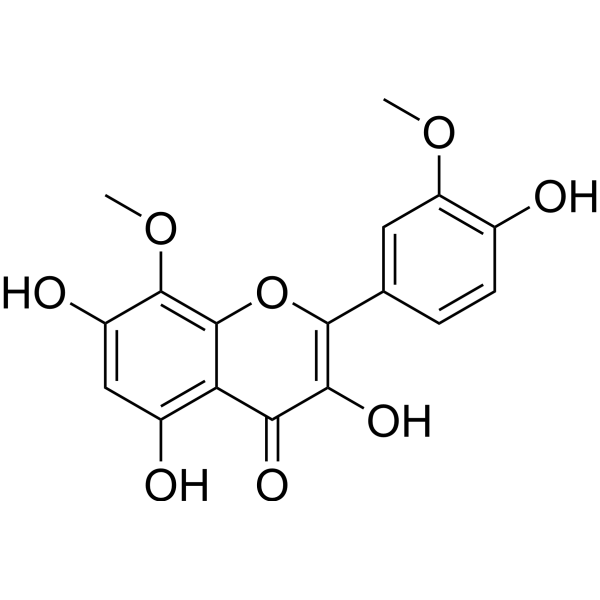
Limocitrin
 0 Images
Limocitrin is a flavonol glycoside. Limocitrin inhibits AKT phosphorylation and JNK phosphorylation, upregulates p38 phosphorylation, and inhibits ERK1/2 phosphorylation, thereby blocking MAPK signaling. Limocitrin induces Apoptosis through the mitochondrial pathway, death receptor-mediated signaling, Caspase activation, and G2/M cell cycle arrest. Limocitrin possesses anti-inflammatory and anticancer properties. Limocitrin can be used for research on oral squamous cell carcinoma and chronic myeloid leukemia.
-
Methylcarbamyl PAF C-8
 0 ImagesCat. No.: HY-176019
Methylcarbamyl PAF C-8 is resistant to the degradation function of platelet-activating factor acetylhydrolase (PAF-AH). It has a half-life of more than 100 minutes in platelet-poor plasma and possesses the activity of inducing platelet aggregation. In NRK-49 cells overexpressing the PAF receptor, Methylcarbamyl PAF C-8 can induce the expression of c-myc and c-fos, and activate mitogen-activated protein kinase (MAPK). Additionally, Methylcarbamyl PAF C-8 can induce cell cycle arrest in the G1 phase. Methylcarbamyl PAF C-8 holds promise for research in the fields of cardiovascular diseases and anti-cancer therapy.
-
Ferroptosis inducer-7
 0 ImagesCat. No.: HY-172803CAS No.: 2723569-00-2
Ferroptosis inducer-7 is an orally active and selective ferroptosis inducer via inositol 1,4,5-trisphosphate receptor (IP3R)/calcium release-activated calcium channel protein (ORAI). Ferroptosis inducer-7 exhibits a notable effect in alleviating anemia symptoms, suppressing bone marrow CTLs activation, and improving hematopoietic function in immune-mediated bone marrow failure. Ferroptosis inducer-7 can be studied in research for aplastic anemia.
-
Apoptosis inducer 53
 0 ImagesCat. No.: HY-179451
Apoptosis inducer 53 is an apoptosis inducer. Apoptosis inducer 53 can inhibit proliferation of human tumor cell lines (A549, HeLa, SW1573, T-47D, WiDr) with GI50 values of 2.5-9.1 μM. Apoptosis inducer 53 can induce cancer cells apoptosis and reduce colony formation. Apoptosis inducer 53 can activate p38α MAPK signaling and exerts anti-inflammatory effect. Apoptosis inducer 53 also shows anti-Leishmania donovani activity. Apoptosis inducer 53 can be used for the researches of cancer, infection and inflammation.
-
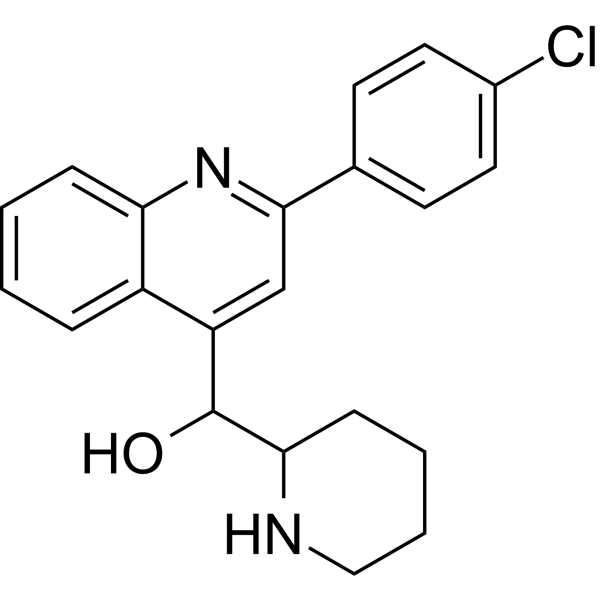
PQ-1
 0 ImagesCat. No.: HY-14584CAS No.: 955995-48-9
PQ-1 is a gap junction enhancer.
-
Cyproheptadine hydrochloride-d3
 0 ImagesCat. No.: HY-W745430Synonyms: Cyproheptadine HCl-d3
Cyproheptadine hydrochloride-d3 (Cyproheptadine HCl-d3) is the d3-labeled Cyproheptadine (hydrochloride) (HY-B0366A). Cyproheptadine hydrochloride (Cyproheptadine HCl) acts as a p38 MAP kinase activator, CHK2 activator, histamine H1 receptor inhibitor and serotonin receptor inhibitor. Cyproheptadine hydrochloride mediates cell cycle arrest via G1 phase arrest, G1/S transition arrest, G0/G1 phase arrest, reduced expression of cyclins D1/D2/D3, upregulated expression of HBP1, p16, p21, p27, and decreased phosphorylation of retinoblastoma protein. Cyproheptadine hydrochloride induces Apoptosis by increasing PARP and cleaved PARP, as well as activating the mitochondrial caspase pathway. Cyproheptadine hydrochloride inhibits tumor growth with extremely low toxicity to normal cells. Cyproheptadine hydrochloride can be used in research related to hepatocellular carcinoma, multiple myeloma and acute myeloid leukemia.
-
Chromium picolinate (Standard)
 0 ImagesSynonyms: Chromium (III) picolinate (Standard); Cr(Pic)3 (Standard)
Chromium picolinate (Standard) is the analytical standard of Chromium picolinate. This product is intended for research and analytical applications. Chromium picolinate (Chromium (III) picolinate) is a compound that has oral activity. Chromium picolinate induces apoptosis. Chromium picolinate is the activator of p38 MAPK. Chromium picolinate has antioxidant activity. Chromium picolinate can be used in research on type 2 diabetes.
-
Histamine-13C5, 15N3
 0 ImagesCat. No.: HY-B1204S2Synonyms: Ergamine-13C5, 15N3
Histamine-13C5, 15N3 (Ergamine-13C5, 15N3) is the 13C and 15N labeled isotope of Histamine (HY-B1204). Histamine is the agonist for histamine receptor and a vasodilator. Histamine is an organic nitrogen compound that participates in local immune responses, regulates intestinal physiological functions, and acts as a neurotransmitter. Histamine affects p38 MAPK/Akt signaling pathway, exhibits antitumor, antioxidant and anti-inflammatory activities. Histamine can be used in the research of acute myeloid leukemia, malignant melanoma, and renal cell carcinoma.
-
SDUY104
 0 ImagesCat. No.: HY-184412
SDUY104 is an orally active amide-based allosteric inhibitor of SHP2 with an IC50 of 140 nM. SDUY104 impairs KRAS-driven pancreatic cancer cell proliferation via cell-cycle arrest and apoptosis. SDUY104 suppresses MAPK signaling and triggers compensatory PI3K-AKT activation. SDUY104 can be used for KRAS-mutant pancreatic cancer research.
-
Semaglutide, Cy5 labeled
 0 ImagesCat. No.: HY-114118F5Synonyms: Semaglutide-Cys(Cy5)
Semaglutide, Cy5-labeled (Semaglutide-Cys(Cy5)) is a CY5 (HY-D0821) -labeled version of Semaglutide (HY-114118) (Ex/Em = 633/670 nm). Semaglutide, Cy5-labeled can be used for studies on Semaglutide receptor binding (GLP-1R), cellular uptake and endocytosis, in vivo tissue distribution, and the targeting efficiency of delivery systems.
-
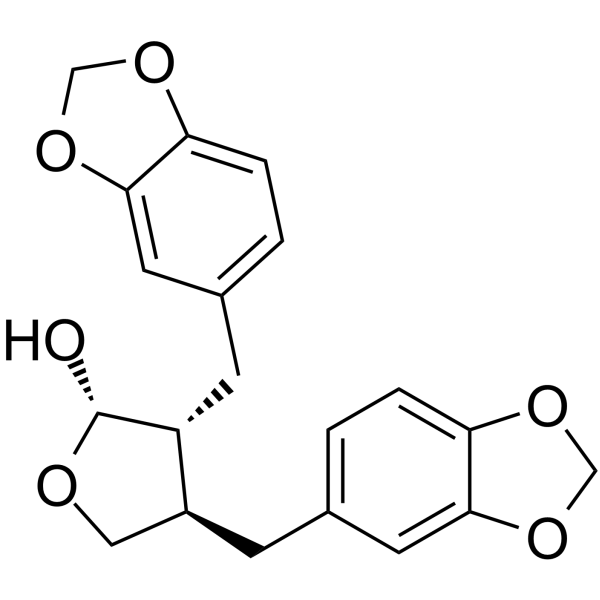
Cubebin
 0 ImagesCat. No.: HY-N10423CAS No.: 18423-69-3Synonyms: (-)-Cubebin
Cubebin ((-)-Cubebin), a dibenzyl butyrolactone lignan, is an orally active AChE inhibitor. Cubebin binds to active sites of NF-κB, TNF-α, and TGF-β1 via hydrogen and hydrophobic interactions, obstructing critical residues to inhibit pro-inflammatory or renal fibrosis-related activity. Cubebin enhances p38 MAPK phosphorylation to increase tyrosinase gene expression, stimulating melanogenesis via elevated tyrosinase activity, expression, and mRNA levels. Cubebin reduces oxidative stress via enhanced endogenous antioxidant enzyme activity and inhibited lipid peroxidation, regulates lipid metabolism, improves glycemic control, and exerts renoprotective effects via reduced renal dysfunction markers and improved renal architecture. Cubebin shows antimicrobial activity. Cubebin exerts larvicidal activity against Angiostrongylus cantonensis larvae, with no cytotoxicity toward monkey or human cell lines or Caenorhabditis elegans. Cubebin can be used for the research of diabetic nephropathy, melanoma, colon adenocarcinoma, neuroangiostrongyliasis, Alzheimer’s disease (AD) and depression.
-
Histamine-15N3
 0 ImagesCat. No.: HY-B1204S4Synonyms: Ergamine-15N3
Histamine-15N3 is the 15N3-labeled Histamine (HY-B1204). Histamine is the agonist for histamine receptor and a vasodilator. Histamine is an organic nitrogen compound that participates in local immune responses, regulates intestinal physiological functions, and acts as a neurotransmitter. Histamine affects p38 MAPK/Akt signaling pathway, exhibits antitumor, antioxidant and anti-inflammatory activities. Histamine can be used in the research of acute myeloid leukemia, malignant melanoma, and renal cell carcinoma.
-
SMU-L11-R
 0 ImagesCat. No.: HY-179047CAS No.: 3040320-18-8
SMU-L11-R is a selective TLR7 agonist with an EC50 of 0.012 μM for human TLR7. SMU-L11-R specifically activates TLR7, recruits MyD88, and triggers MAPK/NF-κB pathways, leading to TNF-α/IL-1β/IL-6 secretion in both mouse and human peripheral blood mononuclear cells. SMU-L11-R promotes M1-like macrophage polarization. SMU-L11-R exhibits excellent synergistic anti-tumor effects with PD-L1 inhibitors by upregulating CD8+T cells. SMU-L11-R shows potential in colorectal cancer studies.
-
Semaglutide sodium
 0 ImagesCat. No.: HY-114118CCAS No.: 2924330-56-1
Semaglutide sodium is a long-acting, selective, competitive GLP-1R agonist that can penetrate the blood-brain barrier. After activating GLP-1R, Semaglutide sodium promotes insulin secretion, inhibits gastric emptying and appetite, and at the same time enhances autophagy, inhibits oxidative stress and apoptosis. Semaglutide sodium also regulates mitochondrial function and lipid metabolism (such as reducing de novo lipogenesis in the liver). Semaglutide sodium has activities such as lowering blood sugar, reducing weight, neuroprotection (such as improving motor function in Parkinson's disease models, reducing α-synuclein aggregation) and improving hepatic steatosis. Semaglutide sodium can be used for the study of neurodegenerative diseases and liver diseases such as type 2 diabetes, obesity, Parkinson's disease, metabolic associated fatty liver disease (MASLD), and cancer.
-
p-Cresyl sulfate (Standard)
 0 ImagesSynonyms: p-Tolyl sulfate (Standard)
Platycodin D (Standard) is the analytical standard of Platycodin D. This product is intended for research and analytical applications. Platycodin D is a saponin isolated from Platycodon grandiflorus, acts as an activator of AMPKα, with anti-obesity property. WNT/β-catenin pathway mediates the anti-adipogenic effect of platycodin D.
-
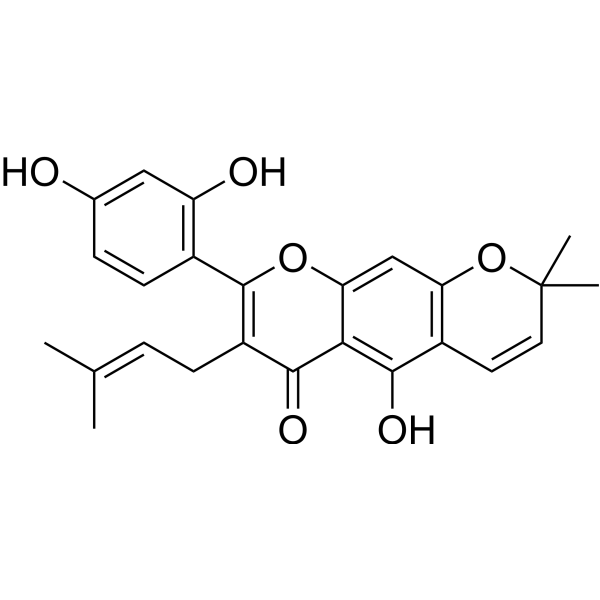
Cudraflavone B
 0 ImagesCat. No.: HY-N10009CAS No.: 19275-49-1
Cudraflavone B is a prenylated flavonoid with anti-inflammatory and anti-tumor properties. Cudraflavone B is also a dual inhibitor of COX-1 and COX-2. Cudraflavone B blocks the translocation of nuclear factor κB (NF-κB) from the cytoplasm to the nucleus in macrophages. Thus, Cudraflavone B inhibits tumor necrosis factor α (TNFα) gene expression and secretion. Cudraflavone B also triggers the mitochondrial apoptotic pathway, activates NF-κB, the MAPK p38, and ERK, and induced the expression of SIRT1. Thus Cudraflavone B inhibits the growth of human oral squamous cell carcinoma cells.
-
Picolinafen
 0 ImagesCat. No.: HY-W711035CAS No.: 137641-05-5Synonyms: AC 900001
Picolinafen is a pyridine-class herbicide that acts as a phytoene desaturase (PDS) inhibitor. Picolinafen effectively controls broadleaf weeds and disrupts carotenoid biosynthesis. Picolinafen exhibits cytotoxicity to porcine trophectoderm (pTr) and luminal epithelial (pLE) cells. Picolinafen induces (ROS accumulation, calcium depletion, and activates (MAPK and PI3K signaling pathways, leading to decreased cell viability, increased apoptosis, impaired migration, and altered expression of implantation-related genes. Picolinafen has an LD50 value of 2.7 mg/kg in mammals and 7 μg/L in fish. Picolinafen exhibits toxic effects during zebrafish embryogenesis[1][2].
-
Dinitramine
 0 ImagesCat. No.: HY-W714183CAS No.: 29091-05-2
Dinitramine is a herbicide. Dinitramine activates the Erk/P38/JNK/MAPK pathway and inactivates the PI3k/Akt pathway in testicular cells. Dinitramine induces endoplasmic reticulum stress, dysregulation of calcium homeostasis in the cytoplasm and mitochondria, apoptosis, and downregulated expression of cell cycle genes in testicular cells. Dinitramine reduces the viability and proliferation capacity of testicular cells, and inhibits cell division by suppressing the synthesis of tubulin. Dinitramine induces abnormal heart development, inhibited angiogenesis, inflammatory responses, apoptosis, and impaired embryonic growth in zebrafish embryos.



