



Tau Protein
Tau is well established as a microtubule-associated protein in neurons. They have roles primarily in maintaining the stability of microtubules in axons and are abundant in the neurons of the central nervous system (CNS). However, under pathological conditions, aberrant assembly of tau into insoluble aggregates is accompanied by synaptic dysfunction and neural cell death in a range of neurodegenerative disorders, collectively referred to as tauopathies.
All Product Categories
-
Tau Protein Related Products (216)
Related Products (216)

-
Antibodies (5)
-
THK5351
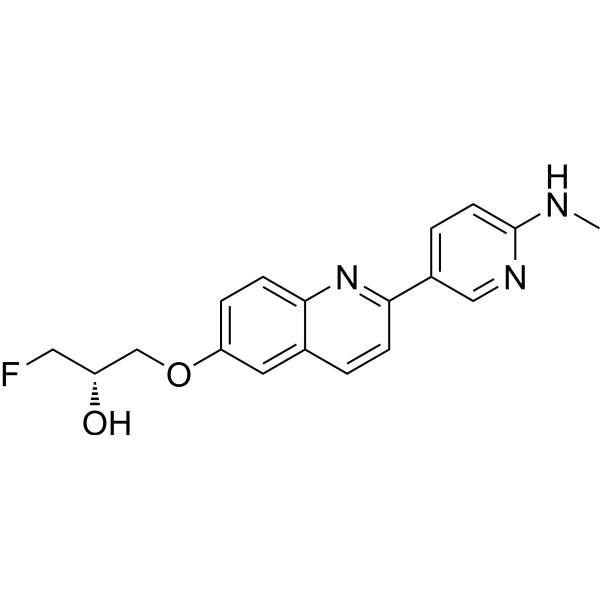 0 ImagesTHK5351 can be radiolabeled and used as a radiotracer for in vivo imaging of tau pathology in the brain.
-
Lithium orotate
 0 ImagesLithium orotate is an orally active lithium supplement with reduced binding that can bypass amyloid sequestration in AD mice models. Lithium orotate can prevent Aβ plaque deposition and phospho-tau accumulation and reverse AD pathology, neuroinflammatory changes and memory loss in AD mice models and ageing wild-type mice. Lithium orotate can be used for the research of alcoholism and Alzheimer’s disease.
-
Pongamol
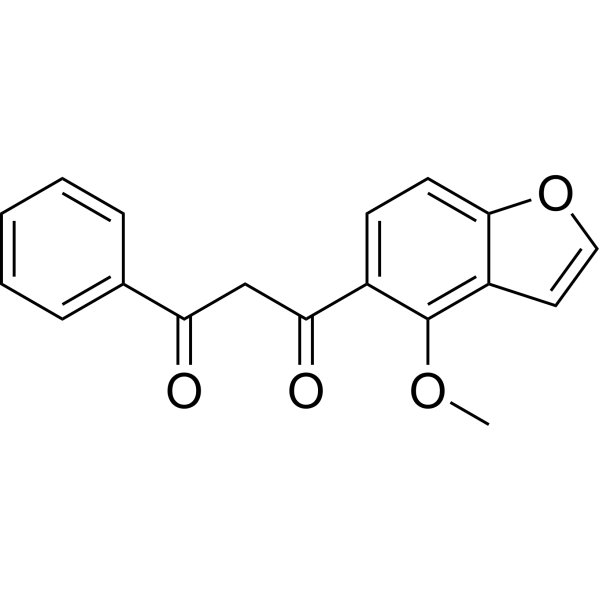 0 ImagesPongamol (Lanceolatin C) is an orally active flavonoid with an IC50 of 75 μM and a Ki of 58 μM against PTPase-1B, and an IC50 of 103.5 μM against intestinal α-Glycosidase. Pongamol reduces the release of IL‑1β, TNF‑α, COX‑2 and iNOS in cells, reverses the nuclear translocation of NF‑κB, and upregulates the levels of Beclin 1 and LC3 Ⅱ/LC3 Ⅰ. Pongamol promotes glucose uptake by increasing the level of GLUT4 on the surface of skeletal muscle cells. Pongamol inhibits epithelial-mesenchymal transition by suppressing the FAK/Akt-mTOR signaling pathway. Pongamol inhibits neuronal cytotoxicity, suppresses cell apoptosis and extends the lifespan of Caenorhabditis elegans by activating the MAPKs/Nrf2 signaling pathway. Pongamol exerts hypoglycemic effects in diabetic mouse models. Pongamol exhibits antibacterial activity. Pongamol alleviates oxidative stress, neuroinflammation, Aβ deposition and excessive phosphorylation of Tau Protein, and restores autophagy function in Alzheimer's disease mouse models by inhibiting the Akt/mTOR signaling pathway. Pongamol is applicable to research related to Alzheimer's disease, type 2 diabetes, non-small cell lung cancer and postprandial hyperglycemia.

-
YHV98-4
 0 ImagesYHV98-4 is a selective, blood-brain barrier-permeable Hv1 inhibitor with an IC50 of 0.7 μM. YHV98-4 reduces ROS production and restores the SHP-1-pAKT signaling pathway. YHV98-4 decreases the spread of hyperphosphorylated Tau protein. YHV98-4 alleviates inflammation and produces analgesic effects. YHV98-4 improves cognitive function in mouse models of Alzheimer's disease. YHV98-4 can be used in research related to inflammatory pain, neuropathic pain and Alzheimer's disease.

-
Tau ligand-1
 0 ImagesTau ligand-1 (Compound 75) is a ligand for aggregated tau protein that can penetrate the blood-brain barrier. In tissues from patients with Alzheimer's disease, progressive supranuclear palsy, corticobasal degeneration, and Pick's disease, Tau ligand-1 exhibits high affinity for aggregated tau protein, with equilibrium dissociation constant (KD) values ranging from 1 to 3.8 nM. Tau ligand-1 can serve as a potential positron emission tomography (PET) tracer and holds promise for application in positron emission tomography imaging studies of tau-related diseases in the central nervous system.
-
TAU-IN-4
 0 ImagesTAU-IN-4 (compound I1.21) is a potent Tau aggregation inhibitor with a KD of 1.58 μM. TAU-IN-4 can be used in the study of Alzheimer’s disease.
-
Moponetug
 0 ImagesSynonyms: PRX-005Moponetug (PRX-005), an anti-microtubule binding region (MTBR) tau monoclonal antibody, is a humanized monoclonal tri-epitopic antibody. Moponetug binds with high affinity to the R1, R2, and R3 repeats in the MTBR region of tau, and targets both 3R and 4R tau isoforms. Moponetug can be used for the study of Alzheimer’s disease.
-
Tau protein aggregation-IN-1
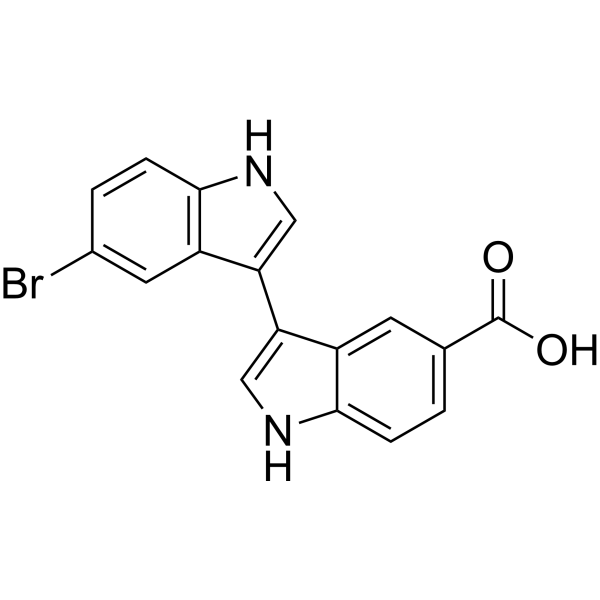 0 ImagesTau protein aggregation-IN-1 (Compound 0c) is a Tau protein aggregation inhibitor. Tau protein aggregation-IN-1 can be used in the study of protein folding disorders such as Alzheimer's disease, dementia, Parkinson's disease, Huntington's disease and prion-based spongiform encephalopathies.
-
TAU-IN-5
 0 ImagesTAU-IN-5 (compound 13) is a TAU protein inhibitor with an EC50 of 0.81 μM. TAU-IN-5 inhibits the formation of tau (2N4R isoform) oligomers and reduces the formation of tau dimers. TAU-IN-5 can be used in the study of Alzheimer's disease (AD) and Parkinson's disease (PD).
-
RI-AG03 acetate
 0 ImagesCat. No.: HY-P10861APurity: 98.22%RI-AG03 acetate is a proteolytically stable tau aggregation inhibitor that crosses the blood-brain barrier and exhibits oral efficacy. RI-AG03 acetate inhibits tau aggregation and promotes the formation of alternative amorphous aggregates that are non-amyloidogenic. RI-AG03 acetate mediates cellular uptake through direct membrane penetration and macropinocytosis, and its conjugation with cell-penetrating peptide sequences (CPPs) enhances the binding of cells to liposomes. RI-AG03 acetate suppresses aggregation-dependent neurodegenerative and behavioral phenotypes, and extends the lifespan of Drosophila models of tauopathy. RI-AG03 acetate can be used for research on tau-related diseases such as Alzheimer's disease.
-
GSK-3β inhibitor 13
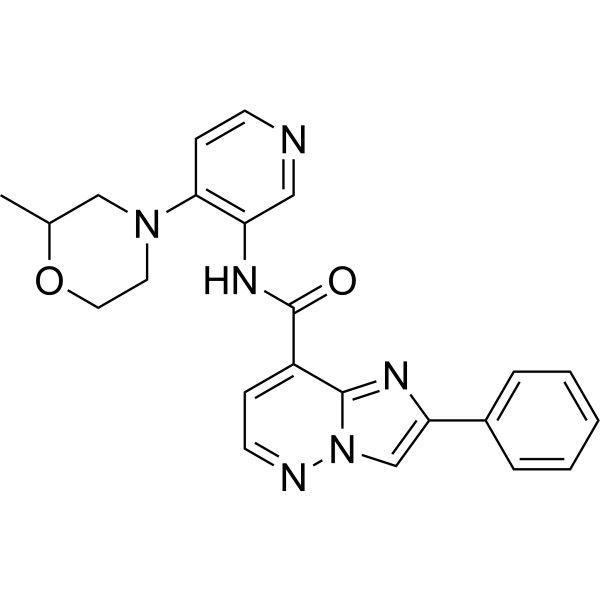 0 ImagesGSK-3β inhibitor 13 (compound 47) is an orally active and potent GSK-3β inhibitor with blood-brain permeability. GSK-3β inhibitor 13 inhibits GSK-3β and GSK-3α with IC50s of 0.73 nM and 0.35 nM, respectively. GSK-3β inhibitor 13 significantly decreases the phosphorylation of tau (IC50=58 nM), which leads the formation of the neurofibrillary tangles associated with Alzheimer's disease.
-
THK5351 (R enantiomer)
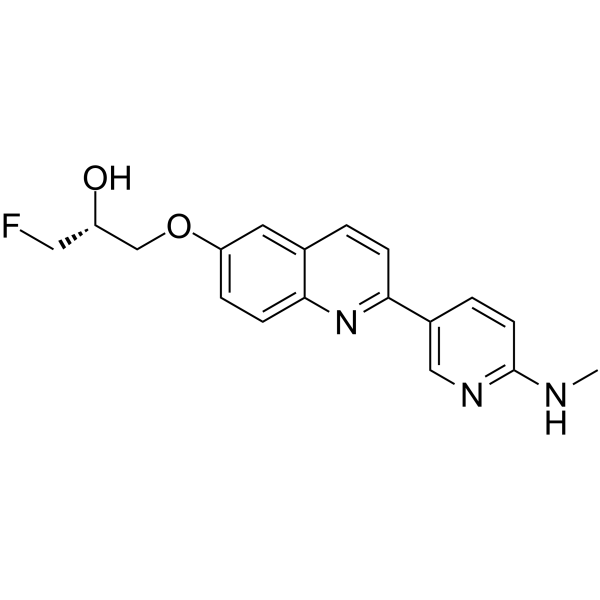 0 ImagesCat. No.: HY-101183ACAS No.: 2101218-44-2THK5351 R enantiomer is an R enantiomer of THK5351.
-
Tau Peptide (275-305) (Repeat 2 domain)
 0 ImagesTau Peptide (275-305) (Repeat 2 domain) is the Alzheimer's Tau fragment R2, corresponding to the second repeat unit of the microtubule-binding domain, which is believed to be pivotal to the biochemical properties of full tau protein. Tau Peptide (275-305) specifically coordinates with group IIB metal ions (Zn²⁺, Cd²⁺, Hg²⁺), which can induce their conformational changes and significantly promote their pathological accumulation. Tau Peptide (275-305) can be used to study the role of heavy metals in neurodegenerative diseases.

-
Dopegal
 0 ImagesCat. No.: HY-W653777CAS No.: 13023-73-9Dopegal is a metabolite od Norepinephrine. Dopegal activates asparagine endopeptidase and pathological Tau aggregation in locus coeruleus.
-
TTBK1/2-IN-3
 0 ImagesCat. No.: HY-172544CAS No.: 2857982-34-2TTBK1/2-IN-3 (Compound 10) is a potent inhibitor of tau tubulin kinase 1 (TTBK1) and TTBK2, with IC50 values of 579 nM and 258 nM, respectively. TTBK1/2-IN-3 inhibits the phosphorylation of TDP-43. TTBK1/2-IN-3 reduces the expression of primary cilia on the surface of iPSCs.
-
Tau Peptide (273-284)
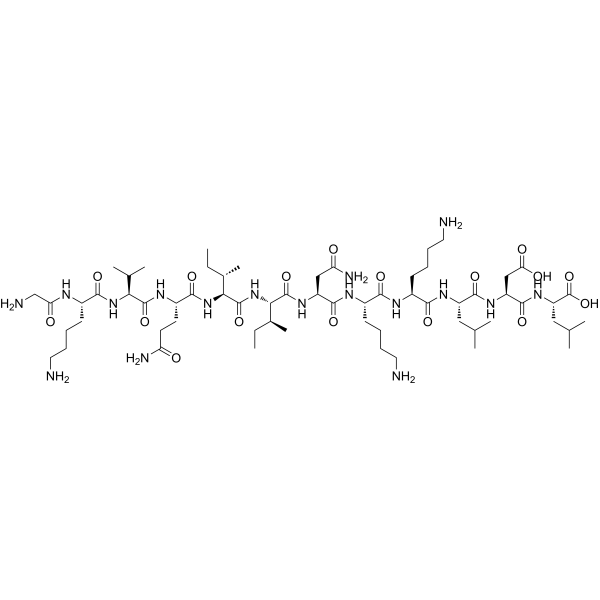 0 ImagesTau Peptide (273-284) is a Tau fragment. Tau Peptide (273-284) can be used in the research of tauopathies, especially Alzheimer's disease.
-
DYRK2-IN-2
 0 ImagesCat. No.: HY-402805CAS No.: 2416195-65-6DYRK2-IN-2 (Compound C17) is a selective inhibitor of DYRK2, with its IC50 value being 40.3 nM. The inhibitory activity of DYRK2-IN-2 on DYRK1A (IC50 = 1842 nM), DYRK1B (IC50 = 1335 nM), DYRK4 (IC50 = 1931 nM), DYRK3 (IC50 = 112 nM), and CLKs (IC50 = 540-6496 NM) is relatively low. DYRK2-IN-2 inhibits the phosphorylation of Tau protein at Thr212 and shows moderate cytotoxicity in HT22 cells. DYRK2-IN-2 can be used in cancer research.




