



THAM
Based on 3 publication(s) in Google Scholar
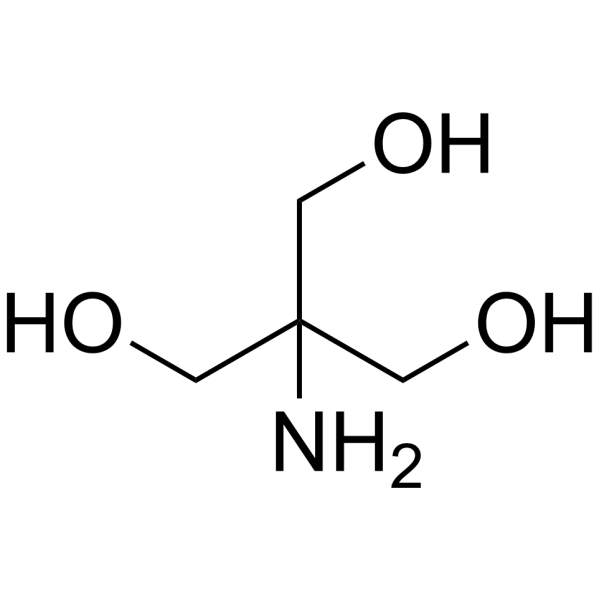
THAM (Tris) is a low-toxicity amino alcohol buffer, a specific CO2-consuming proton acceptor that buffers carbon dioxide and acid both in vitro and in vivo. THAM binds protons to form bicarbonate, reduces PaCO2, and induces intracellular alkalization, thereby ameliorating hypercapnia-induced elevation of pulmonary blood vessels and pulmonary arterial pressure. THAM may cause PaCO2 rebound, hypoglycemia, and respiratory depression. THAM removes amniotic epithelium and preserves the basement membrane, but depletes extracellular matrix and reduces the adhesion rate of limbal epithelial cells. THAM can act as a CO2 carrier to enhance the productivity and carbon utilization rate of Scenedesmus obliquus. THAM is a key component of buffer solutions used in various biological, cell culture, biochemical, and molecular biology applications.
For research use only. We do not sell to patients.
- Purity : 99.88%
- CAS No.: 77-86-1
- Formula: C4H11NO3
- Molecular Weight:121.14
-
Storage:
Store at room temperature, keep dry and cool.
In solvent -80°C, 1 year , -20°C, 6 months

To place orders, for customer services and technical support, please contact: MedChemExpress USA
Tel: 609-228-6898 E-mail: [email protected] [email protected]


-
 Biological Activity
-
Chemical Information
-
Solvent & Solubility
- Protocols
- Purity & Documentation
- References
-
 Help & FAQs


-
HY-Y0682
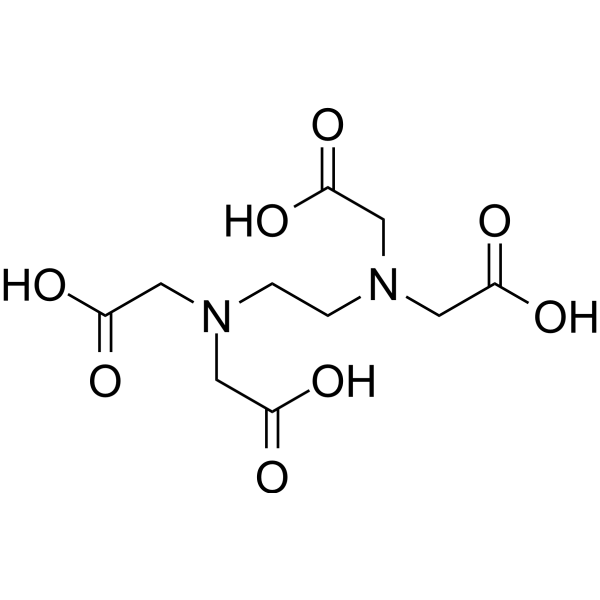
Ethylenediaminetetraacetic acidMetal Chelator -
HY-D0227A
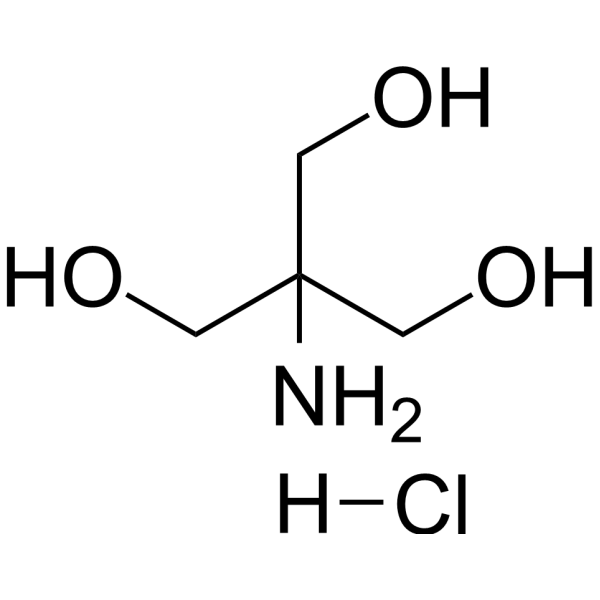
THAM hydrochlorideAmino Alcohol -
HY-D0857
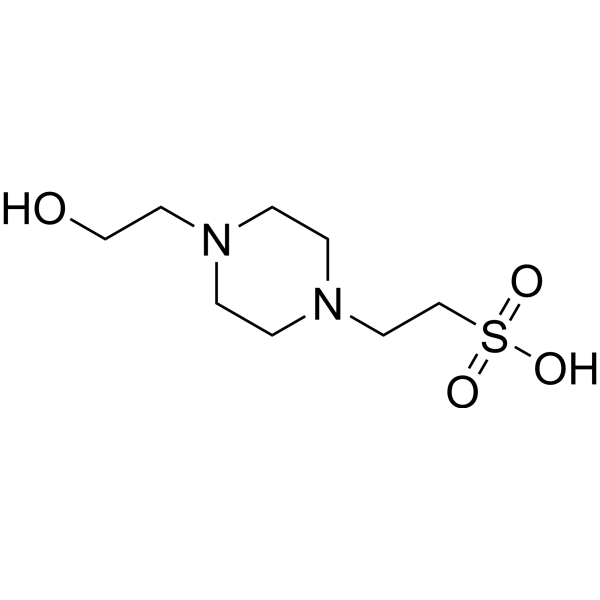
HEPESZwitterionic Buffer -
HY-B0178A
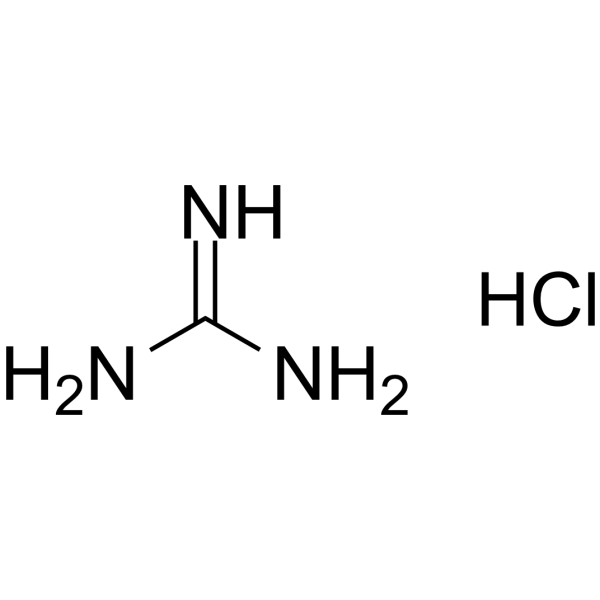
Guanidine hydrochlorideProtein Denaturant -
HY-15917
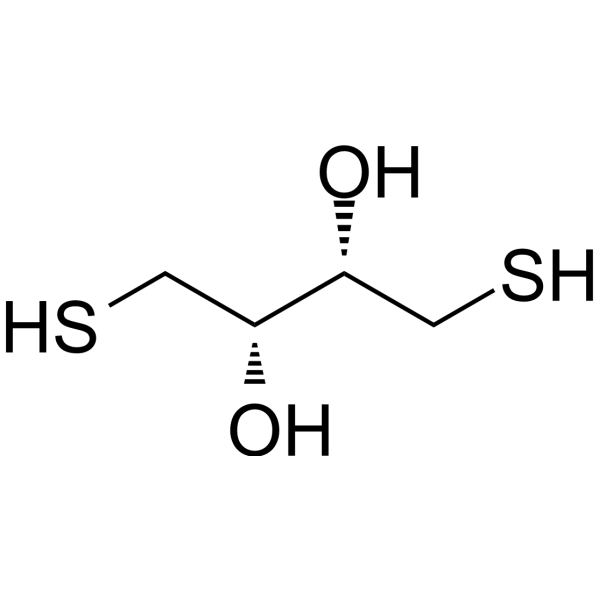
DL-DithiothreitolReducing Agent -
HY-Y0332B
Potassium dihydrogen phosphate, AR,99.5%Cell Culture Reagent -
HY-90006
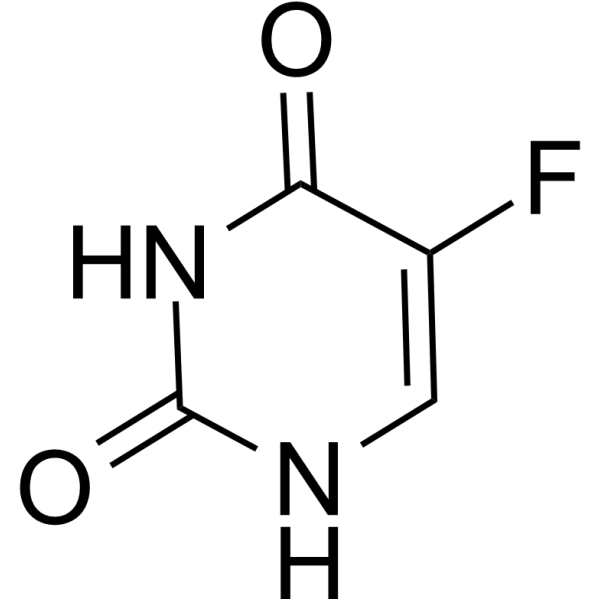
5-FluorouracilThymidylate Synthase Inhibitor -
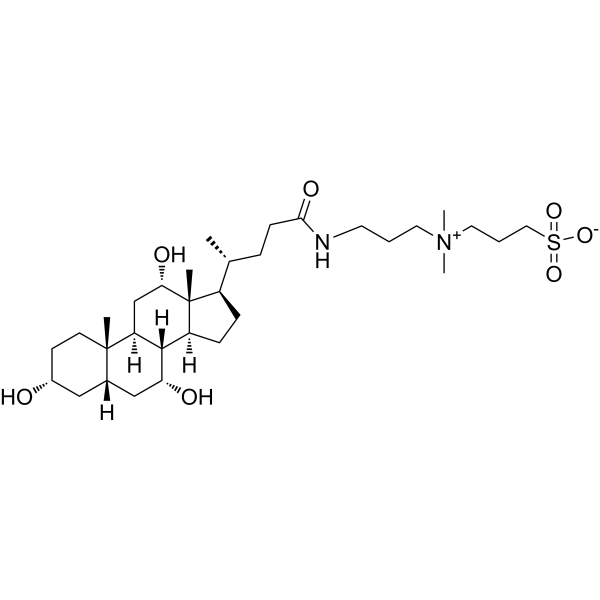
HY-15435
CHAPSIonic Detergent/Micelle Forming Agent -
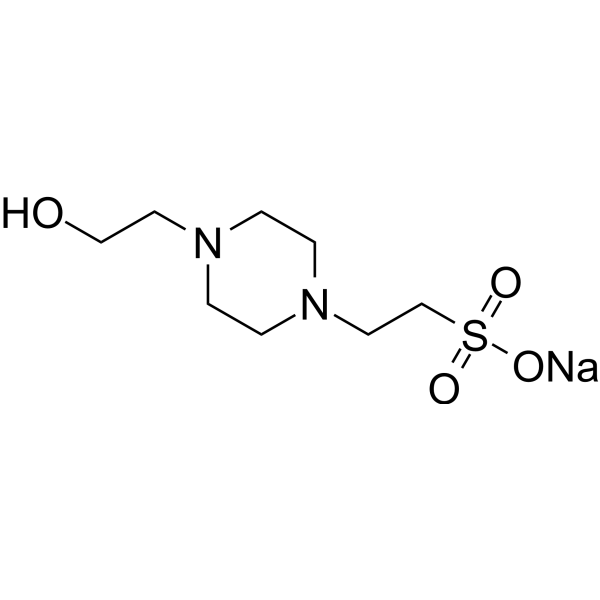
HY-108535
HEPES sodiumZwitterionic Buffer -
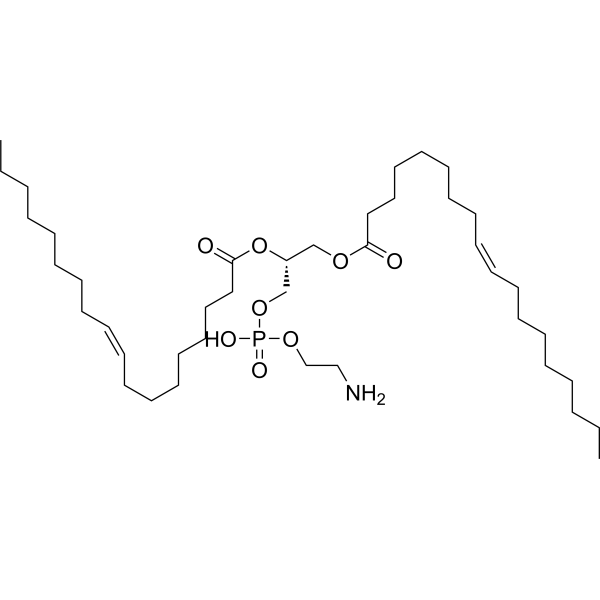
HY-112005
DOPEFerroptosis Inhibitor -
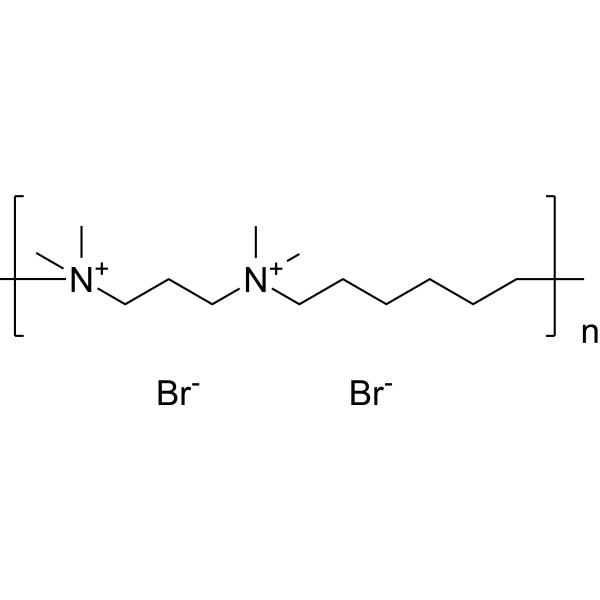
HY-112735
Hexadimethrine bromideCationic Polyelectrolyte -
HY-112764
mPEG2000-DMGLiposome
Publications Citing Use of MedChemExpress (MCE) THAM
More

Biological Activity
Description
In Vitro
THAM (5 min) induces intracellular alkalization in human HepG2 hepatocytes perfused with acidotic artificial media, with a larger effect in the presence of low extracellular non-bicarbonate buffer compared to high extracellular non-bicarbonate buffer[3].
THAM (110 μL) induces intracellular alkalization in human HepG2 hepatocytes bathed in acidotic human blood[3].
THAM (2-8 mmol/L; 40 min) enhances CO2 gas absorptivity and total inorganic carbon storage capacity of modified BG-11 medium, with the highest TIC absorption observed at 8 mmol·L-1[5].
THAM (2-8 mmol/L; 8 days) improves biomass productivity of Scenedesmus dimorphus in indoor shake flask culture, while also increasing polyunsaturated fatty acid content and showing no biodegradation over 8 days[5].
THAM (6 mmol/L; 8 days) increases biomass areal productivity of Scenedesmus dimorphus by 32-33% and CO2 utilisation efficiency by 6-12% in outdoor 2 m2 raceway pond culture, while also increasing polyunsaturated fatty acid content[5].
MedChemExpress (MCE) has not independently confirmed the accuracy of these methods. They are for reference only.
In Vivo
MedChemExpress (MCE) has not independently confirmed the accuracy of these methods. They are for reference only.


Chemical Information
-
CAS No. 77-86-1
-
Appearance Solid
-
Molecular Weight 121.14
-
Formula C4H11NO3
-
Color White to off-white
-
SMILES
OCC(CO)(N)CO
-
Synonyms
Tris; Tris(hydroxymethyl)aminomethane
-
Shipping
Room temperature in continental US; may vary elsewhere.
-
Storage
Store at room temperature, keep dry and cool
In solvent -80°C 1 year -20°C 6 months


Publications (3)
-
Journal Impact Factor
-
Most Recent
-
-
-
ACS Omega
Highly Efficient Photoelectrochemical Detection of Cystatin C Based on a Core-Shell MOF Nanocomposite with Biomimetic-Catalysis Amplification. [Abstract]2024 Jun 14;9(26):28228-28236. PMID: 38973831


Solvent & Solubility
In Vitro:
H2O : 50 mg/mL (412.75 mM; Need ultrasonic)
DMSO : 25 mg/mL (206.37 mM; ultrasonic and warming and heat to 60°C; Hygroscopic DMSO has a significant impact on the solubility of product, please use newly opened DMSO)
Please refer to the solubility information to select the appropriate solvent. Once prepared, please aliquot and store the solution to prevent product inactivation from repeated freeze-thaw cycles.
Storage method and period of stock solution: -80°C, 1 year; -20°C, 6 months. When stored at -80°C, please use it within 1 year. When stored at -20°C, please use it within 6 months.
* Note: If you choose water as the stock solution, please dilute it to the working solution, then filter and sterilize it with a 0.22 μm filter before use.
Please refer to the solubility information to select the appropriate solvent. Once prepared, please aliquot and store the solution to prevent product inactivation from repeated freeze-thaw cycles.
Storage method and period of stock solution: -80°C, 1 year; -20°C, 6 months. When stored at -80°C, please use it within 1 year. When stored at -20°C, please use it within 6 months.
* Note: If you choose water as the stock solution, please dilute it to the working solution, then filter and sterilize it with a 0.22 μm filter before use.
Concentration (start) × Volume (start) = Concentration (final) × Volume (final)


Purity & Documentation
-
Data Sheet (274 KB)
-
SDS (252 KB)
- English - EN (252 KB)
- Français - FR (252 KB)
- Deutsch - DE (252 KB)
- Norwegian - NO (252 KB)
- Español - ES (252 KB)
- Swedish - SV (252 KB)
- Italian - IT (252 KB)
- Korean - KR (252 KB)
- Portuguese - PT (252 KB)
-
Handling Instructions (2659 KB)
References
[1]. Nahas GG, et al. Guidelines for the treatment of acidaemia with THAM. Drugs. 1998 Feb;55(2):191-224. [Content Brief]
[2]. Höstman S, et al. THAM reduces CO2-associated increase in pulmonary vascular resistance - an experimental study in lung-injured piglets. Crit Care. 2015 Sep 17;19(1):331. [Content Brief]


Complete Stock Solution Preparation Table
Please refer to the solubility information to select the appropriate solvent. Once prepared, please aliquot and store the solution to prevent product inactivation from repeated freeze-thaw cycles.
Storage method and period of stock solution: -80°C, 1 year; -20°C, 6 months. When stored at -80°C, please use it within 1 year. When stored at -20°C, please use it within 6 months.
| Optional Solvent | Concentration Solvent Mass | 1 mg | 5 mg | 10 mg | 25 mg |
|---|---|---|---|---|---|
| DMSO / H2O | 1 mM | 8.2549 mL | 41.2746 mL | 82.5491 mL | 206.3728 mL |
| 5 mM | 1.6510 mL | 8.2549 mL | 16.5098 mL | 41.2746 mL | |
| 10 mM | 0.8255 mL | 4.1275 mL | 8.2549 mL | 20.6373 mL | |
| 15 mM | 0.5503 mL | 2.7516 mL | 5.5033 mL | 13.7582 mL | |
| 20 mM | 0.4127 mL | 2.0637 mL | 4.1275 mL | 10.3186 mL | |
| 25 mM | 0.3302 mL | 1.6510 mL | 3.3020 mL | 8.2549 mL | |
| 30 mM | 0.2752 mL | 1.3758 mL | 2.7516 mL | 6.8791 mL | |
| 40 mM | 0.2064 mL | 1.0319 mL | 2.0637 mL | 5.1593 mL | |
| 50 mM | 0.1651 mL | 0.8255 mL | 1.6510 mL | 4.1275 mL | |
| 60 mM | 0.1376 mL | 0.6879 mL | 1.3758 mL | 3.4395 mL | |
| 80 mM | 0.1032 mL | 0.5159 mL | 1.0319 mL | 2.5797 mL | |
| 100 mM | 0.0825 mL | 0.4127 mL | 0.8255 mL | 2.0637 mL |
* Note: If you choose water as the stock solution, please dilute it to the working solution, then filter and sterilize it with a 0.22 μm filter before use.


THAM Related Classifications
HY-D0227 Related Classifications
 Powered by Bioz