



Carbaryl

Based on 1 Customer Validation
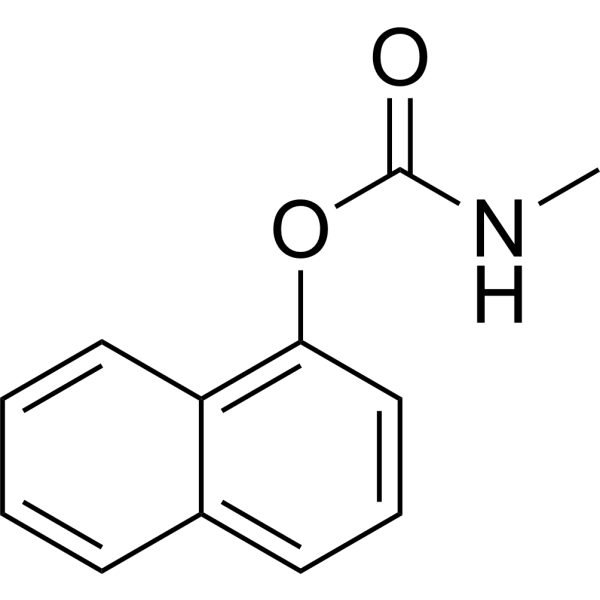
Carbaryl is the inhibitor for acetylcholinesterase that inhibits the degradation of acetylcholine in the synaptic cleft, leads to the accumulation of acetylcholine and causes neurotoxicity. Carbaryl can be used as an insecticide.
Nur für Forschungszwecke. Wir verkaufen nicht an Patienten.
- Reinheit : 99.94%
- CAS. Nr.: 63-25-2
- Formel: C12H11NO2
- Molecular Weight:201.22
-
Speicherung:Powder -20°C, 3 years , 4°C, 2 years ; In solvent -80°C, 6 months , -20°C, 1 month

To place orders, for customer services and technical support, please contact: MedChemExpress USA
Tel: 609-228-6898 E-mail: [email protected] [email protected]


-
 Biologische Aktivität
-
Chemical Information
-
Lösungsmittel & Löslichkeit
- Protokoll
- Reinheit & Dokumentation
- Verweise
-
 Help & FAQs


-
HY-B0815
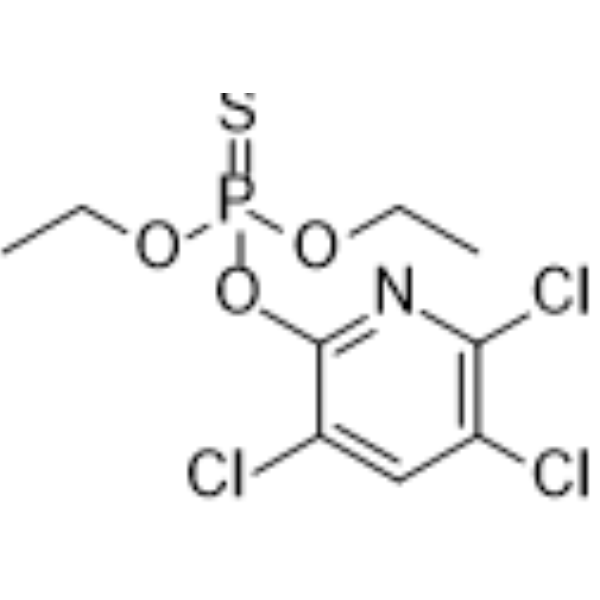
ChlorpyrifosMuscarinic Antagonist -

HY-B1315R
Carbaryl (Standard)Standard of Carbaryl -
HY-18260
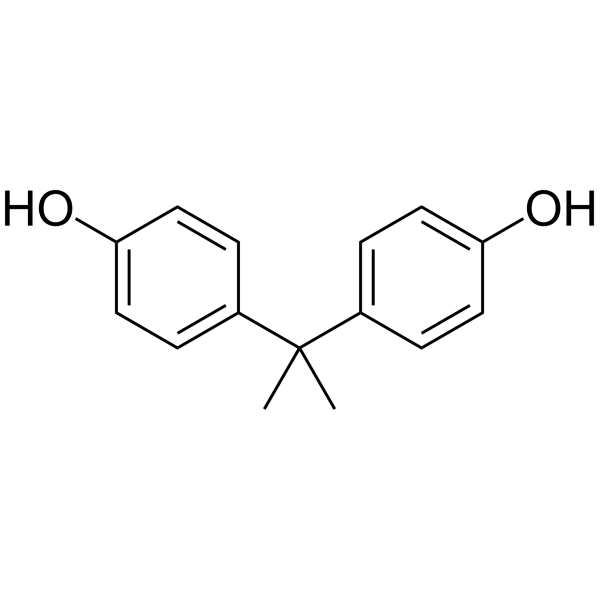
Bisphenol AEndocrine-Disrupting Compound -

HY-116439
Diisononyl phthalateACE/AT1R Enhancer -
HY-B0827
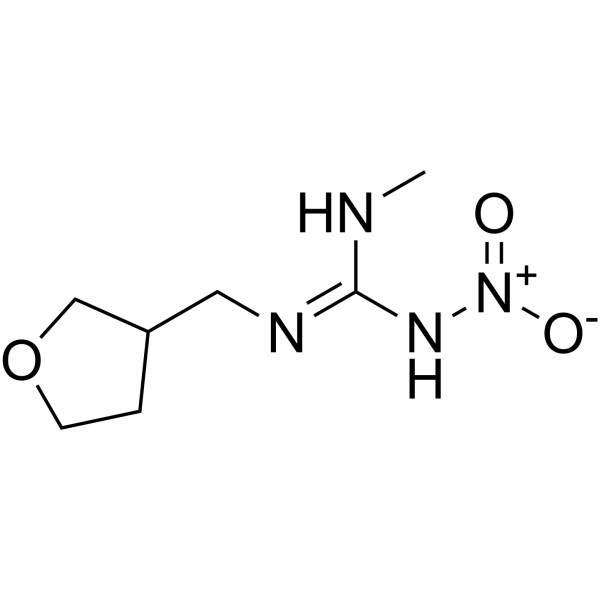
DinotefuranNicotinic acetylcholine receptors Inhibitor -
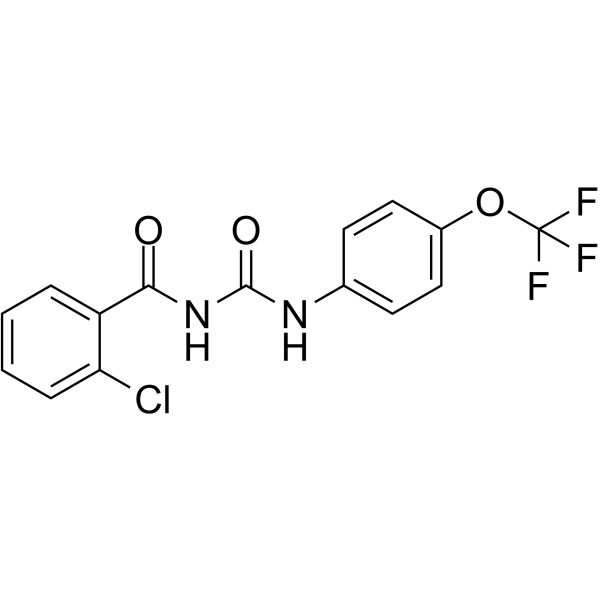
HY-B2049
TriflumuronChitin Synthesis Inhibitor -
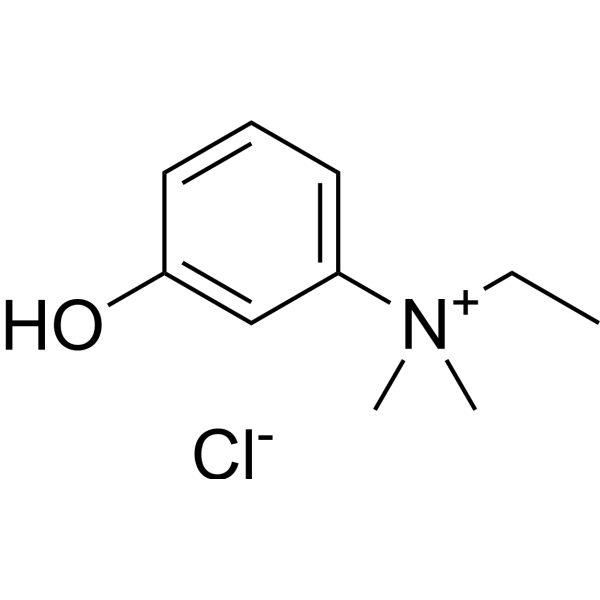
HY-B0882
Edrophonium chlorideAChE Inhibitor -
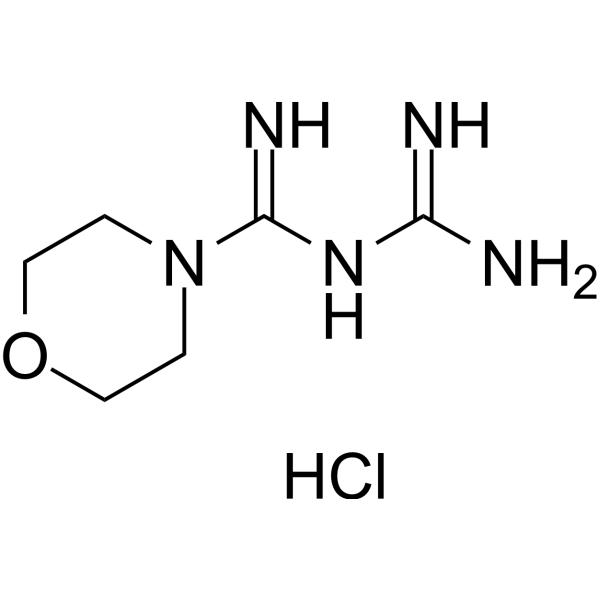
HY-B0420A
Moroxydine hydrochlorideBroad-spectrum Antiviral Agent -
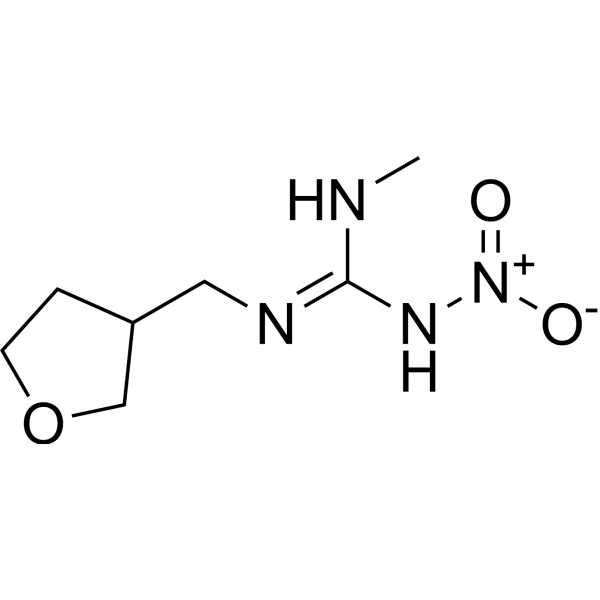
HY-B0827R
Dinotefuran (Standard)Nicotinic acetylcholine receptors Inhibitor -

HY-W017455
2,6-Diethylaniline2,6-Diethylaniline Film Monomer -

HY-B2049R
Triflumuron (Standard)Chitin Synthesis Inhibitor -
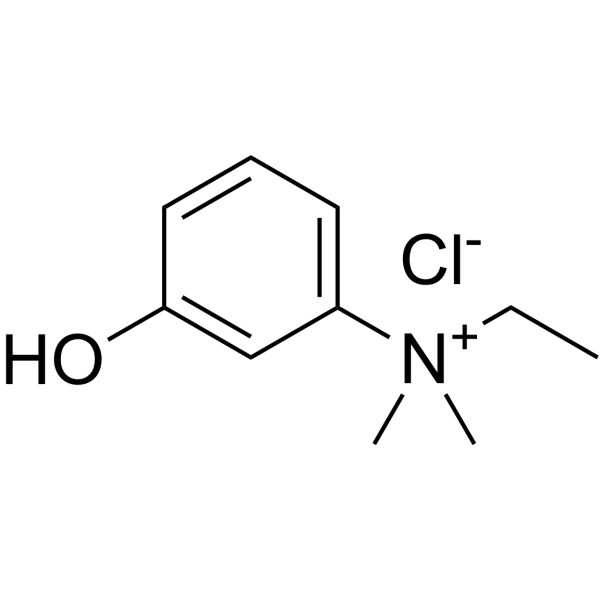
HY-B0882R
Edrophonium chloride (Standard)Standard of Edrophonium chloride


Biologische Aktivität
Beschreibung
In Vitro
Carbaryl (1-8 ppm, 48 h) stimulates cell division and increases the cell number by 9.44% and 3.78% at 1 ppm and 2 ppm, inhibites cell growth and decreases the cell number by 11.32% and 33.96% at 4 ppm and 8 ppm, modulates the phospholipid content[2].
Carbaryl (20-40 μg/mL, 24 h) causes developmental delays, cardiac, neurodevelopmental and morphological defects, leads to cell death in cardiac region and nervous system in zebrafish embryos[3].
Carbaryl (10 μM, 8-12 h) increases the ROS level and induces oxidative stress in cell Neuro 2A, impairs mitochondrial functions, and induces apoptosis[4].
MedChemExpress (MCE) has not independently confirmed the accuracy of these methods. They are for reference only.
In Vivo
MedChemExpress (MCE) has not independently confirmed the accuracy of these methods. They are for reference only.
-
Animal Model:Rats models[5]
-
Dosage:10-30 mg/kg
-
Administration:ip, 5 times a week for 28 days
-
Result:Reduced the weight of the spleen and thymus, inhibited the proliferation of spleen lymphocytes and the production of IL-2, increased the levels of IL-4 and IL-10 in serum, reduced the level of IFN-γ in serum and the levels of IL-1β and TNF-α produced by peritoneal macrophages.


Chemical Information
-
CAS. Nr. 63-25-2
-
Appearance Solid
-
Molecular Weight 201.22
-
Formel C12H11NO2
-
Color Off-white to pink
-
SMILES
O=C(OC1=C2C=CC=CC2=CC=C1)NC
-
Versand
Room temperature in continental US; may vary elsewhere.
-
Speicherung
Powder -20°C 3 years 4°C 2 years In solvent -80°C 6 months -20°C 1 month


Lösungsmittel & Löslichkeit
In Vitro:
DMSO : 100 mg/mL (496.97 mM; Need ultrasonic; Hygroscopic DMSO has a significant impact on the solubility of product, please use newly opened DMSO)
Please refer to the solubility information to select the appropriate solvent. Once prepared, please aliquot and store the solution to prevent product inactivation from repeated freeze-thaw cycles.
Storage method and period of stock solution: -80°C, 6 months; -20°C, 1 month. When stored at -80°C, please use it within 6 months. When stored at -20°C, please use it within 1 month.
Please refer to the solubility information to select the appropriate solvent. Once prepared, please aliquot and store the solution to prevent product inactivation from repeated freeze-thaw cycles.
Storage method and period of stock solution: -80°C, 6 months; -20°C, 1 month. When stored at -80°C, please use it within 6 months. When stored at -20°C, please use it within 1 month.
Konzentration (Stammlösung) × Volumen (Stammlösung) = Konzentration (Ziellösung) × Volumen (Ziellösung)
In Vivo:
Select the appropriate dissolution method based on your experimental animal and administration route.
- For the following dissolution methods, please ensure to first prepare a clear stock solution using an In Vitro approach and then sequentially add co-solvents:
- To ensure reliable experimental results, the clarified stock solution can be appropriately stored based on storage conditions. As for the working solution for In Vivo experiments, it is recommended to prepare freshly and use it on the same day.
- The percentages shown for the solvents indicate their volumetric ratio in the final prepared solution. If precipitation or phase separation occurs during preparation, heat and/or sonication can be used to aid dissolution.
Add each solvent one by one: 10% DMSO 40% PEG300 5% Tween-80 45% Saline
Solubility: ≥ 2.5 mg/mL (12.42 mM); Clear solution
This protocol yields a clear solution of ≥ 2.5 mg/mL (saturation unknown).
Taking 1 mL working solution as an example, add 100 μL DMSO stock solution (25.0 mg/mL) to 400 μL PEG300, and mix evenly; then add 50 μL Tween-80 and mix evenly; then add 450 μL Saline to adjust the volume to 1 mL.
Preparation of Saline: Dissolve 0.9 g sodium chloride in ddH₂O and dilute to 100 mL to obtain a clear Saline solution.
Add each solvent one by one: 10% DMSO 90% (20% SBE-β-CD in Saline)
Solubility: ≥ 2.5 mg/mL (12.42 mM); Clear solution
This protocol yields a clear solution of ≥ 2.5 mg/mL (saturation unknown).
Taking 1 mL working solution as an example, add 100 μL DMSO stock solution (25.0 mg/mL) to 900 μL 20% SBE-β-CD in Saline, and mix evenly.
Preparation of 20% SBE-β-CD in Saline (4°C, storage for one week): 2 g SBE-β-CD powder is dissolved in 10 mL Saline, completely dissolve until clear.
In Vivo Dissolution Calculator
Please enter the basic information of animal experiments:
-
-
-
-
Recommended: Prepare an additional quantity of animals to account for potential losses during experiments.
Please enter your animal formula composition:
-
%DMSO +
Recommended: Keep the proportion of DMSO in working solution below 2% if your animal is weak.
-
%+
-
+%Tween-80 + +
-
%Saline +
The co-solvents required include: DMSO, . All of co-solvents are available by MedChemExpress (MCE). , Tween 80. All of co-solvents are available by MedChemExpress (MCE).
Working solution concentration: 0.22 mg/mL
Method for preparing stock solution: mg drug dissolved in μL DMSO. Stock solution concentration: mg/mL.
1. Take μL DMSO stock solution;
2. Add μL .
μL , mix evenly;
3. Then add μL Tween 80, mix evenly;
4. Then add μL
Please ensure that the stock solution in the first step is dissolved to a clear state, and add co-solvents in sequence. You can use ultrasonic heating (ultrasonic cleaner, recommended frequency 20-40 kHz), vortexing, etc. to assist dissolution.


Reinheit & Dokumentation
-
Data Sheet (281 KB)
-
SDS (788 KB)
- English - EN (788 KB)
- Français - FR (788 KB)
- Deutsch - DE (788 KB)
- Norwegian - NO (788 KB)
- Español - ES (788 KB)
- Swedish - SV (788 KB)
- Italian - IT (788 KB)
- Korean - KR (788 KB)
- Portuguese - PT (788 KB)
-
Handling Instructions (2659 KB)
Verweise
[1]. Nancy E Todd, et al. Effects of Sevin (Carbaryl Insecticide) on Early Life Stages of Zebrafish (Danio Rerio). Ecotoxicol Environ Saf. 2002 Oct;53(2):267-72. [Content Brief]
[2]. Blevins RD, et al., Effects of carbaryl and dieldrin on the growth,protein content, and phospholipid content of HeLa cells. J Agric Food Chem. 1975 May-Jun;23(3):377-82. [Content Brief]
[3]. Schock EN, et al., The effects of carbaryl on the development of zebrafish (Danio rerio) embryos. Zebrafish. 2012 Dec;9(4):169-78. [Content Brief]
[4]. Muthaiah VP, et al., Neuroprotective role of naringenin on carbaryl induced neurotoxicity in mouse neuroblastoma cells. J Pharmacol Pharmacother. 2013 Jul;4(3):192-7. [Content Brief]
[5]. Jorsaraei SG, et al., Immunotoxicity effects of carbaryl in vivo and in vitro. Environ Toxicol Pharmacol. 2014 Nov;38(3):838-44. [Content Brief]


Complete Stock Solution Preparation Table
Please refer to the solubility information to select the appropriate solvent. Once prepared, please aliquot and store the solution to prevent product inactivation from repeated freeze-thaw cycles.
Storage method and period of stock solution: -80°C, 6 months; -20°C, 1 month. When stored at -80°C, please use it within 6 months. When stored at -20°C, please use it within 1 month.
| Optional Solvent | Concentration Solvent Mass | 1 mg | 5 mg | 10 mg | 25 mg |
|---|---|---|---|---|---|
| DMSO | 1 mM | 4.9697 mL | 24.8484 mL | 49.6968 mL | 124.2421 mL |
| 5 mM | 0.9939 mL | 4.9697 mL | 9.9394 mL | 24.8484 mL | |
| 10 mM | 0.4970 mL | 2.4848 mL | 4.9697 mL | 12.4242 mL | |
| 15 mM | 0.3313 mL | 1.6566 mL | 3.3131 mL | 8.2828 mL | |
| 20 mM | 0.2485 mL | 1.2424 mL | 2.4848 mL | 6.2121 mL | |
| 25 mM | 0.1988 mL | 0.9939 mL | 1.9879 mL | 4.9697 mL | |
| 30 mM | 0.1657 mL | 0.8283 mL | 1.6566 mL | 4.1414 mL | |
| 40 mM | 0.1242 mL | 0.6212 mL | 1.2424 mL | 3.1061 mL | |
| 50 mM | 0.0994 mL | 0.4970 mL | 0.9939 mL | 2.4848 mL | |
| 60 mM | 0.0828 mL | 0.4141 mL | 0.8283 mL | 2.0707 mL | |
| 80 mM | 0.0621 mL | 0.3106 mL | 0.6212 mL | 1.5530 mL | |
| 100 mM | 0.0497 mL | 0.2485 mL | 0.4970 mL | 1.2424 mL |


Carbaryl Related Classifications
HY-B1315 Related Classifications
 Powered by Bioz