



2,4-PDCA

Based on 1 Customer Validation
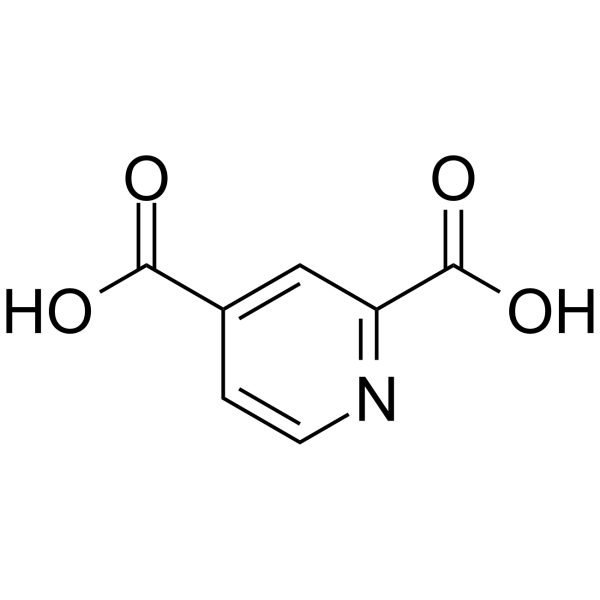
2,4-PDCA (2,4 pyridine dicarboxylic acid) is a broad-spectrum inhibitor of 2OG oxygenase, including JmjC domain-containing family of histone demethylases (JHDMs). 2,4-PDCA is a target chemical in the field of bio-based plastics.
For research use only. We do not sell to patients.
- Purity : 99.82%
- CAS No.: 499-80-9
- Formula: C7H5NO4
- Molecular Weight:167.12
-
Storage:
Store at room temperature 3 years.
In solvent -80°C, 2 years , -20°C, 1 year

To place orders, for customer services and technical support, please contact: MedChemExpress USA
Tel: 609-228-6898 E-mail: [email protected] [email protected]


-
 Biological Activity
-
Chemical Information
-
Solvent & Solubility
- Purity & Documentation
- References
-
 Help & FAQs


-
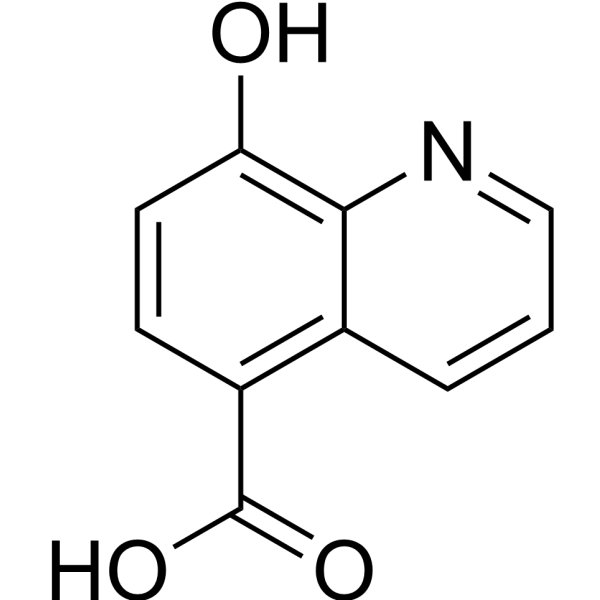
HY-12304
IOX12OG Oxygenases Inhibitor -
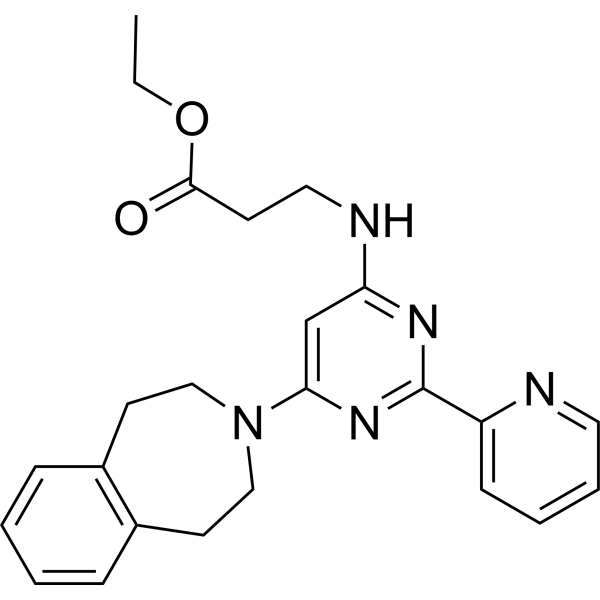
HY-15648B
GSK-J4JMJD3/UTX Inhibitor -

HY-Y1891
Tween 80 -
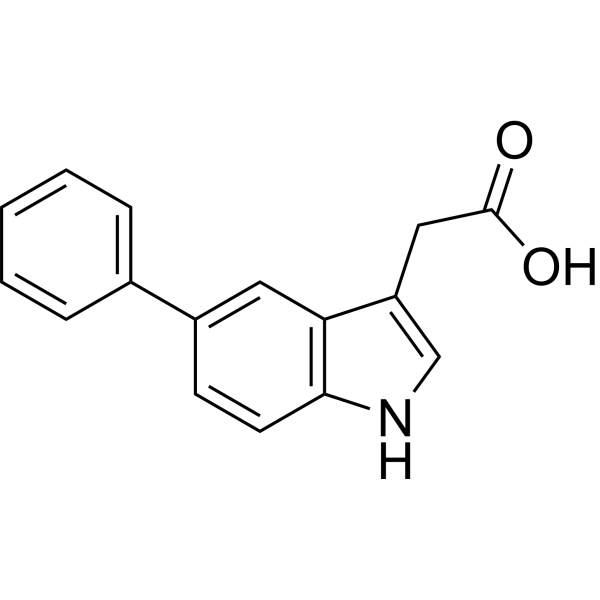
HY-134653
5-Ph-IAAAID2 Ligand -
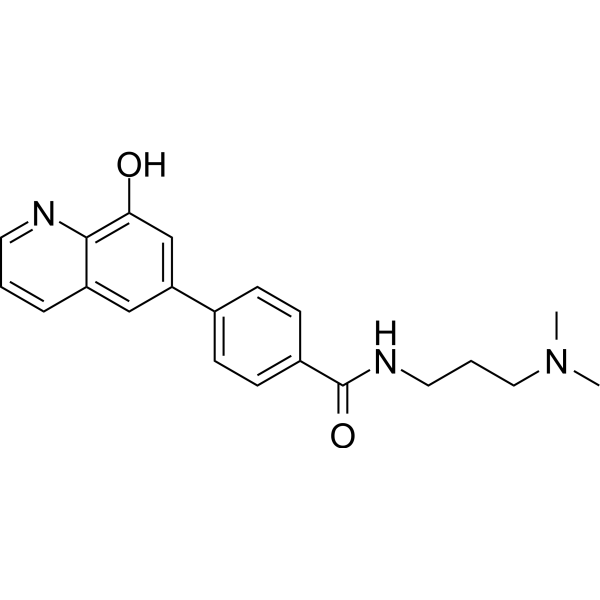
HY-12725
ML324JMJD2 Inhibitor -
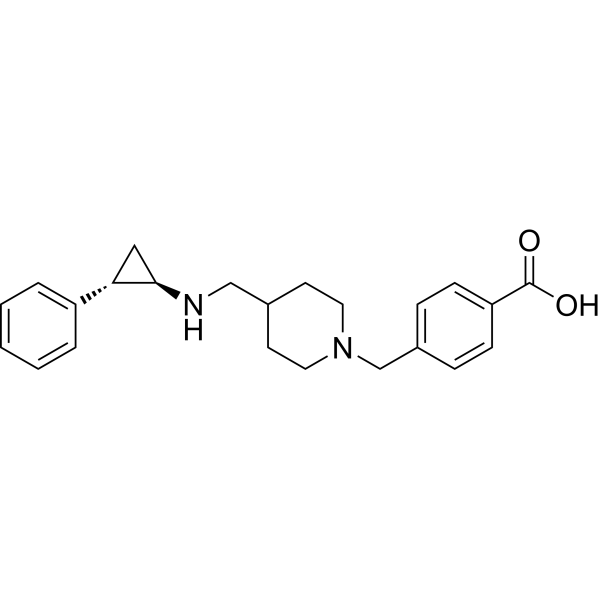
HY-18632
GSK2879552LSD1 Inhibitor -
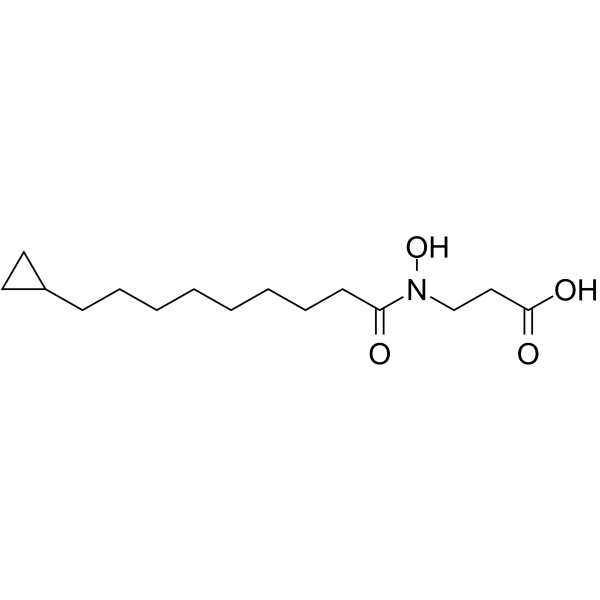
HY-107573
KDM2/7-IN-1KDM2/7 Inhibitor -
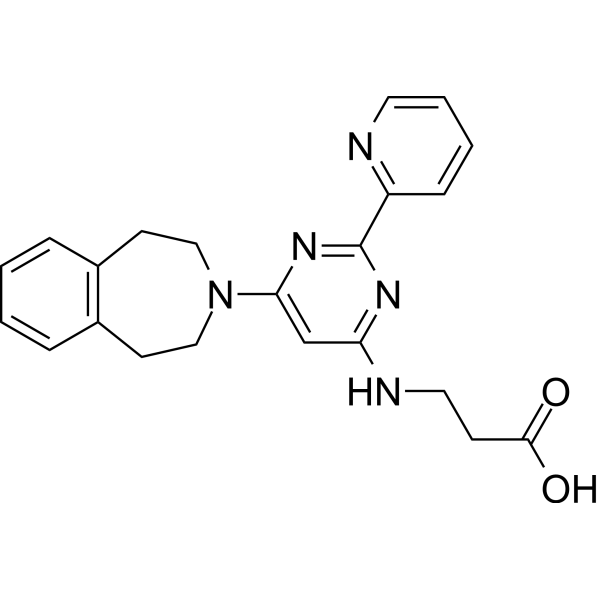
HY-15648
GSK-J1JMJD3/KDM6B Inhibitor -
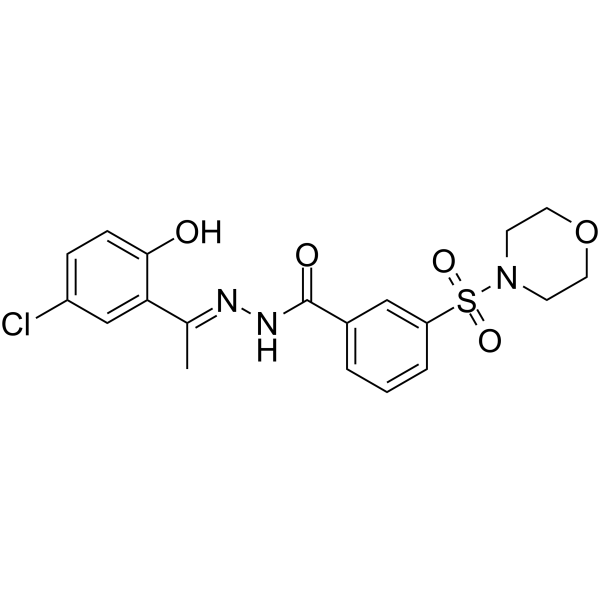
HY-12635
SP2509LSD1 Antagonist -
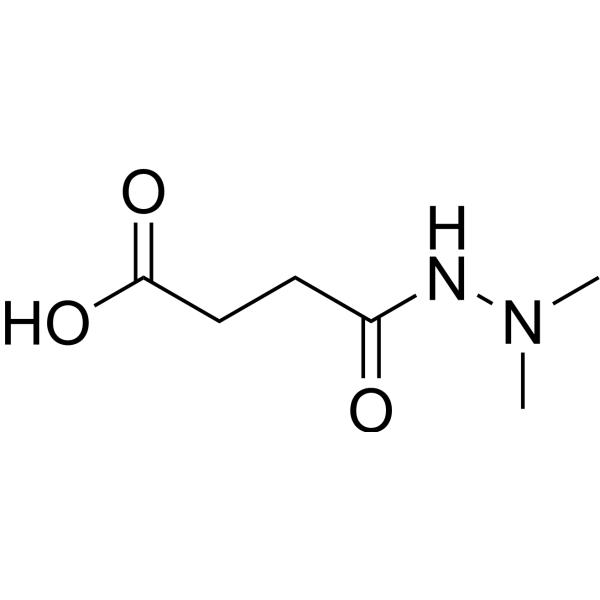
HY-13643
DaminozideKDM2/7 Inhibitor -
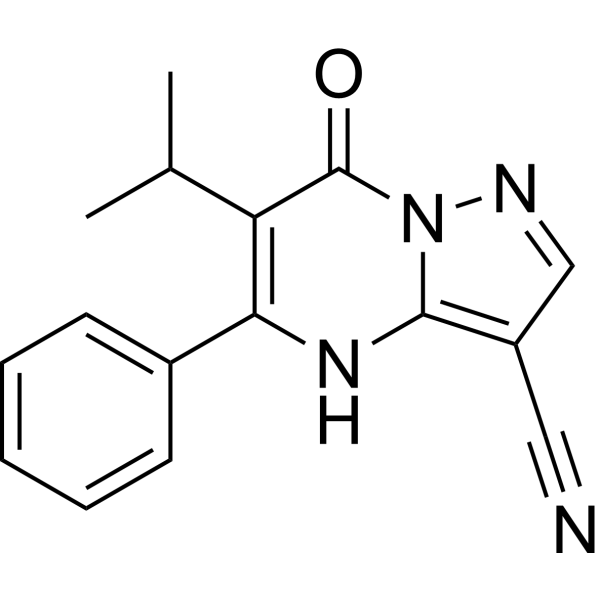
HY-100421
CPI-455KDM5 Inhibitor -
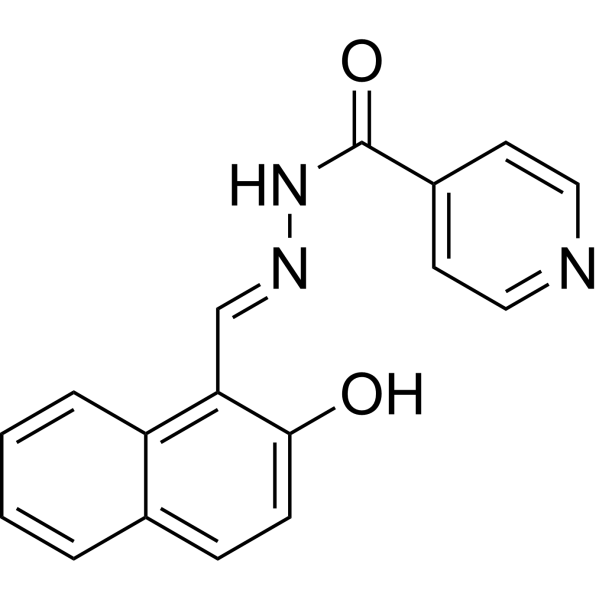
HY-100744
AS8351KDM5B Inhibitor


Biological Activity
Description
Cellular Effect
|
Cell Line

|
Type | Value | Description | References |
|---|---|---|---|---|
| A549 | EC50 |
>250 μM
Compound: 5
|
Antiproliferative activity against human A549 cells assessed as reduction in cell viability
Antiproliferative activity against human A549 cells assessed as reduction in cell viability
|
[PMID: 34555614] |
| HeLa | GI50 |
>240 μM
Compound: 2, PCA
|
Growth inhibition of human HeLa cells after 48 hrs by MTT assay
Growth inhibition of human HeLa cells after 48 hrs by MTT assay
|
[PMID: 23964788] |
| KYSE-150 cell line | GI50 |
>240 μM
Compound: 2, PCA
|
Growth inhibition of human KYSE-150 cells after 48 hrs by MTT assay
Growth inhibition of human KYSE-150 cells after 48 hrs by MTT assay
|
[PMID: 23964788] |
| LNCaP | CC50 |
588.7 μM
Compound: 2
|
Cytotoxicity against human LNCAP cells after 3 days by MTT assay
Cytotoxicity against human LNCAP cells after 3 days by MTT assay
|
[PMID: 24971742] |
| Sf21 | IC50 |
0.76 μM
Compound: 1; 2,4-PDCA
|
Inhibition of KDM5A (1 to 797 residues) (unknown origin) expressed in insect sf21 cells using ARTK(Me3)QTARKSTGGKAPRK peptide/ 100 uM alpha-ketoglutarate as substrate/cofactor incubated for 45 mins by MALDI assay
Inhibition of KDM5A (1 to 797 residues) (unknown origin) expressed in insect sf21 cells using ARTK(Me3)QTARKSTGGKAPRK peptide/ 100 uM alpha-ketoglutarate as substrate/cofactor incubated for 45 mins by MALDI assay
|
[PMID: 26699912] |
| Sf9 | IC50 |
1.5 μM
Compound: 1, PCA
|
Inhibition of human recombinant PHD1 expressed in Sf9 cells by time-resolved fluorescence assay
Inhibition of human recombinant PHD1 expressed in Sf9 cells by time-resolved fluorescence assay
|
[PMID: 20684604] |
| Sf9 | IC50 |
6.1 μM
Compound: 1, PCA
|
Inhibition of human recombinant PHD2 expressed in Sf9 cells by time-resolved fluorescence assay
Inhibition of human recombinant PHD2 expressed in Sf9 cells by time-resolved fluorescence assay
|
[PMID: 20684604] |
In Vitro
2,4-PDCA (2 µM (tested in purified enzyme system), 25 µM (tested in cellular system)) significantly inhibits prolyl 4-hydroxylase activity and interferes with collagen synthesis[3]. 2,4-PDCA (700 µM) inhibits prolyl 4-hydroxylase activity and reduces procollagen production in the chicken calvaria model[3].
MedChemExpress (MCE) has not independently confirmed the accuracy of these methods. They are for reference only. .


Chemical Information
-
CAS No. 499-80-9
-
Appearance Solid
-
Molecular Weight 167.12
-
Formula C7H5NO4
-
Color Off-white to light yellow
-
SMILES
O=C(C1=NC=CC(C(O)=O)=C1)O
-
Shipping
Room temperature in continental US; may vary elsewhere.
-
Storage
Store at room temperature 3 years
In solvent -80°C 2 years -20°C 1 year


Solvent & Solubility
In Vitro:
DMSO : 100 mg/mL (598.37 mM; Need ultrasonic; Hygroscopic DMSO has a significant impact on the solubility of product, please use newly opened DMSO)
Please refer to the solubility information to select the appropriate solvent. Once prepared, please aliquot and store the solution to prevent product inactivation from repeated freeze-thaw cycles.
Storage method and period of stock solution: -80°C, 2 years; -20°C, 1 year. When stored at -80°C, please use it within 2 years. When stored at -20°C, please use it within 1 year.
Please refer to the solubility information to select the appropriate solvent. Once prepared, please aliquot and store the solution to prevent product inactivation from repeated freeze-thaw cycles.
Storage method and period of stock solution: -80°C, 2 years; -20°C, 1 year. When stored at -80°C, please use it within 2 years. When stored at -20°C, please use it within 1 year.
Concentration (start) × Volume (start) = Concentration (final) × Volume (final)
In Vivo:
Select the appropriate dissolution method based on your experimental animal and administration route.
- For the following dissolution methods, please ensure to first prepare a clear stock solution using an In Vitro approach and then sequentially add co-solvents:
- To ensure reliable experimental results, the clarified stock solution can be appropriately stored based on storage conditions. As for the working solution for In Vivo experiments, it is recommended to prepare freshly and use it on the same day.
- The percentages shown for the solvents indicate their volumetric ratio in the final prepared solution. If precipitation or phase separation occurs during preparation, heat and/or sonication can be used to aid dissolution.
Add each solvent one by one: 10% DMSO 40% PEG300 5% Tween-80 45% Saline
Solubility: ≥ 2.5 mg/mL (14.96 mM); Clear solution
This protocol yields a clear solution of ≥ 2.5 mg/mL (saturation unknown).
Taking 1 mL working solution as an example, add 100 μL DMSO stock solution (25.0 mg/mL) to 400 μL PEG300, and mix evenly; then add 50 μL Tween-80 and mix evenly; then add 450 μL Saline to adjust the volume to 1 mL.
Preparation of Saline: Dissolve 0.9 g sodium chloride in ddH₂O and dilute to 100 mL to obtain a clear Saline solution.
Add each solvent one by one: 10% DMSO 90% (20% SBE-β-CD in Saline)
Solubility: ≥ 2.5 mg/mL (14.96 mM); Clear solution
This protocol yields a clear solution of ≥ 2.5 mg/mL (saturation unknown).
Taking 1 mL working solution as an example, add 100 μL DMSO stock solution (25.0 mg/mL) to 900 μL 20% SBE-β-CD in Saline, and mix evenly.
Preparation of 20% SBE-β-CD in Saline (4°C, storage for one week): 2 g SBE-β-CD powder is dissolved in 10 mL Saline, completely dissolve until clear.
In Vivo Dissolution Calculator
Please enter the basic information of animal experiments:
-
-
-
-
Recommended: Prepare an additional quantity of animals to account for potential losses during experiments.
Please enter your animal formula composition:
-
%DMSO +
Recommended: Keep the proportion of DMSO in working solution below 2% if your animal is weak.
-
%+
-
+%Tween-80 + +
-
%Saline +
The co-solvents required include: DMSO, . All of co-solvents are available by MedChemExpress (MCE). , Tween 80. All of co-solvents are available by MedChemExpress (MCE).
Working solution concentration: 0.22 mg/mL
Method for preparing stock solution: mg drug dissolved in μL DMSO. Stock solution concentration: mg/mL.
1. Take μL DMSO stock solution;
2. Add μL .
μL , mix evenly;
3. Then add μL Tween 80, mix evenly;
4. Then add μL
Please ensure that the stock solution in the first step is dissolved to a clear state, and add co-solvents in sequence. You can use ultrasonic heating (ultrasonic cleaner, recommended frequency 20-40 kHz), vortexing, etc. to assist dissolution.


Purity & Documentation
-
Data Sheet (272 KB)
-
SDS (393 KB)
- English - EN (393 KB)
- Français - FR (393 KB)
- Deutsch - DE (393 KB)
- Norwegian - NO (393 KB)
- Español - ES (393 KB)
- Swedish - SV (393 KB)
- Italian - IT (393 KB)
- Korean - KR (393 KB)
- Portuguese - PT (393 KB)
-
Handling Instructions (2659 KB)
References
[1]. Brewitz L, et al. Fluorinated derivatives of pyridine-2,4-dicarboxylate are potent inhibitors of human 2-oxoglutarate dependent oxygenases. J Fluor Chem. 2021 Jul;247:109804. [Content Brief]
[2]. Gómez-Álvarez H, et al. Bioconversion of lignin-derived aromatics into the building block pyridine 2,4-dicarboxylic acid by engineering recombinant Pseudomonas putida strains. Bioresour Technol. 2022 Feb;346:126638. [Content Brief]
[3]. Hanauske-Abel HM. Prolyl 4-hydroxylase, a target enzyme for drug development. Design of suppressive agents and the in vitro effects of inhibitors and proinhibitors. J Hepatol. 1991;13 Suppl 3:S8-15; discussion S16. [Content Brief]


Complete Stock Solution Preparation Table
Please refer to the solubility information to select the appropriate solvent. Once prepared, please aliquot and store the solution to prevent product inactivation from repeated freeze-thaw cycles.
Storage method and period of stock solution: -80°C, 2 years; -20°C, 1 year. When stored at -80°C, please use it within 2 years. When stored at -20°C, please use it within 1 year.
| Optional Solvent | Concentration Solvent Mass | 1 mg | 5 mg | 10 mg | 25 mg |
|---|---|---|---|---|---|
| DMSO | 1 mM | 5.9837 mL | 29.9186 mL | 59.8372 mL | 149.5931 mL |
| 5 mM | 1.1967 mL | 5.9837 mL | 11.9674 mL | 29.9186 mL | |
| 10 mM | 0.5984 mL | 2.9919 mL | 5.9837 mL | 14.9593 mL | |
| 15 mM | 0.3989 mL | 1.9946 mL | 3.9891 mL | 9.9729 mL | |
| 20 mM | 0.2992 mL | 1.4959 mL | 2.9919 mL | 7.4797 mL | |
| 25 mM | 0.2393 mL | 1.1967 mL | 2.3935 mL | 5.9837 mL | |
| 30 mM | 0.1995 mL | 0.9973 mL | 1.9946 mL | 4.9864 mL | |
| 40 mM | 0.1496 mL | 0.7480 mL | 1.4959 mL | 3.7398 mL | |
| 50 mM | 0.1197 mL | 0.5984 mL | 1.1967 mL | 2.9919 mL | |
| 60 mM | 0.0997 mL | 0.4986 mL | 0.9973 mL | 2.4932 mL | |
| 80 mM | 0.0748 mL | 0.3740 mL | 0.7480 mL | 1.8699 mL | |
| 100 mM | 0.0598 mL | 0.2992 mL | 0.5984 mL | 1.4959 mL |


2,4-PDCA Related Classifications
HY-W017132 Related Classifications
 Powered by Bioz