



Thiothixene
Thiothixene is a typical antipsychotic. It selectively binds to dopamine D2 over D1, D3, and D4 receptors (Kis=0.417, 338, 186.2, and 363.1 nM, respectively). Thiothixene also binds to various serotonin (5-HT), histamine H1, α1- and α2-adrenergic, muscarinic acetylcholine, and sigma receptors (Kis=15-5,754 nM) as well as the dopamine, norepinephrine, and serotonin transporters (Kis=3.16-30 μM). In vivo, thiothixene reduces spontaneous and amphetamine-induced locomotor activity in rats. It enhances latent inhibition, as measured by a decreased lick latency in response to light and foot shock stimuli, which is a measure of selective attention in rats.3 Thiothixene also increases competitive behavior in submissive mice, indicating antidepressant-like behavior.
For research use only. We do not sell to patients.
- CAS No.: 5591-45-7
- Formula: C23H29N3O2S2
- Molecular Weight:443.63
-
Storage:
Please store the product under the recommended conditions in the Certificate of Analysis.


To place orders, for customer services and technical support, please contact: MedChemExpress USA
Tel: 609-228-6898 E-mail: [email protected] [email protected]


-
 Biological Activity
-
Chemical Information
- Protocols
- Purity & Documentation
- References
-
 Help & FAQs


-
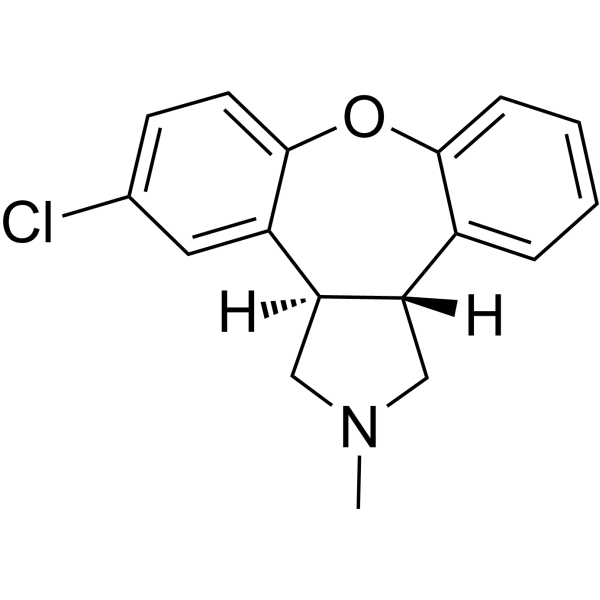
HY-10121
Asenapine5-HT/Dopamine/Histamine/Adrenergic Receptors Antagonist -
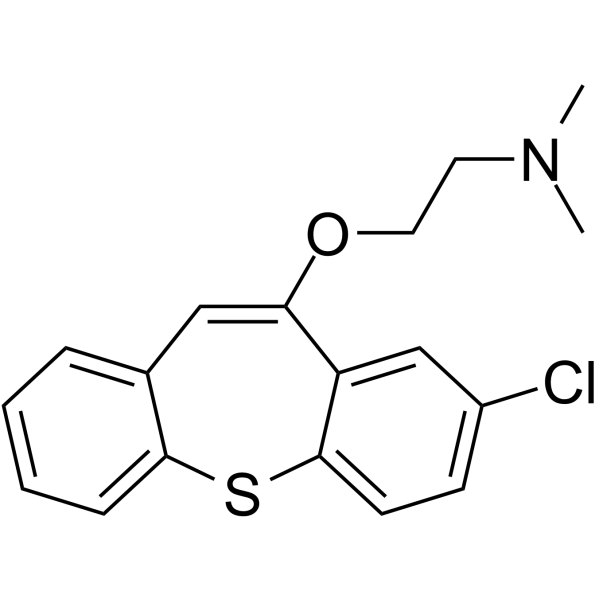
HY-103093
ZotepineAntipsychotic Agent -
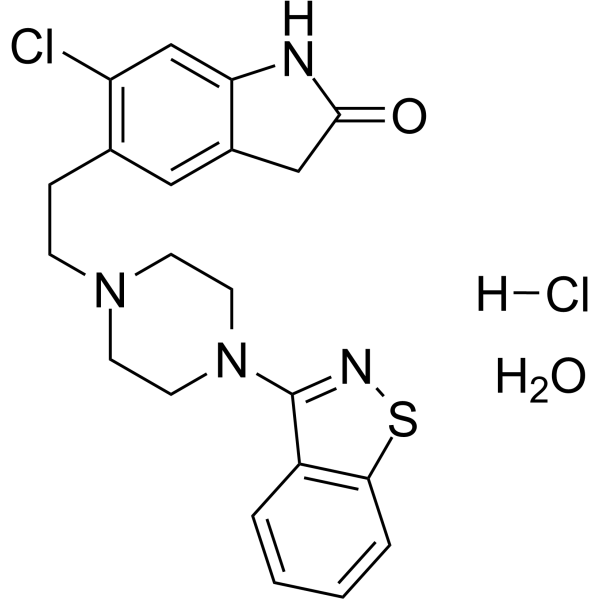
HY-17407
Ziprasidone hydrochloride monohydrate5-HT/DA Receptor Antagonist -

HY-10121R
Asenapine (Standard)5-HT/Dopamine/Histamine/Adrenergic Receptors Antagonist -

HY-103093R
Zotepine (Standard)Antipsychotic Agent -

HY-17407R
Ziprasidone hydrochloride monohydrate (Standard)5-HT/DA Receptor Antagonist
All Sigma Receptor Isoforms
MoreAll Dopamine Receptor Isoforms
MoreAll Histamine Receptor Isoforms
MoreAll Adrenergic Receptor Isoforms
More

Biological Activity
Description
Clinical Trial
| NCT Number | Sponsor | Condition | Start Date |
Phase

|
|---|---|---|---|---|
| NCT01329991 | 2011-05 | PHASE1 |


Chemical Information
-
CAS No. 5591-45-7
-
Molecular Weight 443.63
-
Formula C23H29N3O2S2
-
SMILES
O=S(C1=CC(/C2=C/CCN3CCN(C)CC3)=C(SC4=C2C=CC=C4)C=C1)(N(C)C)=O
-
Synonyms
NSC 108165; Navan; Navane
-
Shipping
Room temperature in continental US; may vary elsewhere.
-
Storage
Please store the product under the recommended conditions in the Certificate of Analysis.


Purity & Documentation
References

Calculators
Concentration (start) × Volume (start) = Concentration (final) × Volume (final)


Thiothixene Related Classifications
HY-A0139 Related Classifications
 Powered by Bioz