



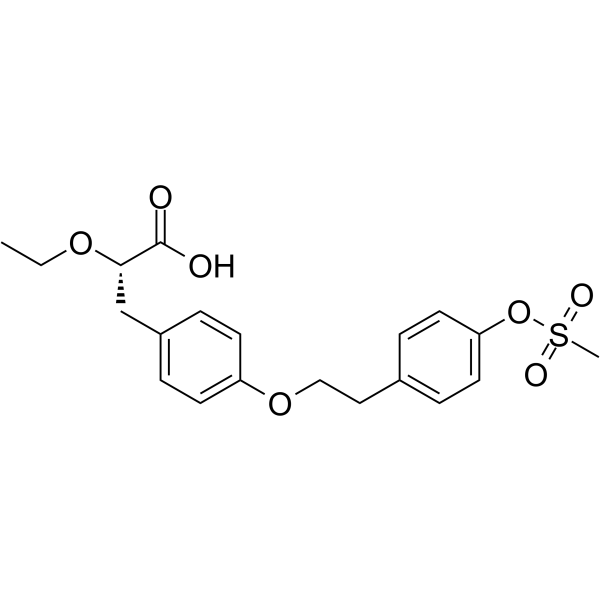
Tesaglitazar

Based on 1 Customer Validation
Tesaglitazar is a dual-target PPARα/γ agonist with an EC50 of 13.4 μM for rat PPARα and 3.6 μM for human PPARα. Tesaglitazar affects lipid and glucose metabolism by activating PPARα and PPARγ receptors, and has the potential to improve blood sugar and relieve pain. Tesaglitazar can be used to induce in vivo tumor models and can be used in the study of type 2 diabetes, dyslipidemia, and neuropathic pain.
For research use only. We do not sell to patients.
- Purity : 99.08%
- CAS No.: 251565-85-2
- Formula: C20H24O7S
- Molecular Weight:408.47
-
Storage:
-20°C, sealed storage, away from moisture
* In solvent : -80°C, 6 months; -20°C, 1 month (sealed storage, away from moisture)

To place orders, for customer services and technical support, please contact: MedChemExpress USA
Tel: 609-228-6898 E-mail: [email protected] [email protected]


-
 Biological Activity
-
Chemical Information
-
Solvent & Solubility
- Protocols
- Purity & Documentation
- References
-
 Help & FAQs


-
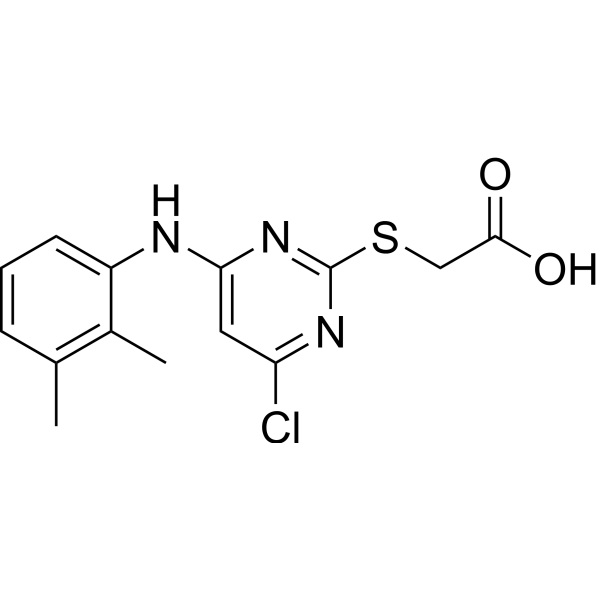
HY-16995
Pirinixic acidPPAR Agonist -
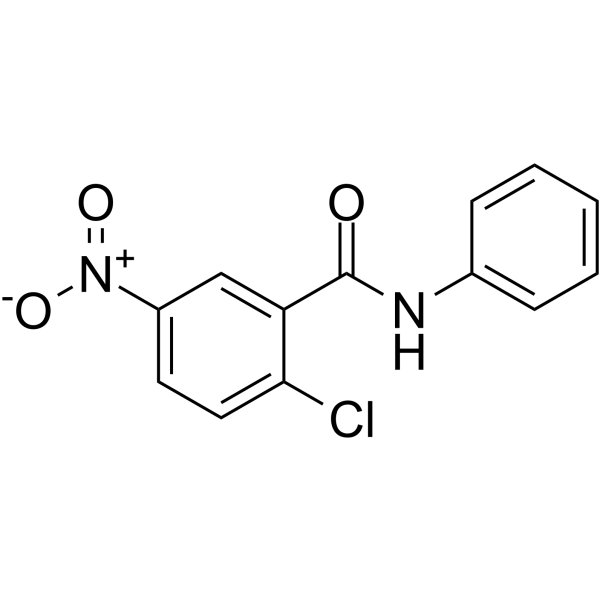
HY-16578
GW9662PPARγ Antagonist -
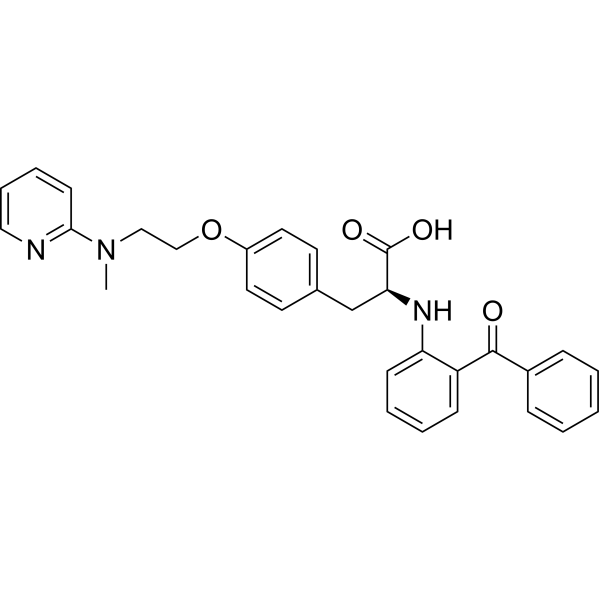
HY-15655
GW1929PPARγ Agonist -
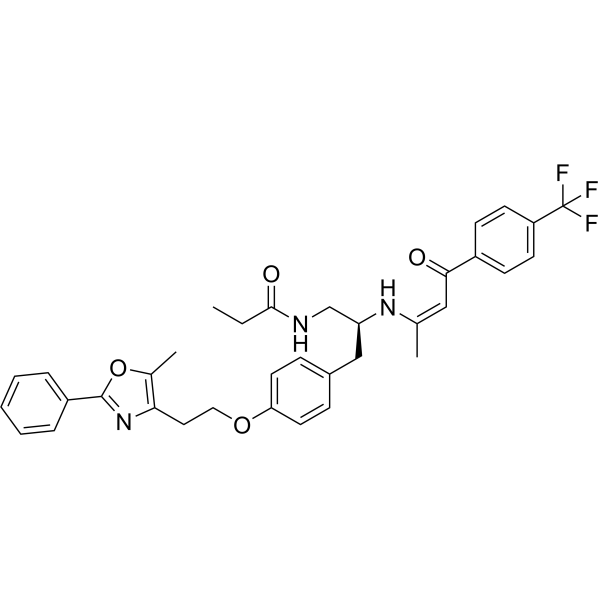
HY-15372
GW6471PPARα Antagonist -
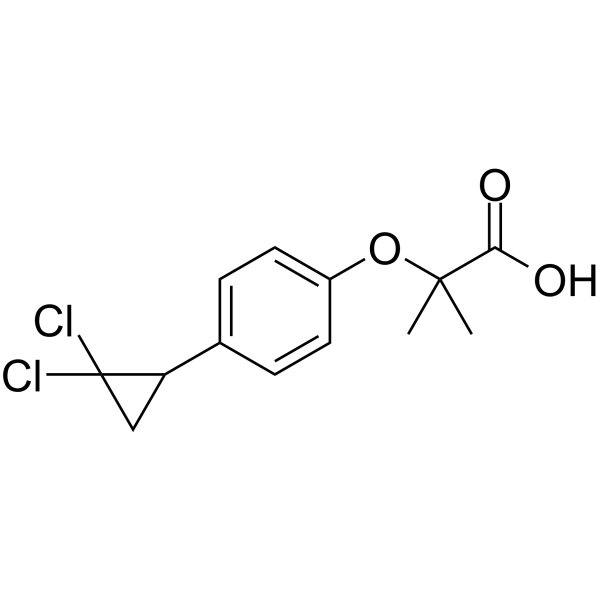
HY-B0664
CiprofibratePeroxisome Proliferator -
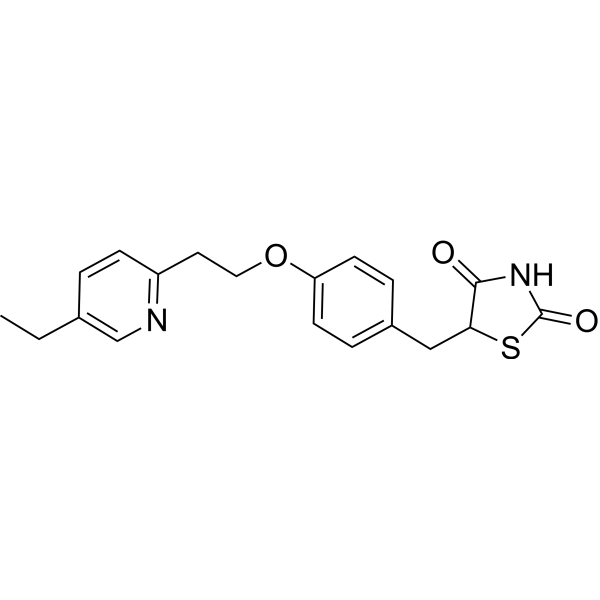
HY-13956
PioglitazonePPARγ Agonist -
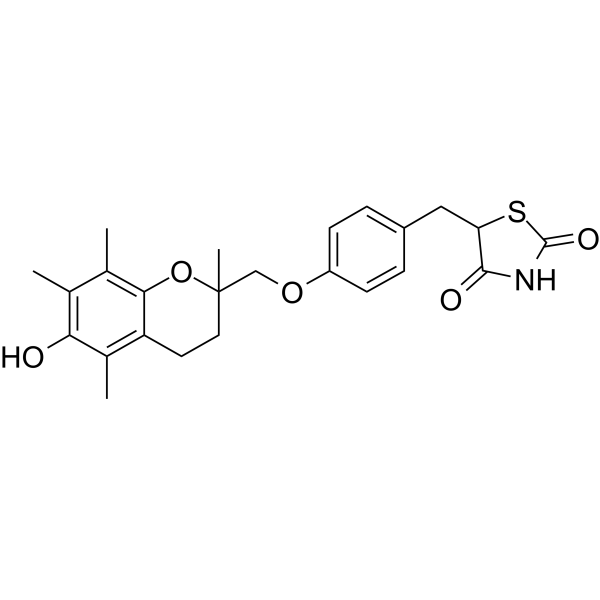
HY-50935
TroglitazonePPARγ Agonist -
HY-10997
IbrutinibBtk Inhibitor -
HY-14652
TamibaroteneApoptosis Inducer -
HY-16737
ElafibranorPPARα/δ Agonist -
HY-10219
RapamycinmTOR Inhibitor -
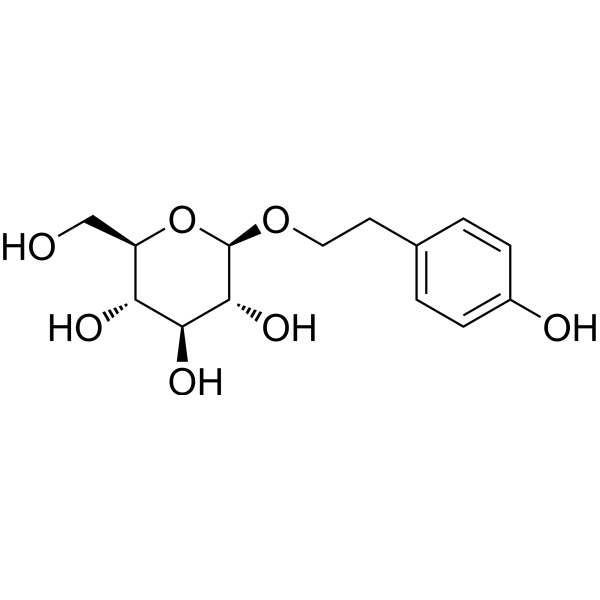
HY-N0109
SalidrosideProlyl Endopeptidase Inhibitor


Biological Activity
Description
IC50 & Target
EC50: 13.4 μM (rat PPARα), 3.6 μM (human PPARα), 0.2 μM (PPARγ)[1]
Cellular Effect
|
Cell Line

|
Type | Value | Description | References |
|---|---|---|---|---|
| CV-1 | EC50 |
0.704 μM
Compound: (S)-tesaglitazar
|
Agonist activity at human PPARgamma ligand binding domain expressed in african green monkey CV1 cells co-transfected with fused Gal4-DBD by transactivation assay
Agonist activity at human PPARgamma ligand binding domain expressed in african green monkey CV1 cells co-transfected with fused Gal4-DBD by transactivation assay
|
[PMID: 18826205] |
| CV-1 | EC50 |
3.124 μM
Compound: (S)-tesaglitazar
|
Agonist activity at human PPARalpha ligand binding domain expressed in african green monkey CV1 cells co-transfected with fused Gal4-DBD by transactivation assay
Agonist activity at human PPARalpha ligand binding domain expressed in african green monkey CV1 cells co-transfected with fused Gal4-DBD by transactivation assay
|
[PMID: 18826205] |
| HEK293 | EC50 |
0.36 μM
Compound: (S)-2b
|
Agonist activity at GAL4N fused human PPARgamma LBD expressed in HEK293 cells co-expressing TK-MH100x4-Luc after 24 hrs by luciferase reporter gene assay
Agonist activity at GAL4N fused human PPARgamma LBD expressed in HEK293 cells co-expressing TK-MH100x4-Luc after 24 hrs by luciferase reporter gene assay
|
[PMID: 28539218] |
| HEK293 | EC50 |
3.8 μM
Compound: (S)-2b
|
Agonist activity at GAL4N fused human PPARalpha LBD expressed in HEK293 cells co-expressing TK-MH100x4-Luc after 24 hrs by luciferase reporter gene assay
Agonist activity at GAL4N fused human PPARalpha LBD expressed in HEK293 cells co-expressing TK-MH100x4-Luc after 24 hrs by luciferase reporter gene assay
|
[PMID: 28539218] |
| HepG2 | EC50 |
0.013 μM
Compound: tesaglitazar
|
Agonist activity at human PPARgamma ligand binding domain expressed in human HepG2 cells co-transfected with PPRE3-TK-luc assessed as induction of beta-galactosidase activity by transactivation assay
Agonist activity at human PPARgamma ligand binding domain expressed in human HepG2 cells co-transfected with PPRE3-TK-luc assessed as induction of beta-galactosidase activity by transactivation assay
|
[PMID: 18805005] |
| HepG2 | EC50 |
0.82 μM
Compound: tesaglitazar
|
Agonist activity at human PPARalpha ligand binding domain expressed in human HepG2 cells co-transfected with PPRE3-TK-luc assessed as induction of beta-galactosidase activity by transactivation assay
Agonist activity at human PPARalpha ligand binding domain expressed in human HepG2 cells co-transfected with PPRE3-TK-luc assessed as induction of beta-galactosidase activity by transactivation assay
|
[PMID: 18805005] |
| HepG2 | EC50 |
3528 nM
Compound: 3,tesaglitazar
|
Agonist activity at human PPARgamma in HepG2 cells by PPAR-GAL4 transactivation assay
Agonist activity at human PPARgamma in HepG2 cells by PPAR-GAL4 transactivation assay
|
[PMID: 17157019] |
| HepG2 | EC50 |
9798 nM
Compound: 3,tesaglitazar
|
Agonist activity at human PPARalpha in HepG2 cells by PPAR-GAL4 transactivation assay
Agonist activity at human PPARalpha in HepG2 cells by PPAR-GAL4 transactivation assay
|
[PMID: 17157019] |
In Vitro
Tesaglitazar mediates PPARα transcriptional activation with EC50 of 13.4 μM and 3.6 μM for rat and human PPARα, respectively, and EC50 of approximately 0.2 μM for rat and human PPARγ[1].
Tesaglitazar (2 μM; 6 hours pretreatment) significantly inhibited 10 μM Capsaicin (HY-10448)-induced cobalt influx into dorsal root ganglion (DRG) neurons in a cobalt uptake assay, and this inhibitory effect was PPARα- and PPARγ-dependent[3].
MedChemExpress (MCE) has not independently confirmed the accuracy of these methods. They are for reference only.
In Vivo
Tesaglitazar (1, 10 μmol/kg; po; once daily; 2 or 12 weeks) in Wistar Hannover Galas rats, sustained stimulation of DNA synthesis, increased BrdU-labeled cells[1].
Tesaglitazar (50 nmol/kg; sc; once daily; 14 days) reduced body weight, food intake, fasting blood glucose and insulin levels, improved insulin sensitivity and glucose metabolism, and had no significant effect on renal function in the male C57BL/6J diet-induced obesity (DIO) mouse model[2].
Tesaglitazar (5 or 100 nmol/kg; sc; single dose) induced an acute deterioration in glucose tolerance at a high dose (100 nmol/kg), but a low dose (5 nmol/kg) reduced body weight, food intake and fasting blood glucose levels and improved glucose tolerance[2] in the DIO mouse model[2].
Tesaglitazar (10-20 μg/kg; intraperitoneal injection; single dose) significantly restored the mechanical paw withdrawal threshold (PWT) in the Streptozotocin (HY-13753)-induced diabetic neuropathy pain model in rats without affecting blood glucose levels[3].
MedChemExpress (MCE) has not independently confirmed the accuracy of these methods. They are for reference only.
-
Animal Model:Wistar Hannover Galas rats (6-8 weeks old; carcinogenicity model)[1]
-
Dosage:0.3, 1, 3, 10 μmol/kg (dissolved in 5mM sodium hydrogen carbonate buffer solution, pH 8.5)
-
Administration:Oral gavage, once daily, 104 weeks
-
Result:Induced subcutaneous mesenchymal sarcomas (fibrosarcomas) in both male and female rats (10 μmol/kg).
Caused various non-neoplastic changes, such as myocardial hypertrophy, liver changes, and alterations in multiple organ systems.
Clinical Trial
| NCT Number | Sponsor | Condition | Start Date |
Phase
|
|---|---|---|---|---|
| NCT01329991 | Plexxikon| | 2011-05 | PHASE1 |


Chemical Information
-
CAS No. 251565-85-2
-
Appearance Solid
-
Molecular Weight 408.47
-
Formula C20H24O7S
-
Color White to off-white
-
SMILES
O=C(O)[C@@H](OCC)CC1=CC=C(OCCC2=CC=C(OS(=O)(C)=O)C=C2)C=C1
-
Shipping
Room temperature in continental US; may vary elsewhere.
-
Storage
-20°C, sealed storage, away from moisture
* In solvent : -80°C, 6 months; -20°C, 1 month (sealed storage, away from moisture)


Solvent & Solubility
In Vitro:
DMSO : 100 mg/mL (244.82 mM; Need ultrasonic; Hygroscopic DMSO has a significant impact on the solubility of product, please use newly opened DMSO)
Please refer to the solubility information to select the appropriate solvent. Once prepared, please aliquot and store the solution to prevent product inactivation from repeated freeze-thaw cycles.
Storage method and period of stock solution: -80°C, 6 months; -20°C, 1 month (sealed storage, away from moisture). When stored at -80°C, please use it within 6 months. When stored at -20°C, please use it within 1 month.
Please refer to the solubility information to select the appropriate solvent. Once prepared, please aliquot and store the solution to prevent product inactivation from repeated freeze-thaw cycles.
Storage method and period of stock solution: -80°C, 6 months; -20°C, 1 month (sealed storage, away from moisture). When stored at -80°C, please use it within 6 months. When stored at -20°C, please use it within 1 month.
Concentration (start) × Volume (start) = Concentration (final) × Volume (final)
In Vivo:
Select the appropriate dissolution method based on your experimental animal and administration route.
- For the following dissolution methods, please ensure to first prepare a clear stock solution using an In Vitro approach and then sequentially add co-solvents:
- To ensure reliable experimental results, the clarified stock solution can be appropriately stored based on storage conditions. As for the working solution for In Vivo experiments, it is recommended to prepare freshly and use it on the same day.
- The percentages shown for the solvents indicate their volumetric ratio in the final prepared solution. If precipitation or phase separation occurs during preparation, heat and/or sonication can be used to aid dissolution.
Add each solvent one by one: 10% DMSO 40% PEG300 5% Tween-80 45% Saline
Solubility: ≥ 5 mg/mL (12.24 mM); Clear solution
This protocol yields a clear solution of ≥ 5 mg/mL (saturation unknown).
Taking 1 mL working solution as an example, add 100 μL DMSO stock solution (50.0 mg/mL) to 400 μL PEG300, and mix evenly; then add 50 μL Tween-80 and mix evenly; then add 450 μL Saline to adjust the volume to 1 mL.
Preparation of Saline: Dissolve 0.9 g sodium chloride in ddH₂O and dilute to 100 mL to obtain a clear Saline solution.
Add each solvent one by one: 10% DMSO 90% (20% SBE-β-CD in Saline)
Solubility: ≥ 5 mg/mL (12.24 mM); Clear solution
This protocol yields a clear solution of ≥ 5 mg/mL (saturation unknown).
Taking 1 mL working solution as an example, add 100 μL DMSO stock solution (50.0 mg/mL) to 900 μL 20% SBE-β-CD in Saline, and mix evenly.
Preparation of 20% SBE-β-CD in Saline (4°C, storage for one week): 2 g SBE-β-CD powder is dissolved in 10 mL Saline, completely dissolve until clear.
In Vivo Dissolution Calculator
Please enter the basic information of animal experiments:
-
-
-
-
Recommended: Prepare an additional quantity of animals to account for potential losses during experiments.
Please enter your animal formula composition:
-
%DMSO +
Recommended: Keep the proportion of DMSO in working solution below 2% if your animal is weak.
-
%+
-
+%Tween-80 + +
-
%Saline +
The co-solvents required include: DMSO, . All of co-solvents are available by MedChemExpress (MCE). , Tween 80. All of co-solvents are available by MedChemExpress (MCE).
Working solution concentration: 0.22 mg/mL
Method for preparing stock solution: mg drug dissolved in μL DMSO. Stock solution concentration: mg/mL. * In solvent : -80°C, 6 months; -20°C, 1 month (sealed storage, away from moisture)
1. Take μL DMSO stock solution;
2. Add μL .
μL , mix evenly;
3. Then add μL Tween 80, mix evenly;
4. Then add μL
Please ensure that the stock solution in the first step is dissolved to a clear state, and add co-solvents in sequence. You can use ultrasonic heating (ultrasonic cleaner, recommended frequency 20-40 kHz), vortexing, etc. to assist dissolution.


Purity & Documentation
-
Data Sheet (275 KB)
-
SDS (393 KB)
- English - EN (393 KB)
- Français - FR (393 KB)
- Deutsch - DE (393 KB)
- Norwegian - NO (393 KB)
- Español - ES (393 KB)
- Swedish - SV (393 KB)
- Italian - IT (393 KB)
- Korean - KR (393 KB)
- Portuguese - PT (393 KB)
-
Handling Instructions (2659 KB)
References
[1]. Hellmold H, et al. Tesaglitazar, a PPARalpha/gamma agonist, induces interstitial mesenchymal cell DNA synthesis and fibrosarcomas in subcutaneous tissues in rats. Toxicol Sci. 2007 Jul;98(1):63-74. [Content Brief]
[2]. Quarta C, et al. GLP-1-mediated delivery of tesaglitazar improves obesity and glucose metabolism in male mice. Nat Metab. 2022 Aug;4(8):1071-1083. [Content Brief]
[3]. Alsalem M, et al. Effects of Dual Peroxisome Proliferator-Activated Receptors α and γ Activation in Two Rat Models of Neuropathic Pain. PPAR Res. 2019 Apr 17;2019:2630232. [Content Brief]


Complete Stock Solution Preparation Table
Please refer to the solubility information to select the appropriate solvent. Once prepared, please aliquot and store the solution to prevent product inactivation from repeated freeze-thaw cycles.
Storage method and period of stock solution: -80°C, 6 months; -20°C, 1 month (sealed storage, away from moisture). When stored at -80°C, please use it within 6 months. When stored at -20°C, please use it within 1 month.
| Optional Solvent | Concentration Solvent Mass | 1 mg | 5 mg | 10 mg | 25 mg |
|---|---|---|---|---|---|
| DMSO | 1 mM | 2.4482 mL | 12.2408 mL | 24.4816 mL | 61.2040 mL |
| 5 mM | 0.4896 mL | 2.4482 mL | 4.8963 mL | 12.2408 mL | |
| 10 mM | 0.2448 mL | 1.2241 mL | 2.4482 mL | 6.1204 mL | |
| 15 mM | 0.1632 mL | 0.8161 mL | 1.6321 mL | 4.0803 mL | |
| 20 mM | 0.1224 mL | 0.6120 mL | 1.2241 mL | 3.0602 mL | |
| 25 mM | 0.0979 mL | 0.4896 mL | 0.9793 mL | 2.4482 mL | |
| 30 mM | 0.0816 mL | 0.4080 mL | 0.8161 mL | 2.0401 mL | |
| 40 mM | 0.0612 mL | 0.3060 mL | 0.6120 mL | 1.5301 mL | |
| 50 mM | 0.0490 mL | 0.2448 mL | 0.4896 mL | 1.2241 mL | |
| 60 mM | 0.0408 mL | 0.2040 mL | 0.4080 mL | 1.0201 mL | |
| 80 mM | 0.0306 mL | 0.1530 mL | 0.3060 mL | 0.7651 mL | |
| 100 mM | 0.0245 mL | 0.1224 mL | 0.2448 mL | 0.6120 mL |


Tesaglitazar Related Classifications
HY-17444 Related Classifications
 Powered by Bioz