



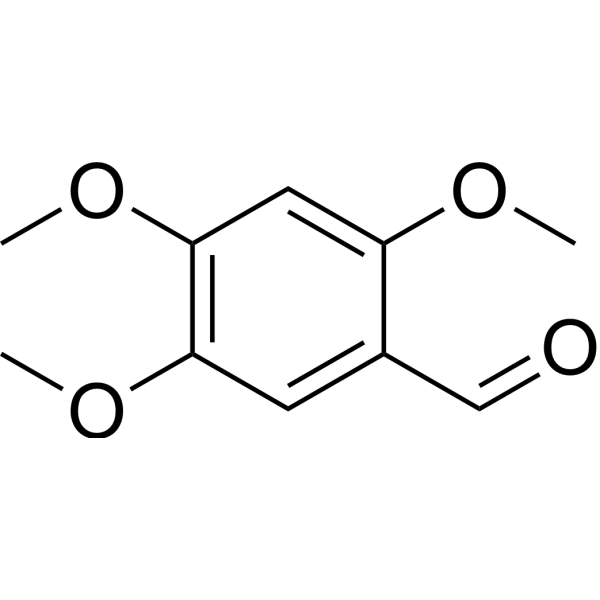
Asaraldehyde

Based on 1 Customer Validation
Asarylaldehyde (Asaronaldehyde), a COX-2 inhibitor, significantly inhibits cyclooxygenase II (COX-2) activity with an IC50 value of 100 μg/mL.
Nos produits utilisent uniquement pour la recherche. Nous ne vendons pas aux patients.
- Pureté : 99.42%
- CAS No.: 4460-86-0
- Formule: C10H12O4
- Masse moléculaire:196.20
-
Stockage:
4°C, stored under nitrogen
* In solvent : -80°C, 6 months; -20°C, 1 month (stored under nitrogen)

To place orders, for customer services and technical support, please contact: MedChemExpress USA
Tel: 609-228-6898 E-mail: [email protected] [email protected]


-
 Activité biologique
-
Chemical Information
-
Solvant et solubilité
- Pureté et documentation
- Références
-
 Help & FAQs


-

HY-100580R
Asaraldehyde (Standard)COX-2 Inhibitor -
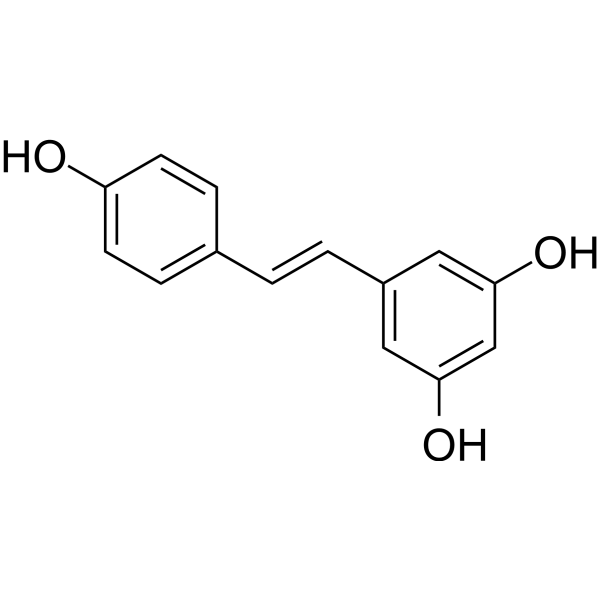
HY-16561
ResveratrolPolyphenolic Phytoalexin -
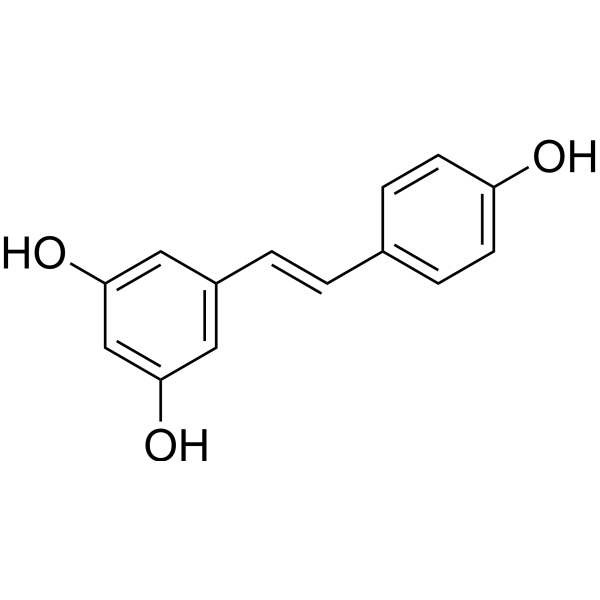
HY-16561R
Resveratrol (Standard) -
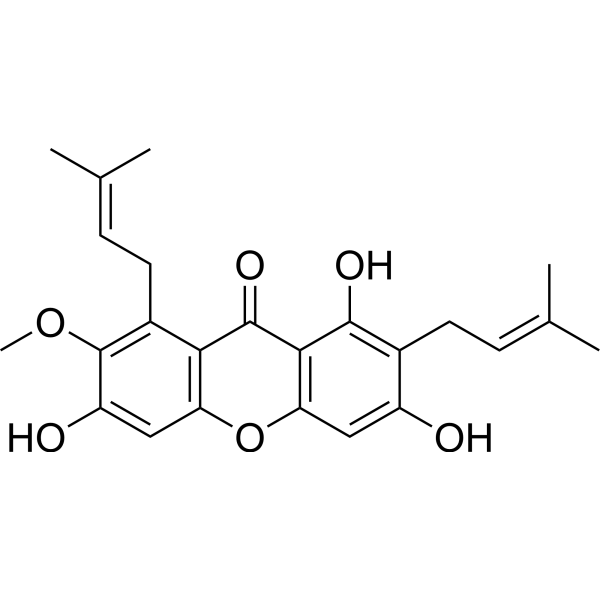
HY-N0328
alpha-MangostinIDH1-R132H Inhibitor -
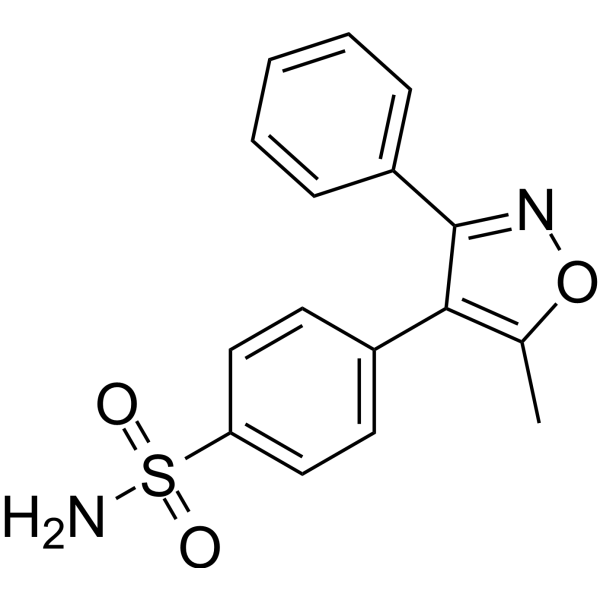
HY-15762
ValdecoxibCOX-2 Inhibitor -
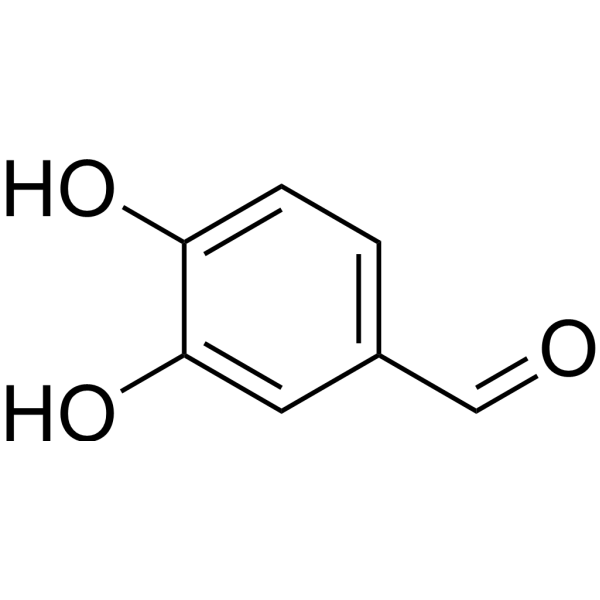
HY-N0295
ProtocatechualdehydePolyphenol Compound -
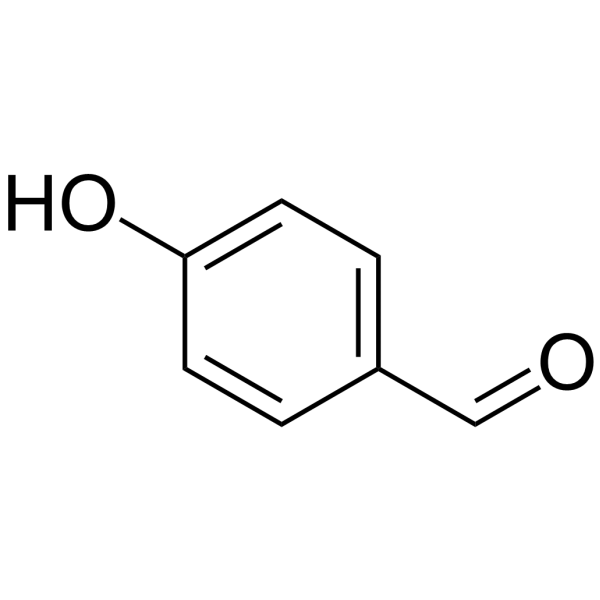
HY-Y0313
p-Hydroxybenzaldehyde -
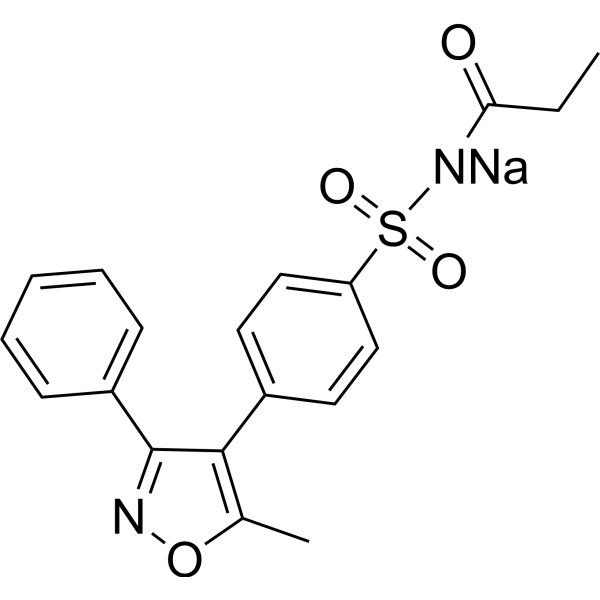
HY-17474A
Parecoxib SodiumCOX-2 Inhibitor -
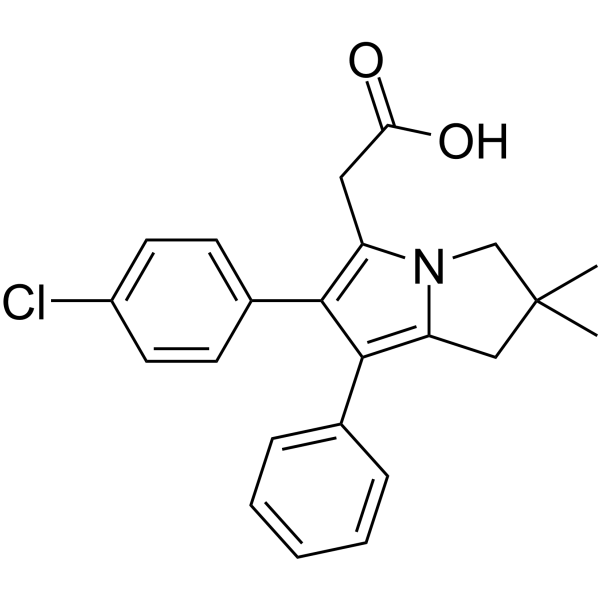
HY-B1452
LicofeloneCOX/5-LOX Inhibitor -
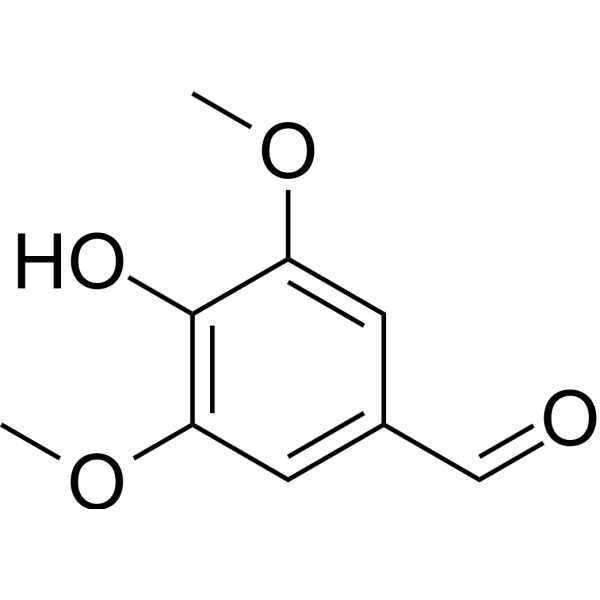
HY-N1390
SyringaldehydeCOX-2 Inhibitor -
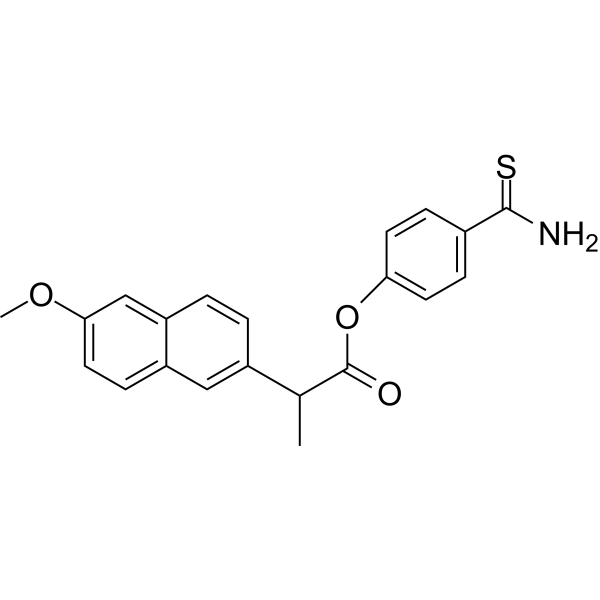
HY-15028
Otenaproxesul -
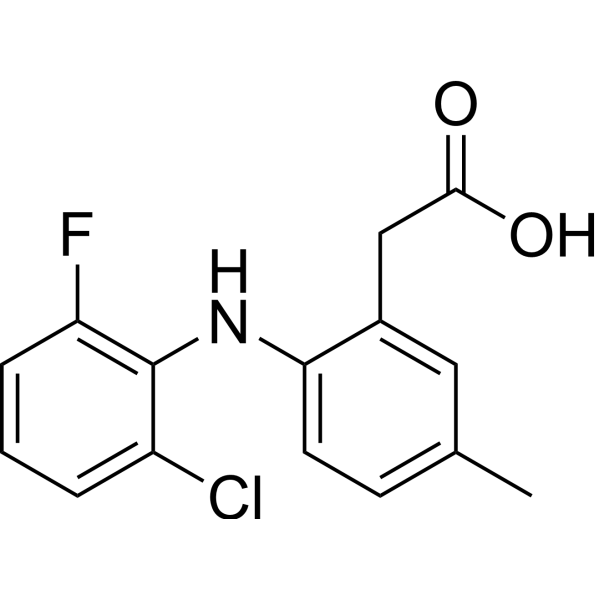
HY-13507
LumiracoxibCOX-2 Inhibitor


Activité biologique
Description
IC50 & Target
[1]|
COX-2 |
In Vitro
Asarylaldehyde (2,4,5-TMBA) is a natural COX-2 inhibitor, which isolated from carrot (Daucus carota L.) seeds significantly inhibits cyclooxygenase II (COX-2) activity at the concentration of 100 μg/mL compared to three commercial nonsteroidal anti-inflammatory drugs Aspinin, Ibuprofen, and Naproxen at their IC50 values 180, 2.52, and 2.06 μg/mL, respectively. 2,4,5-TMBA, a natural inhibitor of cyclooxygenase-2, suppresses adipogenesis and oromotes lipolysis in 3T3-L1 adipocytes. 2,4,5-Trimethoxybenzaldehyde (2,4,5-TMBA) present in plant roots, seeds, and leaves is reported to be a significant inhibitor of cyclooxygenase-2 (COX-2) activity at the concentration of 100 μg/mL. Because COX-2 is associated with differentiation of preadipocytes, the murine 3T3-L1 cells are cultured with 100 μg/mL of 2,4,5-TMBA during differentiation and after the cells are fully differentiated to study the effect of 2,4,5-TMBA on adipogenesis and lipolysis. Oil Red O staining and triglyceride assay revealed that 2,4,5-TMBA inhibited the formation of lipid droplets during differentiation; moreover, 2,4,5-TMBA down-regulated the protein levels of adipogenic signaling molecules and transcription factors MAP kinase kinase (MEK), extracellular signal-regulated kinase (ERK), CCAAT/enhancer binding protein (C/EBP)α, β, and δ, peroxisome proliferator-activated receptor (PPAR)γ, adipocyte determination and differentiation-dependent factor 1 (ADD1), and the rate-limiting enzyme for lipid synthesis acetyl-CoA carboxylase (ACC). In fully differentiated adipocytes, treatment with 2,4,5-TMBA for 72 h significantly decreased lipid accumulation by increasing the hydrolysis of triglyceride through suppression of perilipin A (lipid droplet coating protein) and up-regulation of hormone-sensitive lipase (HSL). When treated with 100 μg/mL of 2,4,5-TMBA for 24, 48, or 72 h, the viability of fully differentiated 3T3-L1 adipocytes is decreased by 8.35, 15.54, and 27.26%, respectively. When the preadiocytes are treated with 100 μg/mL of 2,4,5-TMBA for 24 h before differentiation medium is supplemented, the cell viability is decreased by 26.46%[1]. A COX-2 inhibitor 2,4,5-trimethoxybenzaldehyde (TMBA) is found to be the most abundant constituent, but is totally absent in its cultured broth and its natural host, C. kanehirae wood. 2,4,5-trimethoxybenzaldehyde (TMBA) is the major constituent in fruiting bodies[2].
MedChemExpress (MCE) has not independently confirmed the accuracy of these methods. They are for reference only.


Chemical Information
-
CAS No. 4460-86-0
-
Appearance Solid
-
Masse moléculaire 196.20
-
Formule C10H12O4
-
Color Off-white to light brown
-
SMILES
O=CC1=CC(OC)=C(OC)C=C1OC
-
Synonyms
Asaronaldehyde; 2,4,5-trimethoxy-Benzaldehyde
-
Structure Classification
-
Initial Source
-
Livraison
Room temperature in continental US; may vary elsewhere.
-
Stockage
4°C, stored under nitrogen
* In solvent : -80°C, 6 months; -20°C, 1 month (stored under nitrogen)


Solvant et solubilité
In Vitro:
DMSO : 100 mg/mL (509.68 mM; Need ultrasonic; Hygroscopic DMSO has a significant impact on the solubility of product, please use newly opened DMSO)
Ethanol : 50 mg/mL (254.84 mM; Need ultrasonic)
H2O : < 0.1 mg/mL (insoluble)
Please refer to the solubility information to select the appropriate solvent. Once prepared, please aliquot and store the solution to prevent product inactivation from repeated freeze-thaw cycles.
Storage method and period of stock solution: -80°C, 6 months; -20°C, 1 month (stored under nitrogen). When stored at -80°C, please use it within 6 months. When stored at -20°C, please use it within 1 month.
Please refer to the solubility information to select the appropriate solvent. Once prepared, please aliquot and store the solution to prevent product inactivation from repeated freeze-thaw cycles.
Storage method and period of stock solution: -80°C, 6 months; -20°C, 1 month (stored under nitrogen). When stored at -80°C, please use it within 6 months. When stored at -20°C, please use it within 1 month.
Concentration (start) × Volume (start) = Concentration (final) × Volume (final)
In Vivo:
Select the appropriate dissolution method based on your experimental animal and administration route.
- For the following dissolution methods, please ensure to first prepare a clear stock solution using an In Vitro approach and then sequentially add co-solvents:
- To ensure reliable experimental results, the clarified stock solution can be appropriately stored based on storage conditions. As for the working solution for In Vivo experiments, it is recommended to prepare freshly and use it on the same day.
- The percentages shown for the solvents indicate their volumetric ratio in the final prepared solution. If precipitation or phase separation occurs during preparation, heat and/or sonication can be used to aid dissolution.
Add each solvent one by one: 10% EtOH 40% PEG300 5% Tween-80 45% Saline
Solubility: ≥ 3.75 mg/mL (19.11 mM); Clear solution
This protocol yields a clear solution of ≥ 3.75 mg/mL (saturation unknown).
Taking 1 mL working solution as an example, add 100 μL EtOH stock solution (37.5 mg/mL) to 400 μL PEG300, and mix evenly; then add 50 μL Tween-80 and mix evenly; then add 450 μL Saline to adjust the volume to 1 mL.
Preparation of Saline: Dissolve 0.9 g sodium chloride in ddH₂O and dilute to 100 mL to obtain a clear Saline solution.
Add each solvent one by one: 10% EtOH 90% Corn Oil
Solubility: ≥ 3.75 mg/mL (19.11 mM); Clear solution
This protocol yields a clear solution of ≥ 3.75 mg/mL (saturation unknown). If the continuous dosing period exceeds half a month, please choose this protocol carefully.
Taking 1 mL working solution as an example, add 100 μL EtOH stock solution (37.5 mg/mL) to 900 μL Corn oil, and mix evenly.
Add each solvent one by one: 10% DMSO 40% PEG300 5% Tween-80 45% Saline
Solubility: ≥ 2.5 mg/mL (12.74 mM); Clear solution
This protocol yields a clear solution of ≥ 2.5 mg/mL (saturation unknown).
Taking 1 mL working solution as an example, add 100 μL DMSO stock solution (25.0 mg/mL) to 400 μL PEG300, and mix evenly; then add 50 μL Tween-80 and mix evenly; then add 450 μL Saline to adjust the volume to 1 mL.
Preparation of Saline: Dissolve 0.9 g sodium chloride in ddH₂O and dilute to 100 mL to obtain a clear Saline solution.
In Vivo Dissolution Calculator
Please enter the basic information of animal experiments:
-
-
-
-
Recommended: Prepare an additional quantity of animals to account for potential losses during experiments.
Please enter your animal formula composition:
-
%DMSO +
Recommended: Keep the proportion of DMSO in working solution below 2% if your animal is weak.
-
%+
-
+%Tween-80 + +
-
%Saline +
The co-solvents required include: DMSO, . All of co-solvents are available by MedChemExpress (MCE). , Tween 80. All of co-solvents are available by MedChemExpress (MCE).
Working solution concentration: 0.22 mg/mL
Method for preparing stock solution: mg drug dissolved in μL DMSO. Stock solution concentration: mg/mL. * In solvent : -80°C, 6 months; -20°C, 1 month (stored under nitrogen)
1. Take μL DMSO stock solution;
2. Add μL .
μL , mix evenly;
3. Then add μL Tween 80, mix evenly;
4. Then add μL
Please ensure that the stock solution in the first step is dissolved to a clear state, and add co-solvents in sequence. You can use ultrasonic heating (ultrasonic cleaner, recommended frequency 20-40 kHz), vortexing, etc. to assist dissolution.


Pureté et documentation
-
Fiche technique (280 KB)
-
SDS (394 KB)
- English - EN (394 KB)
- Français - FR (394 KB)
- Deutsch - DE (394 KB)
- Norwegian - NO (394 KB)
- Español - ES (394 KB)
- Swedish - SV (394 KB)
- Italian - IT (394 KB)
- Korean - KR (394 KB)
- Portuguese - PT (394 KB)
-
Instruction de manipulation (2659 KB)
Références
[1]. Wu MR, et al. 2,4,5-TMBA, a natural inhibitor of cyclooxygenase-2, suppresses adipogenesis and promotes lipolysis in 3T3-L1 adipocytes. J Agric Food Chem. 2012 Jul 25;60(29):7262-9. [Content Brief]
[2]. Chen CC, et al. Production of a COX-2 inhibitor, 2,4,5-trimethoxybenzaldehyde, with submerged cultured Antrodia camphorata. Lett Appl Microbiol. 2007 Apr;44(4):387-92. [Content Brief]


Complete Stock Solution Preparation Table
Please refer to the solubility information to select the appropriate solvent. Once prepared, please aliquot and store the solution to prevent product inactivation from repeated freeze-thaw cycles.
Storage method and period of stock solution: -80°C, 6 months; -20°C, 1 month (stored under nitrogen). When stored at -80°C, please use it within 6 months. When stored at -20°C, please use it within 1 month.
| Optional Solvent | Concentration Solvent Mass | 1 mg | 5 mg | 10 mg | 25 mg |
|---|---|---|---|---|---|
| Ethanol / DMSO | 1 mM | 5.0968 mL | 25.4842 mL | 50.9684 mL | 127.4210 mL |
| 5 mM | 1.0194 mL | 5.0968 mL | 10.1937 mL | 25.4842 mL | |
| 10 mM | 0.5097 mL | 2.5484 mL | 5.0968 mL | 12.7421 mL | |
| 15 mM | 0.3398 mL | 1.6989 mL | 3.3979 mL | 8.4947 mL | |
| 20 mM | 0.2548 mL | 1.2742 mL | 2.5484 mL | 6.3711 mL | |
| 25 mM | 0.2039 mL | 1.0194 mL | 2.0387 mL | 5.0968 mL | |
| 30 mM | 0.1699 mL | 0.8495 mL | 1.6989 mL | 4.2474 mL | |
| 40 mM | 0.1274 mL | 0.6371 mL | 1.2742 mL | 3.1855 mL | |
| 50 mM | 0.1019 mL | 0.5097 mL | 1.0194 mL | 2.5484 mL | |
| 60 mM | 0.0849 mL | 0.4247 mL | 0.8495 mL | 2.1237 mL | |
| 80 mM | 0.0637 mL | 0.3186 mL | 0.6371 mL | 1.5928 mL | |
| 100 mM | 0.0510 mL | 0.2548 mL | 0.5097 mL | 1.2742 mL |


Asaraldehyde Related Classifications
HY-100580 Related Classifications
 Powered by Bioz