



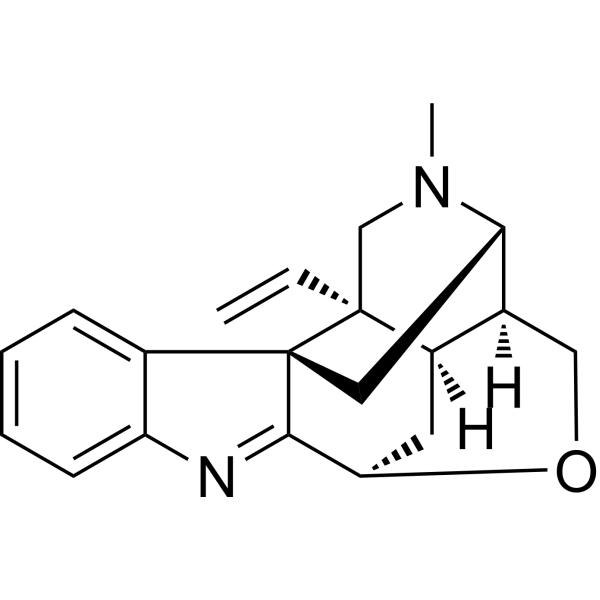
Koumine

Based on 1 Customer Validation
Koumine is an alkaloid separated from Gelsemium elegans, shows potent anti-tumor activity. Koumine up-regulates the Bax/Bcl-2 ratio and caspase-3 expression in human breast cancer cells. Koumine has anxiolytic, antistress, antipsoriatic, and analgesic activities, protects against the development of arthritis in Rheumatoid arthritis (RA) animal models.
Nos produits utilisent uniquement pour la recherche. Nous ne vendons pas aux patients.
- Pureté : 99.93%
- CAS No.: 1358-76-5
- Formule: C20H22N2O
- Masse moléculaire:306.40
-
Stockage:
4°C, sealed storage, away from moisture and light
* In solvent : -80°C, 6 months; -20°C, 1 month (sealed storage, away from moisture and light)

To place orders, for customer services and technical support, please contact: MedChemExpress USA
Tel: 609-228-6898 E-mail: [email protected] [email protected]


-
 Activité biologique
-
Chemical Information
-
Solvant et solubilité
- Protocole
- Pureté et documentation
- Références
-
 Help & FAQs


-
HY-N0831
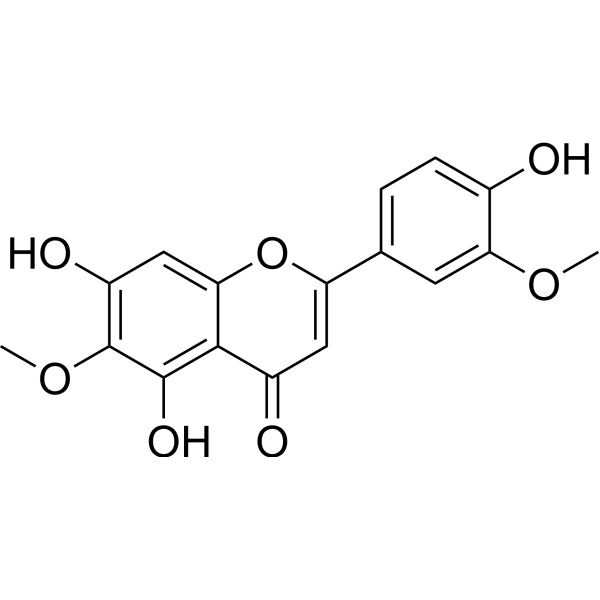
JaceosidinBax Activator -

HY-N1440R
Koumine (Standard)Alkaloid -
HY-10087
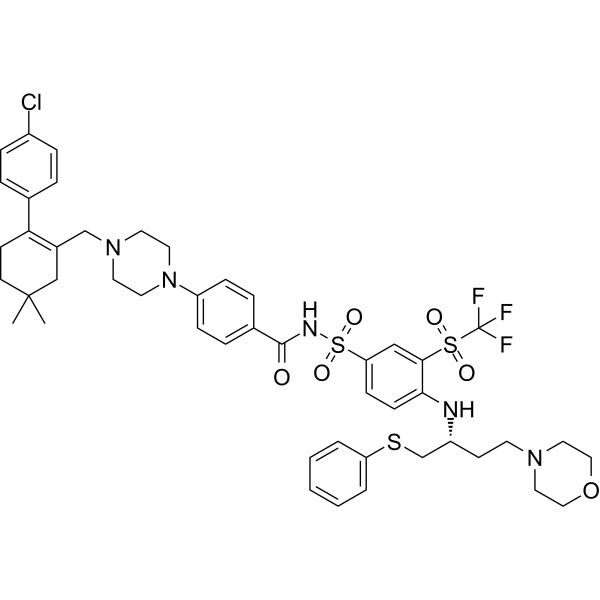
NavitoclaxBcl-2 Inhibitor -
HY-N0087
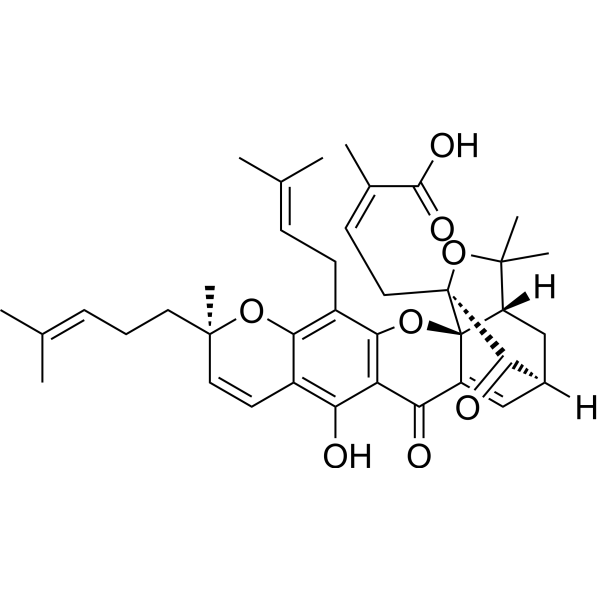
Gambogic AcidBcl-2 Family Inhibitor -
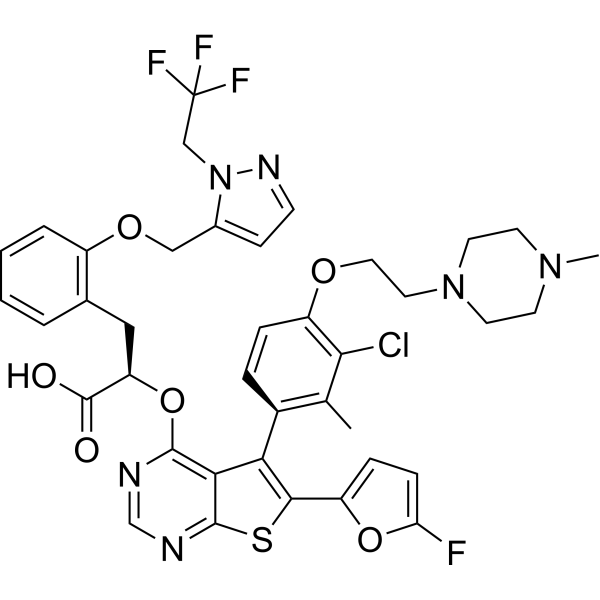
HY-100741
S63845MCL1 Inhibitor -
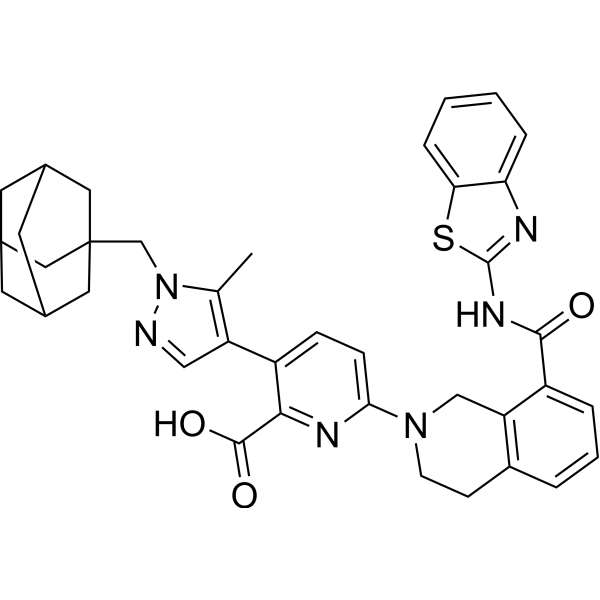
HY-19741
A-1331852Bcl-xL Inhibitor -
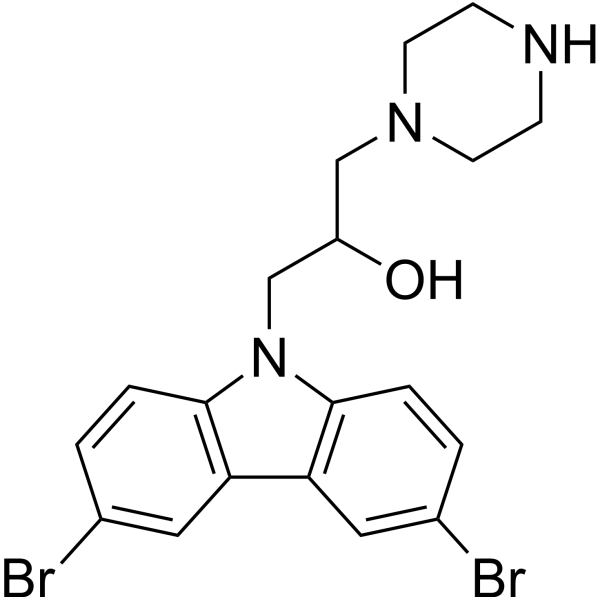
HY-103269
BAI1BAX Inhibitor -
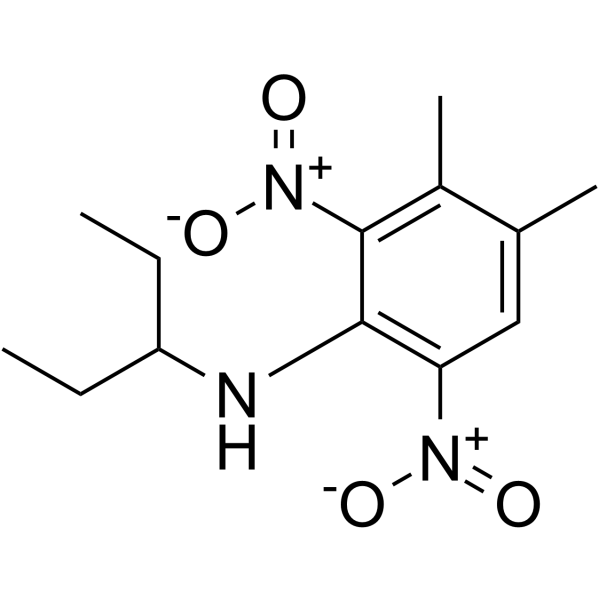
HY-B0862
PendimethalinHerbicide -
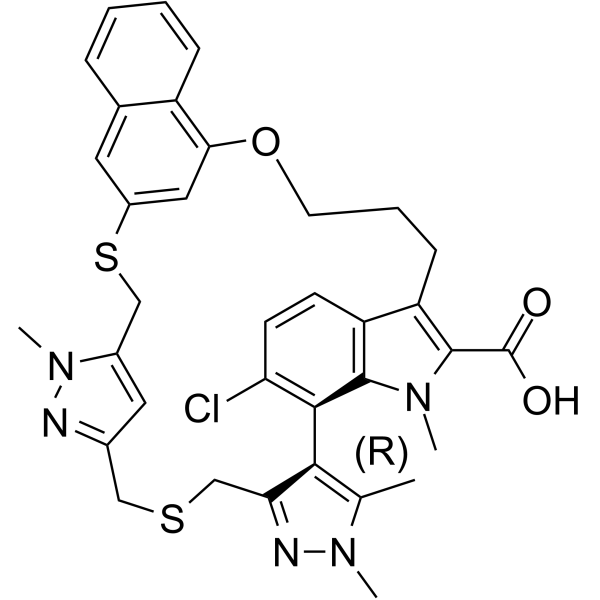
HY-101533
AZD-5991Mcl-1 Inhibitor -
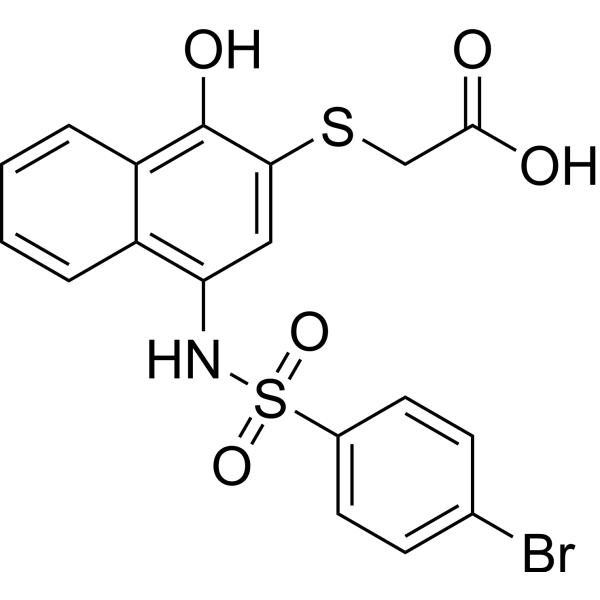
HY-18628
UMI-77Bcl-2 Family Inhibitor -

HY-10087R
Navitoclax (Standard)Reference Standard -
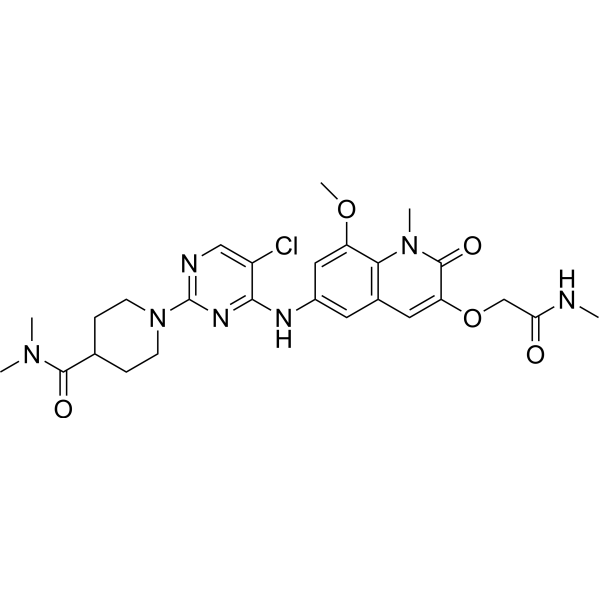
HY-111381
BI-3812Bcl-2 Family Inhibitor


Activité biologique
Description
Cellular Effect
|
Cell Line

|
Type | Value | Description | References |
|---|---|---|---|---|
| A-431 | EC50 |
>100 μM
Compound: koumine
|
Cytotoxicity against human A431 cells after 48 hrs by trypan blue test
Cytotoxicity against human A431 cells after 48 hrs by trypan blue test
|
[PMID: 16643063] |
In Vitro
Koumine (0.5, 1 and 2 mg/mL) dose- and time-dependently inhibits the proliferation of MCF-7 cells, with an IC50 of 124 µg/mL at 72 h. Koumine induces apoptosis, causes cell cycle arrest at G2/M phase[1].
Koumine (0.5, 1 and 2 mg/mL) up-regulates the Bax/Bcl-2 ratio and caspase-3 expression in a dose-dependent manner in MCF-7 Cells[1].
Koumine (25, 50, 100, and 200 μM) decreases the protein and mRNA levels of microglia M1 polarization factors in LPS-induced BV2 cells[3].
MedChemExpress (MCE) has not independently confirmed the accuracy of these methods. They are for reference only.
In Vivo
Koumine inhibits the increase in cytokines in joint tissue and TNF-α level in serum at 15 mg/kg, and suppresses the increase in the serum level of IL-1β at 3 and 15 mg/kg[2].
Koumine (0.28, 7 mg/kg, s.c.) significantly reduces neuropathic pain after nerve injury. Koumine suppresses the increased Iba-1 protein level[3].
MedChemExpress (MCE) has not independently confirmed the accuracy of these methods. They are for reference only.


Chemical Information
-
CAS No. 1358-76-5
-
Appearance Solid
-
Masse moléculaire 306.40
-
Formule C20H22N2O
-
Color White to off-white
-
SMILES
C=C[C@]12[C@]3([H])C[C@@H]4C5=NC6=CC=CC=C6[C@@]51C[C@H](N(C)C2)[C@@]3([H])CO4
-
Structure Classification
-
Livraison
Room temperature in continental US; may vary elsewhere.
-
Stockage
4°C, sealed storage, away from moisture and light
* In solvent : -80°C, 6 months; -20°C, 1 month (sealed storage, away from moisture and light)


Solvant et solubilité
In Vitro:
DMSO : 33.33 mg/mL (108.78 mM; ultrasonic and warming and heat to 60°C; Hygroscopic DMSO has a significant impact on the solubility of product, please use newly opened DMSO)
Please refer to the solubility information to select the appropriate solvent. Once prepared, please aliquot and store the solution to prevent product inactivation from repeated freeze-thaw cycles.
Storage method and period of stock solution: -80°C, 6 months; -20°C, 1 month (sealed storage, away from moisture and light). When stored at -80°C, please use it within 6 months. When stored at -20°C, please use it within 1 month.
Please refer to the solubility information to select the appropriate solvent. Once prepared, please aliquot and store the solution to prevent product inactivation from repeated freeze-thaw cycles.
Storage method and period of stock solution: -80°C, 6 months; -20°C, 1 month (sealed storage, away from moisture and light). When stored at -80°C, please use it within 6 months. When stored at -20°C, please use it within 1 month.
Concentration (start) × Volume (start) = Concentration (final) × Volume (final)
In Vivo:
Select the appropriate dissolution method based on your experimental animal and administration route.
- For the following dissolution methods, please ensure to first prepare a clear stock solution using an In Vitro approach and then sequentially add co-solvents:
- To ensure reliable experimental results, the clarified stock solution can be appropriately stored based on storage conditions. As for the working solution for In Vivo experiments, it is recommended to prepare freshly and use it on the same day.
- The percentages shown for the solvents indicate their volumetric ratio in the final prepared solution. If precipitation or phase separation occurs during preparation, heat and/or sonication can be used to aid dissolution.
Add each solvent one by one: 10% DMSO 40% PEG300 5% Tween-80 45% Saline
Solubility: ≥ 2.08 mg/mL (6.79 mM); Clear solution
This protocol yields a clear solution of ≥ 2.08 mg/mL (saturation unknown).
Taking 1 mL working solution as an example, add 100 μL DMSO stock solution (20.8 mg/mL) to 400 μL PEG300, and mix evenly; then add 50 μL Tween-80 and mix evenly; then add 450 μL Saline to adjust the volume to 1 mL.
Preparation of Saline: Dissolve 0.9 g sodium chloride in ddH₂O and dilute to 100 mL to obtain a clear Saline solution.
Add each solvent one by one: 10% DMSO 90% (20% SBE-β-CD in Saline)
Solubility: ≥ 2.08 mg/mL (6.79 mM); Clear solution
This protocol yields a clear solution of ≥ 2.08 mg/mL (saturation unknown).
Taking 1 mL working solution as an example, add 100 μL DMSO stock solution (20.8 mg/mL) to 900 μL 20% SBE-β-CD in Saline, and mix evenly.
Preparation of 20% SBE-β-CD in Saline (4°C, storage for one week): 2 g SBE-β-CD powder is dissolved in 10 mL Saline, completely dissolve until clear.
In Vivo Dissolution Calculator
Please enter the basic information of animal experiments:
-
-
-
-
Recommended: Prepare an additional quantity of animals to account for potential losses during experiments.
Please enter your animal formula composition:
-
%DMSO +
Recommended: Keep the proportion of DMSO in working solution below 2% if your animal is weak.
-
%+
-
+%Tween-80 + +
-
%Saline +
The co-solvents required include: DMSO, . All of co-solvents are available by MedChemExpress (MCE). , Tween 80. All of co-solvents are available by MedChemExpress (MCE).
Working solution concentration: 0.22 mg/mL
Method for preparing stock solution: mg drug dissolved in μL DMSO. Stock solution concentration: mg/mL. * In solvent : -80°C, 6 months; -20°C, 1 month (sealed storage, away from moisture and light)
1. Take μL DMSO stock solution;
2. Add μL .
μL , mix evenly;
3. Then add μL Tween 80, mix evenly;
4. Then add μL
Please ensure that the stock solution in the first step is dissolved to a clear state, and add co-solvents in sequence. You can use ultrasonic heating (ultrasonic cleaner, recommended frequency 20-40 kHz), vortexing, etc. to assist dissolution.


Pureté et documentation
-
Fiche technique (279 KB)
-
SDS (394 KB)
- English - EN (394 KB)
- Français - FR (394 KB)
- Deutsch - DE (394 KB)
- Norwegian - NO (394 KB)
- Español - ES (394 KB)
- Swedish - SV (394 KB)
- Italian - IT (394 KB)
- Korean - KR (394 KB)
- Portuguese - PT (394 KB)
-
Instruction de manipulation (2659 KB)
Références
[1]. Zhang X, et al. Apoptotic Effect of Koumine on Human Breast Cancer Cells and the Mechanism Involved. Cell Biochem Biophys. 2015 Jun;72(2):411-6. [Content Brief]
[2]. Yang J, et al. Effects of Koumine on Adjuvant- and Collagen-Induced Arthritis in Rats. J Nat Prod. 2016 Oct 28;79(10):2635-2643. [Content Brief]
[3]. Jin GL, et al. Koumine Attenuates Neuroglia Activation and Inflammatory Response to Neuropathic Pain. Neural Plast. 2018 Mar 25;2018:9347696. [Content Brief]


Complete Stock Solution Preparation Table
Please refer to the solubility information to select the appropriate solvent. Once prepared, please aliquot and store the solution to prevent product inactivation from repeated freeze-thaw cycles.
Storage method and period of stock solution: -80°C, 6 months; -20°C, 1 month (sealed storage, away from moisture and light). When stored at -80°C, please use it within 6 months. When stored at -20°C, please use it within 1 month.
| Optional Solvent | Concentration Solvent Mass | 1 mg | 5 mg | 10 mg | 25 mg |
|---|---|---|---|---|---|
| DMSO | 1 mM | 3.2637 mL | 16.3185 mL | 32.6371 mL | 81.5927 mL |
| 5 mM | 0.6527 mL | 3.2637 mL | 6.5274 mL | 16.3185 mL | |
| 10 mM | 0.3264 mL | 1.6319 mL | 3.2637 mL | 8.1593 mL | |
| 15 mM | 0.2176 mL | 1.0879 mL | 2.1758 mL | 5.4395 mL | |
| 20 mM | 0.1632 mL | 0.8159 mL | 1.6319 mL | 4.0796 mL | |
| 25 mM | 0.1305 mL | 0.6527 mL | 1.3055 mL | 3.2637 mL | |
| 30 mM | 0.1088 mL | 0.5440 mL | 1.0879 mL | 2.7198 mL | |
| 40 mM | 0.0816 mL | 0.4080 mL | 0.8159 mL | 2.0398 mL | |
| 50 mM | 0.0653 mL | 0.3264 mL | 0.6527 mL | 1.6319 mL | |
| 60 mM | 0.0544 mL | 0.2720 mL | 0.5440 mL | 1.3599 mL | |
| 80 mM | 0.0408 mL | 0.2040 mL | 0.4080 mL | 1.0199 mL | |
| 100 mM | 0.0326 mL | 0.1632 mL | 0.3264 mL | 0.8159 mL |


Koumine Related Classifications
HY-N1440 Related Classifications
 Powered by Bioz