



MI-773
Based on 6 publication(s) in Google Scholar
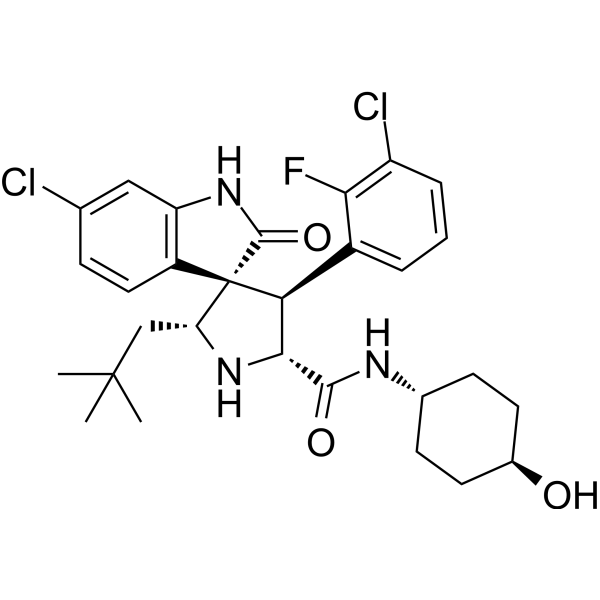
MI-773 is an orally active, selective MDM2-p53 interaction inhibitor with a Ki of 0.88 nM for MDM2. MI-773 blocks the MDM2-TP53 interaction. MI-773 potently activates p53. MI-773 induces Apoptosis. MI-773 causes tumor regression in xenograft models of adenoid cystic carcinoma. MI-773 exhibits anticancer effects in neuroblastoma. MI-773 TFA can be used for the research of adenoid cystic carcinoma.
Nos produits utilisent uniquement pour la recherche. Nous ne vendons pas aux patients.
- Pureté : 98.91%
- CAS No.: 1303607-07-9
- Formule: C29H34Cl2FN3O3
- Masse moléculaire:562.50
-
Stockage:
4°C, stored under nitrogen
* In solvent : -80°C, 6 months; -20°C, 1 month (stored under nitrogen)

To place orders, for customer services and technical support, please contact: MedChemExpress USA
Tel: 609-228-6898 E-mail: [email protected] [email protected]


-
 Activité biologique
-
Chemical Information
-
Solvant et solubilité
- Protocole
- Pureté et documentation
- Références
-
 Help & FAQs


-
HY-10029
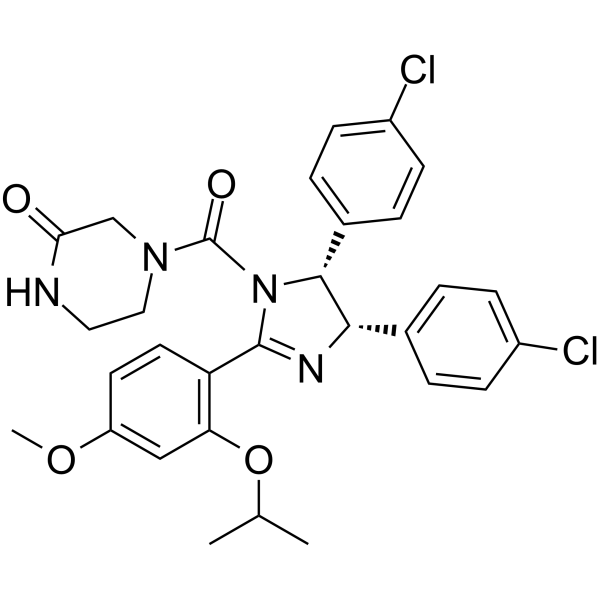
Nutlin-3aMDM2 Antagonist -
HY-15676
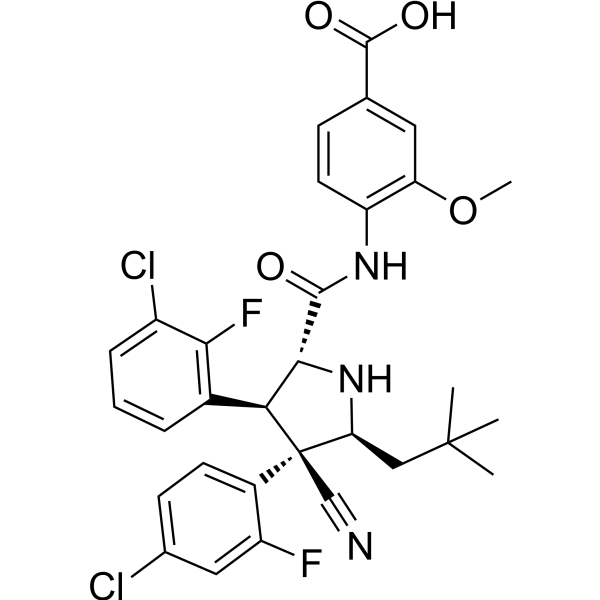
IdasanutlinMDM2 Inhibitor -
HY-50696
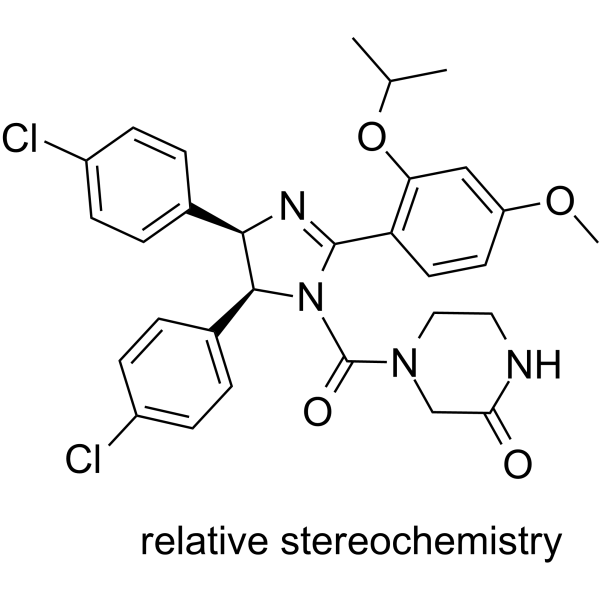
Nutlin-3p53-MDM2 Inhibitor -
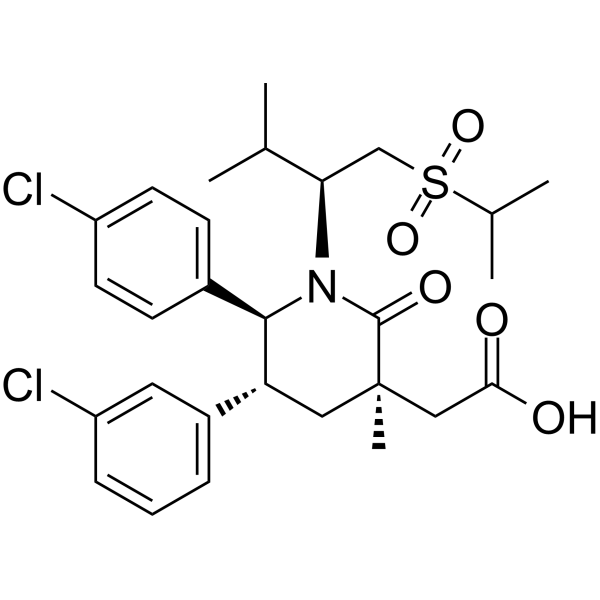
HY-12296
NavtemadlinMDM2-p53 Interaction Inhibitor -
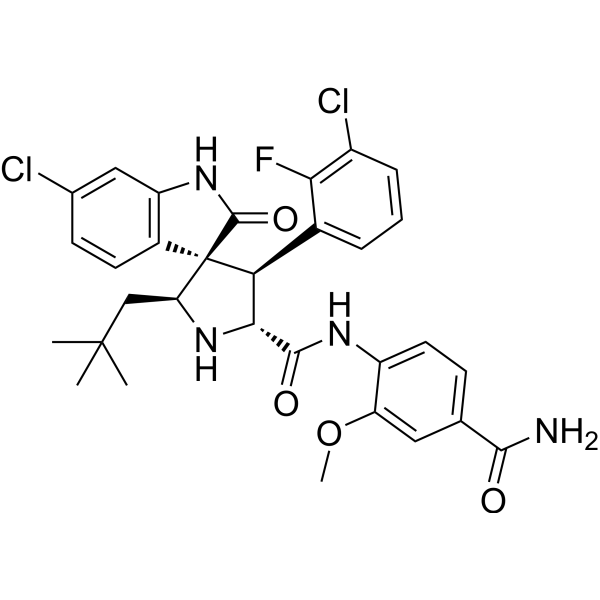
HY-16999
RO8994MDM2 Inhibitor -
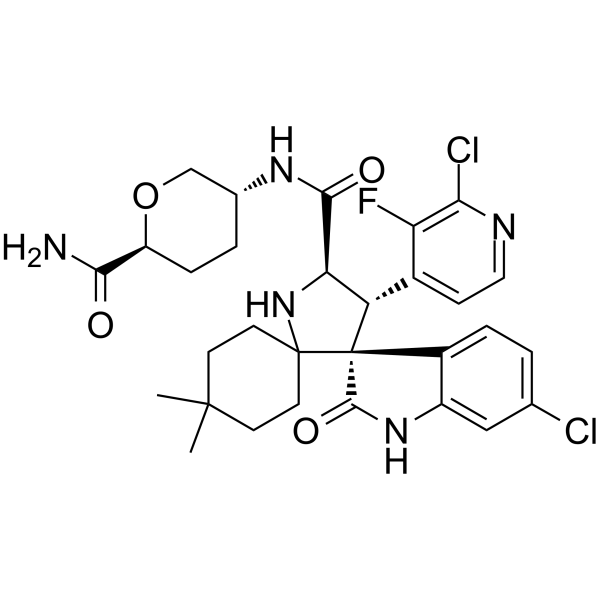
HY-101266
MilademetanMDM2 Inhibitor -
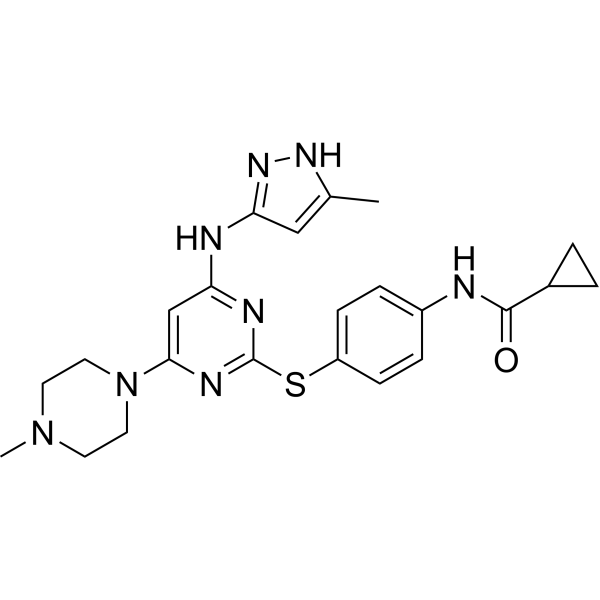
HY-10161
TozasertibAurora A/B/C Inhibitor -
HY-A0005
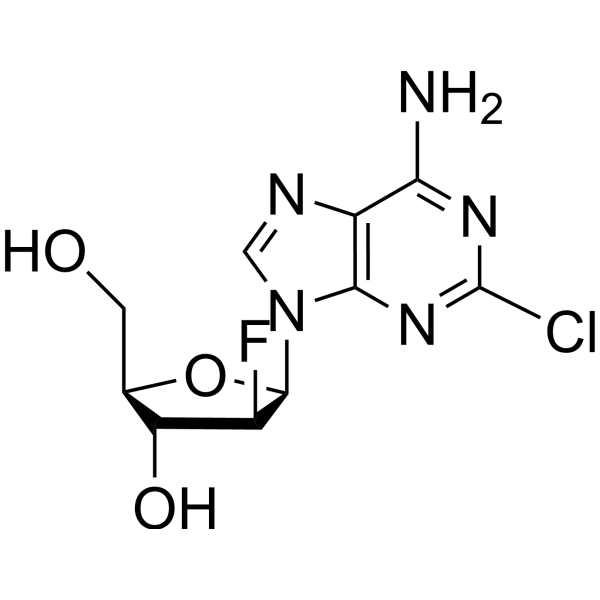
ClofarabineRibonucleotide Reductase Inhibitor -
HY-19896
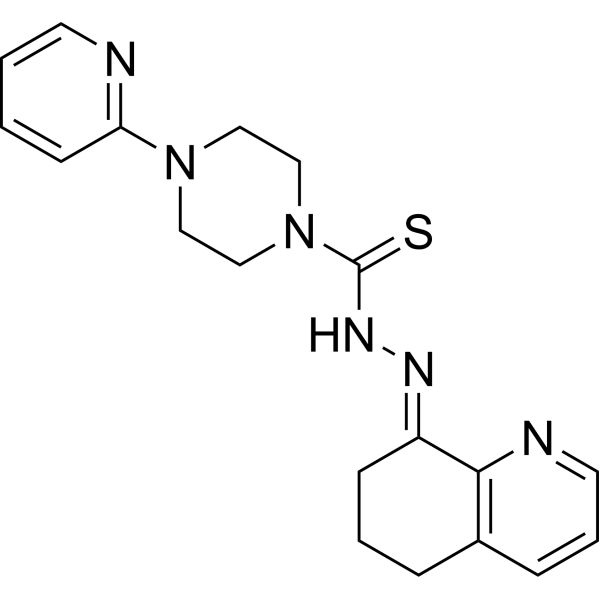
COTI-2Mutant p53 Activator -
HY-18658
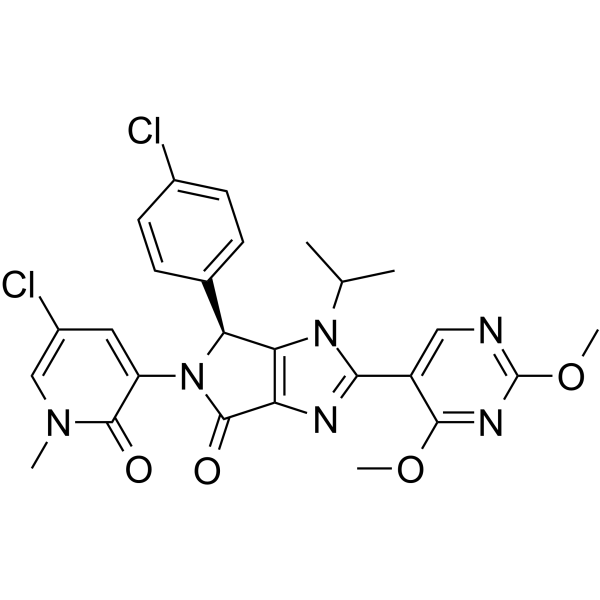
Siremadlinp53-MDM2 Inhibitor -
HY-15954
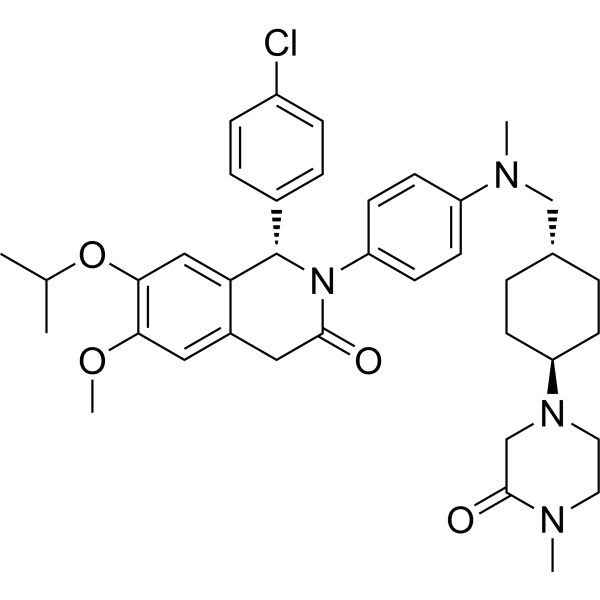
NVP-CGM097MDM2 Inhibitor -
HY-10959
RG7112MDM2 Antagonist
Publications Citing Use of MedChemExpress (MCE) MI-773
More Customer Validation & Images

-
WB


Activité biologique
Description
In Vivo
MI-773 (100 mg/kg; p.o.; daily) mediates significant tumor regression in the ACCx6 adenoid cystic carcinoma PDX model[1].
MI-773 (100 mg/kg; p.o.; daily) mediates significant tumor regression in the ACCx9 adenoid cystic carcinoma PDX model[1].
MedChemExpress (MCE) has not independently confirmed the accuracy of these methods. They are for reference only.
-
Animal Model:CB.17.SCID (male and female, severe combined immunodeficient)[1]
-
Dosage:10 mg/kg; 50 mg/kg; 100 mg/kg
-
Administration:p.o.; daily
-
Result:Modestly reduced tumor growth rate, resulting in a tumor growth inhibition (TGI) index of 34% and final average tumor volume of 600 mm3 at 20 days of treatment (10 mg/kg).
Caused significant tumor regression, with a TGI index of 127%, 86% tumor shrinkage, and final average tumor volume of 30 mm3 at 20 days of treatment (100 mg/kg).
Increased time to tumor failure (defined as 2x increase in pre-treatment volume; p=0.044) (100 mg/kg).
Increased percentage of TUNEL-positive apoptotic cells (p=0.015) and p53-positive cells (p<0.001) in tumor tissue, with p53 localization shifted from nuclear to cytoplasmic (100 mg/kg).
Increased p53 and phospho-p53 (Ser392) protein levels in tumor lysates (50 or 100 mg/kg).
Showed no observable weight loss in all treatment groups.


Chemical Information
-
CAS No. 1303607-07-9
-
Appearance Solid
-
Masse moléculaire 562.50
-
Formule C29H34Cl2FN3O3
-
Color White to off-white
-
SMILES
O=C([C@H](N[C@@H]1CC(C)(C)C)[C@H](C2=CC=CC(Cl)=C2F)[C@]31C(NC4=C3C=CC(Cl)=C4)=O)N[C@H]5CC[C@H](O)CC5
-
Livraison
Room temperature in continental US; may vary elsewhere.
-
Stockage
4°C, stored under nitrogen
* In solvent : -80°C, 6 months; -20°C, 1 month (stored under nitrogen)


Publications (6)
-
Journal Impact Factor
-
Most Recent
-
Nat Chem Biol
Discovery and characterization of highly potent and selective allosteric USP7 inhibitors. [Abstract]2018 Feb;14(2):118-125. PMID: 29200206
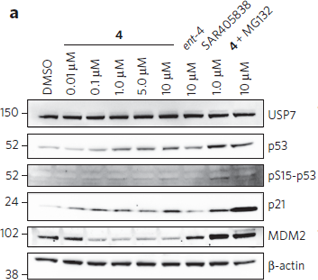
MI-773 purchased from MedChemExpress. Usage Cited in: Nat Chem Biol. 2018 Feb;14(2):118-125. [Abstract]
HCT 116 cells are treated with 4, ent-4 and SAR405838 for 2 h and lysed for western blotting analysis probing for USP7, p53, p-Ser15-p53, p21, MDM2 and β-actin as indicated.
-
Cells
PROTAC-Mediated Targeted Degradation of MDM2 Induces Tumor-Suppressive Signaling in Osteosarcoma Cells. [Abstract]2026 Mar 5;15(5):473. PMID: 41827906 -
Int J Mol Sci
Improving Reporter Gene Assay Methodology for Evaluating the Ability of Compounds to Restore P53 Activity. [Abstract]2022 Nov 10;23(22):13867. PMID: 36430341 -
BMC Biol
A yeast two-hybrid system for the screening and characterization of small-molecule inhibitors of protein-protein interactions identifies a novel putative Mdm2-binding site in p53. [Abstract]2017 Nov 9;15(1):108. PMID: 29121928 -
-
Mater Sci Eng C Mater Biol Appl
A stimuli-responsive combination therapy for recovering p53-inactivation associated drug resistance. [Abstract]2020 Mar:108:110403. PMID: 31923941


Solvant et solubilité
In Vitro:
DMSO : ≥ 53 mg/mL (94.22 mM; Hygroscopic DMSO has a significant impact on the solubility of product, please use newly opened DMSO)
* "≥" means soluble, but saturation unknown.
Please refer to the solubility information to select the appropriate solvent. Once prepared, please aliquot and store the solution to prevent product inactivation from repeated freeze-thaw cycles.
Storage method and period of stock solution: -80°C, 6 months; -20°C, 1 month (stored under nitrogen). When stored at -80°C, please use it within 6 months. When stored at -20°C, please use it within 1 month.
Please refer to the solubility information to select the appropriate solvent. Once prepared, please aliquot and store the solution to prevent product inactivation from repeated freeze-thaw cycles.
Storage method and period of stock solution: -80°C, 6 months; -20°C, 1 month (stored under nitrogen). When stored at -80°C, please use it within 6 months. When stored at -20°C, please use it within 1 month.
Concentration (start) × Volume (start) = Concentration (final) × Volume (final)
In Vivo:
Select the appropriate dissolution method based on your experimental animal and administration route.
- For the following dissolution methods, please ensure to first prepare a clear stock solution using an In Vitro approach and then sequentially add co-solvents:
- To ensure reliable experimental results, the clarified stock solution can be appropriately stored based on storage conditions. As for the working solution for In Vivo experiments, it is recommended to prepare freshly and use it on the same day.
- The percentages shown for the solvents indicate their volumetric ratio in the final prepared solution. If precipitation or phase separation occurs during preparation, heat and/or sonication can be used to aid dissolution.
Add each solvent one by one: 10% DMSO 40% PEG300 5% Tween-80 45% Saline
Solubility: ≥ 2.5 mg/mL (4.44 mM); Clear solution
This protocol yields a clear solution of ≥ 2.5 mg/mL (saturation unknown).
Taking 1 mL working solution as an example, add 100 μL DMSO stock solution (25.0 mg/mL) to 400 μL PEG300, and mix evenly; then add 50 μL Tween-80 and mix evenly; then add 450 μL Saline to adjust the volume to 1 mL.
Preparation of Saline: Dissolve 0.9 g sodium chloride in ddH₂O and dilute to 100 mL to obtain a clear Saline solution.
Add each solvent one by one: 10% DMSO 90% (20% SBE-β-CD in Saline)
Solubility: ≥ 2.5 mg/mL (4.44 mM); Clear solution
This protocol yields a clear solution of ≥ 2.5 mg/mL (saturation unknown).
Taking 1 mL working solution as an example, add 100 μL DMSO stock solution (25.0 mg/mL) to 900 μL 20% SBE-β-CD in Saline, and mix evenly.
Preparation of 20% SBE-β-CD in Saline (4°C, storage for one week): 2 g SBE-β-CD powder is dissolved in 10 mL Saline, completely dissolve until clear.
In Vivo Dissolution Calculator
Please enter the basic information of animal experiments:
-
-
-
-
Recommended: Prepare an additional quantity of animals to account for potential losses during experiments.
Please enter your animal formula composition:
-
%DMSO +
Recommended: Keep the proportion of DMSO in working solution below 2% if your animal is weak.
-
%+
-
+%Tween-80 + +
-
%Saline +
The co-solvents required include: DMSO, . All of co-solvents are available by MedChemExpress (MCE). , Tween 80. All of co-solvents are available by MedChemExpress (MCE).
Working solution concentration: 0.22 mg/mL
Method for preparing stock solution: mg drug dissolved in μL DMSO. Stock solution concentration: mg/mL. * In solvent : -80°C, 6 months; -20°C, 1 month (stored under nitrogen)
1. Take μL DMSO stock solution;
2. Add μL .
μL , mix evenly;
3. Then add μL Tween 80, mix evenly;
4. Then add μL
Please ensure that the stock solution in the first step is dissolved to a clear state, and add co-solvents in sequence. You can use ultrasonic heating (ultrasonic cleaner, recommended frequency 20-40 kHz), vortexing, etc. to assist dissolution.

Protocole
-
Detection of Apoptosis
Apoptosis, also called programmed cell death, is generally characterized by distinct morphological characteristics.
-
TUNEL staining for apoptotic DNA fragmentation
TUNEL staining detects DNA strand breaks by using terminal deoxynucleotidyl transferase to add labeled nucleotides to exposed 3′-OH DNA termini, generating either microscopic staining in fixed cells or tissue sections, or fluorescence/cytometric signal in cell suspensions. TUNEL positivity reflects DNA fragmentation but should not be interpreted alone as definitive apoptosis, because TUNEL can also label necrotic, autolytic, mechanically damaged, or DNA-repair-associated DNA breaks.
-
Annexin V plus membrane-impermeant dye apoptosis staining
Annexin V-based apoptosis assays rely on the detection of phosphatidylserine (PS) externalization from the inner leaflet of the plasma membrane to the outer leaflet, an early biochemical hallmark of apoptosis. Fluorescently labeled Annexin V binds PS in a calcium-dependent manner, enabling identification of early apoptotic cells by flow cytometry or fluorescence microscopy. When combined with a membrane-impermeant DNA-binding dye (e. g. , propidium iodide), this approach allows discrimination between viable (Annexin V−/dye−), early apoptotic (Annexin V+/dye−), and late apoptotic or necrotic (Annexin V+/dye+) cell populations by assessing membrane integrity and PS exposure.
-
Patient-Derived Xenograft (PDX)
Patient-derived xenograft (PDX) models are generated by engrafting primary human tumor tissue directly into immunodeficient mice, allowing in vivo propagation of patient tumor biology without initial in vitro adaptation. These models are used to preserve key histopathological and molecular characteristics of the original tumor and enable assessment of tumor growth dynamics and therapeutic response in a living organism. The biological readout is tumor engraftment and subsequent growth in the murine host, which reflects the ability of human tumor cells to survive, vascularize, and expand in an immunocompromised microenvironment.
-
Apoptosis Solutions
Apoptosis is a regulated, generally non-lytic cell-death pathway that removes unwanted, damaged, infected, or abnormal cells through coordinated morphological changes, caspase activation, DNA fragmentation, and membrane remodeling. The intrinsic apoptosis pathway is controlled mainly by mitochondrial outer membrane permeabilization, BCL-2 family proteins, cytochrome c release, apoptosome formation, caspase-9 activation, and downstream executioner caspase-3/7 activation. The extrinsic apoptosis pathway is initiated by death receptors such as Fas, TNFR, and TRAIL receptors, which recruit adaptor proteins and activate caspase-8 before engaging executioner caspases or mitochondrial amplification through BID cleavage. Apoptosis is linked to many phenotypes, including cancer cell killing, tissue homeostasis, immune regulation, neurodegeneration, infection response, and treatment-induced cytotoxicity; unresolved questions include how apoptosis interacts with necroptosis, pyroptosis, ferroptos
-
Splenic/Portal-Vein Liver Metastasis Xenograft
Splenic and portal-vein liver metastasis xenograft models deliver tumor cells into the portal circulation so that cells reach the liver first and form hepatic metastatic lesions; splenic injection uses the spleen as an access route to the portal system, while direct portal-vein injection introduces cells into the portal vein without requiring splenectomy. The assay detects liver colonization, intrahepatic tumor growth, tumor distribution, treatment response, survival, and liver-metastasis microenvironment changes; readouts include bioluminescence or fluorescence imaging, gross liver nodule counts, liver weight or tumor burden, histology, and survival.
-
Subcutaneous Cell-Line-Derived Xenograft
Subcutaneous cell-line-derived xenograft (CDX) models are established by implanting cultured human cancer cell lines into immunodeficient mice, where the injected cells form localized tumors that can be monitored in vivo as a measure of tumorigenic potential, growth kinetics, and treatment response. These models are widely used in oncology research because they allow reproducible tumor formation and enable comparative assessment of tumor growth between different cell lines or genetic manipulations in a controlled in vivo microenvironment. Subcutaneous implantation of cancer cells in immunodeficient mice is a standard approach for evaluating tumor growth behavior and therapeutic response across multiple cancer types, including prostate, esophageal, pancreatic, and colon cancer models.
-
Orthotopic Cell-Line Xenograft
Orthotopic cell-line xenograft models involve implantation of human cancer cell lines into the anatomically corresponding organ of immunodeficient mice to reproduce tumor growth within a native microenvironment, enabling more clinically relevant tumor behavior compared with subcutaneous models. These models are widely used because orthotopic placement better recapitulates tumor progression, including invasion and metastatic spread, which are often underrepresented in heterotopic implantation systems. Compared with conventional xenografts, orthotopic implantation is described as more technically complex but provides improved simulation of tumor-microenvironment interactions and metastatic behavior, making it particularly valuable for translational oncology research. Surgical orthotopic implantation approaches have been emphasized as enabling faithful reproduction of clinical cancer features, including metastasis and disease progression patterns that align with the tumor’s organ of origi
-
Intraperitoneal/Peritoneal Dissemination Xenograft
Intraperitoneal (IP) or peritoneal dissemination xenograft models are based on the introduction of human cancer cells into the peritoneal cavity of immunodeficient mice, where they attach to peritoneal surfaces, form multicellular aggregates or spheroids, and progressively generate disseminated tumor nodules that mimic advanced peritoneal metastatic disease. These models are widely used to study ovarian cancer progression, tumor-microenvironment interactions, and intraperitoneal therapeutic responses, often incorporating bioluminescence or fluorescence imaging to longitudinally monitor tumor burden in vivo. The biological principle relies on the capacity of tumor cells such as SKOV3 or related ovarian carcinoma lines to survive in suspension, aggregate within ascites-like fluid, adhere to mesothelial surfaces, and invade peritoneal organs, thereby recapitulating human peritoneal carcinomatosis patterns observed in advanced disease.


Pureté et documentation
-
Fiche technique (281 KB)
-
SDS (394 KB)
- English - EN (394 KB)
- Français - FR (394 KB)
- Deutsch - DE (394 KB)
- Norwegian - NO (394 KB)
- Español - ES (394 KB)
- Swedish - SV (394 KB)
- Italian - IT (394 KB)
- Korean - KR (394 KB)
- Portuguese - PT (394 KB)
-
Instruction de manipulation (2659 KB)
Références
[1]. Zhang Q, et al. Targeting p53-MDM2-MDMX loop for cancer therapy. Subcell Biochem. 2014;85:281-319. [Content Brief]
[2]. Tatyana A Grigoreva, et al. Amino acids as chiral derivatizing agents for antiproliferative substituted N-benzyl isoindolinones. Chirality. 2018 Jun;30(6):785-797. [Content Brief]


Complete Stock Solution Preparation Table
Please refer to the solubility information to select the appropriate solvent. Once prepared, please aliquot and store the solution to prevent product inactivation from repeated freeze-thaw cycles.
Storage method and period of stock solution: -80°C, 6 months; -20°C, 1 month (stored under nitrogen). When stored at -80°C, please use it within 6 months. When stored at -20°C, please use it within 1 month.
| Optional Solvent | Concentration Solvent Mass | 1 mg | 5 mg | 10 mg | 25 mg |
|---|---|---|---|---|---|
| DMSO | 1 mM | 1.7778 mL | 8.8889 mL | 17.7778 mL | 44.4444 mL |
| 5 mM | 0.3556 mL | 1.7778 mL | 3.5556 mL | 8.8889 mL | |
| 10 mM | 0.1778 mL | 0.8889 mL | 1.7778 mL | 4.4444 mL | |
| 15 mM | 0.1185 mL | 0.5926 mL | 1.1852 mL | 2.9630 mL | |
| 20 mM | 0.0889 mL | 0.4444 mL | 0.8889 mL | 2.2222 mL | |
| 25 mM | 0.0711 mL | 0.3556 mL | 0.7111 mL | 1.7778 mL | |
| 30 mM | 0.0593 mL | 0.2963 mL | 0.5926 mL | 1.4815 mL | |
| 40 mM | 0.0444 mL | 0.2222 mL | 0.4444 mL | 1.1111 mL | |
| 50 mM | 0.0356 mL | 0.1778 mL | 0.3556 mL | 0.8889 mL | |
| 60 mM | 0.0296 mL | 0.1481 mL | 0.2963 mL | 0.7407 mL | |
| 80 mM | 0.0222 mL | 0.1111 mL | 0.2222 mL | 0.5556 mL |


MI-773 Related Classifications
HY-17493 Related Classifications
 Powered by Bioz