



CBiPES hydrochloride

Based on 1 Customer Validation
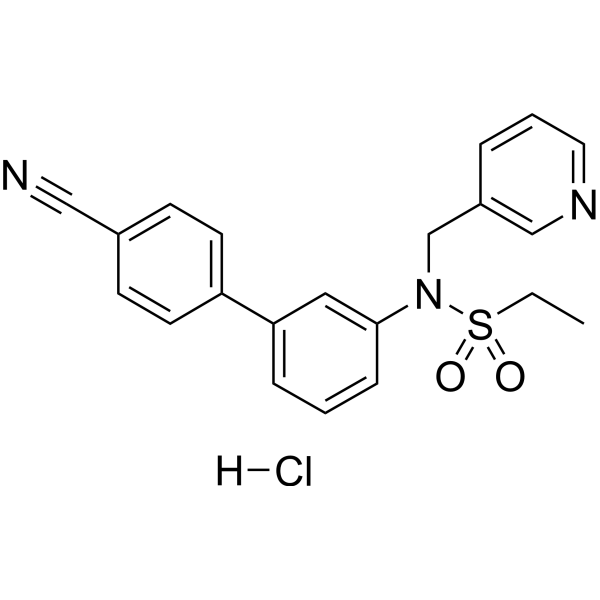
CBiPES hydrochloride is a mGlu2 receptor positive allosteric modulator (EC50: 92.8 nM). CBiPES hydrochloride attenuates stress-induced hyperthermia and PCP-induced hyperlocomotor activity. CBiPES hydrochloride can be used for research of neurological disease, such as Parkinson's disease (PD).
For research use only. We do not sell to patients.
- Purity : 99.23%
- CAS No.: 856702-40-4
- Formula: C21H20ClN3O2S
- Molecular Weight:413.92
-
Storage:
4°C, protect from light
* In solvent : -80°C, 6 months; -20°C, 1 month (protect from light)

To place orders, for customer services and technical support, please contact: MedChemExpress USA
Tel: 609-228-6898 E-mail: [email protected] [email protected]


-
 Biological Activity
-
Chemical Information
-
Solvent & Solubility
- Protocols
- Purity & Documentation
- References
-
 Help & FAQs


-
HY-103558
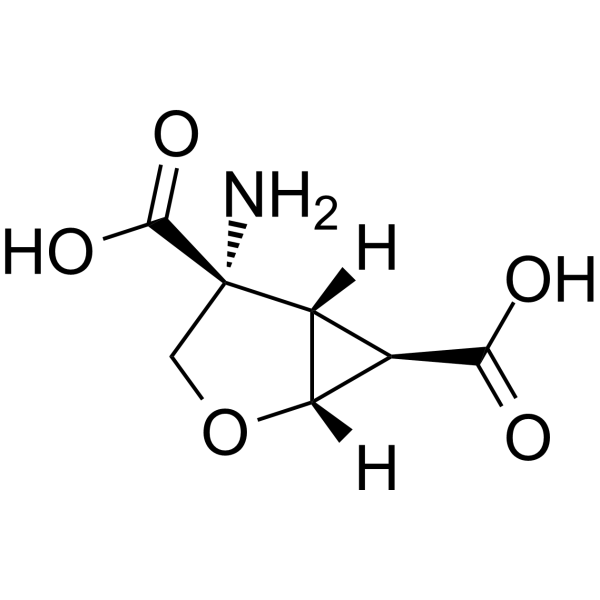
LY379268mGlu2/3R Agonist -
HY-12598
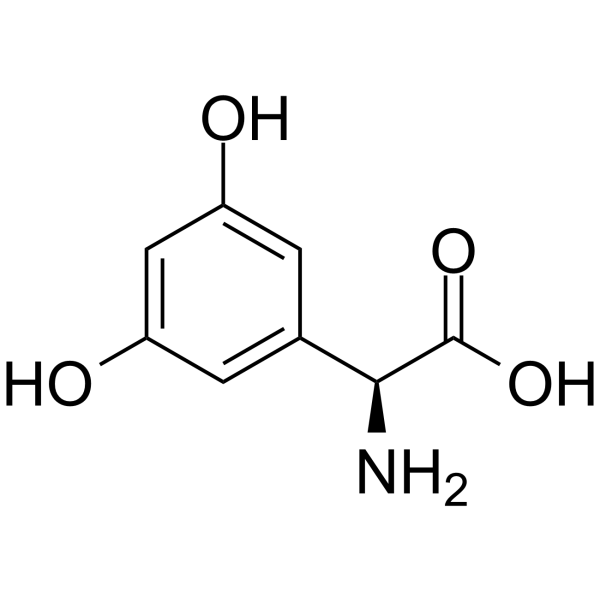
(S)-3,5-DHPGmGluRs Agonist -
HY-102095
SIB-1757mGluR5 antagonist -
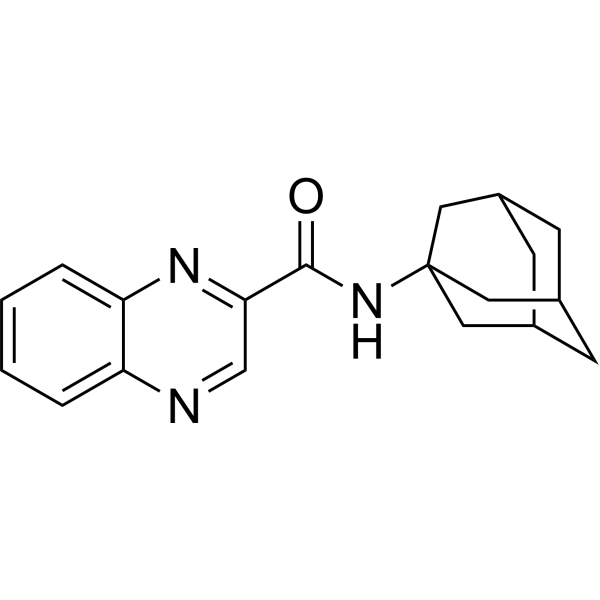
HY-11095
NPS 2390CaSR/mGluR1/5 Allosteric Antagonist -
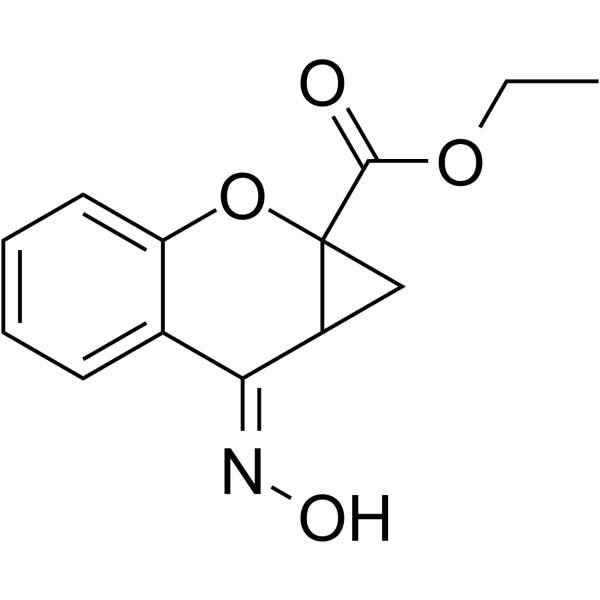
HY-101356
CPCCOEtmGluR1b Antagonist -
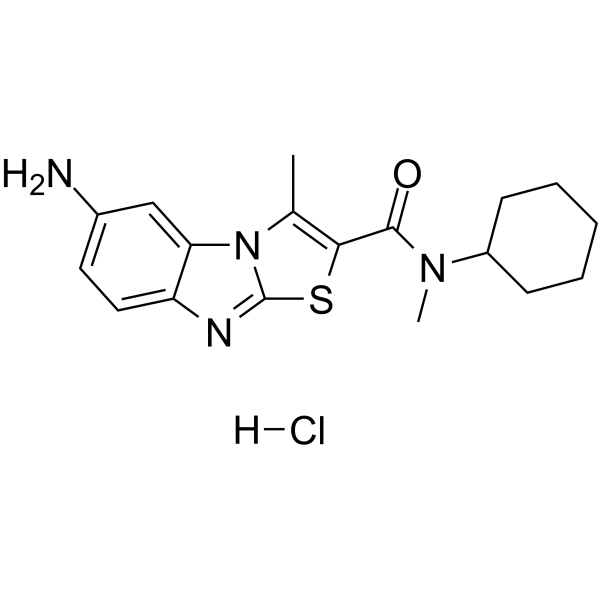
HY-103568
YM-298198 hydrochloridemGluR1 Antagonist -
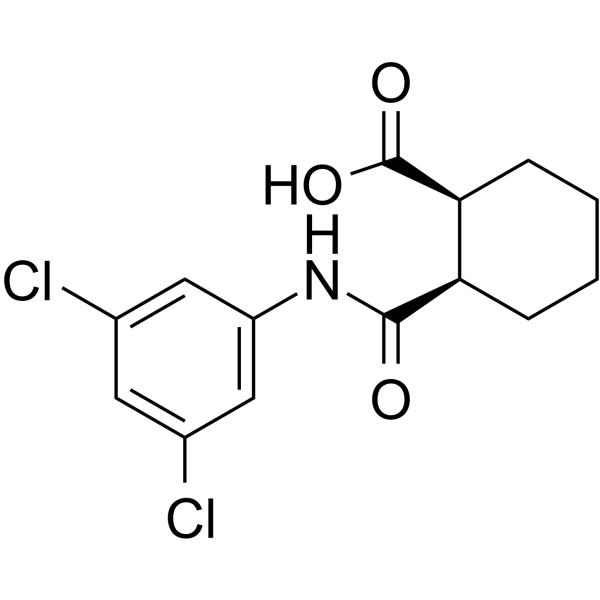
HY-14417
VU0155041mGluR4 Allosteric Agonist -
HY-103550
A-841720mGlu1 Receptor Antagonist -

HY-102095R
SIB-1757 (Standard)Reference Standard -

HY-103558R
LY379268 (Standard)Reference Standard


Biological Activity
Description
IC50 & Target
EC50: 92.8 nM (mGlu2 receptor)[1]
In Vivo
CBiPES (0.1-10 mg/kg) hydrochloride reduces global dyskinesia and diminishes global psychosis-like behaviours (PLBs) in the MPTP (HY-15608)-lesioned marmoset[2].
MedChemExpress (MCE) has not independently confirmed the accuracy of these methods. They are for reference only.
-
Animal Model:Male ICR mice were given a subcutaneous injection of PCP (7.5 mg/kg)[1]
-
Dosage:100 mg/kg
-
Administration:i.p.; once
-
Result:Attenuated a stress-induced hyperthermia and PCP-induced hyperlocomotor activity.


Chemical Information
-
CAS No. 856702-40-4
-
Appearance Solid
-
Molecular Weight 413.92
-
Formula C21H20ClN3O2S
-
Color Off-white to light yellow
-
SMILES
CCS(N(C1=CC(C2=CC=C(C#N)C=C2)=CC=C1)CC3=CN=CC=C3)(=O)=O.[H]Cl
-
Shipping
Room temperature in continental US; may vary elsewhere.
-
Storage
4°C, protect from light
* In solvent : -80°C, 6 months; -20°C, 1 month (protect from light)


Solvent & Solubility
In Vitro:
DMSO : 125 mg/mL (301.99 mM; Need ultrasonic; Hygroscopic DMSO has a significant impact on the solubility of product, please use newly opened DMSO)
Please refer to the solubility information to select the appropriate solvent. Once prepared, please aliquot and store the solution to prevent product inactivation from repeated freeze-thaw cycles.
Storage method and period of stock solution: -80°C, 6 months; -20°C, 1 month (protect from light). When stored at -80°C, please use it within 6 months. When stored at -20°C, please use it within 1 month.
Please refer to the solubility information to select the appropriate solvent. Once prepared, please aliquot and store the solution to prevent product inactivation from repeated freeze-thaw cycles.
Storage method and period of stock solution: -80°C, 6 months; -20°C, 1 month (protect from light). When stored at -80°C, please use it within 6 months. When stored at -20°C, please use it within 1 month.
Concentration (start) × Volume (start) = Concentration (final) × Volume (final)

Protocols
-
Human pluripotent stem cell midbrain dopaminergic neuron differentiation
Human pluripotent stem cells are directed toward midbrain dopaminergic neurons by first inducing a neural floor-plate-like progenitor state, then patterning cells with ventralizing SHH signaling and midbrain/WNT-FGF cues, and finally maturing progenitors into neurons expressing dopaminergic markers such as TH, NURR1/NR4A2, PITX3, DAT/SLC6A3, VMAT2/SLC18A2, GIRK2/KCNJ6, FOXA2, LMX1A, and EN1. The main readouts are loss of pluripotency, acquisition of FOXA2+/LMX1A+ midbrain floor-plate progenitors, emergence of βIII-tubulin+/MAP2+ neurons, and production of TH+ dopaminergic neurons with molecular, dopamine-release, and electrophysiological features of midbrain dopaminergic identity.
-
Research Protocol for Neurological Diseases
PINK1/Parkin-mediated mitophagy pathway is a mitochondrial quality-control signaling axis in which mitochondrial depolarization stabilizes PINK1 on damaged mitochondria, activates Parkin recruitment and E3 ubiquitin ligase activity, promotes ubiquitination of outer mitochondrial membrane proteins, recruits selective autophagy adaptors, and drives lysosomal degradation of damaged mitochondria. In neurological disease research, this pathway is experimentally important because neurons, especially dopaminergic neurons, are highly dependent on mitochondrial integrity, and defective mitochondrial turnover can lead to mitochondrial dysfunction, oxidative stress, impaired neuronal survival, α-synuclein accumulation, and neuroinflammatory damage-associated signals. The genetic disease link is strongest in Parkinson’s disease because mutations in PRKN/parkin cause autosomal recessive juvenile parkinsonism, mutations in PINK1 cause hereditary early-onset Parkinson’s disease, and Drosophila studie


Purity & Documentation
-
Data Sheet (274 KB)
-
SDS (252 KB)
- English - EN (252 KB)
- Français - FR (252 KB)
- Deutsch - DE (252 KB)
- Norwegian - NO (252 KB)
- Español - ES (252 KB)
- Swedish - SV (252 KB)
- Italian - IT (252 KB)
- Korean - KR (252 KB)
- Portuguese - PT (252 KB)
-
Handling Instructions (2659 KB)
References
[1]. Johnson MP, et al. Metabotropic glutamate 2 receptor potentiators: receptor modulation, frequency-dependent synaptic activity, and efficacy in preclinical anxiety and psychosis model(s). Psychopharmacology (Berl). 2005 Apr;179(1):271-83. [Content Brief]
[2]. Frouni I, et al. Effect of the mGlu2 positive allosteric modulator CBiPES on dyskinesia, psychosis-like behaviours and parkinsonism in the MPTP-lesioned marmoset. J Neural Transm (Vienna). 2021 Jan;128(1):73-81. [Content Brief]


Complete Stock Solution Preparation Table
Please refer to the solubility information to select the appropriate solvent. Once prepared, please aliquot and store the solution to prevent product inactivation from repeated freeze-thaw cycles.
Storage method and period of stock solution: -80°C, 6 months; -20°C, 1 month (protect from light). When stored at -80°C, please use it within 6 months. When stored at -20°C, please use it within 1 month.
| Optional Solvent | Concentration Solvent Mass | 1 mg | 5 mg | 10 mg | 25 mg |
|---|---|---|---|---|---|
| DMSO | 1 mM | 2.4159 mL | 12.0796 mL | 24.1593 mL | 60.3981 mL |
| 5 mM | 0.4832 mL | 2.4159 mL | 4.8319 mL | 12.0796 mL | |
| 10 mM | 0.2416 mL | 1.2080 mL | 2.4159 mL | 6.0398 mL | |
| 15 mM | 0.1611 mL | 0.8053 mL | 1.6106 mL | 4.0265 mL | |
| 20 mM | 0.1208 mL | 0.6040 mL | 1.2080 mL | 3.0199 mL | |
| 25 mM | 0.0966 mL | 0.4832 mL | 0.9664 mL | 2.4159 mL | |
| 30 mM | 0.0805 mL | 0.4027 mL | 0.8053 mL | 2.0133 mL | |
| 40 mM | 0.0604 mL | 0.3020 mL | 0.6040 mL | 1.5100 mL | |
| 50 mM | 0.0483 mL | 0.2416 mL | 0.4832 mL | 1.2080 mL | |
| 60 mM | 0.0403 mL | 0.2013 mL | 0.4027 mL | 1.0066 mL | |
| 80 mM | 0.0302 mL | 0.1510 mL | 0.3020 mL | 0.7550 mL | |
| 100 mM | 0.0242 mL | 0.1208 mL | 0.2416 mL | 0.6040 mL |


CBiPES hydrochloride Related Classifications
HY-107505 Related Classifications
 Powered by Bioz