



E7820
Based on 5 publication(s) in Google Scholar
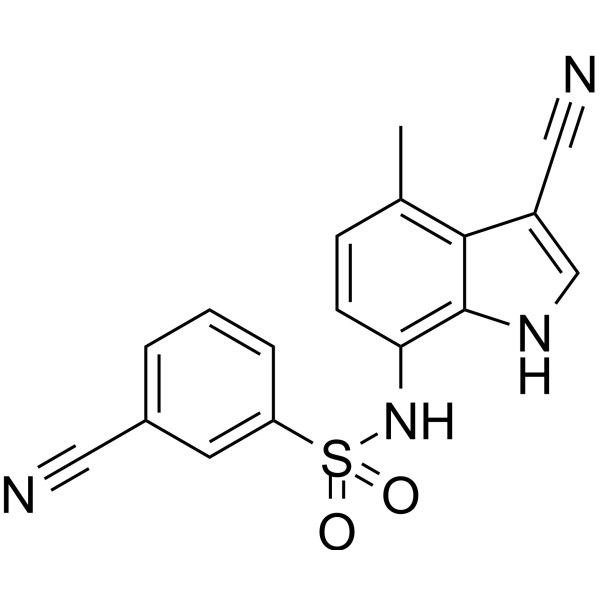
E7820 (ER68203-00), an orally active aromatic sulfonamide derivative, is a molecular glue that induces the targeted degradation of splicing factor RBM39 by recruiting the E3 ubiquitin ligase CUL4-RBX1-DDB1-DCAF15 (CRL4DCAF15). E7820 is an angiogenesis inhibitor suppressing an expression of integrin alpha2 subunit on endothelium. E7820 inhibits rat aorta angiogenesis with an IC50 of 0.11 μg/ml. E7820 modulates α-1, α-2, α-3, and α-5 integrin mRNA expression. E7820 can be used for the study of acute myeloid leukemia (AML).
Nur für Forschungszwecke. Wir verkaufen nicht an Patienten.
- Reinheit : 99.26%
- CAS. Nr.: 289483-69-8
- Formel: C17H12N4O2S
- Molecular Weight:336.37
-
Speicherung:Powder -20°C, 3 years , 4°C, 2 years ; In solvent -80°C, 6 months , -20°C, 1 month

To place orders, for customer services and technical support, please contact: MedChemExpress USA
Tel: 609-228-6898 E-mail: [email protected] [email protected]


-
 Biologische Aktivität
-
Chemical Information
-
Lösungsmittel & Löslichkeit
- Protokoll
- Reinheit & Dokumentation
- Verweise
-
 Help & FAQs


-
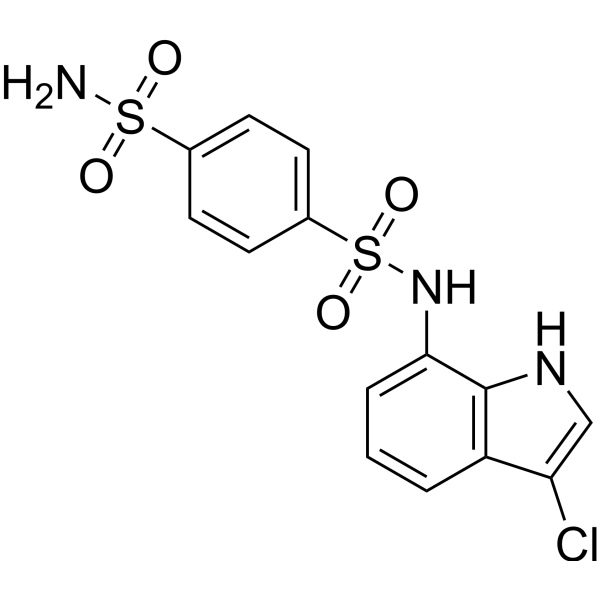
HY-13650
IndisulamCarbonic Anhydrase Inhibitor/RBM39 Molecular Glue Degrader -
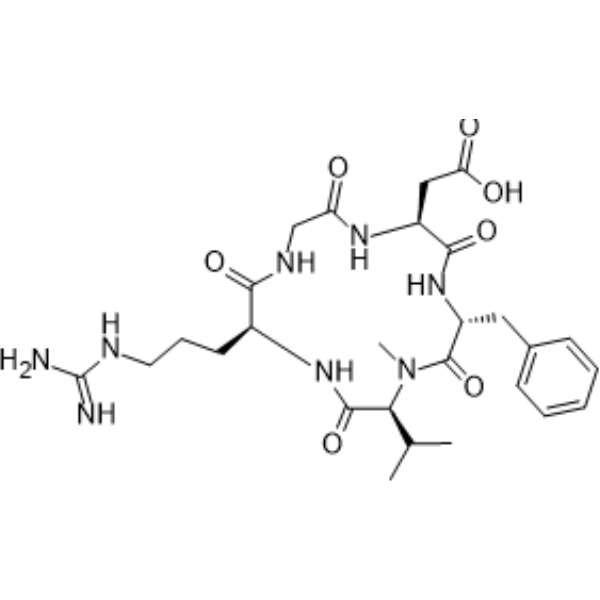
HY-16141
CilengitideIntegrin Inhibitor -
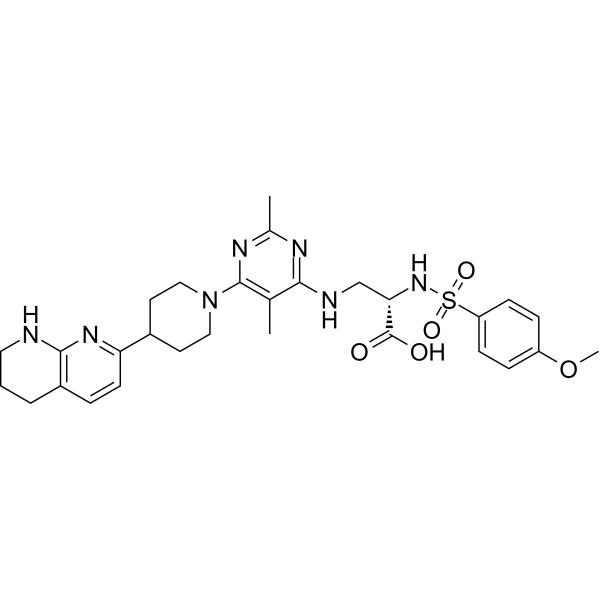
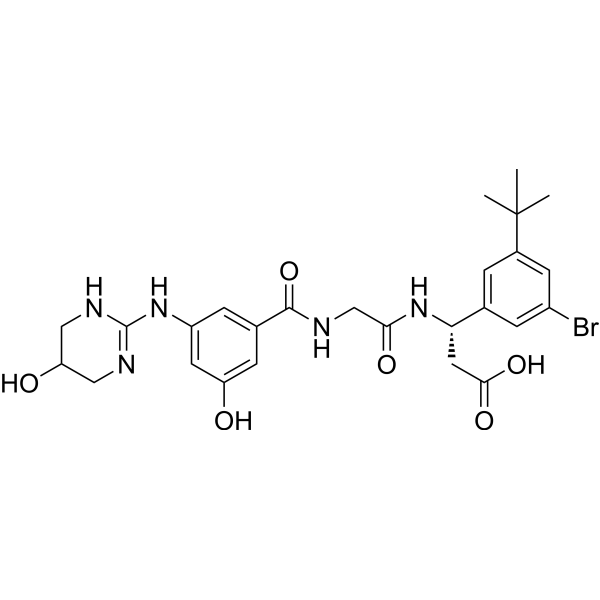
HY-100506
GLPG0187Integrin Receptor Antagonist -
HY-18644
CWHM-12αV Integrins Inhibitor -
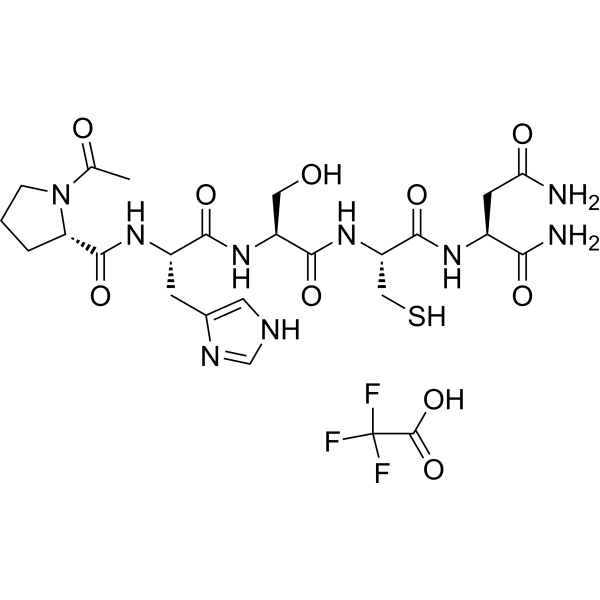
HY-13535A
ATN-161 trifluoroacetate saltIntegrin Antagonist -
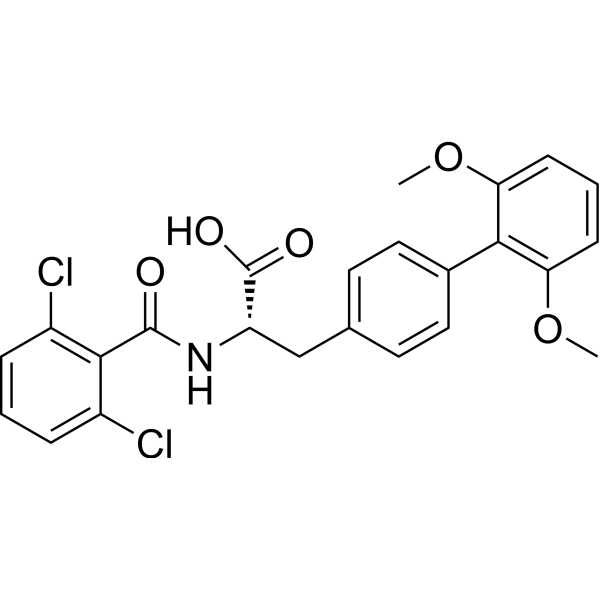
HY-15770
TR-14035α4β7/α4β1 Antagonist -
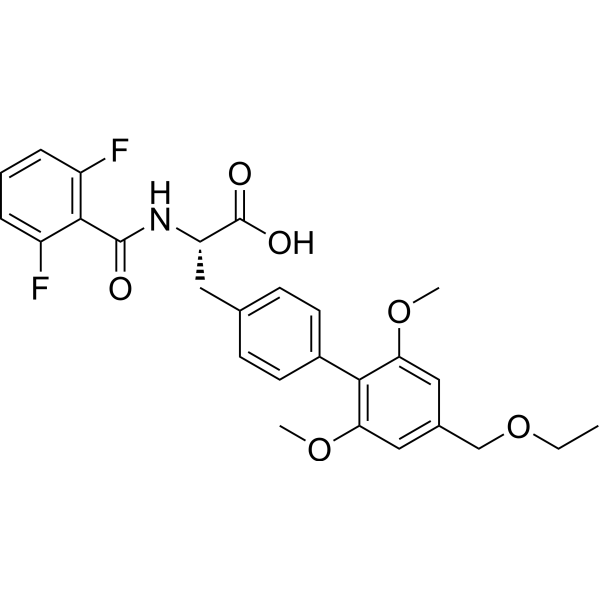
HY-14951
FirategrastIntegrin Antagonist -
HY-P0023
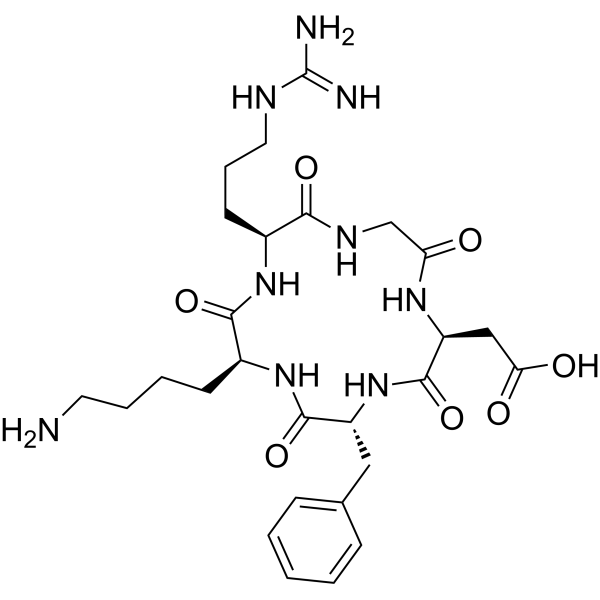
Cyclo(-RGDfK)αvβ3 Integrin Inhibitor -
HY-13535
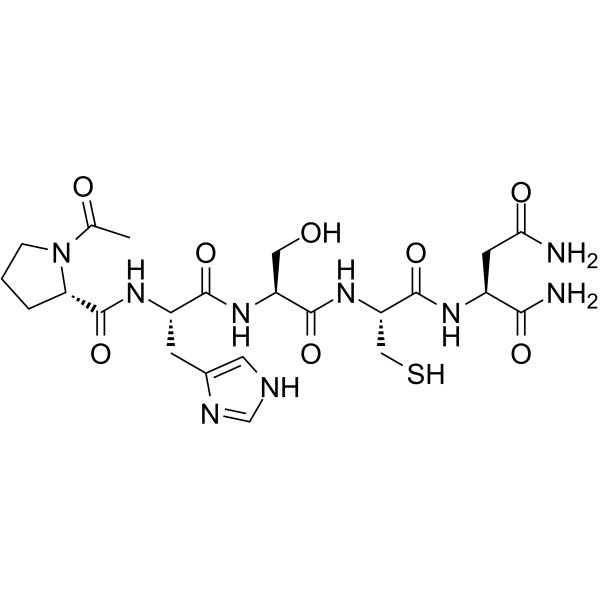
ATN-161α5β1/αvβ3 Integrin Binder -
HY-14804
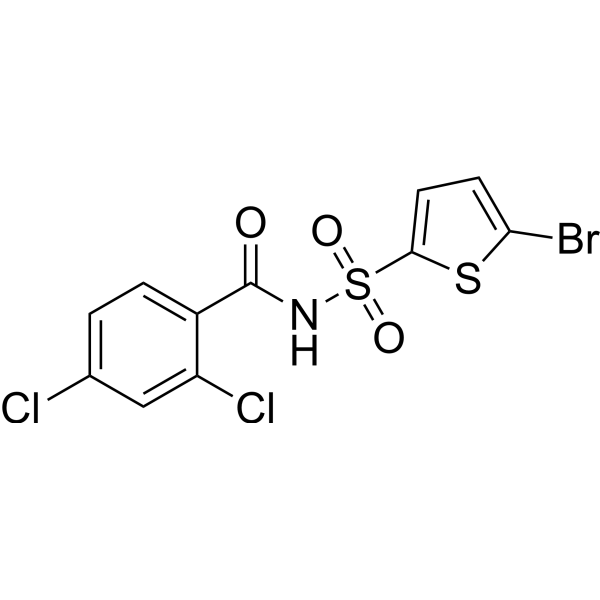
Tasisulam -
HY-12290
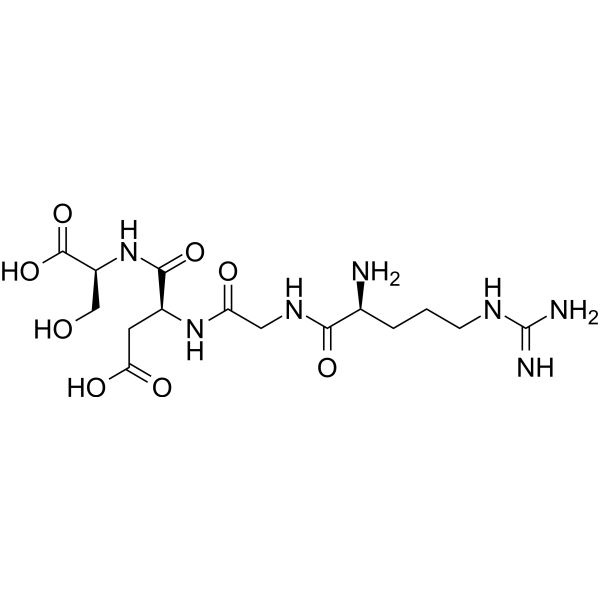
Arg-Gly-Asp-SerIntegrin Inhibitor -
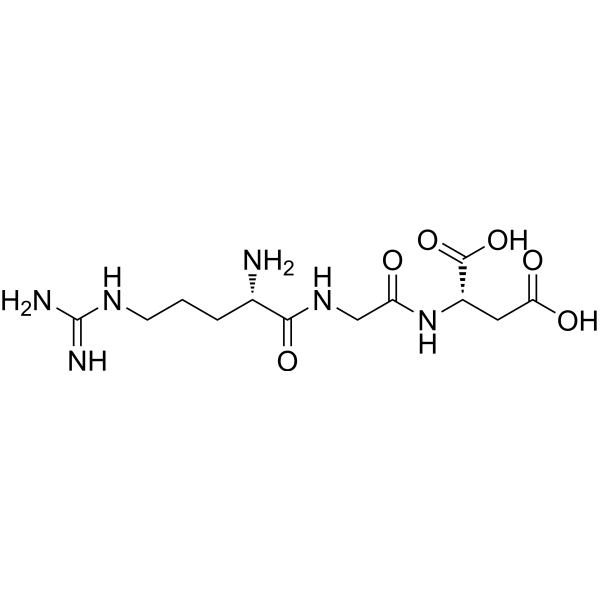
HY-P0278
RGDTripeptide
Publications Citing Use of MedChemExpress (MCE) E7820
More Customer Validation & Images

-
Cell Proliferation/Viability Assay
-
Cell Proliferation/Viability Assay

-
Cell Proliferation/Viability Assay

-
Flow Cytometry
-
In Vivo Efficacy Study


Biologische Aktivität
Beschreibung
In Vitro
E7820 (ER68203-00) inhibits both bFGF- and VEGF-driven ube formation of human umbilical vascular endothelial cell (HUVEC) in a dose-dependent manner with IC50 of 0.20 and 0.24 μg/ml, respectively[1].
E7820 inhibits proliferation of HUVEC induced by either bFGF or VEGF in serum-free medium (SFM). The IC50 values are 0.10 and 0.081 μg/ml, respectively. Antiproliferative activity of E7820 against both WiDr and LoVo cells is very weak compared with that against HUVEC. The values of IC50 were 29 and 15 μg/ml, respectively[1].
MedChemExpress (MCE) has not independently confirmed the accuracy of these methods. They are for reference only.
In Vivo
E7820 (200-400 mg/kg; p.o.;once daily for 4 days) potently inhibits WiDr-induced angiogenesis[1].
MedChemExpress (MCE) has not independently confirmed the accuracy of these methods. They are for reference only.
-
Animal Model:Six-week-old female nude mice (KSN mice, WiDr-induced angiogenesis model) [1]
-
Dosage:50, 100, 200 mg/kg
-
Administration:p.o. ; twice daily for 14 days from 2 days after inoculation of the tumor cells
-
Result:The antitumor effect was dose-dependent at 50, 100, and 200 mg/kg, and the tumor growth rates were 52%, 46%, and 27%, respectively.
Clinical Trial
| NCT Number | Sponsor | Condition | Start Date |
Phase

|
|---|---|---|---|---|
| NCT01329991 | Plexxikon| | 2011-05 | PHASE1 |


Chemical Information
-
CAS. Nr. 289483-69-8
-
Appearance Solid
-
Molecular Weight 336.37
-
Formel C17H12N4O2S
-
Color Light yellow to light brown
-
SMILES
O=S(C1=CC(C#N)=CC=C1)(NC2=C(NC=C3C#N)C3=C(C)C=C2)=O
-
Synonyms
ER68203-00
-
Versand
Room temperature in continental US; may vary elsewhere.
-
Speicherung
Powder -20°C 3 years 4°C 2 years In solvent -80°C 6 months -20°C 1 month


Publications (5)
-
Journal Impact Factor
-
Most Recent
-
Nat Chem Biol
2024 Sep;20(9):1227-1236. PMID: 38514884 -
Cancers (Basel)
ITGA2 Mediates the Resistance of Hepatocellular Carcinoma to Lenvatinib by Activating the AKT/FOXO3A Signaling Pathway. [Abstract]2025 Aug 29;17(17):2846. PMID: 40940943
E7820 purchased from MedChemExpress. Usage Cited in: Cancers (Basel). 2025 Aug 29;17(17):2846. [Abstract]
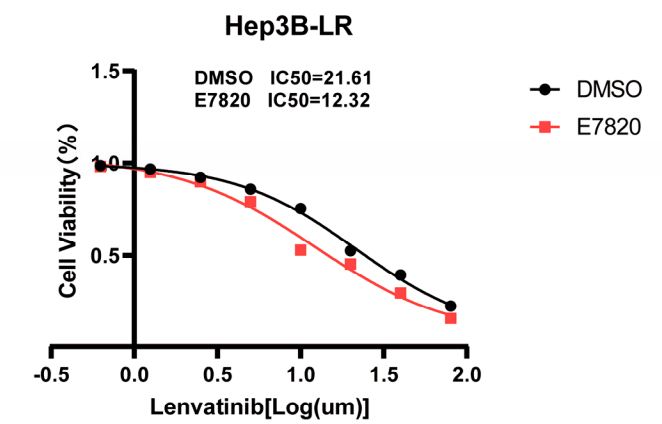
CCK8 assays showing reduced IC50 of lenvatinib after E7820 treatment in Hep3B-LR, Huh7-LR, and SNU449 cells.
E7820 purchased from MedChemExpress. Usage Cited in: Cancers (Basel). 2025 Aug 29;17(17):2846. [Abstract]
Colony formation assays indicating enhanced inhibitory effect of lenvatinib by E7820.
E7820 purchased from MedChemExpress. Usage Cited in: Cancers (Basel). 2025 Aug 29;17(17):2846. [Abstract]
CCK8 assays demonstrating E7820-promoted suppression of cell proliferation by lenvatinib.
E7820 purchased from MedChemExpress. Usage Cited in: Cancers (Basel). 2025 Aug 29;17(17):2846. [Abstract]
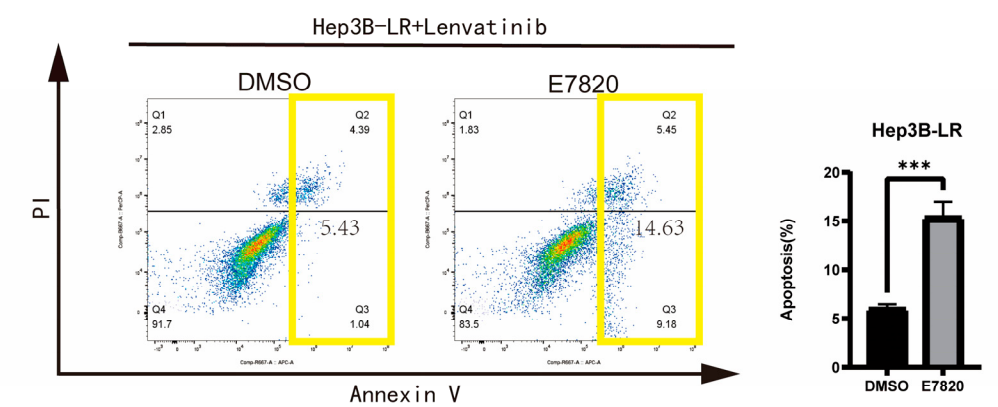
Flow cytometry analysis of apoptosis after E7820 and lenvatinib treatment. The total apoptosis rate (sum of early and late apoptosis) is delineated by the yellow boxes.
E7820 purchased from MedChemExpress. Usage Cited in: Cancers (Basel). 2025 Aug 29;17(17):2846. [Abstract]
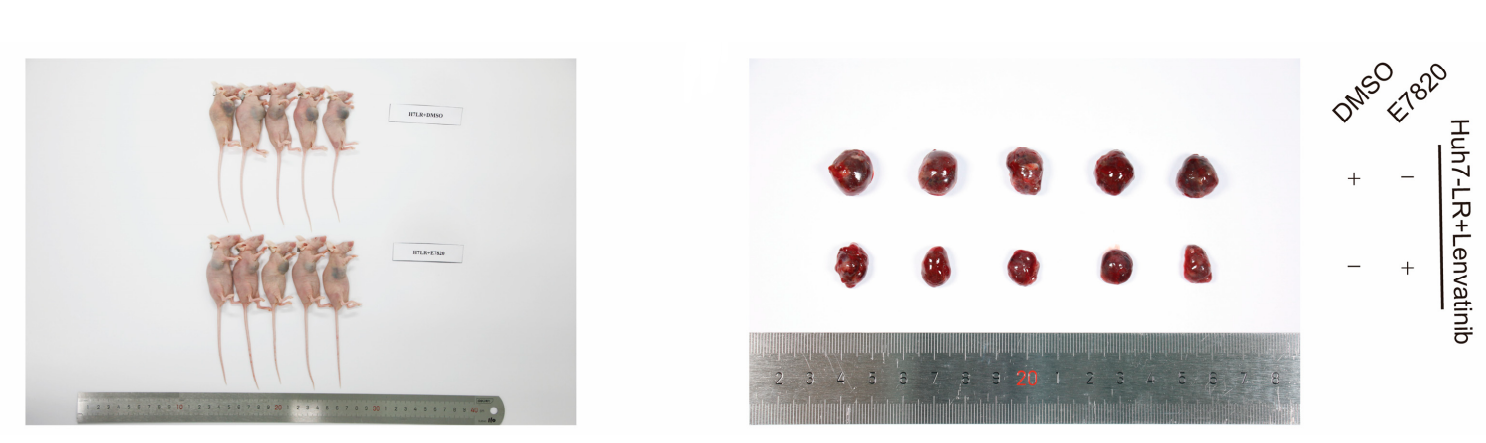
Compared with those in the lenvatinib monotherapy group, the tumor growth rates of the mice in the lenvatinib combined with E7820 (5 mg/kg) treatment group were significantly lower, and the tumor weights were significantly lower.
-
Cell Biol Int
Reversing microtubule-directed chemotherapeutic drug resistance by co-delivering α2β1 inhibitor and paclitaxel with nanoparticles in ovarian cancer. [Abstract]2020 Feb;44(2):610-620. PMID: 31743535 -
bioRxiv
2025 Nov 21:2025.11.20.689563. PMID: 41332615 -


Lösungsmittel & Löslichkeit
In Vitro:
DMSO : 100 mg/mL (297.29 mM; Need ultrasonic; Hygroscopic DMSO has a significant impact on the solubility of product, please use newly opened DMSO)
Please refer to the solubility information to select the appropriate solvent. Once prepared, please aliquot and store the solution to prevent product inactivation from repeated freeze-thaw cycles.
Storage method and period of stock solution: -80°C, 6 months; -20°C, 1 month. When stored at -80°C, please use it within 6 months. When stored at -20°C, please use it within 1 month.
Please refer to the solubility information to select the appropriate solvent. Once prepared, please aliquot and store the solution to prevent product inactivation from repeated freeze-thaw cycles.
Storage method and period of stock solution: -80°C, 6 months; -20°C, 1 month. When stored at -80°C, please use it within 6 months. When stored at -20°C, please use it within 1 month.
Konzentration (Stammlösung) × Volumen (Stammlösung) = Konzentration (Ziellösung) × Volumen (Ziellösung)
In Vivo:
Select the appropriate dissolution method based on your experimental animal and administration route.
- For the following dissolution methods, please ensure to first prepare a clear stock solution using an In Vitro approach and then sequentially add co-solvents:
- To ensure reliable experimental results, the clarified stock solution can be appropriately stored based on storage conditions. As for the working solution for In Vivo experiments, it is recommended to prepare freshly and use it on the same day.
- The percentages shown for the solvents indicate their volumetric ratio in the final prepared solution. If precipitation or phase separation occurs during preparation, heat and/or sonication can be used to aid dissolution.
Add each solvent one by one: 10% DMSO 90% (20% SBE-β-CD in Saline)
Solubility: ≥ 2.5 mg/mL (7.43 mM); Clear solution
This protocol yields a clear solution of ≥ 2.5 mg/mL (saturation unknown).
Taking 1 mL working solution as an example, add 100 μL DMSO stock solution (25.0 mg/mL) to 900 μL 20% SBE-β-CD in Saline, and mix evenly.
Preparation of 20% SBE-β-CD in Saline (4°C, storage for one week): 2 g SBE-β-CD powder is dissolved in 10 mL Saline, completely dissolve until clear.
Add each solvent one by one: 10% DMSO 40% PEG300 5% Tween-80 45% Saline
Solubility: ≥ 2.08 mg/mL (6.18 mM); Clear solution
This protocol yields a clear solution of ≥ 2.08 mg/mL (saturation unknown).
Taking 1 mL working solution as an example, add 100 μL DMSO stock solution (20.8 mg/mL) to 400 μL PEG300, and mix evenly; then add 50 μL Tween-80 and mix evenly; then add 450 μL Saline to adjust the volume to 1 mL.
Preparation of Saline: Dissolve 0.9 g sodium chloride in ddH₂O and dilute to 100 mL to obtain a clear Saline solution.
In Vivo Dissolution Calculator
Please enter the basic information of animal experiments:
-
-
-
-
Recommended: Prepare an additional quantity of animals to account for potential losses during experiments.
Please enter your animal formula composition:
-
%DMSO +
Recommended: Keep the proportion of DMSO in working solution below 2% if your animal is weak.
-
%+
-
+%Tween-80 + +
-
%Saline +
The co-solvents required include: DMSO, . All of co-solvents are available by MedChemExpress (MCE). , Tween 80. All of co-solvents are available by MedChemExpress (MCE).
Working solution concentration: 0.22 mg/mL
Method for preparing stock solution: mg drug dissolved in μL DMSO. Stock solution concentration: mg/mL.
1. Take μL DMSO stock solution;
2. Add μL .
μL , mix evenly;
3. Then add μL Tween 80, mix evenly;
4. Then add μL
Please ensure that the stock solution in the first step is dissolved to a clear state, and add co-solvents in sequence. You can use ultrasonic heating (ultrasonic cleaner, recommended frequency 20-40 kHz), vortexing, etc. to assist dissolution.


Reinheit & Dokumentation
-
Data Sheet (280 KB)
-
SDS (393 KB)
- English - EN (393 KB)
- Français - FR (393 KB)
- Deutsch - DE (393 KB)
- Norwegian - NO (393 KB)
- Español - ES (393 KB)
- Swedish - SV (393 KB)
- Italian - IT (393 KB)
- Korean - KR (393 KB)
- Portuguese - PT (393 KB)
-
Handling Instructions (2659 KB)
Verweise
[1]. Funahashi Y, et al. Sulfonamide derivative, E7820, is a unique angiogenesis inhibitor suppressing an expression of integrin alpha2 subunit on endothelium. Cancer Res. 2002;62(21):6116-6123. [Content Brief]
[2]. Ito K, et al. Enhanced anti-angiogenic effect of E7820 in combination with erlotinib in epidermal growth factor receptor-tyrosine kinase inhibitor-resistant non-small-cell lung cancer xenograft models. Cancer Sci. 2014;105(8):1023-1031. [Content Brief]
[3]. Faust TB, et al. Structural complementarity facilitates E7820-mediated degradation of RBM39 by DCAF15. Nat Chem Biol. 2020 Jan;16(1):7-14. [Content Brief]


Complete Stock Solution Preparation Table
Please refer to the solubility information to select the appropriate solvent. Once prepared, please aliquot and store the solution to prevent product inactivation from repeated freeze-thaw cycles.
Storage method and period of stock solution: -80°C, 6 months; -20°C, 1 month. When stored at -80°C, please use it within 6 months. When stored at -20°C, please use it within 1 month.
| Optional Solvent | Concentration Solvent Mass | 1 mg | 5 mg | 10 mg | 25 mg |
|---|---|---|---|---|---|
| DMSO | 1 mM | 2.9729 mL | 14.8646 mL | 29.7292 mL | 74.3229 mL |
| 5 mM | 0.5946 mL | 2.9729 mL | 5.9458 mL | 14.8646 mL | |
| 10 mM | 0.2973 mL | 1.4865 mL | 2.9729 mL | 7.4323 mL | |
| 15 mM | 0.1982 mL | 0.9910 mL | 1.9819 mL | 4.9549 mL | |
| 20 mM | 0.1486 mL | 0.7432 mL | 1.4865 mL | 3.7161 mL | |
| 25 mM | 0.1189 mL | 0.5946 mL | 1.1892 mL | 2.9729 mL | |
| 30 mM | 0.0991 mL | 0.4955 mL | 0.9910 mL | 2.4774 mL | |
| 40 mM | 0.0743 mL | 0.3716 mL | 0.7432 mL | 1.8581 mL | |
| 50 mM | 0.0595 mL | 0.2973 mL | 0.5946 mL | 1.4865 mL | |
| 60 mM | 0.0495 mL | 0.2477 mL | 0.4955 mL | 1.2387 mL | |
| 80 mM | 0.0372 mL | 0.1858 mL | 0.3716 mL | 0.9290 mL | |
| 100 mM | 0.0297 mL | 0.1486 mL | 0.2973 mL | 0.7432 mL |


E7820 Related Classifications
HY-14571 Related Classifications
 Powered by Bioz