



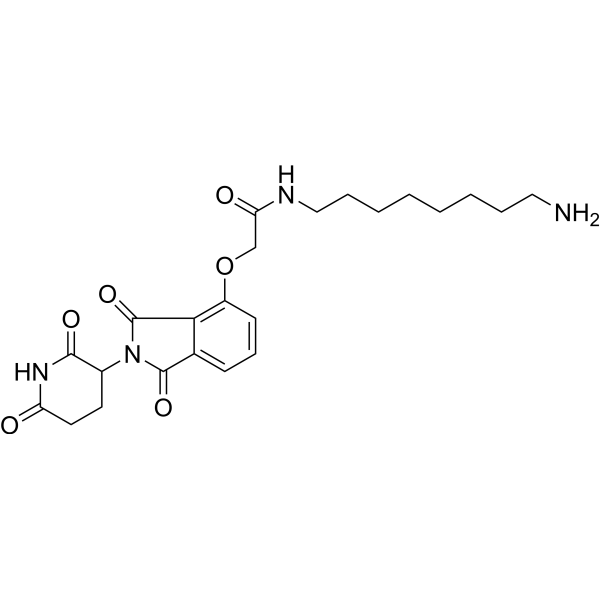
Thalidomide-O-amido-C8-NH2
Based on 1 publication(s) in Google Scholar
Thalidomide-O-amido-C8-NH2 (Cereblon Ligand-Linker Conjugates 2), a synthesized E3 ligase ligand-linker conjugate that incorporates the Thalidomide based cereblon ligand and a linker, can be used in the synthesis of PROTACs.
Nur für Forschungszwecke. Wir verkaufen nicht an Patienten.
- CAS. Nr.: 1950635-15-0
- Formel: C23H30N4O6
- Molecular Weight:458.51
-
Speicherung:
Please store the product under the recommended conditions in the Certificate of Analysis.

To place orders, for customer services and technical support, please contact: MedChemExpress USA
Tel: 609-228-6898 E-mail: [email protected] [email protected]


-
 Biologische Aktivität
-
Chemical Information
- Reinheit & Dokumentation
- Verweise
-
 Help & FAQs


-
HY-103601
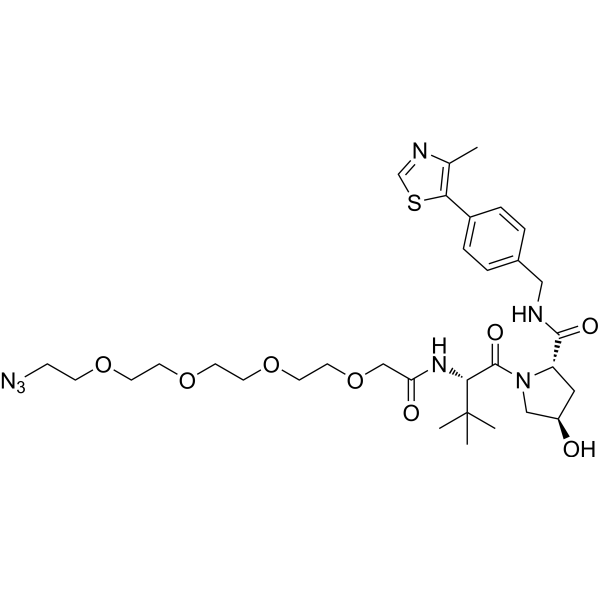
(S,R,S)-AHPC-PEG4-N3E3 ligase ligand-linker conjugate -
HY-107438
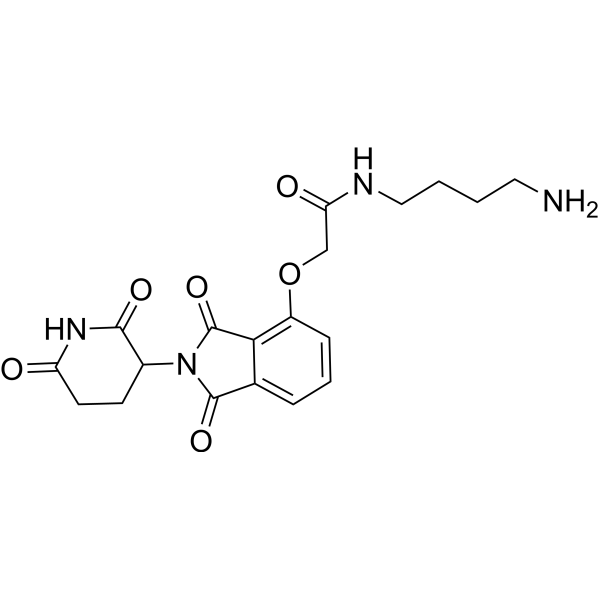
Thalidomide-O-amido-C4-NH2E3 Ligase Ligand-Linker Conjugates -
HY-107440
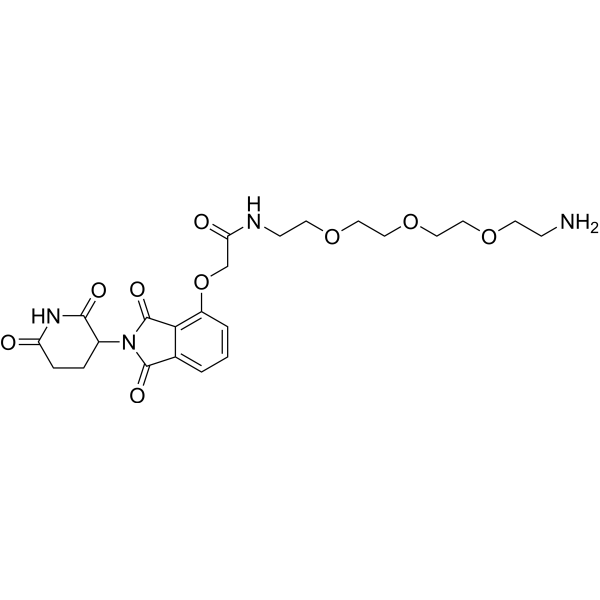
Thalidomide-O-amido-PEG3-C2-NH2E3 Ligase Ligand-Linker Conjugate -
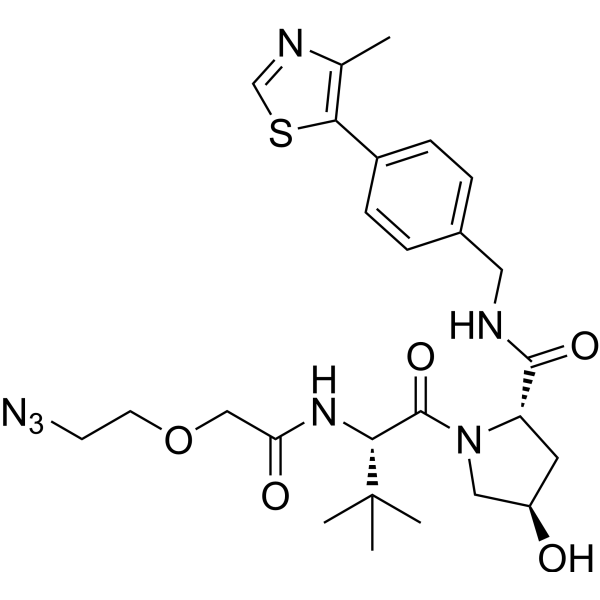
HY-103600
(S,R,S)-AHPC-PEG1-N3E3 Ligase Ligand-Linker Conjugate -
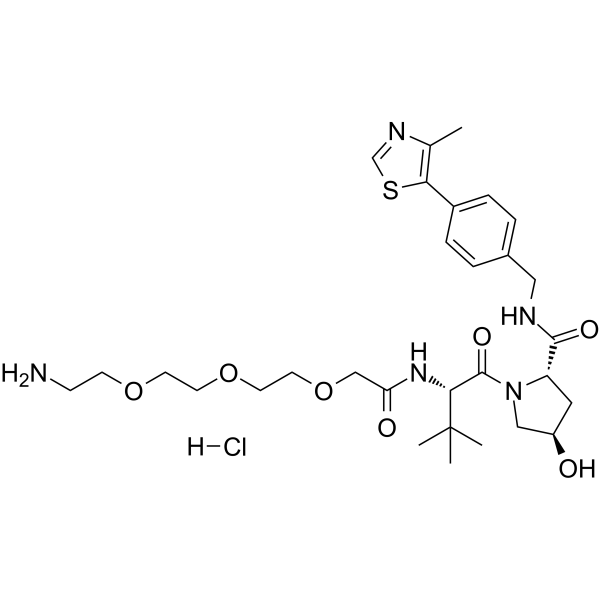
HY-103602
(S,R,S)-AHPC-PEG3-NH2 hydrochlorideE3 Ligase Ligand-Linker Conjugate -
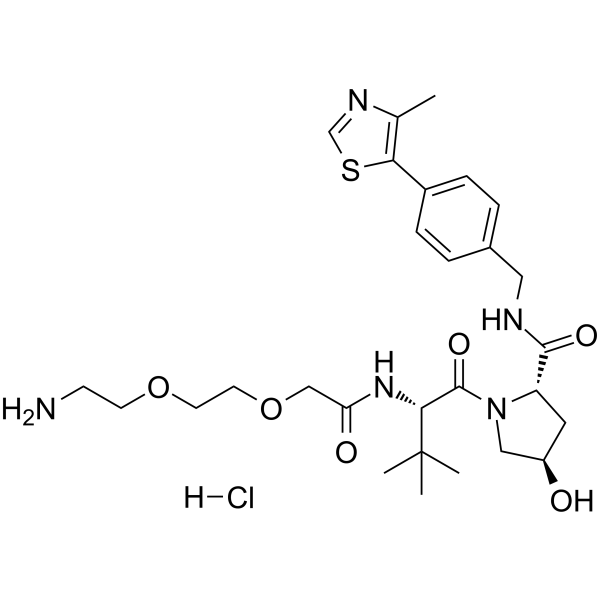
HY-103603
(S,R,S)-AHPC-PEG2-NH2 hydrochlorideE3 ligase ligand-linker conjugate -
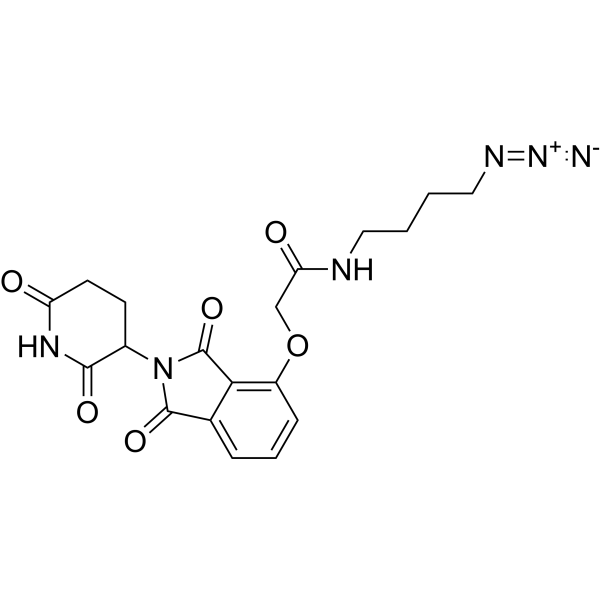
HY-103615
Thalidomide-O-amido-C4-N3E3 ligase ligand-linker conjugate -
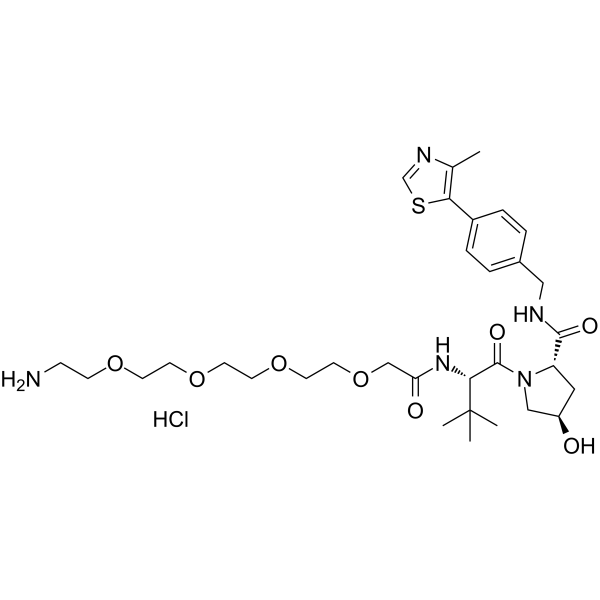
HY-103604
(S,R,S)-AHPC-PEG4-NH2 hydrochlorideE3 ligase ligand-linker conjugate -
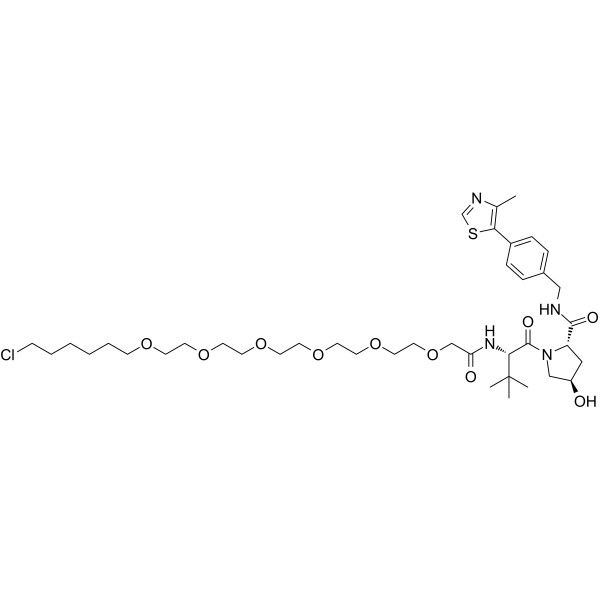
HY-103606
(S,R,S)-AHPC-PEG6-C4-ClE3 ligase ligand-linker conjugate -
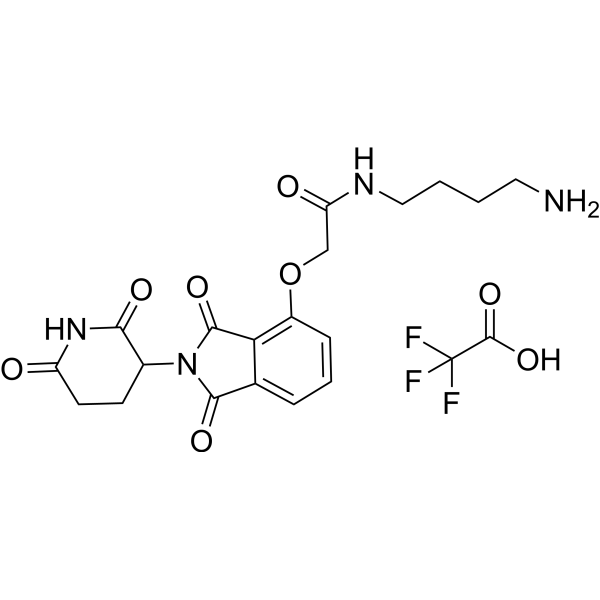
HY-103613
Thalidomide-O-amido-C4-NH2 TFAE3 ligase ligand-linker conjugate -
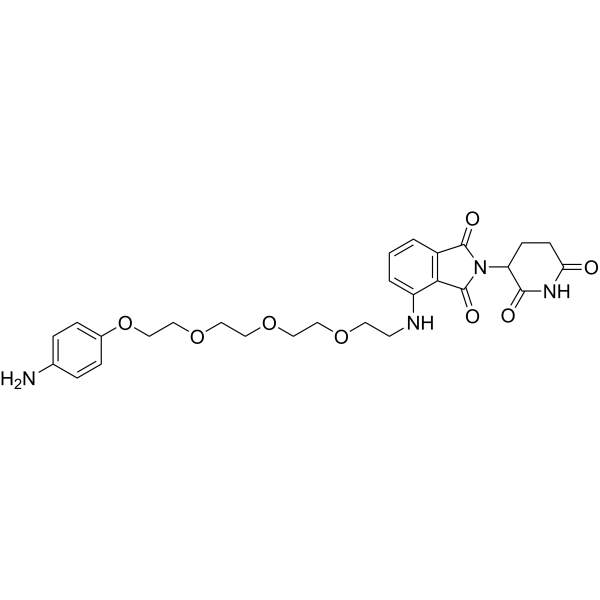
HY-41549
Pomalidomide-PEG4-Ph-NH2E3 Ligase Ligand-Linker Conjugate -
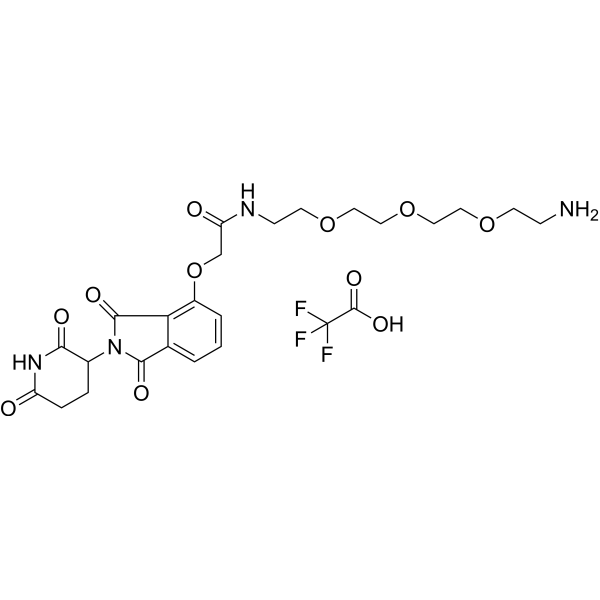
HY-103611
Thalidomide-O-amido-PEG3-C2-NH2 TFAE3 ligase ligand-linker conjugate
Publications Citing Use of MedChemExpress (MCE) Thalidomide-O-amido-C8-NH2
MoreAlle E3 Ligase Ligand-Linker Conjugates Isoform-spezifische Produkte anzeigen
More

Biologische Aktivität
Beschreibung
IC50 & Target
[1]|
Cereblon |
In Vitro
Thalidomide-O-amido-C8-NH2 is a degron-linker (refer to Compound DL7-TL). The PROTAC linker is bound lo at least one targeting ligand. Degron-linker-targeting ligand, wherein the linker is covalently bound lo at least one degron and at least one targeting ligand, the degron is a compound capable of binding to an ubiquitin ligase such as an E3 ubiquitin ligase (e g, cereblon), and the targeting ligand is capable of binding to the targeted protein (s)[1].
MedChemExpress (MCE) has not independently confirmed the accuracy of these methods. They are for reference only.


Chemical Information
-
CAS. Nr. 1950635-15-0
-
Molecular Weight 458.51
-
Formel C23H30N4O6
-
SMILES
NCCCCCCCCNC(COC1=C(C(N2C(CCC3=O)C(N3)=O)=O)C(C2=O)=CC=C1)=O
-
Synonyms
Cereblon Ligand-Linker Conjugates 2; E3 Ligase Ligand-Linker Conjugates 20
-
Versand
Room temperature in continental US; may vary elsewhere.
-
Speicherung
Please store the product under the recommended conditions in the Certificate of Analysis.


Publications (1)
-
Journal Impact Factor
-
Most Recent
-
Bioconjug Chem
Development of BODIPY FL Thalidomide As a High-Affinity Fluorescent Probe for Cereblon in a Time-Resolved Fluorescence Resonance Energy Transfer Assay. [Abstract]2020 Nov 18;31(11):2564-2575. PMID: 33070611


Reinheit & Dokumentation
Verweise

Calculators
Konzentration (Stammlösung) × Volumen (Stammlösung) = Konzentration (Ziellösung) × Volumen (Ziellösung)


Thalidomide-O-amido-C8-NH2 Related Classifications
HY-107439 Related Classifications
 Powered by Bioz