



CD532
Based on 1 publication(s) in Google Scholar
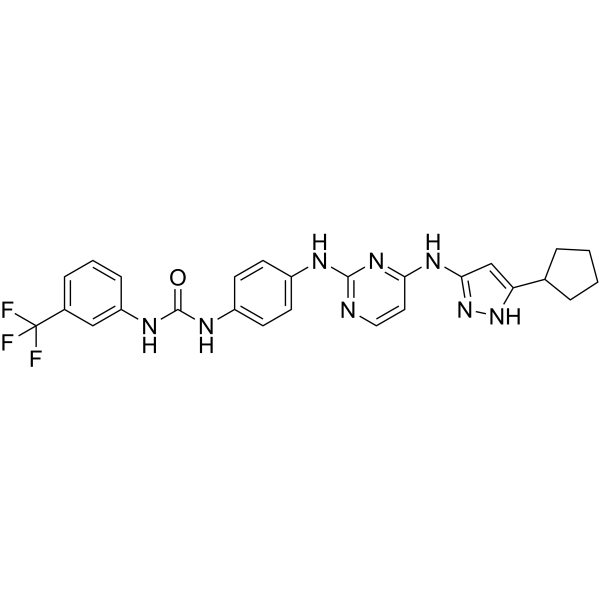
CD532 is a potent Aurora A kinase inhibitor with an IC50 of 45 nM. CD532 has the dual effect of blocking Aurora A kinase activity and driving degradation of MYCN. CD532 also can directly interact with AURKA and induces a global conformational shift. CD532 can be used for the research of cancer.
For research use only. We do not sell to patients.
- Purity : 98.86%
- CAS No.: 1639009-81-6
- Formula: C26H25F3N8O
- Molecular Weight:522.52
-
Storage:Powder -20°C, 3 years , 4°C, 2 years ; In solvent -80°C, 6 months , -20°C, 1 month

To place orders, for customer services and technical support, please contact: MedChemExpress USA
Tel: 609-228-6898 E-mail: [email protected] [email protected]


-
 Biological Activity
-
Chemical Information
-
Solvent & Solubility
- Protocols
- Purity & Documentation
- References
-
 Help & FAQs


-
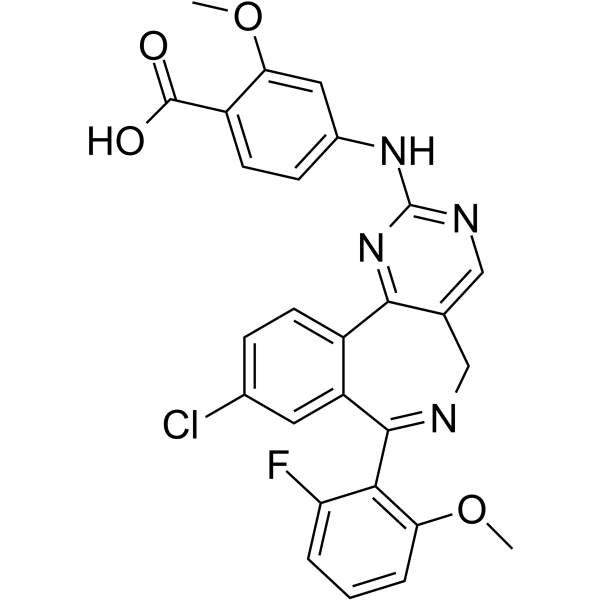
HY-10971
AlisertibAurora A Kinase Inhibitor -
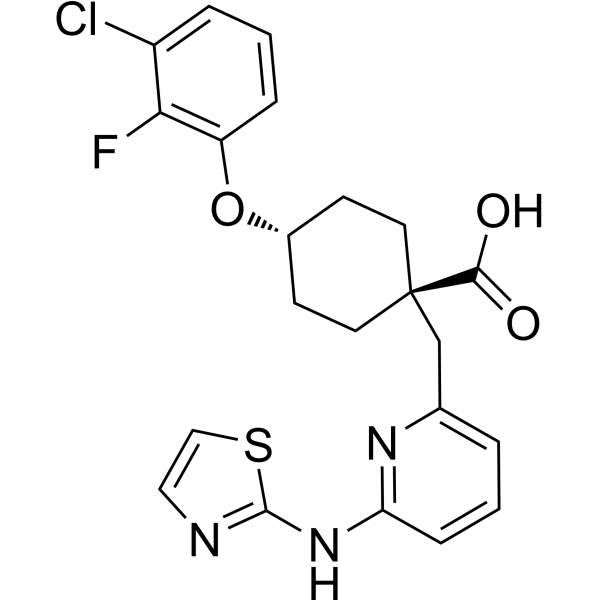
HY-13252
MK-5108Aurora Kinase Inhibitor -
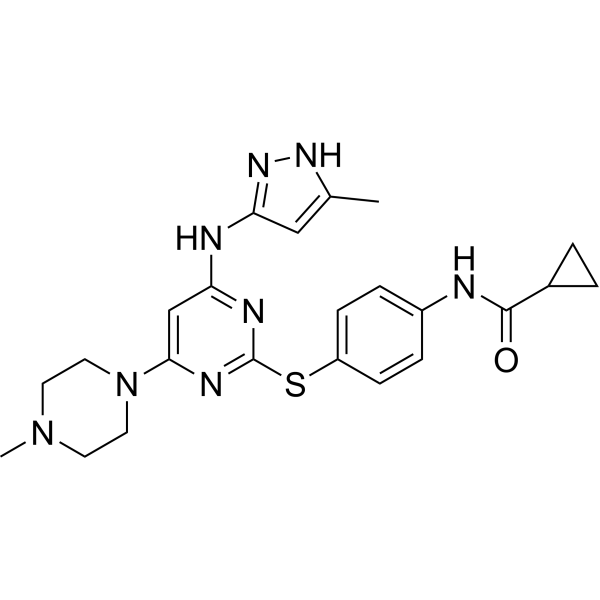
HY-10161
TozasertibAurora A/B/C Inhibitor -
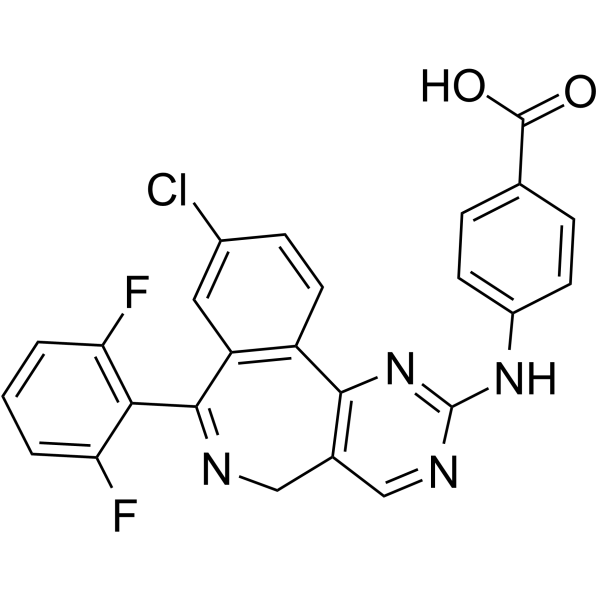
HY-10180
MLN8054Aurora A Inhibitor -
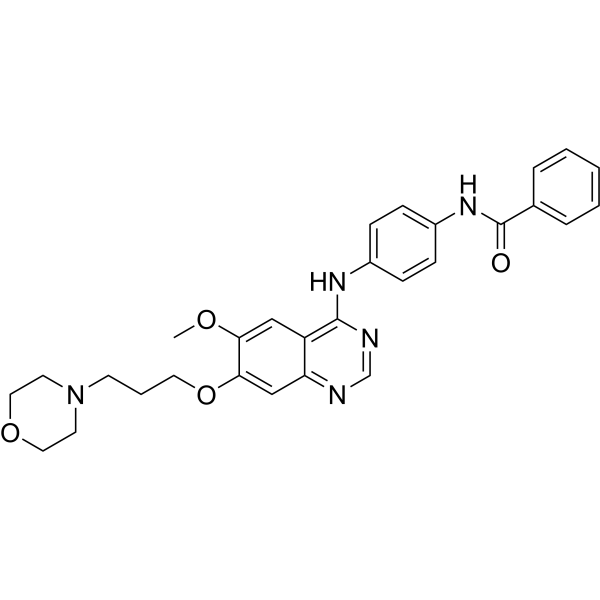
HY-10128
ZM-447439Aurora A/B Inhibitor -
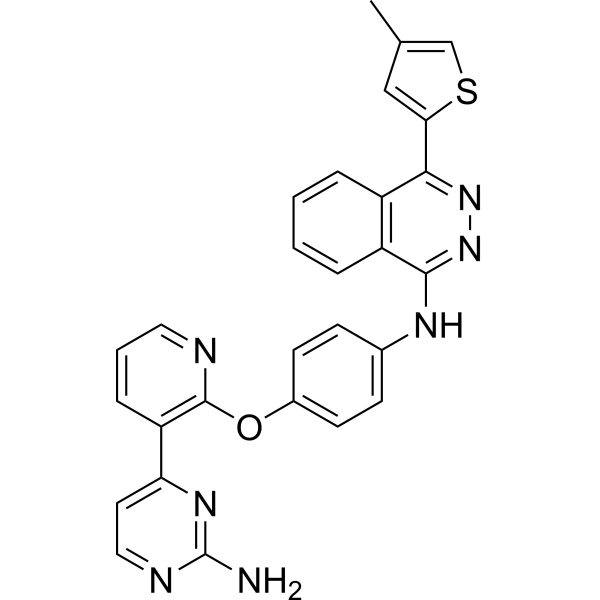
HY-13253
AMG 900Aurora Kinase Inhibitor -
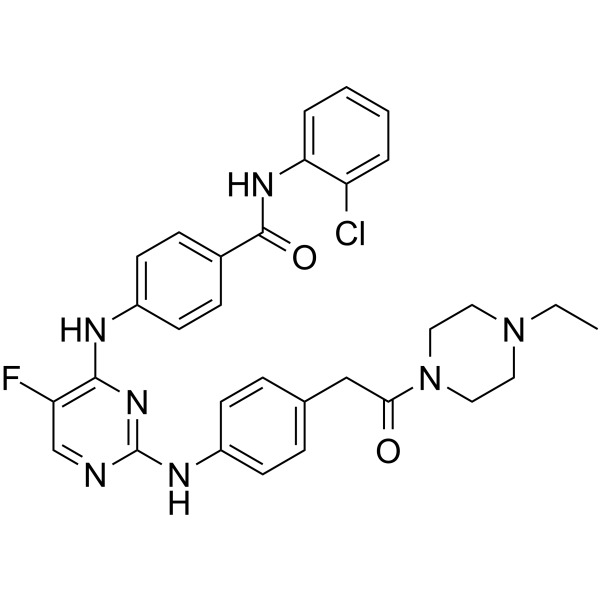
HY-70061
TCS7010Aurora A Inhibitor -
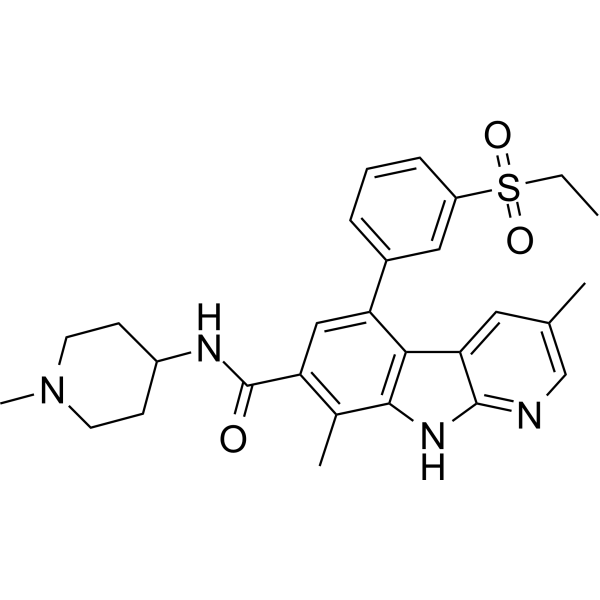
HY-12201
TAK-901 -
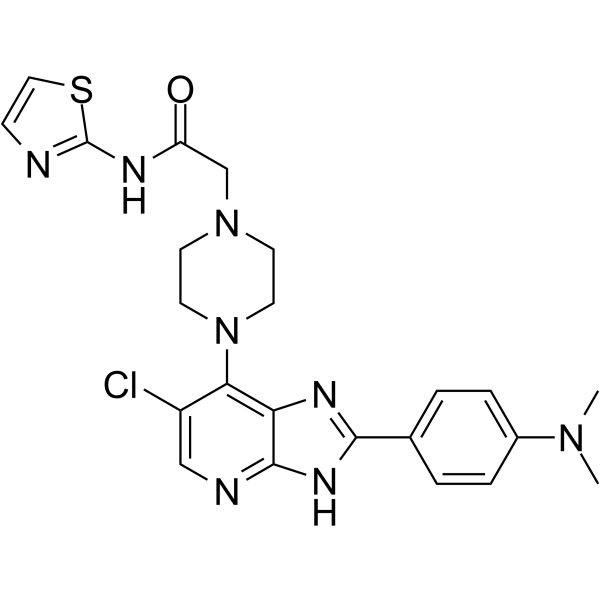
HY-12049
CCT129202Aurora Kinase Inhibitor -
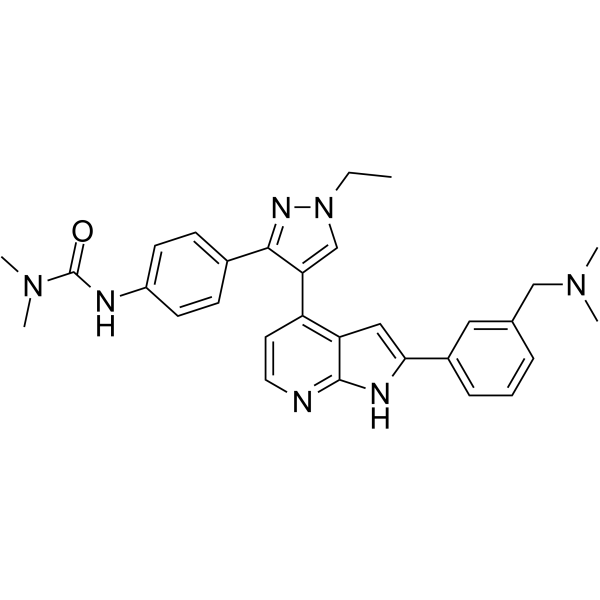
HY-70044
GSK-1070916Aurora B/C Inhibitor -
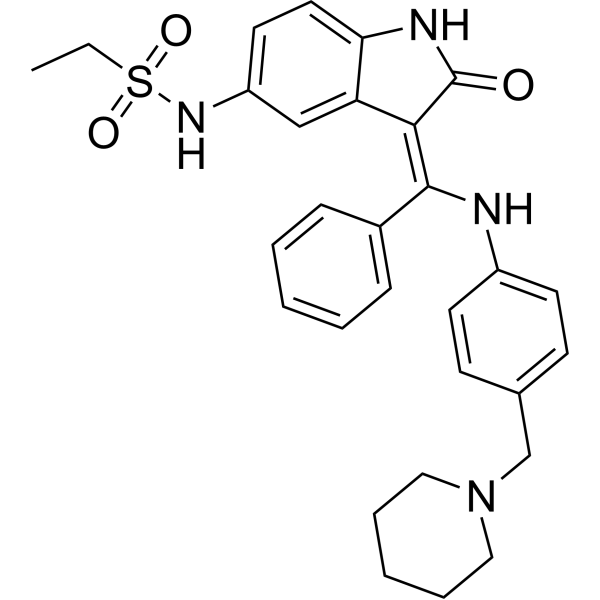
HY-12054
HesperadinAurora B Inhibitor -
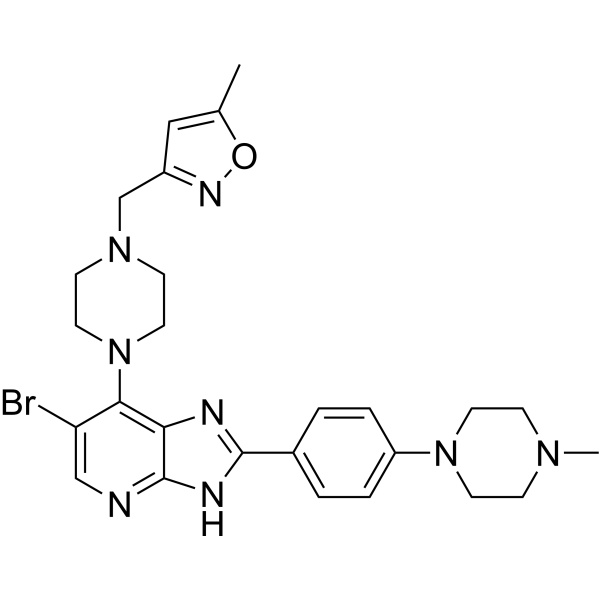
HY-10804
CCT 137690Apoptosis Inducer
Publications Citing Use of MedChemExpress (MCE) CD532
MoreAll Aurora Kinase Isoforms
More

Biological Activity
Description
IC50 & Target
[1]|
Aurora A 45 nM (IC50) |
In Vitro
CD532 (1-10000 nM; 72 h) is cytotoxic in MYCN-amplified neuroblastoma cell lines SK-N-BE(2) and Kelly, with EC50s of 223.2 nM and 146.7 nM, respectively[1].
CD532 (0.1-1 μM; 24 h) causes dose-dependent loss of MYCN protein in SK-N-BE(2) cells[1].
CD532 (1 μM; 6 h) prevents S-phase entry in SK-N-BE(2) cells[1].
MedChemExpress (MCE) has not independently confirmed the accuracy of these methods. They are for reference only.
-
Cell Line:SK-N-BE(2) and Kelly cells
-
Concentration:1, 10, 100, 1000, 10000 nM
-
Incubation Time:72 hours
-
Result:Inhibited the cell viability of SK-N-BE(2) and Kelly cells, with EC50s of 223.2 nM and 146.7 nM, respectively.
-
Cell Line:SK-N-BE(2) cells
-
Concentration:1 μM
-
Incubation Time:4 hours
-
Result:Resulted in a rapid and potent loss of S-phase and accumulation in both G0/G1 and G2.
-
Cell Line:SK-N-BE(2) cells
-
Concentration:0.1, 0.25, 0.5, 1 μM
-
Incubation Time:2, 4, 6, 24 hours
-
Result:Causes dose-dependent and time-dependent loss of MYCN protein.
In Vivo
CD532 (60 mg/kg; i.p. for 2 days) decreases the level of MYCN protein in MYCN-amplified neuroblastoma xenografts[1].
CD532 (20 mg/kg; i.p.) shows a serum half-life of ~1.5 hours and AUC0-24 of 27 μM•h in mice[1].
MedChemExpress (MCE) has not independently confirmed the accuracy of these methods. They are for reference only.
-
Animal Model:Homozygous nu/nu mice with SHH-subtype MYCN-expressing medulloblastoma[1]
-
Dosage:25 mg/kg
-
Administration:I.p. twice weekly for 3 weeks
-
Result:Decreased the level of MYCN protein and tumor volume and increases survival.


Chemical Information
-
CAS No. 1639009-81-6
-
Appearance Solid
-
Molecular Weight 522.52
-
Formula C26H25F3N8O
-
Color White to off-white
-
SMILES
FC(F)(F)C1=CC=CC(NC(NC2=CC=C(NC3=NC=CC(NC4=NNC(C5CCCC5)=C4)=N3)C=C2)=O)=C1
-
Shipping
Room temperature in continental US; may vary elsewhere.
-
Storage
Powder -20°C 3 years 4°C 2 years In solvent -80°C 6 months -20°C 1 month


Publications (1)
-
Journal Impact Factor
-
Most Recent
-
Bioorg Chem
Identification of novel AURKA inhibitors against neuroblastoma using a virtual screening approach. [Abstract]2025 Jun 15:160:108480. PMID: 40253760


Solvent & Solubility
In Vitro:
DMSO : 250 mg/mL (478.45 mM; Need ultrasonic; Hygroscopic DMSO has a significant impact on the solubility of product, please use newly opened DMSO)
Please refer to the solubility information to select the appropriate solvent. Once prepared, please aliquot and store the solution to prevent product inactivation from repeated freeze-thaw cycles.
Storage method and period of stock solution: -80°C, 6 months; -20°C, 1 month. When stored at -80°C, please use it within 6 months. When stored at -20°C, please use it within 1 month.
Please refer to the solubility information to select the appropriate solvent. Once prepared, please aliquot and store the solution to prevent product inactivation from repeated freeze-thaw cycles.
Storage method and period of stock solution: -80°C, 6 months; -20°C, 1 month. When stored at -80°C, please use it within 6 months. When stored at -20°C, please use it within 1 month.
Concentration (start) × Volume (start) = Concentration (final) × Volume (final)
In Vivo:
Select the appropriate dissolution method based on your experimental animal and administration route.
- For the following dissolution methods, please ensure to first prepare a clear stock solution using an In Vitro approach and then sequentially add co-solvents:
- To ensure reliable experimental results, the clarified stock solution can be appropriately stored based on storage conditions. As for the working solution for In Vivo experiments, it is recommended to prepare freshly and use it on the same day.
- The percentages shown for the solvents indicate their volumetric ratio in the final prepared solution. If precipitation or phase separation occurs during preparation, heat and/or sonication can be used to aid dissolution.
Add each solvent one by one: 10% DMSO 40% PEG300 5% Tween-80 45% Saline
Solubility: ≥ 2.08 mg/mL (3.98 mM); Clear solution
This protocol yields a clear solution of ≥ 2.08 mg/mL (saturation unknown).
Taking 1 mL working solution as an example, add 100 μL DMSO stock solution (20.8 mg/mL) to 400 μL PEG300, and mix evenly; then add 50 μL Tween-80 and mix evenly; then add 450 μL Saline to adjust the volume to 1 mL.
Preparation of Saline: Dissolve 0.9 g sodium chloride in ddH₂O and dilute to 100 mL to obtain a clear Saline solution.
Add each solvent one by one: 10% DMSO 90% (20% SBE-β-CD in Saline)
Solubility: ≥ 2.08 mg/mL (3.98 mM); Clear solution
This protocol yields a clear solution of ≥ 2.08 mg/mL (saturation unknown).
Taking 1 mL working solution as an example, add 100 μL DMSO stock solution (20.8 mg/mL) to 900 μL 20% SBE-β-CD in Saline, and mix evenly.
Preparation of 20% SBE-β-CD in Saline (4°C, storage for one week): 2 g SBE-β-CD powder is dissolved in 10 mL Saline, completely dissolve until clear.
In Vivo Dissolution Calculator
Please enter the basic information of animal experiments:
-
-
-
-
Recommended: Prepare an additional quantity of animals to account for potential losses during experiments.
Please enter your animal formula composition:
-
%DMSO +
Recommended: Keep the proportion of DMSO in working solution below 2% if your animal is weak.
-
%+
-
+%Tween-80 + +
-
%Saline +
The co-solvents required include: DMSO, . All of co-solvents are available by MedChemExpress (MCE). , Tween 80. All of co-solvents are available by MedChemExpress (MCE).
Working solution concentration: 0.22 mg/mL
Method for preparing stock solution: mg drug dissolved in μL DMSO. Stock solution concentration: mg/mL.
1. Take μL DMSO stock solution;
2. Add μL .
μL , mix evenly;
3. Then add μL Tween 80, mix evenly;
4. Then add μL
Please ensure that the stock solution in the first step is dissolved to a clear state, and add co-solvents in sequence. You can use ultrasonic heating (ultrasonic cleaner, recommended frequency 20-40 kHz), vortexing, etc. to assist dissolution.


Purity & Documentation
-
Data Sheet (274 KB)
-
SDS (393 KB)
- English - EN (393 KB)
- Français - FR (393 KB)
- Deutsch - DE (393 KB)
- Norwegian - NO (393 KB)
- Español - ES (393 KB)
- Swedish - SV (393 KB)
- Italian - IT (393 KB)
- Korean - KR (393 KB)
- Portuguese - PT (393 KB)
-
Handling Instructions (2659 KB)
References
[1]. Gustafson WC, et, al. Drugging MYCN through an allosteric transition in Aurora kinase A. Cancer Cell. 2014 Sep 8;26(3):414-427. [Content Brief]
[2]. Lee JK, et, al. N-Myc Drives Neuroendocrine Prostate Cancer Initiated from Human Prostate Epithelial Cells. Cancer Cell. 2016 Apr 11;29(4):536-547. [Content Brief]


Complete Stock Solution Preparation Table
Please refer to the solubility information to select the appropriate solvent. Once prepared, please aliquot and store the solution to prevent product inactivation from repeated freeze-thaw cycles.
Storage method and period of stock solution: -80°C, 6 months; -20°C, 1 month. When stored at -80°C, please use it within 6 months. When stored at -20°C, please use it within 1 month.
| Optional Solvent | Concentration Solvent Mass | 1 mg | 5 mg | 10 mg | 25 mg |
|---|---|---|---|---|---|
| DMSO | 1 mM | 1.9138 mL | 9.5690 mL | 19.1380 mL | 47.8451 mL |
| 5 mM | 0.3828 mL | 1.9138 mL | 3.8276 mL | 9.5690 mL | |
| 10 mM | 0.1914 mL | 0.9569 mL | 1.9138 mL | 4.7845 mL | |
| 15 mM | 0.1276 mL | 0.6379 mL | 1.2759 mL | 3.1897 mL | |
| 20 mM | 0.0957 mL | 0.4785 mL | 0.9569 mL | 2.3923 mL | |
| 25 mM | 0.0766 mL | 0.3828 mL | 0.7655 mL | 1.9138 mL | |
| 30 mM | 0.0638 mL | 0.3190 mL | 0.6379 mL | 1.5948 mL | |
| 40 mM | 0.0478 mL | 0.2392 mL | 0.4785 mL | 1.1961 mL | |
| 50 mM | 0.0383 mL | 0.1914 mL | 0.3828 mL | 0.9569 mL | |
| 60 mM | 0.0319 mL | 0.1595 mL | 0.3190 mL | 0.7974 mL | |
| 80 mM | 0.0239 mL | 0.1196 mL | 0.2392 mL | 0.5981 mL | |
| 100 mM | 0.0191 mL | 0.0957 mL | 0.1914 mL | 0.4785 mL |


CD532 Related Classifications
HY-112273 Related Classifications
 Powered by Bioz