



Astilbin
Based on 10 publication(s) in Google Scholar
Astilbin is a flavonoid compound and enhances NRF2 activation. Astilbin also suppresses TNF-α expression and NF-κB activation.
Nos produits utilisent uniquement pour la recherche. Nous ne vendons pas aux patients.
- Pureté : 99.80%
- CAS No.: 29838-67-3
- Formule: C21H22O11
- Masse moléculaire:450.39
-
Stockage:Powder -20°C, 3 years , 4°C, 2 years ; In solvent -80°C, 6 months , -20°C, 1 month

To place orders, for customer services and technical support, please contact: MedChemExpress USA
Tel: 609-228-6898 E-mail: [email protected] [email protected]


-
 Activité biologique
-
Chemical Information
-
Solvant et solubilité
- Protocole
- Pureté et documentation
- Références
-
 Help & FAQs


-
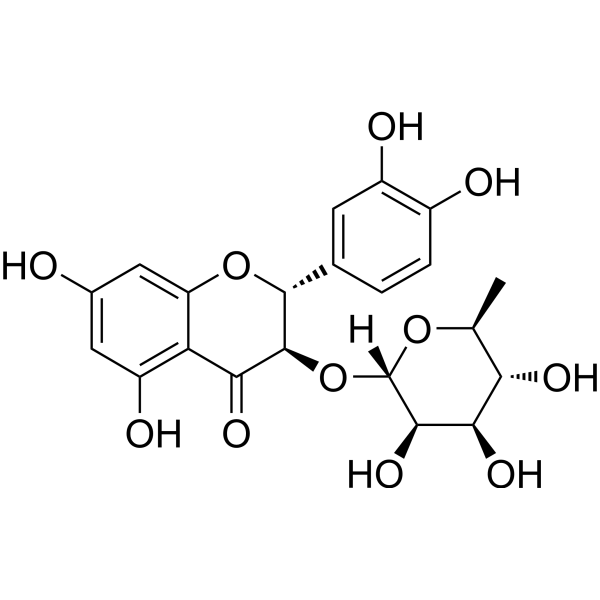
HY-N0436
EngeletinNF-κB Inhibitor -
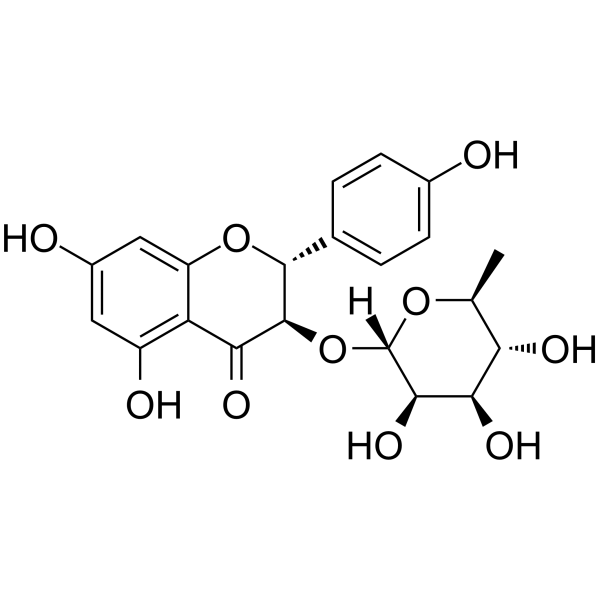
HY-14590
KaempferolEstrogen Receptor α Inhibitor -
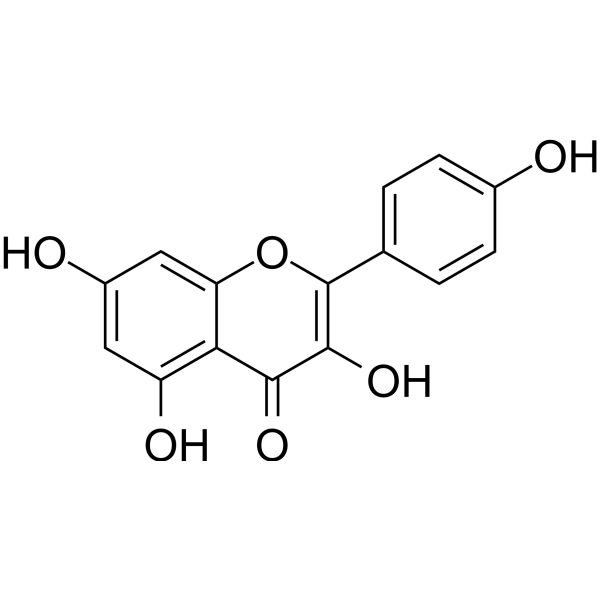
HY-16561
ResveratrolPolyphenolic Phytoalexin -
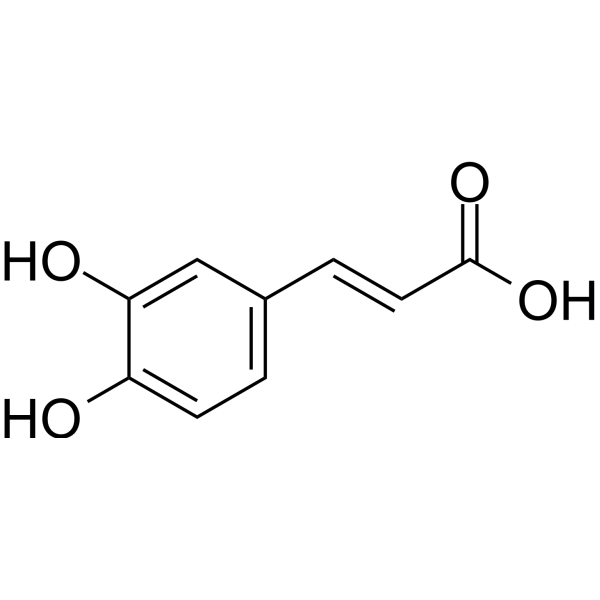
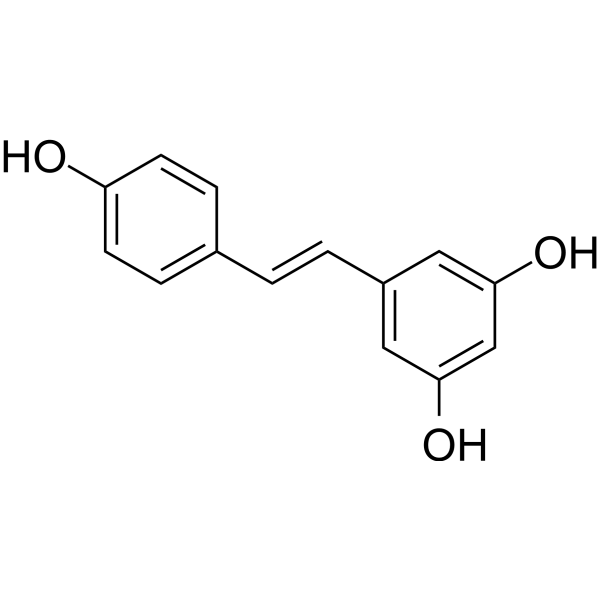
HY-N0172
Caffeic acidEndogenous Metabolite -
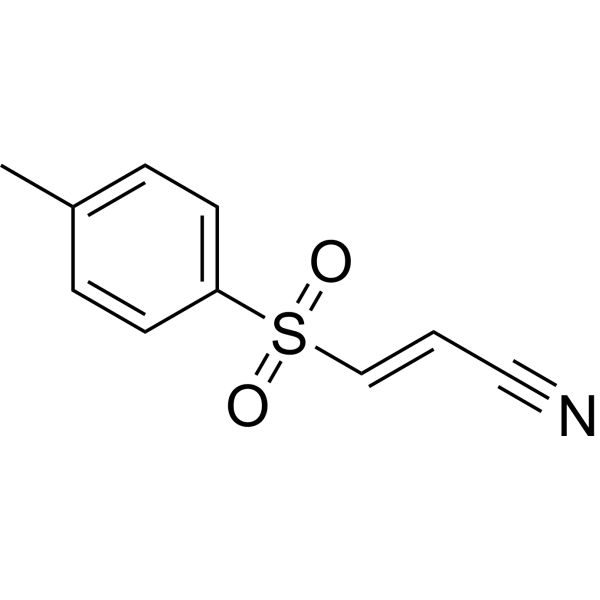
HY-13453
BAY 11-7082IκBα/NF-κB Inhibitor -

HY-N0509R
Astilbin (Standard)TNF Receptor Inhibitor -
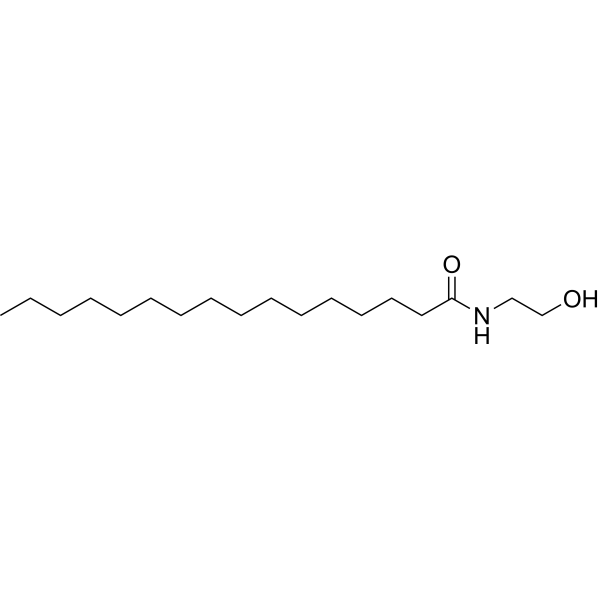
HY-20685
PalmitoylethanolamideEndogenous Metabolite -
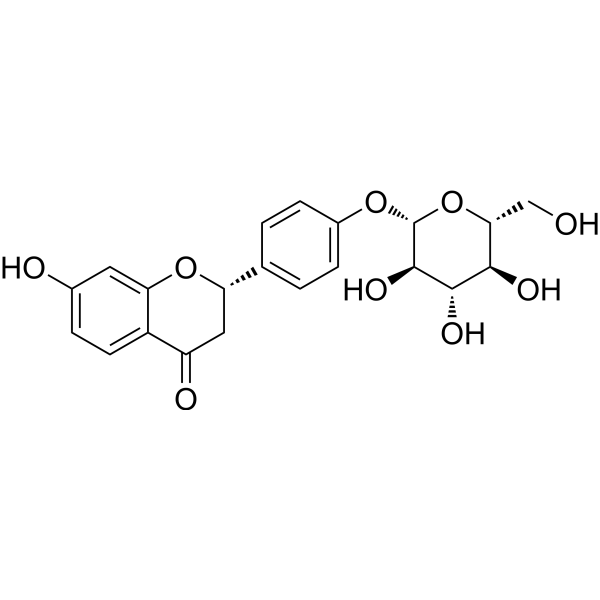
HY-N0376
LiquiritinAKR1C1 Inhibitor -
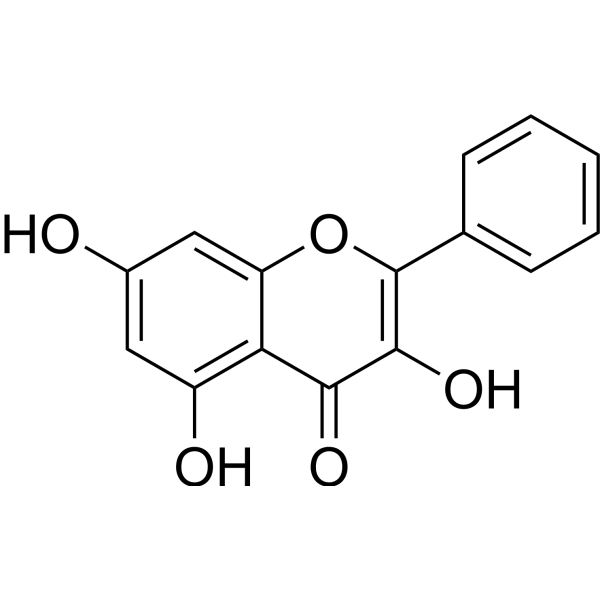
HY-N0382
GalanginCytochrome P450 Inhibitor -
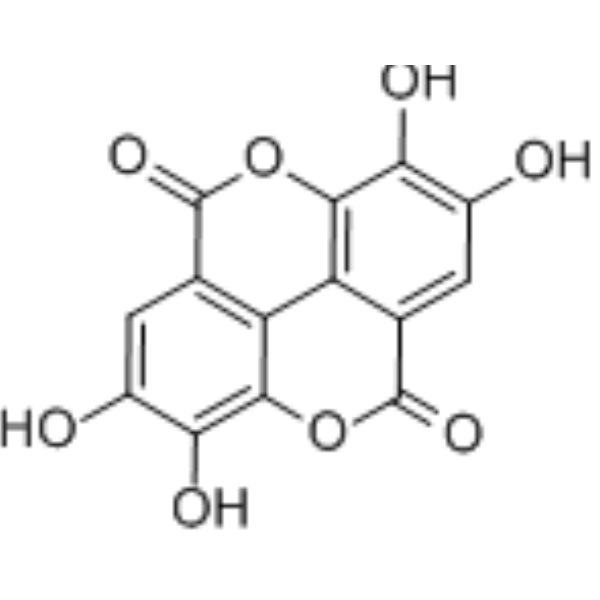
HY-B0183
Ellagic acidSHP2 Inhibitor -
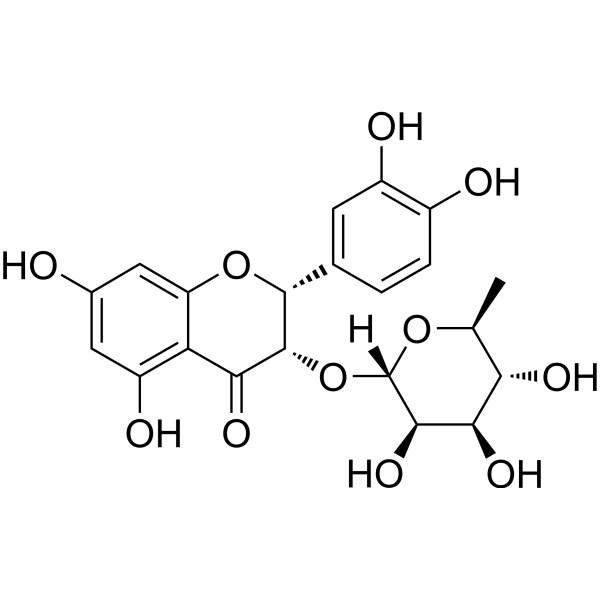
HY-N4005
IsoastilbinBacterial Inhibitor -
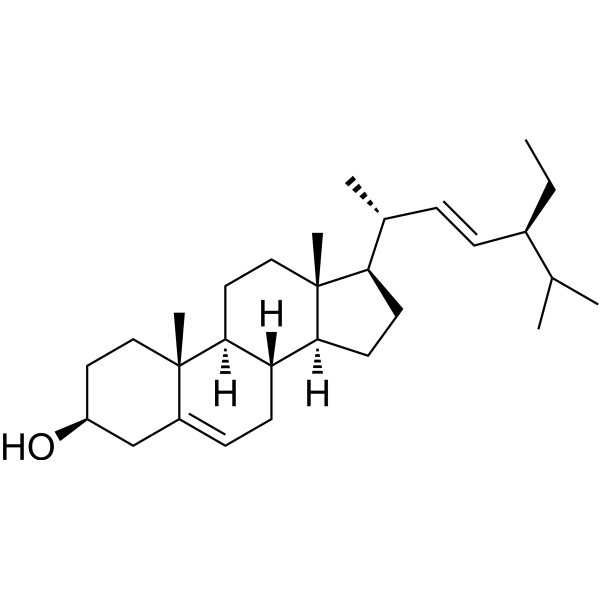
HY-N0131
StigmasterolPlant Sterol
Publications Citing Use of MedChemExpress (MCE) Astilbin
More- Food Chem. 2025 Dec 30:497:146992. [Abstract]
- Food Chem. 2025 Oct 15:489:144992. [Abstract]
- Phytother Res. 2024 Feb;38(2):1044-1058. [Abstract]
- J Ethnopharmacol. 2025 Jun 26:350:120002. [Abstract]
- Ind Crops Prod. 2026 May 8;246:123392.
- Ind Crops Prod. 2025 Dec 11;239:122458.
- Life Sci. 2025 Aug 15:375:123698. [Abstract]
- Inflamm Res. 2025 Oct 30;74(1):155. [Abstract]
- Front Pharmacol. 2022 May 16;13:848957. [Abstract]
- Dermatol Sin. 2026 Jul-Sep;44(3):267-278.
 Customer Validation & Images

-
ELISA
-
Histological Imaging/Staining
-
Bio/Physico-chemical Assay
-
In Vivo Imaging
-
Cell Proliferation/Viability Assay
Voir tous les produits spécifiques à Isoform TNF Receptor
More

Activité biologique
Description
IC50 & Target
[1]|
NRF2 |
NF-κB |
In Vitro
Astilbin is a common dietary flavonoid that can be found in various kinds of herbs and foods such as Smilax Glabra, Sarcandra glabra, grape and red wine. Astilbin markedly inhibits cisplatin-induced cell apoptosis and recovers cell growth. Astilbin significantly decreases reactive oxygen species (ROS) accumulation and alleviates ROS-induced activation of p53, MAPKs and AKT signaling cascades, which in turn attenuates cisplatin-induced HEK-293 cell apoptosis. Astilbin effectively enhances NRF2 activation and transcription of its targeting antioxidant genes to reduce ROS accumulation in cisplatin-induced HEK-293 cells. Astilbin obviously suppresses tumor necrosis factor alpha (TNF-α) expression and NF-κB activation, and also inhibits the expression of induced nitric oxide synthase (iNOS) and cyclooxygenase-2 (COX-2). To measure the effects of Astilbin on the growth of CDDP-treated renal cells, HEK-293 cells are treated with CDDP (100 μM) and/or Astilbin (200 μM). Astilbin treatment significantly improvescell growth in CDDP-induced HEK-293 cells[1].
MedChemExpress (MCE) has not independently confirmed the accuracy of these methods. They are for reference only. Further protocols information, click here.
In Vivo
MedChemExpress (MCE) has not independently confirmed the accuracy of these methods. They are for reference only.


Chemical Information
-
CAS No. 29838-67-3
-
Appearance Solid
-
Masse moléculaire 450.39
-
Formule C21H22O11
-
Color White to off-white
-
SMILES
O=C1[C@@H]([C@@H](C2=CC(O)=C(O)C=C2)OC3=CC(O)=CC(O)=C13)O[C@@](O[C@@H](C)[C@H](O)[C@H]4O)([H])[C@@H]4O
-
Structure Classification
-
Initial Source
-
Livraison
Room temperature in continental US; may vary elsewhere.
-
Stockage
Powder -20°C 3 years 4°C 2 years In solvent -80°C 6 months -20°C 1 month


Publications (10)
-
Journal Impact Factor
-
Most Recent
-
Food Chem
Effects of sun drying combined with baking processes on the flavor quality of Chongqing Tuocha raw tea. [Abstract]2025 Dec 30:497:146992. PMID: 41285060 -
Food Chem
Flavonoid-mediated metabolic underpinning quality variation in red bud-sport pear mutants. [Abstract]2025 Oct 15:489:144992. PMID: 40466530 -
Phytother Res
Astilbin protects from sepsis-induced cardiac injury through the NRF2/HO-1 and TLR4/NF-κB pathway. [Abstract]2024 Feb;38(2):1044-1058. PMID: 38153125
Astilbin purchased from MedChemExpress. Usage Cited in: Phytother Res. 2024 Feb;38(2):1044-1058. [Abstract]
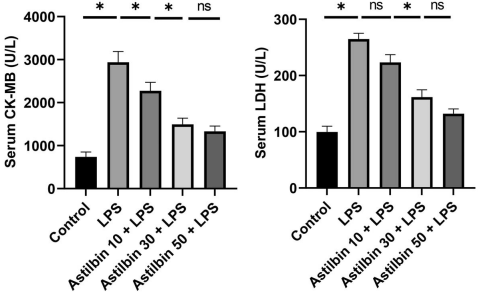
Astilbin (10-50 mg/kg; i.p.; once daily for 1 week before LPS injection) reduced serum CK-MB and LDH levels in mice, indicating that Astilbin alleviated LPS-induced myocardial injury.
Astilbin purchased from MedChemExpress. Usage Cited in: Phytother Res. 2024 Feb;38(2):1044-1058. [Abstract]
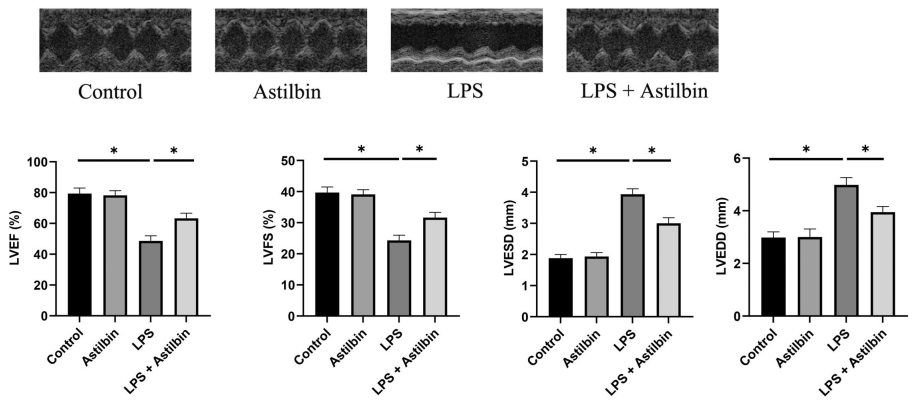
Echocardiographs and statistical analysis of LVEF, LVFS, LVESD, and LVEDD in four groups (n = 6). Echocardiographic results demonstrated decreased LVEF and LVFS and increased LVESD and LVEDD, suggesting that Astilbin (10-50 mg/kg; i.p.; once daily for 1 week before LPS injection) improved LPS-induced cardiac dysfunction in mice and reversed EF and FS. LVEF: left ventricular ejection fraction, LVFS: left ventricular fractional shortening, LVEDD: left ventricular end-diastolic diameter, LVESD: left ventricular end-systolic diameter.
Astilbin purchased from MedChemExpress. Usage Cited in: Phytother Res. 2024 Feb;38(2):1044-1058. [Abstract]
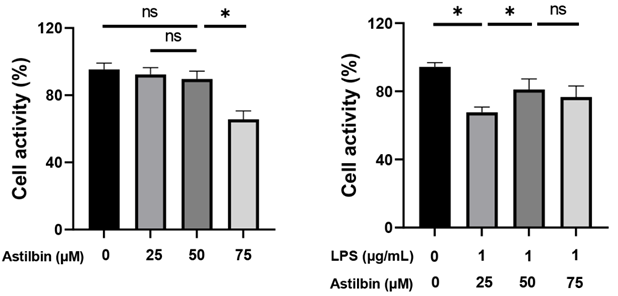
Astilbin (25-75 μM; 4 h) at concentrations below 50 μM had no significant effect on H9C2 cell viability and could improve the significant decrease in cell viability induced by LPS (1 μg/mL; 24 h).
-
J Ethnopharmacol
2025 Jun 26:350:120002. PMID: 40412780 -
-
-
Life Sci
OASL activates MAPK to drive psoriatic pathogenesis: Astilbin targeting this axis improves metabolic-inflammation crosstalk. [Abstract]2025 Aug 15:375:123698. PMID: 40360089 -
Inflamm Res
A novel anti-acute lung injury mechanism of astilbin: inhibition of epithelial cells ferroptosis by targeting NRF2 activation via binding Val608 site of NRF2. [Abstract]2025 Oct 30;74(1):155. PMID: 41165829
Astilbin purchased from MedChemExpress. Usage Cited in: Inflamm Res. 2025 Oct 30;74(1):155. [Abstract]
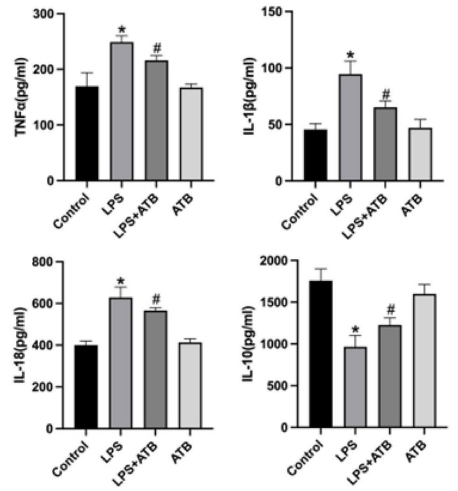
Astilbin (ATB, 40 mg/kg; i.p.; once daily for 7 days) significantly reduced IL-1β, IL-18, and TNFα levels, while IL-10 levels were also reduced in mice.
Astilbin purchased from MedChemExpress. Usage Cited in: Inflamm Res. 2025 Oct 30;74(1):155. [Abstract]
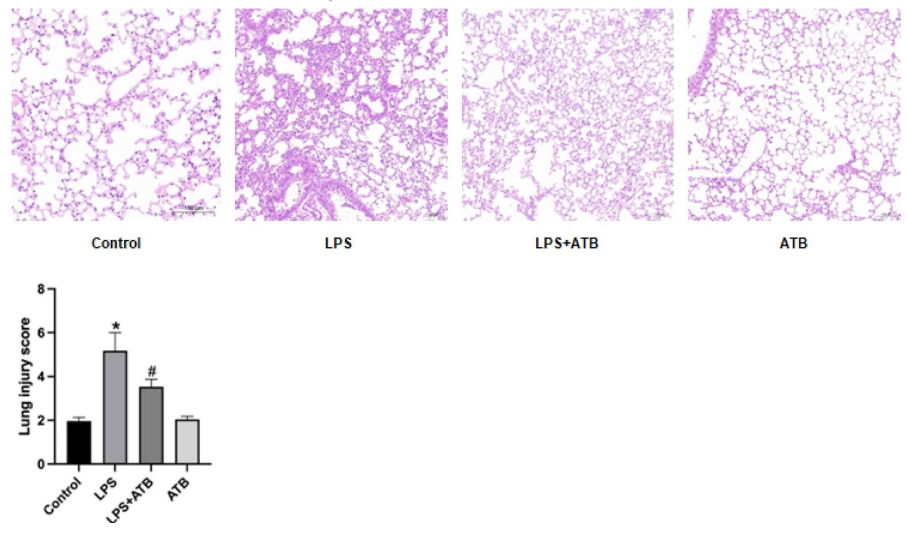
Representative H&E stained images of mouse lung tissues and lung injury scoring (n = 5). Astilbin (ATB, 40 mg/kg; i.p; once daily for 7 days) effectively reduced the significant increase in LPS-induced immune cell infiltration in mouse lung tissue. Scale bar: 100 μm.
-
Front Pharmacol
Astilbin Activates the Reactive Oxidative Species/PPARγ Pathway to Suppress Effector CD4+ T Cell Activities via Direct Binding With Cytochrome P450 1B1. [Abstract]2022 May 16;13:848957. PMID: 35652039 -


Solvant et solubilité
In Vitro:
DMSO : 100 mg/mL (222.03 mM; Need ultrasonic; Hygroscopic DMSO has a significant impact on the solubility of product, please use newly opened DMSO)
H2O : < 0.1 mg/mL (insoluble)
Please refer to the solubility information to select the appropriate solvent. Once prepared, please aliquot and store the solution to prevent product inactivation from repeated freeze-thaw cycles.
Storage method and period of stock solution: -80°C, 6 months; -20°C, 1 month. When stored at -80°C, please use it within 6 months. When stored at -20°C, please use it within 1 month.
Please refer to the solubility information to select the appropriate solvent. Once prepared, please aliquot and store the solution to prevent product inactivation from repeated freeze-thaw cycles.
Storage method and period of stock solution: -80°C, 6 months; -20°C, 1 month. When stored at -80°C, please use it within 6 months. When stored at -20°C, please use it within 1 month.
Concentration (start) × Volume (start) = Concentration (final) × Volume (final)
In Vivo:
Select the appropriate dissolution method based on your experimental animal and administration route.
- For the following dissolution methods, please ensure to first prepare a clear stock solution using an In Vitro approach and then sequentially add co-solvents:
- To ensure reliable experimental results, the clarified stock solution can be appropriately stored based on storage conditions. As for the working solution for In Vivo experiments, it is recommended to prepare freshly and use it on the same day.
- The percentages shown for the solvents indicate their volumetric ratio in the final prepared solution. If precipitation or phase separation occurs during preparation, heat and/or sonication can be used to aid dissolution.
Add each solvent one by one: 10% DMSO 40% PEG300 5% Tween-80 45% Saline
Solubility: ≥ 2.5 mg/mL (5.55 mM); Clear solution
This protocol yields a clear solution of ≥ 2.5 mg/mL (saturation unknown).
Taking 1 mL working solution as an example, add 100 μL DMSO stock solution (25.0 mg/mL) to 400 μL PEG300, and mix evenly; then add 50 μL Tween-80 and mix evenly; then add 450 μL Saline to adjust the volume to 1 mL.
Preparation of Saline: Dissolve 0.9 g sodium chloride in ddH₂O and dilute to 100 mL to obtain a clear Saline solution.
Add each solvent one by one: 10% DMSO 90% (20% SBE-β-CD in Saline)
Solubility: ≥ 2.08 mg/mL (4.62 mM); Clear solution
This protocol yields a clear solution of ≥ 2.08 mg/mL (saturation unknown).
Taking 1 mL working solution as an example, add 100 μL DMSO stock solution (20.8 mg/mL) to 900 μL 20% SBE-β-CD in Saline, and mix evenly.
Preparation of 20% SBE-β-CD in Saline (4°C, storage for one week): 2 g SBE-β-CD powder is dissolved in 10 mL Saline, completely dissolve until clear.
In Vivo Dissolution Calculator
Please enter the basic information of animal experiments:
-
-
-
-
Recommended: Prepare an additional quantity of animals to account for potential losses during experiments.
Please enter your animal formula composition:
-
%DMSO +
Recommended: Keep the proportion of DMSO in working solution below 2% if your animal is weak.
-
%+
-
+%Tween-80 + +
-
%Saline +
The co-solvents required include: DMSO, . All of co-solvents are available by MedChemExpress (MCE). , Tween 80. All of co-solvents are available by MedChemExpress (MCE).
Working solution concentration: 0.22 mg/mL
Method for preparing stock solution: mg drug dissolved in μL DMSO. Stock solution concentration: mg/mL.
1. Take μL DMSO stock solution;
2. Add μL .
μL , mix evenly;
3. Then add μL Tween 80, mix evenly;
4. Then add μL
Please ensure that the stock solution in the first step is dissolved to a clear state, and add co-solvents in sequence. You can use ultrasonic heating (ultrasonic cleaner, recommended frequency 20-40 kHz), vortexing, etc. to assist dissolution.

Protocole
-
RNA extraction experimental
By lysing cells, releasing RNA, and removing impurities such as proteins and DNA, high-purity RNA products are finally obtained. The commonly used traditional method is the guanidine isothiocyanate/phenol/chloroform method (Trizol), which is suitable for a variety of animal materials including animal tissues, microorganisms, cultured cells, etc., and most plant materials.
-
Research Protocol for Inflammation-related Diseases
The NLRP3 inflammasome is a cytosolic innate immune signaling platform that integrates priming signals and danger-signal activation to promote caspase-1 activation, maturation of IL-1β and IL-18, and gasdermin D-mediated pyroptotic cell death. The core experimental logic is to determine whether inflammatory disease phenotypes are driven by increased NLRP3 expression, ASC-containing inflammasome assembly, caspase-1 cleavage, GSDMD cleavage, and extracellular release of IL-1β/IL-18 rather than by nonspecific cell injury alone. The pathway is strongly linked to inflammation-related disease phenotypes because monosodium urate crystals activate NALP3/NLRP3 inflammasome signaling in gout-like crystal inflammation, cholesterol crystals activate NLRP3 inflammasomes in atherogenesis models, and DSS-induced intestinal inflammation has been reported to involve NLRP3 inflammasome activity. However, experimental colitis studies also show context-dependent protective effects of NLRP3 inflammasome co


Pureté et documentation
-
Fiche technique (283 KB)
-
SDS (398 KB)
- English - EN (398 KB)
- Français - FR (398 KB)
- Deutsch - DE (398 KB)
- Norwegian - NO (398 KB)
- Español - ES (398 KB)
- Swedish - SV (398 KB)
- Italian - IT (398 KB)
- Korean - KR (398 KB)
- Portuguese - PT (398 KB)
-
Instruction de manipulation (2659 KB)
Références


Complete Stock Solution Preparation Table
Please refer to the solubility information to select the appropriate solvent. Once prepared, please aliquot and store the solution to prevent product inactivation from repeated freeze-thaw cycles.
Storage method and period of stock solution: -80°C, 6 months; -20°C, 1 month. When stored at -80°C, please use it within 6 months. When stored at -20°C, please use it within 1 month.
| Optional Solvent | Concentration Solvent Mass | 1 mg | 5 mg | 10 mg | 25 mg |
|---|---|---|---|---|---|
| DMSO | 1 mM | 2.2203 mL | 11.1015 mL | 22.2030 mL | 55.5074 mL |
| 5 mM | 0.4441 mL | 2.2203 mL | 4.4406 mL | 11.1015 mL | |
| 10 mM | 0.2220 mL | 1.1101 mL | 2.2203 mL | 5.5507 mL | |
| 15 mM | 0.1480 mL | 0.7401 mL | 1.4802 mL | 3.7005 mL | |
| 20 mM | 0.1110 mL | 0.5551 mL | 1.1101 mL | 2.7754 mL | |
| 25 mM | 0.0888 mL | 0.4441 mL | 0.8881 mL | 2.2203 mL | |
| 30 mM | 0.0740 mL | 0.3700 mL | 0.7401 mL | 1.8502 mL | |
| 40 mM | 0.0555 mL | 0.2775 mL | 0.5551 mL | 1.3877 mL | |
| 50 mM | 0.0444 mL | 0.2220 mL | 0.4441 mL | 1.1101 mL | |
| 60 mM | 0.0370 mL | 0.1850 mL | 0.3700 mL | 0.9251 mL | |
| 80 mM | 0.0278 mL | 0.1388 mL | 0.2775 mL | 0.6938 mL | |
| 100 mM | 0.0222 mL | 0.1110 mL | 0.2220 mL | 0.5551 mL |


Astilbin Related Classifications
HY-N0509 Related Classifications
 Powered by Bioz