



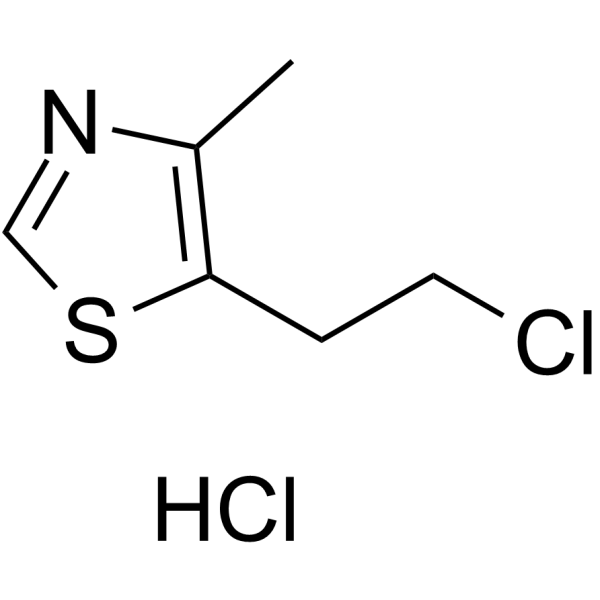
Chlormethiazole hydrochloride
Based on 4 publication(s) in Google Scholar
Clomethiazole hydrochloride is a potent and orally active GABAA agonist. Clomethiazole hydrochloride inhibits cytochrome P450 isoforms: CYP2A6 and CYP2E1 in human liver microsomes. Clomethiazole hydrochloride is an anticonvulsant agent and has the potential for treating convulsive status epilepticus.
For research use only. We do not sell to patients.
- Purity : 99.94%
- CAS No.: 6001-74-7
- Formula: C6H9Cl2NS
- Molecular Weight:198.11
-
Storage:
4°C, sealed storage, away from moisture
* In solvent : -80°C, 6 months; -20°C, 1 month (sealed storage, away from moisture)

To place orders, for customer services and technical support, please contact: MedChemExpress USA
Tel: 609-228-6898 E-mail: [email protected] [email protected]


-
 Biological Activity
-
Chemical Information
-
Solvent & Solubility
- Purity & Documentation
- References
-
 Help & FAQs


-
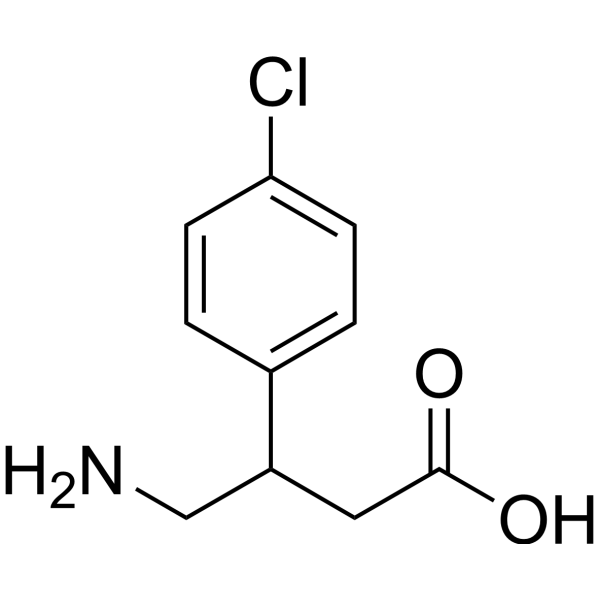
HY-B0007
BaclofenGABABR Agonist -
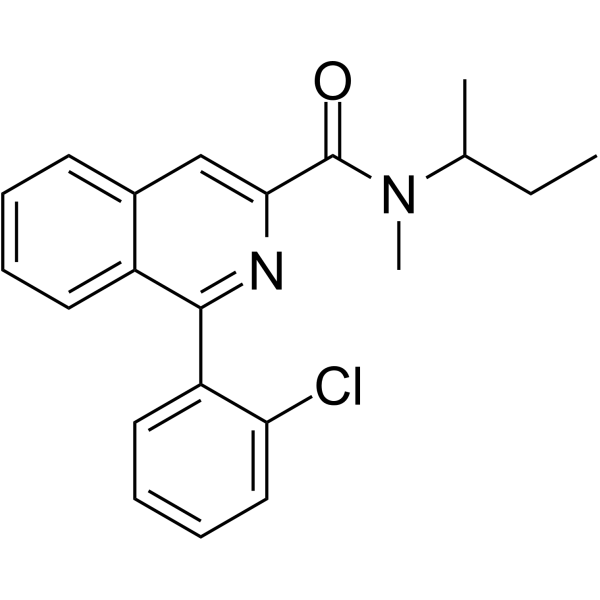
HY-19567
PK 11195Parasite Inhibitor -
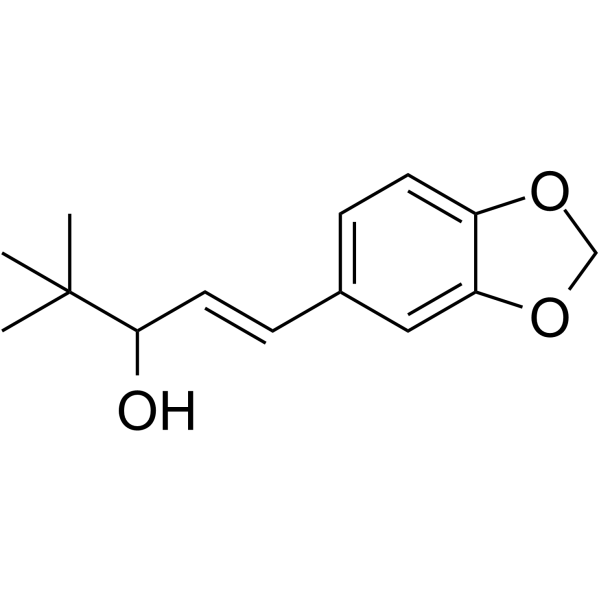
HY-103392
StiripentolAnticonvulsant Agent -
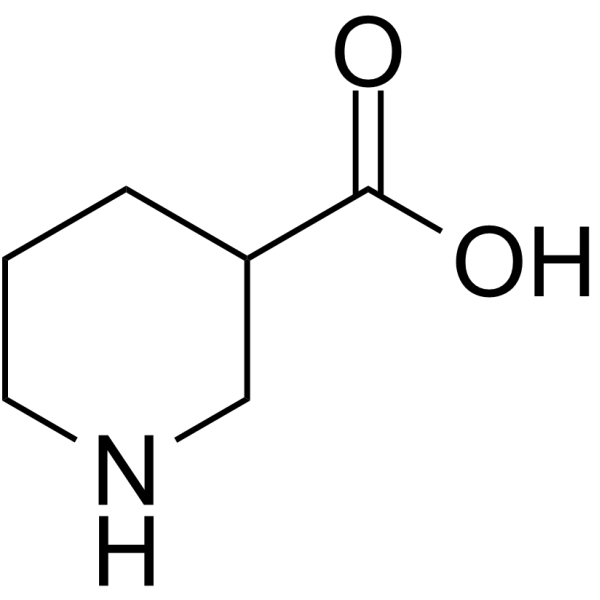
HY-69359
Nipecotic acidGABA Uptake Inhibitor -
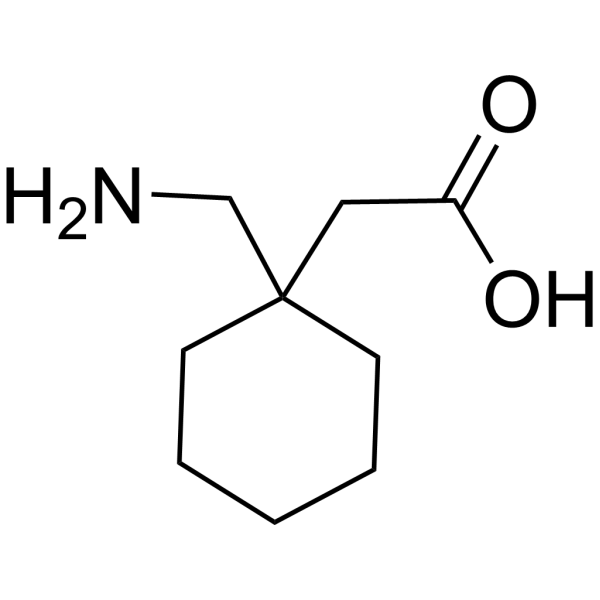
HY-A0057
GabapentinCalcium Channel Blocker. -
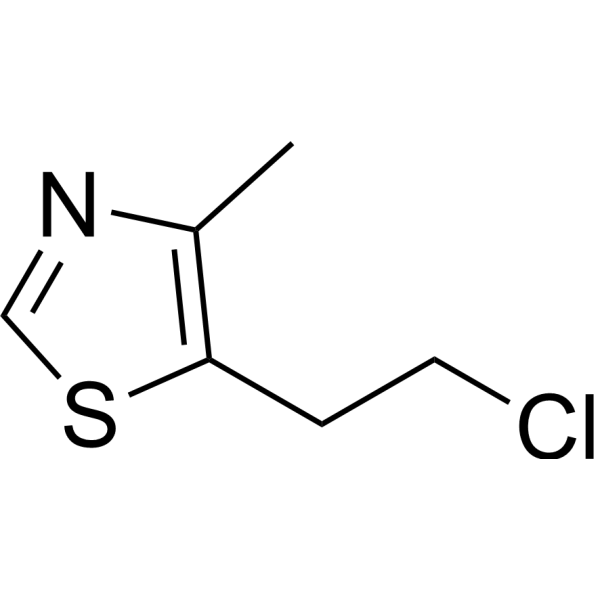
HY-129105
ClomethiazoleGABAA Agonist -
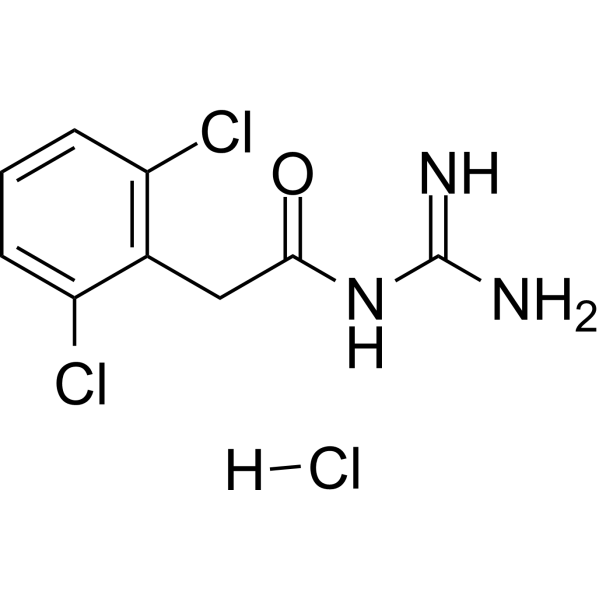
HY-17416
Guanfacine hydrochlorideα2A Agonist -
HY-N1950
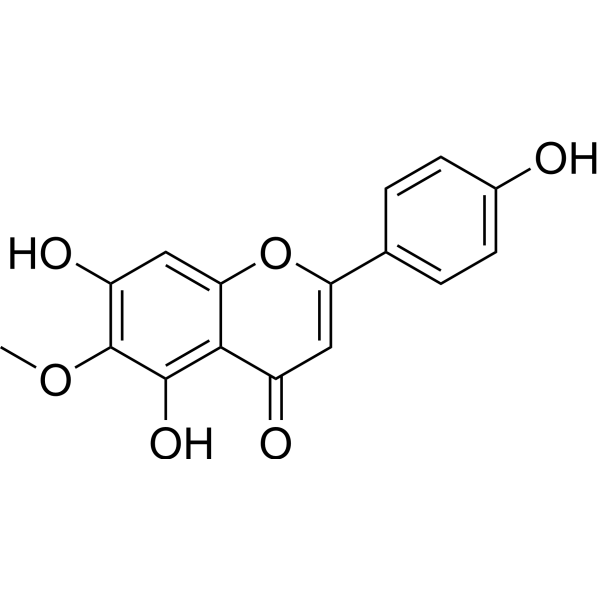
HispidulinPim-1 Inhibitor -
HY-17030
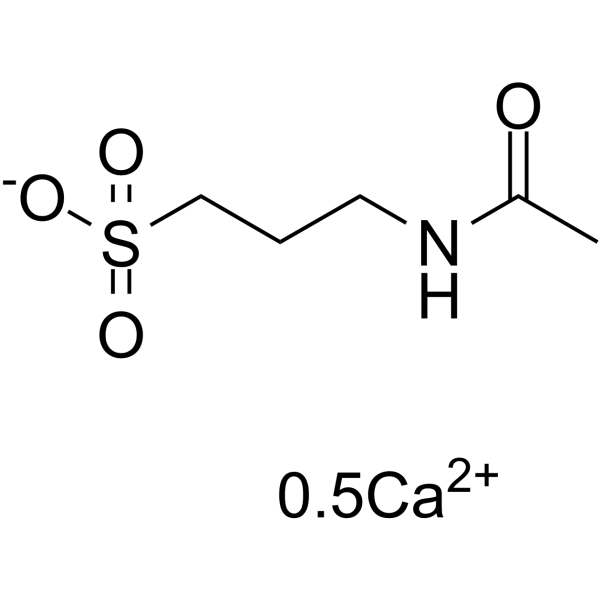
Acamprosate calciumGABA Receptor Agonist -
HY-B0493
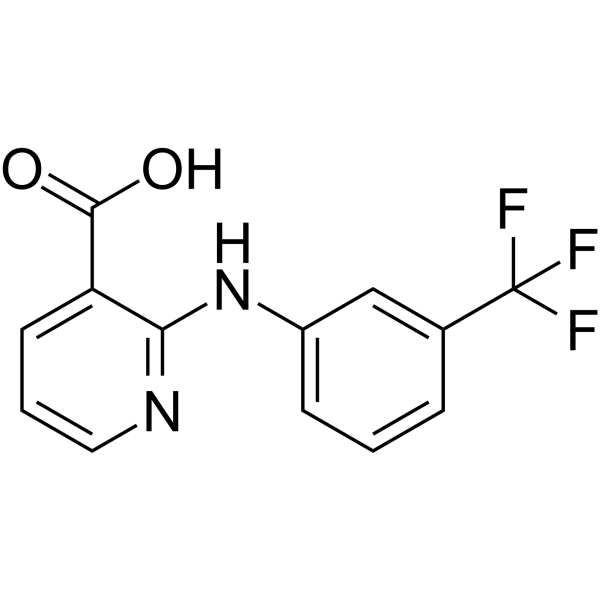
Niflumic acidChloride Channel/COX Inhibitor -
HY-107994
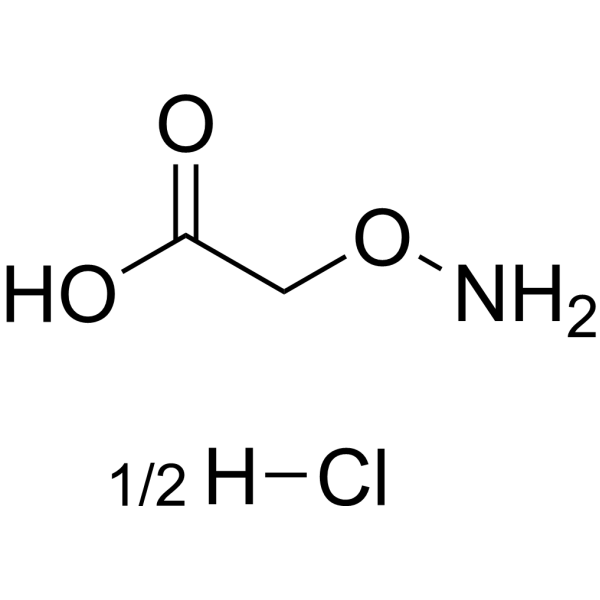
Aminooxyacetic acid hemihydrochlorideGABA Receptor Inhibitor -
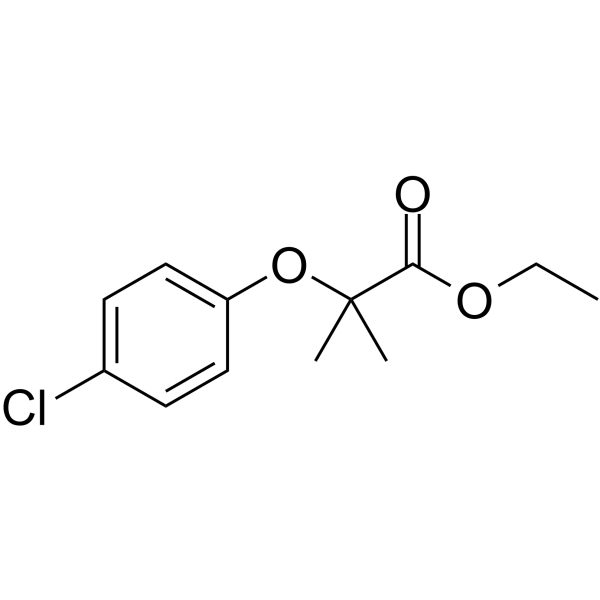
HY-B0287
ClofibratePPAR Agonist
Publications Citing Use of MedChemExpress (MCE) Chlormethiazole hydrochloride
More

Biological Activity
Description


Chemical Information
-
CAS No. 6001-74-7
-
Appearance Solid
-
Molecular Weight 198.11
-
Formula C6H9Cl2NS
-
Color Light yellow to yellow
-
SMILES
CC1=C(CCCl)SC=N1.Cl
-
Synonyms
Clomethiazole hydrochloride
-
Shipping
Room temperature in continental US; may vary elsewhere.
-
Storage
4°C, sealed storage, away from moisture
* In solvent : -80°C, 6 months; -20°C, 1 month (sealed storage, away from moisture)


Publications (4)
-
Journal Impact Factor
-
Most Recent
-
Biomaterials
Endoplasmic reticulum-targeted inhibition of CYP2E1 with vitamin E nanoemulsions alleviates hepatocyte oxidative stress and reverses alcoholic liver disease. [Abstract]2022 Sep:288:121720. PMID: 35961822 -
Cell Death Dis
USP14 governs CYP2E1 to promote nonalcoholic fatty liver disease through deubiquitination and stabilization of HSP90AA1. [Abstract]2023 Aug 26;14(8):566. PMID: 37633951 -
ACS Environ Au
Machine Learning-Assisted Recognition of Environmental Sulfur-Containing Chemicals in Nontargeted Mass Spectrometry Analysis of Inadequate Mass Resolution. [Abstract]2025 Aug 5;5(6):573-582. PMID: 41277996 -


Solvent & Solubility
In Vitro:
DMSO : 125 mg/mL (630.96 mM; Need ultrasonic; Hygroscopic DMSO has a significant impact on the solubility of product, please use newly opened DMSO)
H2O : 100 mg/mL (504.77 mM; Need ultrasonic)
Please refer to the solubility information to select the appropriate solvent. Once prepared, please aliquot and store the solution to prevent product inactivation from repeated freeze-thaw cycles.
Storage method and period of stock solution: -80°C, 6 months; -20°C, 1 month (sealed storage, away from moisture). When stored at -80°C, please use it within 6 months. When stored at -20°C, please use it within 1 month.
* Note: If you choose water as the stock solution, please dilute it to the working solution, then filter and sterilize it with a 0.22 μm filter before use.
Please refer to the solubility information to select the appropriate solvent. Once prepared, please aliquot and store the solution to prevent product inactivation from repeated freeze-thaw cycles.
Storage method and period of stock solution: -80°C, 6 months; -20°C, 1 month (sealed storage, away from moisture). When stored at -80°C, please use it within 6 months. When stored at -20°C, please use it within 1 month.
* Note: If you choose water as the stock solution, please dilute it to the working solution, then filter and sterilize it with a 0.22 μm filter before use.
Concentration (start) × Volume (start) = Concentration (final) × Volume (final)
In Vivo:
Select the appropriate dissolution method based on your experimental animal and administration route.
- For the following dissolution methods, please ensure to first prepare a clear stock solution using an In Vitro approach and then sequentially add co-solvents:
- To ensure reliable experimental results, the clarified stock solution can be appropriately stored based on storage conditions. As for the working solution for In Vivo experiments, it is recommended to prepare freshly and use it on the same day.
- The percentages shown for the solvents indicate their volumetric ratio in the final prepared solution. If precipitation or phase separation occurs during preparation, heat and/or sonication can be used to aid dissolution.
Add each solvent one by one: 10% DMSO 40% PEG300 5% Tween-80 45% Saline
Solubility: ≥ 2.08 mg/mL (10.50 mM); Clear solution
This protocol yields a clear solution of ≥ 2.08 mg/mL (saturation unknown).
Taking 1 mL working solution as an example, add 100 μL DMSO stock solution (20.8 mg/mL) to 400 μL PEG300, and mix evenly; then add 50 μL Tween-80 and mix evenly; then add 450 μL Saline to adjust the volume to 1 mL.
Preparation of Saline: Dissolve 0.9 g sodium chloride in ddH₂O and dilute to 100 mL to obtain a clear Saline solution.
Add each solvent one by one: 10% DMSO 90% (20% SBE-β-CD in Saline)
Solubility: ≥ 2.08 mg/mL (10.50 mM); Clear solution
This protocol yields a clear solution of ≥ 2.08 mg/mL (saturation unknown).
Taking 1 mL working solution as an example, add 100 μL DMSO stock solution (20.8 mg/mL) to 900 μL 20% SBE-β-CD in Saline, and mix evenly.
Preparation of 20% SBE-β-CD in Saline (4°C, storage for one week): 2 g SBE-β-CD powder is dissolved in 10 mL Saline, completely dissolve until clear.
For the following dissolution methods, please prepare the working solution directly:
It is recommended to prepare fresh solutions and use them promptly within a short period of time.
The percentages shown for the solvents indicate their volumetric ratio in the final prepared solution. If precipitation or phase separation occurs during preparation, heat and/or sonication can be used to aid dissolution.
Add each solvent one by one: PBS
Solubility: 12.5 mg/mL (63.10 mM); Clear solution; Need ultrasonic
In Vivo Dissolution Calculator
Please enter the basic information of animal experiments:
-
-
-
-
Recommended: Prepare an additional quantity of animals to account for potential losses during experiments.
Working solution concentration: 0.22 mg/mL
This product has good water solubility, please refer to the measured solubility data in water/PBS/Saline for details.


Purity & Documentation
-
Data Sheet (276 KB)
-
SDS (476 KB)
- English - EN (476 KB)
- Français - FR (476 KB)
- Deutsch - DE (476 KB)
- Norwegian - NO (476 KB)
- Español - ES (476 KB)
- Swedish - SV (476 KB)
- Italian - IT (476 KB)
- Korean - KR (476 KB)
- Portuguese - PT (476 KB)
-
Handling Instructions (2659 KB)
References
[1]. Hohmann N, et al. Clomethiazole inhibits cytochrome P450 2E1 and improves alcoholic liver disease. Gut. 2022 Apr;71(4):842-844. [Content Brief]
[2]. Hewitt KE, et al. Chlormethiazole, dizocilpine and haloperidol prevent the degeneration of serotonergic nerve terminals induced by administration of MDMA ('Ecstasy') to rats. Neuropharmacology. 1994 Dec;33(12):1589-95. [Content Brief]
[3]. Cross AJ, et al. The protective action of chlormethiazole against ischaemia-induced neurodegeneration in gerbils when infused at doses having little sedative or anticonvulsant activity. Br J Pharmacol. 1995 Apr;114(8):1625-30. [Content Brief]


Complete Stock Solution Preparation Table
Please refer to the solubility information to select the appropriate solvent. Once prepared, please aliquot and store the solution to prevent product inactivation from repeated freeze-thaw cycles.
Storage method and period of stock solution: -80°C, 6 months; -20°C, 1 month (sealed storage, away from moisture). When stored at -80°C, please use it within 6 months. When stored at -20°C, please use it within 1 month.
| Optional Solvent | Concentration Solvent Mass | 1 mg | 5 mg | 10 mg | 25 mg |
|---|---|---|---|---|---|
| H2O / DMSO | 1 mM | 5.0477 mL | 25.2385 mL | 50.4770 mL | 126.1925 mL |
| 5 mM | 1.0095 mL | 5.0477 mL | 10.0954 mL | 25.2385 mL | |
| 10 mM | 0.5048 mL | 2.5239 mL | 5.0477 mL | 12.6193 mL | |
| 15 mM | 0.3365 mL | 1.6826 mL | 3.3651 mL | 8.4128 mL | |
| 20 mM | 0.2524 mL | 1.2619 mL | 2.5239 mL | 6.3096 mL | |
| 25 mM | 0.2019 mL | 1.0095 mL | 2.0191 mL | 5.0477 mL | |
| 30 mM | 0.1683 mL | 0.8413 mL | 1.6826 mL | 4.2064 mL | |
| 40 mM | 0.1262 mL | 0.6310 mL | 1.2619 mL | 3.1548 mL | |
| 50 mM | 0.1010 mL | 0.5048 mL | 1.0095 mL | 2.5239 mL | |
| 60 mM | 0.0841 mL | 0.4206 mL | 0.8413 mL | 2.1032 mL | |
| 80 mM | 0.0631 mL | 0.3155 mL | 0.6310 mL | 1.5774 mL | |
| 100 mM | 0.0505 mL | 0.2524 mL | 0.5048 mL | 1.2619 mL |
* Note: If you choose water as the stock solution, please dilute it to the working solution, then filter and sterilize it with a 0.22 μm filter before use.


Chlormethiazole hydrochloride Related Classifications
HY-A0296 Related Classifications
 Powered by Bioz