



Curdlan
Based on 2 publication(s) in Google Scholar
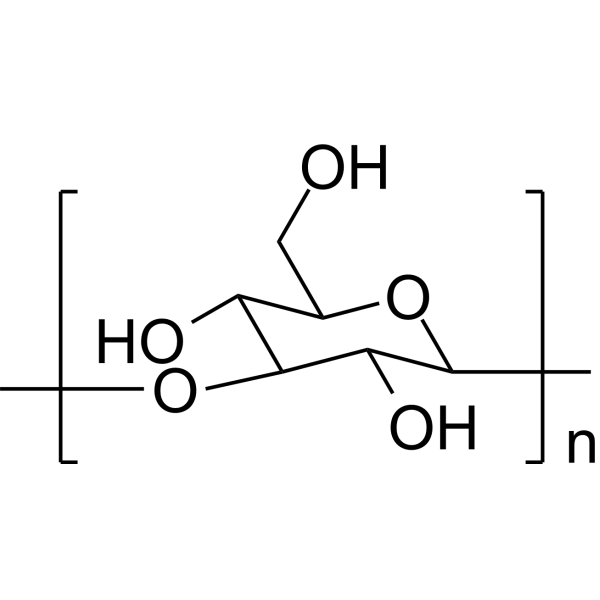
Curdlan is a polysaccharide found in bacteria, consisting of a glucose homopolymer with β-1,3-glycosidic linkages. Curdlan can be recognized by Dectin-1 (a C-type lectin receptor), inducing immune responses in tissue mast cells and enhancing dendritic cell effects in tumor immunity. Curdlan holds potential for research in cancer and immune-inflammatory diseases.
For research use only. We do not sell to patients.
- Purity : 98.01%
- CAS No.: 54724-00-4
- Formula: (C6H10O5)n
-
Storage:Powder -20°C, 3 years , 4°C, 2 years ; In solvent -80°C, 6 months , -20°C, 1 month

To place orders, for customer services and technical support, please contact: MedChemExpress USA
Tel: 609-228-6898 E-mail: [email protected] [email protected]


-
 Biological Activity
-
Chemical Information
-
Solvent & Solubility
- Purity & Documentation
- References
-
 Help & FAQs


-
HY-119109
LaminaranImmunotherapy Agent -
HY-134816
D-GlucanDectin-1 Activator -
HY-13259
MG-132Proteasome Inhibitor -
HY-18739
Phorbol 12-myristate 13-acetatePKC Activator -

HY-Y1888
Corn oil -

HY-W145522
Pullulan, Viscosity(10%):15-180mPa.sGlucosic Polysaccharide -
HY-Y0873
PEG300Neutral Polymer -
HY-B0015
PaclitaxelAntitumor Agent -
HY-10219
RapamycinmTOR Inhibitor -
HY-17561
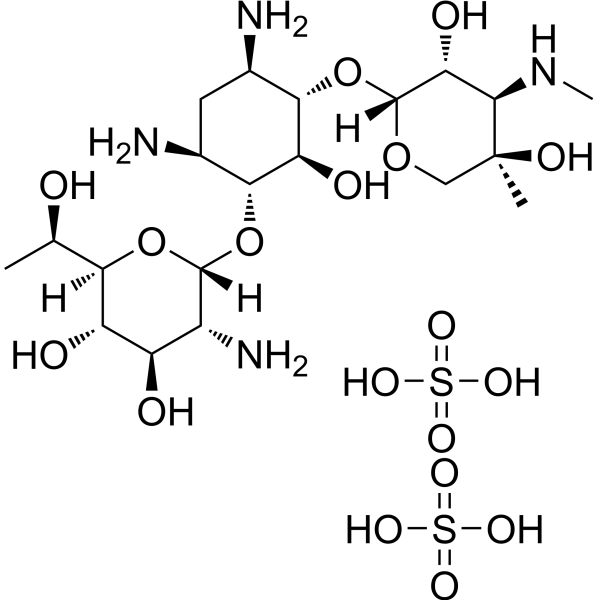
G-418 disulfateAminoglycoside Antibiotic -
HY-P1180A
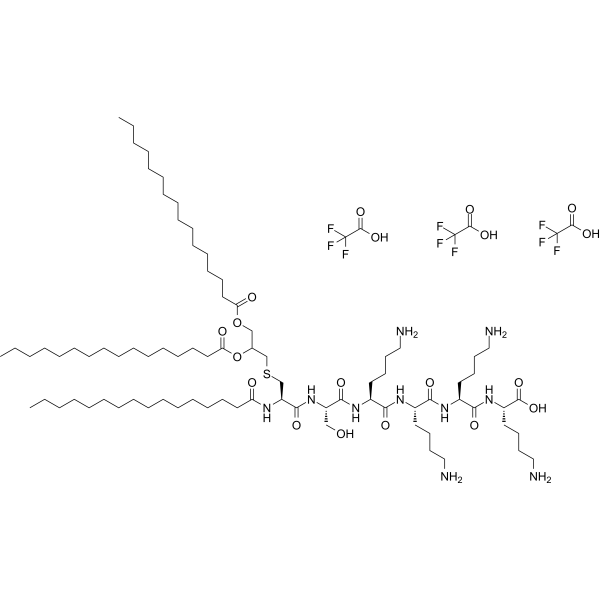
Pam3CSK4 TFATLR1/2 Agonist -

HY-N6653
LentinanNrf2 Activator
Publications Citing Use of MedChemExpress (MCE) Curdlan
More Customer Validation & Images

-
In Vivo Efficacy Study
-
In Vivo Efficacy Study
-
Histological Imaging/Staining
-
Flow Cytometry
-
Flow Cytometry


Biological Activity
Description
IC50 & Target
|
Dectin-1 |
In Vitro
Curdlan (10, 30, 100 μg/mL, 48 hours) activates dendritic cells by upregulating the expression of Dectin-1 and TLR4[2]. Curdlan (10, 30, 100 μg/mL, 24 hours) activates the immune effects of dendritic cells by regulating the cell cycle, enhancing dendritic cell migration ability, and increasing NO production[2]. Curdlan (50 μg/mL, 1 hour) induces tissue mast cells to modulate immune responses via the Dectin-1 receptor, stimulating their migration, synthesis of pro-inflammatory mediators, and production of ROS[3].
MedChemExpress (MCE) has not independently confirmed the accuracy of these methods. They are for reference only. .
-
Cell Line:LPS-induced mouse dendritic cells (BM cells from C57BL/6 mice)
-
Concentration:10 μg/mL, 30 μg/mL, 100 μg/mL
-
Incubation Time:48 hours
-
Result:Increased the protein expression of Dectin-1 and TLR4.
-
Cell Line:LPS-induced mouse dendritic cells (BM cells from C57BL/6 mice)
-
Concentration:10 μg/mL, 30 μg/mL, 100 μg/mL
-
Incubation Time:24 hours
-
Result:Significantly enhanced the migration ability of dendritic cells.
-
Cell Line:LPS-induced mouse dendritic cells (BM cells from C57BL/6 mice)
-
Concentration:10 μg/mL, 30 μg/mL, 100 μg/mL
-
Incubation Time:24 hours
-
Result:Increased the proportion of dendritic cells in the G0/G1 phase.
In Vivo
MedChemExpress (MCE) has not independently confirmed the accuracy of these methods. They are for reference only.
-
Animal Model:B16F10 melanoma model in C57BL/6 mice (B16F10 cells were implanted subcutaneously into syngeneic mice)[2]
-
Dosage:10 mg/kg or 100 μg/mL
-
Administration:Method 1: Intraperitoneal injection (i.p.), every two days for 14 days (accompanied by subcutaneous injection of dendritic cells once a day for 14 days) Method 2: Pre-treated dendritic cells with curdlan (100 μg/mL) in vitro for 48 hours, then injected the dendritic cells subcutaneously into mice once a day for a total of 14 days. Note: B dendritic cells were activated by 16F10 melanoma cell lysate.
-
Result:Enhanced the antitumor immune response of dendritic cells.
Clinical Trial
| NCT Number | Sponsor | Condition | Start Date |
Phase

|
|---|---|---|---|---|
| NCT01329991 | Plexxikon| | 2011-05 | PHASE1 |


Chemical Information
-
CAS No. 54724-00-4
-
Appearance Solid
-
Formula (C6H10O5)n
-
Color White to yellow
-
SMILES
OC[C@H]1O[C@@H](C)[C@H](O)C(OC)[C@@H]1O.[n]
-
Shipping
Room temperature in continental US; may vary elsewhere.
-
Storage
Powder -20°C 3 years 4°C 2 years In solvent -80°C 6 months -20°C 1 month


Publications (2)
-
Journal Impact Factor
-
Most Recent
-
Int J Biol Macromol
Curdlan/chitosan NIR-responsive in situ forming gel: An injectable scaffold for the treatment of epiphyseal plate injury. [Abstract]2025 May;308(Pt 1):142052. PMID: 40090650 -
Curdlan purchased from MedChemExpress. Usage Cited in: Int Immunopharmacol. 2026 Jan 28.
Curdlan (3 mg; i.p.; once a week for twice) developed robust polyarthritis in BALB/c mice within four weeks.
Curdlan purchased from MedChemExpress. Usage Cited in: Int Immunopharmacol. 2026 Jan 28.
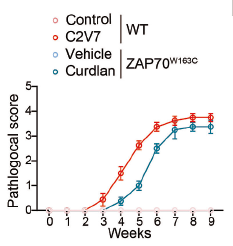
Curdlan (3 mg; i.p.; once a week for twice) induced inflammation in BALB/c-ZAP70W163C mice.
Curdlan purchased from MedChemExpress. Usage Cited in: Int Immunopharmacol. 2026 Jan 28.
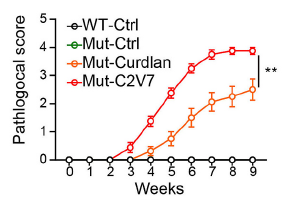
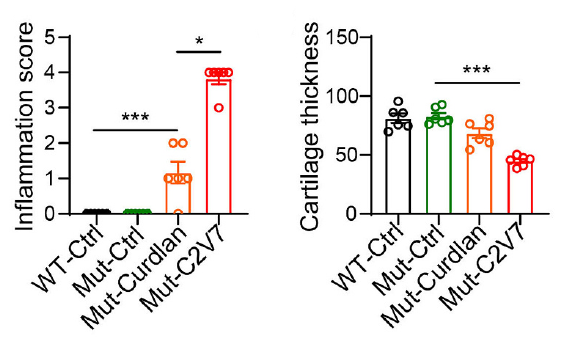
Curdlan (3 mg; i.p.; once a week for twice) exacerbated inflammatory infiltrates and cartilage degradation in SKG mice.
Curdlan purchased from MedChemExpress. Usage Cited in: Int Immunopharmacol. 2026 Jan 28.
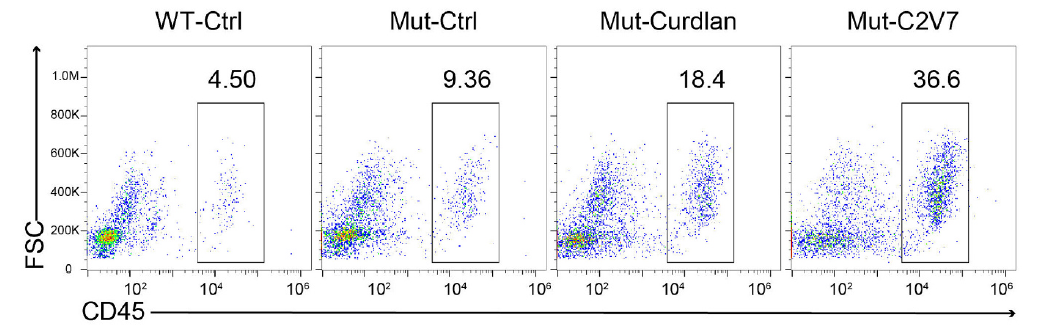
Curdlan (3 mg; i.p.; once a week for twice) significantly increased the proportion of CD45+ immune cells in the joints of SKG mice.
Curdlan purchased from MedChemExpress. Usage Cited in: Int Immunopharmacol. 2026 Jan 28.
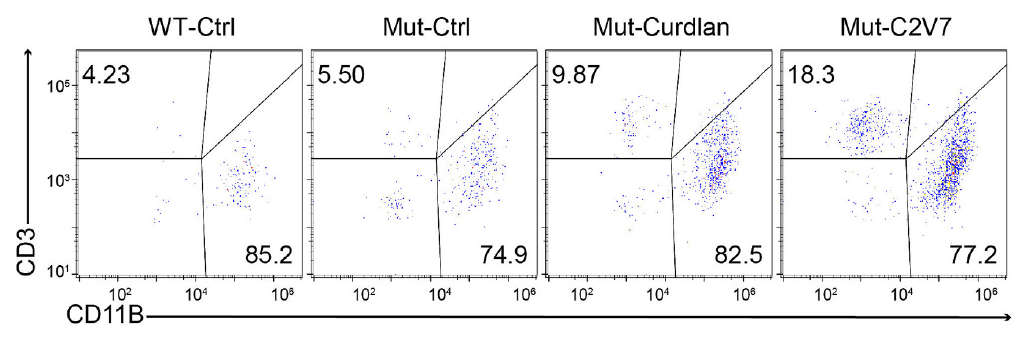
Curdlan (3 mg; i.p.; once a week for twice) significantly increased proportions of CD3+ T cells and CD11b+ myeloid cells in the soft tissues of SKG mouse ankle joints.


Solvent & Solubility
In Vitro:
DMSO : 10 mg/mL (Need ultrasonic; Hygroscopic DMSO has a significant impact on the solubility of product, please use newly opened DMSO)
0.1 M NaOH : 1 mg/mL (ultrasonic and adjust pH to 12 with NaOH)
In Vivo:
Select the appropriate dissolution method based on your experimental animal and administration route.
- For the following dissolution methods, please ensure to first prepare a clear stock solution using an In Vitro approach and then sequentially add co-solvents:
- To ensure reliable experimental results, the clarified stock solution can be appropriately stored based on storage conditions. As for the working solution for In Vivo experiments, it is recommended to prepare freshly and use it on the same day.
- The percentages shown for the solvents indicate their volumetric ratio in the final prepared solution. If precipitation or phase separation occurs during preparation, heat and/or sonication can be used to aid dissolution.
Add each solvent one by one: 10% DMSO 40% PEG300 5% Tween-80 45% Saline
Solubility: ≥ 1 mg/mL; Clear solution
This protocol yields a clear solution of ≥ 1 mg/mL (saturation unknown).
Taking 1 mL working solution as an example, add 100 μL DMSO stock solution (10.0 mg/mL) to 400 μL PEG300, and mix evenly; then add 50 μL Tween-80 and mix evenly; then add 450 μL Saline to adjust the volume to 1 mL.
Preparation of Saline: Dissolve 0.9 g sodium chloride in ddH₂O and dilute to 100 mL to obtain a clear Saline solution.
In Vivo Dissolution Calculator
Please enter the basic information of animal experiments:
-
-
-
-
Recommended: Prepare an additional quantity of animals to account for potential losses during experiments.
Please enter your animal formula composition:
-
%DMSO +
Recommended: Keep the proportion of DMSO in working solution below 2% if your animal is weak.
-
%+
-
+%Tween-80 + +
-
%Saline +
The co-solvents required include: DMSO, . All of co-solvents are available by MedChemExpress (MCE). , Tween 80. All of co-solvents are available by MedChemExpress (MCE).
Working solution concentration: 0.22 mg/mL
Method for preparing stock solution: mg drug dissolved in μL DMSO. Stock solution concentration: mg/mL.
1. Take μL DMSO stock solution;
2. Add μL .
μL , mix evenly;
3. Then add μL Tween 80, mix evenly;
4. Then add μL
Please ensure that the stock solution in the first step is dissolved to a clear state, and add co-solvents in sequence. You can use ultrasonic heating (ultrasonic cleaner, recommended frequency 20-40 kHz), vortexing, etc. to assist dissolution.


Purity & Documentation
-
Data Sheet (287 KB)
-
SDS (252 KB)
- English - EN (252 KB)
- Français - FR (252 KB)
- Deutsch - DE (252 KB)
- Norwegian - NO (252 KB)
- Español - ES (252 KB)
- Swedish - SV (252 KB)
- Italian - IT (252 KB)
- Korean - KR (252 KB)
- Portuguese - PT (252 KB)
-
Handling Instructions (2659 KB)
References
[1]. Masanori Miwa, et al. Food Applications of Curdlan. Food Hydrocolloids pp 119-124.
[2]. Kim HS, et al. Curdlan activates dendritic cells through dectin-1 and toll-like receptor 4 signaling. Int Immunopharmacol. 2016 Oct;39:71-78. [Content Brief]
[3]. Żelechowska P, et al. Curdlan stimulates tissue mast cells to synthesize pro-inflammatory mediators, generate ROS, and migrate via Dectin-1 receptor. Cell Immunol. 2020 May;351:104079. [Content Brief]

Calculators
Concentration (start) × Volume (start) = Concentration (final) × Volume (final)


Curdlan Related Classifications
HY-131166 Related Classifications
 Powered by Bioz