



AX-024
Based on 3 publication(s) in Google Scholar
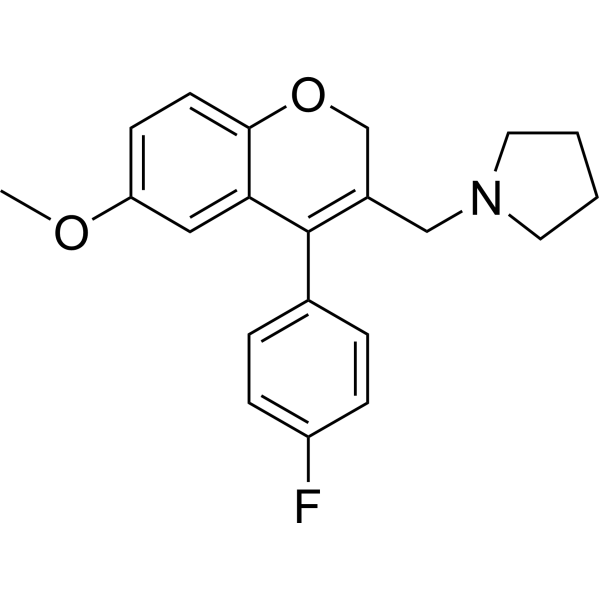
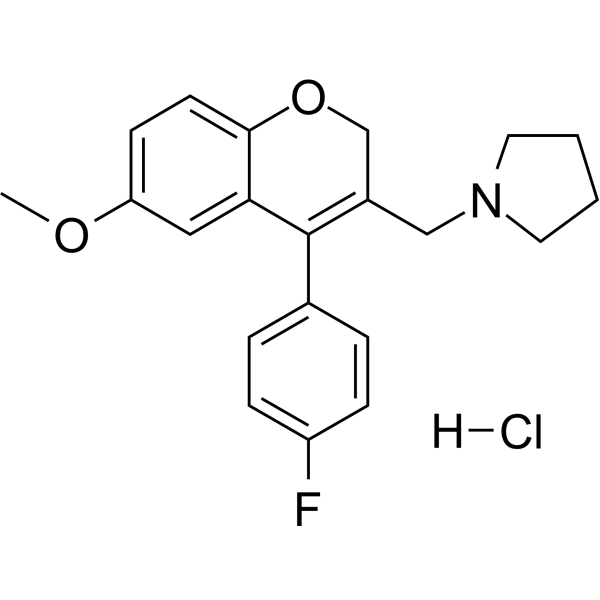
AX-024 is an orally available, first-in-class inhibitor of the TCR-Nck interaction that selectively inhibits TCR-triggered T cell activation with an IC50 ~1 nM. AX-024 modulates cell signaling by targeting SH3 domains. AX-024 has low-acute toxicity and high potency and selectivity, and strongly inhibit the production of IL-6, TNF-α, IFN-γ, IL-10 and IL-17A.
Para uso exclusivo en investigación. No vendemos a pacientes.
- Pureza : 99.73%
- No. CAS: 1370544-73-2
- Fòrmula: C21H22FNO2
- Peso molecular:339.40
-
Almacenamiento:Powder -20°C, 3 years , 4°C, 2 years ; In solvent -80°C, 2 years , -20°C, 1 year

To place orders, for customer services and technical support, please contact: MedChemExpress USA
Tel: 609-228-6898 E-mail: [email protected] [email protected]


-
 Actividad biológica
-
Chemical Information
-
Solvente y solubilidad
- Protocolo
- Pureza y Documentación
- Referencias
-
 Help & FAQs


-
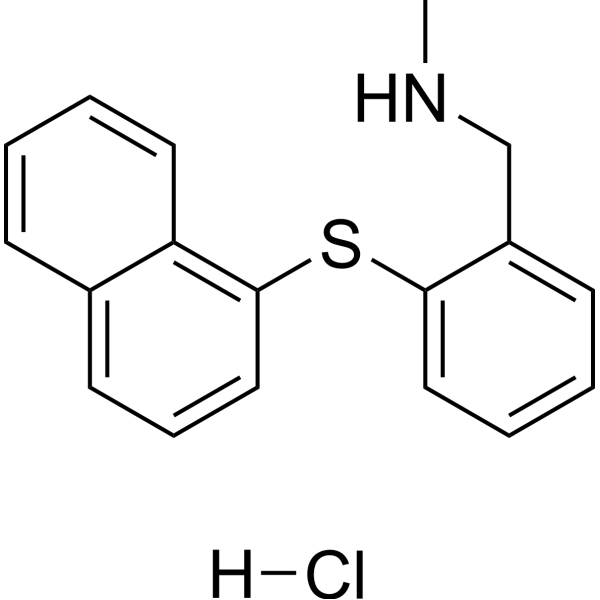
HY-12836A
IFN alpha-IFNAR-IN-1 hydrochlorideIFN alpha-IFNAR Inhibitor -
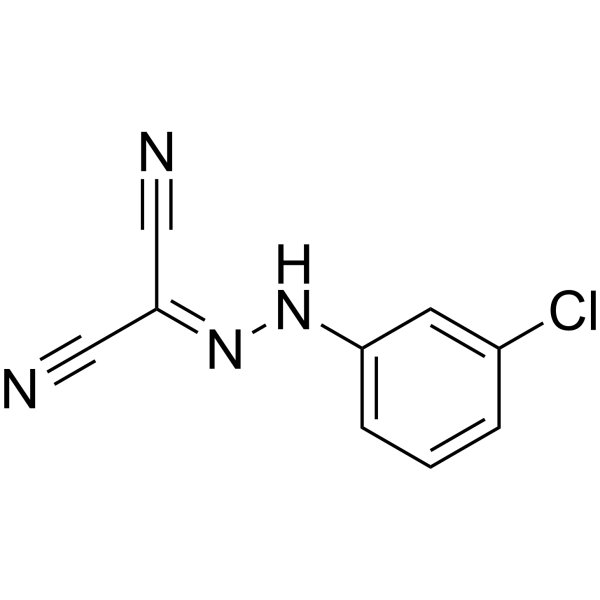
HY-100941
CCCPOXPHOS Uncoupler -
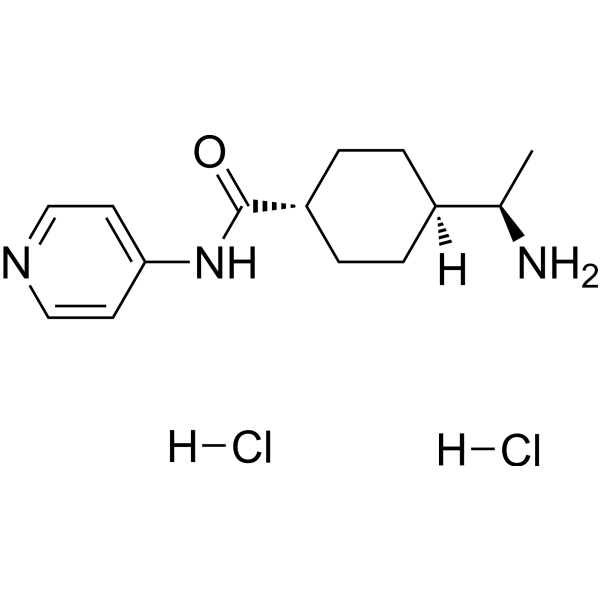
HY-10583
Y-27632 dihydrochlorideROCK Inhibitor -
HY-107390A
AX-024 hydrochlorideTCR-Nck Interaction Inhibitor -
HY-120934
C25-140TRAF6-Ubc13 Inhibitor -

HY-107390AR
AX-024 hydrochloride (Standard)Reference Standard -

HY-100941R
CCCP (Standard)OXPHOS Uncoupler -
HY-A0003
LenalidomideImmunomodulator -
HY-N0629
Maslinic acidBacterial Inhibitor -
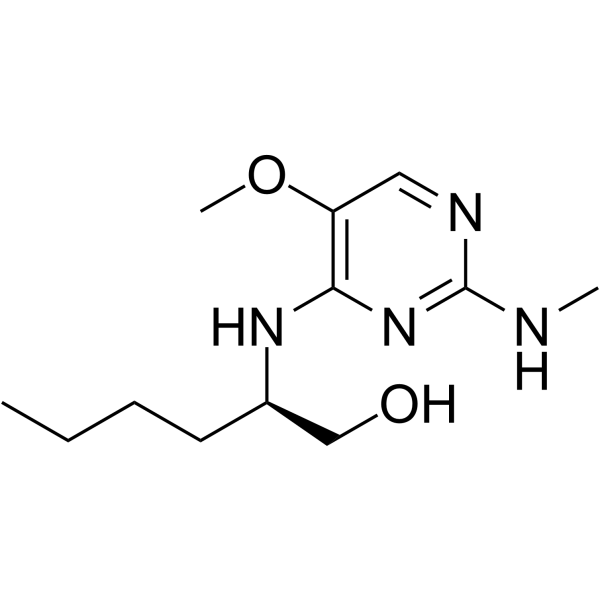
HY-112189
Interferon receptor inducer-1IFNAR Agonist -
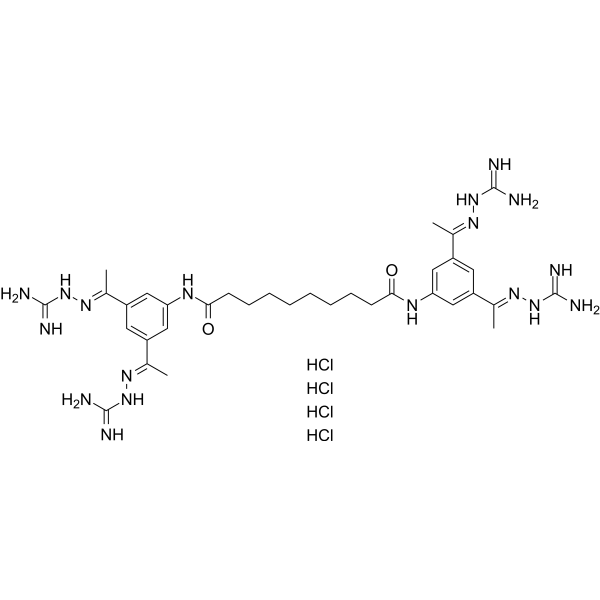
HY-15509A
Semapimod tetrahydrochlorideProinflammatory Cytokine Inhibitor -
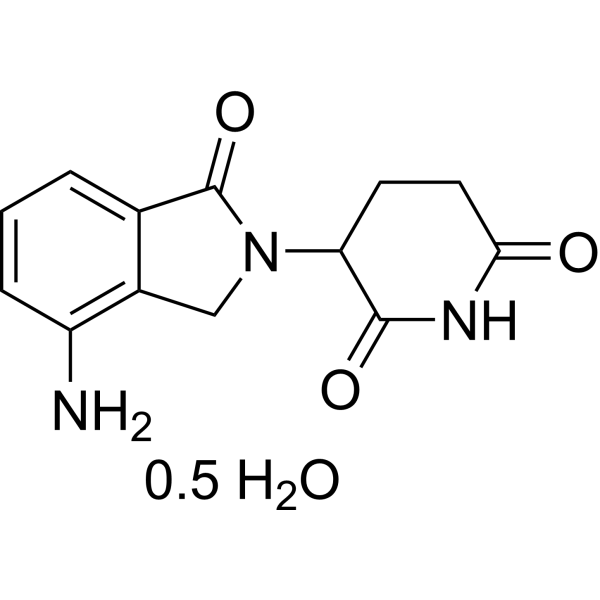
HY-A0003B
Lenalidomide hemihydrateImmunomodulator
Publications Citing Use of MedChemExpress (MCE) AX-024
MoreVer todos los productos específicos de isoformas TNF Receptor
More

Actividad biológica
Descripciòn
IC50 & Target
[1]|
IL-6 |
IL-10 |
IL-17A |
In Vitro
AX-024 is >10,000-fold more potent than the AX-000 hit in terms of inhibition of TCR-triggered T cell proliferation. The IC50 of AX-024 in this assay is 1 nM, although it shows inhibitory effects at a concentration of 1 pM or less. AX-024 is also a much more potent inhibitor of cytokine release by human peripheral blood mononuclear cells stimulated with anti-CD3 than AX-000, strongly hindering interleukin-6 (IL-6), tumor necrosis factor-α (TNF-α), interferon-γ (IFN-γ), IL-10, and IL-17A production at a concentration of 10 nM. In CD8+ T cells of OT1 TCR transgenic (OT1Tg) mice bearing wild-type (WT) AX-024 strongly inhibits T cell proliferation at a concentration of 0.1 nM when OT1Tg T cells are WT for the PRS mutation. Coimmunoprecipitation experiments in these cells show that Nck recruitment to the TCR is induced upon stimulation in the absence of drug but is inhibited in the presence of AX-024 in a dose-dependent manner at concentrations starting from 1 nM[1].
MedChemExpress (MCE) has not independently confirmed the accuracy of these methods. They are for reference only.
In Vivo
MedChemExpress (MCE) has not independently confirmed the accuracy of these methods. They are for reference only.


Chemical Information
-
No. CAS 1370544-73-2
-
Appearance Solid
-
Peso molecular 339.40
-
Fòrmula C21H22FNO2
-
Color Light yellow to yellow
-
SMILES
COC1=CC=C(OC2)C(C(C3=CC=C(F)C=C3)=C2CN4CCCC4)=C1
-
Envío
Room temperature in continental US; may vary elsewhere.
-
Almacenamiento
Powder -20°C 3 years 4°C 2 years In solvent -80°C 2 years -20°C 1 year


Publications (3)
-
Journal Impact Factor
-
Most Recent
-
Cell Rep Med
Microbial-derived immunostimulatory small molecule augments anti-PD-1 therapy in lung cancer. [Abstract]2025 Dec 19:102519. PMID: 41421351 -
Cell Rep
TCR-NF-κB signaling activates the SENP1-NR4A1 axis to fine-tune effector activation of CD8+ T cells. [Abstract]2026 Mar 13;45(3):117102. PMID: 41831233 -
Life Sci
Mechanism of berberine in treating Helicobacter pylori induced chronic atrophic gastritis through IRF8-IFN-γ signaling axis suppressing. [Abstract]2020 May 1:248:117456. PMID: 32097666


Solvente y solubilidad
In Vitro:
Ethanol : 100 mg/mL (294.64 mM; Need ultrasonic)
DMSO : 35 mg/mL (103.12 mM; Need ultrasonic and warming; Hygroscopic DMSO has a significant impact on the solubility of product, please use newly opened DMSO)
Please refer to the solubility information to select the appropriate solvent. Once prepared, please aliquot and store the solution to prevent product inactivation from repeated freeze-thaw cycles.
Storage method and period of stock solution: -80°C, 2 years; -20°C, 1 year. When stored at -80°C, please use it within 2 years. When stored at -20°C, please use it within 1 year.
Please refer to the solubility information to select the appropriate solvent. Once prepared, please aliquot and store the solution to prevent product inactivation from repeated freeze-thaw cycles.
Storage method and period of stock solution: -80°C, 2 years; -20°C, 1 year. When stored at -80°C, please use it within 2 years. When stored at -20°C, please use it within 1 year.
Concentration (start) × Volume (start) = Concentration (final) × Volume (final)
In Vivo:
Select the appropriate dissolution method based on your experimental animal and administration route.
- For the following dissolution methods, please ensure to first prepare a clear stock solution using an In Vitro approach and then sequentially add co-solvents:
- To ensure reliable experimental results, the clarified stock solution can be appropriately stored based on storage conditions. As for the working solution for In Vivo experiments, it is recommended to prepare freshly and use it on the same day.
- The percentages shown for the solvents indicate their volumetric ratio in the final prepared solution. If precipitation or phase separation occurs during preparation, heat and/or sonication can be used to aid dissolution.
Add each solvent one by one: 10% DMSO 40% PEG300 5% Tween-80 45% Saline
Solubility: ≥ 2.5 mg/mL (7.37 mM); Clear solution
This protocol yields a clear solution of ≥ 2.5 mg/mL (saturation unknown).
Taking 1 mL working solution as an example, add 100 μL DMSO stock solution (25.0 mg/mL) to 400 μL PEG300, and mix evenly; then add 50 μL Tween-80 and mix evenly; then add 450 μL Saline to adjust the volume to 1 mL.
Preparation of Saline: Dissolve 0.9 g sodium chloride in ddH₂O and dilute to 100 mL to obtain a clear Saline solution.
Add each solvent one by one: 10% DMSO 90% (20% SBE-β-CD in Saline)
Solubility: 2.5 mg/mL (7.37 mM); Suspended solution; Need ultrasonic
This protocol yields a suspended solution of 2.5 mg/mL. Suspended solution can be used for oral and intraperitoneal injection.
Taking 1 mL working solution as an example, add 100 μL DMSO stock solution (25.0 mg/mL) to 900 μL 20% SBE-β-CD in Saline, and mix evenly.
Preparation of 20% SBE-β-CD in Saline (4°C, storage for one week): 2 g SBE-β-CD powder is dissolved in 10 mL Saline, completely dissolve until clear.
In Vivo Dissolution Calculator
Please enter the basic information of animal experiments:
-
-
-
-
Recommended: Prepare an additional quantity of animals to account for potential losses during experiments.
Please enter your animal formula composition:
-
%DMSO +
Recommended: Keep the proportion of DMSO in working solution below 2% if your animal is weak.
-
%+
-
+%Tween-80 + +
-
%Saline +
The co-solvents required include: DMSO, . All of co-solvents are available by MedChemExpress (MCE). , Tween 80. All of co-solvents are available by MedChemExpress (MCE).
Working solution concentration: 0.22 mg/mL
Method for preparing stock solution: mg drug dissolved in μL DMSO. Stock solution concentration: mg/mL.
1. Take μL DMSO stock solution;
2. Add μL .
μL , mix evenly;
3. Then add μL Tween 80, mix evenly;
4. Then add μL
Please ensure that the stock solution in the first step is dissolved to a clear state, and add co-solvents in sequence. You can use ultrasonic heating (ultrasonic cleaner, recommended frequency 20-40 kHz), vortexing, etc. to assist dissolution.


Pureza y Documentación
-
Ficha de datos (279 KB)
-
SDS (396 KB)
- English - EN (396 KB)
- Français - FR (396 KB)
- Deutsch - DE (396 KB)
- Norwegian - NO (396 KB)
- Español - ES (396 KB)
- Swedish - SV (396 KB)
- Italian - IT (396 KB)
- Korean - KR (396 KB)
- Portuguese - PT (396 KB)
-
Instrucciones de manejo (2659 KB)
Referencias


Complete Stock Solution Preparation Table
Please refer to the solubility information to select the appropriate solvent. Once prepared, please aliquot and store the solution to prevent product inactivation from repeated freeze-thaw cycles.
Storage method and period of stock solution: -80°C, 2 years; -20°C, 1 year. When stored at -80°C, please use it within 2 years. When stored at -20°C, please use it within 1 year.
| Optional Solvent | Concentration Solvent Mass | 1 mg | 5 mg | 10 mg | 25 mg |
|---|---|---|---|---|---|
| DMSO / Ethanol | 1 mM | 2.9464 mL | 14.7319 mL | 29.4638 mL | 73.6594 mL |
| 5 mM | 0.5893 mL | 2.9464 mL | 5.8928 mL | 14.7319 mL | |
| 10 mM | 0.2946 mL | 1.4732 mL | 2.9464 mL | 7.3659 mL | |
| 15 mM | 0.1964 mL | 0.9821 mL | 1.9643 mL | 4.9106 mL | |
| 20 mM | 0.1473 mL | 0.7366 mL | 1.4732 mL | 3.6830 mL | |
| 25 mM | 0.1179 mL | 0.5893 mL | 1.1786 mL | 2.9464 mL | |
| 30 mM | 0.0982 mL | 0.4911 mL | 0.9821 mL | 2.4553 mL | |
| 40 mM | 0.0737 mL | 0.3683 mL | 0.7366 mL | 1.8415 mL | |
| 50 mM | 0.0589 mL | 0.2946 mL | 0.5893 mL | 1.4732 mL | |
| 60 mM | 0.0491 mL | 0.2455 mL | 0.4911 mL | 1.2277 mL | |
| 80 mM | 0.0368 mL | 0.1841 mL | 0.3683 mL | 0.9207 mL | |
| 100 mM | 0.0295 mL | 0.1473 mL | 0.2946 mL | 0.7366 mL |


AX-024 Related Classifications
HY-107390 Related Classifications
 Powered by Bioz