



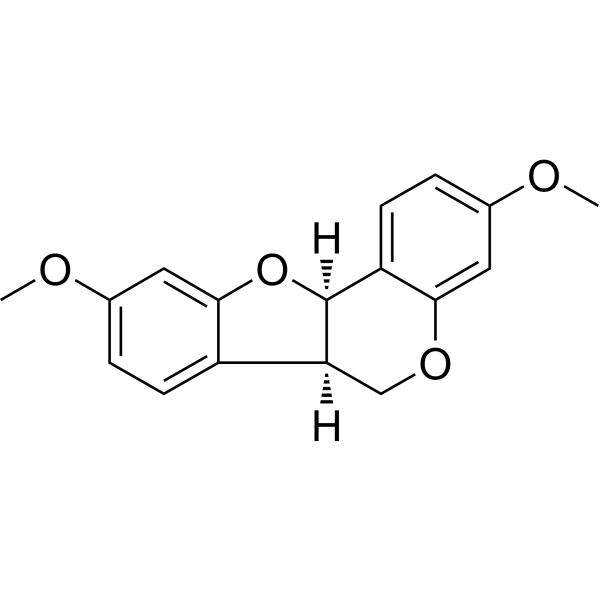
Homopterocarpin

Based on 1 Customer Validation
Homopterocarpin is an isoflavonoid that can be isolated from Pterocarpus erinaceus. Homopterocarpin has hepatoprotective, antioxidant and antiplasmodial activity. Homopterocarpin is a competitive reversible inhibitor of human monoamine oxidase-B with an IC50 and a Ki of 0.72 and 0.21 μM for hMAO-B, respectively. Homopterocarpin can be used for the research of liver injury and oxidative stress.
For research use only. We do not sell to patients.
- Purity : 98.00%
- CAS No.: 606-91-7
- Formula: C17H16O4
- Molecular Weight:284.31
-
Storage:
-20°C, protect from light
* In solvent : -80°C, 6 months; -20°C, 1 month (protect from light)

To place orders, for customer services and technical support, please contact: MedChemExpress USA
Tel: 609-228-6898 E-mail: [email protected] [email protected]


-
 Biological Activity
-
Chemical Information
- Protocols
- Purity & Documentation
- References
-
 Help & FAQs


-
HY-Y0882
Hydroxylamine hydrochlorideMAO Inhibitor -
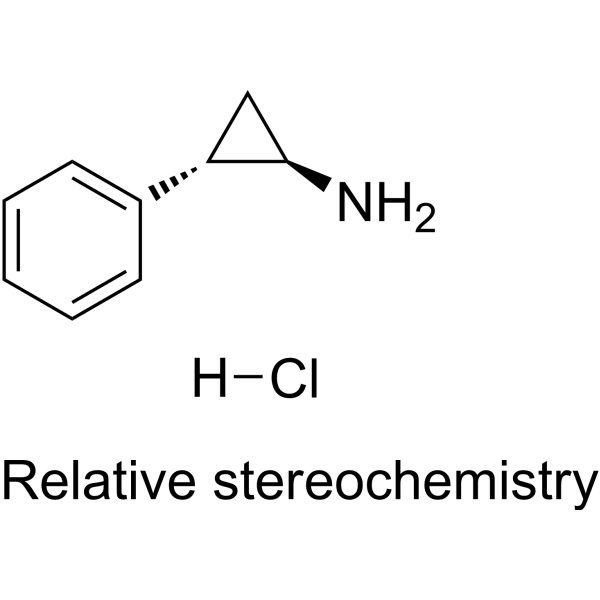
HY-17447A
Tranylcypromine hydrochlorideLSD1/MAO Inhibitor -
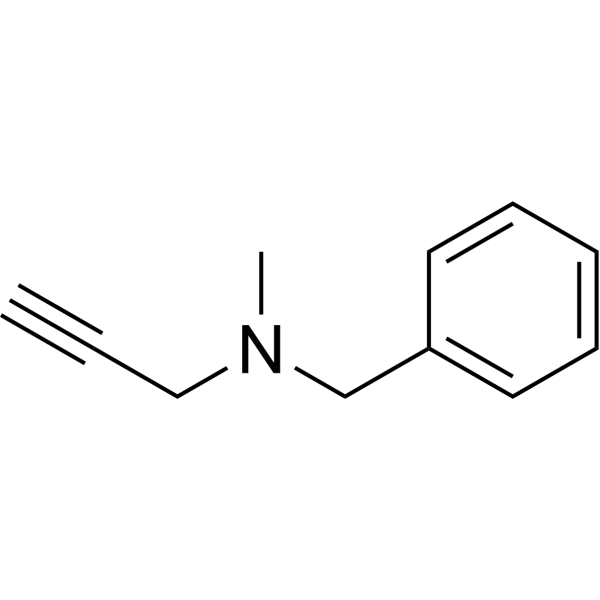
HY-A0091A
PargylineMonoamine Oxidase Inhibitor -
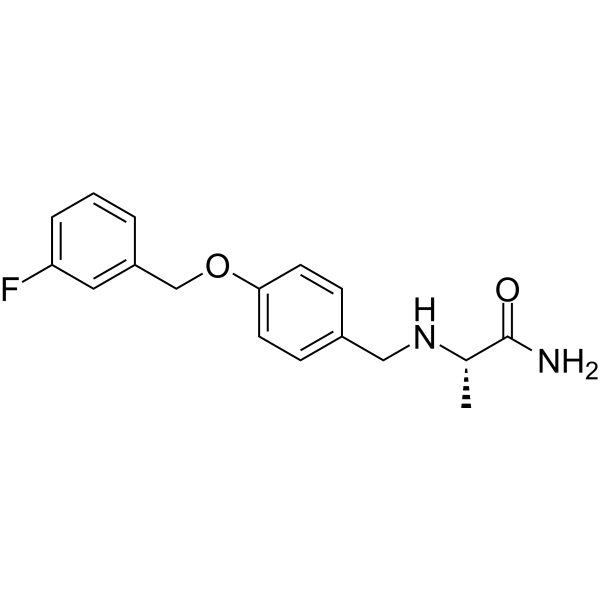
HY-70057
SafinamideMAO-B Inhibitor -
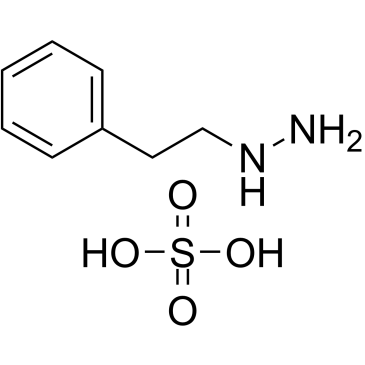
HY-B1018A
Phenelzine sulfateMAO Inhibitor -
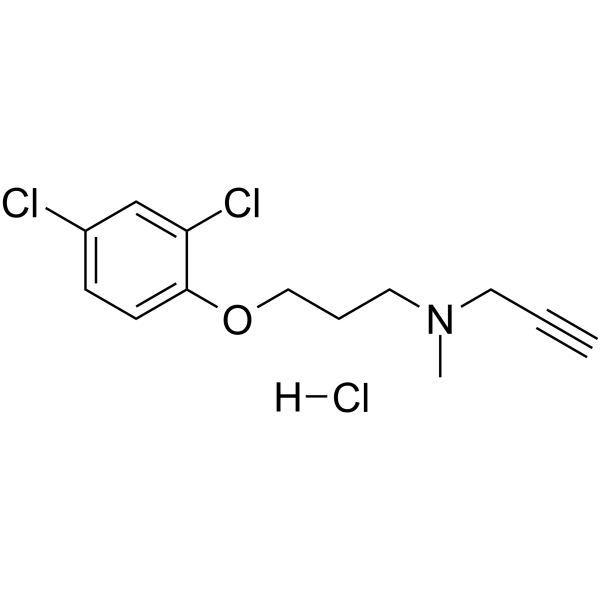
HY-14197A
Clorgyline hydrochlorideMAO-A Inhibitor -
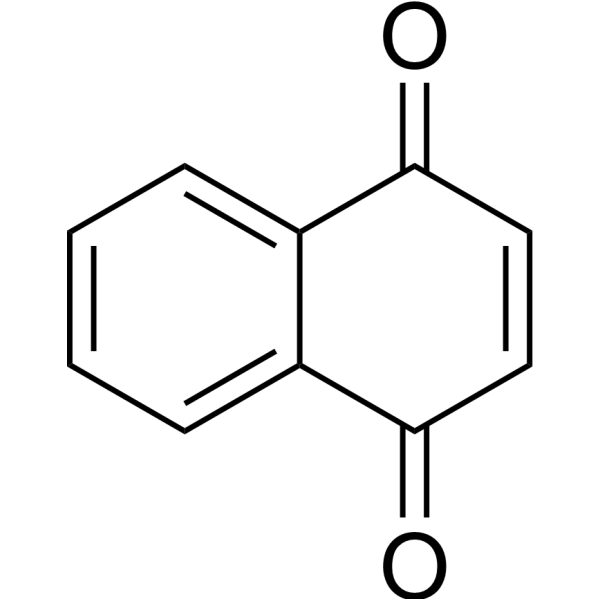
HY-W015490
1,4-NaphthoquinoneMAO-A/B Inhibitor -
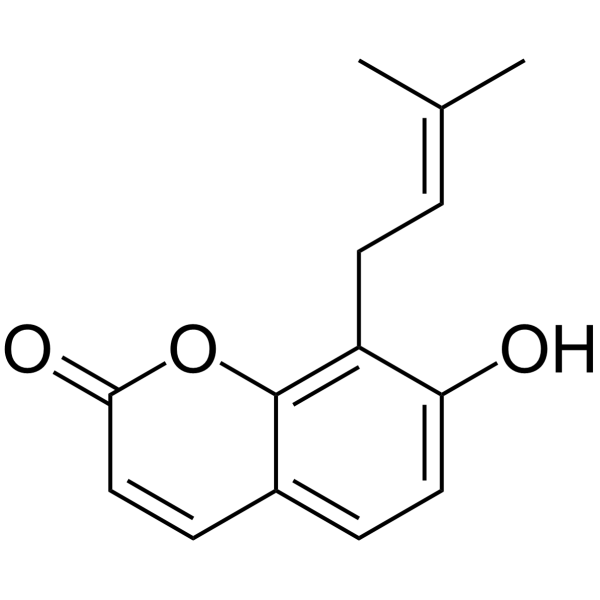
HY-N2554
OsthenolhMAO-A Inhibitor -
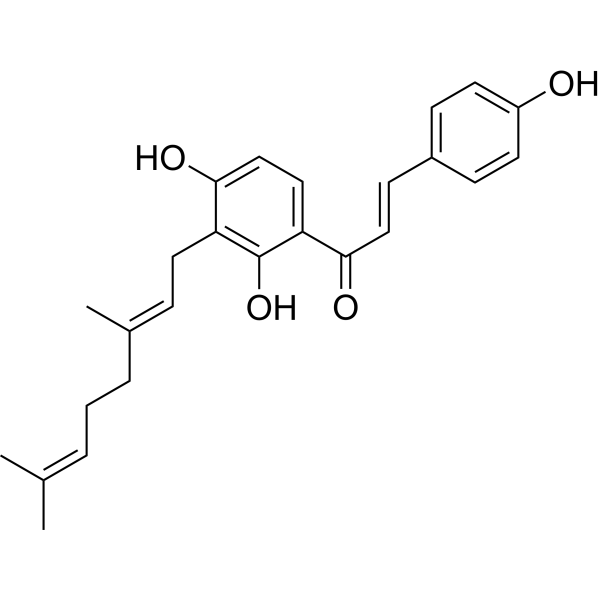
HY-111588
XanthoangelolApoptosis Inducer -
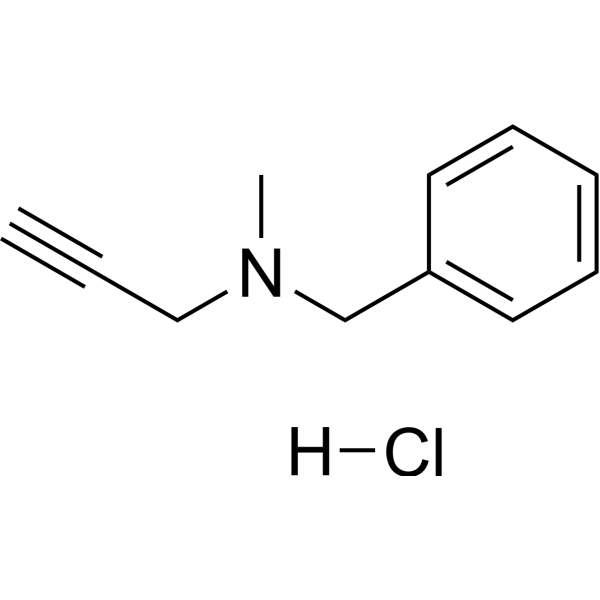
HY-A0091
Pargyline hydrochlorideMonoamine Oxidase Inhibitor -
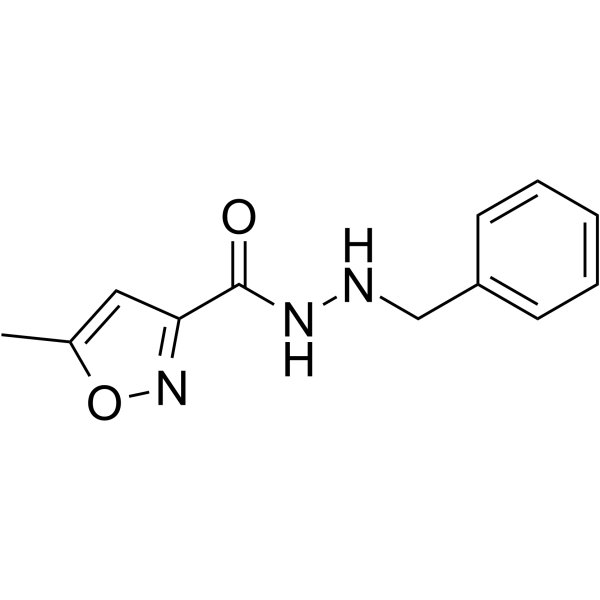
HY-13929
IsocarboxazidMonoamine Oxidase Inhibitor -
HY-14196
ToloxatoneMAO-A Inhibitor
All Parasite Isoforms
More

Biological Activity
Description
IC50 & Target
|
Plasmodium |
Cellular Effect
|
Cell Line

|
Type | Value | Description | References |
|---|---|---|---|---|
| B16 | IC50 |
5.2 μg/mL
Compound: 3, homopterocarpin
|
Cytotoxicity against mouse B16 cells after 72 hrs by MTT assay
Cytotoxicity against mouse B16 cells after 72 hrs by MTT assay
|
[PMID: 15787450] |
| CCRF-CEM | IC50 |
5.5 μg/mL
Compound: 3, homopterocarpin
|
Cytotoxicity against human CEM cells after 72 hrs by MTT assay
Cytotoxicity against human CEM cells after 72 hrs by MTT assay
|
[PMID: 15787450] |
| HCT-8 | IC50 |
6.4 μg/mL
Compound: 3, homopterocarpin
|
Cytotoxicity against human HCT8 cells after 72 hrs by MTT assay
Cytotoxicity against human HCT8 cells after 72 hrs by MTT assay
|
[PMID: 15787450] |
| HL-60 | IC50 |
3.9 μg/mL
Compound: 3, homopterocarpin
|
Cytotoxicity against human HL60 cells after 72 hrs by MTT assay
Cytotoxicity against human HL60 cells after 72 hrs by MTT assay
|
[PMID: 15787450] |
| MCF7 | IC50 |
18.5 μg/mL
Compound: 3, homopterocarpin
|
Cytotoxicity against human MCF7 cells after 72 hrs by MTT assay
Cytotoxicity against human MCF7 cells after 72 hrs by MTT assay
|
[PMID: 15787450] |
| U-937 | IC50 |
>100 μM
Compound: 18, homopterocarpin
|
Antiproliferative activity against human U937 cells after 24 hrs by WST-8 assay
Antiproliferative activity against human U937 cells after 24 hrs by WST-8 assay
|
[PMID: 17158054] |
| U-937 | IC50 |
>100 μM
Compound: 18, homopterocarpin
|
Antiproliferative activity against human U937 cells after 48 hrs by WST-8 assay
Antiproliferative activity against human U937 cells after 48 hrs by WST-8 assay
|
[PMID: 17158054] |
| U-937 | IC50 |
>100 μM
Compound: 18, homopterocarpin
|
Antiproliferative activity against human U937 cells after 72 hrs by WST-8 assay
Antiproliferative activity against human U937 cells after 72 hrs by WST-8 assay
|
[PMID: 17158054] |


Chemical Information
-
CAS No. 606-91-7
-
Appearance Solid
-
Molecular Weight 284.31
-
Formula C17H16O4
-
Color White to off-white
-
SMILES
COC1=CC=C([C@@]2([H])[C@@](C3=CC=C(OC)C=C3O2)([H])CO4)C4=C1
-
Synonyms
(-)-Homopterocarpin; 3,9-Dimethoxypterocarpan
-
Structure Classification
-
Initial Source
-
Shipping
Room temperature in continental US; may vary elsewhere.
-
Storage
-20°C, protect from light
* In solvent : -80°C, 6 months; -20°C, 1 month (protect from light)

Protocols
-
Cell Cytotoxicity Assay
Cytotoxicity assays are usually based on the assessment of cell membrane damage, which can also be indirectly detected by measuring cell viability. Detection methods include MTT assay, CKK-8 assay, LDH assay and ATP assay, etc.
-
ROS/oxidative-stress fluorescent staining
ROS/oxidative-stress fluorescent staining uses cell-permeant fluorogenic probes that become fluorescent after oxidation inside cells or tissues; commonly used examples include DCFH-DA/DCFDA for broad cellular oxidant detection, DHE for superoxide-related signal detection, MitoSOX for mitochondrial superoxide-related signal detection, and CellROX probes for oxidative-stress-associated fluorescence readouts. The assay detects probe oxidation rather than a single ROS species unless the probe and analysis method have been chemically validated for that species. DCFH-DA enters cells, is deacetylated by intracellular esterases to DCFH, and produces fluorescent DCF after oxidation, so the readout is used as an operational measure of total cellular oxidative stress rather than a species-specific ROS measurement. DHE and MitoSOX can report superoxide-related oxidation, but red fluorescence alone can include non-specific ethidium-like oxidation products; HPLC or optimized spectral approaches are


Purity & Documentation
-
Data Sheet (268 KB)
-
SDS (252 KB)
- English - EN (252 KB)
- Français - FR (252 KB)
- Deutsch - DE (252 KB)
- Norwegian - NO (252 KB)
- Español - ES (252 KB)
- Swedish - SV (252 KB)
- Italian - IT (252 KB)
- Korean - KR (252 KB)
- Portuguese - PT (252 KB)
-
Handling Instructions (2659 KB)
References
[1]. Akinmoladun AC, et al. Effect of homopterocarpin, an isoflavonoid from Pterocarpus erinaceus, on indices of liver injury and oxidative stress in acetaminophen-provoked hepatotoxicity. J Basic Clin Physiol Pharmacol. 2015 Nov;26(6):555-62. [Content Brief]
[2]. Oh JM, et al. Medicarpin and Homopterocarpin Isolated from Canavalia lineata as Potent and Competitive Reversible Inhibitors of Human Monoamine Oxidase-B. Molecules. 2022 Dec 28;28(1):258. [Content Brief]
[3]. Alsaleem MA, et al. Homopterocarpin alleviates methoxychlor-induced hepatotoxicity via modulating thioredoxin/peroxiredoxin and TLR4/MyD88 pathway: A comprehensive biochemical, histopathological, and computational analysis. Tissue Cell. 2026;98:103174. [Content Brief]
[4]. Wahyuni DK, et al. In silico anti-SARS-CoV-2, antiplasmodial, antioxidant, and antimicrobial activities of crude extracts and homopterocarpin from heartwood of Pterocarpus macrocarpus Kurz. Heliyon. 2023;9(2):e13644. [Content Brief]

Calculators
Concentration (start) × Volume (start) = Concentration (final) × Volume (final)


Homopterocarpin Related Classifications
HY-N4037 Related Classifications
 Powered by Bioz