



MS432

Based on 1 Customer Validation
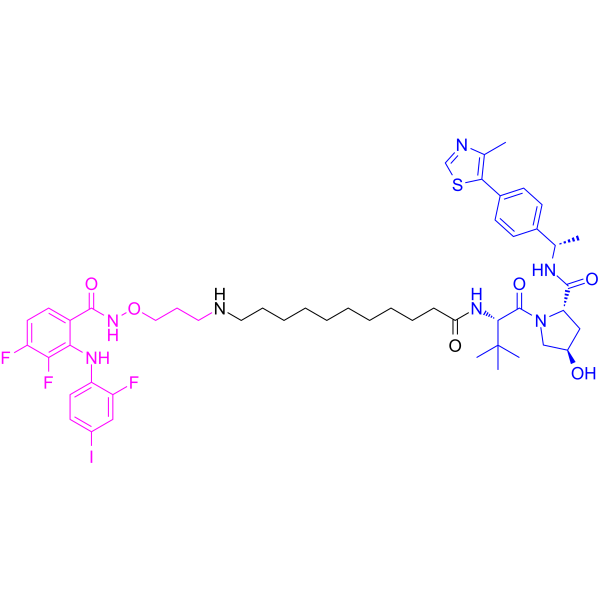
MS432 is a potent and selective MEK1/MEK2 PRORAC degrader. MS432 specifically degrades MEK1 and MEK2 by recruiting the VHL E3 ligase, thereby potently inhibiting the phosphorylation activation of the downstream ERK pathway. MS432 can be used in research related to colorectal cancer and melanoma.
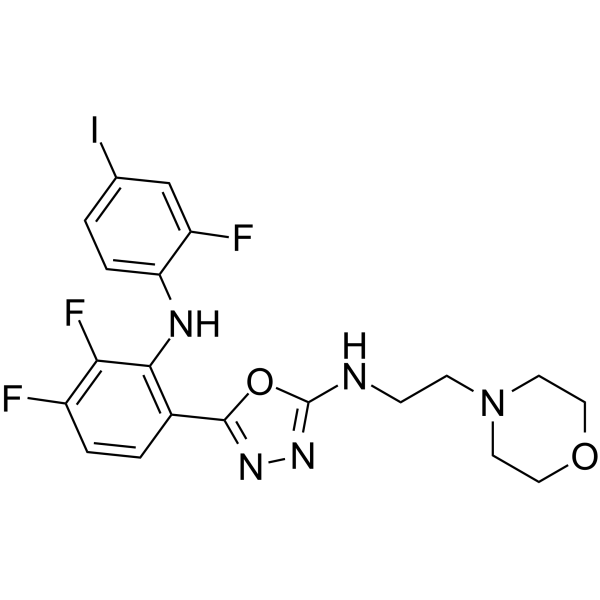
(Pink: MEK1 and MEK2 Target protein ligand; Blue: VHL ligand (HY-112078); Black: linker (HY-W014831)).
For research use only. We do not sell to patients.
- Purity : 99.72%
- CAS No.: 2672512-44-4
- Formula: C50H65F3IN7O6S
- Molecular Weight:1076.06
-
Storage:
-20°C, protect from light, stored under nitrogen
* In solvent : -80°C, 6 months; -20°C, 1 month (protect from light, stored under nitrogen)

To place orders, for customer services and technical support, please contact: MedChemExpress USA
Tel: 609-228-6898 E-mail: [email protected] [email protected]


-
 Biological Activity
-
Chemical Information
-
Solvent & Solubility
- Protocols
- Purity & Documentation
- References
-
 Help & FAQs


-
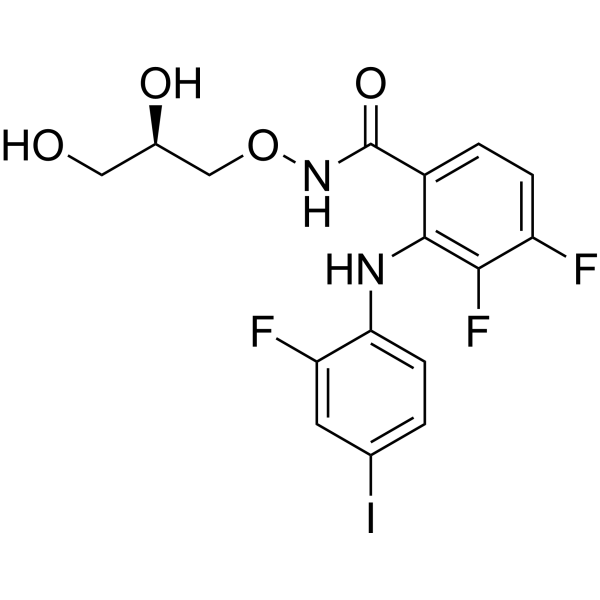
HY-10254
MirdametinibMEK Inhibitor -
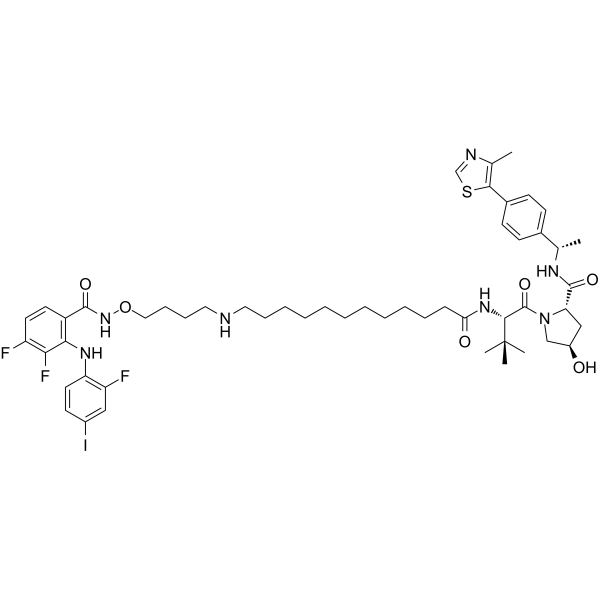
HY-153863
MS934MEK 1/2 Degrader -
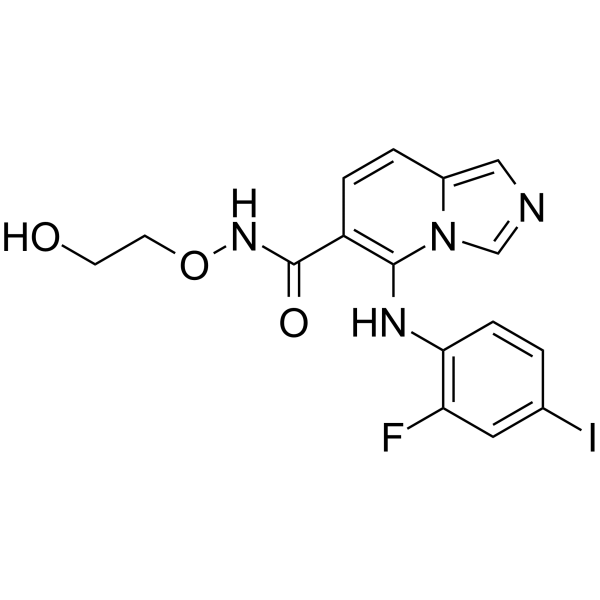
HY-15610
GDC-0623MEK1 Inhibitor -
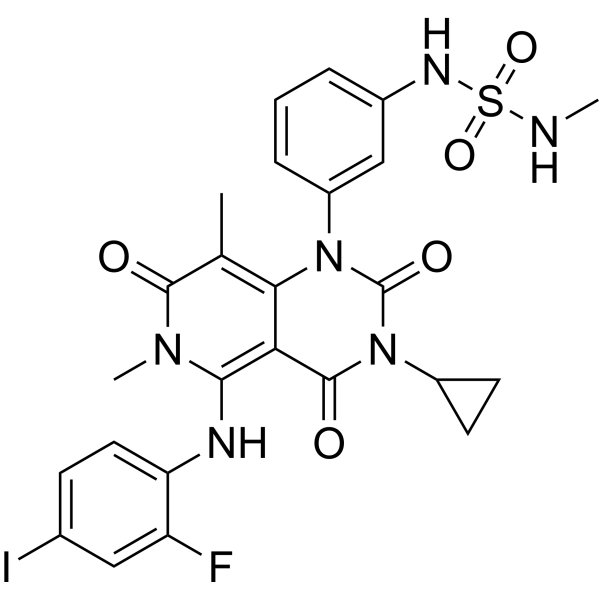
HY-153181
TrametiglueMEK Inhibitor -
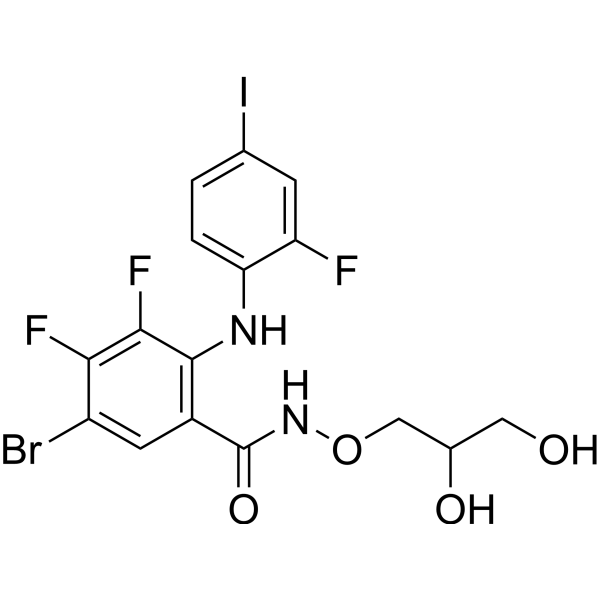
HY-12062
PD318088MEK1/2 Inhibitor -
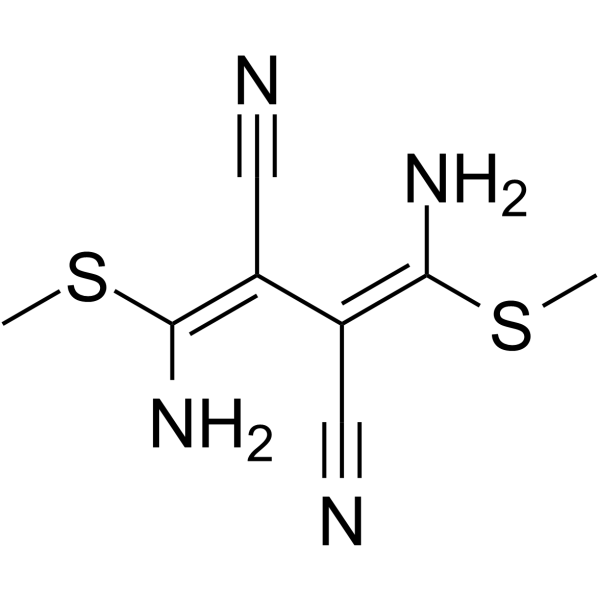
HY-107621
U0124U0126 Inactive Analog -
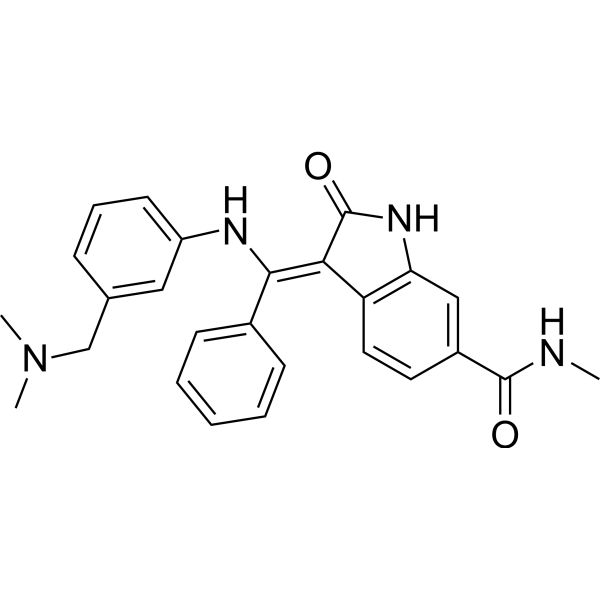
HY-12202
MEK inhibitorMEK Inhibitor -
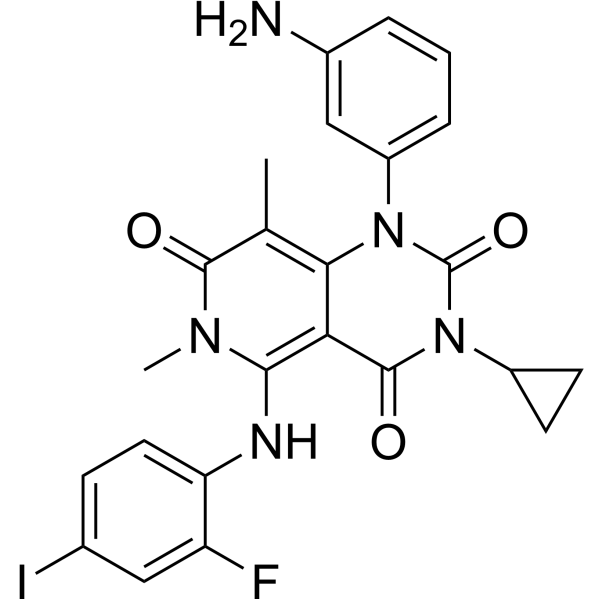
HY-148507
GSK1790627Trametinib Metabolite -
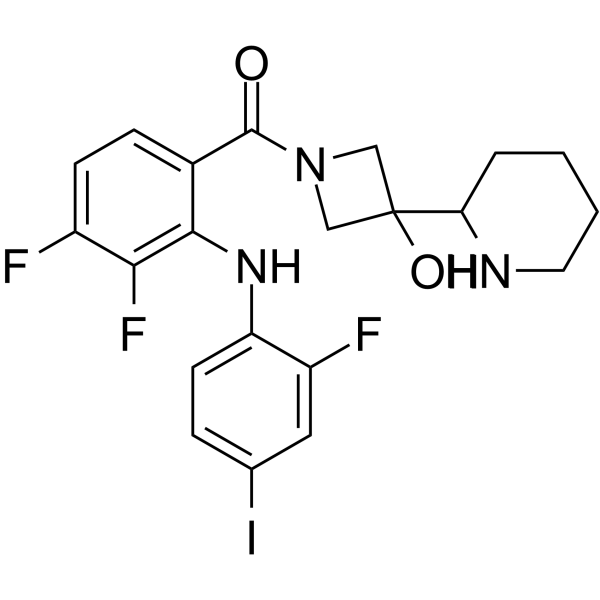
HY-13078
Cobimetinib racemateMEK Inhibitor -
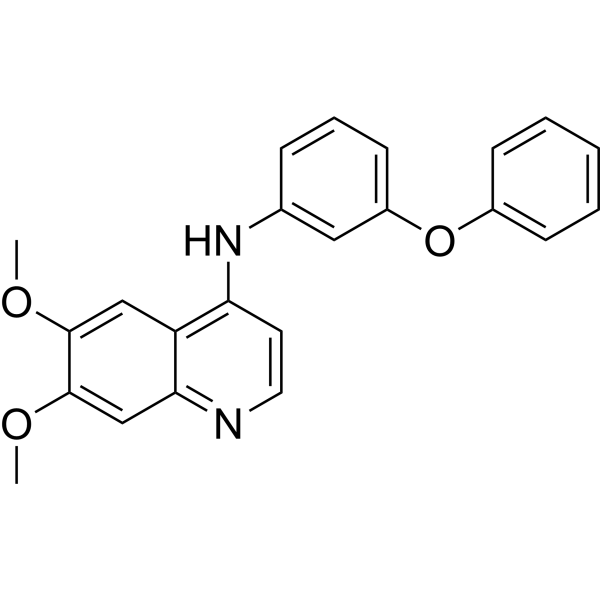
HY-114189
GW284543MEK5 Inhibitor -
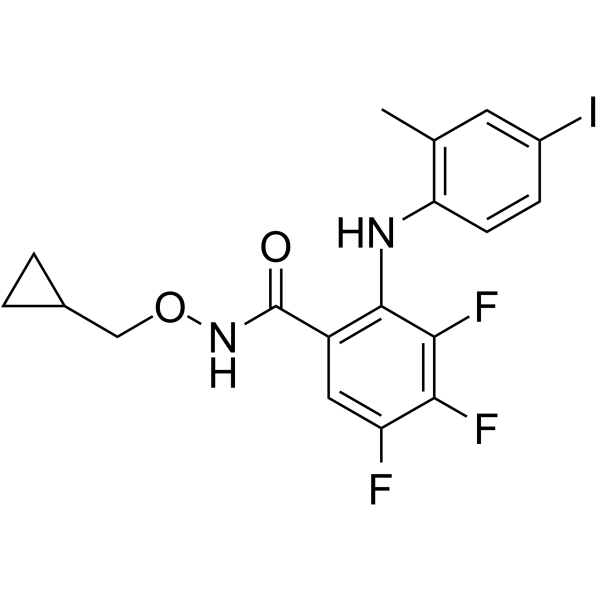
HY-107620
PD 198306MEK Inhibitor -
HY-107619
PD-334581MEK Inhibitor


Biological Activity
Description
IC50 & Target
[1]|
MEK1 31 nM (DC50, in HT29 cells and SK-MEL-28 cells) |
MEK2 17 nM (DC50, in HT29 cells) |
MEK2 9.3 nM (DC50, in SK-MEL-28 cells) |
ERK |
VHL |
Cellular Effect
|
Cell Line

|
Type | Value | Description | References |
|---|---|---|---|---|
| HT-29 | DC50 |
31 nM
|
MEK1 protein degradation in human HT-29 BRAFV600E mutant colorectal cancer cells assessed by Western blot analysis after 24-hour treatment.
MEK1 protein degradation in human HT-29 BRAFV600E mutant colorectal cancer cells assessed by Western blot analysis after 24-hour treatment.
|
31730343 |
| HT-29 | DC50 |
17 nM
|
MEK2 protein degradation in human HT-29 BRAFV600E mutant colorectal cancer cells assessed by Western blot analysis after 24-hour treatment.
MEK2 protein degradation in human HT-29 BRAFV600E mutant colorectal cancer cells assessed by Western blot analysis after 24-hour treatment.
|
31730343 |
| SK-MEL-28 | DC50 |
31 nM
|
MEK1 protein degradation in human SK-MEL-28 BRAFV600E mutant melanoma cells assessed by Western blot analysis after 24-hour treatment.
MEK1 protein degradation in human SK-MEL-28 BRAFV600E mutant melanoma cells assessed by Western blot analysis after 24-hour treatment.
|
31730343 |
| SK-MEL-28 | DC50 |
9.3 nM
|
MEK2 protein degradation in human SK-MEL-28 BRAFV600E mutant melanoma cells assessed by Western blot analysis after 24-hour treatment.
MEK2 protein degradation in human SK-MEL-28 BRAFV600E mutant melanoma cells assessed by Western blot analysis after 24-hour treatment.
|
31730343 |
| HT-29 | GI50 |
130 nM
|
Antiproliferative activity against human HT-29 colorectal cancer cells assessed as reduction in cell viability incubated for 3 days by MTT assay.
Antiproliferative activity against human HT-29 colorectal cancer cells assessed as reduction in cell viability incubated for 3 days by MTT assay.
|
31730343 |
| SK-MEL-28 | GI50 |
83 nM
|
Antiproliferative activity against human SK-MEL-28 melanoma cells assessed as reduction in cell viability incubated for 3 days by MTT assay.
Antiproliferative activity against human SK-MEL-28 melanoma cells assessed as reduction in cell viability incubated for 3 days by MTT assay.
|
31730343 |
In Vitro
MS432 (0.1-0.3 μM; 2-24 h) induces time-dependent degradation of MEK1 and MEK2 and inhibits pMEK and pERK signaling in HT-29 and SK-MEL-28 cells[1].
MS432 (0.3 μM; 3-144 h) induces more sustained degradation of MEK1/2 than PD0325901 in HT-29 cells without causing a significant rebound of pERK signaling[1].
MS432 (3 days) significantly inhibits cell proliferation and survival in HT-29, SK-MEL-28, COLO 205, and UACC257 cells, with GI50 values of 130 nM and 83 nM for HT-29 and SK-MEL-28 cells, respectively[1].
MS432 (10-100 nM; 14 days) inhibits the long-term colony formation capacity of HT-29 and SK-MEL-28 cells [1].
MS432 (0.1 μM; 10 h) exhibits highly target-selective degradation of MEK1 and MEK2 in HT-29 cells, without significantly affecting other proteins in the global proteome[1].
MedChemExpress (MCE) has not independently confirmed the accuracy of these methods. They are for reference only.
-
Cell Line:HT-29 and SK-MEL-28 cells
-
Concentration:0.001, 0.005, 0.01, 0.025, 0.05, 0.1, 0.25, 0.5, 1, 2.5, 5 μM (HT-29); 0.001, 0.003, 0.01, 0.03, 0.1, 0.3, 1, 3 μM (SK-MEL-28)
-
Incubation Time:24 h
-
Result:Induced concentration-dependent degradation of MEK1 with a DC50 of 31 nM.
Induced concentration-dependent degradation of MEK2 with a DC50 of 17 nM.
Reduced over 80% of MEK1 and MEK2 protein levels at 0.5 μM.
Induced concentration-dependent degradation of MEK1 with a DC50 of 31 nM.
Induced concentration-dependent degradation of MEK2 with a DC50 of 9.3 nM.
Reduced over 90% of MEK1 and MEK2 protein levels at 0.3 μM.
Inhibited pMEK (S218/222) in a concentration-dependent manner.
Inhibited pERK (T202/Y204) in a concentration-dependent manner.
Left total ERK levels unchanged.
-
Cell Line:HT-29 and SK-MEL-28 cells
-
Concentration:0.1 μM, 0.3 μM
-
Incubation Time:2, 4, 8, 10, 12, 24 h
-
Result:Induced time-dependent degradation of MEK1/2, with significant protein elimination observed within 4-8 hours.
-
Cell Line:HT-29 and SK-MEL-28 cells
-
Concentration:10, 30, 100 nM
-
Incubation Time:14 days
-
Result:Significantly and durably inhibited the colony-forming ability of tumor cells.
Parmacokinetics
| Species | Dose | Route | Tmax | Cmax | Plasma Concentration |
|---|---|---|---|---|---|
| Mice[1] | 50 mg/kg | i.p. | 0.5 h | 1400 nM | 710 nM |
In Vivo
-
Animal Model:Male Swiss Albino mice[1].
-
Dosage:50 mg/kg (Pharmacokinetic Analysis).
-
Administration:IP
-
Result:Displays good plasma exposure with the maximum plasma concentration of 1,400 nM detected at 0.5 hour post dosing and plasma concentration of 710 nM at 8 hours post dosing.


Chemical Information
-
CAS No. 2672512-44-4
-
Appearance Solid
-
Molecular Weight 1076.06
-
Formula C50H65F3IN7O6S
-
Color White to off-white
-
SMILES
O=C([C@H]1N(C([C@H](C(C)(C)C)NC(CCCCCCCCCCNCCCONC(C2=CC=C(F)C(F)=C2NC3=CC=C(I)C=C3F)=O)=O)=O)C[C@H](O)C1)N[C@H](C4=CC=C(C5=C(C)N=CS5)C=C4)C
-
Shipping
Room temperature in continental US; may vary elsewhere.
-
Storage
-20°C, protect from light, stored under nitrogen
* In solvent : -80°C, 6 months; -20°C, 1 month (protect from light, stored under nitrogen)


Solvent & Solubility
In Vitro:
DMSO : 100 mg/mL (92.93 mM; Need ultrasonic; Hygroscopic DMSO has a significant impact on the solubility of product, please use newly opened DMSO)
Please refer to the solubility information to select the appropriate solvent. Once prepared, please aliquot and store the solution to prevent product inactivation from repeated freeze-thaw cycles.
Storage method and period of stock solution: -80°C, 6 months; -20°C, 1 month (protect from light, stored under nitrogen). When stored at -80°C, please use it within 6 months. When stored at -20°C, please use it within 1 month.
Please refer to the solubility information to select the appropriate solvent. Once prepared, please aliquot and store the solution to prevent product inactivation from repeated freeze-thaw cycles.
Storage method and period of stock solution: -80°C, 6 months; -20°C, 1 month (protect from light, stored under nitrogen). When stored at -80°C, please use it within 6 months. When stored at -20°C, please use it within 1 month.
Concentration (start) × Volume (start) = Concentration (final) × Volume (final)
In Vivo:
Select the appropriate dissolution method based on your experimental animal and administration route.
- For the following dissolution methods, please ensure to first prepare a clear stock solution using an In Vitro approach and then sequentially add co-solvents:
- To ensure reliable experimental results, the clarified stock solution can be appropriately stored based on storage conditions. As for the working solution for In Vivo experiments, it is recommended to prepare freshly and use it on the same day.
- The percentages shown for the solvents indicate their volumetric ratio in the final prepared solution. If precipitation or phase separation occurs during preparation, heat and/or sonication can be used to aid dissolution.
Add each solvent one by one: 10% DMSO 90% (20% SBE-β-CD in Saline)
Solubility: ≥ 2.5 mg/mL (2.32 mM); Clear solution
This protocol yields a clear solution of ≥ 2.5 mg/mL (saturation unknown).
Taking 1 mL working solution as an example, add 100 μL DMSO stock solution (25.0 mg/mL) to 900 μL 20% SBE-β-CD in Saline, and mix evenly.
Preparation of 20% SBE-β-CD in Saline (4°C, storage for one week): 2 g SBE-β-CD powder is dissolved in 10 mL Saline, completely dissolve until clear.
In Vivo Dissolution Calculator
Please enter the basic information of animal experiments:
-
-
-
-
Recommended: Prepare an additional quantity of animals to account for potential losses during experiments.
Please enter your animal formula composition:
-
%DMSO +
Recommended: Keep the proportion of DMSO in working solution below 2% if your animal is weak.
-
%+
-
+%Tween-80 + +
-
%Saline +
The co-solvents required include: DMSO, . All of co-solvents are available by MedChemExpress (MCE). , Tween 80. All of co-solvents are available by MedChemExpress (MCE).
Working solution concentration: 0.22 mg/mL
Method for preparing stock solution: mg drug dissolved in μL DMSO. Stock solution concentration: mg/mL. * In solvent : -80°C, 6 months; -20°C, 1 month (protect from light, stored under nitrogen)
1. Take μL DMSO stock solution;
2. Add μL .
μL , mix evenly;
3. Then add μL Tween 80, mix evenly;
4. Then add μL
Please ensure that the stock solution in the first step is dissolved to a clear state, and add co-solvents in sequence. You can use ultrasonic heating (ultrasonic cleaner, recommended frequency 20-40 kHz), vortexing, etc. to assist dissolution.


Purity & Documentation
-
Data Sheet (275 KB)
-
SDS (252 KB)
- English - EN (252 KB)
- Français - FR (252 KB)
- Deutsch - DE (252 KB)
- Norwegian - NO (252 KB)
- Español - ES (252 KB)
- Swedish - SV (252 KB)
- Italian - IT (252 KB)
- Korean - KR (252 KB)
- Portuguese - PT (252 KB)
-
Handling Instructions (2659 KB)
References


Complete Stock Solution Preparation Table
Please refer to the solubility information to select the appropriate solvent. Once prepared, please aliquot and store the solution to prevent product inactivation from repeated freeze-thaw cycles.
Storage method and period of stock solution: -80°C, 6 months; -20°C, 1 month (protect from light, stored under nitrogen). When stored at -80°C, please use it within 6 months. When stored at -20°C, please use it within 1 month.
| Optional Solvent | Concentration Solvent Mass | 1 mg | 5 mg | 10 mg | 25 mg |
|---|---|---|---|---|---|
| DMSO | 1 mM | 0.9293 mL | 4.6466 mL | 9.2932 mL | 23.2329 mL |
| 5 mM | 0.1859 mL | 0.9293 mL | 1.8586 mL | 4.6466 mL | |
| 10 mM | 0.0929 mL | 0.4647 mL | 0.9293 mL | 2.3233 mL | |
| 15 mM | 0.0620 mL | 0.3098 mL | 0.6195 mL | 1.5489 mL | |
| 20 mM | 0.0465 mL | 0.2323 mL | 0.4647 mL | 1.1616 mL | |
| 25 mM | 0.0372 mL | 0.1859 mL | 0.3717 mL | 0.9293 mL | |
| 30 mM | 0.0310 mL | 0.1549 mL | 0.3098 mL | 0.7744 mL | |
| 40 mM | 0.0232 mL | 0.1162 mL | 0.2323 mL | 0.5808 mL | |
| 50 mM | 0.0186 mL | 0.0929 mL | 0.1859 mL | 0.4647 mL | |
| 60 mM | 0.0155 mL | 0.0774 mL | 0.1549 mL | 0.3872 mL | |
| 80 mM | 0.0116 mL | 0.0581 mL | 0.1162 mL | 0.2904 mL |


MS432 Related Classifications
HY-130602 Related Classifications
 Powered by Bioz