



All-trans-retinal
Based on 3 publication(s) in Google Scholar
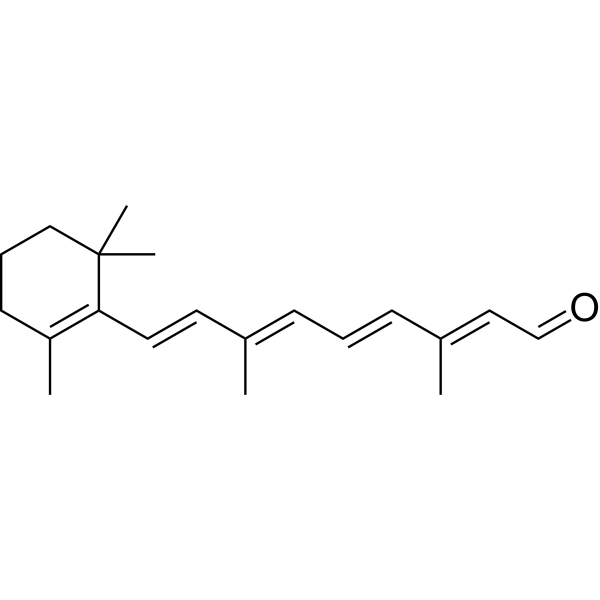
All-trans-retinal is an vitamin A metabolite in the retina, and is produced following photo-isomerization of the visual chromophore 11-cis-Retinal. All-trans-retinal is cleared from photoreceptors by ATP-binding cassette transporter (ABCA4) and all-trans-retinol dehydrogenase (RDH). All-trans-retinal induces Bax activation via DNA damage to mediate retinal cell apoptosis.
For research use only. We do not sell to patients.
- Purity : 99.56%
- CAS No.: 116-31-4
- Formula: C20H28O
- Molecular Weight:284.44
-
Storage:
-20°C, protect from light, stored under nitrogen
* The compound is unstable in solutions, freshly prepared is recommended.

To place orders, for customer services and technical support, please contact: MedChemExpress USA
Tel: 609-228-6898 E-mail: [email protected] [email protected]


-
 Biological Activity
-
Chemical Information
-
Solvent & Solubility
- Protocols
- Purity & Documentation
- References
-
 Help & FAQs


-
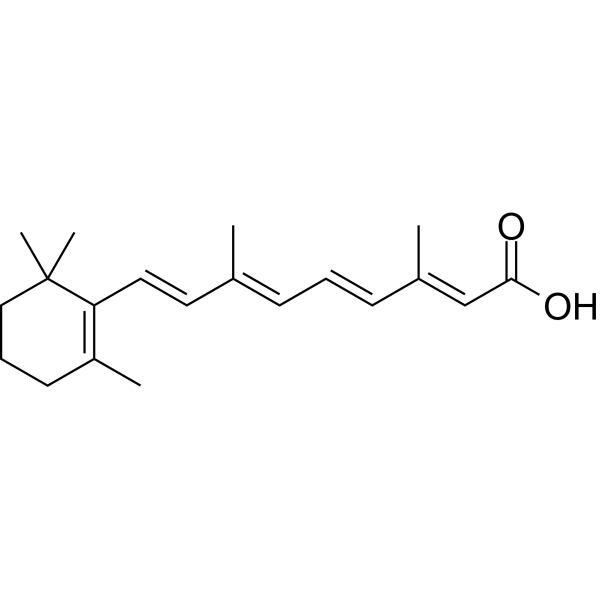
HY-14649
Retinoic acidRAR Agonist -

HY-B1342
Vitamin A -

HY-W004500R
All-trans-retinal (Standard)Analytical Standard -
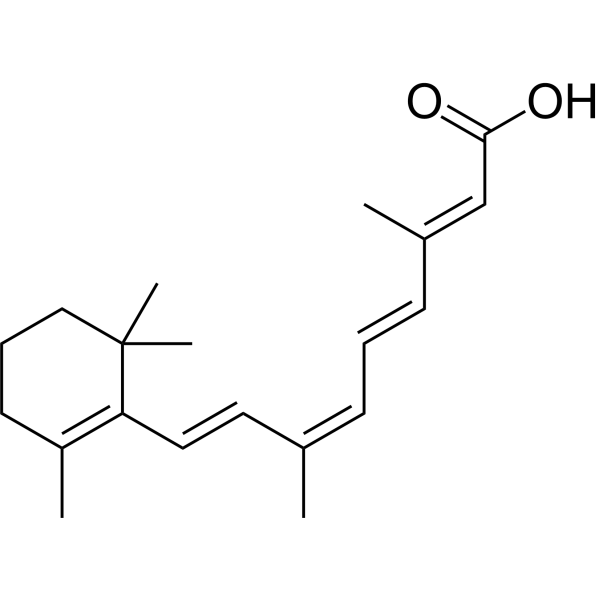
HY-15128
9-cis-Retinoic acidRAR/RXR Agonist -
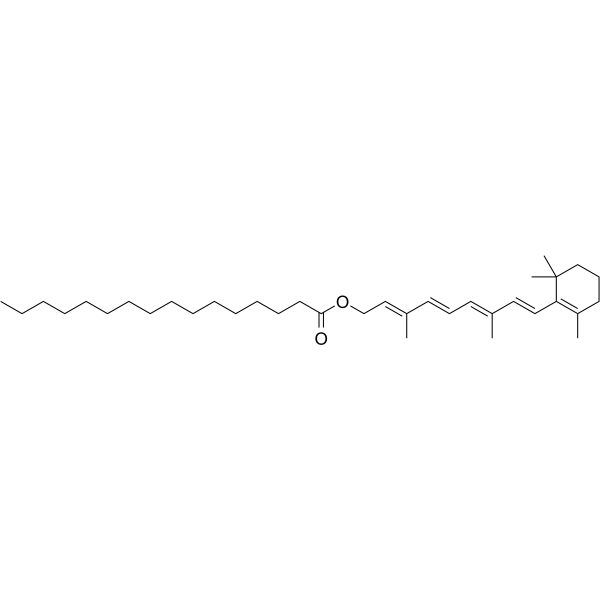
HY-B1384
Retinyl palmitateEndogenous Metabolite -
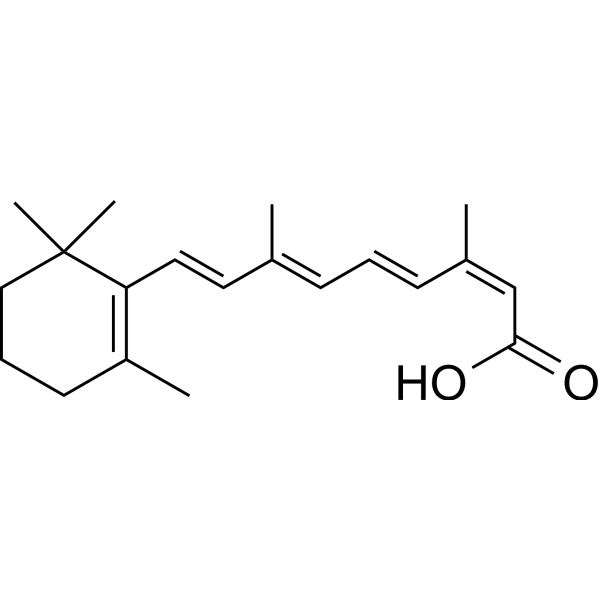
HY-15127
IsotretinoinAnti-acne Agent -
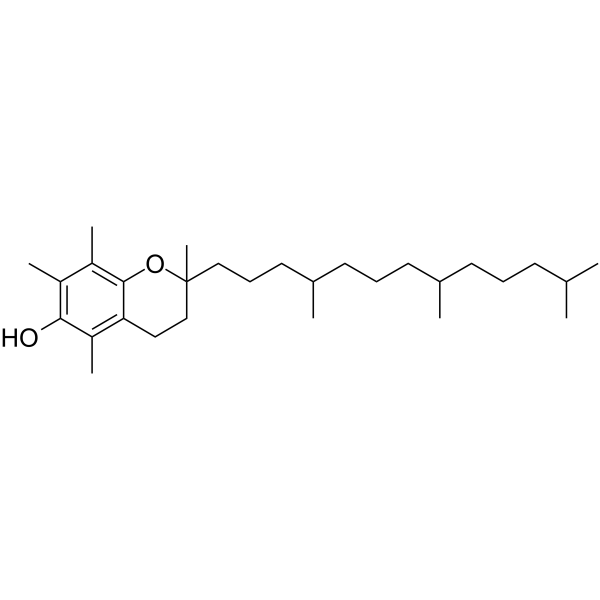
HY-W020044
DL-alpha-TocopherolVitamin E -
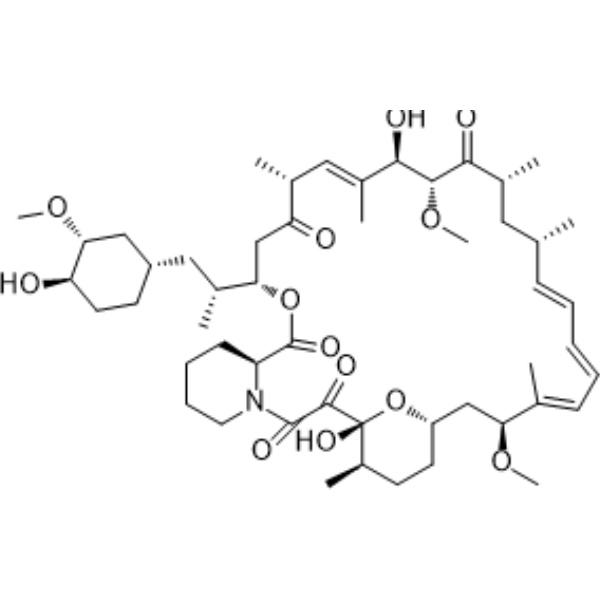
HY-10219
RapamycinmTOR Inhibitor -
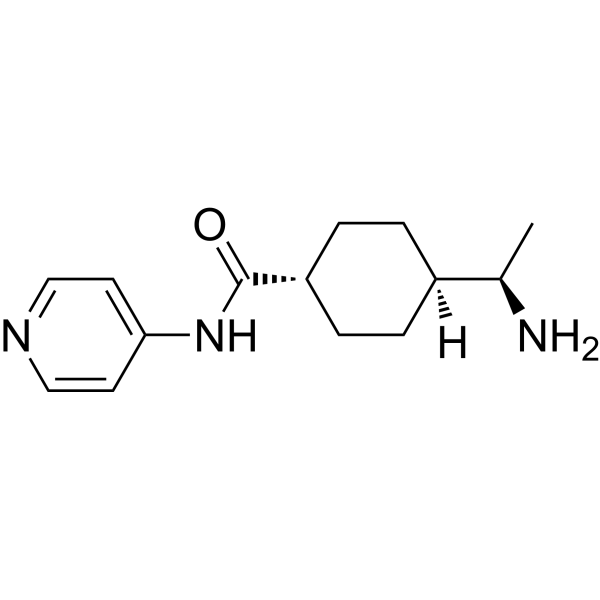
HY-10071
Y-27632ROCK Inhibitor -
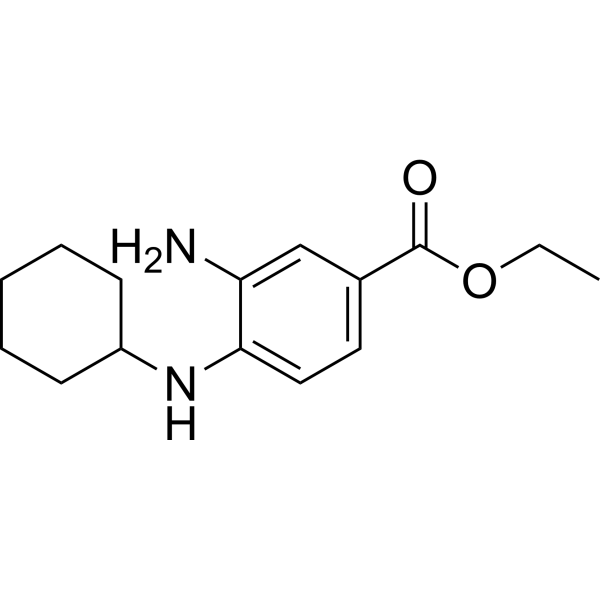
HY-100579
Ferrostatin-1Ferroptosis Inhibitor -
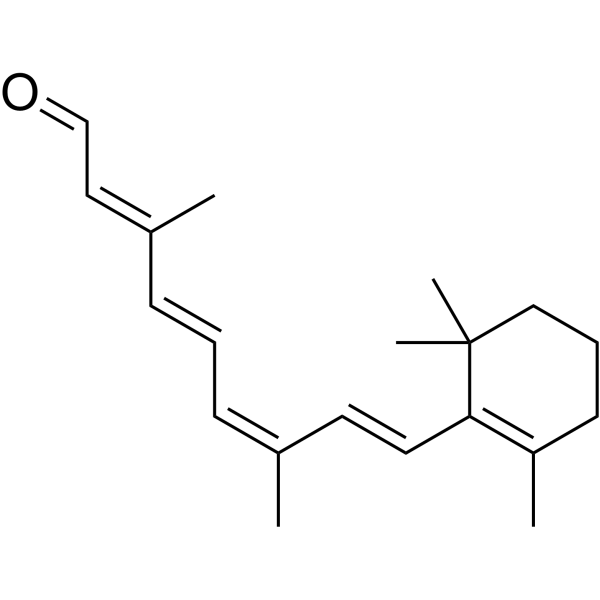
HY-W009310
9-cis-RetinalNatural Retinoid -
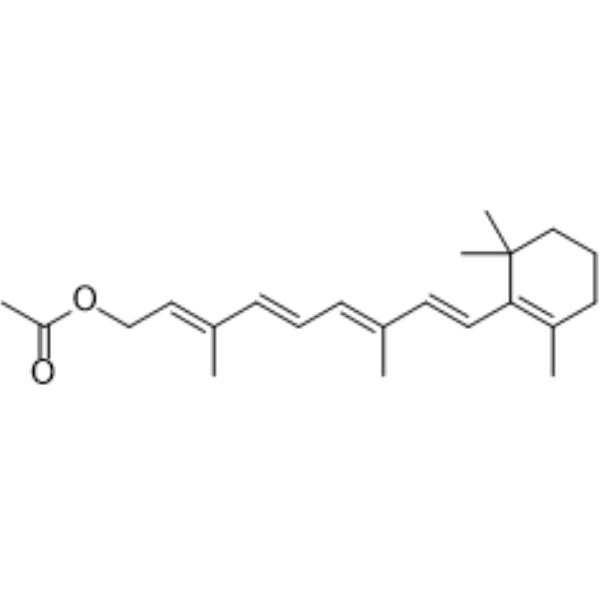
HY-N0679
Retinyl acetateAnticancer Agent
Publications Citing Use of MedChemExpress (MCE) All-trans-retinal
More Customer Validation & Images

-
Bio/Physico-chemical Assay
-
Cell Proliferation/Viability Assay
-
Bio/Physico-chemical Assay
All Endogenous Metabolite Isoforms
More

Biological Activity
Description
IC50 & Target
|
Human Endogenous Metabolite |
In Vitro
All-trans-retinal (10-30 μM; 16 h) displays a dose-dependent toxicity which included the morphological disruption of ARPE-19 cells and a decrease in their viability is observed to be time-dependent measured by LDH assay[1].
All-trans-retinal (10-30 μM; 30 mim) increases the phosphorylation of p53 at Ser 46 and 8-OHdG production[1].
MedChemExpress (MCE) has not independently confirmed the accuracy of these methods. They are for reference only. Further protocols information, click here.
-
Cell Line:ARPE-19 cells
-
Concentration:10 μM, 20 μM, 30 μM
-
Incubation Time:16 h
-
Result:Displayed a dose-dependent toxicity which included the morphological disruption of ARPE-19 cells.
-
Cell Line:ARPE-19 cells
-
Concentration:10 μM, 30 μM
-
Incubation Time:30 min
-
Result:The phosphorylation of p53 at Ser 46 were detected prior to Bax activation in ARPE-19 cells.


Chemical Information
-
CAS No. 116-31-4
-
Appearance Solid
-
Molecular Weight 284.44
-
Formula C20H28O
-
Color Light yellow to yellow
-
SMILES
CC(/C=C/C=C(/C=C/C1=C(CCCC(C)1C)C)C)=C\C=O
-
Structure Classification
-
Initial Source
-
Shipping
Room temperature in continental US; may vary elsewhere.
-
Storage
-20°C, protect from light, stored under nitrogen
* The compound is unstable in solutions, freshly prepared is recommended.


Publications (3)
-
Journal Impact Factor
-
Most Recent
-
Cell Res
Light sensing enhances thermotolerance and competitive fitness via serotonergic signaling in an eyeless organism. [Abstract]2026 Apr;36(4):286-299. PMID: 41764323 -
Nat Commun
Suppression of ferroptosis by vitamin A or radical-trapping antioxidants is essential for neuronal development. [Abstract]2024 Sep 1;15(1):7611. PMID: 39218970
All-trans-retinal purchased from MedChemExpress. Usage Cited in: Nat Commun. 2024 Sep 1;15(1):7611. [Abstract]
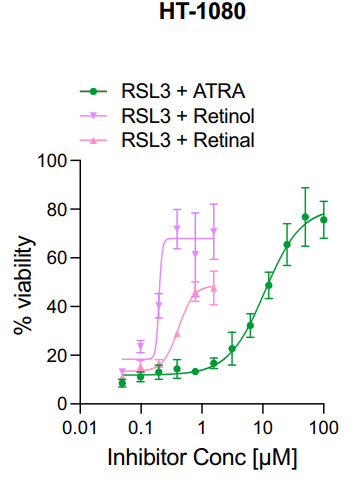
CellTiter-Glo assay of HT-1080 cells co-treated with RSL3 and ATRA, Retinol or Retinal (n = 3 biologically independent replicates) – All-trans-retinal (Retinal) and Retinol at concentrations > 3 µM were toxic.
All-trans-retinal purchased from MedChemExpress. Usage Cited in: Nat Commun. 2024 Sep 1;15(1):7611. [Abstract]
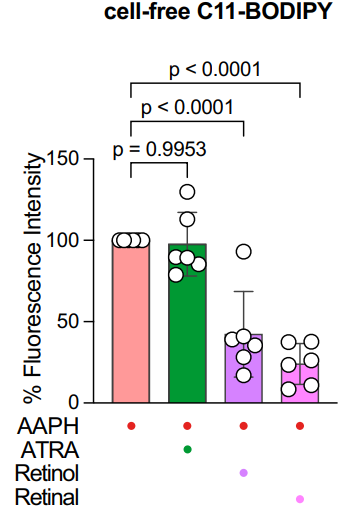
C11-BODIPY cell-free assay of the radical initiator AAPH co-treated with ATRA, Retinol or All-trans-retinal (Retinal). The results showed that Retinal significantly reduced the C11-BODIPY signal induced by AAPH in the cell-free system, indicating its antioxidant activity in free radical scavenging.
-
J Biol Chem
A cell-based assay for retinaldehyde dehydrogenase activity: Retinoid quantification as an alternative to current fluorescence-based approaches. [Abstract]2026 Jan 29;302(3):111211. PMID: 41617028
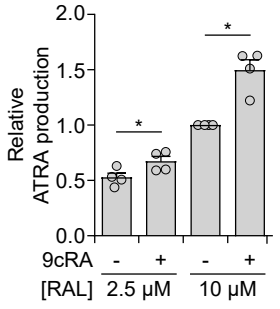
All-trans-retinal purchased from MedChemExpress. Usage Cited in: J Biol Chem. 2026 Jan 29;302(3):111211. [Abstract]
mutuDC1940 cells were treated for 20 h with 1 μM 9cRA, then assayed for RALDH activity in the suspension cell forma, utilising the indicated All-trans-retinal (RAL, 2.5-10 μM) concentrations for 20 min.


Solvent & Solubility
In Vitro:
DMSO : 100 mg/mL (351.57 mM; Need ultrasonic; Hygroscopic DMSO has a significant impact on the solubility of product, please use newly opened DMSO)
Please refer to the solubility information to select the appropriate solvent. The compound is unstable in solutions, freshly prepared is recommended.
Please refer to the solubility information to select the appropriate solvent. The compound is unstable in solutions, freshly prepared is recommended.
Concentration (start) × Volume (start) = Concentration (final) × Volume (final)
In Vivo:
Select the appropriate dissolution method based on your experimental animal and administration route.
- For the following dissolution methods, please ensure to first prepare a clear stock solution using an In Vitro approach and then sequentially add co-solvents:
- To ensure reliable experimental results, the clarified stock solution can be appropriately stored based on storage conditions. As for the working solution for In Vivo experiments, it is recommended to prepare freshly and use it on the same day.
- The percentages shown for the solvents indicate their volumetric ratio in the final prepared solution. If precipitation or phase separation occurs during preparation, heat and/or sonication can be used to aid dissolution.
Add each solvent one by one: 10% DMSO 40% PEG300 5% Tween-80 45% Saline
Solubility: ≥ 2.08 mg/mL (7.31 mM); Clear solution
This protocol yields a clear solution of ≥ 2.08 mg/mL (saturation unknown).
Taking 1 mL working solution as an example, add 100 μL DMSO stock solution (20.8 mg/mL) to 400 μL PEG300, and mix evenly; then add 50 μL Tween-80 and mix evenly; then add 450 μL Saline to adjust the volume to 1 mL.
Preparation of Saline: Dissolve 0.9 g sodium chloride in ddH₂O and dilute to 100 mL to obtain a clear Saline solution.
Add each solvent one by one: 10% DMSO 90% (20% SBE-β-CD in Saline)
Solubility: 2.08 mg/mL (7.31 mM); Suspended solution; Need ultrasonic
This protocol yields a suspended solution of 2.08 mg/mL. Suspended solution can be used for oral and intraperitoneal injection.
Taking 1 mL working solution as an example, add 100 μL DMSO stock solution (20.8 mg/mL) to 900 μL 20% SBE-β-CD in Saline, and mix evenly.
Preparation of 20% SBE-β-CD in Saline (4°C, storage for one week): 2 g SBE-β-CD powder is dissolved in 10 mL Saline, completely dissolve until clear.
In Vivo Dissolution Calculator
Please enter the basic information of animal experiments:
-
-
-
-
Recommended: Prepare an additional quantity of animals to account for potential losses during experiments.
Please enter your animal formula composition:
-
%DMSO +
Recommended: Keep the proportion of DMSO in working solution below 2% if your animal is weak.
-
%+
-
+%Tween-80 + +
-
%Saline +
The co-solvents required include: DMSO, . All of co-solvents are available by MedChemExpress (MCE). , Tween 80. All of co-solvents are available by MedChemExpress (MCE).
Working solution concentration: 0.22 mg/mL
Method for preparing stock solution: mg drug dissolved in μL DMSO. Stock solution concentration: mg/mL. * The compound is unstable in solutions, freshly prepared is recommended.
1. Take μL DMSO stock solution;
2. Add μL .
μL , mix evenly;
3. Then add μL Tween 80, mix evenly;
4. Then add μL
Please ensure that the stock solution in the first step is dissolved to a clear state, and add co-solvents in sequence. You can use ultrasonic heating (ultrasonic cleaner, recommended frequency 20-40 kHz), vortexing, etc. to assist dissolution.

Protocols
-
Apoptosis
Apoptosis, also called programmed cell death, is generally characterized by distinct morphological characteristics.
-
TUNEL staining for apoptotic DNA fragmentation
TUNEL staining detects DNA strand breaks by using terminal deoxynucleotidyl transferase to add labeled nucleotides to exposed 3′-OH DNA termini, generating either microscopic staining in fixed cells or tissue sections, or fluorescence/cytometric signal in cell suspensions. TUNEL positivity reflects DNA fragmentation but should not be interpreted alone as definitive apoptosis, because TUNEL can also label necrotic, autolytic, mechanically damaged, or DNA-repair-associated DNA breaks.
-
Annexin V plus membrane-impermeant dye apoptosis staining
Annexin V-based apoptosis assays rely on the detection of phosphatidylserine (PS) externalization from the inner leaflet of the plasma membrane to the outer leaflet, an early biochemical hallmark of apoptosis. Fluorescently labeled Annexin V binds PS in a calcium-dependent manner, enabling identification of early apoptotic cells by flow cytometry or fluorescence microscopy. When combined with a membrane-impermeant DNA-binding dye (e. g. , propidium iodide), this approach allows discrimination between viable (Annexin V−/dye−), early apoptotic (Annexin V+/dye−), and late apoptotic or necrotic (Annexin V+/dye+) cell populations by assessing membrane integrity and PS exposure.
-
Apoptosis Solutions
Apoptosis is a regulated, generally non-lytic cell-death pathway that removes unwanted, damaged, infected, or abnormal cells through coordinated morphological changes, caspase activation, DNA fragmentation, and membrane remodeling. The intrinsic apoptosis pathway is controlled mainly by mitochondrial outer membrane permeabilization, BCL-2 family proteins, cytochrome c release, apoptosome formation, caspase-9 activation, and downstream executioner caspase-3/7 activation. The extrinsic apoptosis pathway is initiated by death receptors such as Fas, TNFR, and TRAIL receptors, which recruit adaptor proteins and activate caspase-8 before engaging executioner caspases or mitochondrial amplification through BID cleavage. Apoptosis is linked to many phenotypes, including cancer cell killing, tissue homeostasis, immune regulation, neurodegeneration, infection response, and treatment-induced cytotoxicity; unresolved questions include how apoptosis interacts with necroptosis, pyroptosis, ferroptos
-
Genotoxicity/Mutagenicity Study
The bacterial reverse mutation assay detects point mutations that restore amino-acid prototrophy in auxotrophic Salmonella typhimurium or Escherichia coli tester strains; after exposure to a test article, mutagenic activity is read out as an increased number of revertant colonies on minimal agar compared with the vehicle control. The assay uses tester strains with different mutation targets so that base-substitution and frameshift mutagens can be detected, and testing is performed with and without exogenous mammalian metabolic activation because some chemicals require biotransformation to become mutagenic.


Purity & Documentation
-
Data Sheet (276 KB)
-
SDS (557 KB)
- English - EN (557 KB)
- Français - FR (557 KB)
- Deutsch - DE (557 KB)
- Norwegian - NO (557 KB)
- Español - ES (557 KB)
- Swedish - SV (557 KB)
- Italian - IT (557 KB)
- Korean - KR (557 KB)
- Portuguese - PT (557 KB)
-
Handling Instructions (2659 KB)
References


Complete Stock Solution Preparation Table
Please refer to the solubility information to select the appropriate solvent. The compound is unstable in solutions, freshly prepared is recommended.
| Optional Solvent | Concentration Solvent Mass | 1 mg | 5 mg | 10 mg | 25 mg |
|---|---|---|---|---|---|
| DMSO | 1 mM | 3.5157 mL | 17.5784 mL | 35.1568 mL | 87.8920 mL |
| 5 mM | 0.7031 mL | 3.5157 mL | 7.0314 mL | 17.5784 mL | |
| 10 mM | 0.3516 mL | 1.7578 mL | 3.5157 mL | 8.7892 mL | |
| 15 mM | 0.2344 mL | 1.1719 mL | 2.3438 mL | 5.8595 mL | |
| 20 mM | 0.1758 mL | 0.8789 mL | 1.7578 mL | 4.3946 mL | |
| 25 mM | 0.1406 mL | 0.7031 mL | 1.4063 mL | 3.5157 mL | |
| 30 mM | 0.1172 mL | 0.5859 mL | 1.1719 mL | 2.9297 mL | |
| 40 mM | 0.0879 mL | 0.4395 mL | 0.8789 mL | 2.1973 mL | |
| 50 mM | 0.0703 mL | 0.3516 mL | 0.7031 mL | 1.7578 mL | |
| 60 mM | 0.0586 mL | 0.2930 mL | 0.5859 mL | 1.4649 mL | |
| 80 mM | 0.0439 mL | 0.2197 mL | 0.4395 mL | 1.0986 mL | |
| 100 mM | 0.0352 mL | 0.1758 mL | 0.3516 mL | 0.8789 mL |


All-trans-retinal Related Classifications
HY-W004500 Related Classifications
 Powered by Bioz