



JAK2-IN-7

Based on 1 Customer Validation
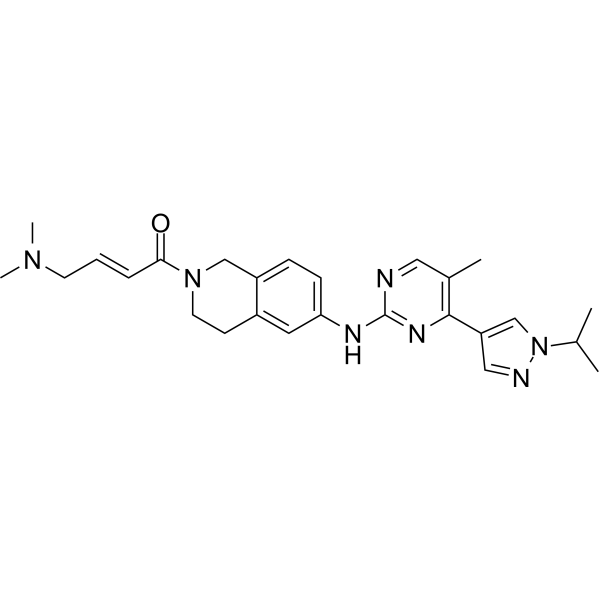
JAK2-IN-7 is a selective JAK2 inhibitor with IC50s of 3, 11.7, and 41 nM for JAK2, SET-2, and Ba/F3V617F cells, respectively. JAK2-IN-7 possesses >14-fold selectivity over JAK1, JAK3, FLT3. JAK2-IN-7 stimulates cell cycle arrest in the G0/G1 phase and induces tumor cellapoptosis. Antitumor activities.
For research use only. We do not sell to patients.
- Purity : 98.31%
- CAS No.: 2593402-36-7
- Formula: C26H33N7O
- Molecular Weight:459.59
-
Storage:Powder -20°C, 3 years , 4°C, 2 years ; In solvent -80°C, 6 months , -20°C, 1 month

To place orders, for customer services and technical support, please contact: MedChemExpress USA
Tel: 609-228-6898 E-mail: [email protected] [email protected]


-
 Biological Activity
-
Chemical Information
-
Solvent & Solubility
- Protocols
- Purity & Documentation
- References
-
 Help & FAQs


-
HY-10961
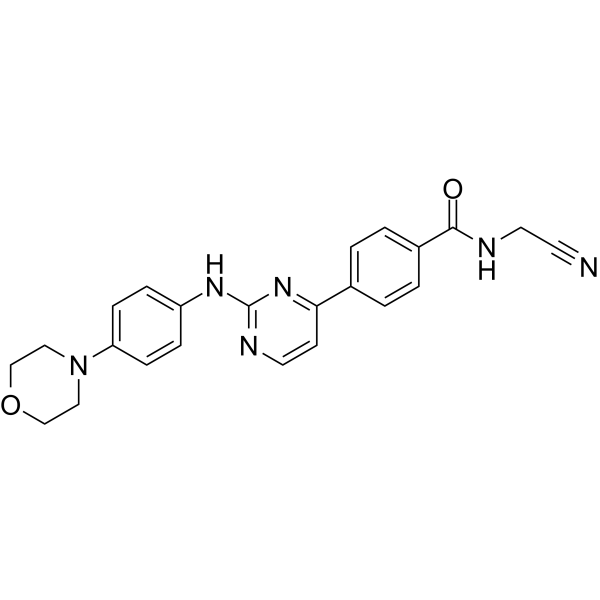
MomelotinibJAK1/2 Inhibitor -
HY-15270
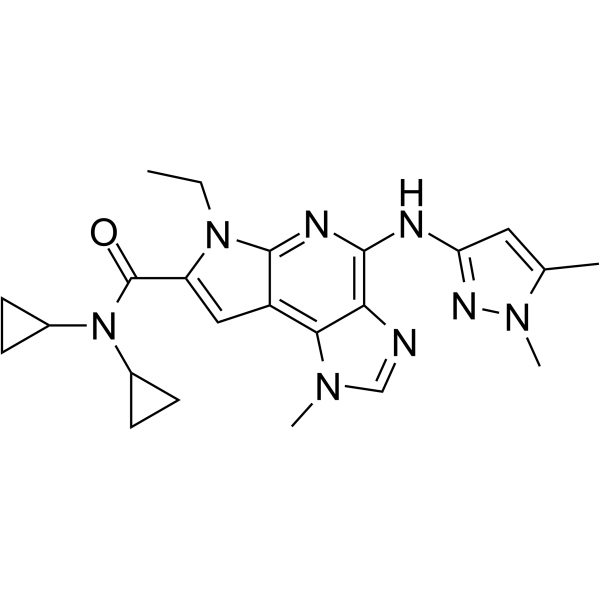
BMS-911543JAK2 Inhibitor -
HY-50867
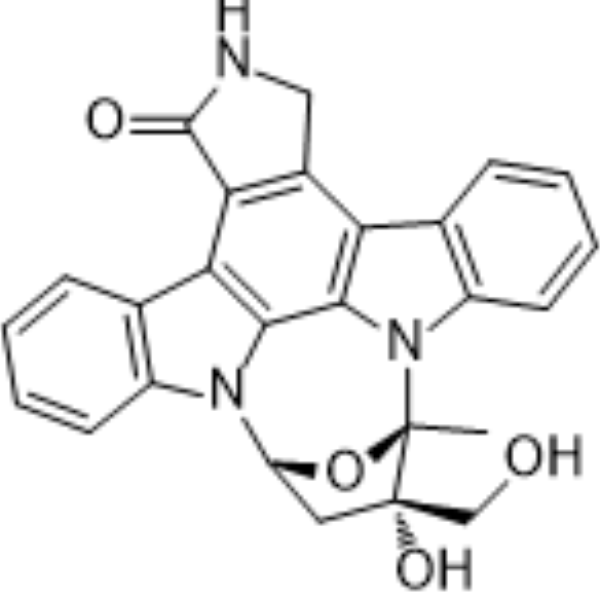
LestaurtinibRPTKs Inhibitor -
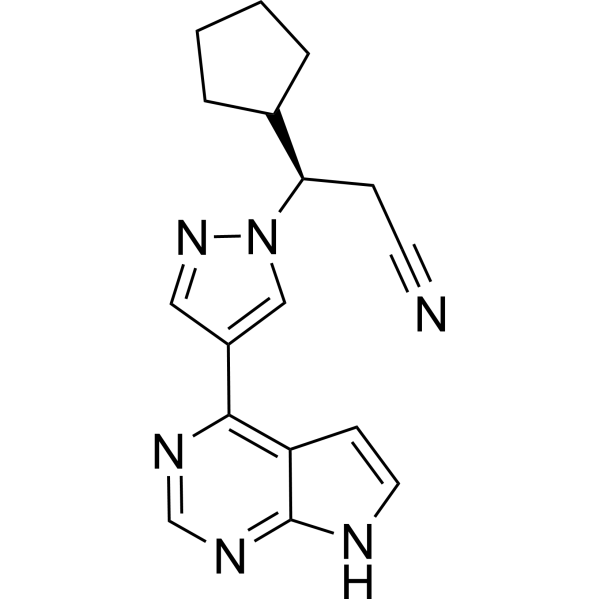
HY-50856
RuxolitinibJAK1/2 Inhibitor -
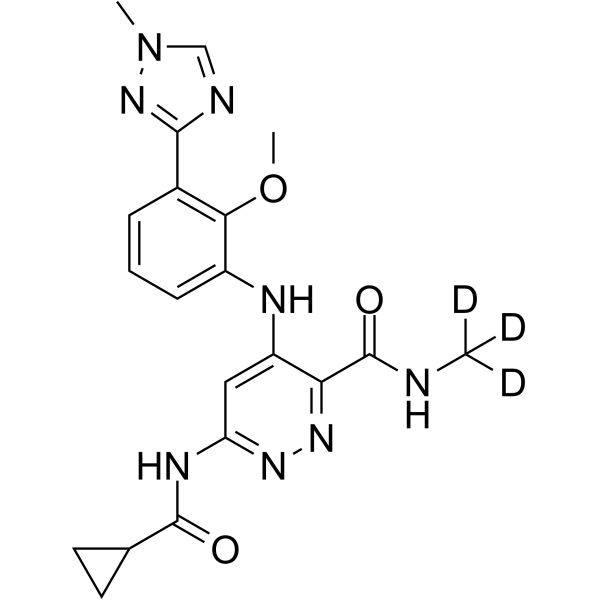
HY-117287
DeucravacitinibTYK2 Inhibitor -
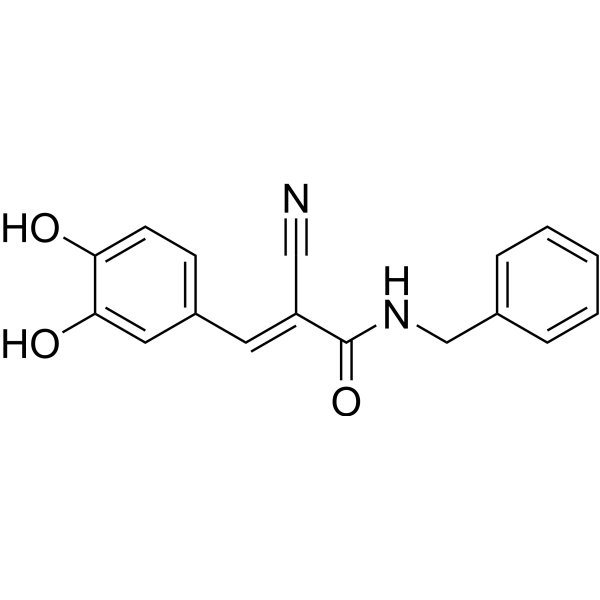
HY-12000
AG490EGFR Inhibitor -
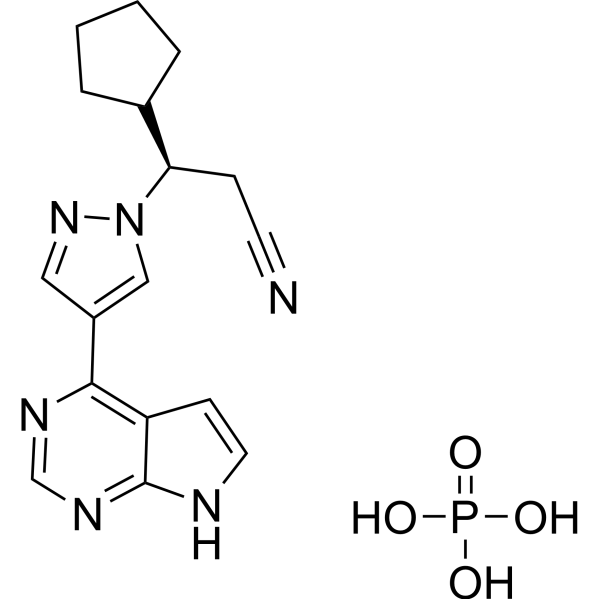
HY-50858
Ruxolitinib phosphateJAK1/2 Inhibitor -

HY-50856R
Ruxolitinib (Standard)JAK1/2 Inhibitor -
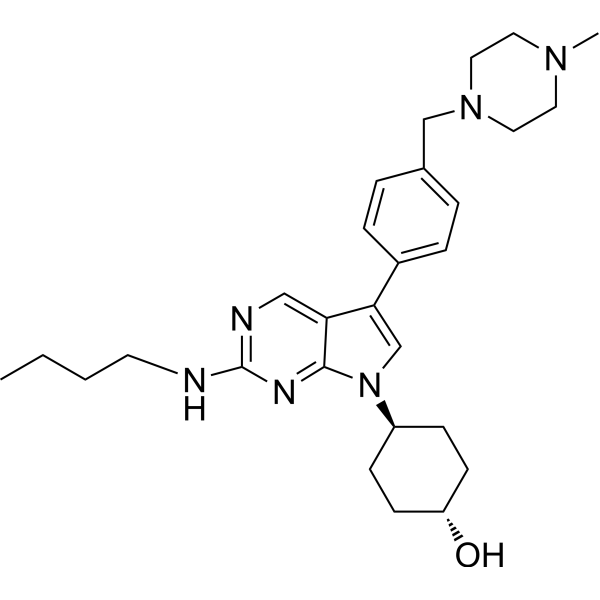
HY-12344
UNC2025MER/FLT3 Inhibitor -
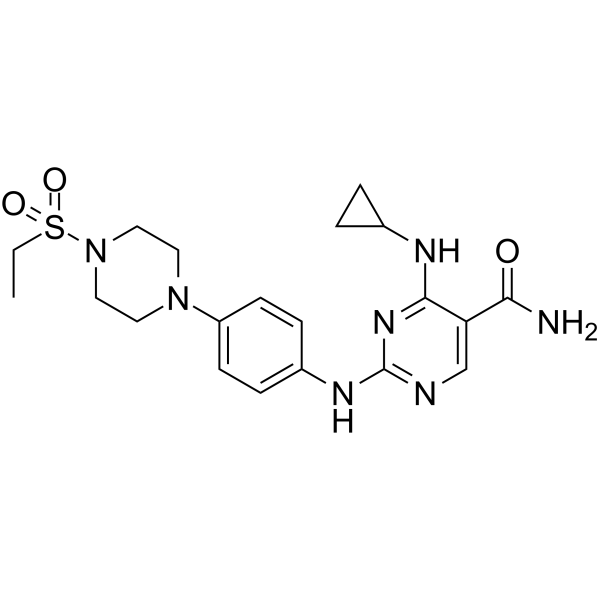
HY-15999
CerdulatinibTyk2 Inhibitor -
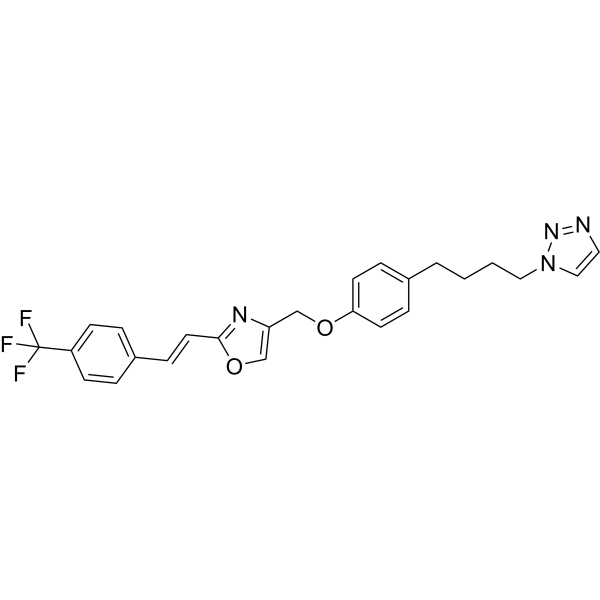
HY-13501
MubritinibERBB2/HER2 Inhibitor -
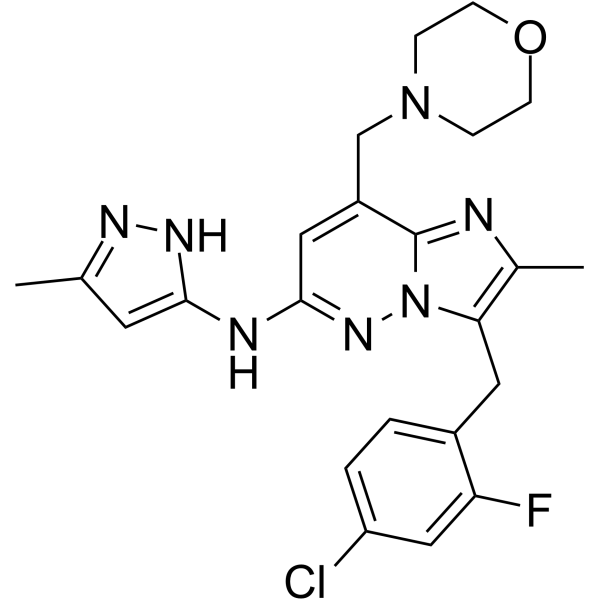
HY-13034
GandotinibJAK2 Inhibitor


Biological Activity
Description
IC50 & Target
[1]|
JAK1 42 nM (IC50) |
JAK2 3 nM (IC50) |
JAK3 94 nM (IC50) |
Tyk2 75 nM (IC50) |
FLT3 62 nM (IC50) |
Cellular Effect
|
Cell Line

|
Type | Value | Description | References |
|---|---|---|---|---|
| L02 | IC50 |
7.22 μM
Compound: 13ac
|
Cytotoxicity against human L02 cells assessed as reduction in cell viability incubated for 72 hrs by MTT assay
Cytotoxicity against human L02 cells assessed as reduction in cell viability incubated for 72 hrs by MTT assay
|
[PMID: 33256400] |
| Vero | IC50 |
6.75 μM
Compound: 13ac
|
Cytotoxicity against African green monkey Vero cells assessed as reduction in cell viability incubated for 72 hrs by MTT assay
Cytotoxicity against African green monkey Vero cells assessed as reduction in cell viability incubated for 72 hrs by MTT assay
|
[PMID: 33256400] |
In Vitro
JAK2-IN-7 (compound 13ac) (0-1000 nM; 2 hours) inhibits JAK2 and STAT5 phosphorylation in a dose-dependent manner in SET-2 and Ba/F3-JAK2V617F cells[1].
JAK2-IN-7 (10-160 nM; 24 hours) induces cell arrest in the G0/G1 phase[1].
JAK2-IN-7 (0.05-1.6 μM; 2 hours) induces apoptosis in SET-2 cells[1].
MedChemExpress (MCE) has not independently confirmed the accuracy of these methods. They are for reference only.
-
Cell Line:SET-2 cells
-
Concentration:10-160 nM
-
Incubation Time:24 hours
-
Result:Induced cell arrest in the G0/G1 phase in a concentration-dependent manner.
-
Cell Line:SET-2 cells
-
Concentration:0.05-1.6 μM
-
Incubation Time:2 hours
-
Result:Induced apoptosis in SET-2 cells.
In Vivo
JAK2-IN-7 (30-60 mg/kg; p.o.; q.d. for 16 day) significantly ameliorates the disease symptoms in a Ba/F3-JAK2V617F allograft model, with 77.1% normalization of spleen weight, which was more potent than Ruxolitinib[1].
MedChemExpress (MCE) has not independently confirmed the accuracy of these methods. They are for reference only.
-
Animal Model:SET-2 cell-inoculated xenograft NOD/SCID mouse model[1]
-
Dosage:15, 30, and 60 mg/kg
-
Administration:Orally daily for 16 days
-
Result:Exhibited a significant tumor growth inhibition of 82.3% without obvious weight change.


Chemical Information
-
CAS No. 2593402-36-7
-
Appearance Solid
-
Molecular Weight 459.59
-
Formula C26H33N7O
-
Color Off-white to light yellow
-
SMILES
CC1=C(N=C(N=C1)NC2=CC=C3CN(CCC3=C2)C(/C=C/CN(C)C)=O)C4=CN(N=C4)C(C)C
-
Shipping
Room temperature in continental US; may vary elsewhere.
-
Storage
Powder -20°C 3 years 4°C 2 years In solvent -80°C 6 months -20°C 1 month


Solvent & Solubility
In Vitro:
DMSO : 250 mg/mL (543.96 mM; Need ultrasonic; Hygroscopic DMSO has a significant impact on the solubility of product, please use newly opened DMSO)
Please refer to the solubility information to select the appropriate solvent. Once prepared, please aliquot and store the solution to prevent product inactivation from repeated freeze-thaw cycles.
Storage method and period of stock solution: -80°C, 6 months; -20°C, 1 month. When stored at -80°C, please use it within 6 months. When stored at -20°C, please use it within 1 month.
Please refer to the solubility information to select the appropriate solvent. Once prepared, please aliquot and store the solution to prevent product inactivation from repeated freeze-thaw cycles.
Storage method and period of stock solution: -80°C, 6 months; -20°C, 1 month. When stored at -80°C, please use it within 6 months. When stored at -20°C, please use it within 1 month.
Concentration (start) × Volume (start) = Concentration (final) × Volume (final)
In Vivo:
Select the appropriate dissolution method based on your experimental animal and administration route.
- For the following dissolution methods, please ensure to first prepare a clear stock solution using an In Vitro approach and then sequentially add co-solvents:
- To ensure reliable experimental results, the clarified stock solution can be appropriately stored based on storage conditions. As for the working solution for In Vivo experiments, it is recommended to prepare freshly and use it on the same day.
- The percentages shown for the solvents indicate their volumetric ratio in the final prepared solution. If precipitation or phase separation occurs during preparation, heat and/or sonication can be used to aid dissolution.
Add each solvent one by one: 10% DMSO 40% PEG300 5% Tween-80 45% Saline
Solubility: ≥ 2.08 mg/mL (4.53 mM); Clear solution
This protocol yields a clear solution of ≥ 2.08 mg/mL (saturation unknown).
Taking 1 mL working solution as an example, add 100 μL DMSO stock solution (20.8 mg/mL) to 400 μL PEG300, and mix evenly; then add 50 μL Tween-80 and mix evenly; then add 450 μL Saline to adjust the volume to 1 mL.
Preparation of Saline: Dissolve 0.9 g sodium chloride in ddH₂O and dilute to 100 mL to obtain a clear Saline solution.
Add each solvent one by one: 10% DMSO 90% (20% SBE-β-CD in Saline)
Solubility: ≥ 2.08 mg/mL (4.53 mM); Clear solution
This protocol yields a clear solution of ≥ 2.08 mg/mL (saturation unknown).
Taking 1 mL working solution as an example, add 100 μL DMSO stock solution (20.8 mg/mL) to 900 μL 20% SBE-β-CD in Saline, and mix evenly.
Preparation of 20% SBE-β-CD in Saline (4°C, storage for one week): 2 g SBE-β-CD powder is dissolved in 10 mL Saline, completely dissolve until clear.
In Vivo Dissolution Calculator
Please enter the basic information of animal experiments:
-
-
-
-
Recommended: Prepare an additional quantity of animals to account for potential losses during experiments.
Please enter your animal formula composition:
-
%DMSO +
Recommended: Keep the proportion of DMSO in working solution below 2% if your animal is weak.
-
%+
-
+%Tween-80 + +
-
%Saline +
The co-solvents required include: DMSO, . All of co-solvents are available by MedChemExpress (MCE). , Tween 80. All of co-solvents are available by MedChemExpress (MCE).
Working solution concentration: 0.22 mg/mL
Method for preparing stock solution: mg drug dissolved in μL DMSO. Stock solution concentration: mg/mL.
1. Take μL DMSO stock solution;
2. Add μL .
μL , mix evenly;
3. Then add μL Tween 80, mix evenly;
4. Then add μL
Please ensure that the stock solution in the first step is dissolved to a clear state, and add co-solvents in sequence. You can use ultrasonic heating (ultrasonic cleaner, recommended frequency 20-40 kHz), vortexing, etc. to assist dissolution.


Purity & Documentation
-
Data Sheet (272 KB)
-
SDS (251 KB)
- English - EN (251 KB)
- Français - FR (251 KB)
- Deutsch - DE (251 KB)
- Norwegian - NO (251 KB)
- Español - ES (251 KB)
- Swedish - SV (251 KB)
- Italian - IT (251 KB)
- Korean - KR (251 KB)
- Portuguese - PT (251 KB)
-
Handling Instructions (2659 KB)
References


Complete Stock Solution Preparation Table
Please refer to the solubility information to select the appropriate solvent. Once prepared, please aliquot and store the solution to prevent product inactivation from repeated freeze-thaw cycles.
Storage method and period of stock solution: -80°C, 6 months; -20°C, 1 month. When stored at -80°C, please use it within 6 months. When stored at -20°C, please use it within 1 month.
| Optional Solvent | Concentration Solvent Mass | 1 mg | 5 mg | 10 mg | 25 mg |
|---|---|---|---|---|---|
| DMSO | 1 mM | 2.1759 mL | 10.8793 mL | 21.7585 mL | 54.3963 mL |
| 5 mM | 0.4352 mL | 2.1759 mL | 4.3517 mL | 10.8793 mL | |
| 10 mM | 0.2176 mL | 1.0879 mL | 2.1759 mL | 5.4396 mL | |
| 15 mM | 0.1451 mL | 0.7253 mL | 1.4506 mL | 3.6264 mL | |
| 20 mM | 0.1088 mL | 0.5440 mL | 1.0879 mL | 2.7198 mL | |
| 25 mM | 0.0870 mL | 0.4352 mL | 0.8703 mL | 2.1759 mL | |
| 30 mM | 0.0725 mL | 0.3626 mL | 0.7253 mL | 1.8132 mL | |
| 40 mM | 0.0544 mL | 0.2720 mL | 0.5440 mL | 1.3599 mL | |
| 50 mM | 0.0435 mL | 0.2176 mL | 0.4352 mL | 1.0879 mL | |
| 60 mM | 0.0363 mL | 0.1813 mL | 0.3626 mL | 0.9066 mL | |
| 80 mM | 0.0272 mL | 0.1360 mL | 0.2720 mL | 0.6800 mL | |
| 100 mM | 0.0218 mL | 0.1088 mL | 0.2176 mL | 0.5440 mL |


JAK2-IN-7 Related Classifications
HY-131906 Related Classifications
 Powered by Bioz