



Sucralose
Based on 3 publication(s) in Google Scholar
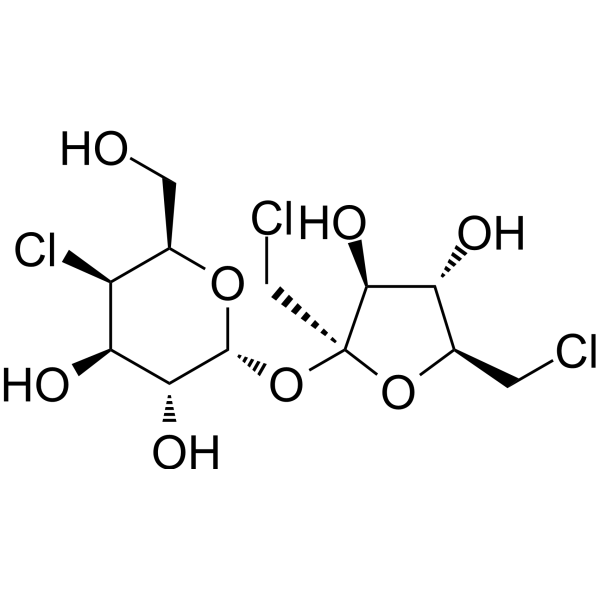
Sucralose (E955; Trichlorosucrose) is a non-nutritive artificial sweetener and sugar substitute. Sucralose can activate a conserved neural fasting response and thereby exerts an appetite-stimulating effect in rodents.
For research use only. We do not sell to patients.
- Purity : 99.95%
- CAS No.: 56038-13-2
- Formula: C12H19Cl3O8
- Molecular Weight:397.63
-
Storage:Powder -20°C, 3 years , 4°C, 2 years ; In solvent -80°C, 2 years , -20°C, 1 year

To place orders, for customer services and technical support, please contact: MedChemExpress USA
Tel: 609-228-6898 E-mail: [email protected] [email protected]


-
 Biological Activity
-
Chemical Information
-
Solvent & Solubility
- Purity & Documentation
- References
-
 Help & FAQs


-
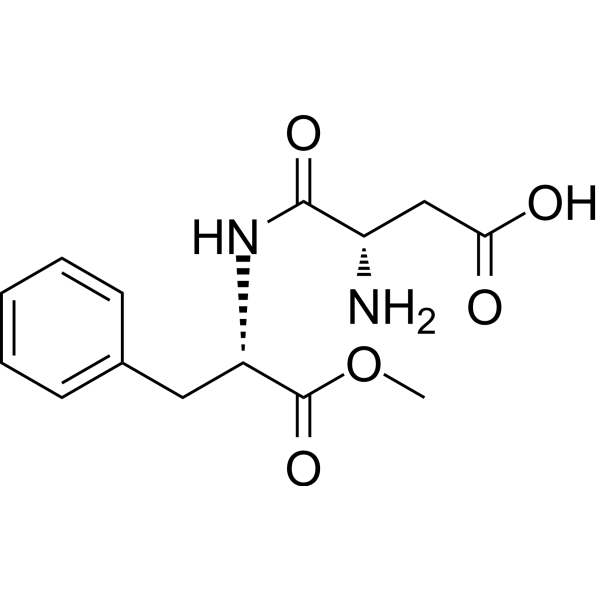
HY-B0361
AspartameSweetener -
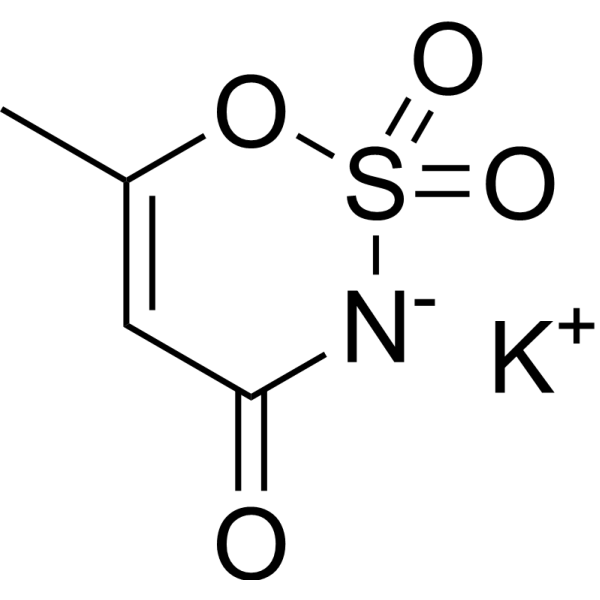
HY-D0195
Acesulfame potassiumSweetener -
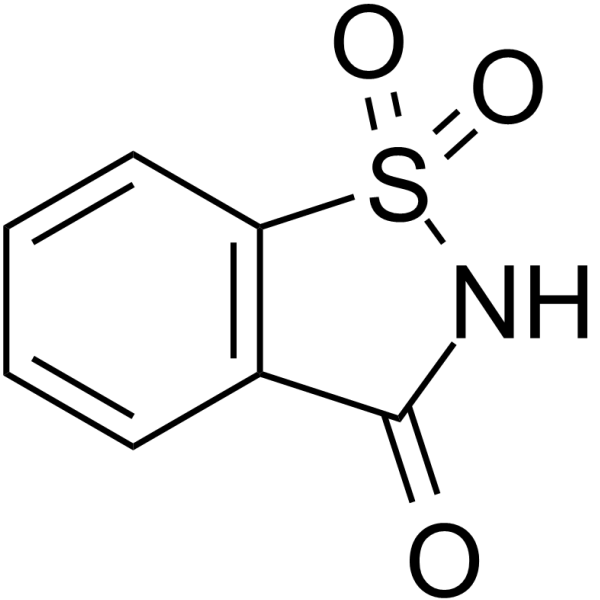
HY-Y0272
Saccharin -
HY-100551
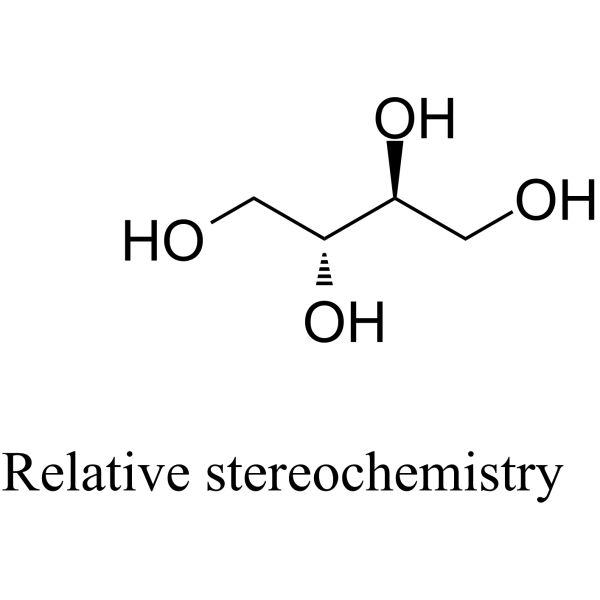
meso-ErythritolSweetener Agent -
HY-B2122
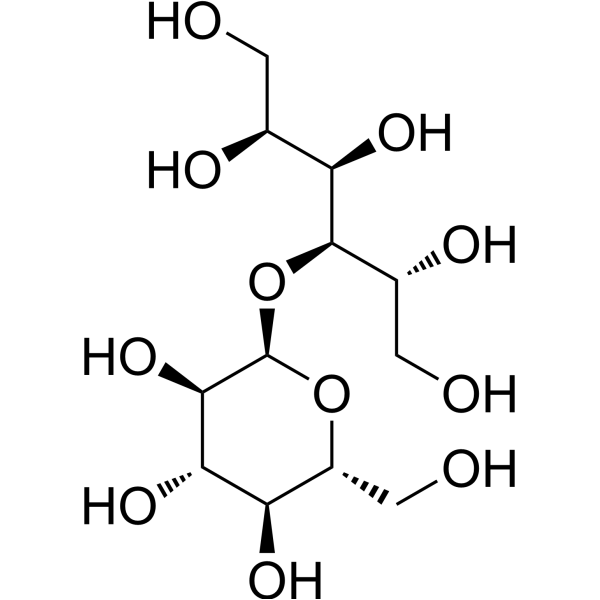
MaltitolSugar Alcohol -
HY-W011053
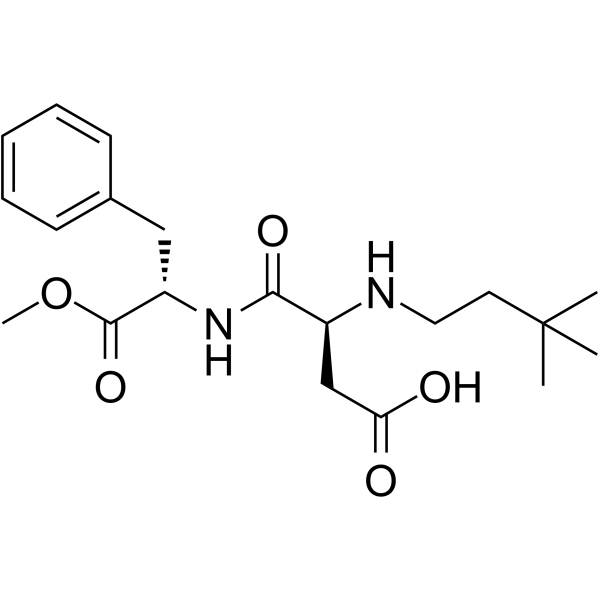
NeotameArtificial Sweetener -

HY-N0614R
Sucralose (Standard)Non-Nutritive Sweetener -
HY-W014839
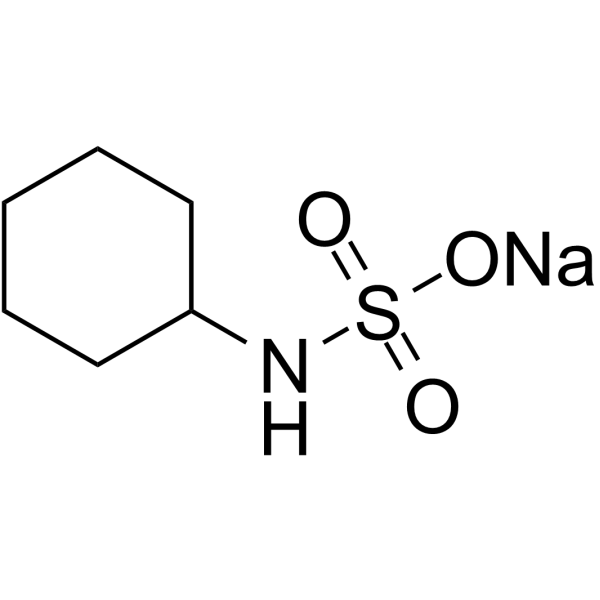
Cyclamic acid sodiumArtificial Sweetener -
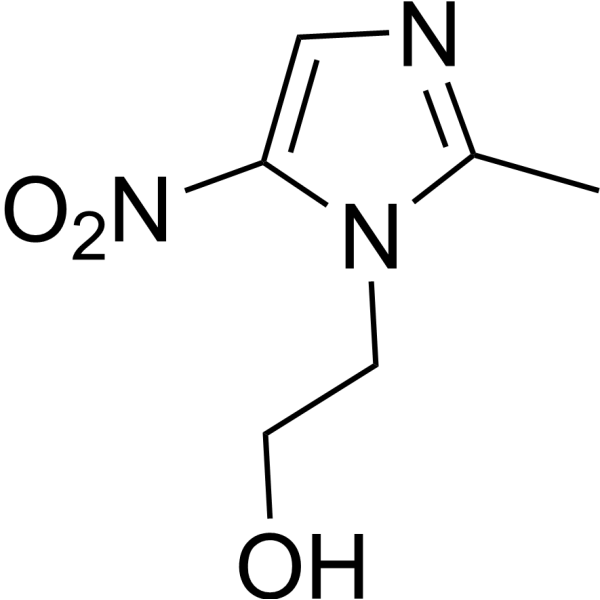
HY-B0318
MetronidazoleAntibiotic -
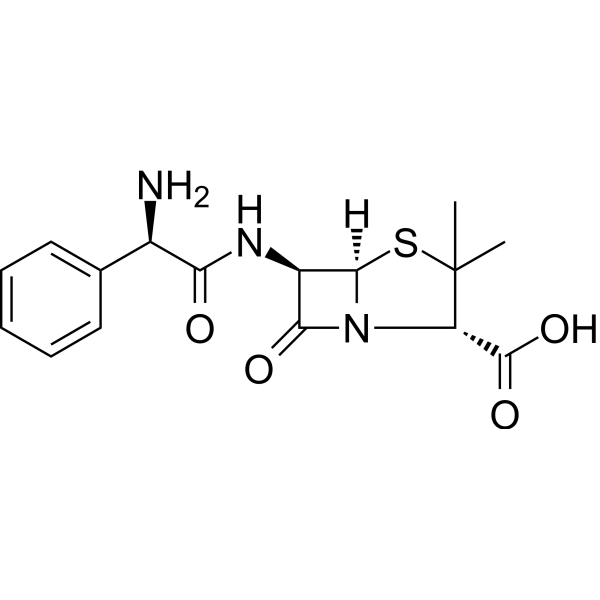
HY-B0522
AmpicillinBacterial Inhibitor -
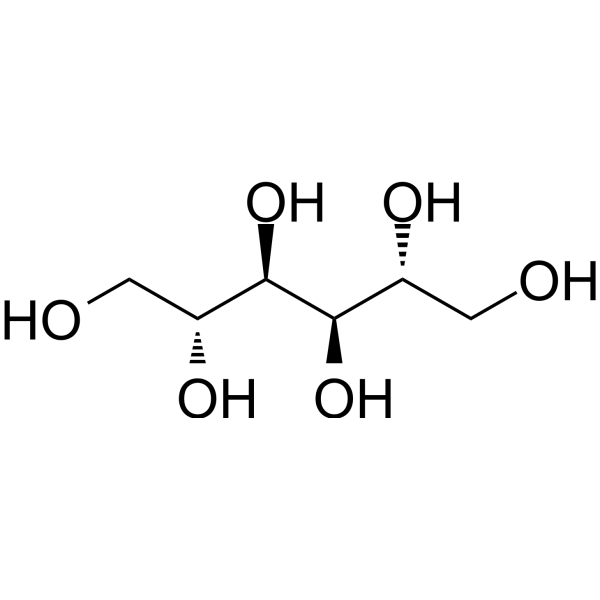
HY-N0378
D-MannitolResistant Sugar/Osmotic Diuretics -
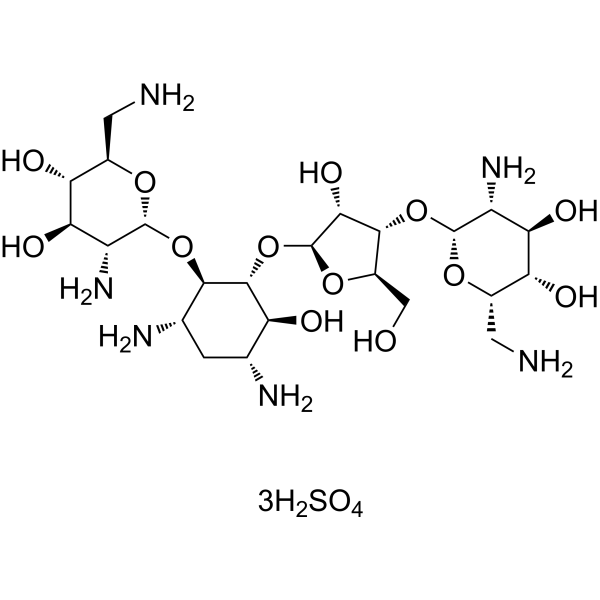
HY-B0470
Neomycin sulfatePhospholipase C Inhibitor, Angiogenesis Modulator
Publications Citing Use of MedChemExpress (MCE) Sucralose
More Customer Validation & Images

-
WB

-
IHC

All Endogenous Metabolite Isoforms
More

Biological Activity
Description
IC50 & Target
|
Human Endogenous Metabolite |
In Vivo
MedChemExpress (MCE) has not independently confirmed the accuracy of these methods. They are for reference only.
Clinical Trial
| NCT Number | Sponsor | Condition | Start Date |
Phase

|
|---|---|---|---|---|
| NCT01329991 | Plexxikon| | 2011-05 | PHASE1 |


Chemical Information
-
CAS No. 56038-13-2
-
Appearance Solid
-
Molecular Weight 397.63
-
Formula C12H19Cl3O8
-
Color White to off-white
-
SMILES
ClC[C@]1(O[C@H](CCl)[C@@H](O)[C@@H]1O)O[C@H]([C@@H]([C@@H](O)[C@H]2Cl)O)O[C@@H]2CO
-
Synonyms
E955; Trichlorosucrose
-
Shipping
Room temperature in continental US; may vary elsewhere.
-
Storage
Powder -20°C 3 years 4°C 2 years In solvent -80°C 2 years -20°C 1 year


Publications (3)
-
Journal Impact Factor
-
Most Recent
-
NPJ Sci Food
2026 Mar 24. PMID: 41876529
Sucralose purchased from MedChemExpress. Usage Cited in: NPJ Sci Food. 2026 Mar 24. [Abstract]
Western blot analysis of the senescence marker p21 in ovaries and other organs from water and long-term sucralose (0.1 mg/mL)-treated mice.
Sucralose purchased from MedChemExpress. Usage Cited in: NPJ Sci Food. 2026 Mar 24. [Abstract]
Representative IHC staining of p21 in ovaries and other organs from water and long-term sucralose (0.1 mg/mL)-treated mice.
-
Cancer Immunol Res
NET-Triggered NLRP3 Activation and IL18 Release Drive Oxaliplatin-Induced Peripheral Neuropathy. [Abstract]2022 Dec 2;10(12):1542-1558. PMID: 36255412 -
Anal Chem
Exposome-Scale Investigation of Cl-/Br-Containing Chemicals Using High-Resolution Mass Spectrometry, Multistage Machine Learning, and Cloud Computing. [Abstract]2025 Jun 3;97(21):11099-11109. PMID: 40401576


Solvent & Solubility
In Vitro:
H2O : 100 mg/mL (251.49 mM; Need ultrasonic)
DMSO : 100 mg/mL (251.49 mM; Need ultrasonic; Hygroscopic DMSO has a significant impact on the solubility of product, please use newly opened DMSO)
Please refer to the solubility information to select the appropriate solvent. Once prepared, please aliquot and store the solution to prevent product inactivation from repeated freeze-thaw cycles.
Storage method and period of stock solution: -80°C, 2 years; -20°C, 1 year. When stored at -80°C, please use it within 2 years. When stored at -20°C, please use it within 1 year.
* Note: If you choose water as the stock solution, please dilute it to the working solution, then filter and sterilize it with a 0.22 μm filter before use.
Please refer to the solubility information to select the appropriate solvent. Once prepared, please aliquot and store the solution to prevent product inactivation from repeated freeze-thaw cycles.
Storage method and period of stock solution: -80°C, 2 years; -20°C, 1 year. When stored at -80°C, please use it within 2 years. When stored at -20°C, please use it within 1 year.
* Note: If you choose water as the stock solution, please dilute it to the working solution, then filter and sterilize it with a 0.22 μm filter before use.
Concentration (start) × Volume (start) = Concentration (final) × Volume (final)
In Vivo:
For the following dissolution methods, please prepare the working solution directly:
It is recommended to prepare fresh solutions and use them promptly within a short period of time.
The percentages shown for the solvents indicate their volumetric ratio in the final prepared solution. If precipitation or phase separation occurs during preparation, heat and/or sonication can be used to aid dissolution.
Add each solvent one by one: PBS
Solubility: 50 mg/mL (125.75 mM); Clear solution; Need ultrasonic


Purity & Documentation
-
Data Sheet (278 KB)
-
SDS (393 KB)
- English - EN (393 KB)
- Français - FR (393 KB)
- Deutsch - DE (393 KB)
- Norwegian - NO (393 KB)
- Español - ES (393 KB)
- Swedish - SV (393 KB)
- Italian - IT (393 KB)
- Korean - KR (393 KB)
- Portuguese - PT (393 KB)
-
Handling Instructions (2659 KB)
References
[1]. M S, et al. Sucralose administered in feed, beginning prenatally through lifespan, induces hematopoietic neoplasias in male swiss mice. Int J Occup Environ Health. 2016 Jan;22(1):7-17. [Content Brief]
[2]. Nabanita Kundu, et al. Sucralose promotes accumulation of reactive oxygen species (ROS) and adipogenesis in mesenchymal stromal cells. Stem Cell Res Ther. 2020 Jun 26;11(1):250. [Content Brief]


Complete Stock Solution Preparation Table
Please refer to the solubility information to select the appropriate solvent. Once prepared, please aliquot and store the solution to prevent product inactivation from repeated freeze-thaw cycles.
Storage method and period of stock solution: -80°C, 2 years; -20°C, 1 year. When stored at -80°C, please use it within 2 years. When stored at -20°C, please use it within 1 year.
| Optional Solvent | Concentration Solvent Mass | 1 mg | 5 mg | 10 mg | 25 mg |
|---|---|---|---|---|---|
| H2O / DMSO | 1 mM | 2.5149 mL | 12.5745 mL | 25.1490 mL | 62.8725 mL |
| 5 mM | 0.5030 mL | 2.5149 mL | 5.0298 mL | 12.5745 mL | |
| 10 mM | 0.2515 mL | 1.2575 mL | 2.5149 mL | 6.2873 mL | |
| 15 mM | 0.1677 mL | 0.8383 mL | 1.6766 mL | 4.1915 mL | |
| 20 mM | 0.1257 mL | 0.6287 mL | 1.2575 mL | 3.1436 mL | |
| 25 mM | 0.1006 mL | 0.5030 mL | 1.0060 mL | 2.5149 mL | |
| 30 mM | 0.0838 mL | 0.4192 mL | 0.8383 mL | 2.0958 mL | |
| 40 mM | 0.0629 mL | 0.3144 mL | 0.6287 mL | 1.5718 mL | |
| 50 mM | 0.0503 mL | 0.2515 mL | 0.5030 mL | 1.2575 mL | |
| 60 mM | 0.0419 mL | 0.2096 mL | 0.4192 mL | 1.0479 mL | |
| 80 mM | 0.0314 mL | 0.1572 mL | 0.3144 mL | 0.7859 mL | |
| 100 mM | 0.0251 mL | 0.1257 mL | 0.2515 mL | 0.6287 mL |
* Note: If you choose water as the stock solution, please dilute it to the working solution, then filter and sterilize it with a 0.22 μm filter before use.


Sucralose Related Classifications
HY-N0614 Related Classifications
 Powered by Bioz