



Brivekimig

Based on 1 Customer Validation
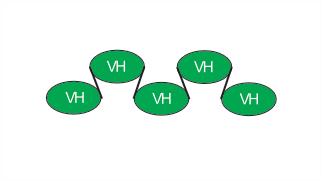
Brivekimig (F-027300252; SAR-442970) is a bispecific nanobody targeting TNF/OX40L. Brivekimig is applicable to research related to hidradenitis suppurativa.
연구목적의 판매만을 진행합니다. 환자를 대상으로 한 판매는 하지 않습니다.
- Purity : 98%
- CAS No.: 2834733-45-6
- 분자량:66.21 kDa
-
보관:Shipping with dry ice
Please store the product under the recommended conditions in the Certificate of Analysis.


To place orders, for customer services and technical support, please contact: MedChemExpress USA
Tel: 609-228-6898 E-mail: [email protected] [email protected]


-
 Biological Activity
-
Chemical Information
- 순도&문서
- References
-
 Help & FAQs











Biological Activity
제품 설명
In Vitro
Brivekimig simultaneously blocks TNF and OX40L, and exhibits superiority over Amlitelimab (HY-P99434) (an anti-OX40L antibody) in reducing infiltrating inflammatory cells[1].
MedChemExpress (MCE) has not independently confirmed the accuracy of these methods. They are for reference only.
신청
ELISA, FACS, Functional assay
Verified Bioactivity
-
 Loaded Brivekimig on AHC2 biosensor, can bind Serum Albumin/ALB Protein, Human (HEK293, His-Avi, HY-P78393) with an affinity constant of 3.668E-09 M as determined in BLI assay.
-
 Loaded Brivekimig on AHC2 biosensor, can bind TNF alpha protein, Human (His, HY-P70426A) with an affinity constant of <1.0E-12 M as determined in BLI assay.
-
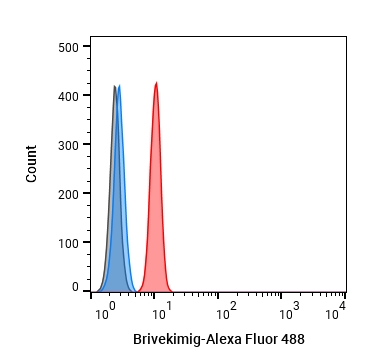 Flow cytometric analysis of 1X10⁶ HUVEC cells with Brivekimig (HY-P990907, red). Cells were fixed with 4% paraformaldehyde. Then stained with the primary antibody at 1/200 dilution for an hour at 4℃. Alexa Fluor 488-conjugated AffiniPure Goat Anti-Human IgG H&L (HY-P83776) was used as the secondary antibody at 1/1,000 dilution for 30 minutes at 4℃. Human IgG1 kappa (HY-P99001, blue) was used as the isotype control, cells without incubation with primary antibody were used as the unlabeled control (black).


Product Details
Product Properties
-
Appearance
Liquid
-
Formulation
Please refer to the lot-specific COA for specific buffer information.
-
Purity
98%
-
Reconstitution
The product can be reconstituted/diluted with sterile PBS or saline.
-
Storage & Stability
Please store the product under the recommended conditions in the Certificate of Analysis.
-
선적
Shipping with dry ice.
순도&문서


References

Calculators
Concentration (start) × Volume (start) = Concentration (final) × Volume (final)


Brivekimig Related Classifications
HY-P990907 Related Classifications
 Powered by Bioz
Keywords