



Epilepsy
-
Epilepsy (194)


- Formula: C1913CH23D2ClN2O2
- Molecular Weight: 363.88
Quinidine-13C, d2 hydrochloride is the 13C, d2 labeled Quinidine hydrochloride (HY-W115674). Quinidine hydrochloride is an orally active antiarrhythmic agent. Quinidine hydrochloride reduces the expression level of P-gp, inhibits P-gp-mediated efflux, increases the intracellular accumulation of P-gp substrates, induces PARP cleavage and Caspase-3 activation, and elevates the proportion of Apoptotic cells at the sub-G1 phase. Quinidine hydrochloride exerts sustained block and open-channel block effects on IK(f). Quinidine hydrochloride alters the urinary metabolic ratio of Amphetamine, modulates the Pentylenetetrazol-induced seizure threshold, and regulates the anticonvulsant effect of Dextromethorphan. Quinidine hydrochloride can be used in studies related to uterine sarcoma and seizures.

- Formula: C17H27N3O3
- Molecular Weight: 321.41
Neuroprotective agent 10 is an orally active, blood-brain barrier permeable neuroprotective agent. Neuroprotective agent 10 scavenges ABTS, DPPH and superoxide anion free radicals. Neuroprotective agent 10 inhibits abnormal electrical discharges. At the cellular level, Neuroprotective agent 10 alleviates H2O2-induced oxidative damage and LPS (HY-D1056)-induced neuroinflammation, and relieves epileptic symptoms and oxidative damage in mice. Neuroprotective agent 10 can be used in the research of epilepsy.
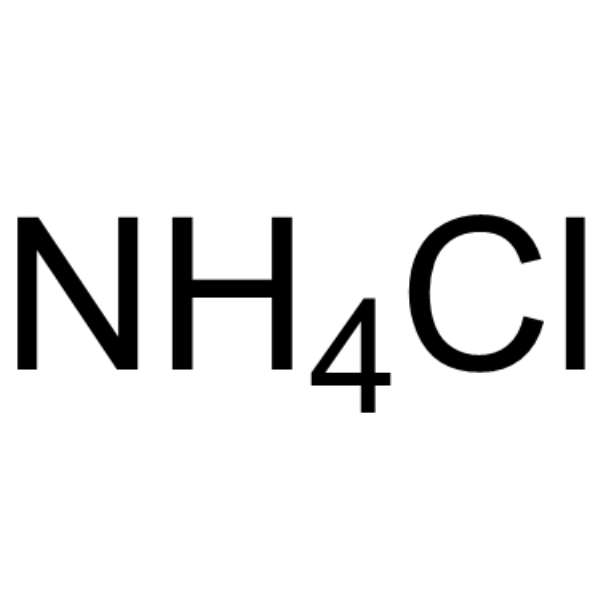
- Formula: NH4Cl
- Molecular Weight: 53.49
Ammonium chloride (Salmiac), for molecular biology is an inhibitor of Slc26a4 and SMAD2. Ammonium chloride, for molecular biology reduces the protein expression level of Slc26a4 in lung tissue, and attenuates ozone-induced increases in proinflammatory cytokines, inflammatory cells, pulmonary resistance, goblet cell hyperplasia, peribronchial inflammation and thiocyanate levels in mouse tissues and bronchoalveolar lavage fluid. Ammonium chloride, for molecular biology decreases the level of phosphorylated SMAD2, inhibits autophagy by reducing autophagy-related proteins, and enhances Cisplatin (HY-17394)-induced cancer cell apoptosis and DNA double-strand breaks. Ammonium chloride, for molecular biology also inhibits the TCA cycle, reduces ATP production, increases glucose utilization, regulates the levels of lactic acid, glutamic acid and ATP, and induces morphological degeneration of neuroblastoma cells. Ammonium chloride, for molecular biology can be used in studies related to ozone-induced airway injury, hepatocellular carcinoma, human cervical cancer, hepatic encephalopathy, Reye syndrome, epilepsy and neurodegenerative diseases.

- Formula: C16H17ClF3NO
- Molecular Weight: 331.76
Norfluoxetine hydrochloride (Standard) is the analytical standard of Norfluoxetine hydrochloride (HY-W011235). This product is intended for research and analytical applications. Norfluoxetine hydrochloride is the active metabolite of the antidepressant Fluoxetine (HY-B0102); it is also a TREK-2 K2P potassium channel inhibitor. Norfluoxetine hydrochloride exhibits neuroimmunological activity, induces apoptosis in primary microglial cells, and inhibits the release of pro-inflammatory factors. Norfluoxetine hydrochloride inhibits high-threshold voltage-gated Ca2+ currents in neurons with an EC50 of 20.4 μM. Norfluoxetine hydrochloride can be used in research related to depression, ischemic stroke, and epilepsy.

- Formula: C4H6KNO4
- Molecular Weight: 171.19
L-Aspartic acid potassium (Standard) is the analytical standard of L-Aspartic acid potassium (HY-N0666A). This product is intended for research and analytical applications. L-Aspartic acid potassium (potassium L-aspartate) is a NMDA receptor agonist and acidic amino acid. L-Aspartic acid potassium has no independent analgesic activity. L-Aspartic acid potassium can antagonize the analgesic effects of D-Aspartic acid and Morphine. L-Aspartic acid potassium regulates polymorph transformation, crystal growth/aggregation and nucleation processes of calcium carbonate, and can serve as a biomineralization template. L-Aspartic acid potassium promotes burst firing of central neurons. L-Aspartic acid potassium can be used in studies related to cerebral ischemia and epilepsy.

- Formula: C19H23ClN2OS
- Molecular Weight: 362.92
Thiazesim hydrochloride is a CNS-penetrant GABAA receptor inhibitor, exerting anticonvulsant and antidepressant effects. Thiazesim hydrochloride depresses amygdala output, disrupts conditioned avoidance response in rats. Thiazesim hydrochloride can be used for the research of depression and epilepsy.

- Formula: C19H20N2O
- Molecular Weight: 292.37
Denzimol is an orally active anticonvulsant agent. Denzimol inhibits cytochrome P450, and interacts with benzodiazepine receptors. Denzimol selectively antagonizes tonic components of Metrazol-induced seizures in rats and mice. Denzimol can be used for the research of epilepsy and convulsions.

- Formula: C19H21ClN2O
- Molecular Weight: 328.84
Denzimol hydrochloride is an orally active anticonvulsant agent. Denzimol hydrochloride inhibits cytochrome P450, and interacts with benzodiazepine receptors. Denzimol hydrochloride selectively antagonizes tonic components of Metrazol-induced seizures in rats and mice. Denzimol hydrochloride can be used for the research of epilepsy and convulsions.

- Formula: C5H6N2O2
- Molecular Weight: 126.11
Imidazoleacetic acid (Standard) is the analytical standard of Imidazoleacetic acid (HY-113413). This product is intended for research and analytical applications. Imidazoleacetic acid (Imidazolyl-4-acetic acid) is a blood-brain barrier-permeable full agonist of the GABAA receptor. Imidazoleacetic acid forms via histamine oxidation in the mouse brain. Imidazoleacetic acid exerts multiple neurochemical and behavioral effects. Imidazoleacetic acid induces a range of centrally mediated effects, including analgesia, sedation, hypnosis, as well as reductions in blood pressure, body temperature, isolation-induced aggression and motor activity.

- Formula: C11H8Cl4N2
- Molecular Weight: 310.01
R 57720 is an antiepileptic agent that exhibits dose-dependent anticonvulsant activity across multiple postnatal rat age groups. R 57720 inhibits severe generalized tonic-clonic seizures induced by Pentylenetetrazol. R 57720 can be used for epilepsy research.

- Formula: C15H11NOS
- Molecular Weight: 253.32
AF-CX 921 is an orally active anticonvulsant agent. AF-CX 921 exhibits antiepileptic effects in ferrets, hippocampally kindled cats, and Mongolian gerbils. AF-CX 921 exhibits anticonvulsant activity in normal and microcephalic hippocampally kindled rats. AF-CX 921 can be used for the research of epileptic seizures and epilepsy.

- Formula: C12H18O6
- Molecular Weight: 258.27
BD-AcAc2 (R,S-1,3-Butanediol acetoacetate diester) is an orally active, CNS-penetrant antiepileptic agent. BD-AcAc2 inhibits NF-κB, NLRP3 inflammasome, caspase-1/3, pyroptosis, apoptosis, and enhances autophagy. BD-AcAc2 exhibits antioxidant activity by modulating ROS, MDA, SOD, and GSH levels, and alleviates oxidative stress. BD-AcAc2 mitigates chronic colitis, counteracts Dextran Sodium Sulfate (DSS)-induced pathology, protects against central nervous system oxygen toxicity and acute lung injury, and exhibits anti-seizure efficacy. BD-AcAc2 can be used for the research of colitis, sarcopenia, acute lung injury, seizure, and obesity.

- Formula: C305H472N98O84S6
- Molecular Weight: 7048.01
α-Dendrotoxin (α-DTX) is a voltage-gated K+ channel blocker and an acid-sensing ion channel (ASIC) inhibitor. α-Dendrotoxin blocks Kv1.1, Kv1.2, Kv1.6 and D-type (ID) voltage-gated K+ channels, and reversibly inhibits slowly inactivating potassium currents. α-Dendrotoxin induces epilepsy-related behaviors in mice. α-Dendrotoxin can be used in studies related to tonic-clonic seizures.
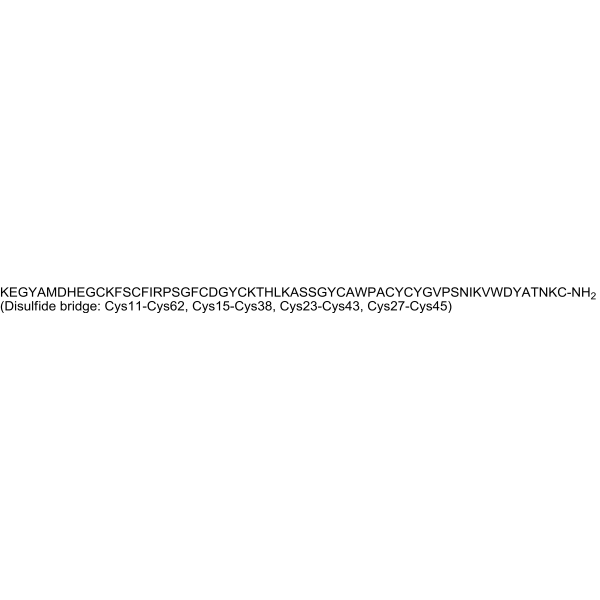
- Formula: C309H438N80O87S9
- Molecular Weight: 6953.86
Scorpion toxin Tf2 is a selective human voltage-gated sodium channel Nav1.3 (hNav1.3) activator. Scorpion toxin Tf2 selectively shifts the channel's activation voltage to more negative values, enabling channel opening at resting membrane potentials. Scorpion toxin Tf2 can be used for the research of epilepsy, nociception (after spinal cord injury).
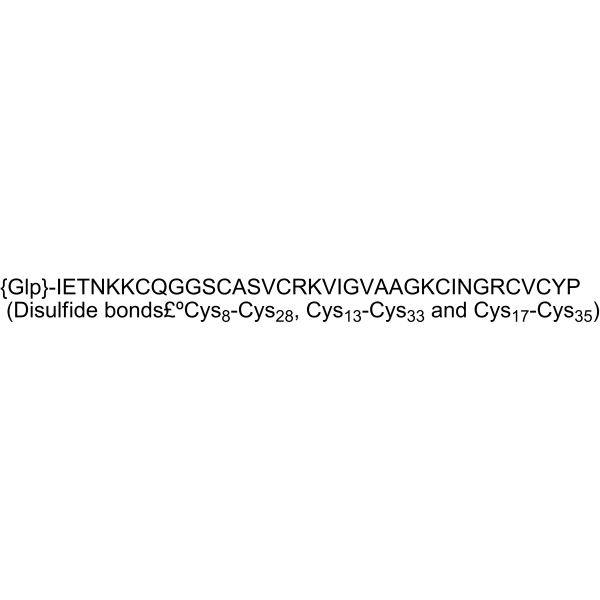
- Formula: C158H262N50O48S6
- Molecular Weight: 3822.47
AmmTX3 is a peptide toxin identified from the venom of the scorpion Androctonus mauretanicus. AmmTX3 is a highly specific blocker of Kv4 channels, which selectively and almost completely blocks transient A-type K+ currents with a Ki of 131 nM. AmmTX3 induces epileptiform behaviors and causes death in mice receiving intracerebroventricular injection. AmmTX3 increases the excitability of dentate gyrus granule cells, reduces GABAergic inhibition, enhances and stabilizes the EPSP-spike component of long-term potentiation, and impairs reference memory. AmmTX3 can be used in research related to pain, epilepsy, and autism spectrum disorder.
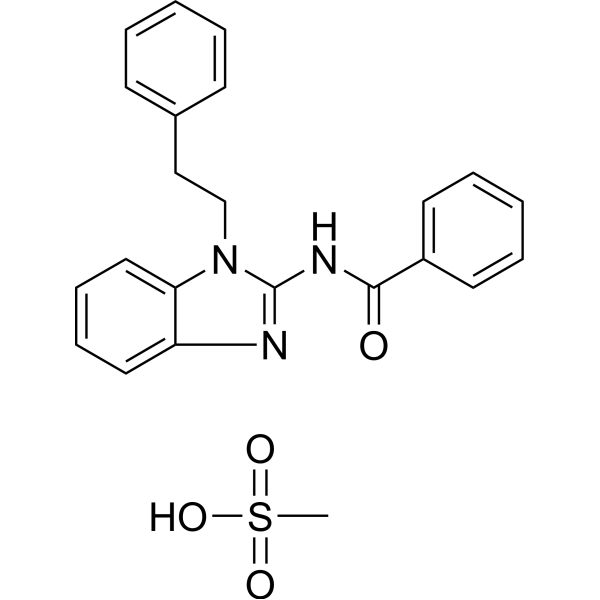
- Formula: C23H23N3O4S
- Molecular Weight: 437.51
GW438014A is a selective NPY-Y5 receptor competitive antagonist capable of crossing the blood-brain barrier, with IC50 values of 197 nM and 211 nM against human receptors. GW438014A reverses PYY-mediated inhibition of Forskolin (HY-15371)-induced cAMP production, reduces NPY-induced food intake and nocturnal food intake in rodents, decreases body weight gain and fat mass in Zucker rats, and inhibits centrally mediated feeding behavior. GW438014A can be used in research related to obesity and epilepsy.
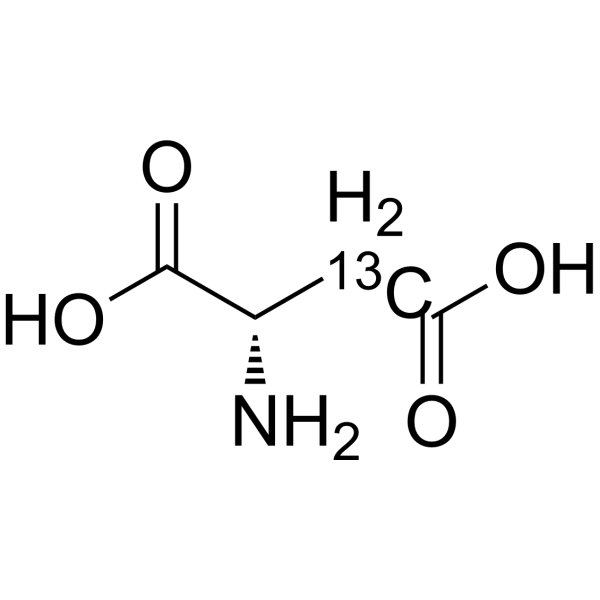
- Formula: C313CH7NO4
- Molecular Weight: 134.10
L-Aspartic acid-13C-1 ([3-13C]Aspartic acid) is the 13C-labeled L-Aspartic acid (HY-N0666). L-Aspartic acid is a NMDA receptor agonist and acidic amino acid. L-Aspartic acid has no independent analgesic activity. L-Aspartic acid can antagonize the analgesic effects of D-Aspartic acid and Morphine. L-Aspartic acid regulates polymorph transformation, crystal growth/aggregation and nucleation processes of calcium carbonate, and can serve as a biomineralization template. L-Aspartic acid promotes burst firing of central neurons. L-Aspartic acid can be used in studies related to cerebral ischemia and epilepsy.
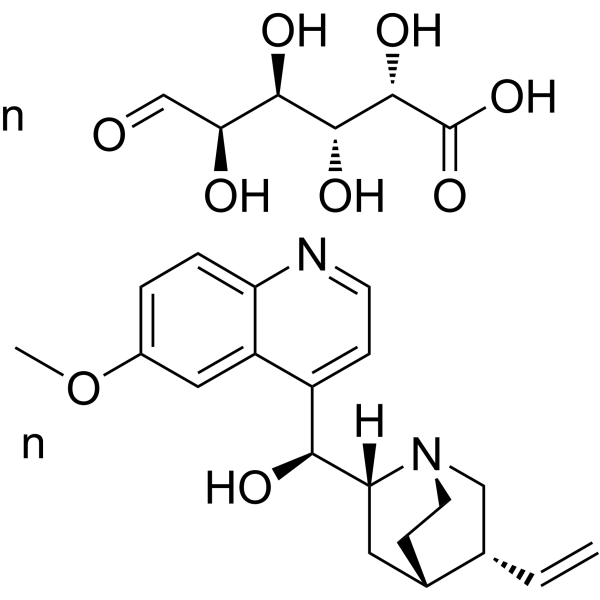
- Formula: C26H34N2O9
Quinidine polygalacturonate is an orally active antiarrhythmic agent. Quinidine polygalacturonate reduces the expression level of P-gp, inhibits P-gp-mediated efflux, increases the intracellular accumulation of P-gp substrates, induces PARP cleavage and Caspase-3 activation, and elevates the proportion of Apoptotic cells at the sub-G1 phase. Quinidine polygalacturonate exerts sustained block and open-channel block effects on IK(f). Quinidine polygalacturonate alters the urinary metabolic ratio of Amphetamine, modulates the Pentylenetetrazol-induced seizure threshold, and regulates the anticonvulsant effect of Dextromethorphan. Quinidine polygalacturonate can be used in studies related to uterine sarcoma and seizures.
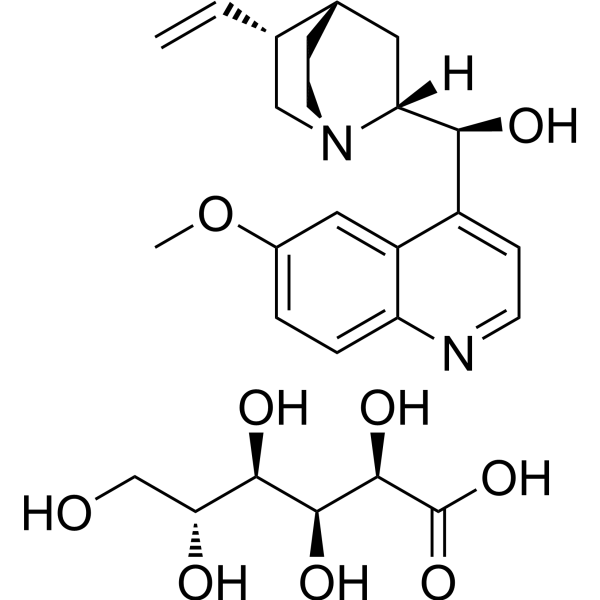
- Formula: C26H36N2O9
- Molecular Weight: 520.57
Quinidine gluconic acid is an orally active antiarrhythmic agent. Quinidine gluconic acid reduces the expression level of P-gp, inhibits P-gp-mediated efflux, increases the intracellular accumulation of P-gp substrates, induces PARP cleavage and Caspase-3 activation, and elevates the proportion of Apoptotic cells at the sub-G1 phase. Quinidine gluconic acid exerts sustained block and open-channel block effects on IK(f). Quinidine gluconic acid alters the urinary metabolic ratio of Amphetamine, modulates the Pentylenetetrazol-induced seizure threshold, and regulates the anticonvulsant effect of Dextromethorphan. Quinidine gluconic acid can be used in studies related to uterine sarcoma and seizures.
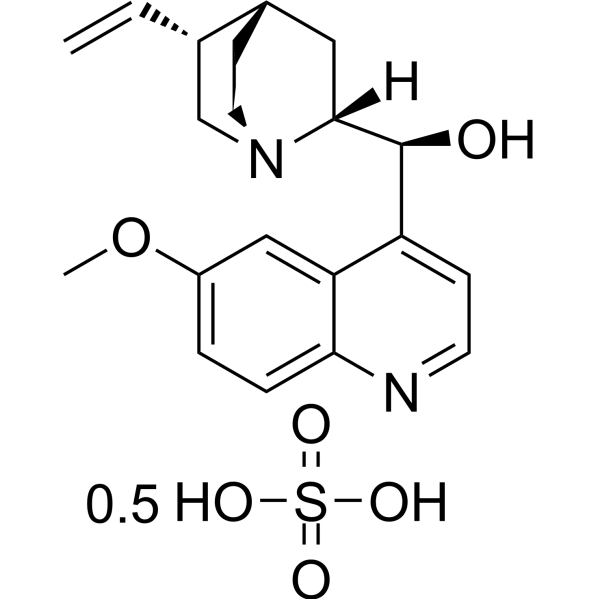
- Formula: C20H26N2O6S
- Molecular Weight: 373.46
Quinidine sulfate is an orally active antiarrhythmic agent. Quinidine sulfate reduces the expression level of P-gp, inhibits P-gp-mediated efflux, increases the intracellular accumulation of P-gp substrates, induces PARP cleavage and Caspase-3 activation, and elevates the proportion of Apoptotic cells at the sub-G1 phase. Quinidine sulfate exerts sustained block and open-channel block effects on IK(f). Quinidine sulfate alters the urinary metabolic ratio of Amphetamine, modulates the Pentylenetetrazol-induced seizure threshold, and regulates the anticonvulsant effect of Dextromethorphan. Quinidine sulfate can be used in studies related to uterine sarcoma and seizures.



