



Polymyxin B nonapeptide TFA
Based on 3 publication(s) in Google Scholar
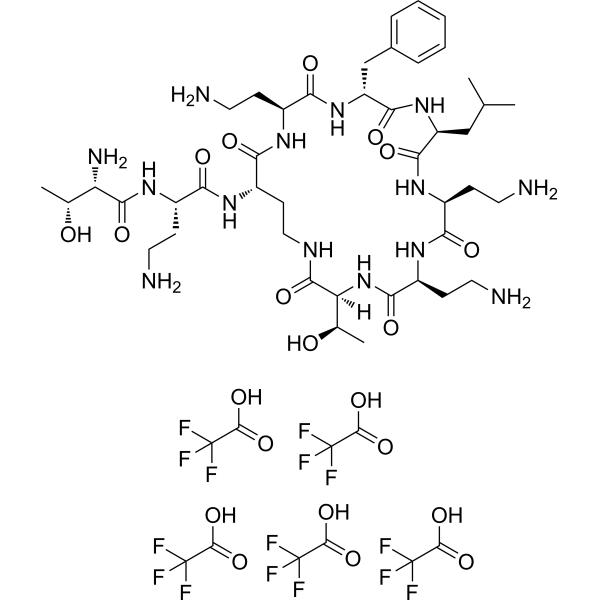
Polymyxin B nonapeptide TFA is a cyclic peptide obtained from Polymyxin B by proteolytic removal of its terminal amino acyl residue. Polymyxin B nonapeptide TFA is less toxic, lacks bactericidal activity, and retains its ability to render gram-negative bacteria susceptible to several antibiotics by permeabilizing their outer membranes.
For research use only. We do not sell to patients.
- Purity : 99.78%
- CAS No.: 2220175-42-6
- Formula: C43H74N14O11.5C2HF3O2
- Molecular Weight:1533.25
-
Storage:
Sealed storage, away from moisture.
Powder -80°C, 2 years , -20°C, 1 year* In solvent : -80°C, 6 months; -20°C, 1 month (sealed storage, away from moisture)

To place orders, for customer services and technical support, please contact: MedChemExpress USA
Tel: 609-228-6898 E-mail: [email protected] [email protected]


-
 Biological Activity
-
Chemical Information
-
Solvent & Solubility
- Protocols
- Purity & Documentation
- References
-
 Help & FAQs


-
HY-10583
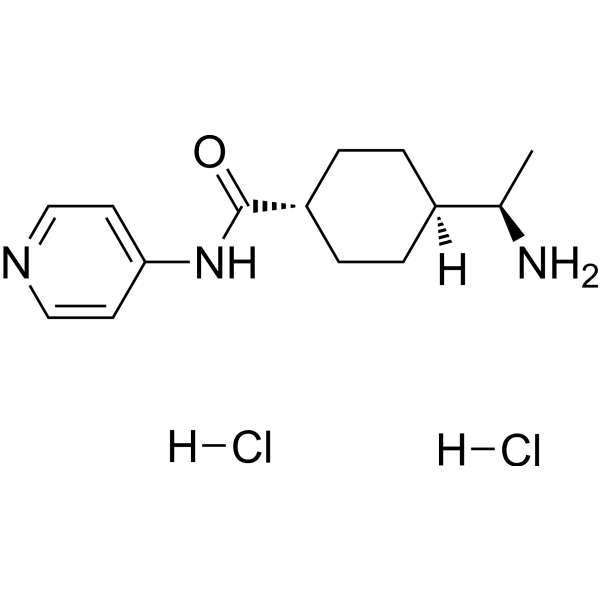
Y-27632 dihydrochlorideROCK Inhibitor -
HY-W014622
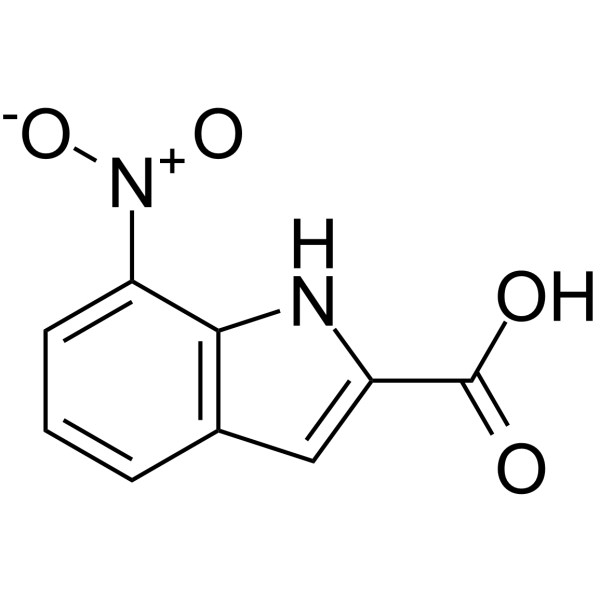
CRT0044876APE1 Inhibitor -
HY-N6739
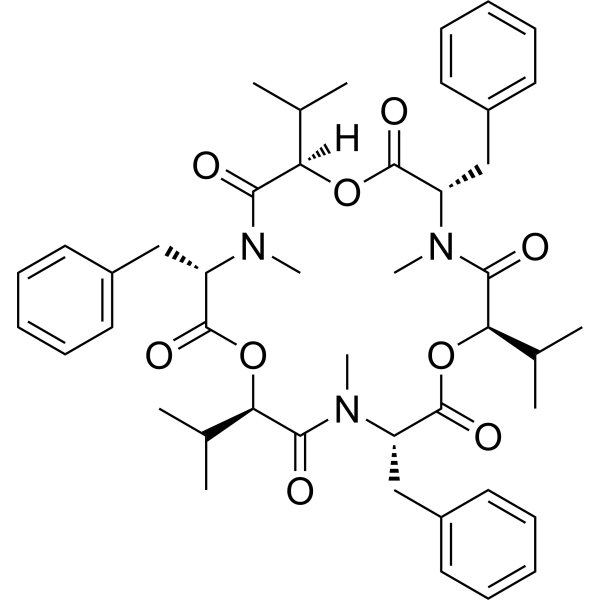
BeauvericinAnticancer Fungal Mycotoxin -
HY-19892A
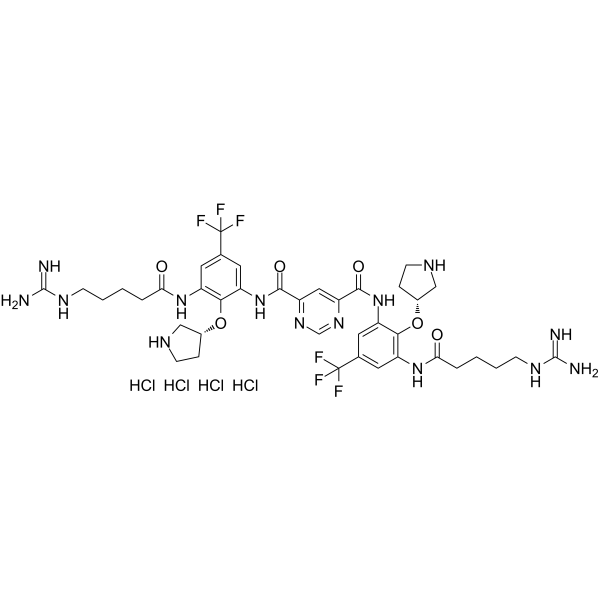
Brilacidin tetrahydrochlorideAntibiotic -
HY-P1649B
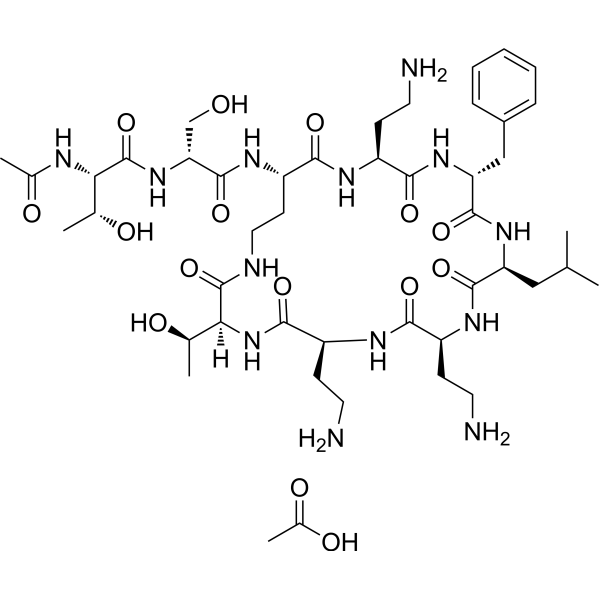
SPR741 acetateBacterial Inhibitor -
HY-119123A
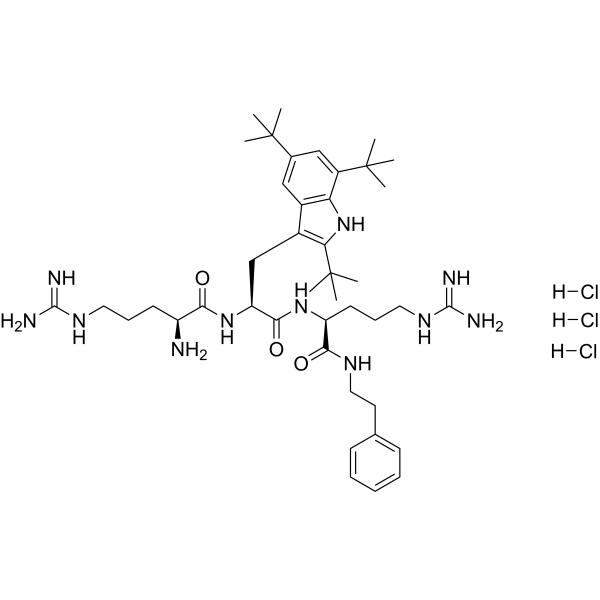
Voxvoganan trihydrochlorideTopical Antimicrobial -

HY-P0274A
PGLa TFAAntimicrobial Peptide
Publications Citing Use of MedChemExpress (MCE) Polymyxin B nonapeptide TFA
MoreAll Antibiotic Isoforms
More

Biological Activity
Description
In Vitro
Polymyxin B nonapeptide TFA (2-32 μg/mL, 24 h) has a synergistic effect with Azithromycin (HY-17506)[1].
Polymyxin B nonapeptide TFA (10 μg/mL) inhibits lipopolysaccharide (HY-D1056)-induced neutrophilic activation in a concentration-dependent manner[2].
MedChemExpress (MCE) has not independently confirmed the accuracy of these methods. They are for reference only. Further protocols information, click here.
-
Cell Line:E. coli strains
-
Concentration:2, 4, 8, 16, 32 μg/mL
-
Incubation Time:24 h
-
Result:Combinated with AZT caused a significant reduction the bacterial growth after 6 h and complete killing after 24 h.
In Vivo
MedChemExpress (MCE) has not independently confirmed the accuracy of these methods. They are for reference only.


Chemical Information
-
CAS No. 2220175-42-6
-
Appearance Solid
-
Molecular Weight 1533.25
-
Formula C43H74N14O11.5C2HF3O2
-
Color White to off-white
-
Sequence
Thr-{Dab}-{Dab}-{Dab}-{d-Phe}-Leu-{Dab}-{Dab}-Thr (Lactam: Dab3-Thr9)
-
Sequence Shortening
T-{Dab}-{Dab}-{Dab}-{d-Phe}-L-{Dab}-{Dab}-T (Lactam: Dab3-Thr9)
-
Shipping
Room temperature in continental US; may vary elsewhere.
-
Storage
Sealed storage, away from moisture
Powder -80°C 2 years -20°C 1 year * In solvent : -80°C, 6 months; -20°C, 1 month (sealed storage, away from moisture)


Publications (3)
-
Journal Impact Factor
-
Most Recent
-
J Adv Res
LTX-315 is a novel broad-spectrum antimicrobial peptide against clinical multidrug-resistant bacteria. [Abstract]2025 Jan 9:S2090-1232(24)00621-0. PMID: 39793961 -
Front Microbiol
Repurposing Antispasmodic Agent Otilonium Bromide for Treatment of Staphylococcus aureus Infections. [Abstract]2020 Jul 31:11:1720. PMID: 32849366 -
BMC Microbiol
Contezolid and polymyxin B nonapeptide combination reveals antibacterial synergy against multidrug-resistant Acinetobacter baumannii strains. [Abstract]2026 May 29. PMID: 42216156


Solvent & Solubility
In Vitro:
DMSO : 100 mg/mL (65.22 mM; Need ultrasonic; Hygroscopic DMSO has a significant impact on the solubility of product, please use newly opened DMSO)
H2O : 50 mg/mL (32.61 mM; ultrasonic and warming and heat to 60°C)
Please refer to the solubility information to select the appropriate solvent. Once prepared, please aliquot and store the solution to prevent product inactivation from repeated freeze-thaw cycles.
Storage method and period of stock solution: -80°C, 6 months; -20°C, 1 month (sealed storage, away from moisture). When stored at -80°C, please use it within 6 months. When stored at -20°C, please use it within 1 month.
* Note: If you choose water as the stock solution, please dilute it to the working solution, then filter and sterilize it with a 0.22 μm filter before use.
Please refer to the solubility information to select the appropriate solvent. Once prepared, please aliquot and store the solution to prevent product inactivation from repeated freeze-thaw cycles.
Storage method and period of stock solution: -80°C, 6 months; -20°C, 1 month (sealed storage, away from moisture). When stored at -80°C, please use it within 6 months. When stored at -20°C, please use it within 1 month.
* Note: If you choose water as the stock solution, please dilute it to the working solution, then filter and sterilize it with a 0.22 μm filter before use.
Concentration (start) × Volume (start) = Concentration (final) × Volume (final)
In Vivo:
For the following dissolution methods, please prepare the working solution directly:
It is recommended to prepare fresh solutions and use them promptly within a short period of time.
The percentages shown for the solvents indicate their volumetric ratio in the final prepared solution. If precipitation or phase separation occurs during preparation, heat and/or sonication can be used to aid dissolution.
Add each solvent one by one: PBS
Solubility: 100 mg/mL (65.22 mM); Clear solution; Need ultrasonic

Protocols
-
Gram Staining of Tissue Sections
Gram staining of tissue sections is a histochemical technique used to differentiate Gram-positive and Gram-negative bacteria within histological specimens based on differences in bacterial cell wall structure and dye retention, adapted from classical bacteriological Gram staining into tissue-compatible “histological Gram stain” variants. In tissue applications, modifications of the Brown-Hopps and Brown-Brenn methods are commonly used to improve differentiation of microorganisms embedded within host connective tissue and to reduce overstaining or loss of Gram-negative signal, which are known limitations of earlier approaches. The principle relies on crystal violet-iodine complex retention in Gram-positive organisms and subsequent decolorization and counterstaining steps that allow contrast visualization of Gram-negative organisms against tissue background.
-
Bacterial live/dead nucleic-acid viability staining
The LIVE/DEAD bacterial viability staining method is based on differential permeability of nucleic-acid-binding fluorescent dyes, most commonly SYTO 9 and propidium iodide (PI), which enables discrimination of bacterial populations with intact versus compromised cytoplasmic membranes. SYTO 9 penetrates both intact and damaged bacterial membranes and binds nucleic acids to produce green fluorescence, whereas propidium iodide penetrates only cells with compromised membranes and fluoresces red while also reducing SYTO 9 signal through competitive binding and fluorescence interactions. The resulting fluorescence pattern is interpreted as a proxy for membrane integrity, which is widely used as an indicator of bacterial viability in microscopy, flow cytometry, and spectroscopic platforms. However, mechanistic studies show that SYTO 9 and PI interactions involve displacement and fluorescence resonance energy transfer effects, which can influence signal interpretation depending on dye ratios a


Purity & Documentation
-
Data Sheet (285 KB)
-
SDS (393 KB)
- English - EN (393 KB)
- Français - FR (393 KB)
- Deutsch - DE (393 KB)
- Norwegian - NO (393 KB)
- Español - ES (393 KB)
- Swedish - SV (393 KB)
- Italian - IT (393 KB)
- Korean - KR (393 KB)
- Portuguese - PT (393 KB)
-
Handling Instructions (2659 KB)
References
[1]. Al-Marzooq F, et al. Discerning the role of polymyxin B nonapeptide in restoring the antibacterial activity of azithromycin against antibiotic-resistant Escherichia coli. Front Microbiol. 2022 Sep 21;13:998671. [Content Brief]
[2]. Danner RL,et al. Purification, toxicity, and antiendotoxin activity of polymyxin B nonapeptide. Antimicrob Agents Chemother. 1989 Sep;33(9):1428-34. [Content Brief]
[3]. Ofek I, et al. Antibacterial synergism of polymyxin B nonapeptide and hydrophobic antibiotics in experimental gram-negative infections in mice. Antimicrob Agents Chemother. 1994 Feb;38(2):374-7. [Content Brief]


Complete Stock Solution Preparation Table
Please refer to the solubility information to select the appropriate solvent. Once prepared, please aliquot and store the solution to prevent product inactivation from repeated freeze-thaw cycles.
Storage method and period of stock solution: -80°C, 6 months; -20°C, 1 month (sealed storage, away from moisture). When stored at -80°C, please use it within 6 months. When stored at -20°C, please use it within 1 month.
| Optional Solvent | Concentration Solvent Mass | 1 mg | 5 mg | 10 mg | 25 mg |
|---|---|---|---|---|---|
| H2O / DMSO | 1 mM | 0.6522 mL | 3.2610 mL | 6.5221 mL | 16.3052 mL |
| 5 mM | 0.1304 mL | 0.6522 mL | 1.3044 mL | 3.2610 mL | |
| 10 mM | 0.0652 mL | 0.3261 mL | 0.6522 mL | 1.6305 mL | |
| 15 mM | 0.0435 mL | 0.2174 mL | 0.4348 mL | 1.0870 mL | |
| 20 mM | 0.0326 mL | 0.1631 mL | 0.3261 mL | 0.8153 mL | |
| 25 mM | 0.0261 mL | 0.1304 mL | 0.2609 mL | 0.6522 mL | |
| 30 mM | 0.0217 mL | 0.1087 mL | 0.2174 mL | 0.5435 mL | |
| DMSO | 40 mM | 0.0163 mL | 0.0815 mL | 0.1631 mL | 0.4076 mL |
| 50 mM | 0.0130 mL | 0.0652 mL | 0.1304 mL | 0.3261 mL | |
| 60 mM | 0.0109 mL | 0.0544 mL | 0.1087 mL | 0.2718 mL |
* Note: If you choose water as the stock solution, please dilute it to the working solution, then filter and sterilize it with a 0.22 μm filter before use.


Polymyxin B nonapeptide TFA Related Classifications
HY-106783A Related Classifications
 Powered by Bioz