237 Results for "

Ionizing

" in MedChemExpress (MCE) Product Catalog:
Products (237)

237 Results for "Ionizing" in MCE Product Catalog:

Cat. No.: HY-172526
CAS No.: 3082361-42-7
Target:  

Liposome

Research Areas:  

Cancer

4A3-SCC-10 is a biodegradable ionizable lipid containing disulfide bonds. 4A3-SCC-10 can be used to prepare lipid nanoparticles (LNPs) for the delivery of mRNA in vitro and in vivo. 4A3-SCC-10 can be used for broad applications such as gene editing, vaccine, and cancer detection .
loading...
    loading...
Cat. No.: HY-176512
CAS No.: 3100308-37-7
Target:  

Liposome

Research Areas:  

Others

FO-32 is an ionizable lipid and mRNA delivery carrier with state-of-the-art aerosolized mRNA delivery capability. FO-32 delivers mRNA to mouse muscle, nasal mucosa, lung, as well as ferret lung epithelium (including conducting airways). FO-32 can be used in studies related to the generation of lipid nanoparticles (LNPs) and the optimization of drug delivery .
loading...
    loading...
Cat. No.: HY-185759
CAS No.: 2940240-84-4
Target:  

Liposome

Research Areas:  

Inflammation/Immunology

IR-19-Py is an ionizable lipid suitable for aerosolized mRNA delivery. When formulated into lipid nanoparticles, IR-19-Py delivers mRNA to nasal tissues in mice, achieving sustained nasal protein expression and dose-dependent pulmonary protein expression. IR-19-Py can be used in cystic fibrosis research .
loading...
    loading...
Cat. No.: HY-185982
Target:  

Liposome

Research Areas:  

Inflammation/Immunology

Ale-a12K4 is a peptide-derived ionizable lipid originating from a12K4. Ale-a12K4 mediates the targeted delivery of mRNA to bone tissues. Ale-a12K4 can be used for the preparation of lipid nanoparticles .
loading...
    loading...
Cat. No.: HY-B0166D
CAS No.: 1987-71-9
Target:  

Drug Derivative

Research Areas:  

Others

Niacinamide ascorbate is a micronutrient with radioprotective properties. Niacinamide ascorbate works as an antioxidant along with vitamin C, vitamin E and other compounds to mitigate the risks associated with exposure to ionizing radiation. Niacinamide ascorbate helps reduce the likelihood of radiation-induced diseases such as acute leukemia, breast cancer, thyroid cancer and mutations, thereby protecting the human body from the harmful effects of radiation .
loading...
    loading...
Cat. No.: HY-N0232R
CAS No.: 18642-23-4
Psoralidin (Standard) is the analytical standard of Psoralidin. This product is intended for research and analytical applications. Psoralidin is a dual inhibitor of COX-2 and 5-LOX, regulates ionizing radiation (IR)-induced pulmonary inflammation.Anti-cancer, anti-bacterial, and anti-inflammatory properties . Psoralidin significantly downregulates NOTCH1 signaling. Psoralidin also greatly induces ROS generation .
loading...
    loading...
Cat. No.: HY-W010341
CAS No.: 1452-63-7
Research Areas:  

Others

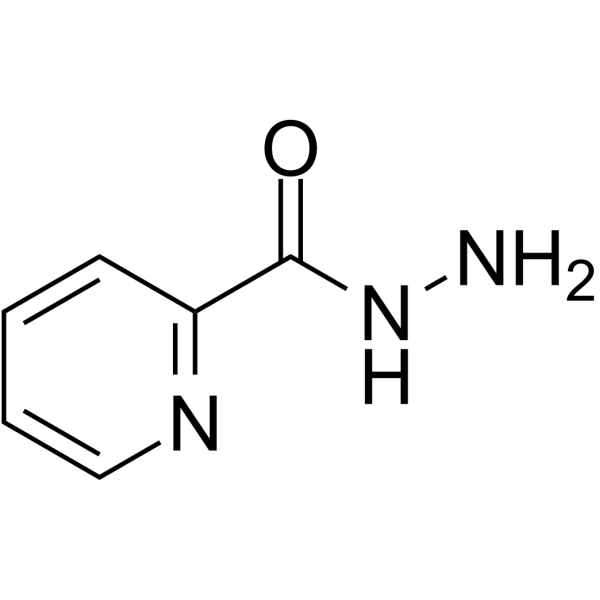
2-Pyridinecarbohydrazide is a versatile heterocyclic building block widely used in medicinal chemistry and coordination chemistry, and it finds extensive applications in various synthetic fields. 2-Pyridinecarbohydrazide reacts with the reducing end of carbohydrates to enhance mass spectrometry ionization efficiency, enabling isomer-specific identification of monosaccharides, disaccharides, ketoses/aldoses, and quantitative mass spectrometry imaging of biological tissues .
loading...
    loading...
Cat. No.: HY-W013973R
CAS No.: 92-94-4
p-Terphenyl (Standard) is the analytical standard of p-Terphenyl. This product is intended for research and analytical applications. p-Terphenyl is a specialty material, and may be used in ionized radiation detectors, nonpolar laser dye, and single molecule optical probe of scanning near-field microscopy. p-Terphenyl can be used to synthesis p-Terphenyl derivatives, for the research of cancer and inflammatory diseases .
loading...
    loading...
Cat. No.: HY-W013973S
CAS No.: 1718-51-0
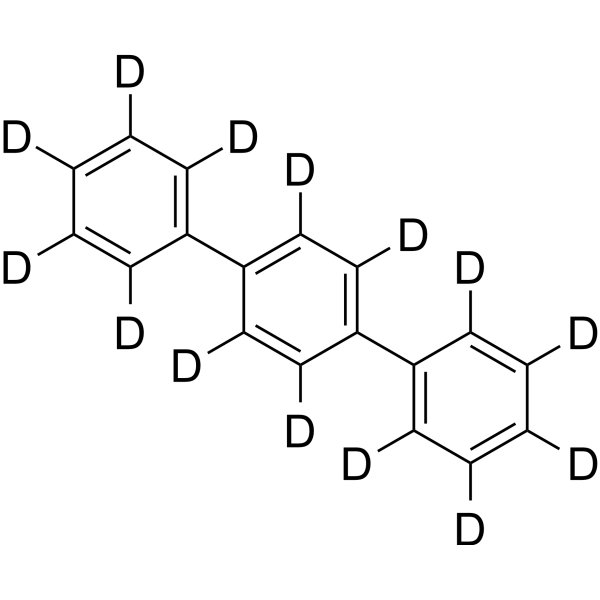
p-Terphenyl-d14 is the deuterium labeled p-Terphenyl (HY-W013973). p-Terphenyl is a specialty material, and may be used in ionized radiation detectors, nonpolar laser dye, and single molecule optical probe of scanning near-field microscopy. p-Terphenyl can be used to synthesis p-Terphenyl derivatives, for the research of cancer and inflammatory diseases .
loading...
    loading...
Cat. No.: HY-141831
CAS No.: 2298390-71-1
Research Areas:  

Cancer

STF-1084 is a specific, cell-impermeable, competitive inhibitor of ENPP1 (Ki = 33 nM). STF-1084 increases extracellular cGAMP concentrations by preventing its degradation by ENPP1, thereby enhancing immune infiltration. STF-1084 acts synergistically with ionizing radiation (IR) and cGAMP to delay tumor progression. STF-1084 can be used to study cancers with low immunogenicity .
loading...
    loading...
Cat. No.: HY-172329
CAS No.: 3112713-48-8
Target:  

Liposome

Research Areas:  

Others

Q1-ALC-0315 iodide is a cationic quaternary ammonium lipid derivative of the ionizable cationic lipid ALC-0315 (HY-138170). Q1-ALC-0315-based LNPs can be used for lung-targeted mRNA delivery, which demonstrates high-performing firefly luciferase protein expression in the lungs .
loading...
    loading...
Cat. No.: HY-L178
3,066 compounds

Radiation sickness is a general term for various types and degrees of damage (or disease) occurring in the human body after exposure to ionizing radiation. Although small amounts of ionizing radiation can also cause the body to produce free radicals and ROS, causing oxidative stress, resulting in DNA damage and chromosomal aberration. Radioprotector are compounds with radiation protection that can be used to prevent/protect non-tumor cells from the harmful effects of radiation. Radioprotective compounds can prevent the damage of radioactive substances to the human body and reduce the clinical symptoms of various radioactive diseases. In addition, radioprotectors can protect normal cells from damage during radiation therapy. The ideal anti-radiation drug should not affect the sensitivity of tumor cells to radiation therapy while protecting normal cells.

MCE designs a unique collection of 3,066 radioprotectors. Radioprotector Library is an effective tool for acute Radiation Syndrome, drug combination research with radiation drugs.

Cat. No.: HY-171896
Target:  

Liposome

Research Areas:  

Inflammation/Immunology Cancer

A28-C6B2 is an ionizable cationic lipid with a pKa of 6.43, and can be used to generate lipid nanoparticles (LNPs) for mRNA delivery in vivo. A28-C6B2 can be studied in research for enhancing the selective delivery of mRNA to the spleen, particularly to antigen-presenting cells .
loading...
    loading...
Cat. No.: HY-178503
Target:  

Apoptosis

Research Areas:  

Cancer

dA-NHbenzylSCF 3 is a radiosensitizer. dA-NHbenzylSCF 3 has low toxicity to cancer cells and normal cells, but can significantly enhance cancer cell death in the presence of ionizing radiation (IR). dA-NHbenzylSCF 3 promotes cell apoptosis by capturing electrons and inducing DNA double strand breaks (DSBs). dA-NHbenzylSCF 3 is often used in the research of cancer, such as prostate cancer and breast cancer .
loading...
    loading...
Cat. No.: HY-183001
CAS No.: 1777792-44-5
Target:  

Liposome CFTR mRNA

Research Areas:  

Inflammation/Immunology

ATX-012 is an ionizable cationic lipid for the assembly of mRNA-delivering lipid nanoparticles (LNPs). ATX-012 blends with helper lipids, cholesterol and PEG-lipid conjugates to form mRNA-containing nanocarriers, which support efficient cellular internalization and the generation of functional proteins including CFTR. ATX-012 constitutes the vital building block of LNPs applied in cystic fibrosis-related biological studies .
loading...
    loading...
Cat. No.: HY-184363
CAS No.: 2153563-36-9
Target:  

Liposome

Research Areas:  

Neurological Disease

C14-306 is an ionizable lipid with a linear 306 amine core and a C14 alkyl tail. C14-306 enhances brain transfection efficiency. Lipid nanoparticles (LNP) formulated with C14-306 promote mRNA delivery, increase neuronal transfection rate, and facilitate Cre-mediated recombination in the brain, while reducing off-target expression in the liver .
loading...
    loading...
Cat. No.: HY-187022
CAS No.: 3092408-38-0
Research Areas:  

Infection

AMG 1541 is a degradable ionizable lipid. AMG 1541 mediates the delivery of polynucleotides including mRNA. AMG 1541 exerts potent neutralizing effects on pseudotyped lentiviruses carrying the B.1.617.2 spike protein. As a component of influenza vaccines, AMG 1541 enables robust immune activation and reduces vaccine dosage. AMG 1541 is applicable to research related to SARS-CoV-2 infection .
loading...
    loading...
Cat. No.: HY-188022
CAS No.: 3024023-96-6
Target:  

Liposome

Research Areas:  

Cardiovascular Disease Cancer

T Cell Lipid 15 is an ionizable cationic lipid. T Cell Lipid 15 can be used to construct LNP targeting T cells. LNPs based on T Cell Lipid 15 induce reduced cytokine secretion, enable specific in vivo CD8 + T cell reprogramming, and cause minimal off-target transfection. T Cell Lipid 15 can be used for research on hematologic malignancies .
loading...
    loading...
Cat. No.: HY-185679
CAS No.: 2991244-19-8
Research Areas:  

Others

W19-LNP is a lipid nanoparticle formulated with a Ugi-reaction-derived ionizable lipid (W19). W19-LNP demonstrates highly selective mRNA delivery to the spleen in female BALB/c mice upon intravenous administration. W19-LNP can be used for the research of mRNA-based vaccine delivery, immune cell reprogramming, and gene-engineered cell preparation .
loading...
    loading...
Cat. No.: HY-171904
Target:  

Liposome

Research Areas:  

Others

BCP-NC2-C12 is an ionizable cationic lipid. BCP-NC2-C12 can be used to generate lipid nanoparticles (LNPs) for in vivo delivery of mRNA. BCP-NC2-C12 LNPs mediated an approximately 90% reduction in PCSK9 serum protein levels via CRISPR/Cas9 gene knockout .
loading...
    loading...

