604 Results for "

SCO2 mutations

" in MedChemExpress (MCE) Product Catalog:
Products (604)

604 Results for "SCO2 mutations" in MCE Product Catalog:

Art. -Nr.: HY-164899
CAS. Nr.: 2765091-45-8
Synonyms: 2-aminopyridine-3-carboxylic acid imidazolide
Target:  

DNA/RNA Synthesis

Forschungsgebiete:  

Infection

2A3 (2-aminopyridine-3-carboxylic acid imidazolide) is a covalent probe reagent for Selective 2'-Hydroxyl Acylation analyzed by Primer Extension (SHAPE) that targets the RNA ribose 2'-OH group. 2A3 efficiently permeates the biological membranes of Gram-negative bacteria, Gram-positive bacteria, and mammalian cells. 2A3 exhibits no base bias and specifically labels conformationally flexible, unpaired regions within RNA. 2A3 forms covalent adducts by acylating the 2'-OH groups of flexible RNA residues. When combined with SHAPE-MaP (mutational profiling) sequencing technology, these modification sites are converted into detectable mutational signals, thereby accurately reflecting local RNA backbone flexibility and base-pairing status. 2A3 is primarily utilized in molecular biology and transcriptomics research, including the resolution of RNA structuromes in living cells, the study of RNA folding regulatory mechanisms, and the investigation of non-coding RNA functions .
loading...
    loading...
Art. -Nr.: HY-L169
732 compounds

Resistance refers to the decrease in the effectiveness of drugs in treating diseases or symptoms. Due to the increasing global antibiotic resistance, it may threaten our ability to treat common infectious diseases. Drug resistance is also the main cause of chemotherapy failure in malignant tumors. In approximately 50% of cases, drug resistance exists even before chemotherapy begins. There are many mechanisms of anticancer drug resistance, including increased protein expression that leads to drug removal, mutations in drug binding sites, recovery of tumor protein production, and pre-existing genetic heterogeneity in tumor cell populations. In addition, the issue of drug resistance seems to have affected the development of new anticancer drugs. Drug resistance may be caused by various conditions, such as mutations, epigenetic modifications, and upregulation of drug efflux protein expression. Overcoming multidrug resistance in cancer treatment is becoming increasingly important.

MCE designs a unique collection of 732 anti-drug-resistant compounds. It is a good tool to be used for research on cancer and other diseases.

Art. -Nr.: HY-123319
CAS. Nr.: 873888-67-6
Target:  

Bacterial Antibiotic

Forschungsgebiete:  

Infection

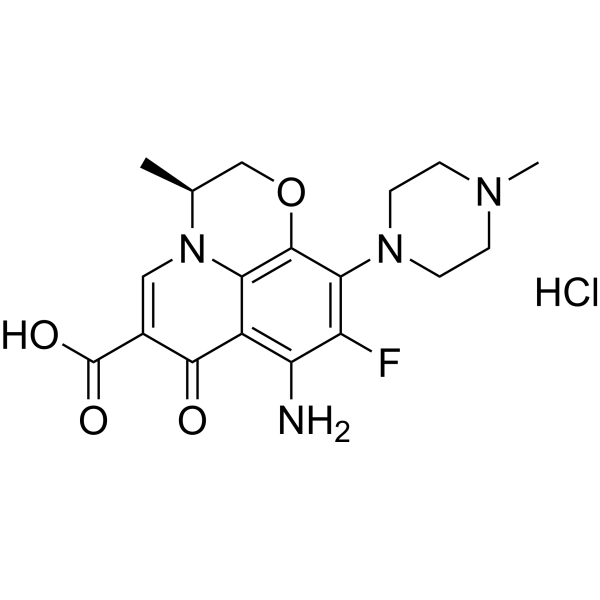
Antofloxacin hydrochloride is a well tolerate, orally active and broad-spectrum 8-amino-fluoroquinolone with potent antibacterial activities. Antofloxacin hydrochloride shows superior antibacterial activity against gyrA mutation-positive H. pylori strains, especially in Asn87- mutated strains, compared to levofloxacin. Antofloxacin hydrochloride is a weak, reversible inhibitor of CYP1A2 for the research of infections caused by a diverse group of bacterial species [2] .
loading...
    loading...
Art. -Nr.: HY-123319A
CAS. Nr.: 119354-43-7
Target:  

Bacterial Antibiotic

Forschungsgebiete:  

Infection

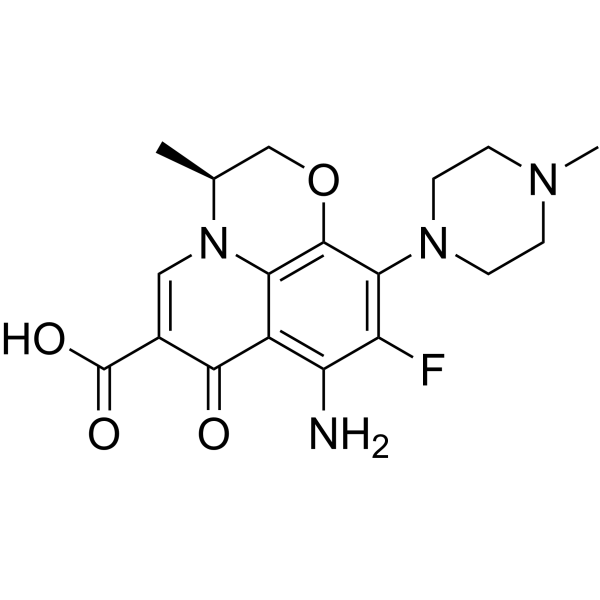
Antofloxacin is a well tolerate, orally active and broad-spectrum 8-amino-fluoroquinolone with potent antibacterial activities. Antofloxacin shows superior antibacterial activity against gyrA mutation-positive H. pylori strains, especially in Asn87- mutated strains, compared to levofloxacin. Antofloxacin is a weak, reversible inhibitor of CYP1A2 for the research of infections caused by a diverse group of bacterial species [2] .
loading...
    loading...
Art. -Nr.: HY-131217
CAS. Nr.: 1410738-11-2
Forschungsgebiete:  

Cancer

MI-2103 is a MDM2 inhibitor with an IC50 of 48.1 nM. MI-2103 inhibits the growth of leukemia and breast cancer cells; it exerts no growth-inhibitory effect on cancer cells with p53 mutation or deletion. MI-2103 serves as a target protein ligand for the synthesis of MG-277 (HY-130122). MI-2103 is applicable to the research of leukemia and breast cancer .
loading...
    loading...
Art. -Nr.: HY-134305A
Synonyms: 8-Methylamino-NAD+ sodium
Target:  

Endogenous Metabolite

Forschungsgebiete:  

Others

8-MA-NAD+ (sodium) (8-Methylamino-NAD+ (sodium)) is a derivative of the signaling molecule and enzyme cofactor NAD+ (HY-B0445). 8-MA-NAD+ (sodium) can be used in the screening of analog-sensitive poly (ADP-ribose) polymerase 1 (PARP1) gatekeeper mutations. 8-MA-NAD+ (sodium) can be used in the synthesis of cyclic ADP-ribose (cADPR) derivatives [2].
loading...
    loading...
Art. -Nr.: HY-135815AR
CAS. Nr.: 2389149-74-8
Synonyms: TAK-788 succinate (Standard); AP32788 succinate (Standard)
Forschungsgebiete:  

Cancer

Mobocertinib (succinate) (Standard) is the analytical standard of Mobocertinib (succinate). This product is intended for research and analytical applications. Mobocertinib (TAK-788) succinate is an orally active and irreversible EGFR/HER2 inhibitor. Mobocertinib succinate potently inhibits oncogenic variants containing activating EGFRex20ins mutations with selectivity over wild-type EGFR. Mobocertinib succinate can be used in NSCLC research [2].
loading...
    loading...
Art. -Nr.: HY-145294
CAS. Nr.: 3031515-48-4
Target:  

ROCK

Forschungsgebiete:  

Neurological Disease

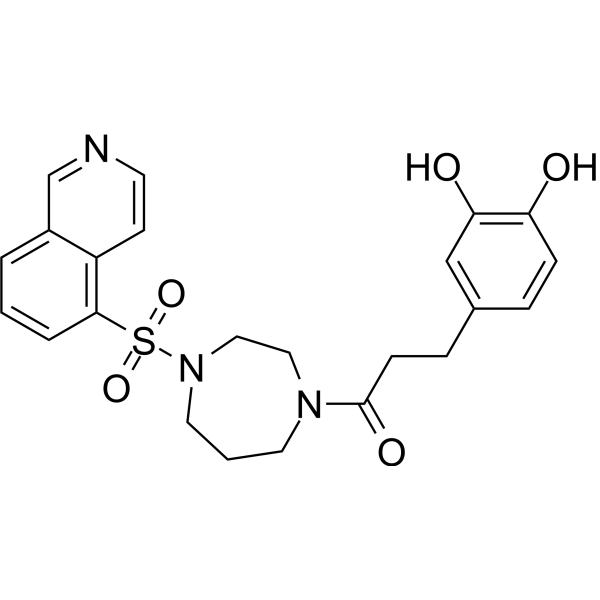
ROCK2-IN-5 (compound 1d) is a hybrid compound containing structural fragments of the Rho kinase inhibitor fasudil and the NRF2 inducers caffeic and ferulic acids. ROCK2-IN-5 has good multitarget profile and good tolerability. ROCK2-IN-5 has the potential for thr research of Amyotrophic lateral sclerosis (ALS) with a SOD1 mutation .
loading...
    loading...
Art. -Nr.: HY-161270
Target:  

HIV Protease

Forschungsgebiete:  

Infection

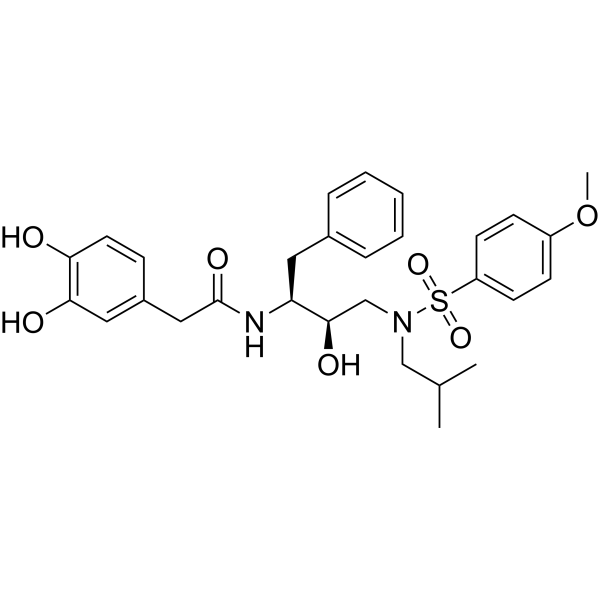
HIV-1 protease-IN-13 (compound 18d) is a potent HIV-1 protease inhibitor with an IC50 value of 0.54 nM. HIV-1 protease-IN-13 also shows potent activity against HIV-1DRVRS (DRV-resistant mutation) and HIV-1NL4_3 variant (wild type) .
loading...
    loading...
Art. -Nr.: HY-175837
CAS. Nr.: 878416-74-1
Target:  

EGFR Apoptosis

Forschungsgebiete:  

Cancer

EGFR-IN-172 is a EGFR inhibitor. EGFR-IN-172 effectively inhibits the proliferation of non-small cell lung cancer (NSCLC) cells carrying the L858R, T790M and C797S drug-resistant mutations. EGFR-IN-172 inhibits EGFR phosphorylation, induces cell cycle arrest and apoptosis. EGFR-IN-172 can be used for the study of NSCLC .
loading...
    loading...
Art. -Nr.: HY-50846R
CAS. Nr.: 942183-80-4
Target:  

Reference Standards ERK

Forschungsgebiete:  

Neurological Disease Cancer

SCH772984 (Standard) is the analytical standard of SCH772984 (HY-50846). This product is intended for research and analytical applications. SCH772984 is a highly selective and ATP-competitive ERK inhibitor, with IC50s of 4 and 1 nM for ERK1 and ERK2, respectively. SCH772984 has antitumor activity in MAPK inhibitor-naive and MAPK inhibitor-resistant cells containing BRAF or RAS mutations .
loading...
    loading...
Art. -Nr.: HY-N2533
CAS. Nr.: 33012-73-6
Synonyms: Cyanidin-3-O-sambubioside chloride
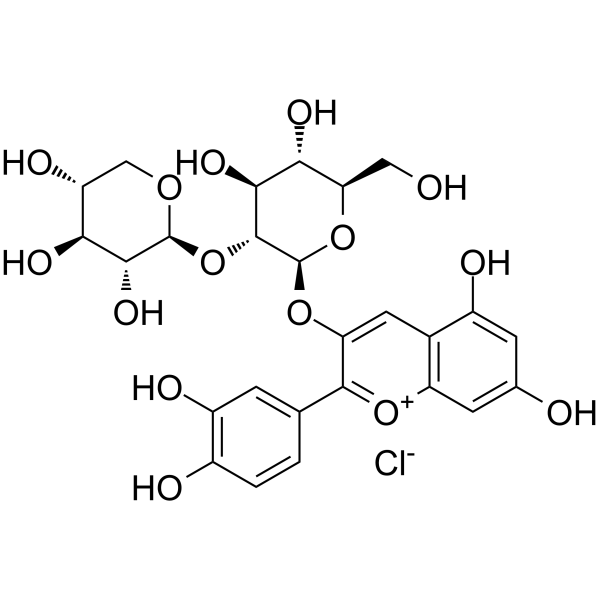
Cyanidin 3-sambubioside chloride (Cyanidin-3-O-sambubioside chloride), a major anthocyanin, a natural colorant, and is a potent NO inhibitor. Cyanidin 3-sambubioside chloride is a H274Y mutation inhibitor, and inhibits influenza neuraminidase activity with an IC50 of 72 μM. Cyanidin 3-sambubioside chloride inhibits angiotensin-converting enzyme (ACE) activity and has antioxidant, anti-angiogenic and antiviral properties [2] .
loading...
    loading...
Art. -Nr.: HY-P12351
CAS. Nr.: 2438158-37-1
Target:  

SARS-CoV

Forschungsgebiete:  

Infection

AYNVTQAFGR is a SARS-CoV-2 nucleocapsid protein peptide. AYNVTQAFGR is not significantly affected by known SARS-CoV-2 mutations. AYNVTQAFGR serves as a target for SISCAPA immunocapture and AEMS quantification in nasopharyngeal swabs. AYNVTQAFGR acts as a surrogate marker for SARS-CoV-2 nucleocapsid protein in mass spectrometry-based targeted assays. AYNVTQAFGR is useful for COVID-19 research [2] .
loading...
    loading...
Art. -Nr.: HY-W1005059
CAS. Nr.: 42472-93-5
Target:  

Ligands for E3 Ligase

Forschungsgebiete:  

Cancer

N-Methylthalidomide is a cereblon ligand derivative that acts as an E3 ubiquitin ligase ligand for the synthesis of PROTAC LLC0424N (HY-185557). LLC0424N serves as a negative control for NSD2 PROTAC degrader LLC0424 (HY-161574), with weak ability to induce NSD2 degradation and low growth inhibitory effect on cancer cells carrying NSD2 mutations .
loading...
    loading...
Art. -Nr.: HY-W127746
CAS. Nr.: 550-74-3
Forschungsgebiete:  

Infection

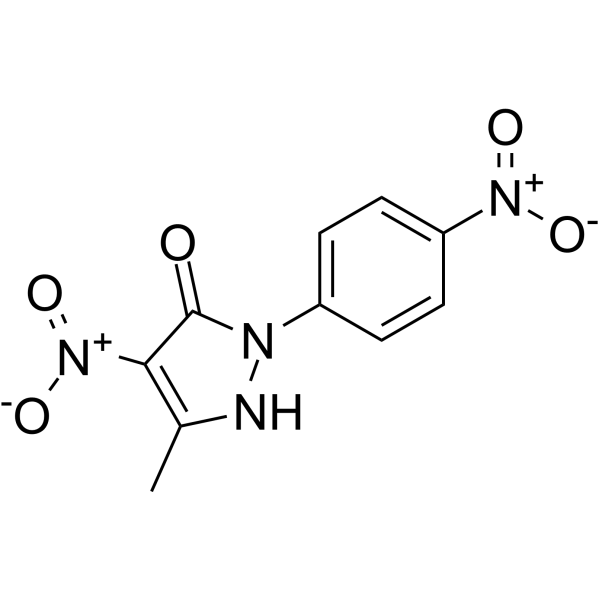
Picrolonic acid is a nematode hatching agent and bacterial frameshift mutagen. Picrolonic acid induces egg hatching in various nematodes. Picrolonic acid induces frameshift mutations in Salmonella. Picrolonic acid preferentially inhibits the growth of DNA polymerase-deficient E. coli . Picrolonic acid also serves as an analytical reagent for the determination of calcium, magnesium, lead, strontium, and thorium, and for the analysis of alkaloids, tryptophan, and phenylalanine. Picrolonic acid is used in research related to bacterial and parasitic infections [2].
loading...
    loading...
Art. -Nr.: HY-10410R
CAS. Nr.: 936091-14-4
Forschungsgebiete:  

Cancer

TG101209 (Standard) is the analytical standard of TG101209 (HY-10410). This product is intended for research and analytical applications. TG101209 is a selective JAK2 inhibitor with IC50 of 6 nM, less potent to Flt3 and RET with IC50 of 25 nM and 17 nM, appr 30-fold selective for JAK2 than JAK3, and sensitive to JAK2V617F and MPLW515L/K mutations.
loading...
    loading...
Art. -Nr.: HY-106219
CAS. Nr.: 355113-98-3
Forschungsgebiete:  

Cancer

BMS 275183 is a potent, orally active analogue of Paclitaxel (HY-B0015). BMS 275183 can stabilize microtubules and exhibits antitumor activity in in vivo tumor models. BMS 275183 is active in vitro against Paclitaxel-resistant tumors including those harboring tubulin mutations or overexpressing P-glycoprotein. BMS 275183 can be used for cancer research, such as non-small cell lung cancer (NSCLC) and prostate carcinoma .
loading...
    loading...
Art. -Nr.: HY-107855R
CAS. Nr.: 674-26-0
Synonyms: (±)-Mevalonolactone (Standard); Mevalolactone (Standard)
DL-Mevalonolactone (Standard) is the analytical standard of DL-Mevalonolactone. This product is intended for research and analytical applications. DL-Mevalonolactone ((±)-Mevalonolactone;Mevalolactone) is the δ-lactone form of mevalonic acid, a precursor in the mevalonate pathway. DL-Mevalonolactone is orally active against HMGCR mutation and statin caused myopathy . DL-Mevalonolactone induces inflammation and oxidative stress response with decreased mitochondrial membrane potential (MMP) and induces mitochondrial swelling [2] .
loading...
    loading...
Art. -Nr.: HY-107855S2
CAS. Nr.: 53771-22-5
Synonyms: (±)-Mevalonolactone-13C; Mevalolactone-13C
DL-Mevalonolactone- 13C ((±)-Mevalonolactone- 13C) is the 13C-labeled DL-Mevalonolactone (HY-107855). DL-Mevalonolactone ((±)-Mevalonolactone;Mevalolactone) is the δ-lactone form of mevalonic acid, a precursor in the mevalonate pathway. DL-Mevalonolactone is orally active against HMGCR mutation and statin caused myopathy. DL-Mevalonolactone induces inflammation and oxidative stress response with decreased mitochondrial membrane potential (MMP) and induces mitochondrial swelling.
loading...
    loading...
Art. -Nr.: HY-119983
CAS. Nr.: 194-59-2
Reinheit:  99.98%
Synonyms: DBC
Forschungsgebiete:  

Cancer

7H-Dibenzo[c,g]carbazole (DBC) is an azaarene with high lipophilicity. 7H-Dibenzo[c,g]carbazole has carcinogenic activity and induce DNA adducts in fish, DNA adducts, mutations in diploid human fibroblasts and micronuclei in human blood lymphocytes. 7H-Dibenzo[c,g]carbazole is activated by cytochrome P450 enzymes resulting mainly in the generation of phenolic metabolites .
loading...
    loading...

