40 Results for "

efflux modulator

" in MedChemExpress (MCE) Product Catalog:
Products (40)

40 Results for "efflux modulator" in MCE Product Catalog:

Cat. No.: HY-B1751F
CAS No.: 7054-25-3
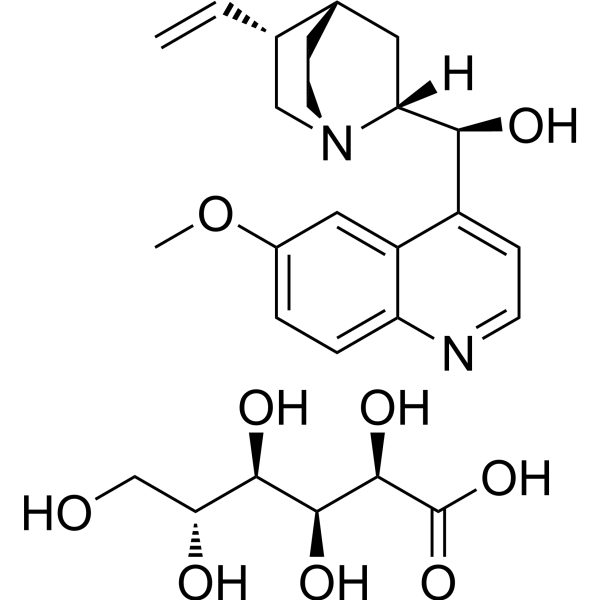
Quinidine gluconic acid is an orally active antiarrhythmic agent. Quinidine gluconic acid reduces the expression level of P-gp, inhibits P-gp-mediated efflux, increases the intracellular accumulation of P-gp substrates, induces PARP cleavage and Caspase-3 activation, and elevates the proportion of Apoptotic cells at the sub-G1 phase. Quinidine gluconic acid exerts sustained block and open-channel block effects on IK(f). Quinidine gluconic acid alters the urinary metabolic ratio of Amphetamine, modulates the Pentylenetetrazol-induced seizure threshold, and regulates the anticonvulsant effect of Dextromethorphan. Quinidine gluconic acid can be used in studies related to uterine sarcoma and seizures .
loading...
    loading...
Cat. No.: HY-B1302R
CAS No.: 6151-40-2
Quinidine hydrochloride monohydrate (Standard) is the analytical standard of Quinidine hydrochloride monohydrate (HY-B1302). This product is intended for research and analytical applications. Quinidine hydrochloride monohydrate is an orally active antiarrhythmic agent. Quinidine hydrochloride monohydrate reduces the expression level of P-gp, inhibits P-gp-mediated efflux, increases the intracellular accumulation of P-gp substrates, induces PARP cleavage and Caspase-3 activation, and elevates the proportion of Apoptotic cells at the sub-G1 phase. Quinidine hydrochloride monohydrate exerts sustained block and open-channel block effects on IK(f). Quinidine hydrochloride monohydrate alters the urinary metabolic ratio of Amphetamine, modulates the Pentylenetetrazol-induced seizure threshold, and regulates the anticonvulsant effect of Dextromethorphan. Quinidine hydrochloride monohydrate can be used in studies related to uterine sarcoma and seizures .
loading...
    loading...
Cat. No.: HY-N0468R
CAS No.: 63279-13-0
Rebaudioside D (Standard) is the analytical standard of Rebaudioside D. This product is intended for research and analytical applications. Rebaudioside D is an orally active sweetener that targets and activates FXR, modulates Acetyl-CoA Carboxylase, and inhibits 3-hydroxy-3-methylglutaryl-CoA reductase. Rebaudioside D regulates bile acid homeostasis and lipid metabolism, reduces the synthesis rates of fatty acids and cholesterol, and exerts multiple effects including anti-adipogenesis, hepatoprotection, anti-steatosis, gut microbiota modulation, enhancement of secondary bile acid metabolism, anti-endotoxin activity, regulation of bile acid transport, and inhibition of bile acid efflux. Rebaudioside D also reduces body weight gain, visceral fat accumulation, hepatic triglyceride and cholesterol accumulation, hepatic lipid peroxidation, and decreases the circulating level of lipopolysaccharide-binding protein. Rebaudioside D additionally enhances the secondary bile acid metabolic pathway of intestinal bacteria, upregulates the gene expression of ileal organic solute transporter α, and downregulates the gene expression of hepatic bile salt export pump. Rebaudioside D does not affect glucose homeostasis, alter total caloric intake or fecal energy excretion, induce weight gain, exacerbate obesity, promote hepatic steatosis, impair brown adipose tissue function, nor change skeletal muscle metabolism-related proteins. Rebaudioside D can be used in diet-induced obesity and obesity-related research .
loading...
    loading...
Cat. No.: HY-162822
Target:  

P-glycoprotein

Research Areas:  

Cancer

P-gp modulator-5 (compound 25) is a modulator of P-gp and can inhibit the proliferation of multidrug resistant (MDR) tumors. P-gp modulator-5 inhibits the activity of drug efflux pumps in MDR cells, leading to a large accumulation of ROS and altered cell cycle profiles .
loading...
    loading...
Cat. No.: HY-161645
Target:  

P-glycoprotein

Research Areas:  

Cancer

P-gp modulator-4 (compound 4c) inhibits the efflux function of P-glycoprotein (P-gp). P-gp modulator-4 shows multidrug resistance (MDR) in cancer reversal activity (IC50 of Paclitaxel (HY-B0015) = 8.80, reversal fold = 211.8) .
loading...
    loading...
Cat. No.: HY-146389
CAS No.: 2487457-15-6
Research Areas:  

Cancer

Anticancer agent 50 (compound 6) is a potent ABCB1 efflux pump modulator. Anticancer agent 50 shows cytotoxic effects and antiproliferative effects. Anticancer agent 50 decreases the expression of cyclin D1 and induces p53 expression. Anticancer agent 50 has the potential for the research of T-lymphoma .
loading...
    loading...
Cat. No.: HY-N1423AR
CAS No.: 863-57-0
Glycocholic acid (sodium) (Standard) is the analytical standard of Glycocholic acid sodium (HY-N1423A). This product is intended for research and analytical applications. Glycocholic acid sodium is a bile acid derivative. Glycocholic acid downregulates MDR1, Bcl-2, MRP1, MRP2 and FXR, upregulates Bax, p53, caspase-9, caspase-3, TGR5 and S1PR2. Glycocholic acid sodium inhibits multidrug resistance and efflux pumps, induces mitochondrial apoptosis, and enhances chemosensitivity. Glycocholic acid sodium modulates related bile acid receptor signaling. Glycocholic acid sodium suppresses growth and conjugation of Enterobacteriaceae and increases their antibiotic susceptibility. Glycocholic acid sodium can be used for the research of colon adenocarcinoma and cholangiocarcinoma (CCA).
loading...
    loading...
Cat. No.: HY-16728A
CAS No.: 491872-39-0
Synonyms: GLYX-13 acetate
Target:  

iGluR mTOR ERK

Research Areas:  

Neurological Disease

Rapastinel (GLYX-13) acetate is a potent NMDAR modulator capable of crossing the blood-brain barrier, and it exhibits extremely high affinity for human NMDAR (EC50=0.0017-9.9 nM). Rapastinel acetate enhances ERK signaling and activates the mTOR pathway, thereby upregulating the expression of BDNF and VGF, and inducing significant neuroplastic changes such as enhanced LTP and increased mature dendritic spine density in the hippocampus. Rapastinel acetate moderately elevates the efflux of dopamine, norepinephrine and 5-HT in the prefrontal cortex, and uniquely avoids side effects of traditional antidepressants such as dissociation, addiction or sedation. Rapastinel acetate is applicable to the research of major depressive disorder and hepatocellular carcinoma .
loading...
    loading...
Cat. No.: HY-W754548
Glycocholic acid- 13C2,d4 is the deuterium labeled and 13C-labeled Glycocholic acid (HY-N1423). Glycocholic acid is a bile acid derivative. Glycocholic acid downregulates MDR1, Bcl-2, MRP1, MRP2 and FXR, upregulates Bax, p53, caspase-9, caspase-3, TGR5 and S1PR2. Glycocholic acid inhibits multidrug resistance and efflux pumps, induces mitochondrial apoptosis, and enhances chemosensitivity. Glycocholic acid modulates related bile acid receptor signaling. Glycocholic acid suppresses growth and conjugation of Enterobacteriaceae and increases their antibiotic susceptibility. Glycocholic acid can be used for the research of colon adenocarcinoma and cholangiocarcinoma (CCA).
loading...
    loading...
Cat. No.: HY-B1751S1
Quinidine- 13C, d2 hydrochloride is the 13C, d2 labeled Quinidine hydrochloride (HY-W115674). Quinidine hydrochloride is an orally active antiarrhythmic agent. Quinidine hydrochloride reduces the expression level of P-gp, inhibits P-gp-mediated efflux, increases the intracellular accumulation of P-gp substrates, induces PARP cleavage and Caspase-3 activation, and elevates the proportion of Apoptotic cells at the sub-G1 phase. Quinidine hydrochloride exerts sustained block and open-channel block effects on IK(f). Quinidine hydrochloride alters the urinary metabolic ratio of Amphetamine, modulates the Pentylenetetrazol-induced seizure threshold, and regulates the anticonvulsant effect of Dextromethorphan. Quinidine hydrochloride can be used in studies related to uterine sarcoma and seizures .
loading...
    loading...
Cat. No.: HY-N4314R
CAS No.: 1168-42-9
Synonyms: 4',5,6,7-Tetramethoxyflavone (Standard)
Scutellarein tetramethyl ether (Standard) is the analytical standard of Scutellarein tetramethyl ether. This product is intended for research and analytical applications. Scutellarein tetramethyl ether (4',5,6,7-Tetramethoxyflavone) is a bioactive compound extracted from Eupatorium odoratum. Scutellarein tetramethyl ether exhibits anti-inflammatory, antibacterial, pro-coagulant, and anti-tumor activities. Scutellarein tetramethyl ether exerts its anti-inflammatory effects by modulating the NF-κB pathway and regulates bacterial resistance through the inhibition of efflux pumps. Additionally, Scutellarein tetramethyl ether accelerates coagulation time via the endogenous coagulation pathway. Studies have shown that Scutellarein tetramethyl ether can effectively inhibit the growth of the liver cancer cell line HepG2 (IC50= 20.08 μg/mL) .
loading...
    loading...
Cat. No.: HY-164585
CAS No.: 352652-36-9
Target:  

P-glycoprotein

Research Areas:  

Cancer

P-gp modulator-6 is a P-glycoprotein (P-gp) modulator. P-gp modulator-6 regulates the substrate specificity of P-gp and enhances the efflux activity of Daunorubicin (HY-13062A) and Rhodamine 123 (HY-D0816). P-gp modulator-6 can be used in the research of multidrug-resistant cancers. P-gp modulator-6 can be used in the research of multidrug-resistant pancreatic cancer and multidrug-resistant colon cancer .
loading...
    loading...
Cat. No.: HY-181520
CAS No.: 2681270-30-2
ABCA1 inducer 3 (Compound 85) is an orally active ABCA1 inducer and lipid-modulating agent. ABCA1 inducer 3 increases ABCA1 expression. ABCA1 inducer 3 upregulates hepatic Abcg5 and Abcg8 mRNA expression. ABCA1 inducer 3 promotes cholesterol efflux. ABCA1 inducer 3 improves hyperlipidemia .
loading...
    loading...
Cat. No.: HY-182484
CAS No.: 372198-80-6
Target:  

GlyT

Research Areas:  

Neurological Disease

Org 24461 is a selective and brain-penetrant GlyT-1 inhibitor. Org 24461 blocks glycine uptake, reuptake, reverse operation, [ 3H]glycine efflux and release. Org 24461 enhances NMDA receptor function, modulates striatal monoamine/glutamate levels, and reverses PCP-induced behavioral and electrographic abnormalities. Org 24461 can be used for the research of retinal hypoxia/ischemia, and schizophrenia .
loading...
    loading...
Cat. No.: HY-182938
CAS No.: 1111050-17-9
Target:  

Autophagy

Research Areas:  

Metabolic Disease

Autophagy activator-2 is a potent autophagy activator with EC50 values of 14.33 μM. Autophagy activator-2 acts as a proteostasis modulator and small-molecule chaperone that upregulates I1061T mutant NPC1 expression and facilitates cholesterol efflux. Autophagy activator-2 reduces lysosomal hydrolase levels. Autophagy activator-2 can be used for the study of Niemann-Pick Type C disease .
loading...
    loading...
Cat. No.: HY-182253
CAS No.: 2035417-32-2
Target:  

P-glycoprotein

Research Areas:  

Cancer

WS-691 is an orally active, selective ABCB1 modulator. WS-691 selectively stabilizes ABCB1 via direct binding to ABCB1. WS-691 inhibits the efflux function of ABCB1 and activates ABCB1 ATPase activity. WS-691 elevates intracellular Paclitaxel (HY-B0015) levels and reduces the required dose of Paclitaxel in cancer cells overexpressing ABCB1. WS-691 increases the sensitivity of colon cancer cells to Paclitaxel .
loading...
    loading...
Cat. No.: HY-136907
CAS No.: 36622-29-4
Synonyms: (S)-(-)-Verapamil
Research Areas:  

Cardiovascular Disease Cancer

(S)-Verapamil ((S)-(-)-Verapamil) is an orally active MRP1 (ABCC1) modulator with a Kd value of 113 nM for hamster MRP1. (S)-Verapamil regulates MRP1, promotes MRP1-mediated glutathione efflux and the transport of calcein and leukotriene C4, reverses glutathione-activated MRP1 ATPase activity, and ultimately depletes intracellular glutathione and induces cell death. (S)-Verapamil specifically induces apoptosis in MRP1-overexpressing tumor cells. (S)-Verapamil can be used in research related to cancer, cardiac diseases such as supraventricular arrhythmia, and hypertension .
loading...
    loading...
Cat. No.: HY-W115674
CAS No.: 1668-99-1
Quinidine hydrochloride is an orally active antiarrhythmic agent. Quinidine hydrochloride reduces the expression level of P-gp, inhibits P-gp-mediated efflux, increases the intracellular accumulation of P-gp substrates, induces PARP cleavage and Caspase-3 activation, and elevates the proportion of Apoptotic cells at the sub-G1 phase. Quinidine hydrochloride exerts sustained block and open-channel block effects on IK(f). Quinidine hydrochloride alters the urinary metabolic ratio of Amphetamine, modulates the Pentylenetetrazol-induced seizure threshold, and regulates the anticonvulsant effect of Dextromethorphan. Quinidine hydrochloride can be used in studies related to uterine sarcoma and seizures .
loading...
    loading...
Cat. No.: HY-189393
CAS No.: 3089177-97-6
Target:  

P-glycoprotein

Research Areas:  

Inflammation/Immunology

RTY-406 is an orally active ABCB4/MDR3 and ABCB11/BSEP positive modulator. RTY-406 increases ABCB4/MDR3 and ABCB11/BSEP protein levels and functional output, elevates biliary phospholipid levels, enhances bile acid efflux, increases bile flow and micelle formation, reduces hepatic bile acids, and promotes cholesterol-to-bile-acid conversion. RTY-406 does not induce hepatocellular injury, maintains normal serum alanine transaminase and aspartate aminotransferase levels, and shows a favorable safety profile in cynomolgus monkeys. RTY-406 can be used for the research of primary sclerosing cholangitis and cholestasis .
loading...
    loading...
Cat. No.: HY-N21887
CAS No.: 105214-48-0
Gypenoside LVI is an orally active dammarane-type triterpenoid compound found in Gynostemma pentaphyllum. Gypenoside LVI inhibits ERK and JNK phosphorylation, the NLRP3 inflammasome, and modulates M1 to M2 microglial polarization. Gypenoside LVI downregulates PCSK9 expression through a SREBP-independent pathway. Gypenoside LVI promotes cholesterol efflux via ABCG1 and SRB1, upregulates LXRα-mediated reverse cholesterol transport, and attenuates foam cell formation by reducing lipid accumulation and cholesterol uptake. Gypenoside LVI inhibits IL-6 and IL-1β secretion, reduces oxidative stress, neuroinflammation, microglial and astrocyte activation, and inhibits LPS-induced microglial proliferation. Gypenoside LVI can be used for research on atherosclerosis, hypercholesterolemia, depression, and non-small cell lung cancer .
loading...
    loading...

