91 Results for "

hydrated matrices

" in MedChemExpress (MCE) Product Catalog:
Products (91)

91 Results for "hydrated matrices" in MCE Product Catalog:

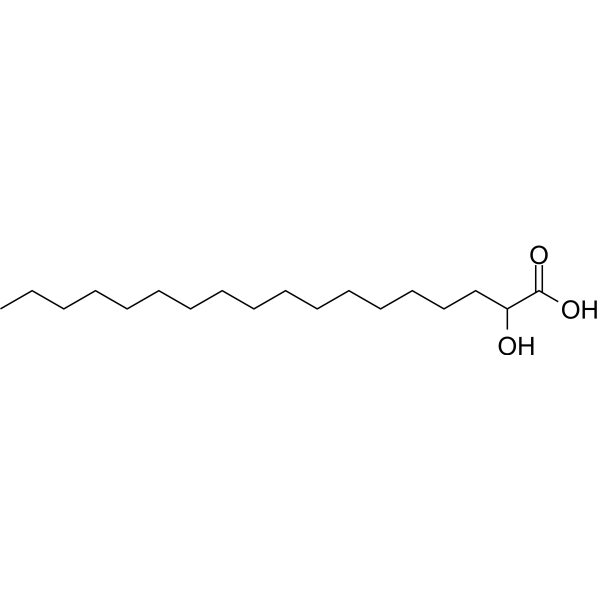
Cat. No.: HY-134120
CAS No.: 629-22-1
Purity:  99.86%
Synonyms: DL-2-Hydroxystearic acid
Research Areas:  

Others

2-Hydroxystearic acid is an alpha-hydroxy fatty acid commonly used in a variety of personal care products, especially cosmetic and skin care formulations. 2-Hydroxystearic acid has unique chemical properties that make it an effective emulsifier and stabilizer, improving the texture and shelf life of cosmetic products. It also has a potential physiological role in improving skin hydration and elasticity, although its biological function is not fully understood.
loading...
    loading...
Cat. No.: HY-112624E
CAS No.: 9004-54-0
Synonyms: Dextran 0.8; Dextran D0.8; Dextran T0.8(MW 640-960)
Dextran T0.8 (Dextran 0.8; Dextran T0.8(MW 640-960)) is a food additive with a porous network structure that exhibits strong hydration capacity and low browning activity. Dextran T0.8 (MW 800) can improve the coagulation of dairy products and is used as a prebiotic in baked goods. Dextran T0.8 (MW 800) is non-toxic to HeLa cells at a concentration of ~500 μg/mL and has a low relative browning rate in the Maillard reaction. The Dextran series of compounds are also natural polysaccharide drug carriers that can be connected to drugs through covalent bonding methods such as ester bonds, amide bonds or click chemistry, or self-assembled to form carriers such as nanoparticles and hydrogels. Dextran is biodegradable and biocompatible, and can achieve targeted delivery and controlled release of drugs. Dextran derivatives can prolong the half-life of drugs, increase local concentrations, and reduce the activity of immune clearance .
loading...
    loading...
Cat. No.: HY-W021022
CAS No.: 14996-61-3
Synonyms: Iridium trichloride hydrate
Iridium(III) chloride hydrate (Iridium trichloride hydrate) is a hydrated iridium (III) chloride salt and also a precursor for the synthesis of cyclometalated and non-cyclometalated iridium (III) complexes .
loading...
    loading...
Cat. No.: HY-P1775A
CAS No.: 9001-03-0
Carbonic anhydrase isoenzyme is an isoform of Carbonic anhydrase (HY-P1775). Carbonic anhydrase isoenzymes are a class of widely distributed metalloenzymes that catalyze the reversible hydration-dehydration reaction of the carbon dioxide-bicarbonate system, and also exhibit acetaldehyde hydration and ester hydrolysis activities. Carbonic anhydrase isoenzyme is associated with epithelial ion transport processes involving sodium, potassium, anions, and ammonia. Carbonic anhydrase isoenzyme can be used in research on cancer, glaucoma, obesity, and epilepsy .
loading...
    loading...
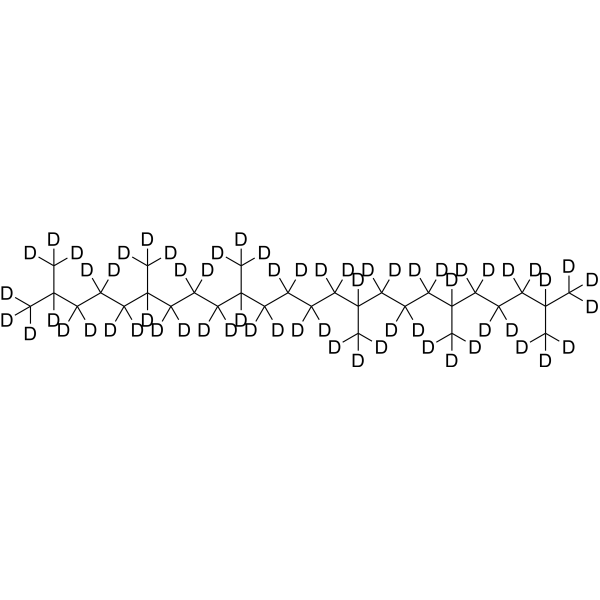
Cat. No.: HY-N7113S
CAS No.: 16514-83-3
Squalane-d62 is the deuterium labeled Squalane . Squalane, found in certain fish oils (especially shark liver oil), and some vegetable oils, is a saturated derivative of Squalene. Squalane shows anticancer, antioxidant, skin hydrating, and emollient activities .
loading...
    loading...
Cat. No.: HY-32876
CAS No.: 16133-25-8
Research Areas:  

Others

Pyridine-3-sulfonyl chloride is a sulfonyl chlorination derivatization reagent for steroidal estrogens. Pyridine-3-sulfonyl chloride reacts with estrogens to form pyridine-3-sulfonyl derivatives, which generate abundant analyte-specific fragment ions upon collision-induced dissociation. Pyridine-3-sulfonyl chloride facilitates quantitative LC-ESI-MS/MS analysis of estrogens in serum and water matrices .
loading...
    loading...
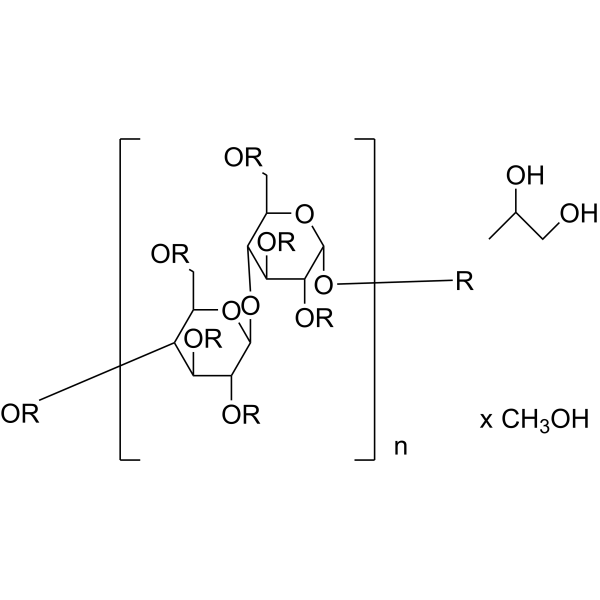
Cat. No.: HY-A0104I
CAS No.: 9004-65-3
Synonyms: Hypromellose (Type II,Viscosity:100000mPa.s); (Hydroxypropyl)methyl cellulose (Type II,Viscosity:100000mPa.s); Celacol HPM 5000 (Type II,Viscosity:100000mPa.s)
HPMC (Hypromellose; (Hydroxypropyl)methyl cellulose; Celacol HPM 5000) (Type II,Viscosity:100000mPa.s) is a non-ionic polymer obtained via synthetic modification of cellulose. As a hydrophilic matrix material, HPMC prolongs drug release through non-Fickian diffusion, including the diffusion of drugs in the hydrated matrix and the polymer relaxation process .
loading...
    loading...
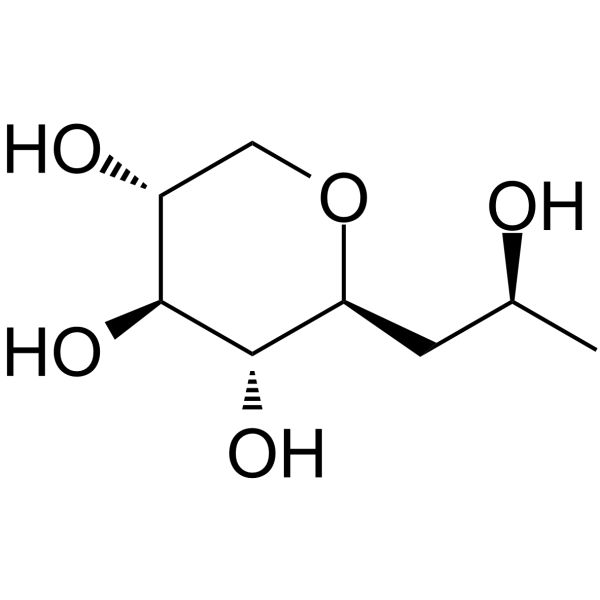
Cat. No.: HY-108036A
CAS No.: 868156-46-1
Purity:  ≥98.0%
Synonyms: (S)-Hydroxypropyl tetrahydropyrantriol
Research Areas:  

Metabolic Disease

(S)-Pro-xylane ((S)-Hydroxypropyl tetrahydropyrantriol) is a bioactive C-glycoside that targets the biosynthesis pathway of glycosaminoglycans/mucopolysaccharides (GAGs) in the skin matrix and can be absorbed transdermally. (S)-Pro-xylane stimulates the biosynthesis of GAGs in fibroblasts, enhances the structural stability of the skin extracellular matrix, improves skin elasticity and moisturizing ability, and delays wrinkle formation. (S)-Pro-xylane can effectively promote the synthesis of collagen fibers and hyaluronic acid in the dermis. (S)-Pro-xylane is used in the field of anti-aging cosmetics to improve skin hydration and elasticity. (S)-Pro-xylane is eco-friendly and biodegradable .
loading...
    loading...
Cat. No.: HY-W587839
CAS No.: 919005-14-4
Research Areas:  

Endocrinology

4,8-Dioxa-3H-perfluorononanoic acid is an ether-substituted polyfluoroalkyl compound and also a ligand of human pregnane X receptor (hPXR), which binds to the ligand-binding domain of hPXR. 4,8-Dioxa-3H-perfluorononanoic acid targets Arg-410, Lys-210, Lys-226, Met-323 and His-327 residues. Its binding process relies on long-range electrostatic interactions, and no significant hydrogen bonds form with hPXR residues. 4,8-Dioxa-3H-perfluorononanoic acid is used as a substitute for PFOA in Germany. 4,8-Dioxa-3H-perfluorononanoic acid is detectable in environmental matrices such as river water near fluoride production plants, accumulates in organisms including grass, deer liver and locusts, and is present in plasma samples of populations in southern Germany .
loading...
    loading...
Cat. No.: HY-W019877
CAS No.: 7727-73-3
Research Areas:  

Others

Sodium sulfate decahydrate is an inorganic hydrated salt phase change material. Sodium sulfate decahydrate can serve as a phase change material for thermal management of photovoltaic panels, absorbing latent heat during the melting process to reduce the panel surface temperature and improve electrical efficiency .
loading...
    loading...
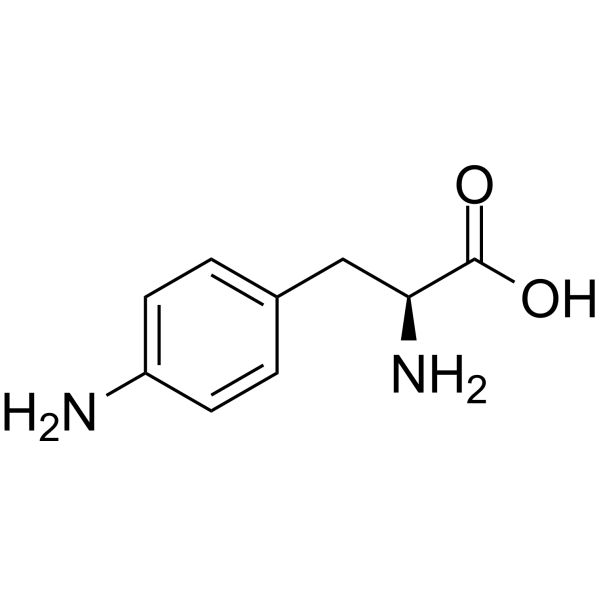
Cat. No.: HY-W016480
CAS No.: 943-80-6
Synonyms: H-Phe(4-NH2)-OH
4-Amino-L-phenylalanine (H-Phe(4-NH2)-OH) is a metabolic intermediate and an α-carbonic anhydrase (TcCA) activator with a Ka value of 0.75 μM. 4-Amino-L-phenylalanine acts through active site cavity entrance binding and a proton shuttle mechanism to enhance the catalytic rate of CO2 hydration. 4-Amino-L-phenylalanine serves as a diamine monomer for bio-based polymer synthesis and is produced in Escherichia coli via the shikimate pathway. 4-Amino-L-phenylalanine constitutes a structural component of haptens used in immunoassay development. 4-Amino-L-phenylalanine is used for the production of Chloramphenicol (HY-B0239) and Pristinamycin I in Streptomyces venezuelae and S. pristinaespiralis, respectively. 4-Amino-L-phenylalanine is used in research related to Trypanosoma cruzi infection .
loading...
    loading...
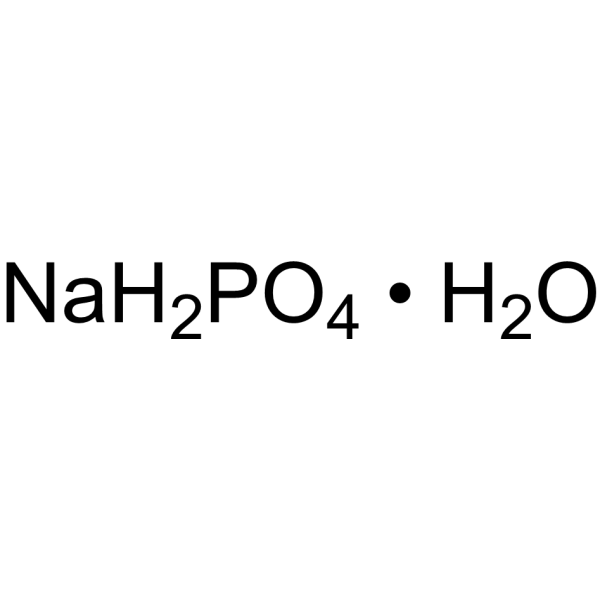
Cat. No.: HY-W094497B
CAS No.: 10049-21-5
Synonyms: Sodium phosphate monobasic monohydrate, for molecular biology
Research Areas:  

Others

Sodium dihydrogen phosphate monohydrate, for molecular biology (Sodium phosphate monobasic monohydrate, for molecular biology), suitable for molecular biology research, is an inorganic hydrated phosphate salt that forms as an intermediate product during the first dehydration step of sodium dihydrogen phosphate dihydrate under heating conditions .
loading...
    loading...
Cat. No.: HY-107784R
CAS No.: 96702-03-3
Ectoine (Standard) is the analytical standard of Ectoine. This product is intended for research and analytical applications. Ectoine is a natural cell protectant, an amino acid derivate produced by bacteria living under extremely harsh environmental conditions. Ectoine serves as an osmoregulatory compatible solute, increasing the hydration of the skin surface and stabilizing lipid layers, which is useful in skincare. Ectoine demonstrates a good safety profile for the treatment of allergic rhinitis .
loading...
    loading...
Cat. No.: HY-139201E
CAS No.: 27964-99-4
Synonyms: PDLHB (MW 150000-300000)
Poly-D-lysine hydrobromide (MW 150000-300000) is a synthetic polymer composed of D-lysine residues and is one of the most widely used matrices in neural cell culture applications. Poly-D-lysine hydrobromide (MW 150000-300000) can be used as a non-specific cell adhesion enhancer. Poly-D-lysine hydrobromide (MW 30000-70000) is an orally active CaSR agonist peptide that indirectly activates the 5-HT₃ receptor signaling pathway, delaying gastric emptying and thereby slowing the rate at which glucose enters the small intestine and is absorbed .
loading...
    loading...
Cat. No.: HY-W800805
CAS No.: 2295813-15-7
Target:  

Liposome

Research Areas:  

Cancer

DOPE-Mal is an N-maleimide-derived phosphatidylethanolamine. DOPE-Mal does not interfere with fatty acyl chains or alter lipid bilayer permeability; it increases lipid bilayer order, reduces fluidity, induces conformational changes in phospholipid polar heads and enhances their hydration. DOPE-Mal can be used as a component to prepare maleimide-displaying liposomes, enabling peptide conjugation via maleimide-thiol coupling. DOPE-Mal can be used to prepare Liposomes for delivering Doxorubicin (HY-15142A) to hepatocytes. DOPE-Mal is applicable to research related to hepatocellular carcinoma and lung cancer .
loading...
    loading...
Cat. No.: HY-160113E
Sodium phosphate buffer 0.1M, pH 8.0 is an aqueous sodium phosphate buffer with a concentration of 0.1M and a pH value of 8.0. Sodium phosphate buffer 0.1M, pH 8.0 can be used for the preparation of hydrated micellar membranes, the construction of pH-sensitive nanocarriers, and the maintenance of stable environmental conditions for pH-cleavable PEG-Hz-PE micelles. Sodium phosphate buffer 0.1M, pH 8.0 can also serve as a universal solvent, reaction medium and eluent, and is widely applied in experimental processes such as antibody thiolation, nanoparticle purification and cross-linking reactions .
loading...
    loading...
Cat. No.: HY-Y1890B
CAS No.: 61791-12-6
Cremophor EL-10 is a nonionic polyoxyethylene castor oil surfactant with multiple functions including organic solubilizer, mixed zinc anode corrosion inhibitor and dendrite growth inhibitor. By forming a physical barrier to block electrolyte contact and constructing oriented hydration channels to reduce the desolvation energy barrier of Zn 2+ , Cremophor EL-10 achieves a corrosion inhibition efficiency of over 99%. Cremophor EL-10 exerts no significant effects on the mitochondrial activity and cell viability of epithelial cells, making it suitable for in vitro drug delivery and biopharmaceutical research at concentrations ≤10% v/v. However, Cremophor EL-10 may induce sustained non-endothelium-dependent contraction in rat aortic rings and exert concentration-dependent inhibitory effects on acetylcholine-induced endothelium-dependent relaxation responses .
loading...
    loading...
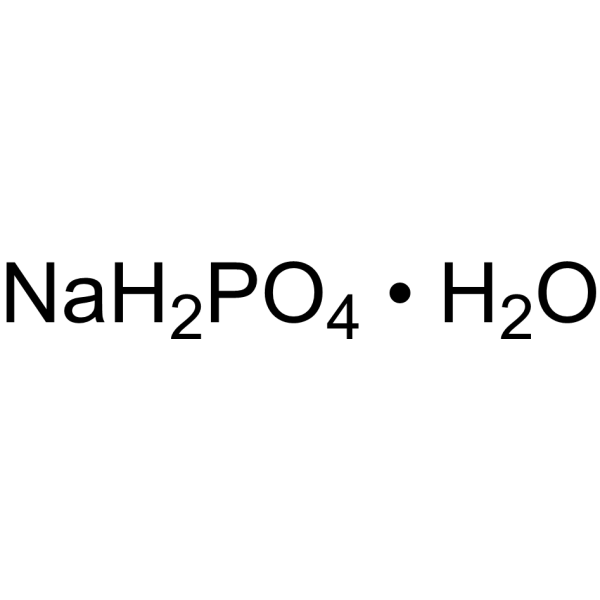
Cat. No.: HY-W094497C
CAS No.: 10049-21-5
Synonyms: Sodium phosphate monobasic monohydrate, for electrophoresis
Research Areas:  

Others

Sodium dihydrogen phosphate monohydrate, for electrophoresis (Sodium phosphate monobasic monohydrate, for electrophoresis), an electrophoresis-grade reagent, is an inorganic hydrated phosphate salt that forms as an intermediate product during the first dehydration step of sodium dihydrogen phosphate dihydrate under heating conditions .
loading...
    loading...
Cat. No.: HY-Y0850U2
CAS No.: 9002-89-5
Synonyms: Polyvinyl alcohol (Mw 130000, 87-89% hydrolyzed, ~2700 polymerization); Poly(Ethenol) (Mw 130000, 87-89% hydrolyzed, ~2700 polymerization)
PVA (Polyvinyl alcohol; Poly(Ethenol)) (Mw 130000, 87-89% hydrolyzed, ~2700 polymerization) is a non-toxic, biodegradable, and highly biocompatible semicrystalline synthetic polymer. PVA (Mw 130000, 87-89% hydrolyzed, ~2700 polymerization) acts as a coating agent to improve tableting performance, and can be cross-linked with sodium trimetaphosphate to prepare tubular vascular grafts or form hydrogels for use as artificial articular cartilage and sustained-release matrices for growth factors. PVA (Mw 130000, 87-89% hydrolyzed, ~2700 polymerization) enhances the redox cycle of iron species in photo-assisted Fenton reactions to simultaneously generate hydrogen peroxide and degrade pollutants, enabling integrated sustainable waste management and water treatment. PVA (Mw 130000, 87-89% hydrolyzed, ~2700 polymerization) is used in the manufacture of biodegradable films and in studies of dry or minimally invasive ex vivo wounds, but cannot form freeze-thaw cross-linked solid sheets for wound dressings .
loading...
    loading...
Cat. No.: HY-164431
CAS No.: 1446772-80-0
Research Areas:  

Others

4-(Azidomethyl)-L-phenylalanine is an unnatural amino acid with an azidomethyl group at position 4 of L-phenylalanine. 4-(Azidomethyl)-L-phenylalanine can be used as a reporter for probing protein hydration through addition of an azide group .
loading...
    loading...

